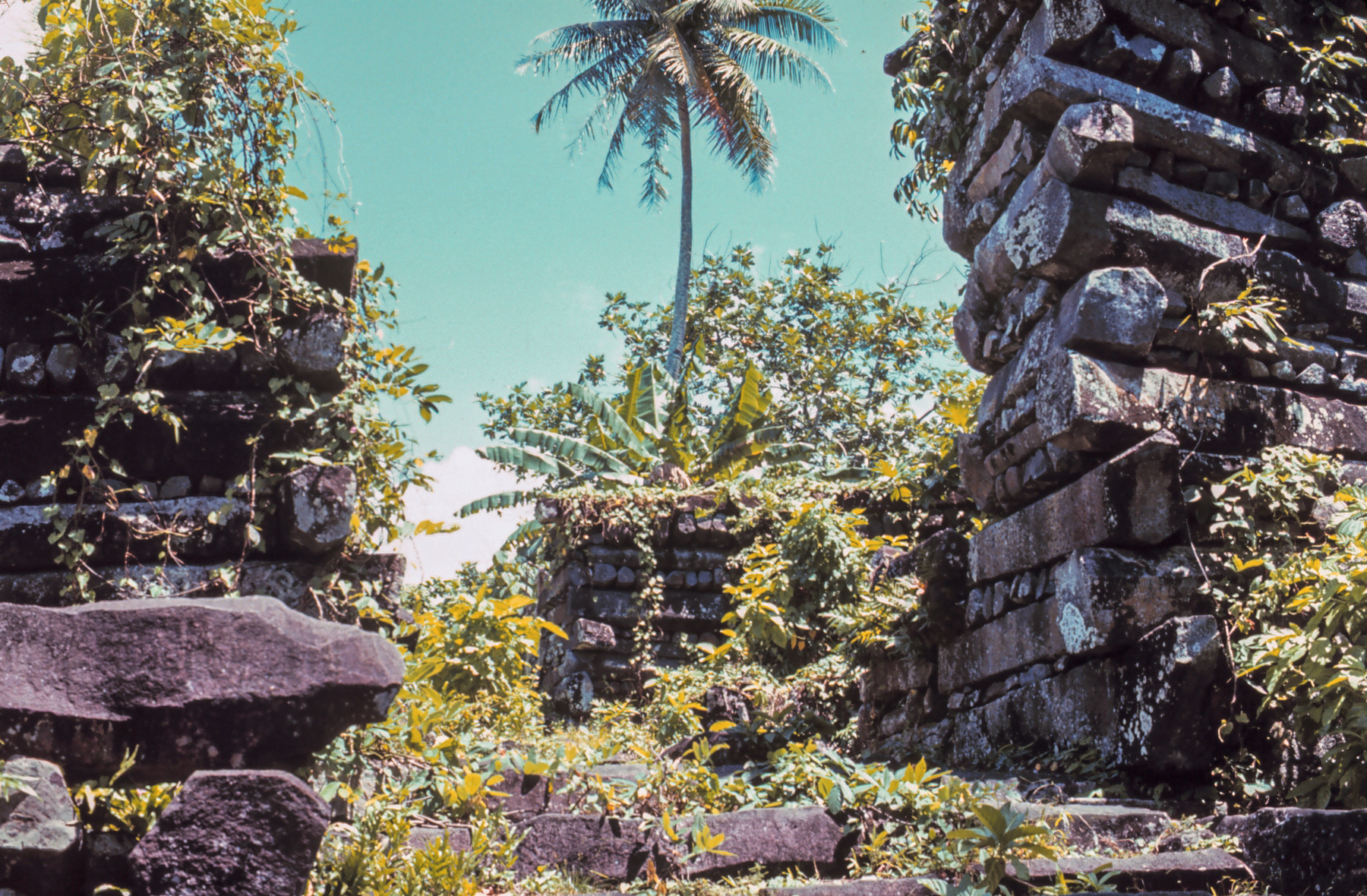
Picture a city with no streets. Not because the builders forgot them, but because they never needed them. To get from one part of town to another, you climbed into a canoe and paddled. The walls that hemmed you in on either side were not made of brick or timber but of colossal columns of black volcanic rock, some of them heavier than a car, stacked crosswise like the logs of a giant’s cabin. This is Nan Madol, sitting on a shallow reef off the eastern shore of Pohnpei in the western Pacific, and it is one of the strangest and most quietly staggering places human beings have ever built.
Most people have never heard of it. It doesn’t have the poster-fame of the pyramids or the tourist crush of Machu Picchu. And yet here is an entire ceremonial city, roughly a hundred artificial islands laced together by canals, raised by hand on a coral flat in the open ocean, using an estimated 750,000 tonnes of basalt. For a long time it was the seat of a dynasty that ruled the whole island. Then, at some point, everyone left, and the reef city was slowly swallowed by mangroves and tide. What remains is haunting in a way that’s hard to shake.
I want to walk you through it slowly, because the more you sit with Nan Madol the more astonishing it becomes. How do you even begin to build a city on water? Who were the people who pulled it off, and why did they choose the hardest possible place to do it? And what happened to make them abandon something that must have taken generations of backbreaking labour to raise?
- A city that shouldn’t exist
- Just how old is it?
- Stacking a mountain by hand
- The Venice comparison, and why it’s only half right
- Nandauwas: the tomb at the heart of it
- The dynasty that ran the reef
- The legend of the flying stones
- Why did everyone leave?
- Daily life on the islets
- Nan Madol’s Pacific cousins
- Lost continents and other tall tales
- Nan Madol today
A city that shouldn’t exist
Pohnpei is a lush, mountainous island in the Federated States of Micronesia, a green speck in a very large ocean. Nan Madol sits just off its southeastern coast, built onto and around the fringing reef near a smaller island called Temwen. That location alone should give you pause. The builders didn’t pick a nice dry hilltop with a commanding view. They went out onto a tidal reef, a place that floods and drains twice a day, and decided that this was where their capital would rise.
The name Nan Madol translates roughly as “the spaces between,” which is about as poetic and accurate a description as you could want. The whole place is defined by the water that runs between its islets. There are something like 92 to 100 of these artificial platforms, depending on how you count, spread across an area of maybe 75 hectares. Each one is a rectangular islet of piled stone and coral rubble, faced with those enormous basalt columns, and between them run channels that fill and empty with the tide.
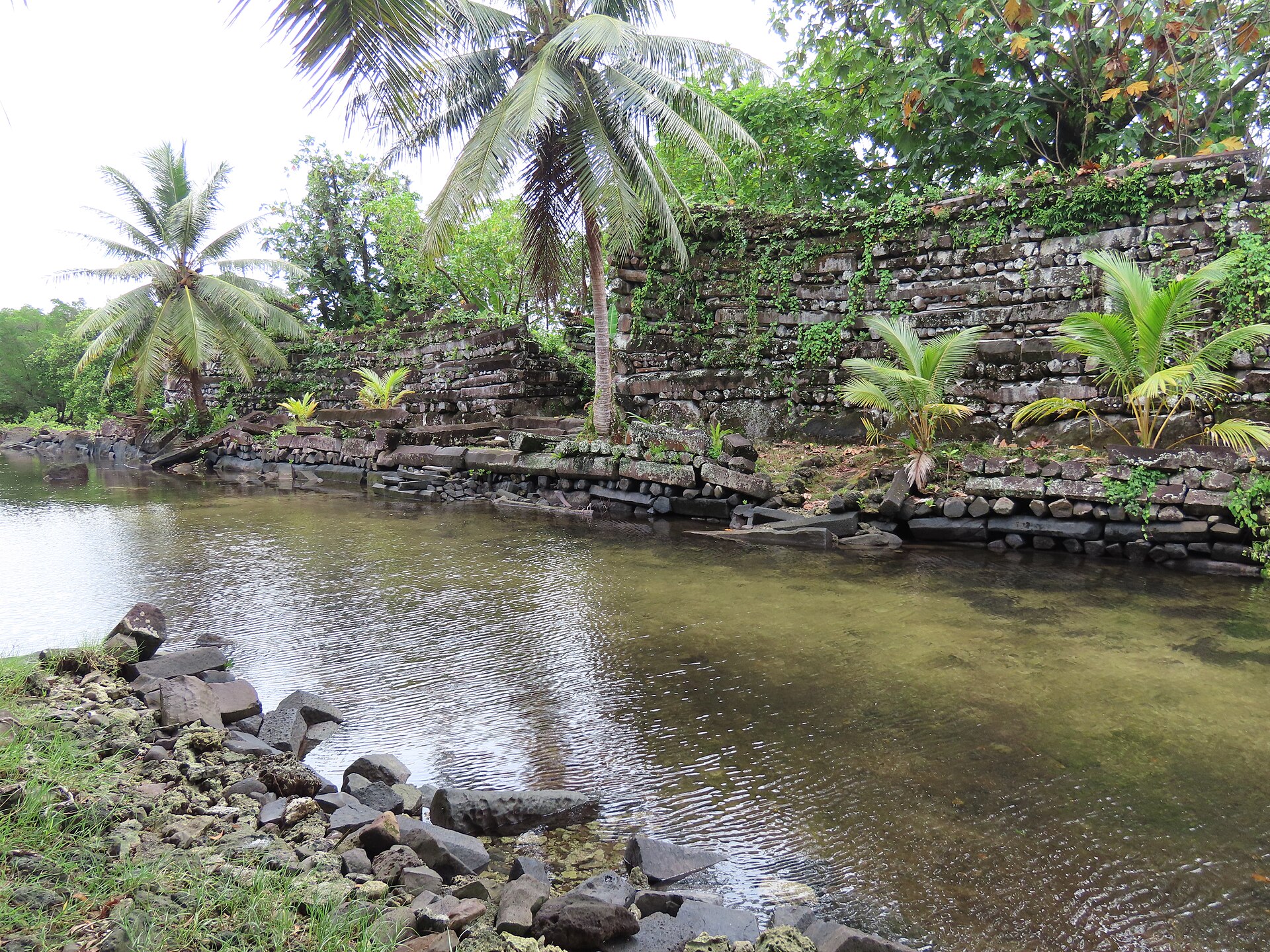
Stand at the edge of one islet and look across, and you get this uncanny sense of a planned settlement, a grid of blocks and waterways, except everything is made of black stone and half-drowned in jungle. There were islets set aside for specific purposes: places for the living elite, places for priests, a spot where canoes were built, a pool where sacred eels were said to be kept and fed. It was a working city, but one organised around ritual and rank as much as daily life. This wasn’t a fishing village that grew by accident. Somebody imagined the whole thing.
What makes it stranger still is the sheer isolation. Pohnpei is thousands of kilometres from any large landmass. The people who built Nan Madol were not part of some vast continental empire with endless manpower to draw on. They were islanders, working with the resources of one volcanic island and a lot of shared determination. And they built something that, tonnage for tonnage, rivals the great monuments of far larger and richer societies.
Just how old is it?
Dating Nan Madol has been a genuine puzzle, and the answer has kept shifting as archaeologists have dug deeper. People were living on this stretch of reef surprisingly early. Radiocarbon dates suggest human activity in the area going back to around the first or second century BCE, which is far older than most people expect. But there’s a difference between people living on the reef and people raising those monumental basalt walls.
The megalithic construction, the stacking of the great stone columns that we picture when we think of Nan Madol, seems to have really taken off much later, roughly between 1100 and 1200 CE, and continued for a couple of centuries after that. So the site has a long, layered history: an early phase of ordinary settlement, then a dramatic later phase when a powerful dynasty poured resources into turning the reef into a monumental capital. When you visit today, most of what towers over you belongs to that later burst of ambition.
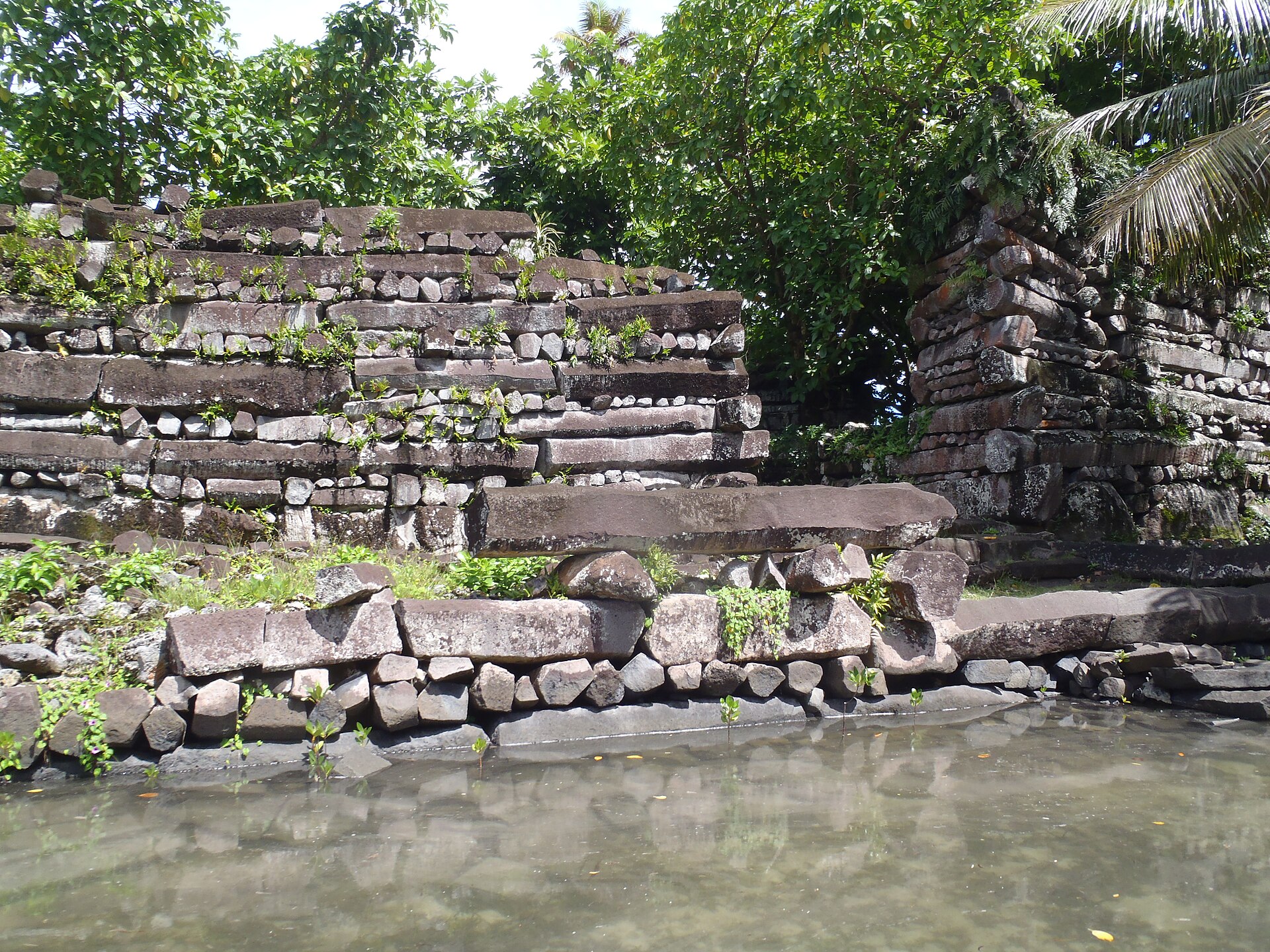
That timeline matters because it puts Nan Madol in surprising company. While the great cathedrals of medieval Europe were going up, and while the Khmer were building at Angkor, islanders in the middle of the Pacific were quarrying and hauling basalt to raise a stone city on a reef. It’s a useful reminder that monumental architecture is not the property of any one region or people. Give humans a strong enough reason and enough organisation, and they will move mountains, sometimes literally.
Stacking a mountain by hand
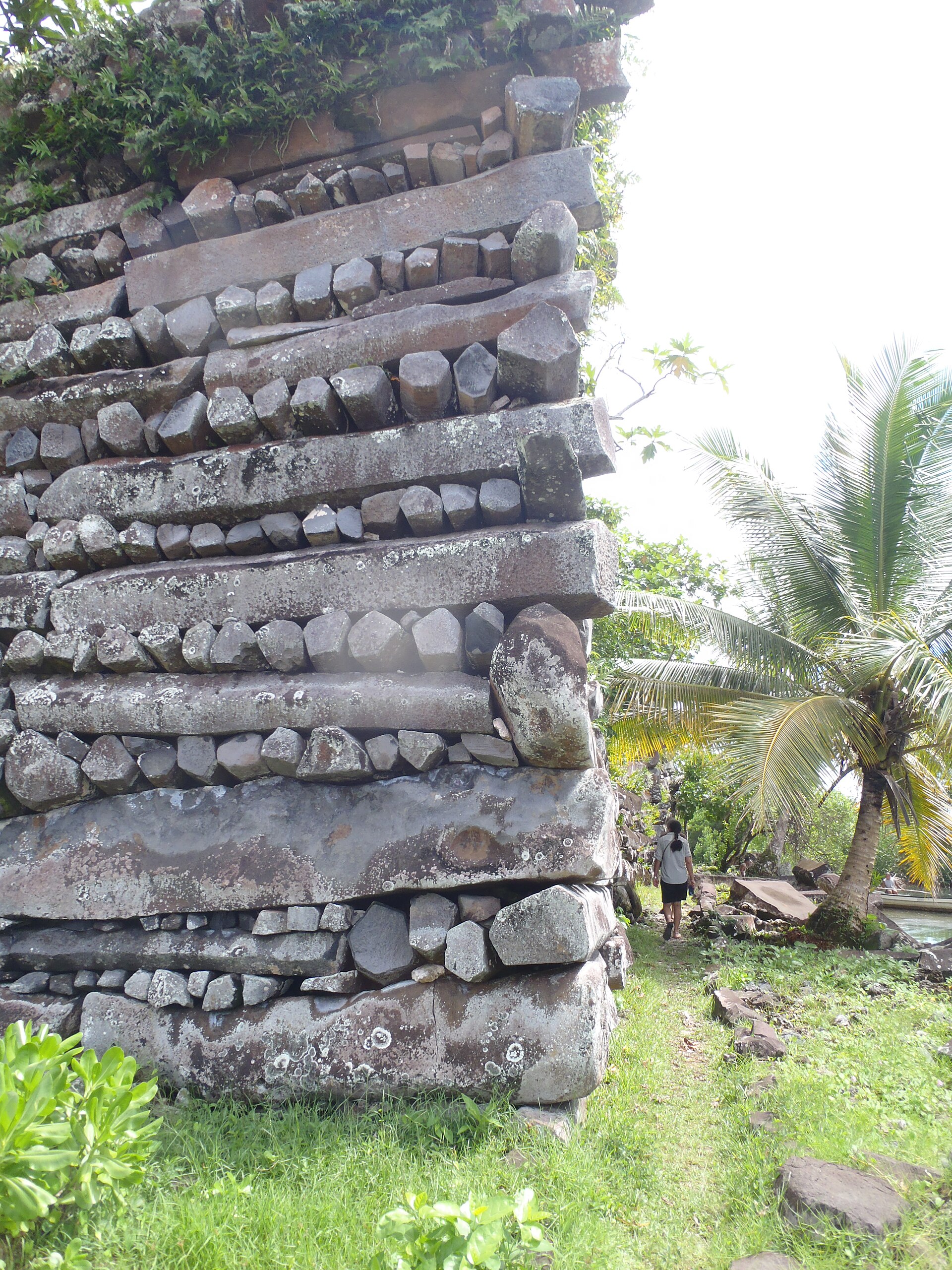
Here is the part that makes engineers go quiet. The walls of Nan Madol are built from columnar basalt, a rock that forms naturally into long, many-sided prisms when thick lava cools slowly. Pohnpei has outcrops of this stuff, and the builders used the columns almost like ready-made logs. They laid them in alternating layers, one course running lengthwise, the next running crosswise, in a header-and-stretcher pattern that locks the whole wall together and gives it real stability. It’s the same basic logic a bricklayer uses, scaled up to boulders.
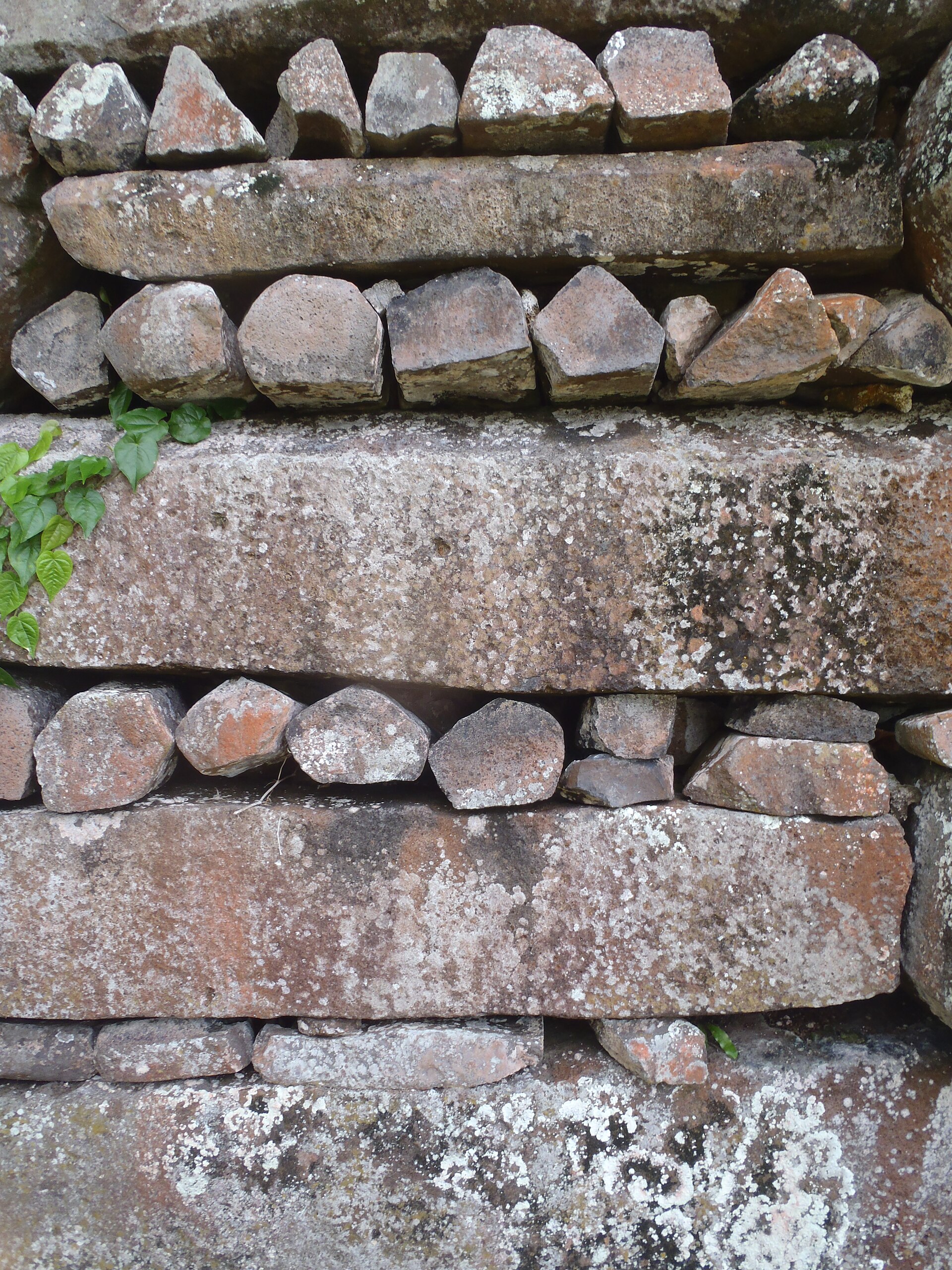
Some of these columns are five or six metres long. Individual stones have been estimated at up to five tonnes, and a few of the really big ones may weigh considerably more. The total mass of basalt at the site runs to somewhere around 750,000 tonnes, with the walls in places rising seven or eight metres and running for tens of metres. All of it was moved without draft animals, without the wheel, without iron tools, and without cranes. Just people, rope, rafts, leverage, and time.
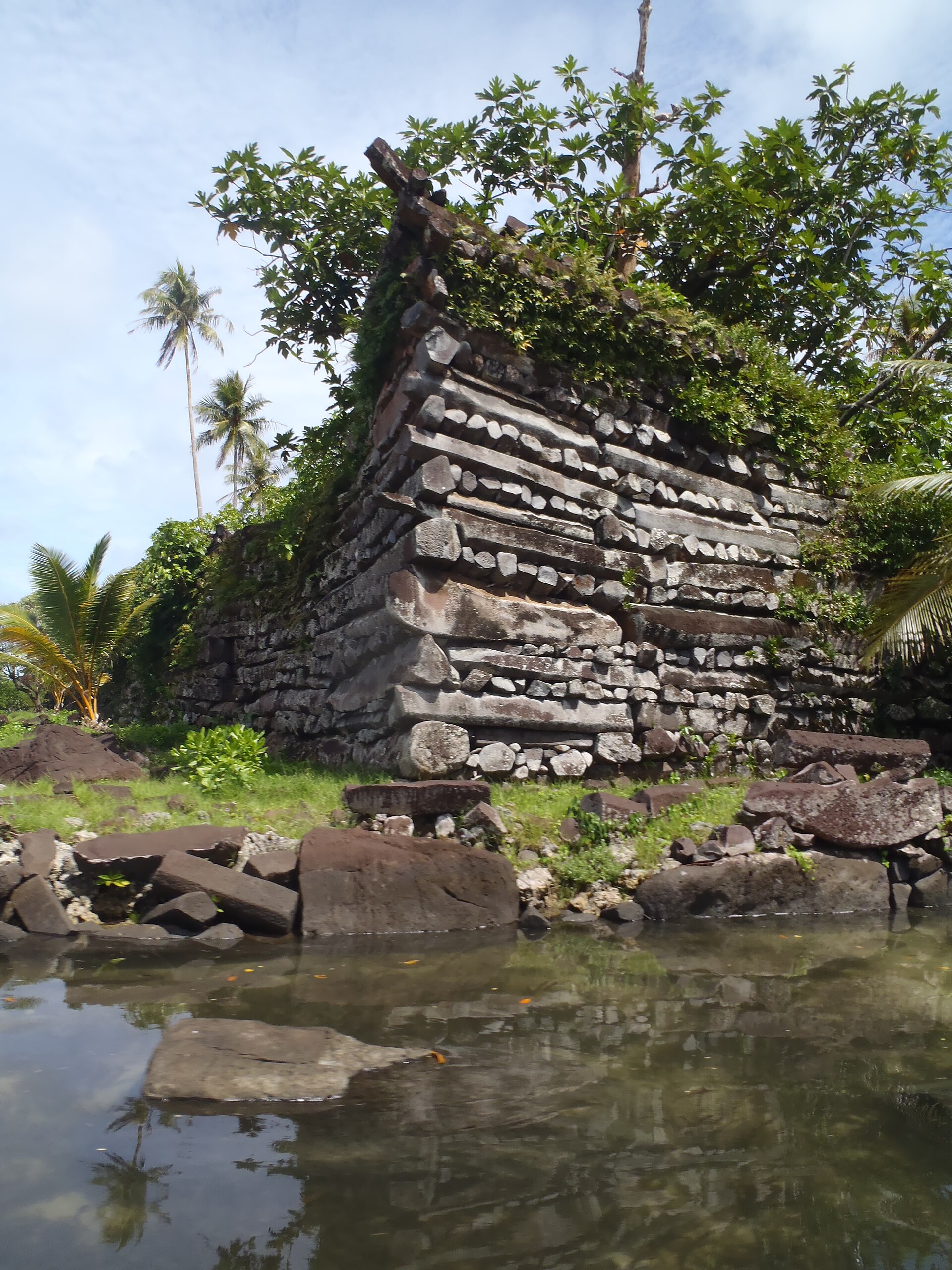
The leading theory is that the columns were quarried elsewhere on Pohnpei, floated to the site on rafts at high tide, and then levered into place. Floating heavy stone on bamboo or log rafts is plausible; a raft displaces its own weight in water, and the lagoon gave relatively sheltered conditions. Even so, the logistics are dizzying. You have to quarry the column, get it down to the shore, build a raft strong enough to carry it, wait for the right tide, guide it kilometres across open water, and then somehow lift a multi-tonne stone into position on a wall that’s already several metres high. Repeat that tens of thousands of times.
Experimental attempts to move these stones by modern volunteers have generally struggled, which has only deepened the mystery and, frankly, our respect. There was clearly a body of practical knowledge here, passed down and refined over generations, that we can only partly reconstruct. The people who built this weren’t working from a manual. They were working from experience, intuition, and an organisational structure capable of feeding and directing a large labour force for a very long time.
The Venice comparison, and why it’s only half right
Nan Madol gets called “the Venice of the Pacific,” and you can see why. A city of islets separated by waterways, navigated by boat, does invite the comparison. But the label sells the place short in an interesting way. Venice grew organically out of refugees settling on marshy lagoon islands and gradually building up. Nan Madol, by contrast, looks far more deliberate. The islets are largely artificial, raised on purpose out of coral and stone, and the layout reflects a designed hierarchy of sacred and administrative spaces.
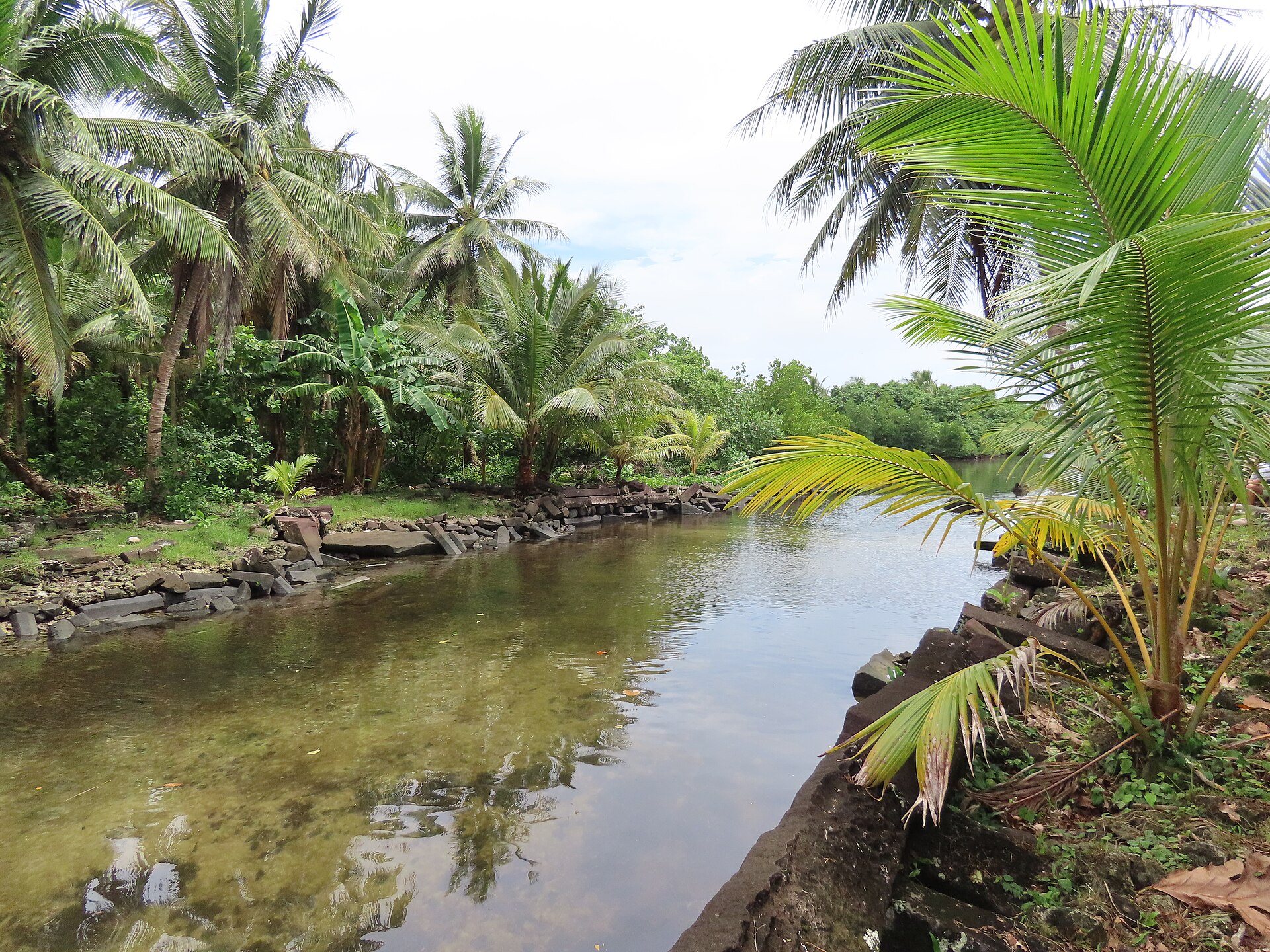
The canals weren’t just charming thoroughfares, either. They served drainage, they let canoes deliver goods and stone right up to each platform, and the tidal flow helped keep the place from becoming a stagnant swamp. There’s even a practical genius to building on the reef: the tide does some of your heavy lifting, floating materials in and flushing waste out. It was a hard place to build, but once built, the water worked for the city rather than against it. Calling it “Venice” captures the romance but misses the engineering intent underneath.
Nandauwas: the tomb at the heart of it
If Nan Madol has a single showstopper, it’s a walled enclosure called Nandauwas. This is the great mortuary complex, the place where the ruling elite were buried, and it is genuinely monumental. Its outer walls rise to somewhere between seven and eight metres, built from those interlocked basalt columns, enclosing courtyards and a central tomb. Standing inside it, with those black walls leaning over you and the mangroves pressing in, you feel the weight of everything that was invested here.
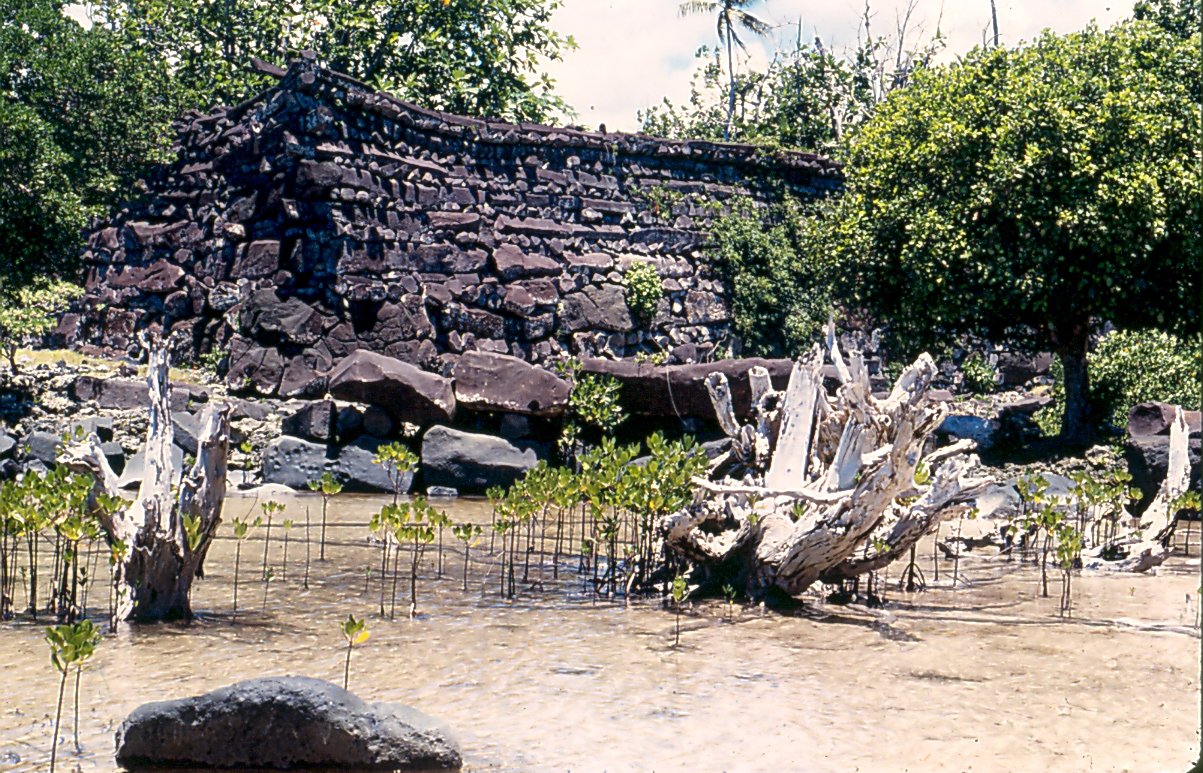
Nandauwas sat in the section of Nan Madol reserved for the sacred and the dead, distinct from the areas where the living conducted the business of governing. This separation of the city into zones, one for ritual and burial, another for administration and daily life, tells you a lot about the society that built it. This was a place with a clear sense of order, of what belonged where, and of who had the right to be in each space. It was, in short, a city organised around power and the memory of power.
The effort poured into Nandauwas also hints at the belief system behind the whole enterprise. You don’t build an eight-metre stone tomb on a reef for practical reasons. You do it because the dead matter, because rank must be visible even in death, and because the legitimacy of the living rulers was tied to their ancestors. Nan Madol was, among other things, a machine for making that legitimacy permanent in stone.
The dynasty that ran the reef
For much of its monumental life, Nan Madol was the seat of the Saudeleur dynasty, a line of rulers who, according to Pohnpeian oral tradition, unified the whole island under a single centralised authority. The Saudeleur period is remembered as a time of strong, and eventually harsh, central rule. The lords gathered the island’s chiefs close to the capital where they could keep an eye on them, extracted tribute, and demanded labour and offerings from across Pohnpei.
That centralised control is probably the key to how Nan Madol got built at all. Raising three-quarters of a million tonnes of basalt on a reef requires the ability to command labour on a massive scale, to feed that labour, and to keep the project going across generations. The Saudeleur had exactly that kind of authority. In a sense, the stones of Nan Madol are the physical shadow of their political power: the more absolute the rule, the taller the walls.
But tradition also remembers that this power curdled over time. The later Saudeleur lords are described as increasingly tyrannical, making ever greater demands on the people and even on the gods. That reputation for oppression sets up the story of how their rule ended, which brings us to one of the great narrative traditions of the Pacific.
The legend of the flying stones
Ask people on Pohnpei how Nan Madol was built, and you may hear a story that no engineer can match. According to tradition, the city was raised by two brothers, sorcerers named Olisihpa and Olosohpa, who came from somewhere across the sea searching for a place to build an altar so they could worship properly. After several attempts, they settled on the reef off Temwen, and there they built Nan Madol. And they moved the great stones, so the story goes, not with rafts and rope but by magic, causing the basalt columns to fly through the air into place.
It’s easy to smile at the idea of flying stones, but the legend is doing something meaningful. When a task looks impossible by ordinary means, human societies often reach for the supernatural to explain it, and that reach tells us how astonishing the achievement seemed even to the people close to it. The builders themselves may have marvelled at what they’d done. The magic in the story is, in a way, an honest measure of the difficulty.
Olosohpa, the surviving brother in most versions, is remembered as the first of the Saudeleur, founding the dynasty that would rule from the city he raised. So the legend and the political history are braided together: the sorcerer who built the reef city becomes the ancestor-king whose descendants govern from it. Later, another tradition tells of a culture hero named Isokelekel who arrived from the outside and overthrew the last, tyrannical Saudeleur, ushering in a new political order on the island. These stories aren’t just entertainment; they are how Pohnpeians have carried the deep history of this place across the centuries.
Why did everyone leave?
Here is the question that lingers. Nan Madol was clearly the beating heart of Pohnpei for centuries. Then, by roughly the seventeenth century, it was largely abandoned as a centre of power, and eventually left to the tide and the mangroves. Why walk away from something that took so much to build?
There’s no single tidy answer, but several threads probably wound together. The overthrow of the Saudeleur dynasty, remembered in the Isokelekel tradition, would have broken the centralised authority that kept the city functioning and fed. A ceremonial capital on a reef is expensive to maintain; it produces no crops of its own, and everything, food, water, materials, has to be brought in by canoe. Without a powerful, tribute-gathering central government, that arrangement becomes very hard to sustain.
Environmental pressures may have added to the strain. Some researchers have pointed to shifts in climate and freshwater availability, and to the sheer logistical burden of supporting a non-productive population on the reef. There’s also the simple fact that political systems change. When power moved elsewhere on the island, the reason for Nan Madol’s existence moved with it. The city didn’t fall in a single dramatic catastrophe so much as it lost its purpose, and once that happened, the ocean was always going to reclaim it.
What daily life might have looked like
It’s worth pausing to imagine the human texture of Nan Madol when it was alive, because the silent ruins can make it feel like it was always a place of stone and shadow. It wasn’t. At its height this was a busy, populated centre, home to priests, nobles, craftspeople, and the servants and labourers who kept everything running. Estimates of the resident population vary, but perhaps a thousand or more people lived on the islets at any given time, with many more passing through to deliver tribute, trade, or take part in ceremonies.
Because almost nothing edible grows on a reef, the whole place depended on a constant flow of supplies from the main island. Canoes would have arrived daily loaded with taro, yams, breadfruit, fish, and fresh water, gliding up the canals to unload at the platforms. That dependence made Nan Madol a kind of inverted city, one that consumed but did not produce, sustained entirely by the labour and loyalty of the wider island. It was a statement of power precisely because it was so impractical: only a ruler who could command an entire island’s surplus could keep such a place fed.
There were specialised islets for specific tasks, and the traditions remember them by name and function. One area was associated with the preparation of food and the brewing of sakau, the Pohnpeian pepper drink still central to social and ceremonial life today. Another was linked to canoe building, another to the keeping of sacred animals. The famous story of a giant eel kept in a pool and fed ritually offered turtle meat belongs to this world of sacred spaces and careful protocol. Life here ran to a rhythm of ceremony, rank, and obligation, all of it staged against those towering black walls.
Nan Madol’s Pacific cousins
Nan Madol can feel like a total one-off, and in its scale it nearly is. But it doesn’t stand entirely alone. Just to the west, on the island of Kosrae, lies a related site called Leluh, another stone-walled ceremonial and residential complex that shares clear architectural DNA with Nan Madol. The two are cousins in the broad tradition of Micronesian monumental building, and comparing them helps archaeologists understand how these societies expressed power through stone.
Across the wider Pacific, other peoples raised their own great monuments in their own idioms: the moai of Rapa Nui, the ceremonial platforms of Polynesia, the earthwork and stone structures scattered across many islands. What unites them is a pattern we see again and again in human history. As societies grow more hierarchical, as chiefs become kings, they tend to reach for permanent, visible, labour-hungry architecture to make their authority feel inevitable. A pyramid, a palace, a reef city of black basalt, these are all answers to the same basic impulse: to turn power into something you can see and touch and cannot easily ignore.
Seen in that light, Nan Madol stops being a bizarre anomaly and becomes something more interesting, a distinctly Pacific expression of a very human idea. The materials and the setting are unlike anything in Europe or the Americas, but the logic behind them is deeply familiar. People with power wanted to make it last, and they had the organisation to do it. That they chose to do it on a flooding reef, in the middle of the largest ocean on Earth, only makes their answer more remarkable than most.
Lost continents, and other tall tales
A place as strange as Nan Madol inevitably attracts wild theories, and it’s worth clearing a little of that fog. Because the site is so monumental and so unexpected, it has been swept up over the years into stories about lost continents, sunken civilisations, and mysterious outsiders who supposedly did what the locals “couldn’t.” You’ll find Nan Madol invoked alongside imaginary lands like Mu or Lemuria, or tied to notions that only visitors from elsewhere could have raised such walls.
These ideas deserve to be named for what they are, which is nonsense, and often nonsense with an ugly edge. The evidence is clear and consistent: Nan Madol was built by the ancestors of the Pohnpeian people, using local basalt from their own island, within a well-documented cultural and political tradition that oral history and archaeology both support. There is no sunken continent, no lost race, no need for outside help. To suggest otherwise is not only wrong but quietly insulting to the islanders whose forebears actually accomplished this.
The real story is far more satisfying than the fantasy anyway. A community of Pacific islanders, working with rope and rafts and generations of accumulated skill, organised themselves under a powerful dynasty and built one of the great stone cities of the pre-modern world on a coral reef. You don’t need aliens or Atlantis. You need people, purpose, and time, and Nan Madol had all three in abundance.
Nan Madol today
Today Nan Madol is a UNESCO World Heritage Site, recognised as a masterpiece of monumental architecture and one of the most important archaeological places in the Pacific. It was inscribed in 2016 and, at the same time, placed on the list of World Heritage in Danger, because the site faces real threats. Mangroves and other vegetation are prising the walls apart, silt is choking the canals, and the encroaching sea and tropical weather steadily wear at the stonework. A city built to defy the ocean is now slowly losing its long argument with it.
Visiting is not simple, and in a way that suits the place. Pohnpei is remote, the site is often muddy and tide-dependent, and parts of it are difficult to reach. There are also local customs and beliefs to respect; for many Pohnpeians, Nan Madol remains a sacred and sometimes uneasy place, tied to spirits and to the memory of the old rulers. That living connection is part of what makes it so different from a sanitised tourist ruin. It has never fully stopped meaning something.
What stays with me about Nan Madol is the mismatch between its obscurity and its scale. Here is a stone city as heavy as a small mountain range, raised by hand on a reef in the open Pacific by a society working without metal or the wheel, and most of the world has never heard its name. It scrambles the tidy stories we tell ourselves about who builds great things and where. The people of Pohnpei looked at a flooding reef and saw a capital. Then they went out and made it real, one impossible black column at a time.
Stand there at low tide, with the walls of Nandauwas above you and the water sliding out of the canals, and it’s hard not to feel that the old legend has a point. Whatever tools they truly used, the achievement really does border on the miraculous. Nan Madol doesn’t need flying stones to amaze you. The truth is astonishing enough.
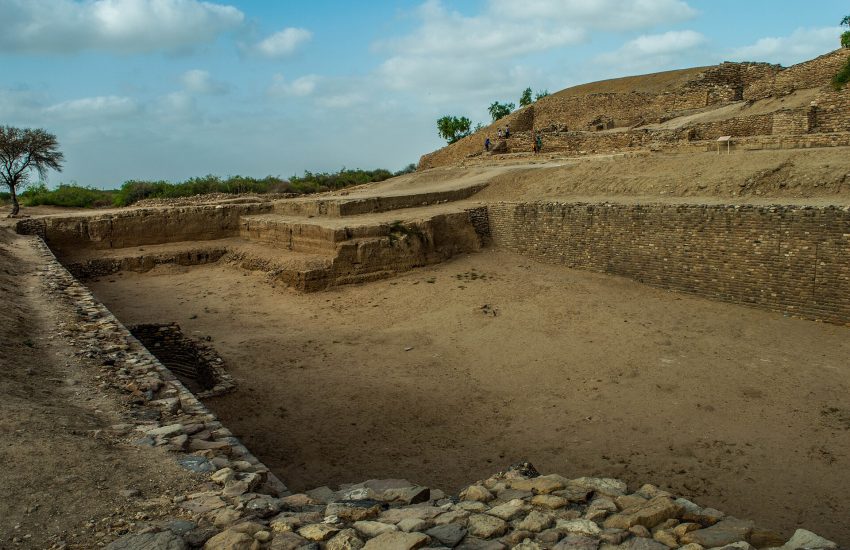
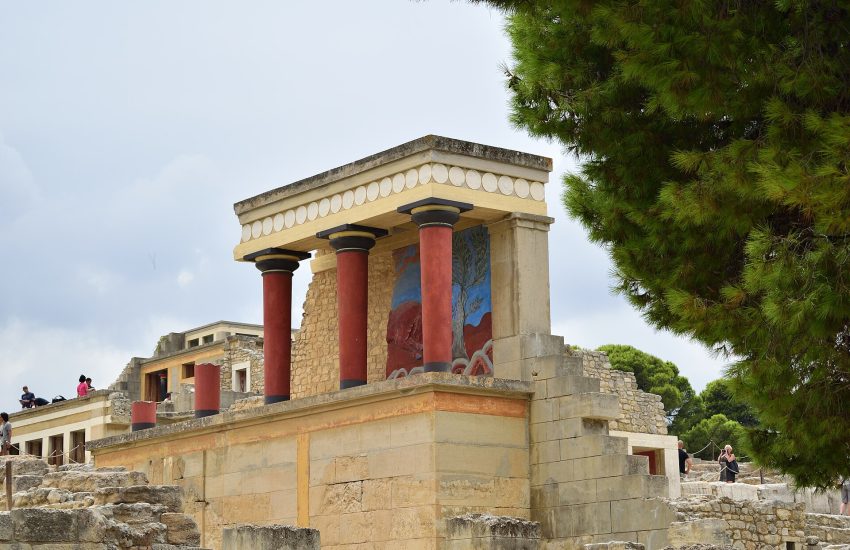
If Nan Madol has left you hungry for more places that make you rethink what early people were capable of, there’s a whole world of them. Some, like Uruk and Sumer in Mesopotamia and Jericho in the Jordan Valley, are where the very idea of the city was born. Others turned engineering into an art long before anyone expected it: the water-planned streets of Mohenjo-daro and Dholavira in the Indus Valley, the jade-loving world of Liangzhu in China, and the pyramid-builders of Caral in the Peruvian desert. If it’s sheer age and mystery you’re after, wander back to Göbekli Tepe and Karahan Tepe, the astonishing carved sanctuaries of southeastern Turkey that predate farming itself, or the painted caves that hold The World’s Oldest Art. And for monuments raised in stone by determined communities, there’s Stonehenge on Salisbury Plain, the tomb of Newgrange in Ireland, the The Megalithic Temples of Malta, the buried town of Çatalhöyük, the stone village of Skara Brae in Orkney, and the labyrinthine palace of Knossos on Crete. Each one, in its own way, is as improbable as a city built on a reef.