In the misty ridges of the southern Appalachian Mountains, and today across a wide swath of northeastern Oklahoma, the Cherokee stand as one of the largest and most historically significant indigenous nations in North America. With well over four hundred thousand enrolled citizens across three federally recognized tribes, the Cherokee combine an ancient Appalachian homeland with a modern history defined by extraordinary adaptation, a written language invented from scratch by one of their own citizens, and one of the most devastating forced removals ever carried out by the United States government.
Cherokee history stands out for the sheer speed and scope of nineteenth-century change, as a society that built towns, farms, a written constitution, a newspaper, and formal schools within a single generation was nonetheless forcibly removed from its ancestral homeland along the Trail of Tears in 1838, an act of betrayal against a nation that had done everything the United States government claimed to demand of indigenous peoples seeking to coexist with it. That the Cherokee Nation not only survived this but rebuilt itself into one of the most prosperous and politically effective indigenous governments in the country speaks to a resilience central to Cherokee identity.
This article moves through Cherokee origins, the meaning of the name, the language and Sequoyah’s remarkable syllabary, the Appalachian homeland, the old town-based way of life, the structure of Cherokee society, spiritual belief, social traditions, craftsmanship, food, festivals and ceremony, the wrenching history of removal, and the Cherokee nation as it exists today.
What This Article Covers
- Origins: An Ancient People of the Southern Appalachians
- Name: Cherokee and the Real Name, Tsalagi
- Language: Tsalagi and Sequoyah’s Remarkable Syllabary
- Homeland: The Mountains That Shaped a Nation
- Old Way of Life: Towns, Farms, and the Three Sisters
- Society: Clans, Towns, and a Changing Government
- Religion: The Sacred Fire and the Upper World
- Traditions: Stickball, Stomp Dance, and Clan Law
- Crafts: Basketry, Pottery, and Beadwork
- Food: Corn, Beans, and the Three Sisters Table
- Festivals: The Green Corn Ceremony and Modern Gatherings
- History: Removal Along the Trail of Tears
- Today: A Nation Rebuilt in Oklahoma and Beyond
An Ancient People of the Southern Appalachians

Cherokee ancestors have occupied the southern Appalachian region for well over a thousand years, part of a broader Iroquoian-speaking population whose linguistic relatives lived far to the north around the Great Lakes and eastern Canada, a geographic separation that has long puzzled linguists and archaeologists studying how an Iroquoian-speaking people came to settle so far south of their linguistic relatives.
Archaeological evidence connects Cherokee ancestors to the broader Mississippian cultural tradition that flourished across the southeastern United States from roughly 800 to 1600 CE, a period marked by substantial agricultural towns, earthen platform mounds used for ceremonial and political purposes, and complex chiefdoms engaged in extensive regional trade, a tradition Cherokee towns carried forward in modified form into the historic period documented by European visitors.
By the time sustained European contact began in the sixteenth and seventeenth centuries, Cherokee territory spanned a substantial portion of the southern Appalachians across what is now western North Carolina, eastern Tennessee, northern Georgia, and parts of South Carolina, Alabama, and Kentucky, organized into dozens of autonomous towns rather than a single centralized nation, a political structure that would gradually consolidate over the following two centuries under mounting external pressure.
Devastating epidemics introduced through European contact, combined with warfare against colonial forces and rival indigenous nations during the eighteenth century, reduced Cherokee population significantly even before the more famous removal crisis of the 1830s, a pattern of loss and adaptation common to many indigenous nations profiled throughout this exploration of the peoples of the Americas.
Cherokee and the Real Name, Tsalagi
The name Cherokee likely derives from a Muskogean or Choctaw word describing people of a different speech or possibly cave dwellers, adopted by European traders and colonial officials as the standard English name despite having no clear origin within the Cherokee language itself, a naming pattern in which an outside label became the standard historical and even modern legal name for the nation.
Cherokee people traditionally refer to themselves as Tsalagi or, in a fuller traditional form, Aniyvwiya, meaning the real people or the principal people, a name expressing the same confident self-identification found among many indigenous nations discussed throughout this series, distinguishing the Cherokee from other peoples in a manner reflecting pride rather than hostility toward outsiders.
Three federally recognized Cherokee tribes exist today in the United States, the Cherokee Nation and the United Keetoowah Band, both headquartered in Oklahoma following nineteenth-century removal, and the Eastern Band of Cherokee Indians, descended from Cherokee people who avoided removal and remained in the mountains of North Carolina, each maintaining its own government, enrollment, and, to varying degrees, distinct dialect and cultural emphasis.
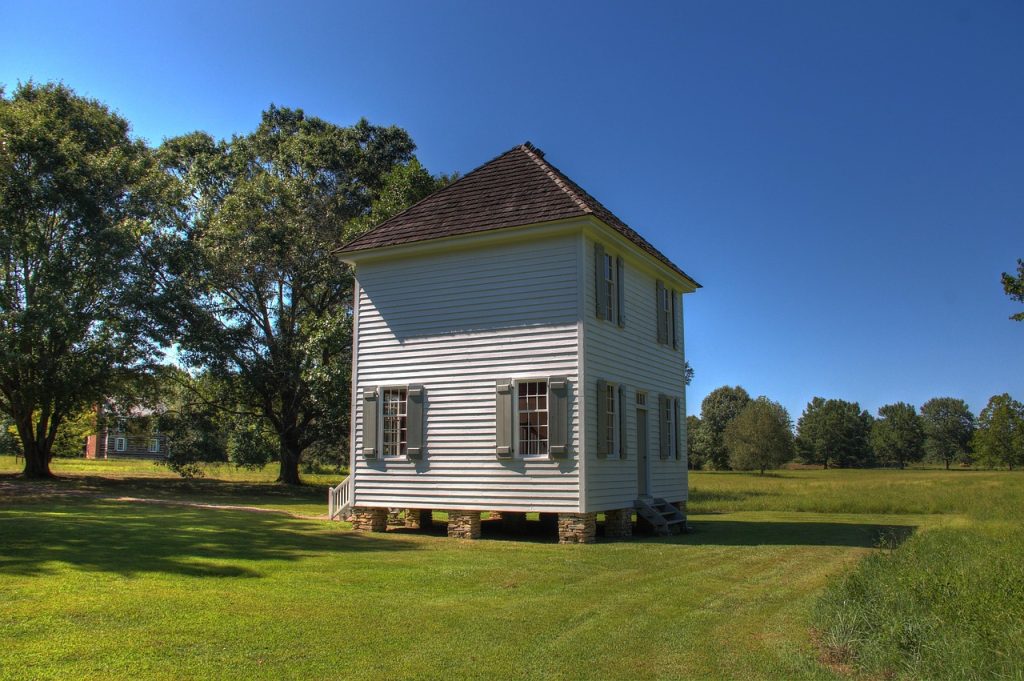
New Echota, established in the 1820s in present-day Georgia as the constitutional capital of the Cherokee Nation, symbolized a deliberate and remarkably rapid Cherokee political transformation, adopting a written constitution modeled partly on the United States government, a printed newspaper, and formal national institutions, an assertion of sovereign nationhood that ultimately did nothing to prevent the removal crisis discussed later in this article.
Tsalagi and Sequoyah’s Remarkable Syllabary
Cherokee, or Tsalagi, belongs to the Iroquoian language family, a notable linguistic outlier positioned far south of its closest relatives such as Mohawk and Seneca, spoken with some dialect variation between the Eastern Band in North Carolina and Cherokee Nation and United Keetoowah Band communities in Oklahoma, reflecting the geographic separation caused by nineteenth-century removal.
Sequoyah, a Cherokee silversmith with no formal education in any written language, achieved one of the most remarkable individual intellectual accomplishments in world linguistic history when he single-handedly developed a complete syllabary for the Cherokee language between 1809 and 1821, a system of eighty-five characters, each representing a spoken syllable, that could be learned and used for genuine literacy within weeks by anyone who already spoke the language.
Cherokee literacy spread with extraordinary speed following the syllabary’s adoption by the Cherokee National Council in 1825, reportedly producing near-universal literacy among Cherokee speakers within a few years, a rate that outpaced literacy among the surrounding white American population at the time, and enabling the Cherokee Phoenix, first published in 1828, to become the first newspaper published by any indigenous nation in the United States, printed in both Cherokee and English.
Cherokee language use declined significantly over the twentieth century due to boarding school policy and broader assimilation pressure, prompting the Cherokee Nation to declare a state of linguistic emergency in 2019 and commit substantial resources to immersion schools, a language apprenticeship program pairing young learners directly with fluent elders, and digital tools, an urgent effort reflecting concern that fluent first-language speakers now number only in the low thousands and skew heavily toward older generations.
The Mountains That Shaped a Nation

Traditional Cherokee homeland centered on the rugged terrain of the southern Appalachian Mountains, including the Great Smoky Mountains along the present North Carolina and Tennessee border, a landscape of steep forested ridges, fast-flowing rivers, and fertile valley bottomlands that supported both hunting and, increasingly over time, substantial agricultural settlement in permanent riverside towns.
Cherokee towns traditionally clustered into several regional divisions recognized by early European traders, including the Lower, Middle, Valley, and Overhill towns, each occupying a somewhat distinct portion of Cherokee territory across present-day South Carolina, North Carolina, and Tennessee, with some dialect and cultural variation existing between these regional groupings even before the more dramatic later division caused by removal.
The Trail of Tears, discussed in full in the history section below, permanently altered Cherokee geography, forcibly relocating the great majority of the nation from this Appalachian homeland to Indian Territory in present-day Oklahoma during the 1830s, while a smaller number of Cherokee people successfully avoided removal and remained in the mountains of North Carolina, eventually forming the modern Eastern Band of Cherokee Indians on the Qualla Boundary near the Great Smoky Mountains.
Today, Cherokee Nation and United Keetoowah Band territory covers a substantial portion of northeastern Oklahoma, a very different landscape of rolling prairie and woodland from the mountainous ancestral homeland, while the Eastern Band’s Qualla Boundary preserves a direct, unbroken Cherokee presence in the original Appalachian homeland that never fully ended despite the scale of nineteenth-century removal.
Towns, Farms, and the Three Sisters
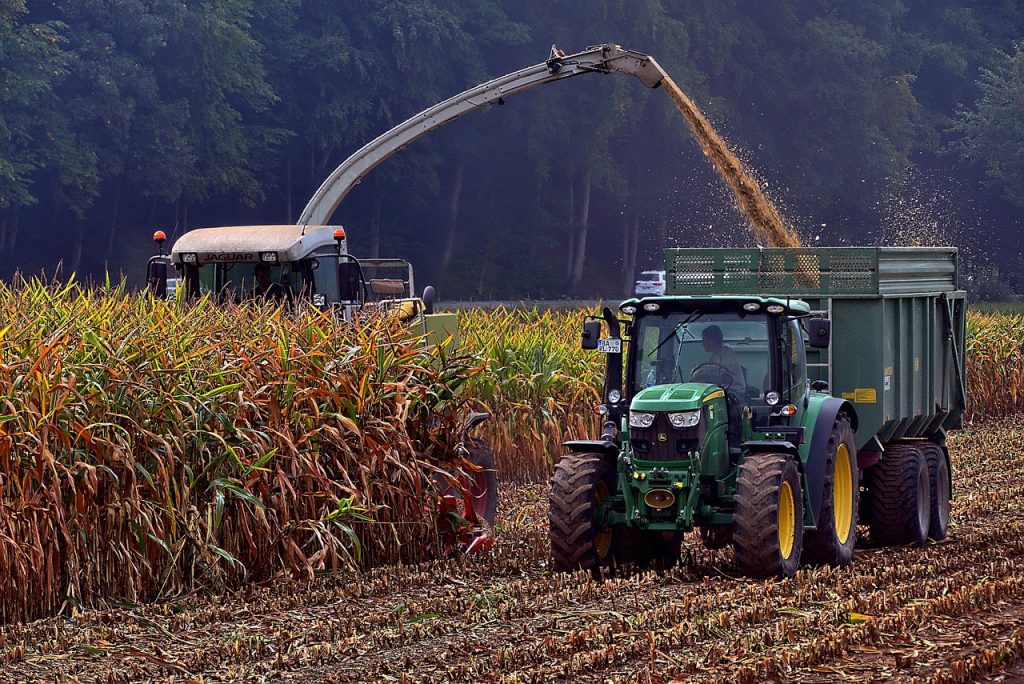
Traditional Cherokee subsistence combined substantial farming with hunting and gathering, growing corn, beans, and squash together in a companion planting method commonly called the Three Sisters, supplemented by hunting deer, elk, and small game, gathering wild plants, nuts, and berries, and fishing in the region’s abundant rivers and streams, a mixed economy that supported permanent, substantial towns rather than a purely nomadic lifestyle.
Cherokee towns traditionally centered on a council house, often built atop an earthen mound inherited from the earlier Mississippian building tradition, used for community meetings, ceremonies, and the maintenance of the sacred fire discussed further in the religion section, surrounded by individual family homes and the agricultural fields that supported the town’s population.
Contact with European traders and settlers from the seventeenth century onward introduced new crops, livestock, and technologies that Cherokee communities adopted selectively and often skillfully, including cattle raising, European-style farming implements, and eventually log cabin construction, a pattern of practical adaptation that would accelerate dramatically during the so-called civilization period of the late eighteenth and early nineteenth centuries.
This civilization period, actively encouraged by United States government policy aiming to assimilate the Cherokee into a European-style agricultural and political model, saw wealthier Cherokee families adopt plantation-style agriculture, including in some cases the ownership of enslaved African Americans, a genuinely uncomfortable historical fact that complicates any simple narrative of Cherokee history and reflects the complex, sometimes troubling ways indigenous nations navigated pressure to assimilate into a slaveholding American society.
Clans, Towns, and a Changing Government
Traditional Cherokee society organized around seven matrilineal clans, membership determined through one’s mother rather than father, that structured marriage, since individuals were required to marry outside their own clan, along with social identity, mutual obligation, and traditional justice, since clan members bore responsibility for avenging wrongs committed against their relatives under a customary law system that predated any written Cherokee legal code.
Each Cherokee town traditionally operated with considerable political autonomy, governed through a council of respected leaders that generally distinguished between a peace chief, responsible for civil and ceremonial matters, and a war chief, whose authority took precedence specifically during military conflict, a dual leadership structure that allowed Cherokee towns to shift flexibly between peacetime and wartime governance as circumstances required.
The early nineteenth century brought rapid formal political centralization, as Cherokee leaders adopted a written constitution in 1827 modeled partly on the United States Constitution, established a national capital at New Echota, and created a formal legislature and court system, a deliberate strategy intended to demonstrate Cherokee sovereignty and civilizational parity to American observers, a strategy that ultimately failed to prevent the removal crisis that followed within just over a decade.
Contemporary Cherokee governance continues to operate through elected principal chiefs and tribal councils across the three federally recognized Cherokee tribes, exercising substantial self-governing authority over health, education, and economic development within their respective jurisdictions, a modern continuation of the same assertion of sovereign self-governance that Cherokee leaders pursued at New Echota nearly two centuries ago.
The Sacred Fire and the Upper World
Traditional Cherokee cosmology describes a layered universe consisting of this world, an upper world of order, purity, and permanence, and a lower world of chaos and change, with human life understood as existing in a delicate balance between these two opposing forces, a worldview reflected in numerous traditional stories and ceremonial practices aimed at maintaining harmony and proper balance.
The sacred fire, maintained continuously in the town council house and understood as a direct link to the sun and to spiritual power, held central religious significance in traditional Cherokee town life, tended carefully by designated keepers and ceremonially renewed each year during the Green Corn Ceremony discussed further in the festivals section, a practice of ritual fire renewal found in modified form among several other southeastern indigenous nations.
Animals feature prominently in traditional Cherokee story and belief, including the deer, considered a being of considerable spiritual power and treated with ritual respect by hunters, and numerous animal characters in traditional stories that explain natural phenomena and convey moral lessons, a storytelling tradition broadly similar in social function, though distinct in specific content, to trickster and animal story traditions found among other indigenous nations discussed throughout this series.
Christian missionary activity achieved substantial conversion among Cherokee communities beginning in the early nineteenth century, a process that in some respects paralleled the broader civilization period discussed earlier, and today most Cherokee people identify with Christian denominations, often incorporating Cherokee language into hymns and worship, while traditional stomp dance religious practice, discussed in the traditions section, continues as an actively maintained parallel spiritual tradition for a meaningful portion of the Cherokee population.
Stickball, Stomp Dance, and Clan Law

Stickball, a demanding and often physically rough team sport played with a small ball and two handheld sticks, traditionally served purposes well beyond athletic competition, used to settle disputes between towns or clans, sometimes literally called in Cherokee the little brother of war for its role as a lower-stakes substitute for armed conflict between communities.
The stomp dance, a nighttime ceremonial dance performed around the sacred fire involving call-and-response singing and rhythmic shell-shaker instruments worn by women dancers, remains an actively practiced religious tradition among a portion of the Cherokee population today, maintained through specific ceremonial grounds and associated with the ceremonial cycle discussed further in the festivals section below.
The Cherokee rose, a white flower that grows wild across much of the southeastern United States and into Oklahoma, is remembered in popular tradition as having sprung up along the route of the Trail of Tears, its white petals representing the tears of mothers who lost children during the forced removal and its golden center representing the gold that first drew American settlers to seek Cherokee land, a powerful piece of cultural memory whether or not the specific botanical claim is literally accurate.
Respect for clan obligation, hospitality toward guests, and careful attention to proper behavior at ceremonial grounds remain widely observed values among Cherokee people who maintain active connection to traditional ceremonial life, alongside a broader cultural emphasis, shared with many other Cherokee people regardless of religious practice, on humor, storytelling, and strong extended family bonds as central to Cherokee identity.
Basketry, Pottery, and Beadwork

River cane basketry stands among the most technically demanding and highly regarded traditional Cherokee crafts, woven from strips of river cane, a native bamboo-like plant, sometimes dyed with natural pigments derived from bloodroot, walnut, and other plants to produce intricate double-woven patterns that require considerable skill and can take master weavers many hours or even days to complete for a single piece.
Pottery making, using coiled construction methods and local clay, represents another long-standing Cherokee craft tradition, producing both utilitarian vessels and decorative pieces stamped with distinctive traditional patterns, a craft that nearly disappeared during the difficult decades following removal but has been actively revived by skilled potters working to document and teach traditional techniques to new generations.
Beadwork, developed extensively after glass beads became available through European trade, produces clothing, jewelry, and ceremonial regalia using both loom and applique techniques, often incorporating floral and geometric patterns that reflect both older Cherokee design traditions and stylistic exchange with neighboring southeastern nations over centuries of contact and trade.
Contemporary Cherokee artists work across these traditional media as well as painting, sculpture, and other contemporary formats, with several Cherokee artists achieving significant national recognition, and cultural institutions operated by the Cherokee Nation and Eastern Band actively support craft education, ensuring these skills continue to be taught to younger generations rather than surviving only as museum pieces.
Corn, Beans, and the Three Sisters Table

Corn held both nutritional and profound spiritual significance in traditional Cherokee life, prepared in numerous forms including cornbread, hominy made by treating dried corn kernels with wood ash lye in a process similar to Mesoamerican nixtamalization, and a traditional dumpling-like dish still commonly prepared at community and family gatherings today, connecting contemporary Cherokee meals directly to agricultural practices many centuries old.
Beans and squash, grown alongside corn as the other two of the Three Sisters, rounded out a nutritionally complementary agricultural foundation, supplemented by wild game, particularly deer, along with fish, wild greens, nuts, and berries gathered seasonally from the surrounding Appalachian forest, a diet reflecting the same mixed farming and foraging economy common among many southeastern indigenous nations.
Bean bread, a traditional dish combining cornmeal and beans, and various forms of hominy remain actively prepared in Cherokee households and served at community gatherings today, representing a direct culinary continuity with pre-removal foodways despite the dramatic geographic relocation most Cherokee people experienced in the nineteenth century.
Contemporary Cherokee Nation food sovereignty initiatives have worked to preserve heirloom Cherokee corn and bean varieties, some maintained continuously by dedicated families since before removal, alongside broader community garden and traditional foods education programs aimed at reconnecting younger Cherokee citizens with agricultural knowledge that colonial disruption and removal badly damaged but did not entirely erase.
The Green Corn Ceremony and Modern Gatherings

The Green Corn Ceremony, held in late summer when the corn crop ripened, stood as the most significant traditional Cherokee religious festival, marking a renewal of the sacred fire, forgiveness of past offenses, and a general spiritual and social reset for the community, a ceremony with broad parallels among other southeastern indigenous nations who shared related agricultural and ceremonial calendars.
Stomp dances, discussed earlier as an ongoing religious tradition, continue to be held at specific ceremonial grounds maintained by Cherokee communities, particularly within Cherokee Nation and United Keetoowah Band territory in Oklahoma, drawing participants for all-night ceremonies that combine religious observance, social gathering, and the maintenance of a living connection to pre-removal ceremonial practice.
The Cherokee National Holiday, held over Labor Day weekend each year in Tahlequah, Oklahoma, the capital of the Cherokee Nation, brings together tens of thousands of Cherokee citizens and visitors for a celebration including a state of the nation address, cultural demonstrations, a powwow, and a gathering of the tribal council, functioning as both civic and cultural celebration of Cherokee nationhood.
The Eastern Band of Cherokee Indians in North Carolina hosts its own significant cultural events, including an outdoor historical drama performed seasonally near the Qualla Boundary that dramatizes Cherokee history for visitors, alongside stickball games, craft demonstrations, and other cultural programming that serves both cultural preservation and the substantial tourism economy that has developed around the Eastern Band’s mountain homeland.
Removal Along the Trail of Tears
Pressure on Cherokee land intensified steadily through the early nineteenth century, driven by American settler demand for territory and dramatically accelerated by the discovery of gold on Cherokee land in Georgia in 1828, prompting the state of Georgia to pass laws attempting to extend its jurisdiction over Cherokee territory and strip Cherokee people of legal rights, actions the Cherokee Nation challenged directly in the United States Supreme Court.
The Cherokee Nation won a significant legal victory in Worcester v. Georgia in 1832, when the Supreme Court ruled that Georgia had no authority over Cherokee territory, a ruling that President Andrew Jackson, a longtime advocate of Indian removal, refused to enforce, reportedly commenting that Chief Justice John Marshall could enforce his own ruling, leaving the Cherokee Nation legally vindicated but practically unprotected against continued pressure.
A small, unauthorized faction of Cherokee leaders signed the Treaty of New Echota in 1835, ceding all Cherokee territory in the southeast in exchange for land in Indian Territory, despite lacking authority from the elected Cherokee government or the support of the vast majority of Cherokee citizens, a fraudulent agreement the United States government nonetheless used as legal justification for removal.
Beginning in 1838, United States soldiers forcibly rounded up Cherokee families and marched them roughly one thousand miles to Indian Territory in present-day Oklahoma during winter conditions, a journey remembered as the Trail of Tears during which an estimated four thousand or more Cherokee people, out of a nation of around sixteen thousand, died from disease, exposure, and exhaustion, a catastrophe inflicted on a nation that had done everything the United States government claimed to demand of indigenous peoples seeking peaceful coexistence.
A Nation Rebuilt in Oklahoma and Beyond
Well over four hundred thousand people are enrolled across the three federally recognized Cherokee tribes today, making the Cherokee Nation alone the largest tribal nation in the United States by enrollment, with substantial populations living within tribal jurisdiction in Oklahoma and North Carolina as well as in cities across the country, reflecting the broader pattern of indigenous population growth and urbanization seen throughout this series.
The Cherokee Nation has built one of the most substantial tribal governments and economies in the United States, operating extensive health, housing, and education programs alongside a diversified business portfolio, while the Eastern Band of Cherokee Indians has developed significant economic enterprises on the Qualla Boundary in North Carolina, together demonstrating a level of institutional and economic capacity that stands in remarkable contrast to the devastation of the removal era less than two centuries earlier.
Language revitalization remains an urgent, well-funded priority following the 2019 emergency declaration, alongside continued efforts to document and teach traditional crafts, ceremonial practice, and history to younger generations, part of a broader Cherokee cultural resurgence that draws on the same institutional sophistication that produced the syllabary, the constitution, and the newspaper nearly two centuries ago.
Cherokee political and legal advocacy continues on issues ranging from tribal sovereignty and jurisdiction to the treaty-guaranteed right to a delegate in the United States House of Representatives, a provision from an 1835 treaty that the Cherokee Nation has formally pressed Congress to honor in recent years, one more chapter in a long Cherokee tradition of using formal legal and political channels to assert nationhood, a persistence shared by indigenous nations across the hemisphere, including a high-altitude Andean people whose own history of conquest and endurance stretches back long before any European ever set foot in the Americas, the Aymara of Bolivia and Peru.
Other Nations Explored in This Look at Indigenous America
The Cherokee join a wider look at indigenous peoples of the Americas covered so far, each still a living presence today:
- The People Who Emerged Into This World, the Story of the Navajo
- The People Who Never Left the Mountains, the Story of the Quechua
- The People Who Never Vanished, the Story of the Maya
- The People of the Seven Council Fires, the Story of the Lakota
- The People of the Land Who Were Never Conquered, the Story of the Mapuche
- The People of Ice and Sea, the Story of the Inuit
- The Islands of the People, the Story of the Haida
- The Four Directions People, the Story of the Cree




3 thoughts on “The Principal People, the Story of the Cherokee”