High in the eastern Andes, where the mountains drop into Amazon cloud forest, a ridge above the Utcubamba valley is ringed by stone walls that in places rise higher than a six-story building. This is Kuelap, built not by the Inca but by an earlier people the Inca themselves struggled to conquer.
Locals and early Spanish chroniclers called them the Chachapoya, a name later Europeanized into something like ‘Warriors of the Clouds,’ a fitting label for a civilization that built its most impressive city at an elevation where clouds regularly drift below the walls rather than above them.
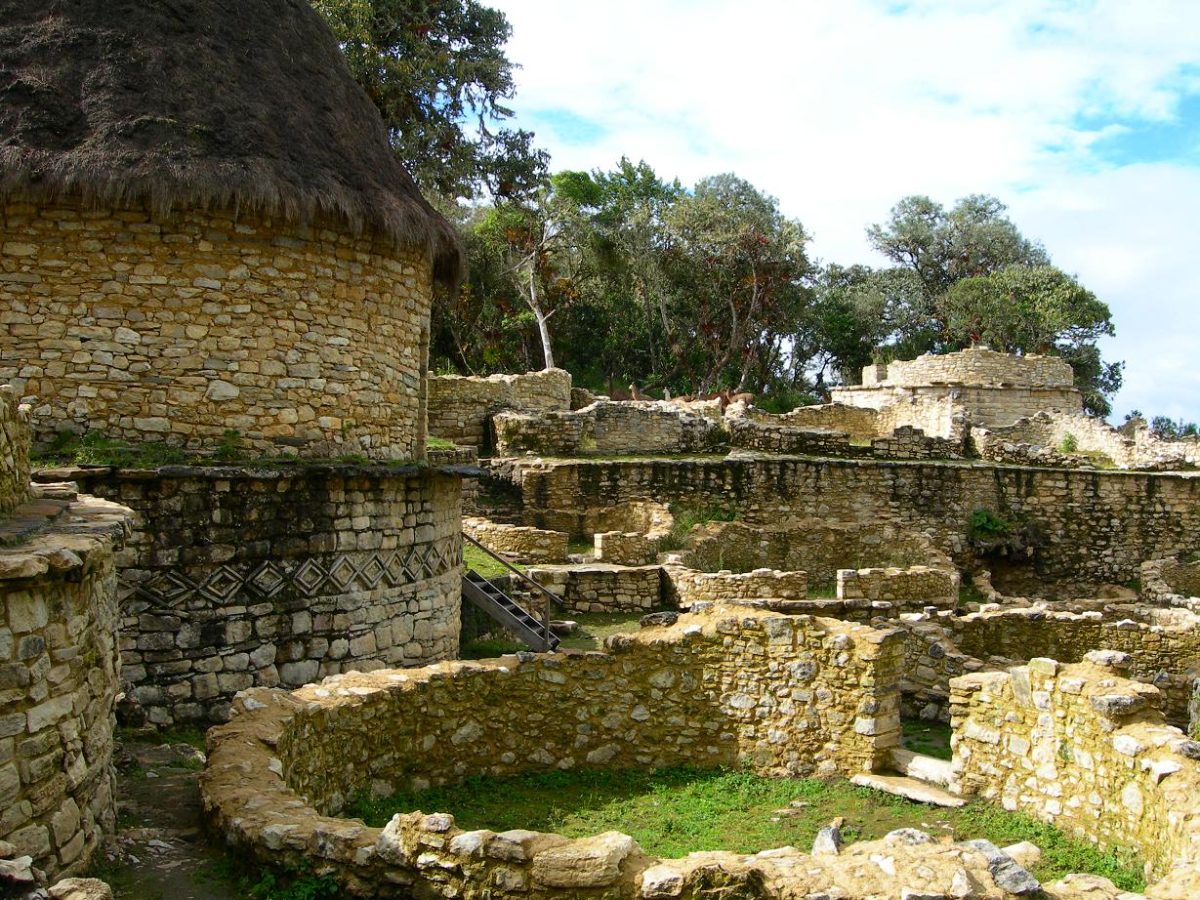
Table of Contents
- A Fortress Above the Clouds
- Home of the Cloud Warriors
- Walls Taller Than a Six-Story Building
- Funnel Gates Built to Slow an Enemy
- What Language Did the Chachapoya Speak?
- Round Houses and Everyday Life
- The Mystery of El Tintero
- Sarcophagi in the Cliffs
- Conquest by the Inca, Then the Spanish
- Rediscovery and Visiting Kuelap Today
- Nearby Places to Explore
A Fortress Above the Clouds
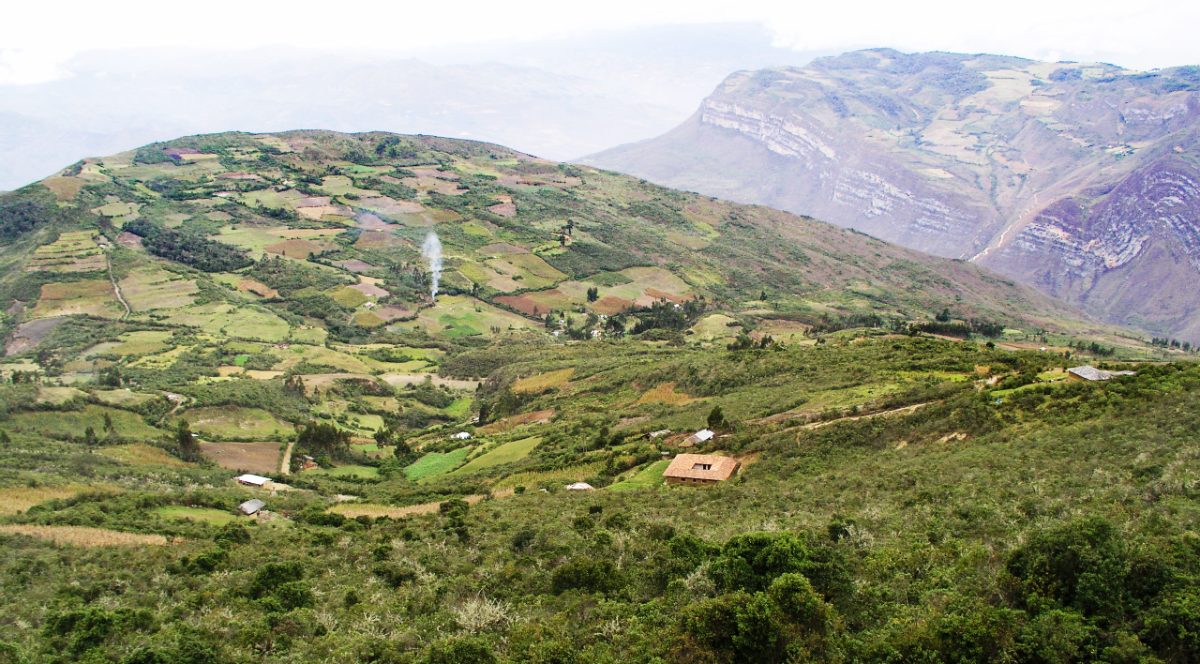
Kuelap sits roughly 3,000 meters above sea level in Peru’s Amazonas region, perched on a limestone ridge that gives it commanding views over the surrounding cloud forest and the Utcubamba valley below. That elevation kept the site cool and misty year-round, a sharp contrast to the desert coast where cities like Sipan and Chan Chan once stood.
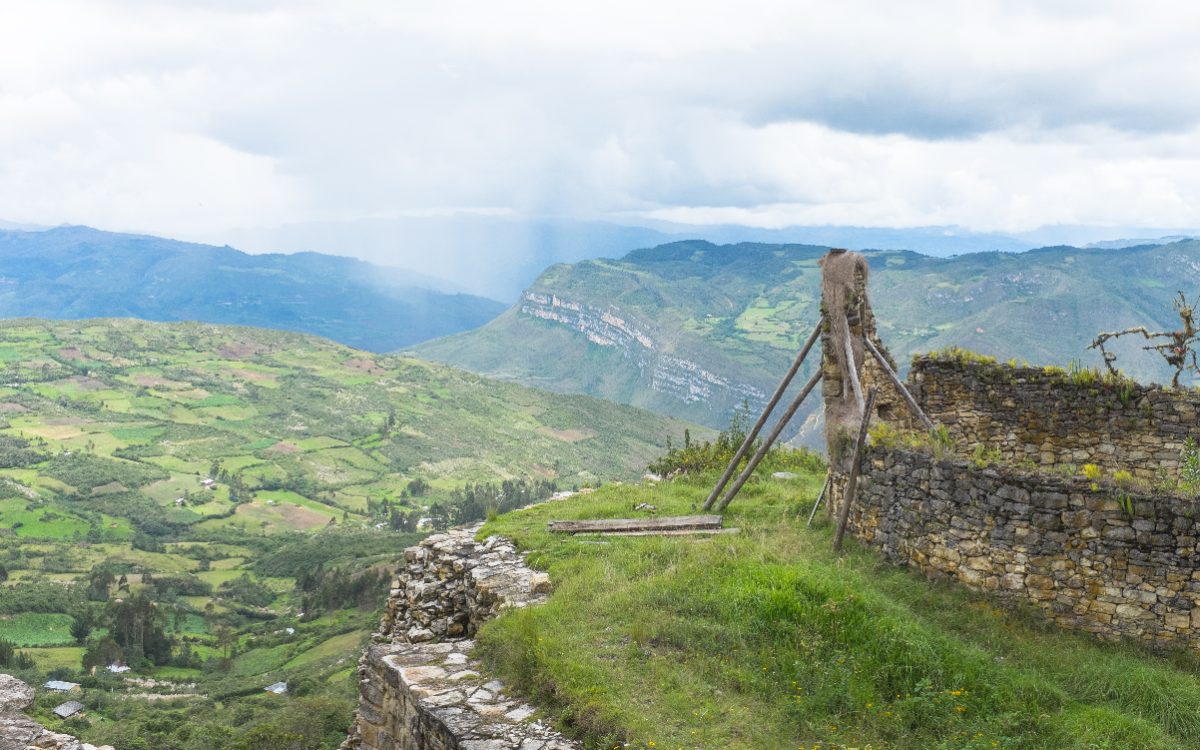
Getting there has never been easy, a fact that likely shaped the site’s entire history. For centuries the journey required a long climb on foot or mule, and it was only in 2017 that a cable car opened, cutting a multi-hour trek down to about twenty minutes and finally making Kuelap accessible to casual visitors rather than only determined trekkers.
The surrounding cloud forest ecosystem, thick with moss, orchids, and bromeliads clinging to nearly every tree branch, differs dramatically from the arid coastal environments of Chan Chan or Sipan, giving Kuelap a genuinely distinct visual and ecological setting compared to most other ancient sites covered elsewhere on Peru’s north coast.
Temperatures at this elevation stay considerably cooler than the sweltering Amazon lowlands only a relatively short distance away, a climate that likely shaped both agricultural choices and building design, favoring compact stone structures suited to retaining warmth over the more open architectural styles found in lower, warmer regions.
Reaching the ridge before the cable car’s construction required travelers to arrange mules or make a demanding hike from the valley floor, a journey that could easily take the better part of a day, which is part of why Kuelap remained a comparatively niche destination for so long despite the scale of what awaited visitors at the top.
Visitors arriving today by cable car still typically finish the journey with a short walk along a forested path before the walls come into view, a final approach that many find preserves at least some of the dramatic sense of arrival earlier travelers experienced after a much longer trek.
Home of the Cloud Warriors
The Chachapoya civilization flourished across this stretch of the eastern Andes and upper Amazon roughly between 900 and 1470 CE, developing a distinct culture known for monumental stone architecture, elaborate cliffside tombs, and, according to later Inca and Spanish accounts, fierce independence.
Unlike the Inca, whose empire is documented through both Spanish chronicles and an extensive administrative record, the Chachapoya left no comparable written or oral historical tradition of their own that survived conquest, meaning much of what is known about their society comes from archaeology and from often unflattering accounts recorded by their eventual conquerors.
Chachapoya settlement was not limited to Kuelap alone. Archaeologists have identified dozens of smaller Chachapoya sites scattered across the region, including fortified hilltop communities, agricultural terraces, and burial complexes, suggesting Kuelap functioned as one major center within a broader, more dispersed regional civilization rather than a single isolated stronghold.
Ceramic and textile styles recovered from Chachapoya sites show both distinctive local traditions and evidence of exchange with neighboring Andean and Amazonian cultures, indicating that despite the region’s rugged, isolating terrain, the Chachapoya were not cut off from broader trade and cultural contact across the wider pre-Columbian Andes.
Spanish colonial writers, drawing on secondhand Inca accounts rather than direct Chachapoya testimony, sometimes described the Chachapoya as unusually pale-skinned compared to other Andean peoples they encountered, a claim modern scholars treat with considerable skepticism given the lack of independent corroborating evidence and the tendency of early colonial sources to exoticize unfamiliar populations.
Walls Taller Than a Six-Story Building
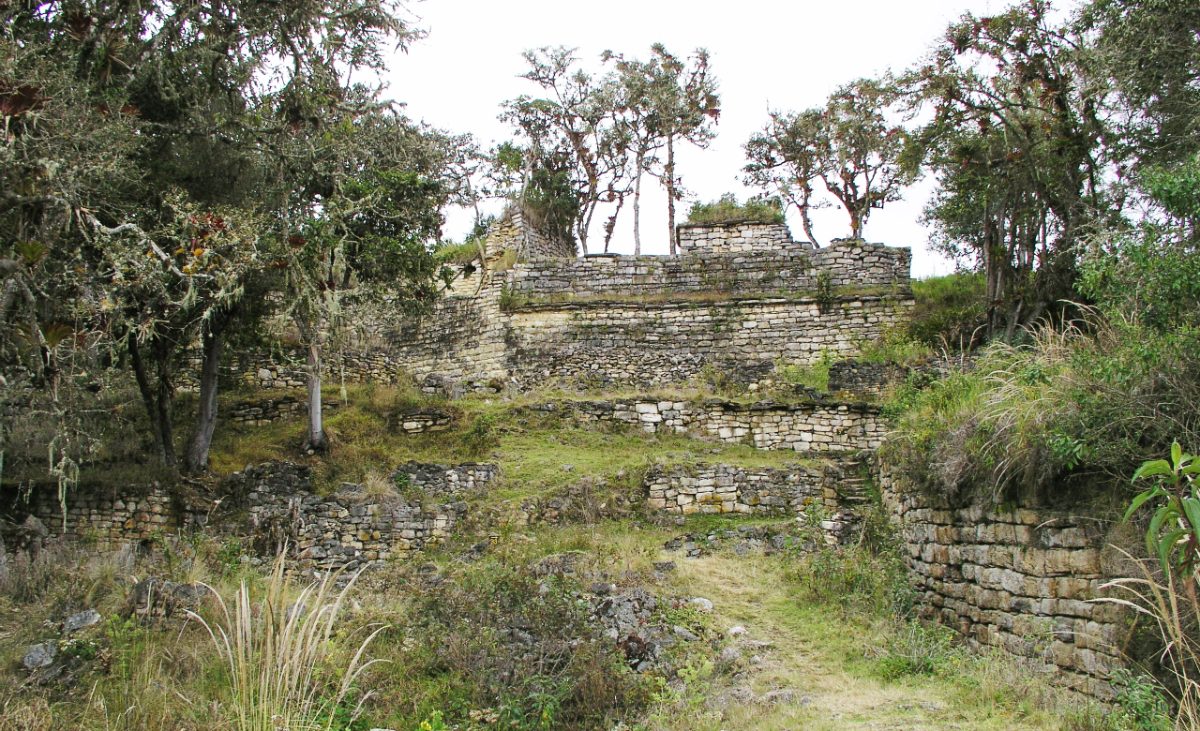
Kuelap’s defining feature is its perimeter wall, built from massive limestone blocks and reaching heights of up to about 19 meters in places, roughly comparable to a six-story building. The sheer volume of stone involved has led to frequent, if disputed, comparisons to the largest pyramids of ancient Egypt in terms of raw material used.
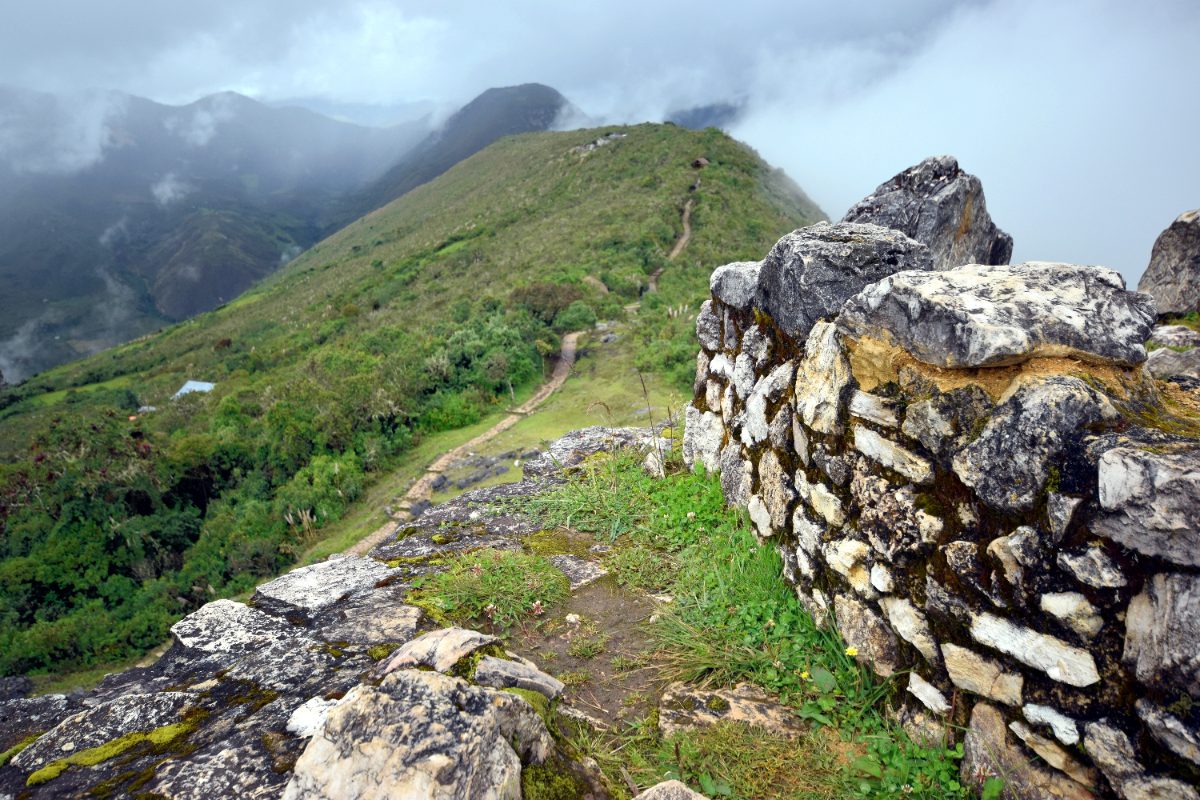
Construction techniques varied along the wall’s length, with sections showing different building phases and styles, suggesting the fortification was expanded and reinforced over an extended period rather than built to a single unified plan in one continuous campaign.
Engineers and archaeologists studying the wall’s construction have noted the skill involved in fitting massive stone blocks without the extensive use of mortar, relying instead on precise shaping and placement, a technique broadly shared with other major Andean stone traditions even though Chachapoya architectural style otherwise differs considerably from Inca or coastal building methods.
Later restoration and stabilization work, carried out to prevent further erosion of the ancient stonework, has had to balance structural safety for modern visitors against preserving the wall’s original appearance and material, a familiar tension for conservators working at monumental stone sites throughout the Andes and beyond.
Aerial and drone survey in recent years has helped researchers map the full extent of the wall and associated terracing more precisely than earlier ground-based measurements allowed, refining estimates of the total stone volume involved and clarifying which sections represent original Chachapoya construction versus later modification.
Weathering from centuries of highland rain and mist has softened some of the wall’s original surfaces, yet the core structure has proven remarkably resilient, a testament to both the quality of the original stonework and the relatively stable geological conditions of the ridge on which Kuelap was built, compared to more seismically volatile parts of the Peruvian coast.
Funnel Gates Built to Slow an Enemy
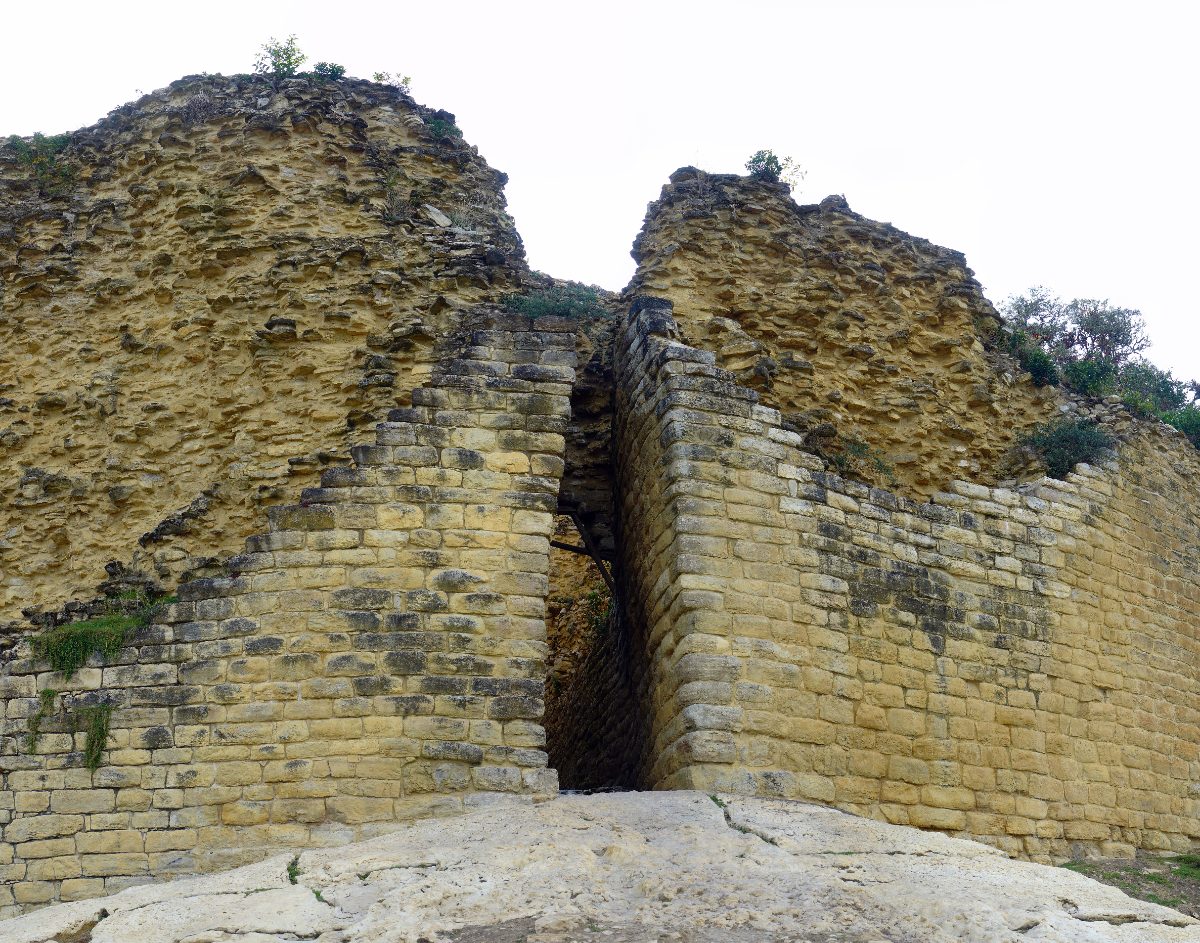
Access into Kuelap was tightly controlled through a small number of narrow entrances that funnel inward as visitors climb, forcing anyone entering, friend or enemy, into single file and gradually restricting available space, a design that would have made any forced entry slow and dangerous for attackers.
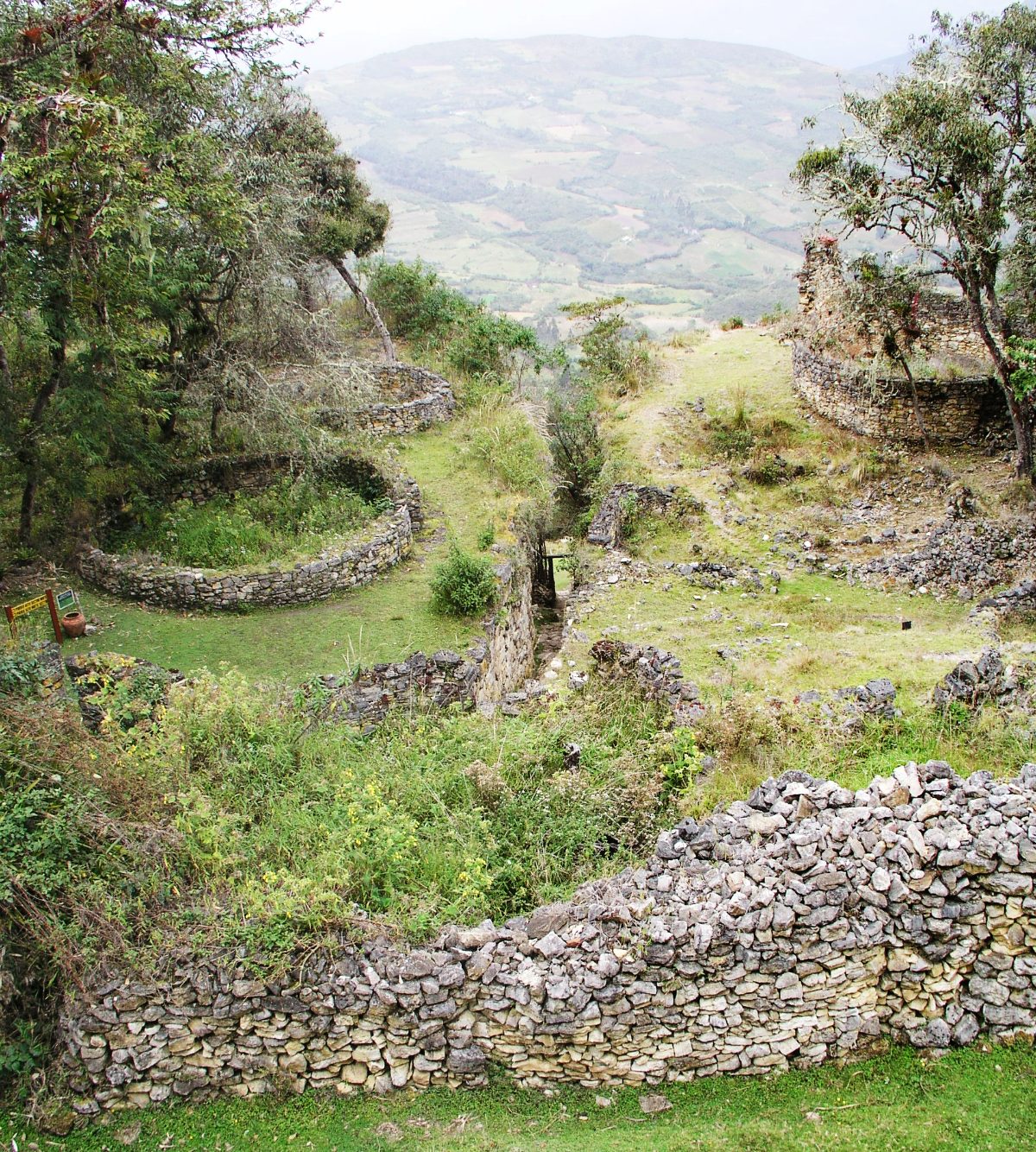
Whether this design was purely defensive or also served ceremonial purposes, controlling how visitors symbolically approached the community within, remains debated among archaeologists, since the same funnel design would have shaped a peaceful visitor’s psychological experience of arrival almost as effectively as it hindered a hostile one.
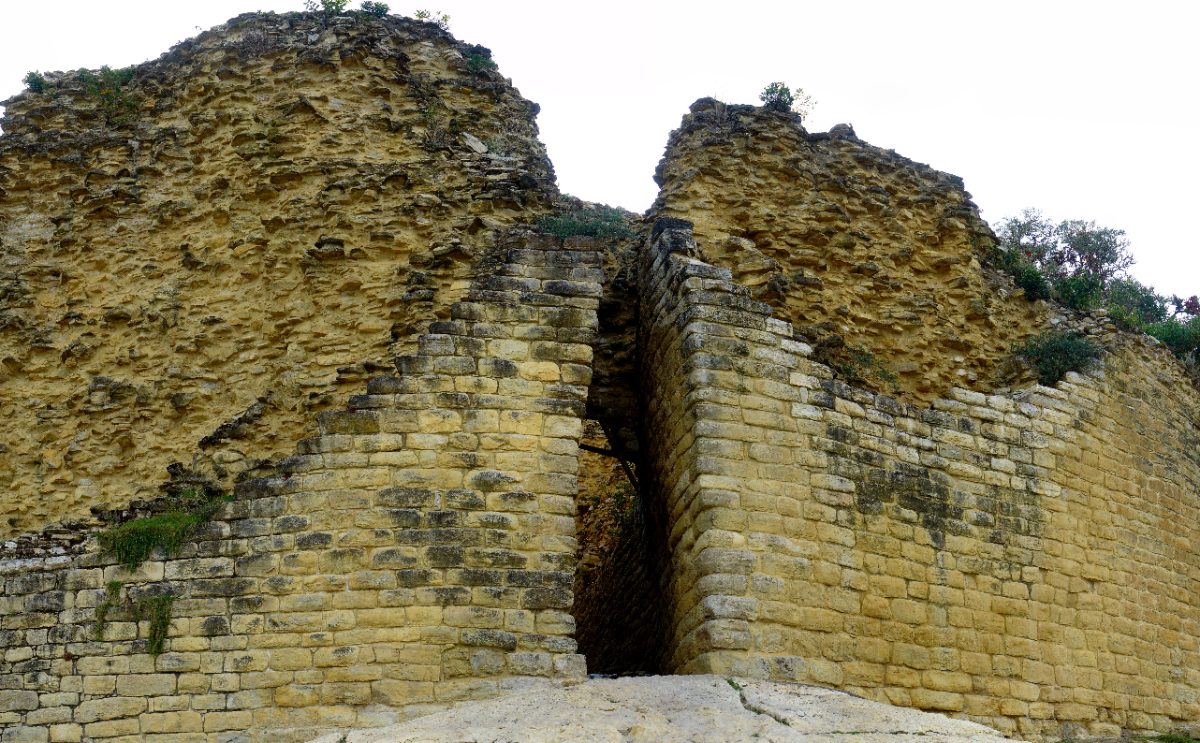
Comparable defensive entrance designs appear at other fortified highland sites across the Andes, though few match the scale and precision documented at Kuelap, where the narrowing passages combine with the towering perimeter walls to create what many visitors describe as a genuinely intimidating approach even without any hostile intent involved.
Some of these entrance passages also incorporate small guard-post-like chambers built directly into the wall, spaces large enough for one or two people to have monitored traffic passing through, further reinforcing interpretations of the entrances as deliberately controlled rather than simply narrow by architectural coincidence.
Researchers have also proposed that the graduated narrowing of these passages may have served a practical structural purpose, distributing the weight and lateral pressure of the surrounding stone more effectively than a uniform, straight corridor would, blending defensive design with sound engineering practice suited to the site’s steep terrain.
What Language Did the Chachapoya Speak?
No confirmed written record of the Chachapoya language survives, and unlike many other Andean and Mesoamerican peoples in this series, linguists cannot point to a clearly attested descendant language spoken in the region today. Quechua, the language of the Inca who eventually conquered the Chachapoya, became dominant here following annexation and remains the primary indigenous language spoken locally now.
Some place names and scattered vocabulary recorded by early Spanish chroniclers hint that a distinct pre-Inca language, or family of related dialects, once existed in this region, but without more substantial documentation, reconstructing what the Chachapoya actually called themselves or their own city remains largely speculative.
This linguistic uncertainty stands in notable contrast to sites like Zaculeu or Kuelap’s Peruvian neighbor Sipan, where at least plausible candidate languages, Mam or Muchik respectively, can be proposed with some confidence. For the Chachapoya, the honest scholarly answer remains that their original spoken language is essentially lost to history.
Toponyms across the Chachapoya region, place names that predate Quechua’s arrival, occasionally preserve linguistic fragments that specialists study for clues, though without a larger corpus of confirmed Chachapoya vocabulary, these fragments function more as tantalizing hints than as a basis for genuine linguistic reconstruction.
Ongoing genetic and archaeological research into Chachapoya origins may eventually shed further light on their broader cultural and possibly linguistic relationships to neighboring Andean and Amazonian populations, though such conclusions remain preliminary and are likely to be refined considerably as more comprehensive regional surveys and DNA studies are completed in the coming years.
Round Houses and Everyday Life
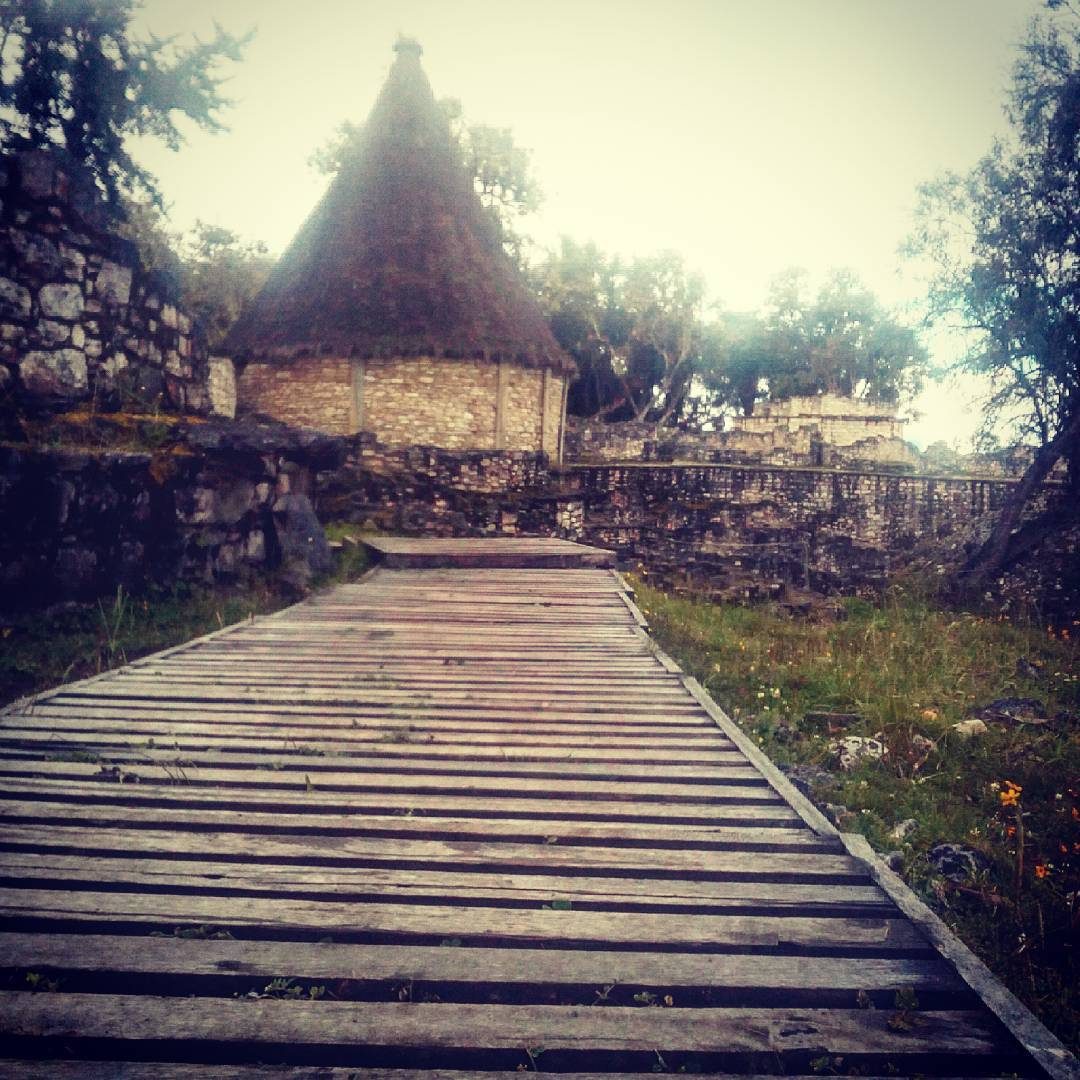
Inside Kuelap’s walls, archaeologists have documented more than four hundred circular stone structures, a striking contrast to the rectangular building traditions favored by the Inca and many coastal Peruvian cultures. Many of these round houses feature decorative friezes worked into their exterior walls, including zigzag and rhombus patterns repeated across different structures.
Population estimates for Kuelap at its peak suggest a community of several hundred to perhaps a couple thousand residents, a population large enough to represent a genuine urban and administrative center for the surrounding Chachapoya territory rather than a purely military outpost.
Excavated household deposits within these round structures have yielded ceramics, textile fragments, and food remains that give archaeologists insight into daily Chachapoya domestic life, complementing the more dramatic funerary and defensive architecture that tends to dominate popular discussion of the site.
Some round houses show evidence of having been rebuilt or modified across multiple occupation phases, suggesting families maintained specific household locations over generations, passing structures down much as land and status might have been inherited within Chachapoya kinship groups.
Storage structures identified within the complex suggest Kuelap’s residents maintained reserves of maize, tubers, and other staple crops grown on nearby terraced slopes, supporting a population that needed to sustain itself through a highland agricultural cycle quite different from the irrigation-dependent farming practiced by contemporary coastal Peruvian societies.
The Mystery of El Tintero
Among Kuelap’s most puzzling structures is El Tintero, or ‘the inkwell,’ a large inverted cone-shaped building whose original function remains genuinely uncertain. Early researchers speculated it may have served as a prison, though this interpretation has since fallen out of favor among archaeologists studying the site.
More recent theories propose that El Tintero functioned as a ceremonial structure, a storage facility, or possibly even an astronomical observation point tied to agricultural or ritual calendars, though no single explanation has been confirmed conclusively, leaving the structure one of Kuelap’s more genuinely open archaeological questions.
Similar cone-shaped or unusual specialized structures appear at a handful of other Chachapoya sites, though none has been studied as extensively as El Tintero, meaning any broader pattern connecting these structures across the wider Chachapoya territory remains an open area for future research rather than an established conclusion.
Visitors climbing to view El Tintero today are often struck by how deliberately isolated the structure appears relative to the surrounding round houses, a spatial separation that some researchers cite as circumstantial support for a specialized ceremonial or restricted-access function rather than an ordinary residential or storage purpose.
Ground-penetrating radar and other non-invasive survey techniques have been proposed as ways to investigate El Tintero’s interior and foundations without further disturbing the structure, an approach reflecting broader trends in Andean archaeology toward minimizing invasive excavation wherever technology allows equally informative alternatives.
Whatever its original purpose, El Tintero remains one of the most photographed individual structures at Kuelap, its unusual cone shape standing out clearly against the surrounding round house foundations and drawing repeated attention from visitors and researchers alike, even without a settled explanation for why it was built in this particular form.
Sarcophagi in the Cliffs
Beyond Kuelap itself, the wider Chachapoya region is famous for elaborate funerary practices, including anthropomorphic sarcophagi known as purunmachu placed high on inaccessible cliff faces at sites like Karajia, and mausoleum complexes at Revash built directly into rock overhangs.
These practices point to a culture deeply invested in ancestor veneration and in placing the dead in dramatic, difficult-to-reach locations, whether for protection from looting, symbolic closeness to the sky, or reasons tied to religious belief that have not survived in any written explanation from the Chachapoya themselves.
Looting has damaged many of these cliffside funerary sites over the decades, since their dramatic and often difficult-to-reach locations paradoxically made them targets for treasure hunters even as the same inaccessibility helped protect other tombs from disturbance for centuries longer than more easily reached burial sites elsewhere in the Andes.
The Karajia sarcophagi in particular have become widely photographed symbols of Chachapoya culture, their painted, human-shaped forms positioned along a sheer cliff face in a manner that continues to puzzle researchers regarding exactly how the Chachapoya managed to place such heavy figures in locations that remain challenging to reach even with modern climbing equipment.
Some Chachapoya burial sites also included mummified remains wrapped in textiles, a practice broadly shared across many Andean cultures, though the specific combination of cliffside placement and lifelike sarcophagus form documented at Karajia appears distinctive enough that specialists generally treat it as a recognizably Chachapoya funerary tradition rather than one borrowed wholesale from neighboring cultures.
Conquest by the Inca, Then the Spanish
The Inca Empire, under Tupac Inca Yupanqui, conquered the Chachapoya region in the 1470s, incorporating it only a few decades before the Spanish arrived in Peru. Inca accounts describe the Chachapoya as a persistently difficult people to subdue, a reputation that later Spanish chroniclers echoed as well.
When Spanish forces later moved against the Inca themselves, some Chachapoya communities reportedly allied with the newcomers against their more recent Inca conquerors, a pragmatic choice that reflected decades of resentment toward Inca rule rather than any straightforward loyalty to either side of the conflict.
Some scholars argue that Inca strategies for managing the newly conquered Chachapoya, including forced resettlement policies known as mitma that relocated populations across the empire, may have deliberately weakened Chachapoya cultural cohesion in the decades before Spanish contact, complicating any later Chachapoya resistance against colonial rule.
Colonial-era tribute records and land disputes occasionally mention Chachapoya communities by name, offering scattered but valuable documentary evidence of how the population and its social structure persisted, in altered form, well into the early Spanish colonial period following the initial conquest.
By the time Spanish administrators consolidated control over the region in the following decades, much of the distinctly Chachapoya political and religious structure had already been reorganized under Inca provincial administration, meaning the culture the Spanish encountered was itself a modified, Inca-influenced version of what had existed at Kuelap’s height.
Rediscovery and Visiting Kuelap Today
Kuelap first reached wider outside attention through Peruvian judge and explorer Juan Crisostomo Nieto, who documented the site in 1843, though it remained relatively obscure compared to Machu Picchu for well over a century afterward, overshadowed partly by its remote and difficult access.
The 2017 opening of a cable car connecting the nearby town of Nuevo Tingo to the fortress dramatically increased visitor numbers, and ongoing excavation continues to refine understanding of the site’s construction phases, population, and the still-unresolved questions surrounding structures like El Tintero.
Peru’s Ministry of Culture has continued funding excavation and conservation work at Kuelap in recent years, part of a broader push to develop the country’s northern archaeological circuit as a complement to the far more heavily visited Cusco and Machu Picchu region further south.
Local guides trained in both Spanish and, increasingly, in the archaeological findings specific to Kuelap now offer visitors considerably more context than was available even a decade ago, part of a broader professionalization of tourism infrastructure across Peru’s northern archaeological circuit.
Nearby Places to Explore
Kuelap’s history connects to other Andean sites covered elsewhere in this series.
- How the Wari Empire Ruled the Andes Long Before the Inca
- Sipan’s Looted Royal Tomb Rewrote Moche History
- Caral Is the Oldest City Ever Built in the Americas
Closing Thoughts
Kuelap’s towering walls make an immediate visual impression, but what makes the site historically significant is what it represents: a distinct Andean civilization that built on a scale rivaling the Inca, resisted conquest fiercely enough to earn a lasting reputation for defiance, and then largely vanished from written history once Inca and Spanish rule reshaped the region.
With no deciphered language and comparatively little surviving oral tradition, much of what future visitors will learn about the Chachapoya likely depends on archaeology still in progress, making Kuelap less a finished museum piece than an active, ongoing investigation into one of the Andes’ more overlooked ancient peoples.
You May Like
Hohensalzburg Fortress: The Great White Stronghold That Never Fell


4 thoughts on “Kuelap, the Andean Fortress the Inca Struggled to Conquer”