Perched on a low cliff above the turquoise waters of the Caribbean, the ruins of Tulum form one of the most beautiful archaeological sites in the Americas. This was a walled Maya city and seaport, one of the last to flourish before the arrival of the Spanish, and one of the few the Maya built directly on the coast.
Though smaller than inland cities like Chichen Itza, Tulum’s dramatic setting, its temples looking out over the sea, has made it among the most iconic images of the Maya world. It offers a vivid picture of a coastal trading society in its final centuries.

Table of Contents
- A Maya City by the Caribbean Sea
- Tulum: The Walled City
- A Late Maya Port and Trading Hub
- El Castillo: The Cliff-Top Temple
- The Temple of the Frescoes
- The Descending God
- Trade, Turquoise Waters, and the Sea
- Daily Life and the Coastal Setting
- Spanish Contact and Abandonment
- Tulum Today: Ruins and Tourism
- Nearby Places
- Closing Thoughts
A Maya City by the Caribbean Sea
Tulum stands on the eastern coast of the Yucatan Peninsula in modern Mexico, one of very few Maya cities built on the shore. Its temples rise on a rocky bluff directly above a stretch of white sand and clear blue water.
This coastal position set Tulum apart from the great inland cities of the Maya. It looked outward to the sea, and its life was bound up with trade carried by canoe along the coast.

Tulum: The Walled City
The very name Tulum means wall or fence in the Maya language, a modern name reflecting its most distinctive feature. On three sides the city was enclosed by a thick stone wall, with the sea guarding the fourth.
This fortification, unusual among Maya cities, suggests a need for defence in the troubled later centuries of Maya history. Gateways pierced the wall, controlling access to the sacred and administrative heart within.
A Late Maya Port and Trading Hub
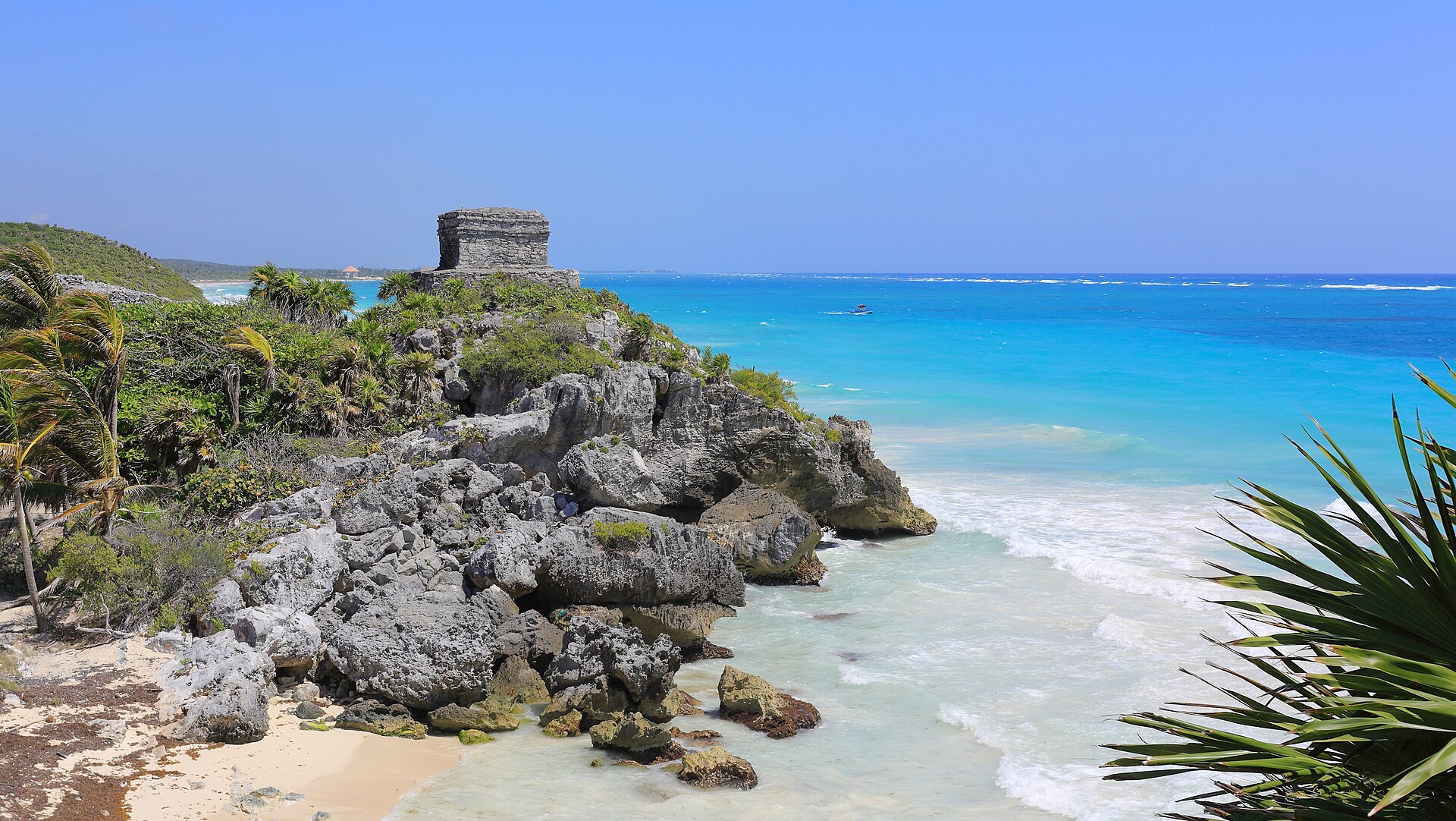
Tulum flourished relatively late, mainly between the thirteenth and sixteenth centuries, during the final era of independent Maya civilisation. It served as an important port for the region, linking sea and land trade routes.
Goods such as obsidian, jade, textiles, salt and cacao passed through Tulum, carried by canoe along the coast and inland by porters. The city was a hub in a far-reaching commercial network.

El Castillo: The Cliff-Top Temple
The largest and most striking building at Tulum is El Castillo, the Castle, a temple standing at the very edge of the cliff above the sea. Its position makes it visible from far out on the water.
It is thought to have served partly as a landmark and beacon for canoes navigating the coast, its openings possibly aligned to guide boats through gaps in the offshore reef. Temple and lighthouse in one, it dominates the site.

The Temple of the Frescoes
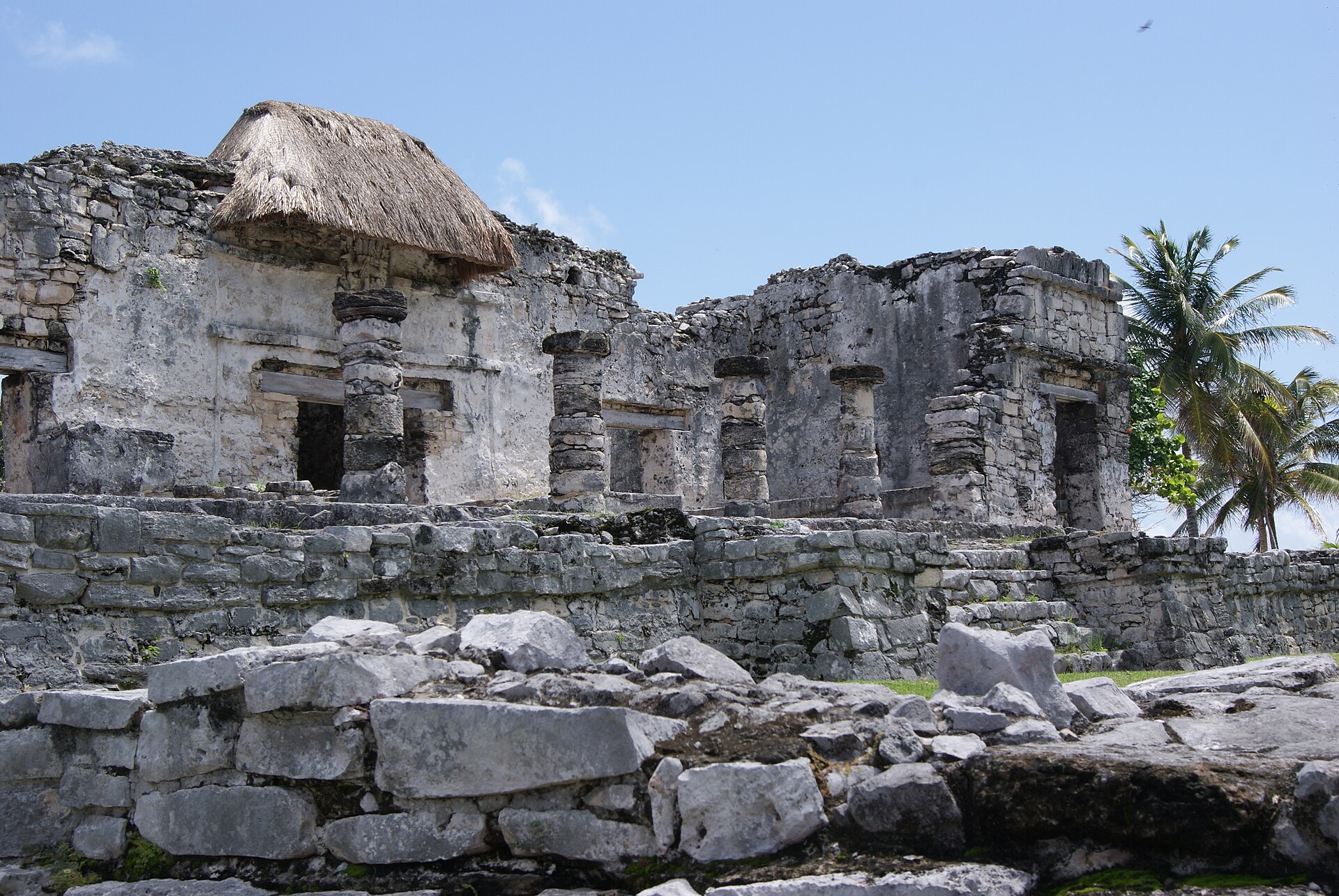
One of the most important buildings is the Temple of the Frescoes, which preserves remarkable Maya wall paintings. These frescoes depict deities and symbolic scenes in the distinctive style of the region.
The temple appears to have served as an observatory for tracking the movements of the sun, reflecting the Maya obsession with astronomy and the calendar. Its paintings are among the finest surviving at Tulum.
The Descending God
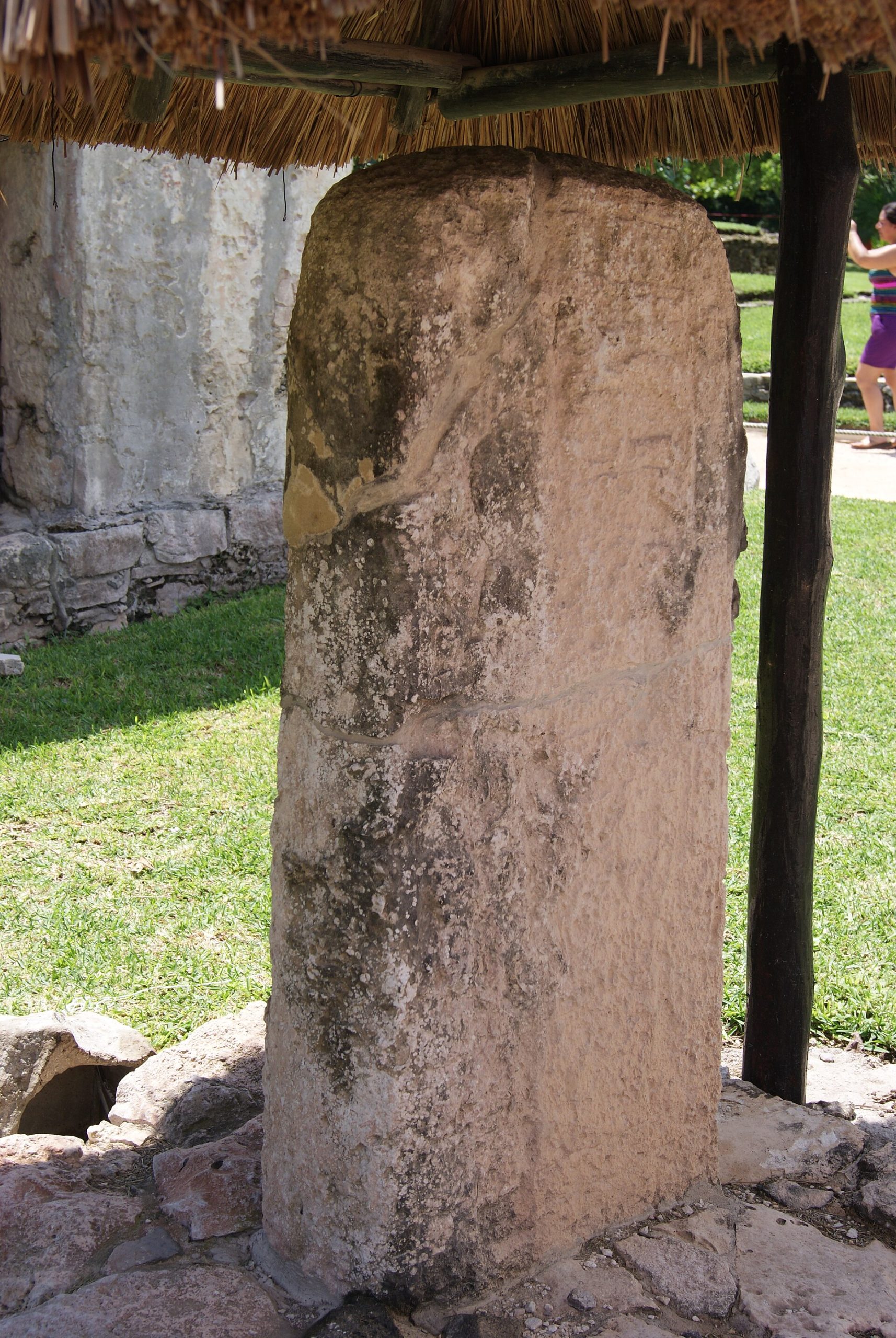
A recurring image at Tulum is the Descending God, a winged figure shown diving head-first from the sky, carved and painted above several doorways. Its exact identity is debated among scholars.
The figure may represent the setting sun, the planet Venus, or a bee god associated with honey, an important product of the region. Whatever its meaning, it is one of the signature motifs of Tulum’s art.
Trade, Turquoise Waters, and the Sea
The sea was central to Tulum’s existence. A small cove below the cliffs, the only natural break in the coastline for some distance, may have served as a landing place for the trading canoes on which the city depended.
Through these waters flowed the commerce that sustained Tulum, connecting it to other Maya centres around the peninsula and beyond. The city was a bridge between the maritime and inland worlds of the late Maya.

Daily Life and the Coastal Setting
Beyond its temples, Tulum was a living town, with houses, platforms and shrines within and around the walls. Its inhabitants fished, traded and farmed, and worshipped at the shrines that dotted the site.
Today the ruins are home to iguanas that bask on the warm ancient stones, and the coastal setting, with its breezes and sea views, gives a sense of what daily life on this beautiful shore might have felt like.

Spanish Contact and Abandonment
Tulum was still inhabited and functioning when the first Spanish ships appeared off the coast in the early sixteenth century. Spanish sailors recorded seeing a walled city as large, they said, as some towns back home.
In the decades after contact, disease and the disruption of Spanish conquest devastated the Maya, and Tulum was gradually abandoned. Its buildings were left to the elements and slowly reclaimed by the coastal vegetation.
Tulum Today: Ruins and Tourism
Rediscovered and studied by explorers and archaeologists from the nineteenth century onward, Tulum is now one of the most visited archaeological sites in Mexico, its fame boosted by its extraordinary setting.
The ruins are protected within a national park, drawing visitors who come to see Maya temples above a Caribbean beach. Balancing this popularity with the preservation of the fragile site is an ongoing challenge.
Nearby Places
- Timbuktu — another great trading city of the late medieval world, on a very different frontier.
- Petra — a caravan city whose wealth, like Tulum’s, came from its command of vital trade routes.
- Angkor — a tropical civilisation, like the Maya, whose great stone temples were reclaimed by the forest.
Closing Thoughts
Tulum is the Maya world at its most picturesque: temples of grey stone standing above a turquoise sea, a walled port that traded along the coast in the last age of Maya independence.
One of the few Maya cities the Spanish saw still alive, and one of the last to fall silent, Tulum offers a hauntingly beautiful window onto a civilisation on the edge of profound change. Its cliff-top temples remain among the most unforgettable ruins in the Americas.


2 thoughts on “Tulum: The Walled Maya Port Whose Temples Watch the Caribbean”