Few buildings on earth carry as much history within their walls as Hagia Sophia. Standing in the heart of old Istanbul, this vast domed structure has served as a cathedral, a mosque, and a museum across nearly fifteen centuries, mirroring the great shifts of empire and faith that shaped the city around it. Today it functions once again as a working mosque, drawing visitors and worshippers from across the world.
A Building of Many Lives
Hagia Sophia was first raised in the sixth century as the principal cathedral of the Byzantine Empire, commissioned by the emperor Justinian and completed in just a handful of years. For almost a thousand years it stood as the largest and most magnificent church in the Christian world. After the Ottoman conquest of the city in 1453, it was converted into a mosque, a role it held for centuries. In the modern era it served for decades as a museum, before being reopened for Muslim prayer once more.
Why It Matters
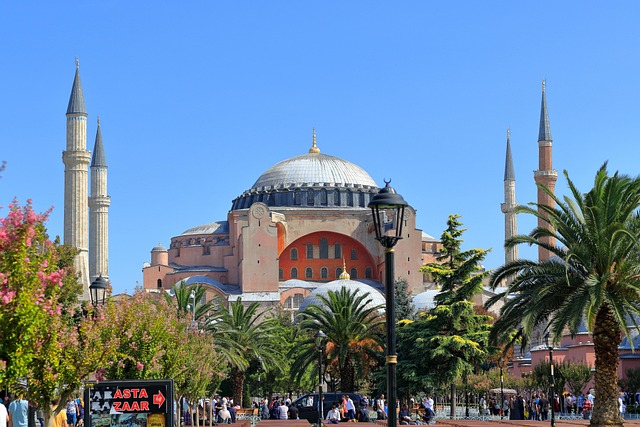
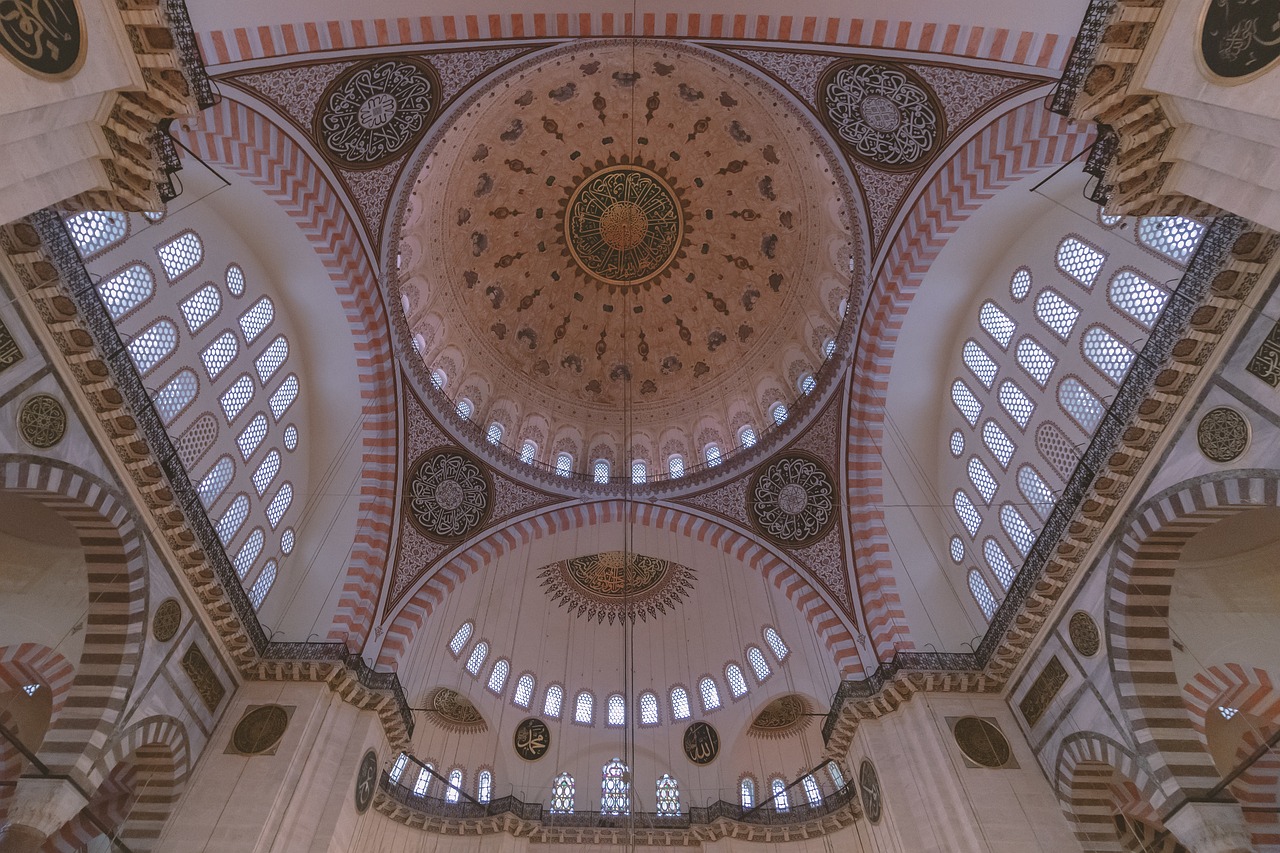
The significance of Hagia Sophia lies in the way it brings together two of history’s great civilisations. Its soaring dome and luminous interior represent the peak of Byzantine architecture, while its minarets, mihrab, and great calligraphic medallions speak to its centuries as an Ottoman mosque. For many, it stands as a meeting point of Christian and Islamic heritage, a single monument in which both traditions remain visibly present.
A Landmark of Istanbul
Set on the historic peninsula beside other great monuments, Hagia Sophia anchors one of the most storied skylines in the world. Generations of travellers have described the overwhelming impression it leaves, an effect created by its scale, its light, and the weight of the events it has witnessed. In the guides that follow, we look more closely at its origins as a Byzantine cathedral, its transformation into a mosque, and the remarkable district that surrounds it.


