Long before Tikal built its towering temples, and centuries before Palenque’s scribes carved Pakal’s tomb, an even larger city rose deep in the rainforest of the Mirador Basin, straddling northern Guatemala near the Mexican border. El Mirador flourished during the Preclassic period, roughly between 600 BCE and 100 CE, and its scale challenges long-held assumptions about when Maya civilization actually reached its most monumental architectural ambitions.
At the heart of El Mirador stands La Danta, a pyramid complex whose total construction volume makes it one of the largest pyramids ever built anywhere in the ancient world, larger by some measures than the Great Pyramid of Giza, an extraordinary achievement for a civilization that modern popular imagination often associates primarily with the later Classic period cities of Tikal, Palenque, and Copan.
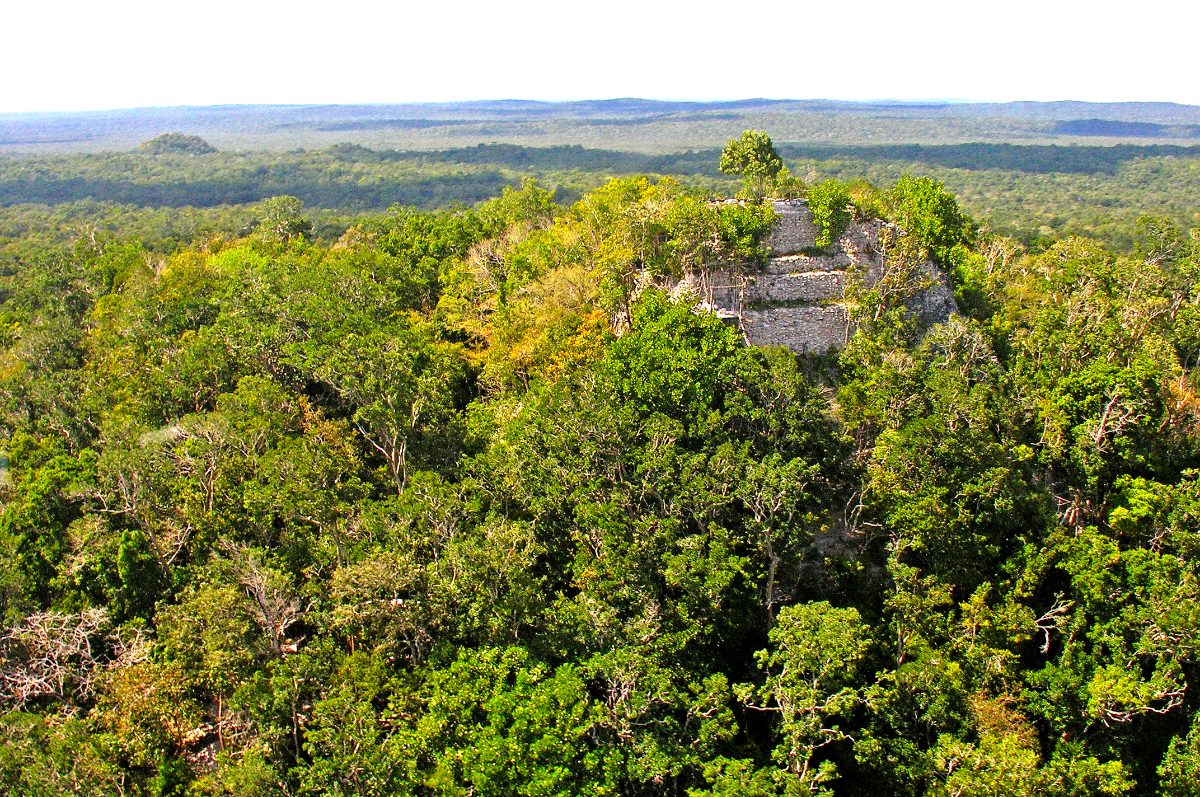
Table of Contents
- Deep in the Mirador Basin: Reaching a Lost Preclassic Capital
- La Danta: One of the Largest Pyramids Ever Built
- El Tigre and the Stucco Masks of Creation
- A City Centuries Before Tikal
- What Language Did El Mirador’s Builders Speak?
- The Kan Dynasty’s Possible Birthplace
- Causeways Across the Basin: A Preclassic Network
- Religion and the Hero Twins in Stucco
- Abandonment and the Preclassic Collapse
- Rediscovery and the Challenge of Visiting El Mirador
- Nearby Places to Explore
- Closing Thoughts
Deep in the Mirador Basin: Reaching a Lost Preclassic Capital
El Mirador remains one of the most physically difficult major Maya sites to reach anywhere in Mesoamerica. No road connects it to the outside world, and most visitors face a choice between a grueling multi-day trek through dense rainforest from the nearest access point or a considerably more expensive helicopter flight, a level of isolation that has protected the site from looting and modern development far more effectively than fences or guards ever could.
This remoteness places El Mirador within a vast protected wilderness area, the Mirador Basin, that also contains numerous smaller related Preclassic sites connected to El Mirador through an extensive ancient causeway network discussed further below, making the entire region a genuinely unique landscape for understanding the earliest large-scale Maya urbanism.
Visitors who make the journey are rewarded with structures on a scale that feels almost disorienting given how early they were built, since La Danta and the nearby El Tigre complex rise dramatically above the surrounding canopy in a way that immediately signals a level of political and economic organization most twentieth-century archaeologists once assumed took many additional centuries to develop among the Maya.
Weather conditions add another layer of difficulty to visiting El Mirador, since heavy rains during much of the year can turn the already demanding trekking route into a genuinely challenging mud-slicked path, meaning most guided expeditions operate primarily during the drier months when the journey, while still strenuous, remains at least somewhat more predictable.
Guides leading treks into the Mirador Basin typically come from the nearby community of Carmelita, whose residents have developed considerable expertise navigating the forest and managing camps along the route, turning what might otherwise be an inaccessible archaeological zone into a genuinely feasible, if physically demanding, destination for sufficiently motivated travelers.
La Danta: One of the Largest Pyramids Ever Built
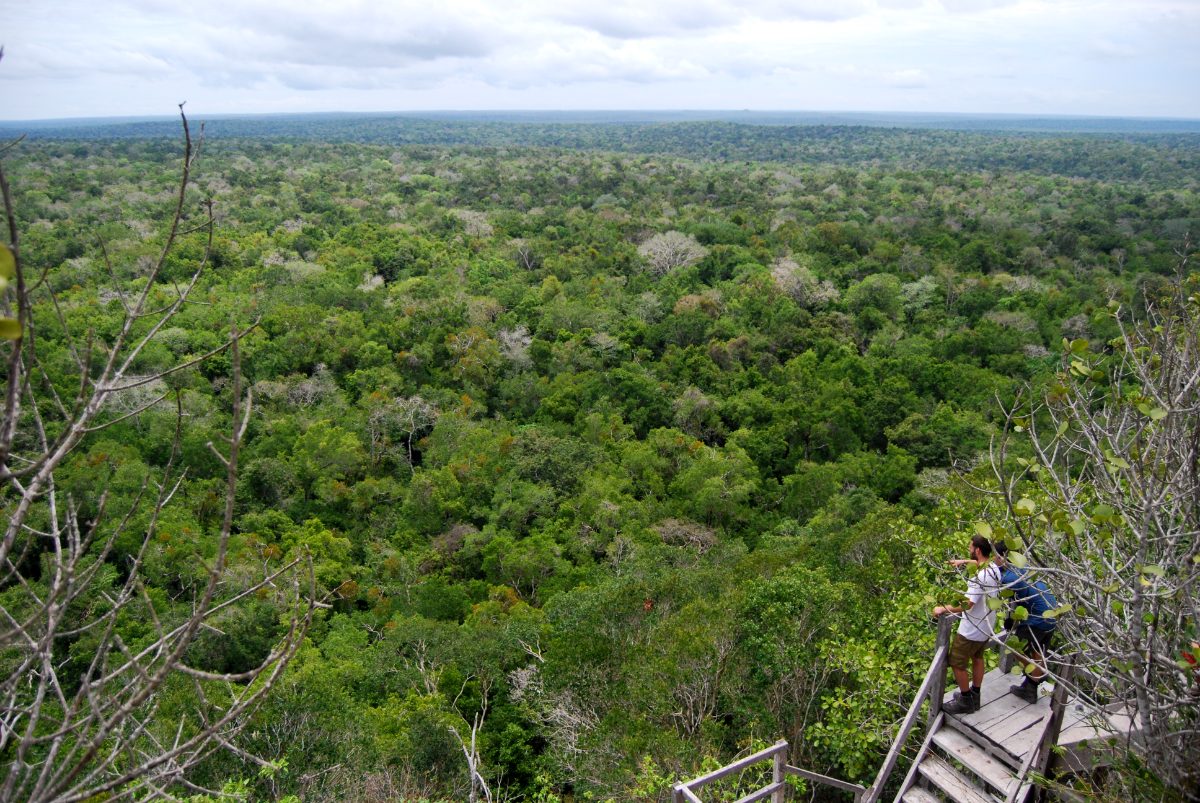
La Danta rises approximately 72 meters above the forest floor when measured from its base to the summit temple, a height achieved not through a single massive pyramid in the way Egyptian pyramids were constructed but through a distinctive triadic architectural pattern, three separate temple platforms arranged atop a series of massive stepped terraces, each terrace itself built on an enormous artificial platform raised above the natural landscape.
When archaeologists calculate La Danta’s total construction volume, accounting for the full mass of the terraced platforms supporting the summit temples rather than height alone, the structure ranks among the largest pyramidal constructions built anywhere in the pre-modern world, a genuinely staggering labor investment for a Preclassic Maya society that conventional historical narratives once assumed lacked the organizational complexity for projects of this scale.
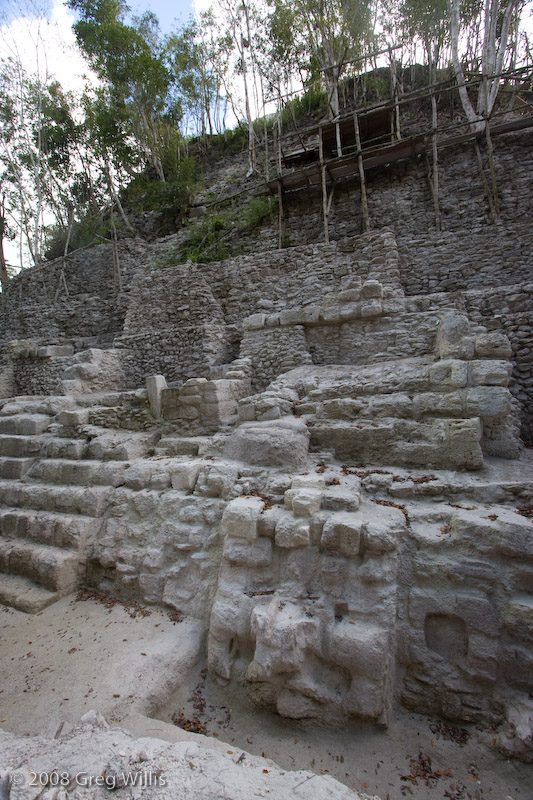
Climbing La Danta today remains possible for visitors who make the journey to El Mirador, and the summit offers a view matched by almost nowhere else in the Maya world: an unbroken expanse of rainforest stretching to the horizon in every direction, with the roof of El Tigre and other Mirador structures occasionally visible poking above the endless green canopy below.
Comparing La Danta’s construction volume directly against the Great Pyramid of Giza requires careful methodology, since the two structures used entirely different building materials and techniques, but multiple independent calculations by archaeologists studying both sites have consistently placed La Danta among the very largest pyramidal structures built anywhere before the modern era, regardless of exactly how the comparison is framed.
The labor required to move and place the sheer volume of fill material used in La Danta’s construction, all accomplished using only human labor without draft animals or wheeled vehicles, underscores just how large and well-organized a workforce Preclassic El Mirador’s rulers were able to mobilize for a single sustained building project spanning likely multiple generations of continuous construction.
El Tigre and the Stucco Masks of Creation
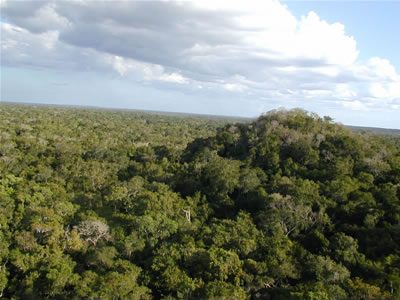
El Tigre, the second great pyramid complex at El Mirador, rises roughly 55 meters and shares La Danta’s triadic architectural pattern, three temples arranged atop a shared platform base, a design so consistently repeated across Preclassic Mirador Basin sites that archaeologists now consider the triadic group a defining architectural signature of this specific period and region of Maya civilization.
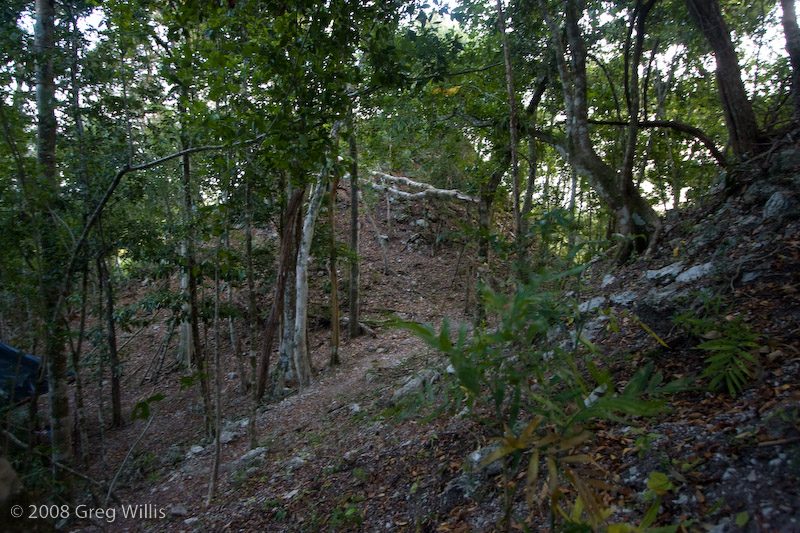
Both major pyramid complexes at El Mirador originally displayed enormous stucco masks and friezes flanking their staircases, some measuring several meters across, depicting mythological figures and creatures associated with Maya creation narratives, rendered in a bold, high-relief sculptural style distinct from the flatter carved stone relief more commonly associated with later Classic period Maya monuments.
These stucco decorations required teams of skilled artisans working in a labor-intensive medium that degrades far more easily than carved stone once exposed to tropical rainfall, meaning many of El Mirador’s original stucco masks survive today only because later construction phases buried and protected them beneath subsequent building layers, preserving details that would otherwise have eroded away entirely within a few generations of rain.
Conservation of El Mirador’s surviving stucco work presents a genuine ongoing challenge for archaeologists, since re-exposing buried masks to open air and tropical rainfall risks accelerating the same erosion that centuries of burial had prevented, forcing researchers to balance scholarly interest in fully documenting the site against the practical need to protect fragile decorative elements from irreversible damage.
A City Centuries Before Tikal
El Mirador’s monumental peak occurred centuries before Tikal, located within the same broader Peten region, rose to its own later prominence, a chronological relationship that has forced archaeologists to substantially revise older models of Maya civilization that treated the Preclassic period as a relatively simple precursor to the truly sophisticated urban Classic period cities that followed.
Population estimates for El Mirador during its peak vary considerably among researchers, but even conservative figures suggest a Preclassic city supporting tens of thousands of residents, organized under a centralized political authority capable of directing the kind of massive, coordinated labor project that raised La Danta and El Tigre, along with the causeway network connecting El Mirador to neighboring settlements.
This evidence has contributed to a broader shift in Maya archaeology away from earlier assumptions that state-level political organization and monumental urban planning developed gradually and relatively late among the Maya, replacing that model with growing recognition that some of the civilization’s most ambitious architectural achievements actually occurred remarkably early, during the Preclassic period El Mirador exemplifies so dramatically.
Radiocarbon dating and ceramic sequence analysis at El Mirador have allowed archaeologists to establish a reasonably precise chronology for the city’s rise and fall, confirming that its major monumental construction phases were substantially complete centuries before Tikal’s own most famous temples were built, a chronological gap significant enough to represent multiple centuries of separate historical development.
This substantial chronological gap between El Mirador’s Preclassic peak and Tikal’s later Classic period prominence means the two cities, despite their geographic proximity within the same broader Peten region, likely never interacted as contemporary political rivals in the way Tikal and Calakmul later did, since El Mirador’s political decline had already occurred well before Tikal’s own rise to major regional importance.
What Language Did El Mirador’s Builders Speak?
Determining the specific language spoken at El Mirador during its Preclassic peak presents genuine challenges beyond even those faced at Classic period cities like Calakmul or Tikal, since Maya hieroglyphic writing was still in a comparatively early stage of development during this period, and the small number of glyphic texts recovered from Preclassic Mirador Basin sites remain far less fully deciphered than the extensive Classic period inscriptions from later cities.
Most linguists working on Maya language history place the ancestral roots of the later Ch’olan language family, the same branch associated with Classic period Tikal, Calakmul, and Palenque, as already present in the southern Maya lowlands during the Preclassic period, making early Ch’olan the most likely candidate for El Mirador’s spoken language, though this remains an inference based on later linguistic geography rather than direct decipherment of Preclassic Mirador texts themselves.
Honest acknowledgment of this uncertainty matters here specifically because El Mirador predates the more extensive hieroglyphic record available for later Classic Maya cities by centuries, meaning researchers must rely more heavily on comparative linguistic reconstruction and indirect archaeological evidence than on any confident direct reading of the city’s own contemporary texts.
Ongoing decipherment efforts applied to the limited Preclassic glyphic material recovered from Mirador Basin sites continue slowly, and some epigraphers remain hopeful that future discoveries, particularly from as-yet unexcavated portions of the site, may eventually provide clearer direct evidence of the specific language used in El Mirador’s earliest written texts.
The Kan Dynasty’s Possible Birthplace
Some archaeologists and epigraphers have proposed a genuinely striking possibility: that El Mirador may represent the original political center of the Kan, or Snake, dynasty that later became famous as the ruling house of Calakmul, the great Classic period rival of Tikal covered elsewhere on this site, suggesting a direct historical thread connecting this early Preclassic capital to one of the most powerful political dynasties of the entire Classic Maya period centuries later.
This hypothesis rests partly on emblem glyph references and partly on the broader observation that the Kan dynasty’s documented Classic period history shows evidence of relocating its capital at least once, from an earlier center sometimes identified with the site of Dzibanche further north, before eventually settling at Calakmul itself, raising the possibility of an even earlier point of origin reaching back into the Preclassic period at a major center like El Mirador.
If accurate, this connection would mean the Snake Kingdom’s political lineage, powerful enough centuries later to rival Tikal for regional dominance across much of the Classic Maya lowlands, may trace its origins back to the same Preclassic political and religious traditions that raised La Danta and El Tigre, a genuinely remarkable continuity spanning well over a thousand years of Maya political history, though this remains an active area of scholarly investigation rather than settled consensus.
Confirming or disproving the El Mirador origin hypothesis for the Kan dynasty would require additional textual evidence that has not yet been recovered, and some epigraphers remain more cautious than others about accepting the connection, noting that emblem glyph continuity across such a vast span of time and multiple relocations is inherently difficult to establish with full certainty using currently available inscriptions.
Causeways Across the Basin: A Preclassic Network
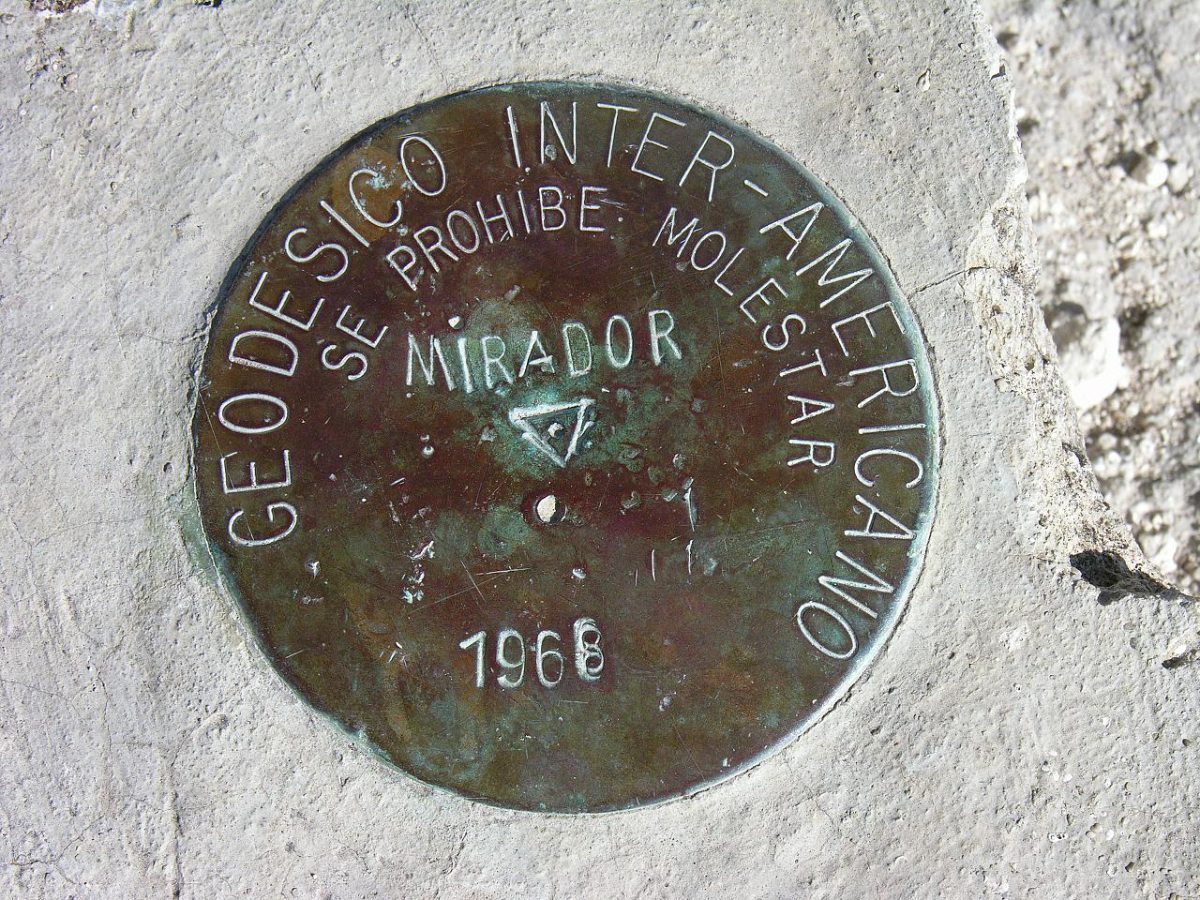
El Mirador sat at the center of an extensive network of raised stone causeways, called sacbeob, connecting the city to numerous smaller settlements scattered throughout the Mirador Basin, including Nakbe, itself one of the oldest known major Maya settlements, whose own monumental construction phases predate El Mirador’s peak by additional centuries.
These causeways, some extending many kilometers through terrain that would otherwise require navigating seasonally flooded lowland swamp areas called bajos, represent a massive engineering investment in regional infrastructure, allowing efficient movement of people, goods, and likely military forces across a Preclassic political network considerably more extensive and interconnected than earlier archaeological models assumed possible for this early period of Maya history.
The sheer scale of this causeway system, combined with the coordinated labor required to build El Mirador’s massive pyramid complexes, strongly suggests a centralized political authority capable of mobilizing and directing labor from multiple subordinate communities throughout the Mirador Basin, evidence of genuine state-level political organization considerably earlier than many twentieth-century archaeologists believed the Maya had achieved.
Nakbe’s own monumental architecture, predating even El Mirador’s peak by additional generations, suggests the broader Mirador Basin functioned as a genuinely early cradle of Maya civilization, with El Mirador eventually emerging as the dominant center within a network of already-established neighboring communities rather than developing in complete isolation.
Some sections of the causeway network connecting El Mirador to its neighboring sites remain only partially mapped even today, and ongoing lidar survey work across the Mirador Basin continues to reveal additional structures and connecting routes, suggesting the full extent of this Preclassic urban network may still be larger than currently documented estimates suggest.
Religion and the Hero Twins in Stucco
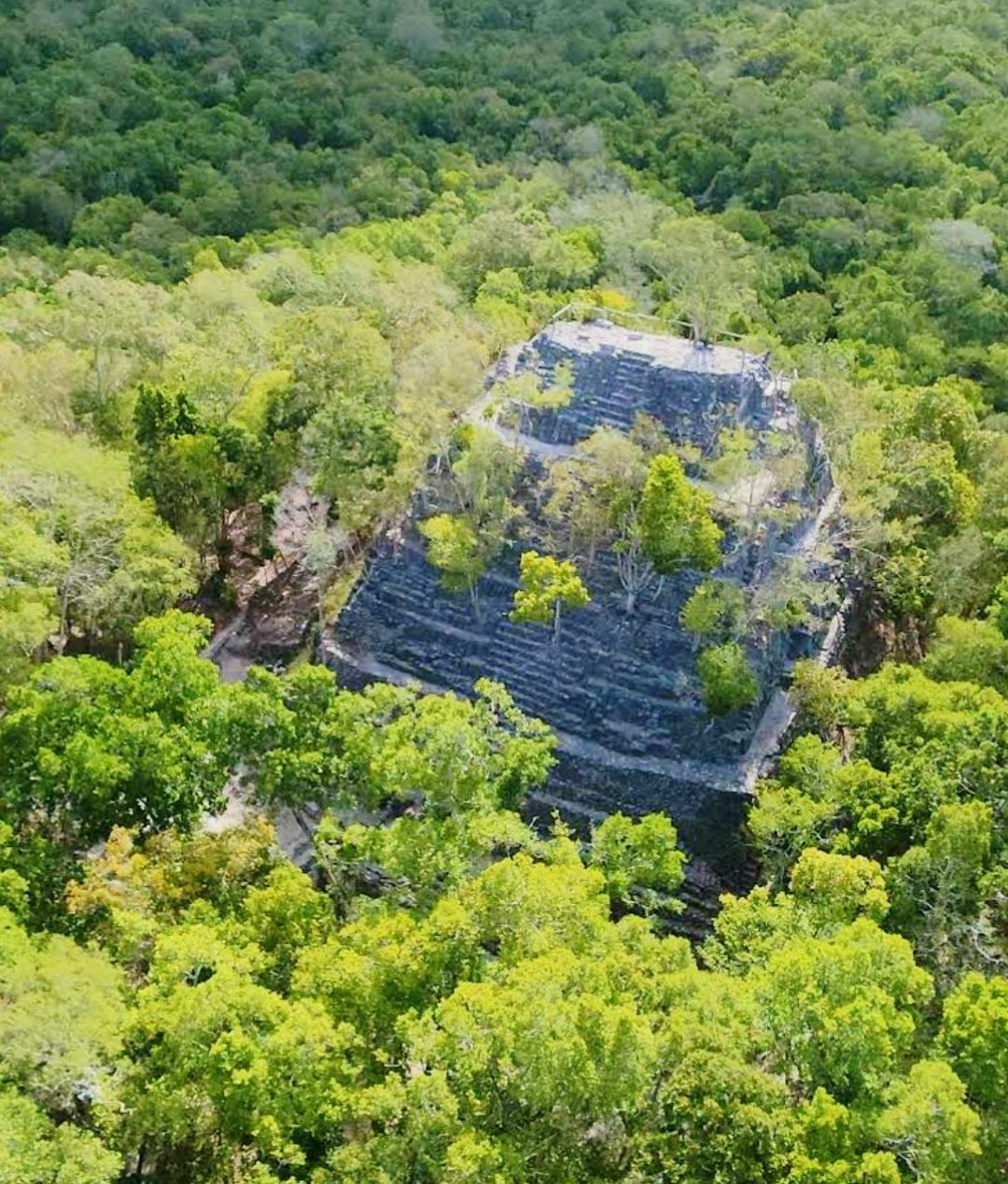
The enormous stucco masks decorating El Mirador’s major pyramids depict figures closely associated with the mythological narrative later recorded in the Popol Vuh, the colonial-era K’iche’ Maya creation epic, including imagery scholars connect to the Hero Twins, central figures in Maya cosmology who descend into the underworld to defeat the lords of death before eventually being transformed into the sun and moon.
Finding such clear iconographic connections to mythology recorded in a document written many centuries later, during the colonial period among a different though related Maya group, suggests remarkable continuity in core Maya religious and cosmological narratives across an enormous span of time and considerable geographic distance, even as specific political structures, dynasties, and even spoken languages changed dramatically throughout that same long history.
Religious ceremony at El Mirador’s peak likely centered on these creation narratives and their connection to kingship, fertility, and the maintenance of cosmic order, themes that would continue to dominate Maya royal ideology throughout the Classic period at cities like Tikal and Calakmul, whose own rulers similarly positioned themselves as essential intermediaries between their subjects and the mythological forces governing the Maya universe.
Similar Hero Twins imagery appears in Maya art across many later centuries and considerable geographic distance, suggesting these specific mythological narratives held deep and remarkably persistent significance throughout Maya cultural history, likely transmitted through oral tradition long before any surviving written version, including the eventual Popol Vuh, was ever recorded.
Abandonment and the Preclassic Collapse
El Mirador’s political and demographic decline occurred around 100 to 150 CE, considerably earlier than the more famous Terminal Classic collapse that later affected cities like Tikal, Calakmul, and Copan, and researchers continue to debate the specific causes behind this earlier Preclassic collapse, with proposed explanations ranging from drought and agricultural strain to deforestation-driven environmental degradation possibly connected to the enormous quantities of wood required to produce the lime plaster used in El Mirador’s massive construction projects.
Some environmental archaeologists have specifically proposed that the sheer scale of El Mirador’s stucco and plaster production, requiring vast quantities of wood fuel to burn limestone into usable lime plaster, may have driven deforestation severe enough to destabilize local agriculture and water management, a potentially self-inflicted environmental crisis that would represent an unusually early example of a civilization’s own construction ambitions contributing to its eventual decline.
Following this Preclassic collapse, El Mirador saw only limited and much reduced reoccupation during the Classic period, never again approaching its earlier scale or political importance, even as nearby Tikal rose to become one of the dominant powers of the Classic Maya lowlands during the centuries that followed El Mirador’s own decline.
Pollen analysis and other paleoenvironmental data recovered from sediment cores in the Mirador Basin have provided archaeologists with independent evidence of vegetation change during El Mirador’s occupation, offering some support for the deforestation hypothesis even as researchers continue debating precisely how much environmental degradation contributed to the city’s eventual decline relative to other possible factors.
Rediscovery and the Challenge of Visiting El Mirador
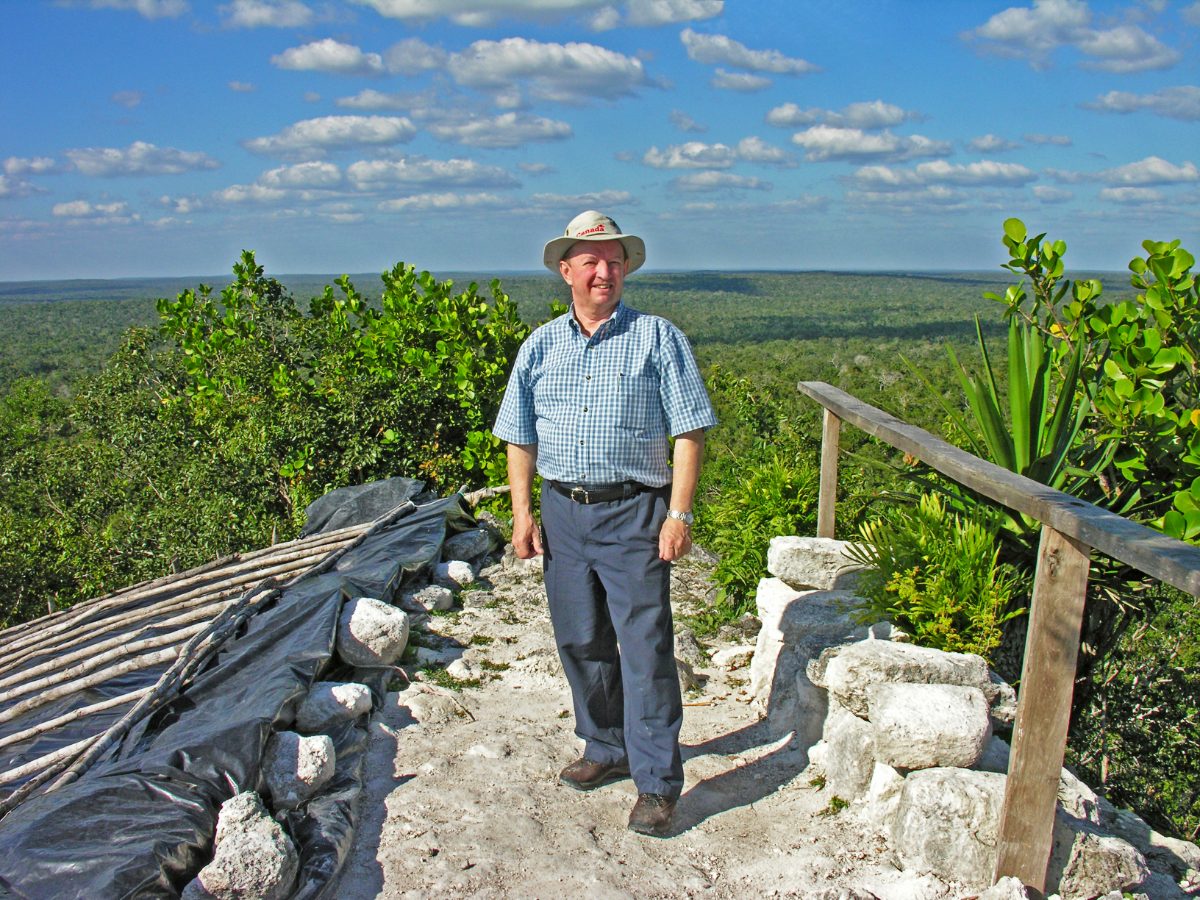
American archaeologist Richard Hansen has led the most extensive modern research at El Mirador, directing decades of excavation, mapping, and conservation work that has done more than any other single research program to establish the site’s significance for understanding early Maya civilization, alongside ongoing efforts to protect the surrounding Mirador Basin from looting and agricultural encroachment.
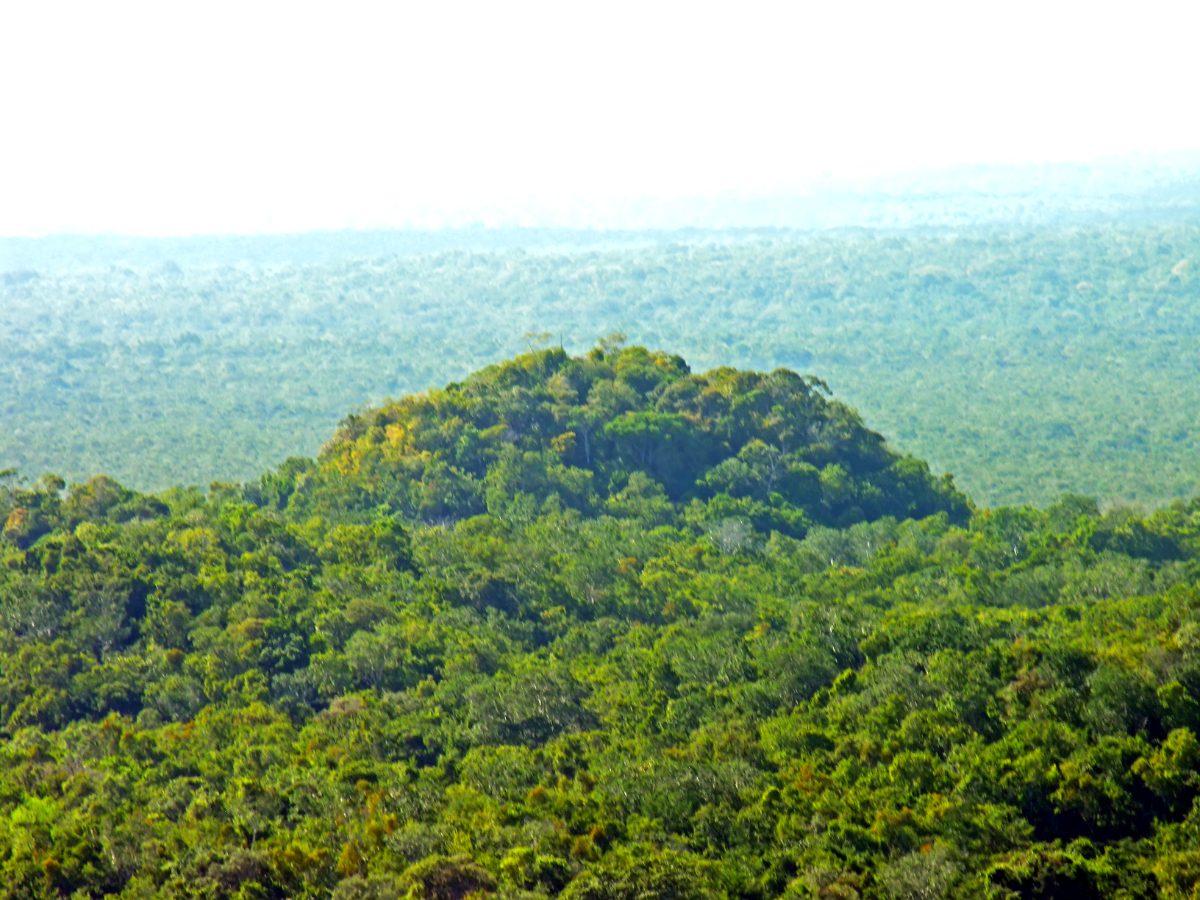
For travelers determined to visit, the standard route involves a multi-day guided trek through the Mirador Basin’s protected forest from the town of Carmelita, camping overnight along the way, an experience that combines serious archaeological tourism with genuine wilderness trekking through one of the largest remaining tracts of tropical forest in Mesoamerica. A more expensive helicopter option exists for visitors unable or unwilling to commit to the multi-day trek, though it necessarily offers a much briefer visit to the ruins themselves.
Hansen’s long-running research program has also pushed for greater legal protection of the wider Mirador Basin, advocating for its recognition as a formally protected cultural and ecological reserve given the ongoing threats posed by illegal logging, looting, and agricultural encroachment along the margins of the currently protected area surrounding the ruins.
Nearby Places to Explore
El Mirador’s possible dynastic connections and its place at the very beginning of large-scale Maya urbanism link it directly to several later Classic period cities covered elsewhere on this site, each offering useful points of comparison for understanding the full arc of ancient Maya civilization.
- Tikal: The Maya Capital of Towering Jungle Temples
- Calakmul: The Snake Kingdom Lost in the Mexican Jungle
- Copan: The Maya City of Kings and Scribes
Closing Thoughts
El Mirador forces a genuine reconsideration of when Maya civilization actually achieved its most monumental ambitions. Centuries before Tikal’s towering Classic period temples or Calakmul’s Snake Kingdom reached their own peaks of power, Preclassic builders at El Mirador were already raising one of the largest pyramids constructed anywhere in the ancient world, connected by an extensive causeway network to neighboring cities across the Mirador Basin.
Whether or not El Mirador truly proves to be the original birthplace of the later Kan dynasty that ruled Calakmul, the sheer scale of La Danta and El Tigre, still rising above an unbroken rainforest canopy reachable only after days of difficult travel, stands as some of the clearest physical evidence anywhere that Maya civilization’s architectural ambition reached extraordinary heights long before the cities most people typically associate with the ancient Maya world.
You May Like
Mafra, the Palace a King Built From a Vow