In the humid lowlands of the Motagua Valley in eastern Guatemala, a comparatively small Classic Maya city produced some of the tallest and most elaborately carved stone monuments anywhere in the ancient Maya world, achievements made all the more remarkable by the fact that this same city spent generations as a subordinate outpost of its far more powerful neighbor before finally asserting its own independence through a single, dramatic act of political violence.
Quirigua’s modest physical footprint, considerably smaller than Tikal or Calakmul, belies its historical importance. This was a city that captured and executed the king of Copan, one of the most powerful Classic Maya capitals, then used its sudden independence to commission stone monuments taller than any other carved stelae the Maya world ever produced.
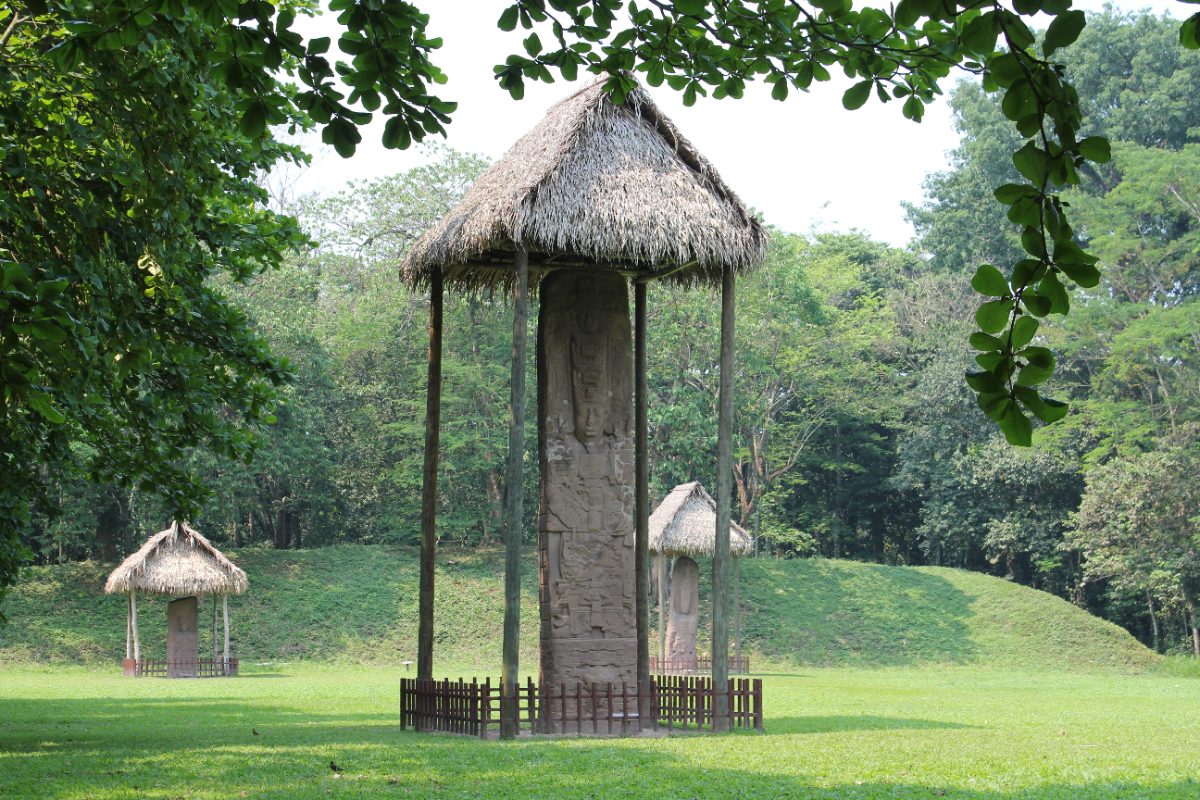
Table of Contents
- Arriving in the Motagua Valley
- Vassal to Rebel: Quirigua Under Copan’s Shadow
- The Day King 18 Rabbit Lost His Head
- Stela E: The Tallest Monument in the Maya World
- What Language Did Quirigua’s Scribes Speak?
- The Zoomorphs: Monsters Carved From Living Stone
- Jade, Obsidian, and the Motagua Trade Route
- Independence and the Reign of Cauac Sky
- Decline and the End of Quirigua’s Monuments
- Rediscovery and Visiting Quirigua Today
- Nearby Places to Explore
- Closing Thoughts
Arriving in the Motagua Valley
Quirigua sits near the Motagua River, whose valley forms a natural corridor connecting the Caribbean coast to the Maya highlands, a strategic location that placed the city directly along one of the most economically important trade routes in the entire Maya world, a geographic advantage that shaped nearly every aspect of Quirigua’s political and economic history.
The site itself occupies a relatively compact ceremonial core compared to sprawling cities like Tikal or Calakmul, but what it lacks in overall size it makes up for in the sheer density and scale of its carved monuments, with the Great Plaza containing one of the most impressive concentrations of tall stelae and massive zoomorphic sculptures found anywhere in the Maya lowlands.
UNESCO recognized Quirigua as a World Heritage Site in 1981, citing specifically the extraordinary artistic and technical achievement represented by its monumental sculpture, a relatively rare case of a UNESCO designation for a Maya site focused primarily on portable-scale artistic achievement rather than architectural scale alone.
The Motagua Fault, a major tectonic boundary running directly through the valley, has periodically produced significant earthquakes throughout the region’s history, and some archaeologists have proposed that seismic activity may have damaged or toppled some of Quirigua’s monuments over the centuries, adding an additional environmental hazard specific to this particular corner of the Maya world.
Banana plantation development in the surrounding Motagua Valley during the twentieth century, tied closely to the region’s broader agricultural and railway history, initially threatened portions of the ruins before conservation efforts secured the ceremonial core as protected parkland, an economic pressure common to many Central American archaeological sites situated within otherwise commercially valuable agricultural land.
Vassal to Rebel: Quirigua Under Copan’s Shadow
For generations during the Early and mid-Classic period, Quirigua functioned as a subordinate settlement within Copan’s political orbit, a relationship documented through hieroglyphic references at both sites describing Quirigua’s rulers in terms indicating a formal, if not entirely equal, political relationship with their more powerful neighbor to the south.
This subordination made practical sense given Copan’s considerably larger population, more extensive monumental architecture, and its position controlling a broader agricultural and trade hinterland, while Quirigua’s own strategic value rested heavily on its specific control over Motagua Valley trade access rather than any comparable independent economic or demographic base of its own.
The relationship began to change during the reign of Quirigua’s ruler K’ak’ Tiliw Chan Yopaat, known to modern scholars by the nickname Cauac Sky, whose growing ambitions and, quite possibly, a search for outside political support would culminate in one of the most consequential single events in Classic Maya political history.
Hieroglyphic references at Copan describing Quirigua’s early rulers use titles suggesting a status somewhere between a fully independent king and a purely local governor appointed directly by Copan’s own royal house, a somewhat ambiguous political arrangement that epigraphers continue to refine as additional inscriptions are studied and compared across both sites.
Trade goods and stylistic influence flowing between Copan and Quirigua during the subordination period demonstrate that political dependency did not prevent meaningful cultural and artistic exchange between the two cities, with Quirigua’s own early monuments showing clear stylistic debts to Copan’s more developed sculptural tradition before the city later forged its own distinct artistic path following independence.
The Day King 18 Rabbit Lost His Head
In 738 CE, Cauac Sky captured Copan’s reigning king, Uaxaclajuun Ubaah K’awiil, known popularly as 18 Rabbit, and had him ritually decapitated, an event recorded in explicit detail on Quirigua’s own monuments, celebrating what was clearly understood at the time as a decisive and historically significant political triumph over a formerly dominant overlord.
Epigraphers have long debated the exact circumstances that allowed a supposedly subordinate ruler to defeat and execute his own overlord so decisively, and many now believe Cauac Sky received crucial military or diplomatic backing from Calakmul, the great Snake Kingdom rival of Tikal covered elsewhere on this site, whose broader Classic period strategy of supporting rebellions against rival powers’ allied cities is well documented across multiple regions of the Maya lowlands.
Whatever combination of local ambition and outside support made it possible, 18 Rabbit’s capture and execution marked an immediate and dramatic reversal of the two cities’ political relationship, effectively ending Copan’s dominance over the Motagua Valley trade corridor and granting Quirigua’s ruler genuine independent authority for the first time in the city’s documented history.
The specific ritual and religious significance of royal decapitation in Classic Maya political culture extended well beyond simple battlefield killing, since removing and displaying an enemy king’s head carried powerful symbolic meaning tied to the ritual humiliation and cosmic defeat of a rival dynasty’s claimed divine legitimacy.
Copan’s own inscriptions, understandably, treat the loss of 18 Rabbit with considerably less celebratory language than Quirigua’s monuments, and reconstructing a balanced historical account of the event requires carefully comparing the differing perspectives and emphases found in each city’s respective hieroglyphic record.
Stela E: The Tallest Monument in the Maya World
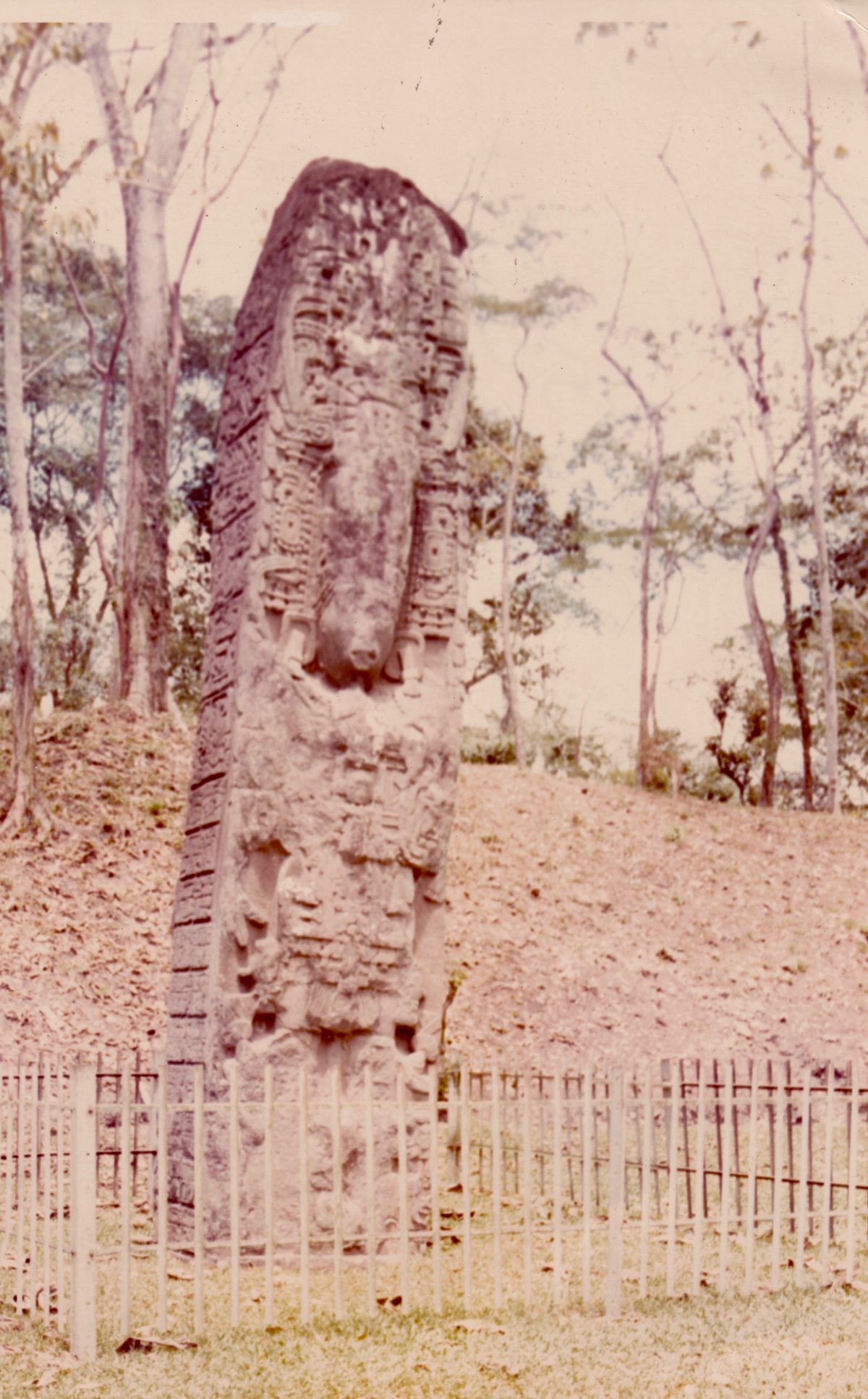
Flush with the prestige of his victory over Copan, Cauac Sky embarked on an ambitious building and monument-carving program, culminating in Stela E, erected in 771 CE and standing approximately 10.6 meters tall including its buried foundation, making it the tallest known carved stone monument produced anywhere in the ancient Maya world.
Quarried from sandstone found locally in the Motagua Valley, a material considerably easier to carve than the harder limestone typical of many other Maya cities but also somewhat more vulnerable to erosion over time, Stela E depicts Cauac Sky himself in elaborate ceremonial regalia, accompanied by dense hieroglyphic inscriptions recording his reign, his military triumph, and the ritual significance of the specific calendar date the monument commemorates.
Modern conservators have installed protective roof structures over Stela E and several other major monuments at Quirigua specifically to slow ongoing weathering of the relatively soft sandstone, a conservation necessity that also, somewhat incidentally, gives visitors a clear sense of just how much taller these monuments are than the human-scale shelters built to protect them.
Comparative measurements place Stela E’s total height, including its buried foundation section anchoring the monument securely into the ground, at a scale that exceeds even the tallest stelae erected at considerably larger and more populous Classic Maya capitals, a genuinely surprising achievement for a city of Quirigua’s comparatively modest overall size.
The specific sandstone used for Quirigua’s monuments, while easier to carve into fine detail than harder stone available elsewhere, has also made ongoing conservation considerably more urgent, since even the protective roof structures installed by modern conservators can only slow, not entirely halt, the gradual weathering affecting these irreplaceable carved surfaces.
What Language Did Quirigua’s Scribes Speak?
Quirigua’s hieroglyphic inscriptions, like those of Copan to its south, were composed in Classic Ch’olan, and most linguists believe the city’s actual spoken population language was closely related to, or a direct variant of, the Ch’olan language associated with Copan specifically, given the two cities’ close historical relationship and geographic proximity within the same southeastern Maya region.
This linguistic closeness to Copan makes sense given Quirigua’s long subordinate relationship with its larger neighbor, and some linguists specifically propose that Quirigua’s population may have spoken a variety closely ancestral to modern Ch’orti, a Ch’olan language still spoken today by indigenous communities in the same general border region of Guatemala and Honduras where both ancient cities once stood.
Despite achieving political independence from Copan in 738 CE, Quirigua’s continued use of the same Ch’olan literary and monumental conventions afterward suggests genuine linguistic and cultural continuity persisted even after the dramatic political rupture between the two cities, a reminder that political rivalry between Classic Maya cities did not necessarily require or produce distinct separate languages or scribal traditions.
Modern Ch’orti communities in the border region between Guatemala and Honduras maintain oral traditions and cultural practices that some ethnographers connect, however indirectly, to the deeper Ch’olan linguistic heritage shared by both ancient Copan and Quirigua, offering a potential living link to the language once used in the royal courts of both cities.
The Zoomorphs: Monsters Carved From Living Stone
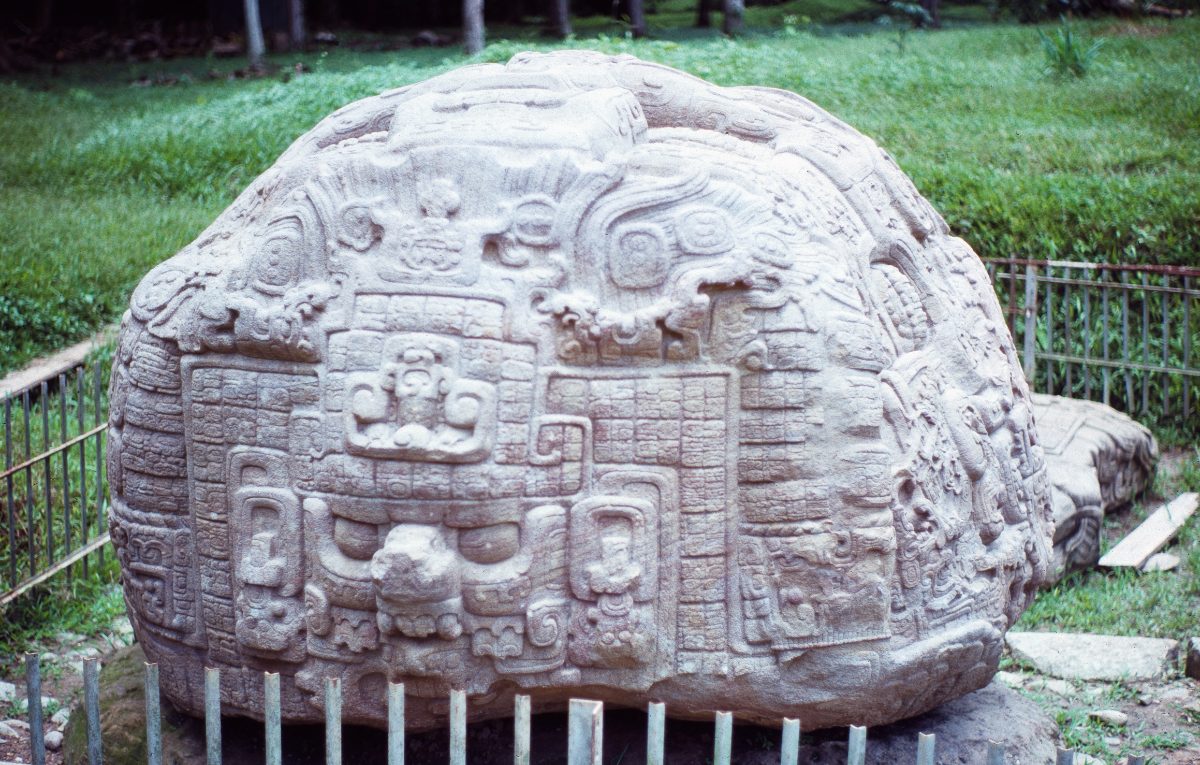
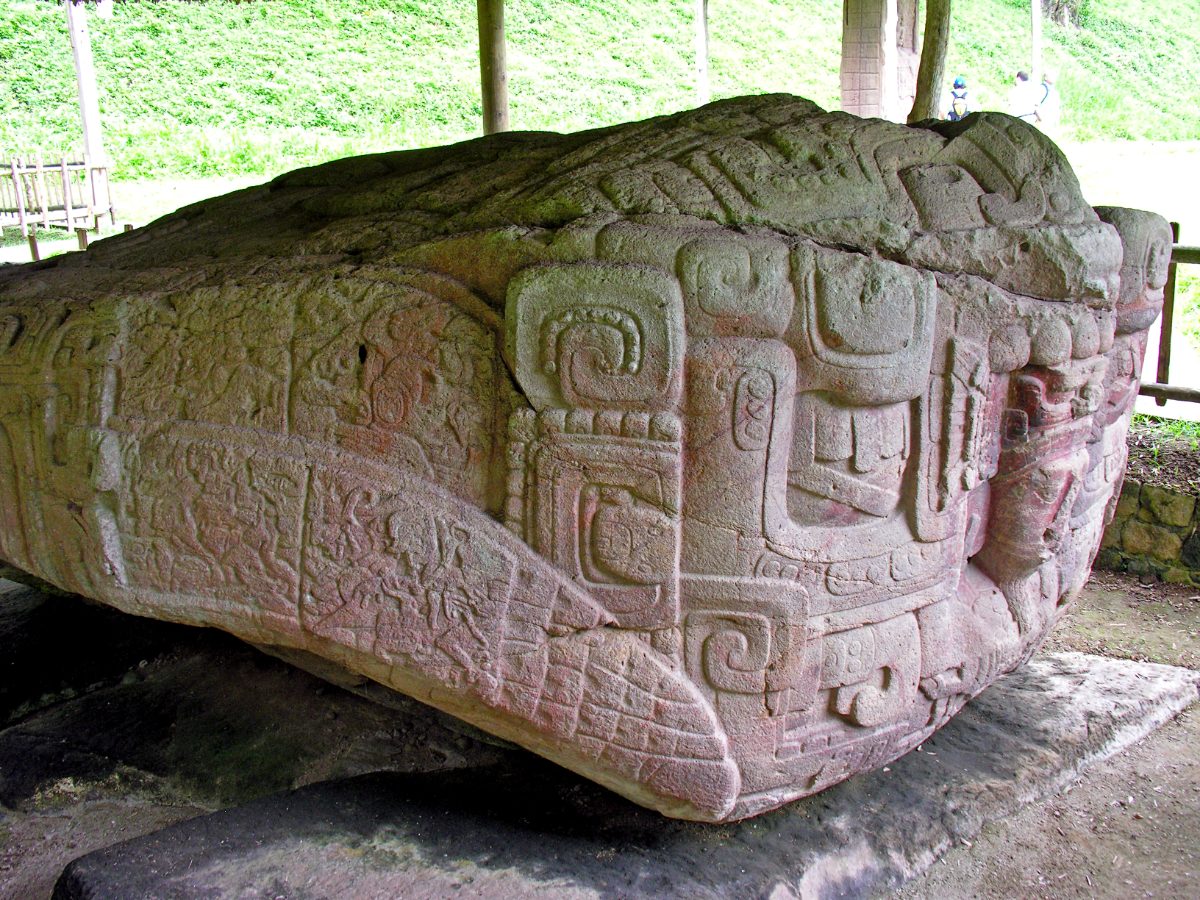
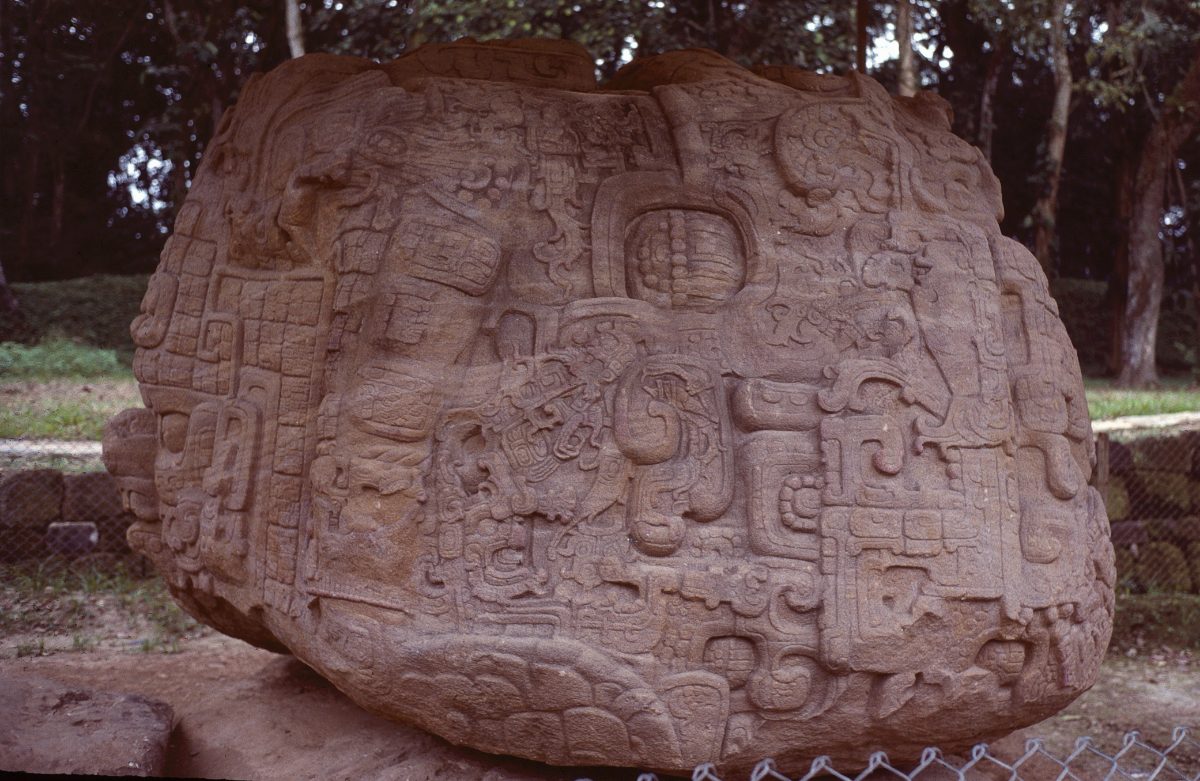
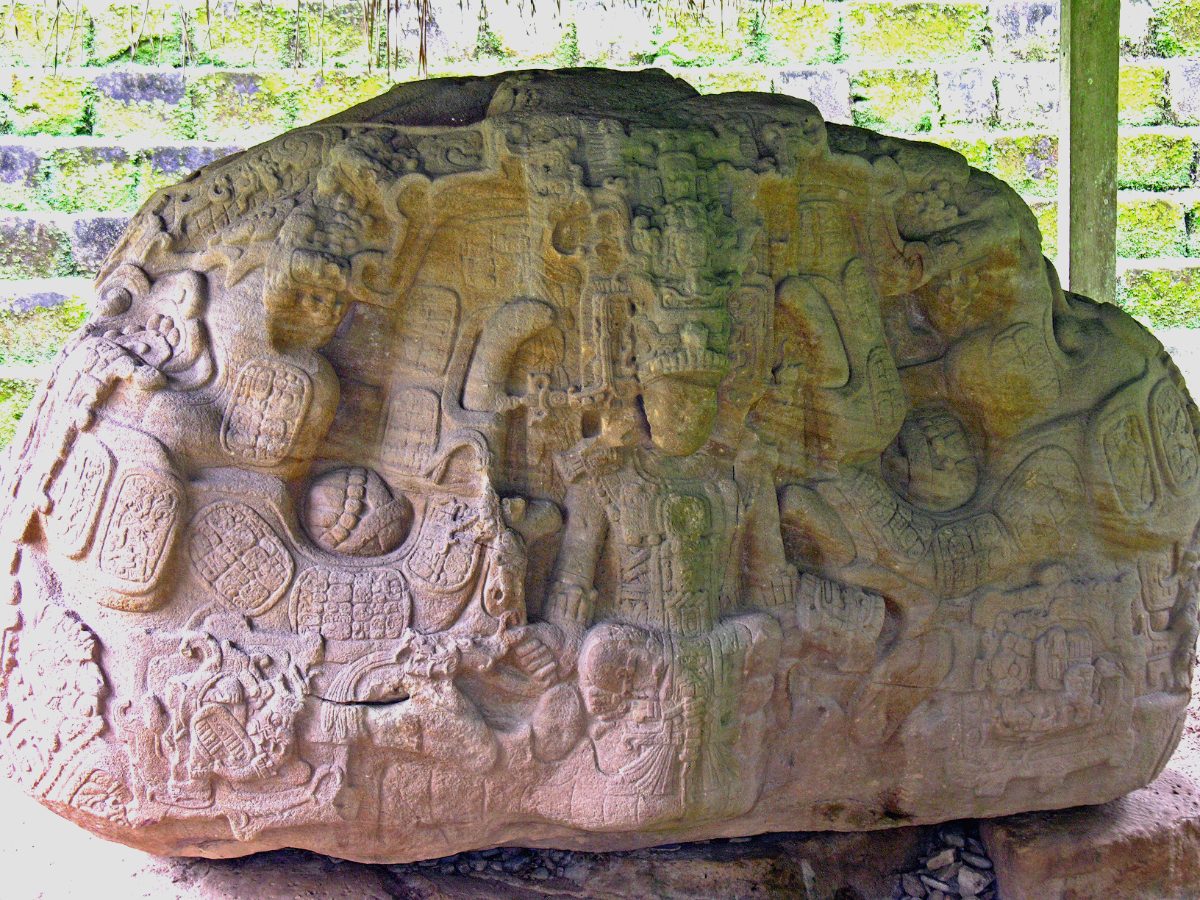
Beyond its towering stelae, Quirigua is equally famous among Maya art historians for its zoomorphs, massive boulder sculptures carved into elaborate stylized representations of mythological creatures, often combining features of jaguars, serpents, and other animals into composite supernatural beings, with human royal figures frequently depicted seated within the creature’s carved mouth or body cavity.
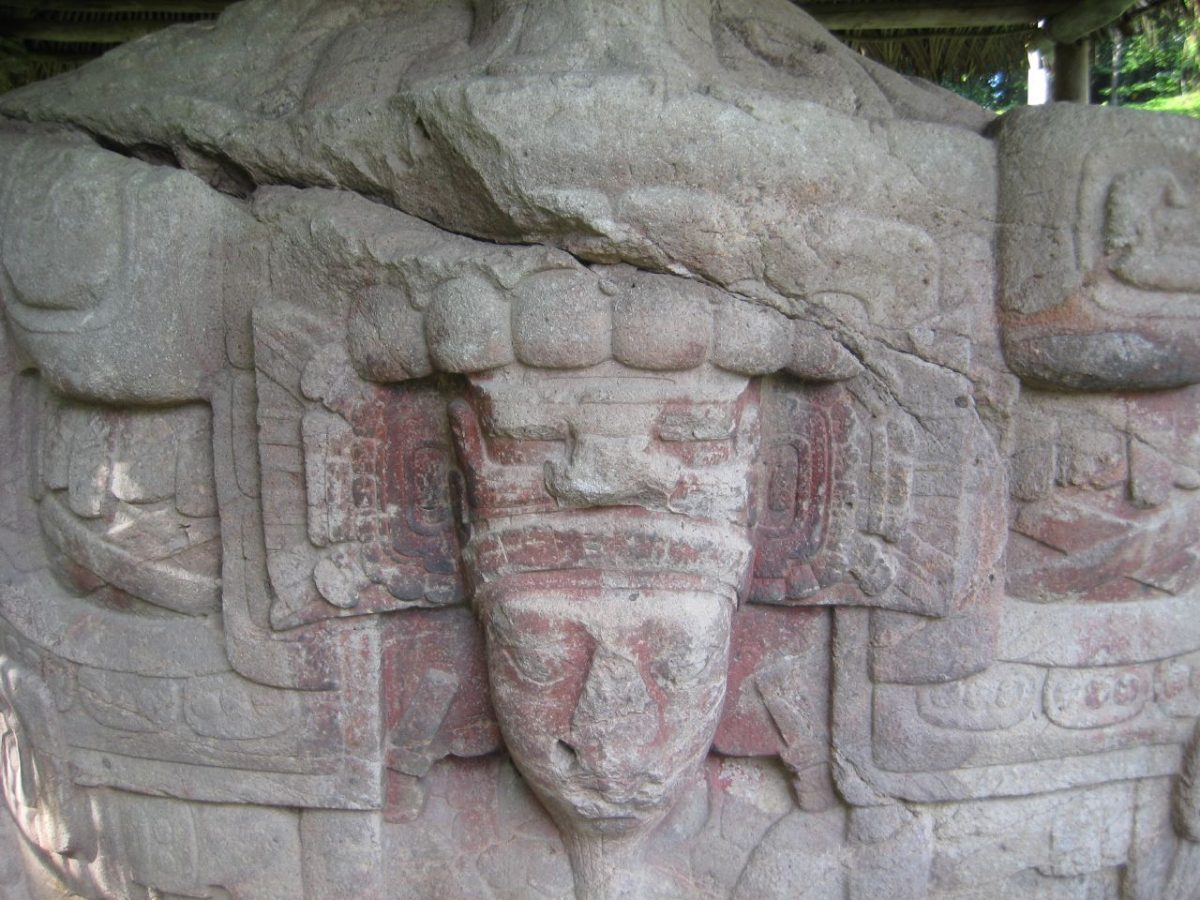
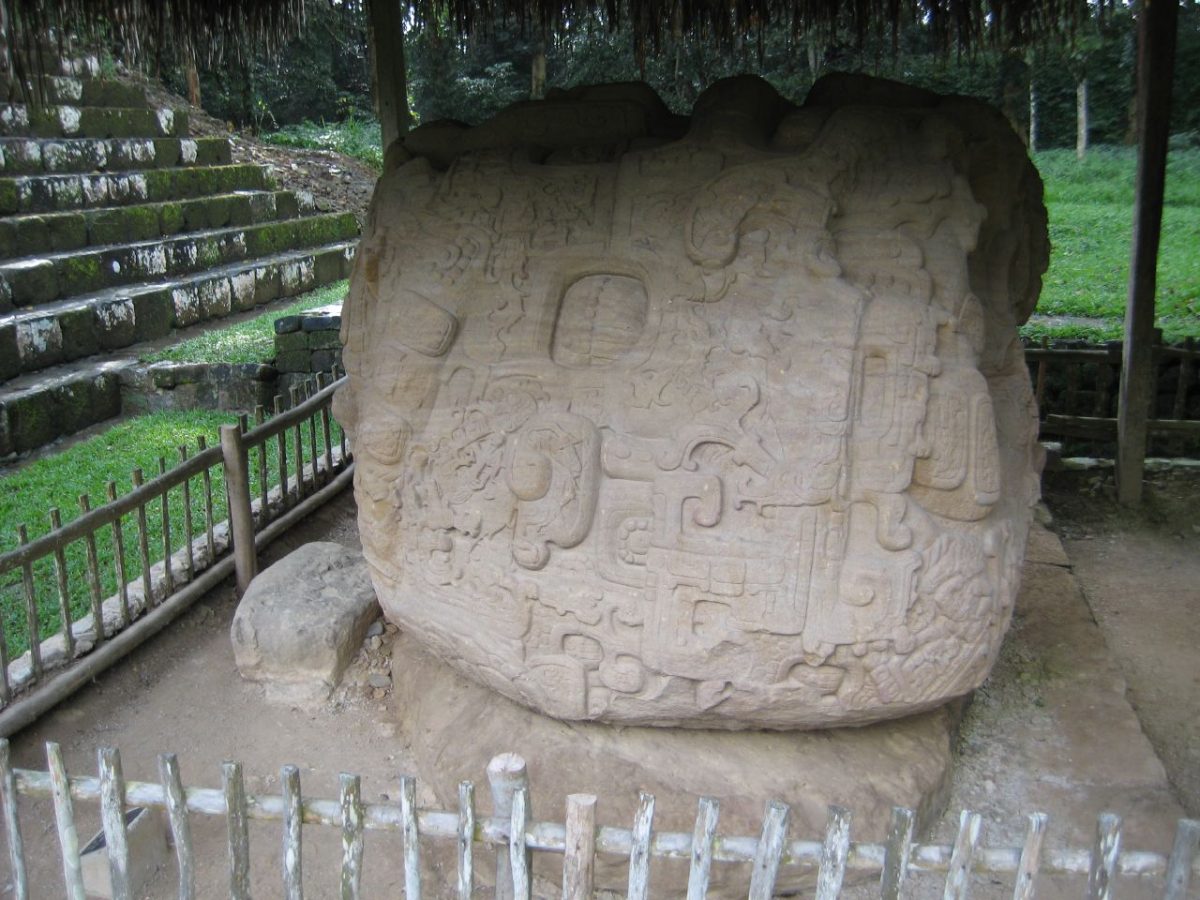
This particular sculptural genre, while not entirely unique to Quirigua, reached an unusually elaborate level of technical and artistic development here, with monuments like Zoomorph B and Zoomorph P displaying dense, deeply carved surfaces covering every visible face of the boulder in continuous mythological narrative and hieroglyphic text, a level of three-dimensional sculptural ambition distinct from the flatter relief carving typical of stelae at most other Classic Maya cities.
Producing these zoomorphs required identifying and transporting exceptionally large boulders suitable for such deep, all-over carving, then committing enormous skilled labor to executing the complex sculptural program, representing yet another way Quirigua’s rulers used monumental art specifically to project political and religious authority following the city’s hard-won independence from Copan.
Some zoomorphs at Quirigua include small carved altars positioned directly in front of the main sculpture, forming a complete ceremonial ensemble likely used for royal ritual performance, offerings, or public ceremony conducted in the immediate presence of these massive mythological stone figures.
Art historians studying Quirigua’s zoomorphs have noted stylistic parallels with sculptural traditions at a handful of other Maya sites in the broader southeastern periphery, suggesting a regional artistic tradition of elaborate boulder sculpture that Quirigua’s workshops brought to its most fully developed and technically ambitious expression.
Jade, Obsidian, and the Motagua Trade Route
The Motagua River valley running past Quirigua contains the single most important source of jade used throughout ancient Mesoamerica, a mineral resource so highly prized by Maya elites for royal regalia, funerary offerings, and portable wealth that control over its extraction and trade carried enormous economic and political significance for whichever city could dominate the valley’s access routes.
Quirigua’s strategic position directly along this trade corridor meant the city could tax, control, or directly profit from jade shipments moving between highland source areas and lowland Maya cities eager to acquire the material for royal workshops, giving Quirigua’s rulers a source of economic leverage disproportionate to the city’s relatively modest population and physical size.
Obsidian, another economically crucial volcanic glass used for cutting tools and ritual blades throughout Mesoamerica, moved along similar highland-to-lowland trade routes through the same general region, further reinforcing Quirigua’s economic importance as a control point for valuable raw materials that lowland Maya cities lacking direct highland access needed to acquire through long-distance trade.
Archaeological analysis of jade artifacts recovered from cities throughout the Maya lowlands has increasingly relied on chemical sourcing techniques capable of tracing specific jade pieces back to particular quarry locations within the Motagua Valley, work that has helped confirm just how central this specific region, and by extension Quirigua’s strategic position within it, was to elite jade consumption across the wider Classic Maya world.
Beyond jade and obsidian, the Motagua corridor likely facilitated movement of other valuable goods including cacao, quetzal feathers, and marine shell from the Caribbean coast, meaning Quirigua’s strategic position brought commercial benefit from multiple valuable trade categories rather than jade and obsidian alone.
Independence and the Reign of Cauac Sky
Following his decisive victory over Copan, Cauac Sky ruled for several more decades, using Quirigua’s newly secured independence and its control over Motagua Valley trade to fund an ambitious building program that transformed the city’s ceremonial core, expanding its plazas and commissioning the series of increasingly tall stelae that would eventually culminate in Stela E.
Later Quirigua rulers continued this monument-building tradition, though none matched Cauac Sky’s specific combination of military triumph and monumental ambition, and the zoomorph sculptures discussed above largely date to the reigns of his immediate successors, suggesting a sustained royal court tradition of monumental artistic patronage that persisted across multiple generations following the city’s independence.
This period of independent prosperity, whatever its precise duration, represents Quirigua’s clearest historical peak, a relatively brief but artistically extraordinary era during which a formerly subordinate city used a single dramatic political victory to fund some of the most technically accomplished stone sculpture the Classic Maya world ever produced.
Cauac Sky’s reign, lasting well over five decades according to surviving inscriptions, ranks among the longest documented reigns of any Classic Maya ruler, giving him ample time to fully capitalize on his early military triumph over Copan through sustained monumental construction across the following decades of his rule.
Successors to Cauac Sky appear to have maintained the political independence he secured for at least several additional decades, continuing to erect dated monuments and manage the valley’s lucrative trade corridor even as the broader Classic Maya political landscape around them grew increasingly unstable toward the end of the eighth century.
Decline and the End of Quirigua’s Monuments
Like most Classic Maya lowland cities, Quirigua experienced significant political decline during the Terminal Classic period, with the pace of monument construction slowing considerably after the early ninth century, a pattern consistent with the broader collapse affecting Copan, Tikal, Calakmul, and numerous other major Classic Maya centers during roughly the same general period.
The specific combination of factors behind Quirigua’s own decline likely mirrors those proposed for the broader Terminal Classic collapse across the Maya lowlands: some combination of prolonged drought, agricultural strain, and the cumulative destabilizing effects of generations of warfare and shifting political alliances across the region, though Quirigua’s particularly close historical entanglement with Copan means the two cities’ declines were likely connected rather than entirely independent events.
By the time of Spanish contact centuries later, Quirigua’s monumental core had long since been abandoned and substantially reclaimed by tropical vegetation, its towering stelae and elaborate zoomorphs left standing largely undisturbed in the Motagua Valley forest until modern archaeological rediscovery brought the site back to scholarly and public attention.
Some archaeologists have specifically proposed that the disruption of long-distance jade and obsidian trade networks during the broader Terminal Classic instability may have hit Quirigua’s economy particularly hard, given how disproportionately the city’s prosperity depended on its role as a trade corridor gatekeeper rather than on a large independent agricultural base of its own.
Settlement pattern surveys around Quirigua indicate a gradual population decline through the ninth century rather than a single abrupt abandonment, a pattern broadly consistent with the way scholars now understand the Terminal Classic collapse unfolding across most of the Maya lowlands, as a prolonged process of contraction rather than a sudden singular catastrophe.
Rediscovery and Visiting Quirigua Today
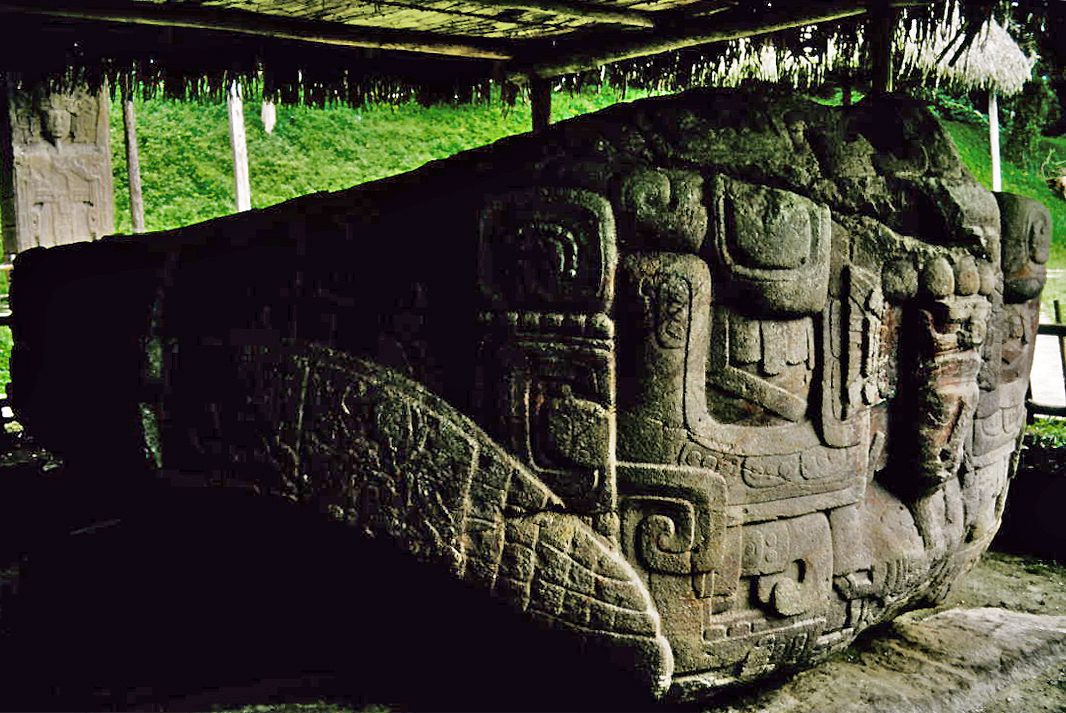
European awareness of Quirigua’s ruins grew during the nineteenth century, with explorers including John Lloyd Stephens and artist Frederick Catherwood, whose earlier documentation of Copan proved so influential, also visiting and describing Quirigua’s monuments, helping establish the site’s significance within the wider emerging scholarly understanding of ancient Maya civilization.
Systematic archaeological excavation and conservation efforts through the twentieth century, including work sponsored by the Carnegie Institution and later Guatemalan cultural heritage authorities, stabilized the site’s major monuments and cleared the surrounding forest sufficiently to allow public access to the Great Plaza and its extraordinary collection of stelae and zoomorphs.
Today Quirigua remains a relatively quiet, uncrowded archaeological park compared to more heavily visited Guatemalan sites like Tikal, giving visitors ample time and space to appreciate the genuinely startling scale of Stela E and the intricate, all-over carving of the site’s famous zoomorphs at a leisurely, unhurried pace.
Stephens’s nineteenth-century published account of Quirigua, illustrated with Catherwood’s detailed engravings, helped introduce the site’s extraordinary monuments to an international audience decades before rigorous scientific archaeology arrived, part of the same broader wave of exploration literature that first brought widespread attention to ancient Maya civilization generally.
Nearby Places to Explore
Quirigua’s dramatic political history connects it directly to several other major Classic Maya cities covered elsewhere on this site, each offering essential context for understanding the wider network of Classic Maya political rivalry and alliance.
- Copan: The Maya City of Kings and Scribes
- Calakmul: The Snake Kingdom Lost in the Mexican Jungle
- Tikal: The Maya Capital of Towering Jungle Temples
Closing Thoughts
Quirigua’s history compresses an entire arc of Classic Maya political drama into a single, relatively small site: generations of quiet subordination to a more powerful neighbor, a single dramatic act of rebellion that beheaded a rival king, and a subsequent burst of monumental artistic ambition that produced the tallest carved stone monument the Maya world ever built.
Stela E and the site’s remarkable zoomorph sculptures stand today as physical evidence of exactly how much political and economic capital a single military victory could generate for an ambitious Classic Maya ruler, transforming a former vassal city into a genuine center of artistic innovation within just a few decades of securing its independence.
You May Like
Mafra, the Palace a King Built From a Vow


2 thoughts on “How Quirigua’s Vassal King Beheaded His Overlord”