On the desert coast south of modern Lima, a sprawling complex of adobe pyramids and plazas overlooks the Pacific Ocean. Pachacamac was never the capital of a single empire. Instead, it was something rarer in the ancient Andes: a religious center so respected that empire after empire chose to preserve it rather than destroy it, each one adding its own temples to a site whose oracle had already been consulted for over a thousand years by the time the Inca arrived.
Long before Cusco existed as an imperial capital, pilgrims were already traveling to this stretch of coastline to ask questions of a god believed to control earthquakes, one of the most feared and unpredictable forces in a region prone to devastating seismic activity.
Table of Contents
- An Oracle That Outlasted Every Empire That Ruled It
- The God Pachacamac and the Shaking Earth
- The Temple of the Sun and the Inca Takeover
- The Temple of the Moon and the Chosen Women
- A Pilgrimage Site Speaking Many Languages
- Faith Before the Inca Arrived
- How the Inca Absorbed a Rival Cult
- Pizarro’s Men and a Temple Stripped of Gold
- A City of Successive Cultures, Not Just One
- Excavating Pachacamac Today
- Nearby Places
An Oracle That Outlasted Every Empire That Ruled It
Archaeological evidence shows that people were building at Pachacamac as early as 200 CE, with the site continuing to grow and evolve for well over a thousand years afterward, passing through the hands of the Lima culture, the Wari empire, the Ychsma people, and finally the Inca, each of whom left their own architectural mark rather than erasing what came before.
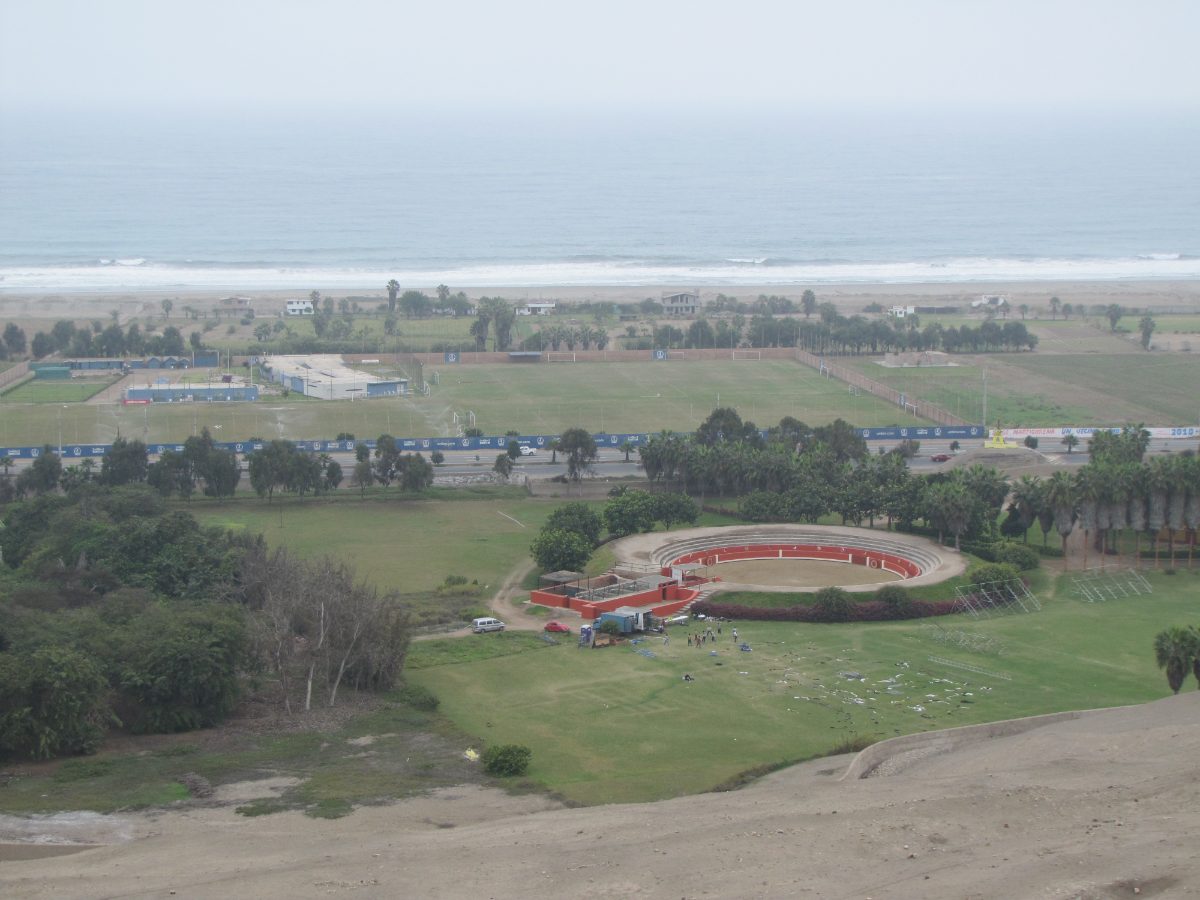
This layered history makes Pachacamac unusual among major Andean sites. Cities like Chan Chan or Chavin de Huantar are strongly associated with a single dominant culture, but Pachacamac’s importance came specifically from its religious continuity, a sacred reputation valuable enough that successive rulers found it more useful to co-opt the site’s prestige than to tear it down.
By the time Spanish chroniclers recorded their observations in the 16th century, Pachacamac was already described as one of the most important pilgrimage sites in the entire Andean world, drawing worshippers from regions the Inca had only recently incorporated into their empire.
Pachacamac’s location also gave it strategic economic value, sitting near the mouth of the Lurin River valley, a fertile area that supported significant agricultural production and connected the coast to trade routes reaching into the highlands. This combination of religious prestige and economic access helped the site accumulate wealth and influence across many centuries of changing political control.
Spanish colonial administrator and chronicler accounts from the 16th century describe Pachacamac’s reputation as extending across a remarkably wide territory, with pilgrims reportedly traveling from regions hundreds of kilometers away specifically to consult the oracle, a scale of religious pilgrimage rivaling any other site in the pre-Columbian Andes.
The site’s proximity to the Pacific also meant its priests and administrators had access to marine resources, including fish and shellfish, supplementing the agricultural output of the surrounding valley and helping sustain a population large enough to maintain the extensive building projects visible at the site today.
The God Pachacamac and the Shaking Earth
The site takes its name from Pachacamac, a creator deity closely associated with earthquakes and the animating force of the earth itself. In coastal Andean belief, Pachacamac was understood as a powerful, somewhat unpredictable god capable of causing the ground to shake, making his favor something rulers and commoners alike had strong incentive to secure through offerings and pilgrimage.
Unlike the Inca sun god Inti, whose worship centered on the sky and celestial order, Pachacamac’s domain was the earth itself, reflecting a somewhat different religious emphasis rooted in the specific anxieties of a coastal population regularly exposed to earthquakes and tsunamis.
Spanish chroniclers, including Pedro Cieza de Leon, recorded that the god’s name was treated with such reverence that it was considered dangerous or forbidden to speak carelessly, an indication of just how central this deity remained to religious life along the central Peruvian coast even after centuries of political upheaval and changing imperial control.
Some chroniclers recorded a related myth describing Pachacamac as married to, or otherwise connected with, Pachamama, the earth mother goddess widely worshipped throughout the Andes, though the exact relationship between these two figures varies across different colonial-era accounts and may reflect regional variation in how coastal and highland communities understood earth-related deities.
The god’s association with earthquakes carried practical as well as spiritual weight. Peru’s coast sits along a highly active seismic zone, and devastating earthquakes were a recurring feature of life in the region long before written records began, giving Pachacamac’s oracle an unusually direct, tangible connection to a real and recurring natural threat.
The Temple of the Sun and the Inca Takeover
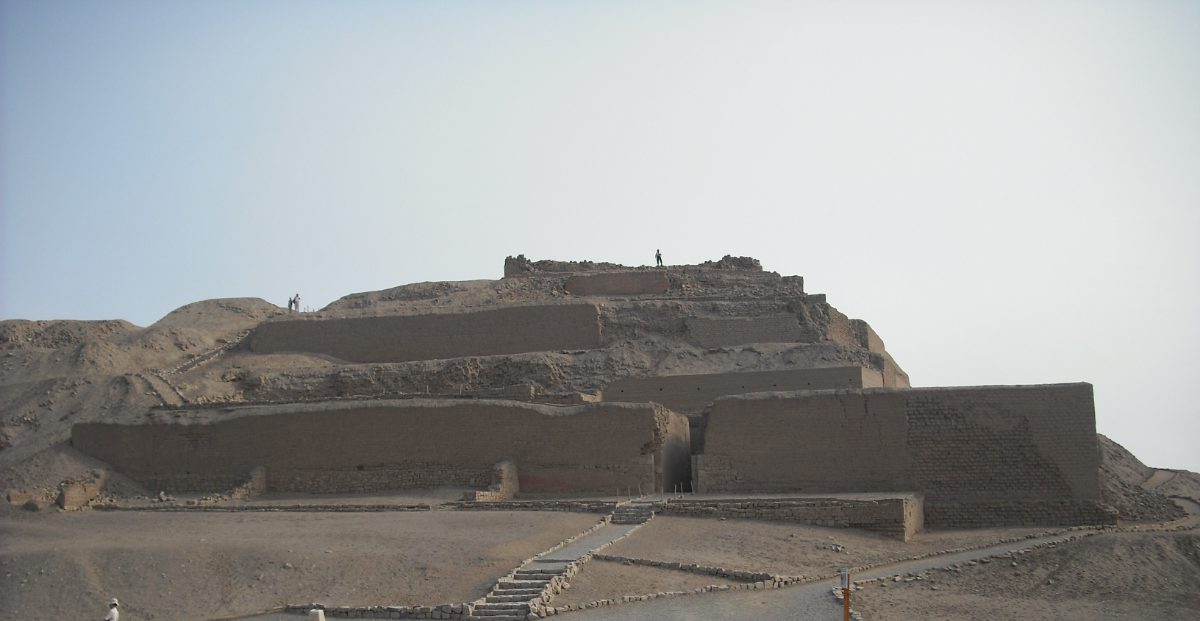
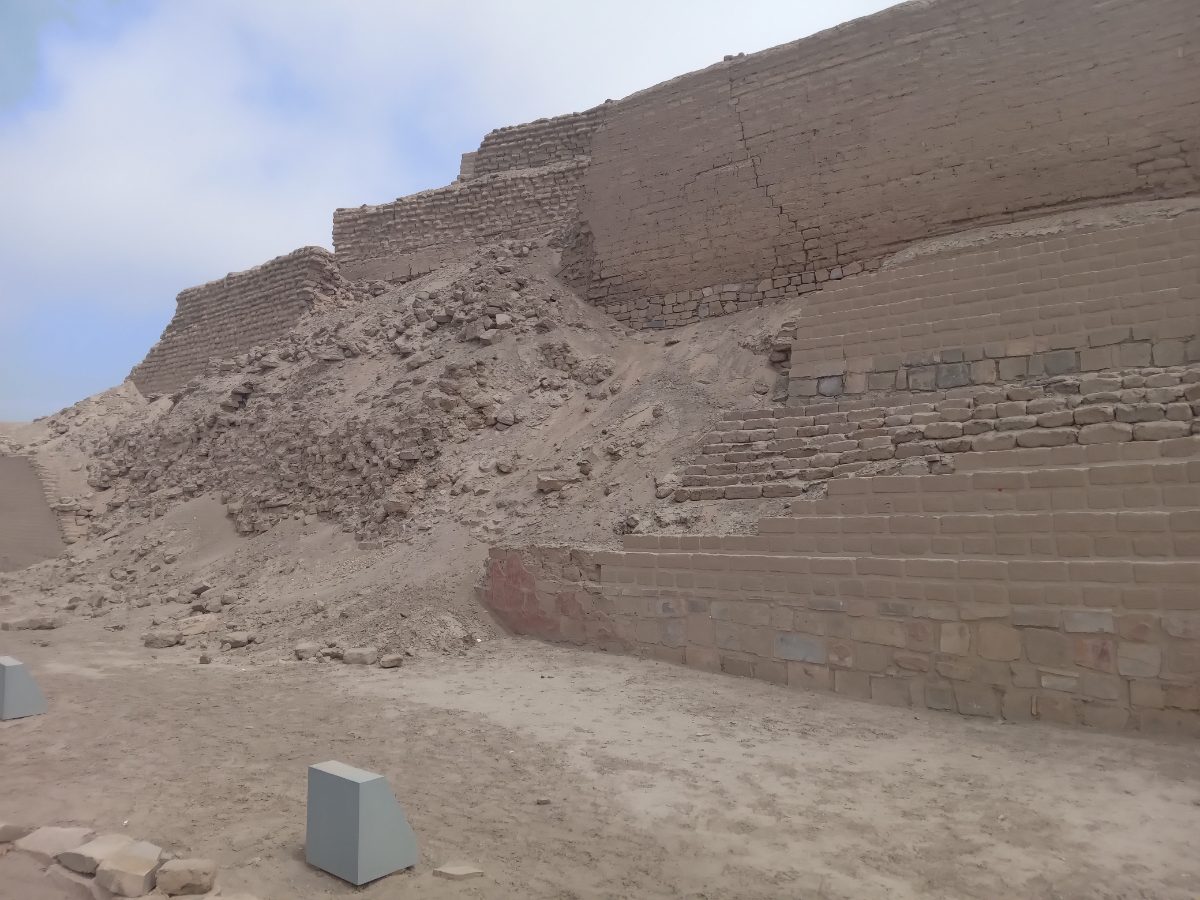
The most visible structure at Pachacamac today is the Temple of the Sun, a massive stepped adobe pyramid built by the Inca after they incorporated the site into their empire in the 15th century. Constructed atop an artificial platform, the temple offered sweeping views over the surrounding plazas and out toward the Pacific Ocean.

Rather than replacing the older oracle temple dedicated to Pachacamac, the Inca built their Temple of the Sun as a separate, parallel structure, a deliberate strategy that allowed them to introduce their own state religion centered on Inti while still permitting, and even formally supporting, continued worship of the older earth god.
This approach mirrors a broader Inca strategy seen at other conquered religious sites, including the Cañari sacred grounds later incorporated into the Inca temple complex at Ingapirca, where existing local religious traditions were absorbed and layered with Inca state religion rather than simply erased.
Construction of the Temple of the Sun involved transporting and shaping enormous quantities of adobe brick, a labor-intensive process that reflects the scale of resources the Inca state was willing to commit to formally recognizing Pachacamac’s religious significance rather than treating the site as a minor regional shrine.
Excavations around the temple platform have recovered ceramics and offerings reflecting both Inca imperial style and older local Ychsma traditions, physical evidence of the religious blending the Inca deliberately encouraged at this particular site.
The temple’s elevated position was almost certainly deliberate, allowing it to be seen from a considerable distance by pilgrims approaching along the coastal routes, reinforcing its symbolic dominance over the surrounding plazas and smaller structures below.
Modern conservation teams have worked to stabilize the temple’s stepped terraces, which suffered significant erosion over the centuries following the site’s abandonment, using techniques designed to protect the original adobe fabric while allowing continued public access to the upper platforms.
The Temple of the Moon and the Chosen Women

Near the older oracle temple stands the Temple of the Moon, also known as the Acllahuasi, a walled compound believed to have housed acllas, women selected to serve the state religion through weaving, brewing chicha for ceremonial use, and other specialized duties. Similar institutions existed at other major Inca religious centers, reflecting a standardized element of Inca imperial religious administration.

The Acllahuasi’s layout, with its narrow interior corridors and controlled access points, reflects the restricted, carefully managed nature of the institution, distinct from the more open, publicly accessible plazas found elsewhere at the site where pilgrims gathered before consulting the oracle.
Some acllas were selected for marriage to Inca nobility or sacrifice during major state ceremonies, while others spent their lives dedicated entirely to religious service, illustrating the complex and often coercive role women played within the formal structure of Inca state religion.
Textile fragments recovered from the Acllahuasi complex indicate a high level of weaving skill, consistent with the specialized training acllas received as part of their religious duties, producing fine cloth used in state ceremonies and as diplomatic gifts distributed by Inca rulers to reinforce political alliances.
Access to the Acllahuasi was tightly restricted even in antiquity, with narrow doorways and winding internal passages designed to control movement in and out of the compound, architectural choices that reflect just how carefully Inca administrators managed the women serving within its walls.
A Pilgrimage Site Speaking Many Languages
Pachacamac’s long history as a multicultural pilgrimage site means no single language can be said to define it the way Quechua defines Cusco or Yucatec Maya defines Chichen Itza. The Lima culture and later Ychsma people who controlled the region for centuries before the Inca conquest likely spoke languages now lost to history, with little surviving evidence to reconstruct them in any detail.
When the Inca incorporated Pachacamac into their empire, they introduced Quechua as an administrative language, much as they did across their other conquered territories, layering it atop whatever local languages pilgrims from different coastal and highland regions already spoke when they arrived to consult the oracle.
This linguistic uncertainty stands in contrast to the living Quechua tradition documented at Cusco, and it reflects a broader pattern along Peru’s central coast, where pre-Inca languages have left far fewer traces than the highland Quechua and Aymara language families that survive today.
Archaeologists studying skeletal remains and grave goods at Pachacamac have identified individuals whose burial styles suggest origins from distant regions of the empire, physical evidence supporting chronicled accounts of the site’s wide-reaching pilgrimage network and its role as a genuine crossroads of Andean cultures and, by extension, languages.
Faith Before the Inca Arrived
Long before the Inca arrived, Pachacamac’s oracle already held enormous religious authority across the central Andean coast. Pilgrims traveled from distant regions specifically to pose questions to priests believed to channel the god’s will, on matters ranging from the outcome of military campaigns to whether a ruler would recover from illness.
During the period of Wari influence, roughly 600 to 1000 CE, Pachacamac appears to have functioned as an important religious and administrative node within a broader network connecting the coast to highland centers, a role that likely helped preserve and even expand its religious prestige even as political control of the region shifted around it.
The later Ychsma culture, which controlled the site directly before Inca conquest, expanded the oracle’s influence further, building much of the pyramid and plaza complex that still defines the older, non-Inca portions of the site today.
The scale of construction undertaken by the Ychsma culture in the centuries before Inca conquest suggests a politically organized and economically capable society in its own right, not merely a passive religious site awaiting eventual incorporation into a larger empire, but an important regional power whose oracle happened to be its greatest and most enduring asset.
Ceramic styles recovered from Ychsma-era construction layers show distinctive local characteristics that differ noticeably from both earlier Lima-culture pottery and later Inca imperial styles, giving archaeologists a useful way to date and distinguish between the site’s successive construction phases.
How the Inca Absorbed a Rival Cult
When the Inca expanded into the central coast in the mid-15th century under Tupac Inca Yupanqui, they recognized that Pachacamac’s religious authority was too deeply entrenched to simply override. Rather than suppressing the oracle, they formally incorporated it into the state religious system, building their Temple of the Sun alongside the existing shrine and reportedly consulting the oracle themselves on matters of state.
Spanish chroniclers recorded that Inca emperors held Pachacamac’s oracle in genuine respect, treating it as one of the few religious institutions powerful enough to warrant direct imperial engagement rather than outright replacement, a rare acknowledgment of religious authority existing independently of the emperor’s own claimed divine lineage through Inti.
This policy of religious accommodation likely helped the Inca secure the loyalty, or at least the cooperation, of coastal populations who might otherwise have resented having a foreign highland power impose its own gods over their long-established local traditions.
This strategy of religious accommodation contrasts somewhat with the more aggressive imposition of Inca state religion seen in other conquered territories, suggesting Inca administrators calibrated their approach to local religious institutions based on how deeply entrenched and politically valuable those institutions already were before conquest.
Pizarro’s Men and a Temple Stripped of Gold
Hernando Pizarro, brother of the conquistador Francisco Pizarro, led an expedition to Pachacamac in 1533, having heard exaggerated reports of the temple’s wealth. Spanish accounts describe considerable disappointment upon arrival, since much of the site’s most valuable portable wealth had reportedly already been removed or hidden by local priests anticipating the Spanish approach.
Despite this, Spanish forces still looted significant quantities of gold, silver, and other valuables from the site, and the conquest marked the effective end of the oracle’s centuries-long religious authority, as Spanish colonial administrators actively suppressed indigenous religious practice across the region in the following decades.
Unlike Qorikancha in Cusco, which the Spanish built directly over with a Catholic church, Pachacamac was largely abandoned rather than repurposed, left to the desert climate that would ultimately help preserve its adobe structures far better than a more humid environment would have allowed.
The relatively limited spoils recovered by Hernando Pizarro’s expedition stand in contrast to the far larger hauls taken from Qorikancha in Cusco, suggesting that word of the approaching Spanish forces had traveled ahead of them along established pilgrimage and trade routes, giving local priests time to remove or conceal the temple’s most valuable religious objects.
A City of Successive Cultures, Not Just One
Archaeologists studying Pachacamac often describe it less as a single ancient city and more as a palimpsest, a site where each successive culture built its own structures using, modifying, or simply building alongside what earlier occupants had left behind. This layering makes excavation at Pachacamac particularly complex, since a given structure may show evidence of Lima, Wari, Ychsma, and Inca-era modification all in a single location.
The site includes dozens of smaller pyramid complexes beyond the well-known Temple of the Sun and Temple of the Moon, many built by the Ychsma culture and only partially excavated, representing administrative and elite residential functions that supported the oracle’s religious operations and the pilgrims who traveled to consult it.
This multicultural layering offers a valuable corrective to narratives that treat Andean history as a simple progression toward a single dominant Inca civilization, showing instead how much cultural and religious continuity persisted across changing political regimes over more than a thousand years.
This layered, multicultural character makes Pachacamac an unusually rich site for studying continuity and change in Andean religious practice over the long term, since a single excavation trench can sometimes reveal centuries of overlapping construction and ritual activity in a single vertical sequence.
Beyond the major temples, Pachacamac’s urban core included residential compounds, storage facilities, and smaller shrine structures whose specific functions remain only partially understood, representing a substantial ongoing area of research for archaeologists working at the site.
Excavating Pachacamac Today

Formal archaeological investigation at Pachacamac began in the early 20th century, with German archaeologist Max Uhle conducting some of the first systematic excavations at the site in 1896, work that helped establish much of the foundational chronology later researchers would continue to refine.
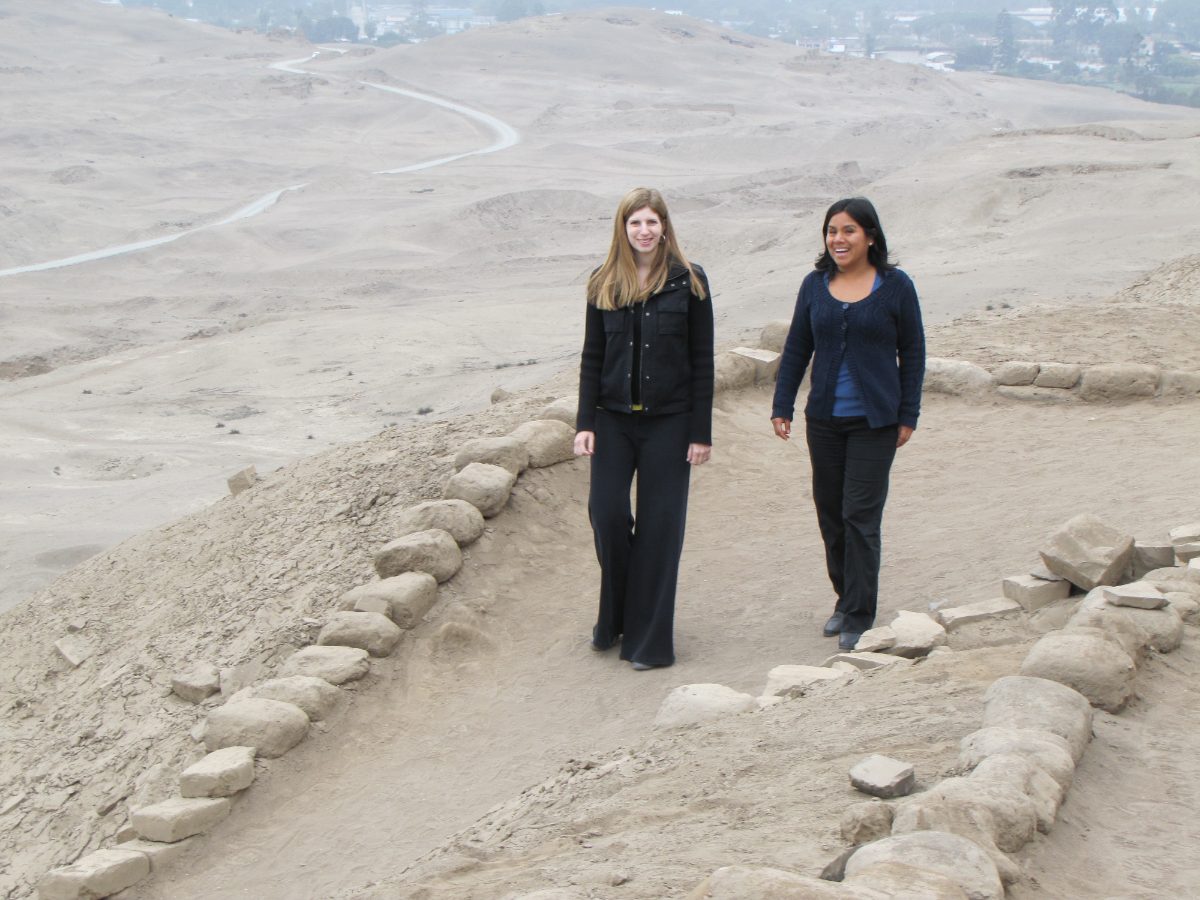
Ongoing excavation, conservation, and restoration work continues at Pachacamac today, managed in coordination with an on-site museum that displays artifacts recovered from across the complex, including textiles, ceramics, and ceremonial objects spanning the site’s many centuries and successive cultures.
Located less than 30 kilometers from central Lima, Pachacamac remains accessible to a large urban population, making it one of the more heavily visited archaeological sites on Peru’s central coast, even though it receives considerably less international attention than Machu Picchu or the Nazca Lines further south.
Peru’s Ministry of Culture continues to fund ongoing conservation work at the site, addressing erosion and structural concerns tied to the fragile adobe construction material used throughout Pachacamac, a material that, while well suited to the region’s dry climate, remains vulnerable to occasional heavy rainfall events and long-term structural settling.
Nearby Places
Pachacamac’s long religious history connects it to several other major sites across the Andean world explored elsewhere in this series.
- Wari, the highland empire whose influence over the central coast helped shape Pachacamac’s rise as a religious center
- Machu Picchu, the royal Inca estate built during the same century the empire absorbed Pachacamac’s oracle
- Sipan, the Moche royal tomb whose discovery reshaped understanding of religious authority on Peru’s northern coast
Closing Thoughts
Pachacamac survived precisely because it was never worth destroying. Empire after empire found it easier, and more useful, to fold its oracle into their own religious systems than to erase a shrine whose authority had already outlasted whichever power happened to be ruling the coast at any given moment. In a region defined by conquest and upheaval, that kind of religious staying power is its own remarkable achievement.
You May Like
Mafra, the Palace a King Built From a Vow


One thought on “Pachacamac’s Oracle Survived Every Empire That Conquered It”