Before the pyramids of Giza rose, the story of monumental stone architecture began a little to the south, at Saqqara, the sprawling desert cemetery of Egypt’s first capital, Memphis. Here the architect Imhotep raised the Step Pyramid of Djoser, the oldest large stone building in the world, and here Egyptians buried their dead for over three thousand years.
Saqqara and the ruins of Memphis together tell the story of how ancient Egyptian civilisation took shape: a great capital on the Nile and, beside it, a necropolis where kings, nobles and sacred bulls were laid to rest beneath pyramids and painted tombs.
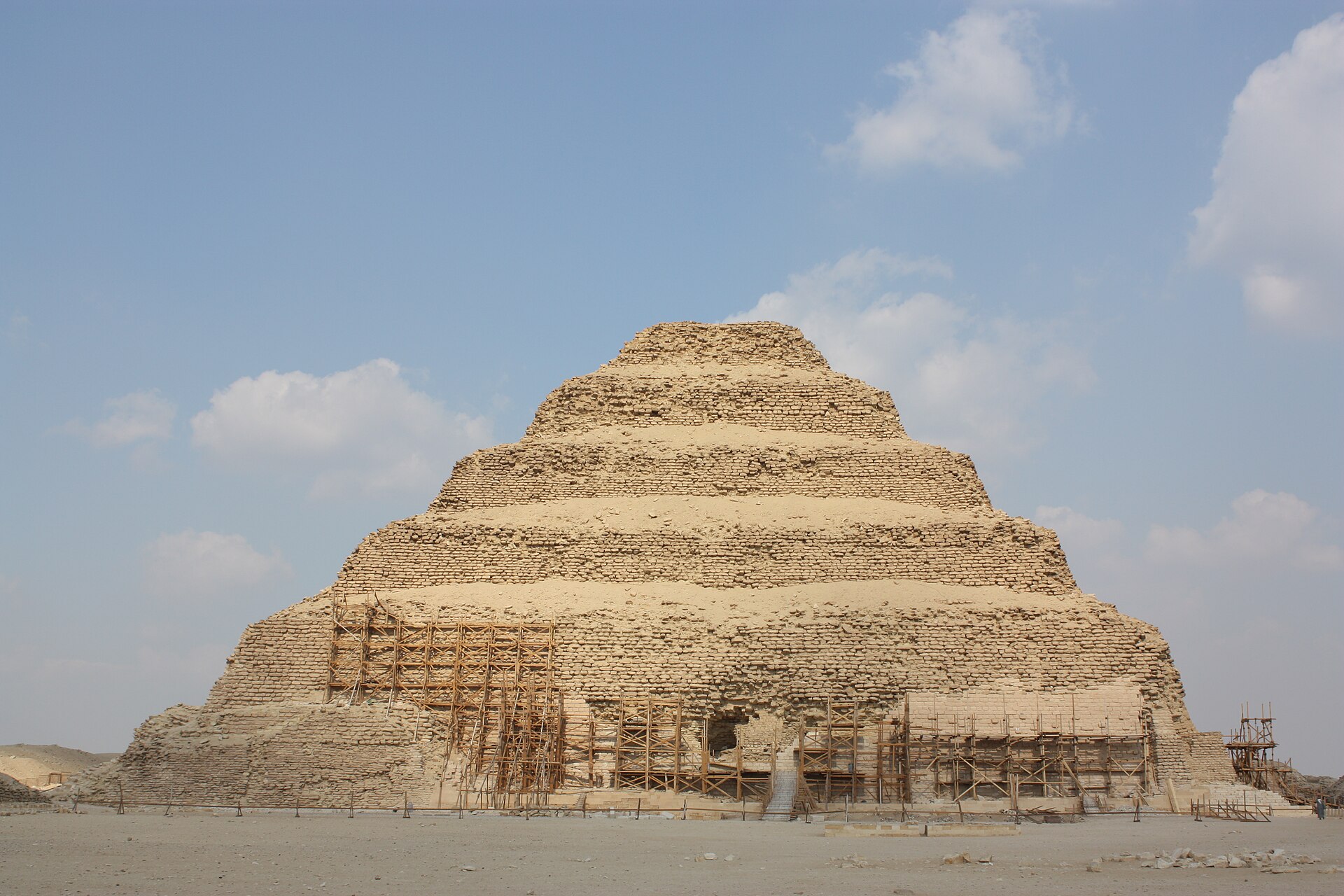
Table of Contents
- The Necropolis of Ancient Memphis
- Memphis: Egypt’s First Great Capital
- The Step Pyramid of Djoser
- Imhotep, the First Named Architect
- A Complex That Invented Stone Architecture
- The Pyramid Texts
- The Serapeum and the Apis Bulls
- Mastaba Tombs and Their Reliefs
- The Alabaster Sphinx of Memphis
- Rediscovery and UNESCO
- Getting There
- Nearby Places
- Closing Thoughts
The Necropolis of Ancient Memphis
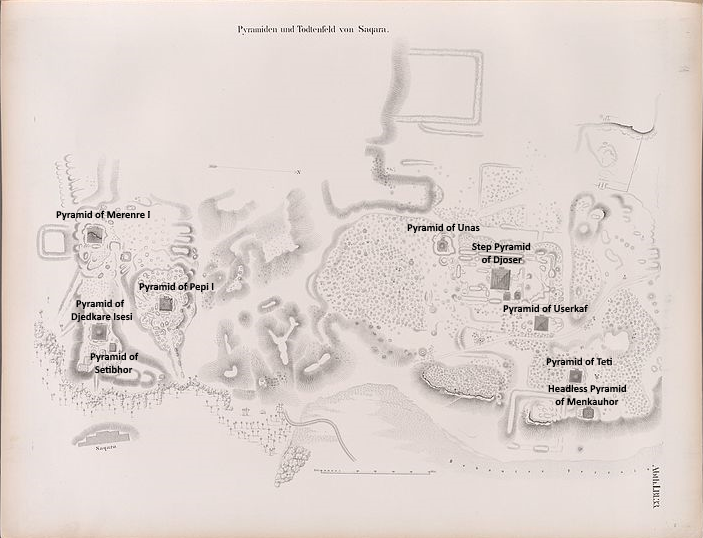
Saqqara is one of the largest and most important cemeteries of ancient Egypt, stretching for kilometres along the desert edge. For more than three millennia it served as the burial ground for the nearby city of Memphis.
Kings, high officials, priests and even sacred animals were interred here, leaving a landscape crowded with pyramids, mastabas and underground tombs. Few places on earth hold such a long and continuous record of a civilisation’s dead.
Memphis: Egypt’s First Great Capital
Founded at the very dawn of Egyptian history, Memphis was the first capital of a united Egypt and remained one of its most important cities for thousands of years. It stood at the strategic point where the Nile valley meets the delta.
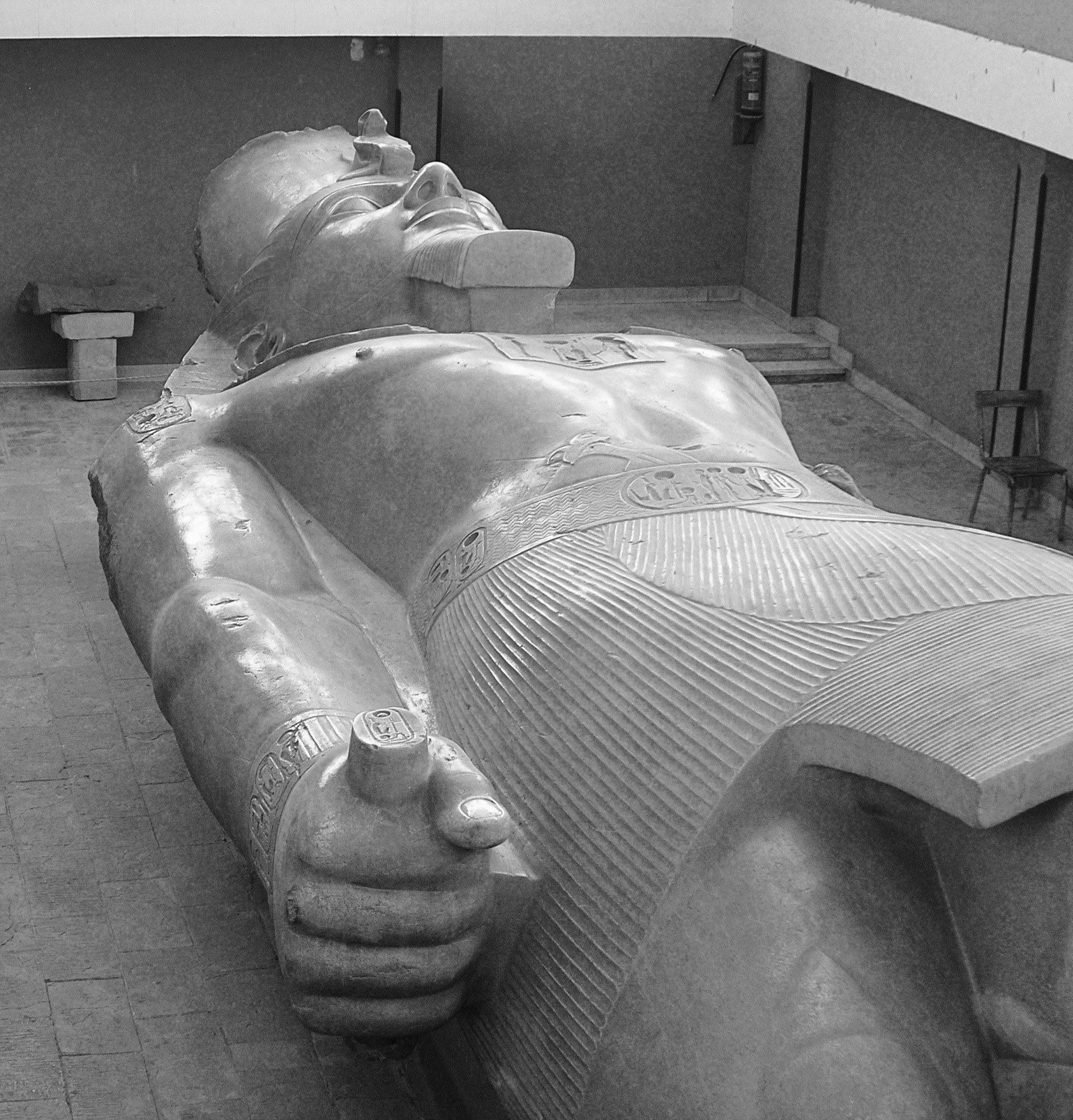
Little of the city survives above ground today, as its stone was reused and the mud brick decayed, but scattered ruins, statues and a great fallen colossus of Ramesses II still mark the site of this once-mighty capital.
The Step Pyramid of Djoser
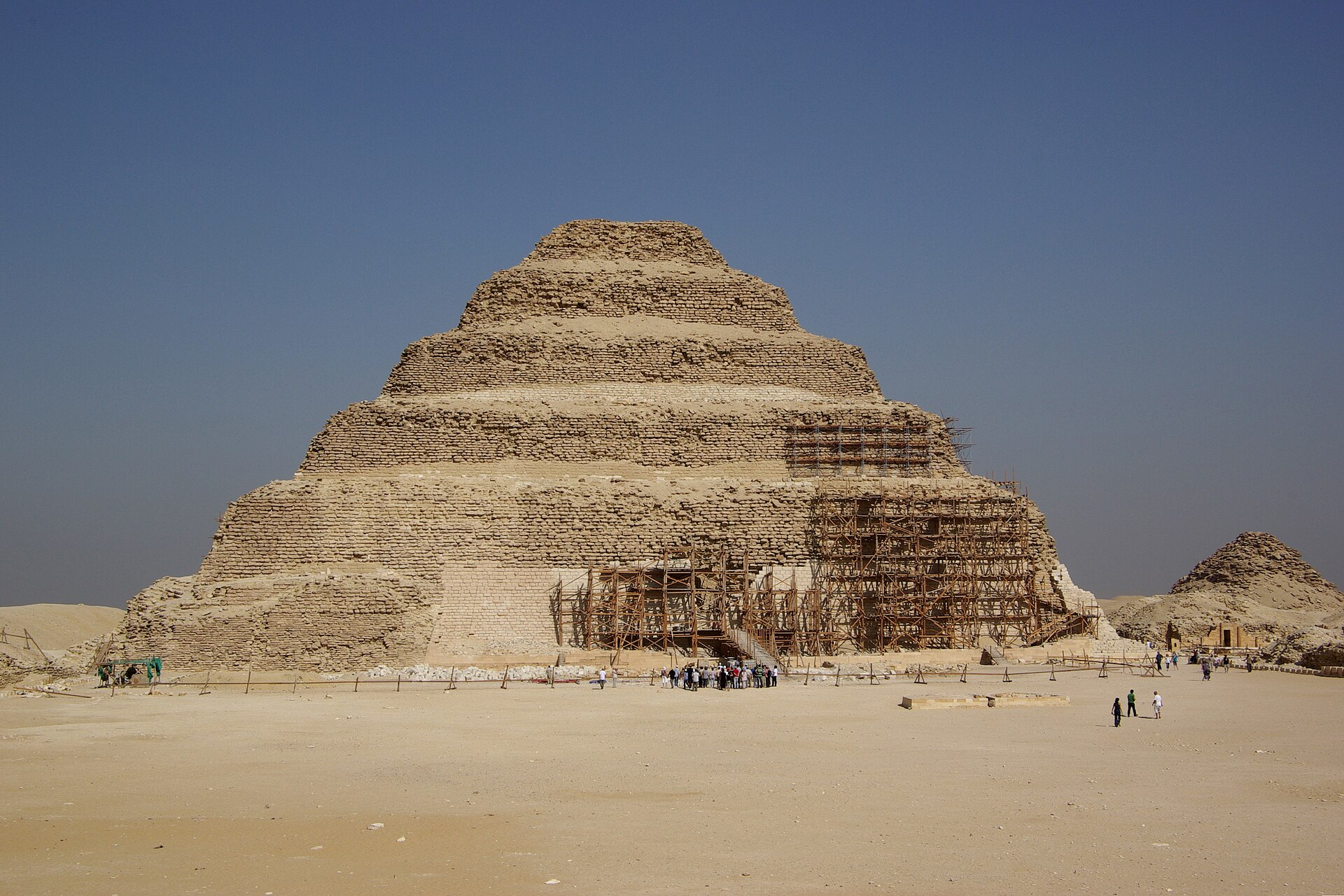
The centrepiece of Saqqara is the Step Pyramid, built for the pharaoh Djoser around 2650 BC. Rising in six great terraces, it was the first pyramid ever built and the earliest monumental structure made entirely of cut stone.
Before it, royal tombs had been low rectangular mounds of mud brick. The Step Pyramid transformed the tomb into a soaring stairway to the heavens, launching the age of pyramid building that would culminate at Giza.
Imhotep, the First Named Architect
The Step Pyramid was designed by Imhotep, Djoser’s brilliant minister, who is the first architect in history whose name we know. So great was his reputation that he was later worshipped as a god of wisdom and healing.
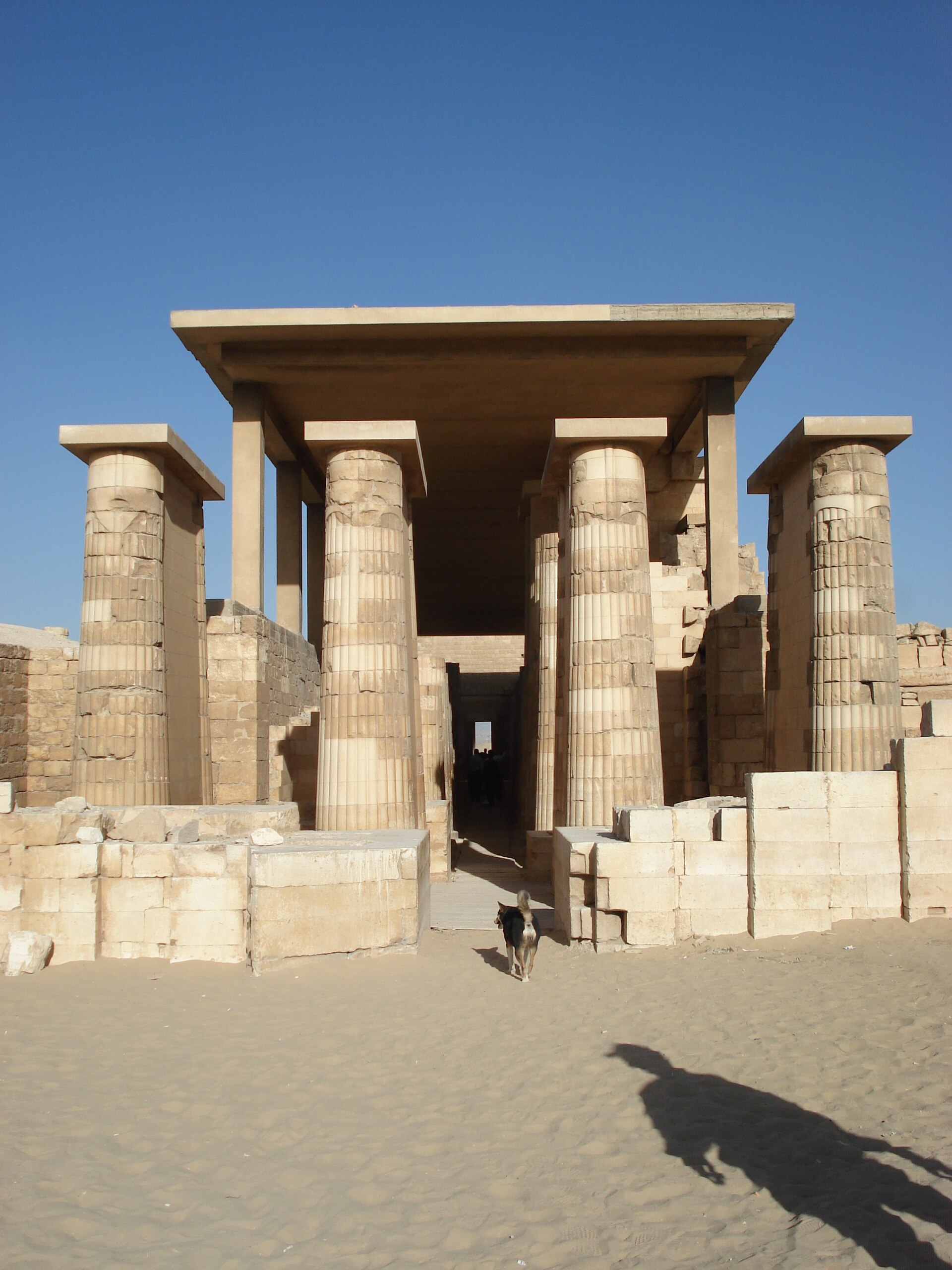
His complex was a revolution in design, surrounded by a great wall and filled with courtyards, shrines and columns imitating in stone the plants and buildings of the earlier world of mud and reeds.
A Complex That Invented Stone Architecture
The Djoser complex is not just a pyramid but an entire walled precinct designed for the king’s eternal rituals. Its builders, working in stone for the first time on this scale, cautiously copied forms from wood, reed and brick.
Slender columns, false doors and dummy buildings recreate in permanent stone the temporary structures of festivals and palaces. In doing so, the architects of Saqqara effectively invented monumental architecture.
The Pyramid Texts
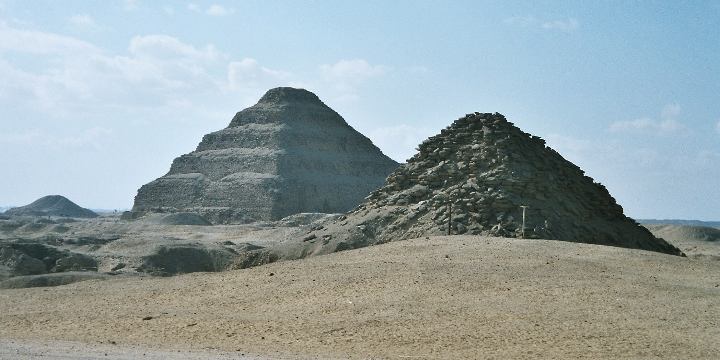
Later pharaohs built their own pyramids at Saqqara, and inside some of them, notably the pyramid of King Unas, the walls are covered with the Pyramid Texts. These are the oldest religious writings in the world.
Carved in columns of hieroglyphs, the spells were meant to protect the king and guide him into the afterlife among the gods and stars. They are a priceless source for understanding ancient Egyptian belief.
The Serapeum and the Apis Bulls
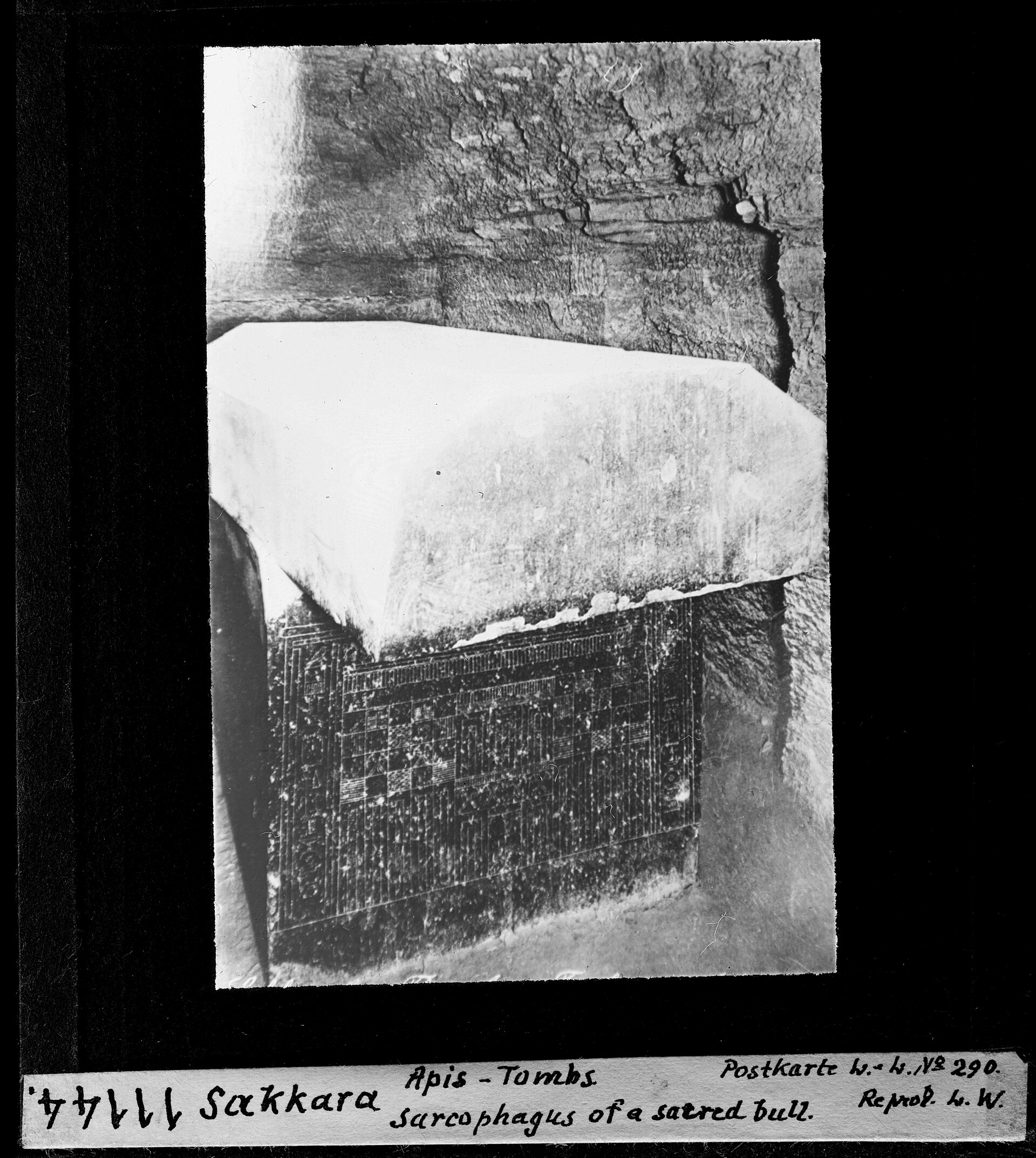
One of the strangest and most impressive monuments at Saqqara is the Serapeum, a vast underground gallery where the sacred Apis bulls were buried. These bulls were regarded as living gods and mourned like kings when they died.
Each was laid in an enormous stone sarcophagus, some weighing many tonnes, set in chambers along dark tunnels cut deep into the rock. The scale of the effort reveals the depth of devotion to these animal gods.
Mastaba Tombs and Their Reliefs
Around the pyramids lie the mastabas, flat-topped rectangular tombs of nobles and officials. The finest of them contain beautifully carved and painted reliefs showing scenes of daily life.
Farming, fishing, feasting, music and craftwork all appear on these walls in vivid detail, meant to sustain the dead in the afterlife. They are among our richest sources for how ordinary ancient Egyptians lived and worked.

The Alabaster Sphinx of Memphis
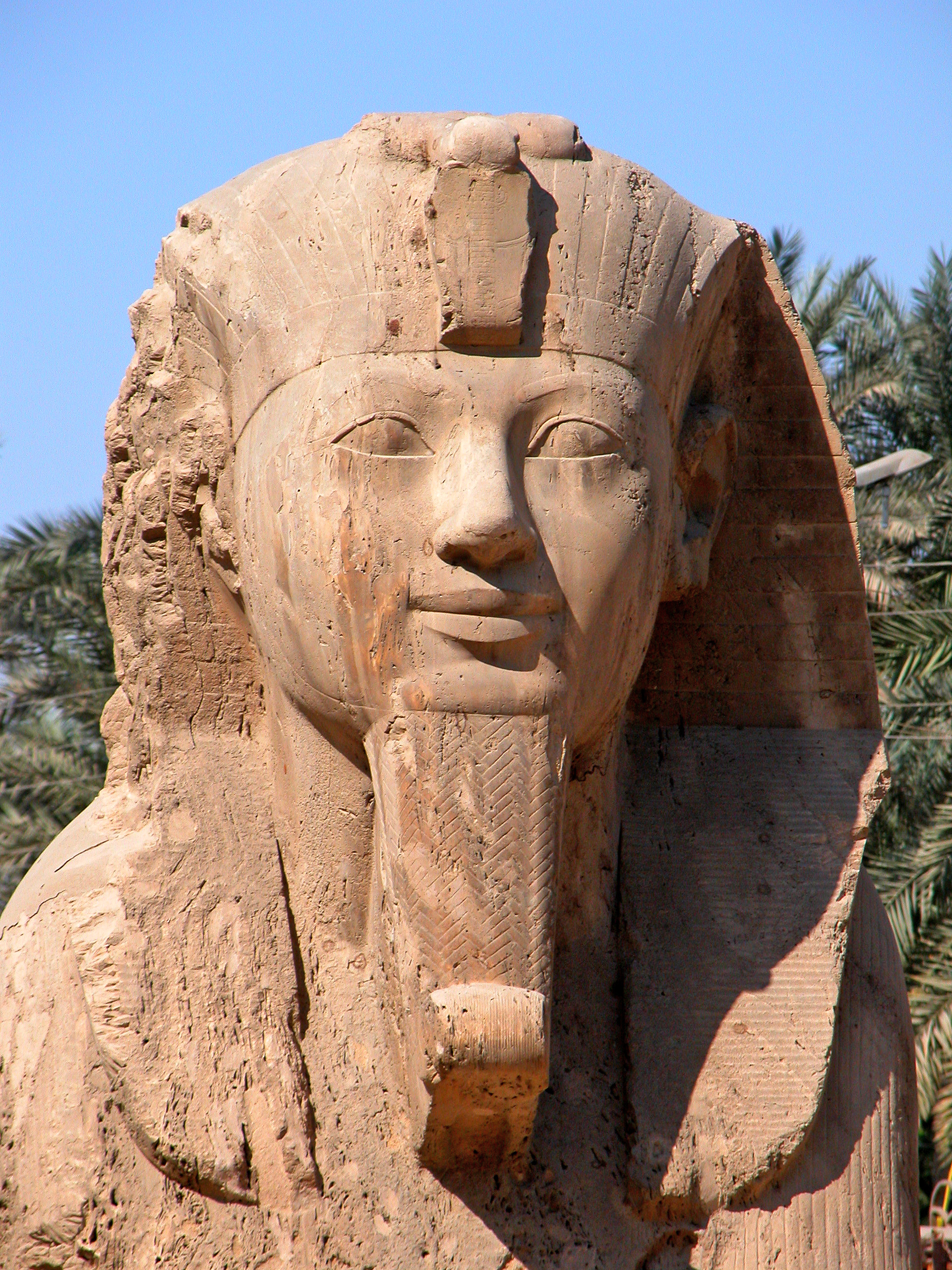
Among the surviving monuments at Memphis is a great sphinx carved from a single block of alabaster, weighing many tonnes. It once guarded a temple in the city.
Together with the fallen colossi of Ramesses II, it hints at the former grandeur of Memphis, a city that Greek and Roman visitors still admired long after Egypt’s golden age had passed.
Rediscovery and UNESCO
The monuments of Memphis and its necropolis, from Giza through Saqqara and beyond, were together inscribed on the UNESCO World Heritage List in 1979. Excavation at Saqqara continues to this day, still yielding spectacular discoveries.
In recent years archaeologists have uncovered dozens of sealed coffins, workshops and tombs, proving that even after centuries of digging, Saqqara has not surrendered all its secrets.
Getting There
Saqqara lies about thirty kilometres south of central Cairo, on the west bank of the Nile, with the ruins of Memphis a short distance away at the village of Mit Rahina. Both are easily reached by road from the capital.
Visitors usually combine Saqqara and Memphis in a single trip, often alongside the pyramids of Giza and Dahshur. A small museum at Memphis shelters the great alabaster sphinx and the colossus of Ramesses II.
Coordinates: 29.8711, 31.2165 — open Saqqara in Google Maps.
Nearby Places
- The Step Pyramid of Djoser — a closer look at the revolutionary monument at the heart of Saqqara.
- The Pyramids of Giza — the towering climax of the pyramid age that began here at Saqqara.
- Thebes — the later royal capital and necropolis that succeeded Memphis in Egypt’s long history.
Closing Thoughts
Saqqara and Memphis are where the story of ancient Egypt truly begins: a great first capital on the Nile and, beside it, the cemetery where the very idea of the pyramid was born.
From Imhotep’s revolutionary Step Pyramid to the deep vaults of the sacred bulls, this vast necropolis records three thousand years of belief in stone. It remains one of the richest and most rewarding of all Egypt’s ancient sites.
You May Like

Mafra, the Palace a King Built From a Vow