In the heart of the Javanese city of Yogyakarta, behind walls that enclose a whole royal quarter, lies one of the last living palaces of a reigning monarch in the world. The Kraton of Yogyakarta, the palace of the sultans, is not only a monument of great beauty but a living center of Javanese culture, still the residence of the sultan and the heart of a court whose traditions of music, dance, and ceremony reach back for centuries. It is a place where the past is not preserved behind glass but lived and continued in the present.
The Kraton is the seat of the sultanate of Yogyakarta, a royal house that has ruled here since the eighteenth century and that continues to this day. Laid out according to profound cosmological principles, the palace is conceived as a sacred center, a point of balance between the mountains and the sea, and its architecture, ceremonies, and arts all express the rich spiritual and cultural traditions of Java. It is at once a residence, a shrine, and a living museum of a great culture.
What makes the Kraton so remarkable is that it remains a functioning royal court, home to the sultan and to the many retainers who serve the palace and maintain its traditions. Its open pavilions still resound with the music of the gamelan and host the stately dances of the Javanese court, and its ceremonies continue to mark the rhythms of the year. It is a place where a living tradition of extraordinary refinement is carried on in the modern world.
In this article you will explore the Kraton of Yogyakarta from the sultanate that built it to its cosmological plan and its graceful pavilions, through its living traditions of music and dance to its role today. Along the way you will discover the rich culture of the Javanese court and understand why this palace of the sultans, still alive with ceremony and art, remains one of the great treasures of Indonesia.

In This Article
- A Living Royal Palace
- The Sultanate of Yogyakarta
- A Cosmic Axis
- The Graceful Pavilions
- A Sequence of Courtyards
- The Ceremonial Heart
- The Music of the Gamelan
- The Dances of the Court
- The Servants of the Palace
- The Water Castle
- A Reigning Court
- Treasures of the Court
- Visiting the Kraton Today
A Living Royal Palace
The Kraton of Yogyakarta stands at the heart of the city, a large walled complex of pavilions, courtyards, and gardens that forms the residence of the sultan and the center of the court. More than a single building, it is a whole royal quarter, laid out according to careful principles and filled with the halls and pavilions where the life and ceremony of the court are conducted.

The palace is built in the traditional Javanese style, characterized by open pavilions with elegant roofs supported by columns, set among courtyards and gardens. This open, airy architecture, suited to the tropical climate, gives the Kraton a distinctive grace, and its pavilions provide the settings for the ceremonies, performances, and daily life of the court.
Unlike many palaces that have become mere museums, the Kraton remains a living royal court, still the residence of the sultan and the home of the many retainers who serve the palace. Its traditions of music, dance, and ceremony continue to be practiced, and it remains the center of Javanese culture and the seat of a reigning royal house.
The Kraton of Yogyakarta is thus both a monument of great beauty and a living institution, a palace where the traditions of the Javanese court are carried on in the present. Its combination of graceful architecture, rich culture, and continuing life makes it one of the most fascinating and important royal palaces in the world, a treasure of Indonesia and of Javanese civilization.
If you arrive early, before the heat settles over the city, you notice how the whole complex seems to breathe at a slower pace than the streets outside its walls. Becak drivers wait in the shade, vendors arrange trays of snacks, and the guards in their dark uniforms move without hurry. The Kraton is not a museum that was built to be looked at; it is a working court that happens to let you in. That distinction changes how you walk through it. You are a guest in someone’s home, and the home belongs to a living sultan whose family has held this ground for more than two and a half centuries.
The Sultanate of Yogyakarta
The Kraton is the seat of the sultanate of Yogyakarta, a royal house founded in the eighteenth century when the older kingdom of the region was divided and a new sultanate established. The founder of the sultanate built the Kraton as his royal seat, and his descendants have ruled here ever since, maintaining the traditions of the court across the centuries.

The sultanate of Yogyakarta emerged from the complex history of Java, and its rulers, bearing the title of sultan, established the palace and the court as the center of their realm. The sultanate maintained its distinctive identity and traditions through the changes of the following centuries, and it remains a living royal house to this day.
The rulers of Yogyakarta played an important role in the history of Java and of Indonesia, and the sultanate came to hold a special place in the life of the nation. Through periods of colonial rule and the birth of the modern nation, the sultanate endured, and its sultan came to hold a position of unique honor and authority in the region.
The history of the Kraton is thus inseparable from the history of the sultanate and of Yogyakarta. As the seat of the royal house and the center of the court, the palace has been the heart of the sultanate since its founding, and it remains the residence of the sultan and the symbol of a royal house that has endured for centuries.
The split that created Yogyakarta in 1755 was not a simple divorce of territory. It was a careful settlement, brokered under Dutch pressure, that divided the old Mataram inheritance between two rival princes. Prince Mangkubumi took the southern lands and the title Hamengkubuwono, which loosely means the one who holds the world on his lap. From that moment Yogyakarta set out to be more Javanese than its rival Surakarta, guarding older forms of dress, dance, and language as proof of legitimacy. When you learn this, the Kraton stops being a pretty compound and becomes an argument in stone about who the true heirs of Mataram really were.
A Cosmic Axis
The Kraton of Yogyakarta was laid out according to profound cosmological principles, conceived as a sacred center at the heart of the realm and the cosmos. The palace stands on an axis that links the great volcano to the north with the ocean to the south, and this alignment expresses the Javanese vision of the palace as a point of balance between powerful spiritual forces.

In the Javanese worldview, the palace and the sultan stood at the center of the realm and the cosmos, mediating between the forces of the mountains and the sea, of the heavens and the earth. The layout of the Kraton, aligned along this sacred axis, gave physical form to this vision, placing the sultan and his palace at the pivot of the world.
This cosmological conception governed the whole arrangement of the palace and the city, with the Kraton at the center and the axis extending outward to the mountain and the sea. The sultan, seated at this center, was seen as the guardian of the balance between the spiritual forces that surrounded the realm, and the palace was the sacred heart of this order.
The cosmological plan of the Kraton gives it a significance far beyond its beauty as a building. Conceived as a sacred center, a point of balance in the cosmos, the palace embodies the spiritual worldview of the Javanese court, and its alignment along the axis between the volcano and the sea remains one of its most profound and fascinating features.
Stand at the center of the complex and imagine the invisible line the Javanese call the sacred axis. It runs from the volcano Merapi in the north, through the Kraton, down to the southern sea where the goddess Ratu Kidul is said to hold court. The sultan sits at the meeting point of fire and water, mountain and ocean, and his role is to keep those forces in balance. This is not decoration or folklore added later for tourists. It shaped where every gate, pavilion, and courtyard was placed, and to this day certain rituals move along that axis to renew the bond between the mortal ruler and the powers above and below him.
The Graceful Pavilions
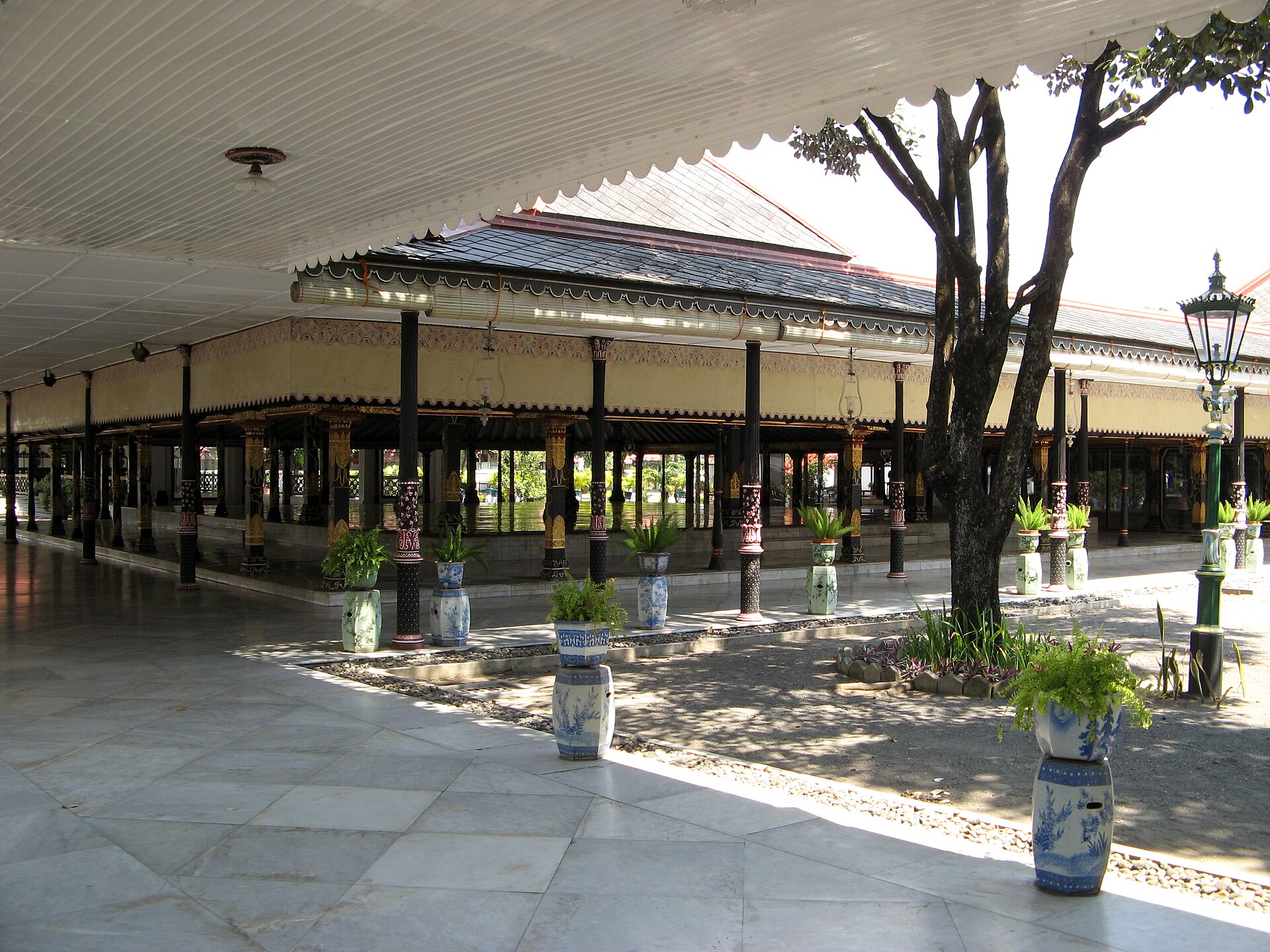
The most characteristic buildings of the Kraton are its pavilions, open halls with elegant roofs supported by rows of columns, which provide the settings for the ceremonies and life of the court. These pavilions, known in Javanese as bangsal, are the distinctive features of the palace, and their graceful forms embody the beauty of Javanese architecture.
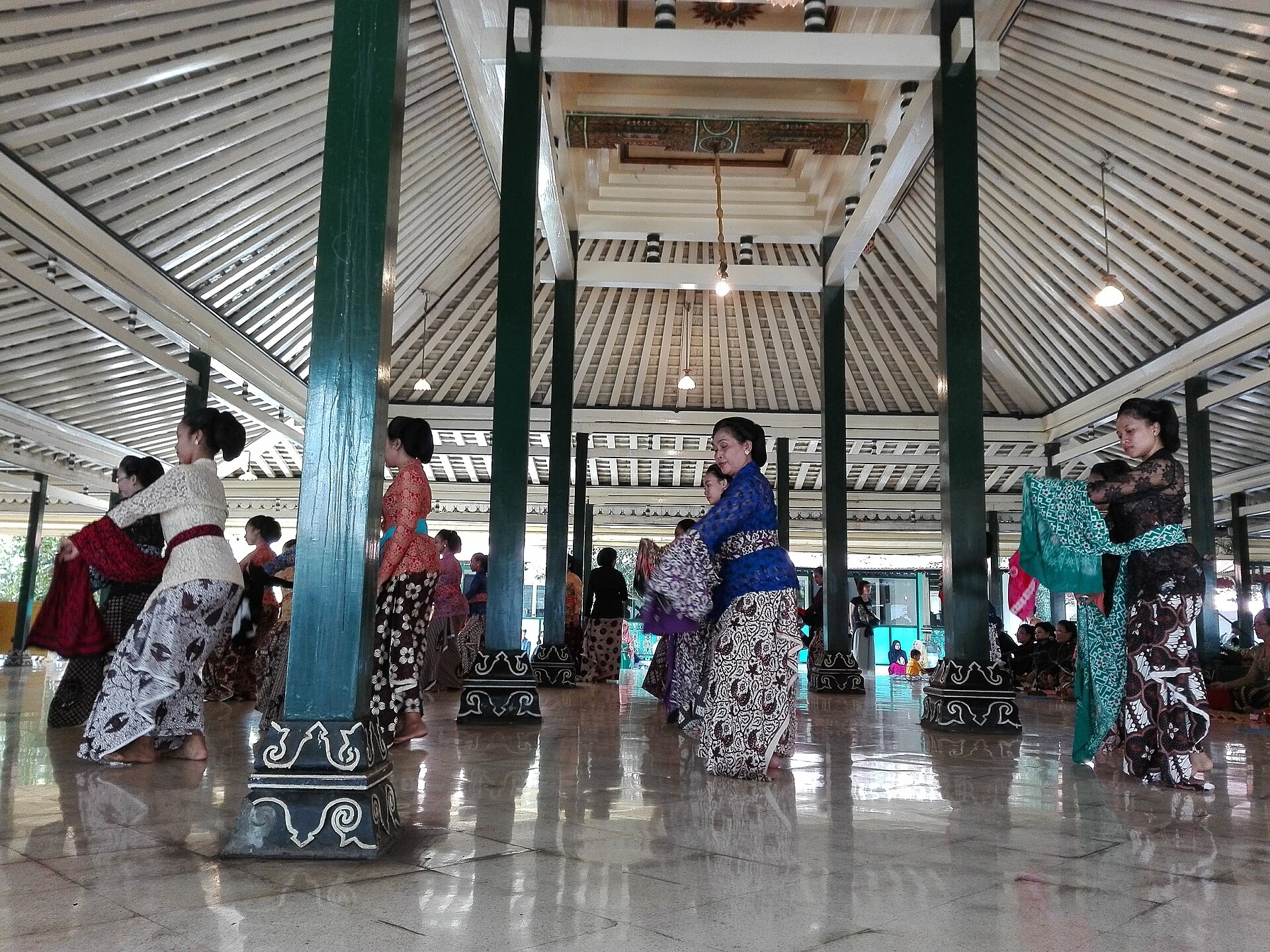
The pavilions are open structures, without walls, their roofs rising in tiers and supported by columns often richly carved and decorated. Suited to the tropical climate, they allow the free flow of air and open onto the courtyards and gardens of the palace, creating spaces of great elegance and grace for the ceremonies and performances of the court.
The most important pavilions serve as the settings for the great ceremonies and performances of the court, from the reception of guests to the stately dances and the music of the gamelan. Their open form allows the ceremonies to be seen and shared, and they are the stages on which the rich cultural life of the Kraton is conducted.
The graceful pavilions of the Kraton, with their elegant roofs and carved columns set among the courtyards, are among the great beauties of the palace and of Javanese architecture. They embody the refinement of the court and provide the settings for its living traditions, and they remain the distinctive and characteristic features of the palace of the sultans.
The open pavilions, called bangsal and pendhapa, teach you something about Javanese ideas of grandeur that European palaces never will. There are no heavy doors to close, no thick walls to shut the world out. Power here is expressed through openness, through the ability to sit calmly in a space that anyone can approach. The tall pillars of teak, the layered roofs, the polished floors that stay cool underfoot, all of it says that the ruler has nothing to hide and everything to hold together. When rain falls, the water sheets off the wide eaves and the pavilion feels like the safest place in the world.
A Sequence of Courtyards
The Kraton is organized as a sequence of courtyards, one within another, leading toward the innermost and most sacred spaces of the palace. This concentric arrangement, moving from the more public outer courtyards toward the private inner ones, reflects the hierarchy and the sacred order of the court.
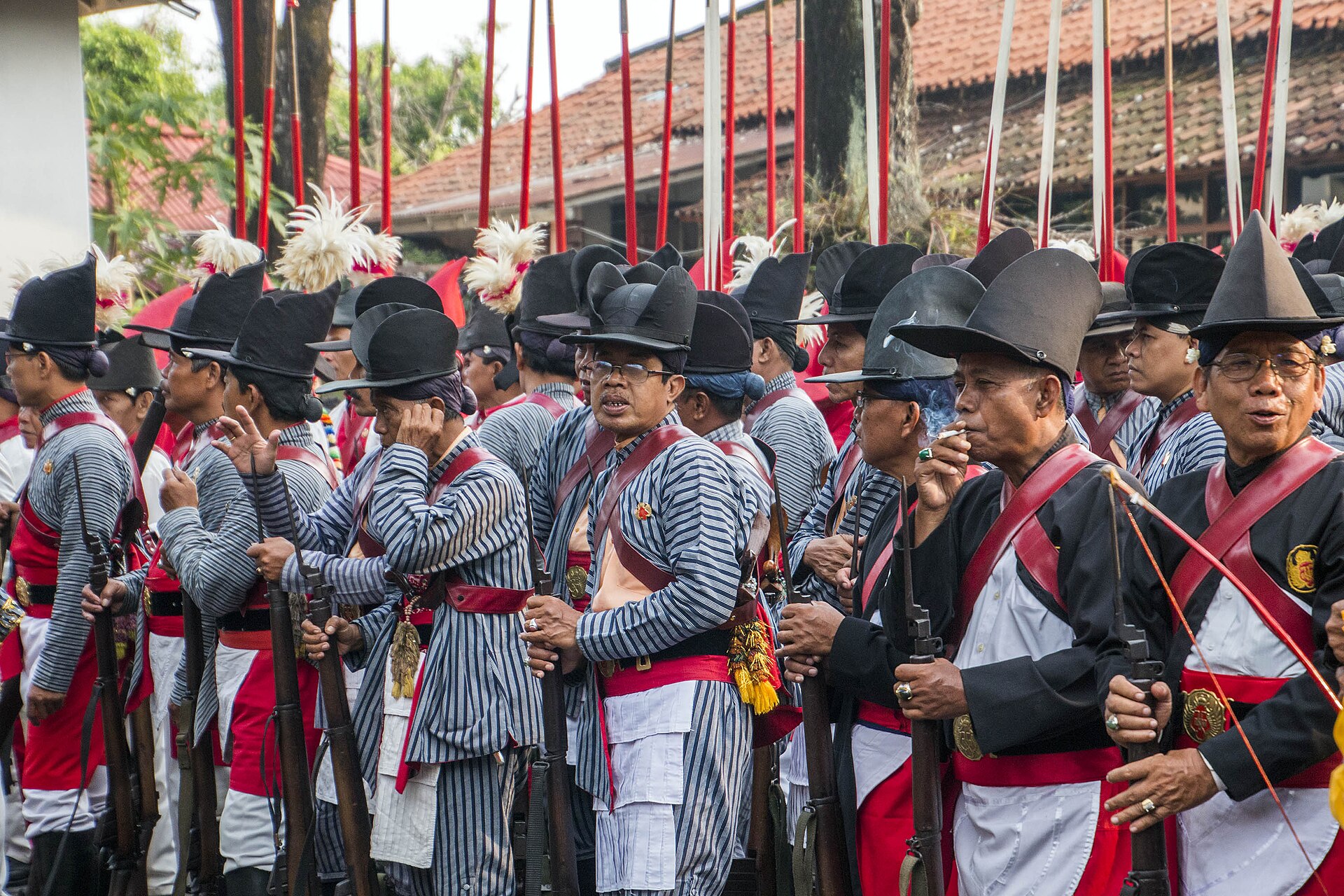
The outer courtyards, more accessible, housed public functions and the reception of visitors, while the inner courtyards, more restricted, contained the private residence of the sultan and the most sacred spaces of the palace. Moving inward through the courtyards, one approached ever closer to the sacred center of the palace and the person of the sultan.
This arrangement of courtyards reflected the Javanese conception of the palace as a series of ever more sacred spaces, culminating in the innermost heart of the complex. The gates and thresholds between the courtyards marked the transitions between these spaces, and the whole sequence expressed the order and the hierarchy of the court.
The sequence of courtyards gives the Kraton its structure and its character, leading the visitor through a series of spaces of increasing sacredness and privacy. This concentric arrangement, reflecting the cosmological and hierarchical vision of the court, is central to the design of the palace and to its meaning as a sacred center.
Moving from one courtyard to the next, you pass through gateways that narrow and then open again, and the rhythm is deliberate. Each threshold is a small test of readiness, a moment to compose yourself before entering a more sacred space. The sand underfoot in some courtyards was carried from the southern beaches, another quiet reminder of the sea goddess and the axis that binds the realm. Twin banyan trees stand in the great northern square, and the old belief holds that a person with a pure heart can walk blindfolded between them, while the guilty drift off course. Visitors still try it, laughing, and still miss.
The Ceremonial Heart
At the heart of the Kraton lie the great ceremonial pavilions where the sultan holds court and where the most important ceremonies of the palace are conducted. Here the sultan appears in state, receives his officials and guests, and presides over the great occasions of the court, in surroundings of dignity and beauty.

The principal ceremonial pavilion is a grand hall, richly decorated and open to the courtyard, where the sultan sits in state on the most important occasions. This hall is the ceremonial center of the palace, the setting for the great ceremonies of the court and the place where the majesty of the sultanate is displayed.
The ceremonies conducted in these pavilions express the traditions and the dignity of the Javanese court, following elaborate customs of great antiquity. The sultan, seated in state amid the beauty of the palace, appears as the center of the realm and the guardian of its traditions, in ceremonies that reach back for centuries.
The ceremonial heart of the Kraton, with its great pavilions and its stately ceremonies, is the focus of the life of the court. Here the traditions of the Javanese monarchy are maintained and displayed, and the sultan presides over the ceremonies that express the dignity and the continuity of the sultanate, at the sacred center of the palace.
The throne hall is where the abstract idea of kingship becomes something you can see. Gilded ornament, imported chandeliers, and Javanese carving sit side by side, because the sultans were never afraid to absorb foreign beauty into their own vocabulary. Dutch glass, Chinese porcelain, and European mirrors were folded into a setting that remained unmistakably Javanese in its proportions and its meanings. When the sultan appears here in full regalia, the room is not merely luxurious, it is a diagram of the cosmos with the ruler at its heart, and every object around him is placed to say so.
The Music of the Gamelan
One of the great glories of the Kraton is its tradition of gamelan music, the ensemble of bronze instruments whose shimmering sound is one of the treasures of Javanese culture. The gamelan of the palace, played on ceremonial occasions and for performances, fills the pavilions with its distinctive and beautiful music, a living tradition of great antiquity.

The gamelan is an ensemble of tuned bronze instruments, including gongs, metallophones, and drums, whose interlocking patterns create a rich and shimmering sound. The gamelan of the Kraton, among the finest in Java, is played for the ceremonies and performances of the court, and it is one of the most treasured traditions of the palace.
The music of the gamelan is deeply woven into the life and ceremony of the court, accompanying dances, marking ceremonies, and filling the pavilions on important occasions. It is a living tradition, maintained by the musicians of the palace, and it is central to the cultural life of the Kraton and of Javanese civilization.
The gamelan music of the Kraton is one of the great treasures of Javanese culture, a living tradition of extraordinary beauty and refinement. Filling the pavilions of the palace with its shimmering sound, it accompanies the ceremonies and dances of the court, and it remains one of the most beautiful and characteristic features of the living culture of the palace.
The gamelan is not background music at the Kraton, it is a presence with a name and a temperament. The oldest and most revered sets are considered sacred, played only on particular days, and treated almost as living members of the court. When the bronze is struck, the sound does not march forward the way Western music often does; it circles, layers, and hangs in the humid air. Sitting on the cool floor while the players work through a slow piece, you begin to feel time stretch. The music is meant to steady the soul, and after a while you understand exactly what that means.
The Dances of the Court
The Kraton is also a great center of Javanese court dance, a tradition of stately and refined dances performed in the pavilions of the palace. These dances, of great antiquity and beauty, are among the most treasured traditions of the court, and they continue to be performed by the dancers of the palace.

The court dances of Yogyakarta are marked by their slow, graceful, and highly controlled movements, expressing a refined and contemplative beauty. The most sacred of the dances, performed on important occasions, are of profound significance, and they reflect the spiritual and cultural traditions of the court in movement of great elegance.
The dances are accompanied by the music of the gamelan, and together the music and the dance create performances of extraordinary beauty and meaning. Performed in the open pavilions of the palace, they are among the great cultural treasures of the Kraton and of Java, living traditions maintained by the artists of the court.
The court dances of the Kraton, with their stately grace and their deep significance, are one of the great glories of the living culture of the palace. Maintained by the dancers of the court and performed in its pavilions, they express the refinement and the spiritual traditions of the Javanese monarchy, and they remain among the most beautiful features of the palace.
Court dance in Yogyakarta is slow to the point of stillness, and that slowness is the whole point. A single turn of the wrist, held and controlled, can carry more weight than a burst of movement. The most sacred dance, the bedhaya, was long reserved for the palace and wrapped in restrictions about who could learn it and when it could be shown. To watch it is to watch discipline made visible, the body trained until it moves like water finding its level. The dancers are not performing for applause; they are completing a ritual that connects the court to forces older than the sultanate itself.
The Servants of the Palace
The life of the Kraton is maintained by the many retainers who serve the palace, known as the abdi dalem, who carry on the traditions and the daily life of the court. These servants, often serving out of devotion and honor rather than for material reward, are essential to the continuing life of the palace and its traditions.

The abdi dalem serve the palace in many roles, from the maintenance of the buildings and the conduct of ceremonies to the performance of the music and dance of the court. Dressed in traditional attire and serving according to ancient customs, they embody the living traditions of the palace and its continuing life as a royal court.
The devotion of the abdi dalem to the palace and the sultan reflects the deep significance of the Kraton in Javanese culture. Many serve out of a sense of honor and spiritual devotion, and their service is essential to the maintenance of the traditions and the daily life of the court, making them a vital part of the living palace.
The presence of the abdi dalem, serving the palace according to ancient customs, is one of the features that makes the Kraton a living royal court rather than a mere museum. Their devotion and their service maintain the traditions and the life of the palace, and they are essential to the continuing vitality of the Kraton as a center of Javanese culture.
The abdi dalem, the court servants, are the quiet heart of the Kraton. Many are not paid enough to live on by their palace duties, yet they wait years for the honor of serving and wear their simple uniforms with visible pride. To them, service is a spiritual practice, a way of seeking inner peace by placing themselves below the ruler who stands at the center of the world. When you see an elderly man sitting cross-legged for hours, ready to guide a visitor or tend a pavilion, you are looking at a whole philosophy of life expressed through patience, humility, and belonging.
The Water Castle
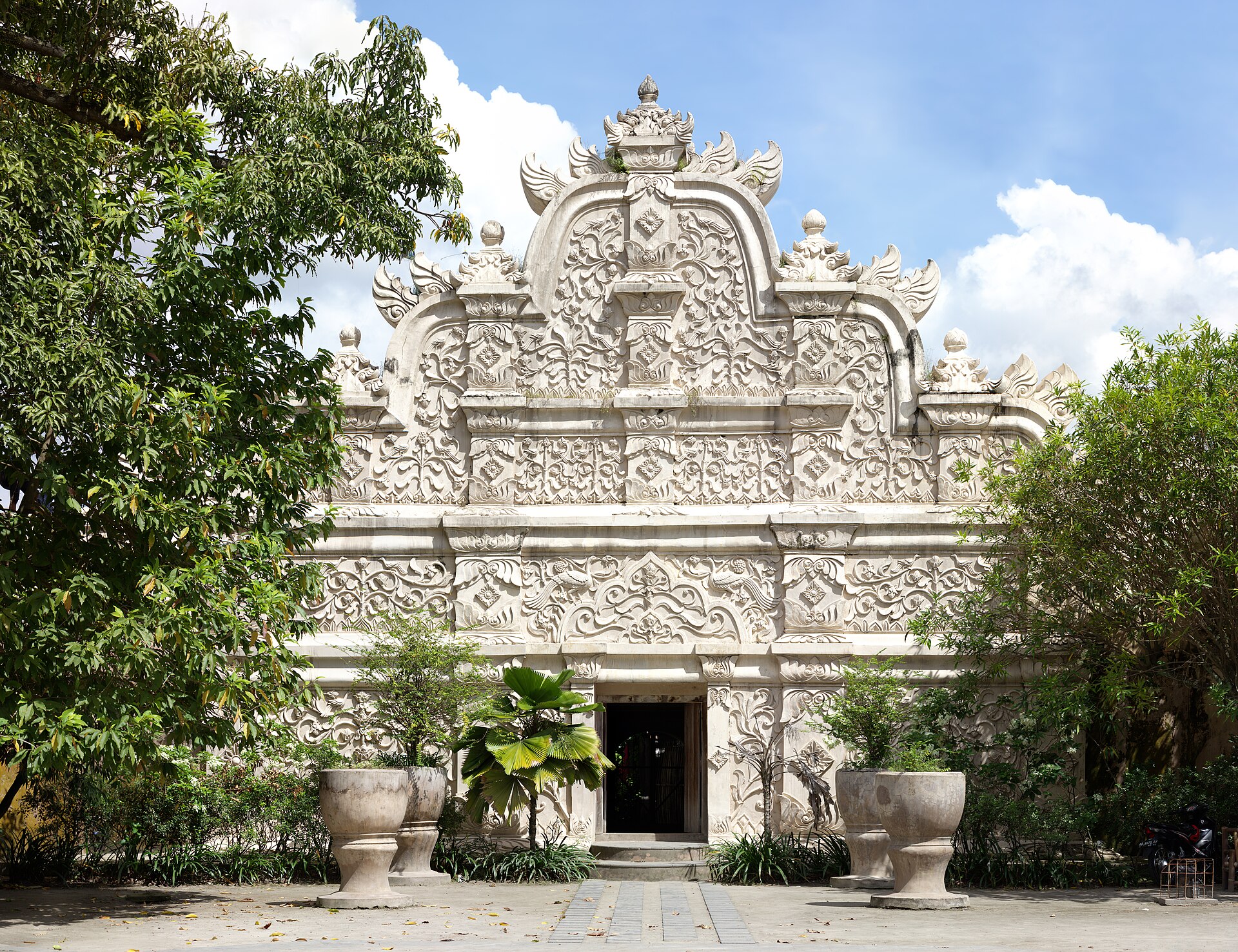
Near the Kraton lies the Taman Sari, a former royal pleasure garden and bathing complex built for the sultans, one of the most beautiful and fascinating sites associated with the palace. This water castle, with its pools, pavilions, and underground passages, was a place of pleasure and retreat for the royal family.

The Taman Sari was built as a garden of pleasure, with bathing pools, pavilions, and gardens where the sultan and his family could relax and enjoy the beauty of the water and the surroundings. Its pools and pavilions, set among gardens and connected by passages, created a place of beauty and delight for the court.
The complex includes not only the bathing pools and pavilions but also underground passages and other structures, adding an air of mystery to the site. Though now partly ruined, the Taman Sari remains one of the most beautiful and evocative sites of Yogyakarta, a relic of the pleasure-loving culture of the court.
The Taman Sari, the water castle of the sultans, complements the Kraton as a place of pleasure and retreat, reflecting the refined culture of the court. Its pools, pavilions, and passages, set near the palace, are among the most beautiful and fascinating sites of Yogyakarta, and they add to the rich heritage of the royal city.
A short walk from the main complex lies Tamansari, the water castle, once a pleasure garden of pools, bathing places, and hidden passages. The Dutch and Portuguese influences in its arches mix with Javanese symbolism to create something that feels half fortress, half dream. Underground tunnels connected the sultan’s private world to the mosque and, legend says, to the southern sea itself. Today much of it is ruin colonized by a dense neighborhood, but the main bathing pools have been restored, and standing beside the still green water it is easy to picture the court retreating here from the heat and the weight of ceremony.
A Reigning Court
The Kraton remains a living royal court, still the residence of the sultan and the center of a reigning royal house. In the modern nation of Indonesia, the sultan of Yogyakarta holds a unique position, and the palace continues to function as a royal court, maintaining its traditions and its role in the life of the region.
The sultan of Yogyakarta holds a special place in the modern nation, and the sultanate has been given a unique status within the country. The palace continues to be the residence of the sultan and the seat of the court, and it maintains its traditions and its ceremonies as a living royal institution.
The continuing life of the Kraton as a reigning court is one of its most remarkable features, for few palaces in the world remain the seat of a living monarchy in this way. The sultan and his court maintain the traditions of the palace, and the Kraton continues to play a central role in the culture and the identity of Yogyakarta.
As a living royal court, the Kraton is far more than a historic monument; it is a functioning institution at the heart of the life and culture of the region. The continuing presence of the sultan and the maintenance of the traditions of the court make the palace a unique and precious survival, a living center of Javanese monarchy and culture.
Because the Kraton is still inhabited, the line between exhibit and home stays deliberately blurred. Family photographs, gifts from foreign dignitaries, and the personal effects of past sultans sit in cases not far from spaces the current family still uses. This gives the place an intimacy that grander, emptier palaces lack. You are not walking through the frozen stage set of a vanished monarchy; you are walking through a household that has simply been unusually careful about keeping its history close. The sense that someone might round a corner at any moment is not an illusion, because someone might.
Treasures of the Court
Parts of the Kraton are open to the public and display the treasures of the court, including royal heirlooms, gifts, furnishings, and objects that illuminate the history and culture of the sultanate. These collections offer a window into the world of the Javanese court and the traditions of the palace.
The treasures of the palace include royal heirlooms of great significance, known as pusaka, which are objects of deep spiritual and cultural importance to the court. These heirlooms, along with fine furnishings, gifts, and works of art, reflect the wealth and the traditions of the sultanate and are among the treasures of the palace.
The collections displayed in the palace illuminate the history of the sultanate, the traditions of the court, and the rich culture of Java. Objects associated with the sultans, the ceremonies, and the arts of the palace offer a vivid picture of the world of the Kraton and the heritage of the royal house.
The treasures of the court, displayed in the palace, make the Kraton not only a living royal court but also a repository of the history and culture of the sultanate. Together with the living traditions of music, dance, and ceremony, they offer visitors a rich encounter with the world of the Javanese court and the heritage of the palace.
The palace museums reward slow attention. There are collections of royal carriages, ceremonial weapons, batik cloth whose patterns were once reserved for the ruling family, and gifts that trace Yogyakarta’s long entanglement with the wider world. Each object carries a story about status, alliance, or belief, and the labels only hint at the depth beneath. A single kris dagger, with its wavy blade and its reputation for holding spiritual power, can hold your attention longer than a whole gallery of ordinary treasures, precisely because in Javanese eyes it is not ordinary metal at all.
Visiting the Kraton Today
Today the Kraton of Yogyakarta is one of the most important and beloved attractions of the city, drawing visitors from around the world to experience the living culture of the Javanese court. Set in the heart of Yogyakarta, it offers a fascinating encounter with the traditions, the architecture, and the art of the sultanate.

View the exact location on Google Maps
A visit leads through the courtyards and pavilions of the palace, where visitors can admire the architecture, see the treasures of the court, and, on many days, enjoy performances of the gamelan music and the court dances. The living traditions of the palace, maintained by the abdi dalem and the artists of the court, offer a vivid experience of Javanese culture.
A visit to the Kraton can be combined with a visit to the nearby Taman Sari, the water castle of the sultans, and with the exploration of the royal city of Yogyakarta. Together these sites offer a rich encounter with the heritage of the sultanate and the culture of Java, at the heart of one of Indonesia’s most fascinating cities.
Whether you come for the architecture, the treasures, the music and dance, or the experience of a living royal court, the Kraton of Yogyakarta offers an unforgettable experience. It is one of the last living palaces of a reigning monarch, a center of Javanese culture, and a place where the traditions of the court are carried on in the present, a treasure of Indonesia.
What makes the Kraton unusual among the world’s palaces is that its ruler still matters in ordinary political life. The Sultan of Yogyakarta also serves as governor of the special region, an arrangement almost unique in modern Indonesia, and the loyalty people feel toward the palace is real and current, not a tourist performance. When you leave through the southern gate and rejoin the traffic, the walls behind you are not a relic of something finished. They enclose a court that still holds its axis between the volcano and the sea, still plays its sacred music, and still expects to be here when the next century arrives.
Palaces Nearby
If this Javanese court has drawn you into the wider world of Asian palaces, two more are worth your time. Follow the sacred mountains north to the roof of the world, or trace the coast to another living royal city on mainland Southeast Asia.
You May Like
The Palaces of Orchha: A Bundela Capital on the Betwa


2 thoughts on “The Kraton of Yogyakarta: Inside Java’s Living Royal Court”