In the hills of the far southwest of Yunnan, near the borders where China meets Burma and Laos, live the Lahu, a mountain people once famed as hunters and trackers of the tiger. A people of the forested slopes and the tea mountains of Pu’er, broken into branches yet one in origin and custom, they are known for the gourd pipe that leads their circle dances, the equality of husband and wife, and, since the coming of the missionaries, a strong strain of Christianity joined to their old love of song.
This account follows the Lahu from their origins among the ancient peoples of the north, through their drift south into the borderland hills and their old life of the hunt, into their Loloish language, their worship of the creator Gui Sha and their new Christian faith, and the gourd pipe, the dance, and the new-year rites that mark them. It ends with the Lahu of today, keeping their music and their customs alive in the tea hills of the southwestern borderlands of modern China.
- The Tiger Hunters of the Southern Hills
- Lahu and the Branches of the People
- The Lahu Tongue and Its Loloish Kindred
- The Hills of Lancang and the Southwest of Yunnan
- The Villages, the Hunt, and the Old Order
- The Household, the Village, and the Bonds of the Lahu
- Gui Sha, the Spirits, and the Coming of the Cross
- The Gourd Pipe, the Dance, and the Ways of the Lahu
- The Weavers, the Silversmiths, and the Makers of Cloth
- Rice, Tea, and the Table of the Hills
- The New Year, the Kuo Ta, and the Feasts
- From the Northern Steppe to the People of Modern China
- The Lahu in Modern China
The Tiger Hunters of the Southern Hills
In the hills of the far southwest of Yunnan, near the borders where China meets Burma and Laos, live the Lahu, a mountain people once famed as hunters and known in their own legends as trackers of the tiger. Numbering some five hundred thousand within China, they cling to the forested slopes above the valleys, a people of the high country whose home lies at the meeting of the Chinese and Southeast Asian worlds.
The Lahu belong to the Tibeto-Burman branch of the great Sino-Tibetan family, and more nearly to its Loloish or Yi group, kin in speech to the Yi, the Lisu, and the other peoples of the Yunnan highlands. Their forebears, like those of their kin, are held to have come long ago from the north, from the borders of the Tibetan plateau, drifting south over many centuries into the hills of the southwest.
As they moved south the Lahu settled the mountain slopes of southwestern Yunnan, above all the country around Lancang, where a Lahu autonomous county centres their homeland, and they spread across the borders into Burma, Thailand, and Laos, where many Lahu live as one of the hill peoples of the uplands. Wherever they went they kept to the high forested country, above the valleys held by others.
To speak of the Lahu is to speak of a mountain people of the southwestern borderlands, once hunters of the forest and now farmers of the slopes, keepers of the gourd pipe and the circle dance, and, since the coming of the missionaries, in part a Christian people. Divided into branches yet one in origin and custom, they hold their place among the many peoples of the Yunnan hills.

Lahu and the Branches of the People
The people call themselves Lahu, and it is by this name that the Chinese state recognises them as one of its nationalities and sets aside the autonomous county of their homeland at Lancang. The name is their own word for themselves, and it binds together the scattered communities of the southwestern hills and of the lands beyond the border under a single identity.
The name Lahu is said in the people’s own telling to carry a meaning tied to the hunting of the tiger, for the Lahu were once renowned as hunters, and their legends tell of the roasting of tiger meat, so that the name is bound up with their old fame as trackers of the great cats of the forest. Whether or not this is the true root, it speaks to the Lahu memory of themselves as a hunting people.
The Lahu are divided into several branches, distinguished by dialect and by the colour and style of their dress, among them the Black Lahu, the Red Lahu, the Yellow Lahu, and others, each with its own customs and appearance. These names, given for the dress, mark real differences among communities scattered across a wide and broken country, yet all count themselves one people under the name Lahu.
Beyond China’s borders the same people live in the hills of Burma, Thailand, and Laos, known by the same name and recognising a common origin and a shared body of custom, legend, and song. Whatever the branch or the border, the Lahu know themselves as one, a mountain people of the southwestern uplands, keepers of the gourd pipe and the circle dance and heirs to the old fame of the hunt.

The Lahu Tongue and Its Loloish Kindred
The Lahu speak a language of the Loloish, or Yi, group of the Tibeto-Burman branch of the Sino-Tibetan family, closely akin to the tongues of the Yi and the Lisu. Like these it is a tonal language, distinguishing meaning by the pitch of the voice, and it is spoken in several dialects across the branches of the people, though the differences are less deep than among some of their mountain neighbours.
For most of their history the Lahu had no writing, and their store of song, legend, and lore was carried by memory and by mouth, kept above all in the rich body of Lahu song, for the people are famed as singers. The great store of their tradition, their myths of origin, their history, and their ritual, lived entirely in the spoken and the sung word, handed down through the generations.
In the early twentieth century Christian missionaries, working among the Lahu, devised a script for their language using the Roman alphabet, and into it they translated the scriptures and the hymns. This script, still in use, gave the Lahu a written language and is bound up with the spread of Christianity among them, so that among many Lahu literacy and the new faith came together.
In the modern age standard Chinese has spread through schooling and daily life, and most Lahu are bilingual, using Chinese for the wider world and their own tongue at home. Yet the Lahu language, with its missionary script and its heritage of song, remains strong among the people, a living tongue of the southwestern hills carried in speech, in song, and in the hymnbook of the Christian communities.

The Hills of Lancang and the Southwest of Yunnan
The homeland of the Lahu is the far southwest of Yunnan, a green and hilly country of forested slopes, deep valleys, and warm, wet weather, near the borders where China meets Burma and Laos. The greater number live in and around the Lahu autonomous county of Lancang and in the wider Pu’er and Lincang regions, with communities scattered across the borders into the neighbouring lands.
This is sub-tropical highland country, its slopes clothed in forest, warmed by the southern sun and drenched by the summer rains, and famous across China as a land of tea, for the old tea mountains of Pu’er lie in and about the Lahu country. The Lahu settled the middle and higher slopes, above the valleys held by the Dai and others, where they cleared their fields and, in the old way, hunted the game of the forest.
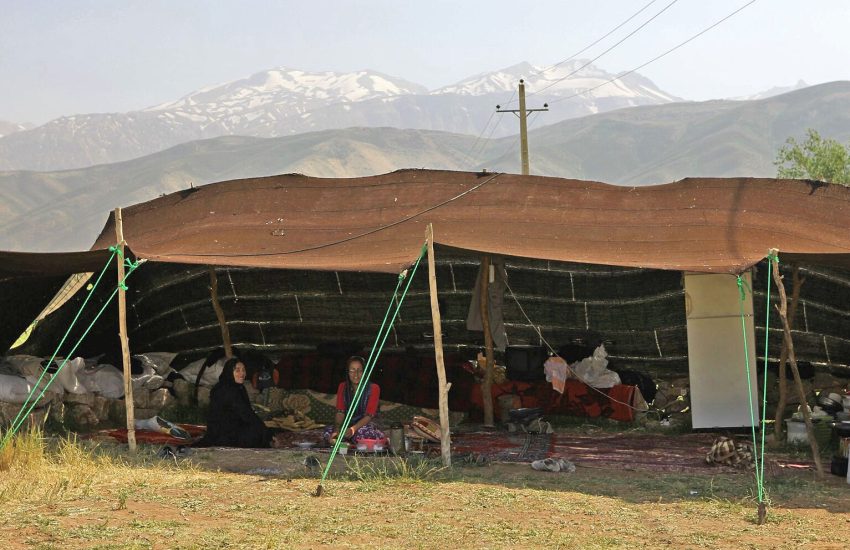
On these forested slopes the Lahu built their villages, clusters of houses often raised in the southern style on posts, roofed with thatch, and set among the fields and the tea gardens. They cleared land on the slopes for rice, both dry and wet where the ground allowed, and for maize and other crops, and they gathered the rich produce of the forest around them.
Rooted to their hill slopes and their tea gardens, and gathered above all around Lancang, the Lahu made their homeland in the warm forested mountains of the southwestern borderlands. It is a land of forest and tea, of thatched villages on the slopes, where a hunting and farming people kept their language, their song, and their gourd pipe through the long centuries at the meeting of China and Southeast Asia.

The Villages, the Hunt, and the Old Order
In the days before the reach of the modern state, the Lahu lived in their hill villages by farming and the hunt, under the sway of custom and the guidance of elders, and, in some places, of local headmen and the native chiefs of the Dai lords in whose domains their hills lay. Each village was a community of households, ordered by the ties of kin and the authority of the old and the wise.
Theirs was once above all a hunting people, famed as trackers of the game of the forest, the deer, the boar, and, in their legends, the tiger, and the hunt gave much of their food, their fame, and their sense of themselves. In time, as game grew scarce and the forest was cleared, the Lahu turned more and more to the farming of the slopes, growing rice, maize, and, increasingly, the tea for which their country is famed.
A striking feature of the old Lahu way was a notable equality between men and women, who worked together in the fields and shared in the life of the household and the village, and among some Lahu a married couple might live and work together as a close and equal pair. This equality, unusual among their neighbours, ran through the social life of the people.
Governed by custom, by elders, and by the bonds of kin, and ruled from afar by the Dai lords and the empire, the Lahu lived as hunters and farmers of the southwestern hills. A people of the forest slopes at the meeting of great worlds, they kept their language, their song, and their gourd pipe through the long centuries, changing slowly under the settled order of the uplands.

The Household, the Village, and the Bonds of the Lahu
Lahu society rests on the household and the village, the bonds of kin that tie families together on the forested slopes. Descent is reckoned in the Lahu world with a notable place for both the father’s and the mother’s line, and among some communities a newly married couple might live with the wife’s family, a mark of the equality between the sexes for which the Lahu are known.
The village is the largest everyday unit of Lahu life, a cluster of houses on a mountain slope, guided by respected elders and, in the old days, by the priests and ritual specialists who kept the sacred lore. The Lahu built no wide state and knew no king, and authority within the village rested on age, on wisdom, and on the respect owed to those skilled in custom and ritual.
A distinctive mark of Lahu society is the closeness and the equality of the married pair, for husband and wife worked together in the field and the forest, shared in the raising of the children and the running of the household, and were bound as a close and cooperating couple. This partnership of the sexes, unusual among the peoples of the region, ran through the whole of Lahu life.
Women held a place of real standing, working beside the men in every task and, as weavers, clothing the household in the cloth they made, adorned among some branches with fine applique and silver. The songs of courtship, sung between young men and women, gave the young a voice in the choosing of their matches, and the ties of marriage bound the households of a village and a district together.

Gui Sha, the Spirits, and the Coming of the Cross
The older faith of the Lahu centred on a supreme creator god, known as Gui Sha, the maker of the world and of humankind, a high god held to watch over the people and to be honoured above all others. This belief in a single great creator, unusual among the mountain peoples, gave the Lahu religion a distinctive cast and, some have thought, made them the readier to receive the Christian message when it came.
Around the worship of Gui Sha the Lahu held a belief in the spirits of the forest, the mountains, the rivers, and the fields, and in the ancestors of the household, whose goodwill was sought and whose neglect brought misfortune. Offerings and rites, led by the village priest and the ritual specialists, kept the spirits content and secured their blessing on the hunt, the crop, and the health of the people.
In the late nineteenth and early twentieth centuries Christian missionaries reached the Lahu and won many of them, above all in certain districts, to the new faith, giving them a written language and planting churches through the hills. The Lahu belief in a single creator god eased the way, and among many communities Christianity became a strong and lasting part of life, joined to the old love of song in the singing of hymns.
Today a good number of the Lahu are Christian, while others keep the older worship of Gui Sha, the spirits, and the ancestors, and among some the two are woven together. Buddhism too reached the Lahu from their Dai neighbours in earlier times. Yet whether in the old faith or the new, the reverence of Gui Sha and the honouring of the spirits and ancestors remain deep in the Lahu world.

The Gourd Pipe, the Dance, and the Ways of the Lahu
The soul of Lahu tradition is music and dance, and above all the gourd pipe, the lusheng or reed-pipe of the people, a wind instrument made of a gourd fitted with pipes, whose reedy voice leads the dances of the Lahu. The player steps and turns as he plays, and around him the people circle in the linked dance, so that music and movement are woven together in the great gatherings.
The circle dance is the characteristic form of Lahu festivity, the people joining hands or moving together in a ring, stepping to the music of the gourd pipe and the drum around the fire or the dancing ground. At the new year and the festivals the whole village dances thus far into the night, and the dance is at once a celebration, a courtship, and a binding of the community.
Song runs through the whole of Lahu life, in courtship, at weddings, at work, and at the festivals, and, among the Christian Lahu, in the singing of hymns that took up the old love of music in a new form. The rich body of Lahu song, carrying the myths, the history, and the feeling of the people, is among their most cherished possessions.
Around these run the customs of the year and of life, the hunt of the old days, the courtship carried on in song and dance, the weddings and funerals with their proper rites, and the great new-year festival. Through the gourd pipe, the circle dance, and the song, the Lahu mark the passages of life and the turning of the year in ways carried down from their forebears in the southwestern hills.

The Weavers, the Silversmiths, and the Makers of Cloth
The crafts of the Lahu are the crafts of a hill people, and chief among them is the making of cloth by the women. They spin and weave cotton, dye it a deep indigo, and adorn the dress with applique and, among some branches, with silver ornaments, in the styles that mark off the Black, the Red, and the other branches of the people. The making of a girl’s dress was a labour of care and a measure of her skill.
The Lahu are known for the fine applique work on their dress, in which pieces of coloured cloth are cut and sewn onto the garment in bold patterns, and for the silver ornaments, buttons, and jewellery worn at the festivals, the work of skilled smiths. The shoulder bag, woven and adorned, is a characteristic Lahu possession, carried by men and women alike.
The making of the gourd pipe, the instrument that leads the Lahu dance, is a craft in itself, the gourd fitted with pipes of bamboo and reeds tuned to sound the melodies of the people, and a good pipe was a treasured thing. Beyond this the Lahu build their houses of timber, bamboo, and thatch, plait bamboo into baskets and mats, and carve the tools of daily life.
The tending and preparing of tea, grown on the famous mountains of their country, was a skill of the Lahu uplands, whose gardens yielded a valued crop. Yet it is for the woven and appliqued dress, the silver, and the gourd pipe above all that the crafts of the Lahu are known, an art bound to the dress and the dance of a mountain people of the southwestern borderlands.

Rice, Tea, and the Table of the Hills
The food of the Lahu is the food of the southwestern hills, built on rice grown on the slopes and, where the land allowed, in the terraced valleys, with maize and other crops on the higher ground. Rice is the heart of every meal, boiled or steamed, and to it is added a relish of vegetables, gathered greens, beans, and the produce of the garden, with meat as the food of festivals and welcome.
In the old days the hunt gave much of the Lahu’s meat, the game of the forest taken with bow and gun, and the memory of the hunting life lingers in the people’s fondness for the wild and the smoked. Pork is the everyday meat of the household, kept and killed for the great occasions, and the forests and streams yield wild plants, fish, and game to enrich the table.
Tea holds a special place among the Lahu, for their country lies in the old tea mountains of Pu’er, and the Lahu have their own ways of preparing and drinking it, at times roasting the leaves before brewing, and the offering of tea is a mark of hospitality. Chilli, herbs, and the sour and the pungent give savour to the Lahu dishes, as among their neighbours of the southwest.
Rice wine and other home-brewed liquors are the drink of hospitality and of ritual, poured for guests, shared at the festivals, and offered to the spirits and the ancestors. From the hill rice and the game of the forest to the tea of the mountains and the home-brewed wine, the food of the Lahu is rooted in the forested slopes and the tea gardens of their southwestern home.

The New Year, the Kuo Ta, and the Feasts
The greatest festival of the Lahu is the new year, the Kuo Ta festival, held at the turning of the year and kept with the whole community for days of feasting, of the wearing of the finest dress, and above all of the circle dance to the music of the gourd pipe. It is the high point of the Lahu year, drawing the scattered families of the hills together to greet the coming season with music and joy.
At the new year the pounding of glutinous rice into cakes, the offering to Gui Sha and the ancestors, and the great circle dances around the fire fill the days and nights of the festival. Among the Lahu the new year is often kept in two parts, a greater and a lesser, and the dancing, the singing, and the courtship of the young make it the most joyful occasion of the year.
For the Christian Lahu, the festivals of the church calendar, above all Christmas, have become great occasions, when the villages gather and the hymn singing that took up the old love of song fills the churches. Thus among the Lahu the old new year and the new Christian feasts both draw the people together in music and celebration.
The turning of the farming year and the passages of life, birth, marriage, and death, gather the kin for ceremony, and among the Lahu the wedding and the courtship are carried on in song and dance. At all these occasions the appliqued dress and the silver, the gourd pipe and the circle dance, and the songs and hymns of the people bring colour and sound, so that the Lahu meet the great moments of life and the year with music and feasting.

From the Northern Steppe to the People of Modern China
The Lahu are counted, like their Yi and Lisu kin, among the peoples who trace their descent from the ancient Qiang of the borders of the Tibetan plateau, from whom sprang many of the Tibeto-Burman peoples of the southwest. Over many centuries their forebears drifted south along the mountain valleys, settling at length the hills of southwestern Yunnan and the lands beyond the border.
Through the long centuries the Lahu lived in their hills under the sway of the Dai lords of the valleys and, more distantly, of the Chinese empire, farming and hunting on the slopes above the settled lowlands. The records tell of Lahu risings against the pressures of the state and the lords, and of their continued movement south into Burma, Thailand, and Laos in search of land and freedom.
The late nineteenth and early twentieth centuries brought the coming of the Christian missionaries, who won many Lahu to the new faith, gave them a written language, and planted churches through the hills, a change that reshaped the spiritual life of much of the people. This conversion, aided by the old belief in a single creator god, made Christianity a strong part of Lahu life in many districts.
After the founding of the People’s Republic the Lahu were recognised as one of the official nationalities of China, and the Lahu autonomous county of Lancang was established in their homeland. The modern age has brought roads, schools, and the tea trade to the Lahu hills, drawing the people into the wider life of the country, while their kin across the borders live as hill peoples of the neighbouring lands.

The Lahu in Modern China
Today the Lahu number some five hundred thousand within China, living still chiefly in the hills of southwestern Yunnan, above all in and around the Lahu autonomous county of Lancang, with large communities across the borders in Burma, Thailand, and Laos. A mountain people of the borderlands, they remain rooted in the forested slopes and the tea gardens of their home.
Modern life has come to the Lahu hills in the shape of roads, schools, and the reach of the market, and above all the growing trade in the famous Pu’er tea of their country, which has brought a measure of prosperity to some communities. The same forces, and the pull of the cities and of migrant labour, draw the young away and press upon the old ways of the villages.
The Lahu language, with its missionary script and its heritage of song, remains strong, and the Christian faith is a firm part of life in many communities, joined to the old love of music in the singing of hymns. Yet standard Chinese and modern schooling spread among the young, and the old religion of Gui Sha and the spirits, like the mother tongue, faces the pressure of a changing world.
Through these changes the Lahu carry their heritage with pride. The gourd pipe and the circle dance, the appliqued dress and the silver, the rich body of song, the equality of the married pair, and the reverence of Gui Sha all endure as marks of who they are. A mountain people of the southwestern borderlands, the Lahu keep their music and their customs alive in modern China.

Related Peoples of the Region
- Derung of the Dulong Valley, a Hidden Mountain People of Yunnan
- Jing People of the Beibu Gulf, China’s Vietnamese Coast Dwellers
- Russians of China, an Orthodox People on the Northern Frontier
- Tatars of China
- Uzbeks of China
- Monba People
- Gaoshan People, the Austronesian Highlanders of Taiwan
- Lhoba People of the Eastern Himalaya, Forest Hunters of the Tibetan Gorges
More Peoples of the World
- Zulu of the Green Hills and Their Kingdom Forged by Shaka
- Xhosa of the Eastern Cape and Their Clicking Tongue and Rite of Manhood
- Basotho of the Mountain Kingdom and the Nation Moshoeshoe Forged
- Shona of the Zimbabwe Plateau and Their Cities of Stone
- Ndebele of the Highveld and Their Painted Homes
- Tswana of the Kalahari Plateau and the Kgotla
- Swazi of Eswatini and the Kingdom of the Two Rulers
You May Like
The Zaza, a Mountain People of Eastern Anatolia