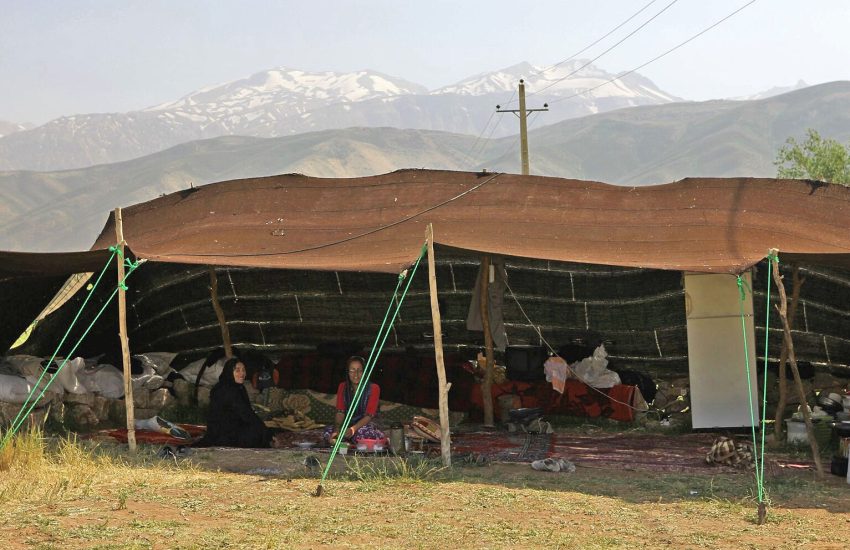
In the high mountains of the far southwest of Yunnan, along the border where China meets Burma, live the Wa, a people of the forested heights whose homeland is known as the Awa mountains. An Austroasiatic people kin in the deep past to the Mon and Khmer of Southeast Asia, they were long the freest and most remote of the frontier peoples, warriors feared by their neighbours, keepers of the great wooden drum, and, until modern times, takers of heads in the rites of the crop.
This account follows the Wa from their ancient origins among the aboriginal peoples of the southwestern mountains, through their free and warlike villages and their worship of the spirits, into their Austroasiatic language, the wooden drum, the buffalo sacrifice, and the vigorous hair dance that mark them. It ends with the Wa of today, an ancient mountain people whose long isolation has ended, keeping their drum and their dance alive in modern China.
- The People of the Awa Mountains
- Va, Wa, and the Name of the People
- The Wa Tongue and the Knotted Cords
- The Awa Mountains of the Southwestern Border
- The Villages, the Headmen, and the Old Order
- The Village, the Clan, and the Bonds of the Wa
- The Spirits, the Wooden Drum, and the Old Rites
- The Hair Dance, the Drum, and the Ways of the Wa
- The Weavers, the Smiths, and the Makers of the Village
- Rice, Tea, and the Table of the Mountains
- The New Rice, the Drum-Pulling, and the Feasts
- From the Ancient South to the People of Modern China
- The Wa in Modern China
The People of the Awa Mountains
In the high mountains of the far southwest of Yunnan, along the border where China meets Burma, live the Wa, a people of the forested heights whose homeland is known as the Awa mountains. Numbering some four hundred thousand within China, with many more across the border in Burma, they are a mountain people of ancient roots, long the freest and most remote of the peoples of the southwestern frontier.
The Wa belong to the Mon-Khmer branch of the Austroasiatic family, kin in the deep past not to the Tibeto-Burman peoples around them but to the Khmer of Cambodia, the Mon of Burma, and the other Austroasiatic peoples of Southeast Asia. This sets them apart from most of their neighbours, and marks them as among the oldest inhabitants of the region, dwellers there before the Tibeto-Burman and Tai peoples came.
Their forebears are held to have lived in these southwestern mountains from very ancient times, one of the aboriginal peoples of the borderland between China and Southeast Asia. High in their remote ranges, hard of access and long beyond the reach of any state, the Wa kept their freedom and their ancient ways later than almost any other people of the region, into the modern age.
To speak of the Wa is to speak of a mountain people of the far southwestern frontier, farmers of the steep slopes and, in the old days, warriors feared by their neighbours, keepers of the great wooden drum and of a religion of the spirits. An Austroasiatic people among Tibeto-Burman and Tai neighbours, dwellers of the remote Awa heights, they hold a place apart among the peoples of China.

Va, Wa, and the Name of the People
The people call themselves by a name usually rendered Va or Wa, their own word for who they are, and it is by this name, in the spelling Wa, that the Chinese state recognises them as one of its nationalities and sets aside the autonomous counties of their homeland. The name binds together the communities of the Awa mountains and of the lands across the border under a single identity.
The homeland of the people, the high ranges of the frontier, is known as the Awa mountains, a name that carries the people’s own name within it, and the Wa are the people of that mountain country. Whether in China or across the border in Burma, where a large Wa population lives in the hills they hold as their own, the people know themselves by this name.
The Wa are divided into groups by dialect and by custom, and in the old days a sharp line was drawn between the Wa of the remoter interior, who kept the fiercest of the old ways, and those nearer the settled valleys, who took on more of their neighbours’ customs. Yet all counted themselves one people, the Wa of the Awa mountains, sharing a common tongue and a common origin.
Across the border in Burma the Wa are numerous and have in recent times held a large territory of their own in the hills, while in China they live in the autonomous counties of the southwestern frontier. Whatever the border, the people know themselves as one, the Wa, an ancient mountain folk of the southwestern heights, keepers of the wooden drum and the old rites of the spirits.

The Wa Tongue and the Knotted Cords
The Wa speak a language of the Mon-Khmer branch of the Austroasiatic family, kin in the deep past to Khmer, to Mon, and to the other Austroasiatic tongues of Southeast Asia, and quite unrelated to the Tibeto-Burman and Tai languages of their neighbours. This ancient linguistic kinship, reaching far to the south, marks the Wa as among the oldest inhabitants of the southwestern mountains.
Unlike the tonal languages that surround them, the Wa tongue is, in the manner of its Austroasiatic kin, not truly tonal, distinguishing its words instead by other means, and its sounds and its grammar set it apart from the speech of the peoples around it. It is spoken in several dialects across the Awa mountains and the lands beyond the border, the everyday tongue of the villages.
For most of their history the Wa had no writing, and their store of song, legend, and lore was carried by memory and by mouth, and by an old system of knotted cords and notched sticks used to keep count and record. The great body of Wa tradition, their myths, their history, and their ritual, lived in the spoken and the sung word, kept by the elders and the ritual specialists.
In the twentieth century scripts were devised for the Wa language, both by Christian missionaries and later by the state, using the Roman alphabet, and the language has been written and taught, above all across the border where the Wa are numerous. In China standard Chinese has spread through schooling, and most Wa now speak both, using Chinese for the wider world and their own ancient tongue in the villages of the mountains.

The Awa Mountains of the Southwestern Border
The homeland of the Wa is the high mountain country of the far southwest of Yunnan, along and across the border with Burma, a region of steep forested ranges known as the Awa mountains. The greater number in China live in the autonomous counties of Cangyuan and Ximeng and the neighbouring districts, in a country of high peaks, deep valleys, and thick forest, remote and long hard of access.
This is rugged sub-tropical highland, its slopes clothed in dense forest, warmed by the southern sun and drenched by the monsoon rains, and cut by deep gorges and swift streams. The Wa settled the high slopes and the ridges, above the valleys held by the Dai and others, where they cleared their fields from the forest and built their villages, often on defensible heights, for the Wa were long a warlike people.
The Wa village of the old days was a place apart, its houses of timber, bamboo, and thatch clustered on a ridge or a slope, sometimes ringed for defence, and among them the great wooden drums in their houses and the sacred posts of the spirits. The old village of Wengding, kept as a living monument, and the famous rock paintings of Cangyuan, ancient images on the cliffs, are among the marks of the Wa country.
Rooted to their high slopes and their mountain fields, and gathered in the remote ranges of the frontier, the Wa made their homeland in one of the most rugged and inaccessible corners of the Chinese southwest. It is a land of forest and height, of ridge-top villages and sacred groves, where an ancient people kept their freedom, their language, and their old rites later than almost any of their neighbours.

The Villages, the Headmen, and the Old Order
In the days before the reach of the modern state, the Wa lived in their mountain villages in a freedom almost unknown among their neighbours, under the sway of custom and the guidance of village headmen and elders, without kings or a wide state of their own. Each village managed its own affairs, and the Wa of the remoter interior held their independence against all comers into the twentieth century.
Theirs was in the old days a warlike world, and the Wa were feared by their neighbours, for the villages warred among themselves and with outsiders, and the fiercest of the interior Wa kept, until modern times, the practice of head-hunting, taking heads for the rites believed to bless the crop and guard the village. This custom, which set the Wa apart and made them dreaded, was given up only in the middle of the twentieth century.
Life turned on the clearing and cropping of the mountain slopes, on the growing of rice and other grain, and, in later times, on the tea and the opium that the hills could yield. Wealth was reckoned in land, in cattle, above all the buffalo sacrificed at the great rites, and in the standing of the village and its headmen, and the round of the farming year and its rituals set the rhythm of life.
Governed by custom, by headmen, and by the ritual specialists, and long beyond the reach of any state, the Wa lived as free and warlike farmers of the remote mountains. An ancient people of the frontier, dwellers of the high forest, they kept their language, their spirits, and their old rites, including the fierce customs of war, later than almost any other people of the southwestern hills.

The Village, the Clan, and the Bonds of the Wa
Wa society rests on the village and the clan, the bonds of kin that tie families together on the mountain slopes. Descent is reckoned through the father’s line, and members of a clan share a common ancestor, honour the same forebears, and owe one another the duties of kin, while the village, often a community of several clans, was the largest everyday unit and, in the old days, a fortress against the world.
Each village was guided by its headmen and its elders and by the ritual specialists who kept the sacred lore and led the rites, for the Wa built no wide state and knew no king. Authority rested on age, on standing, on the leading of the rituals, and, in the warlike old days, on prowess and the taking of heads, rather than on inherited throne. The great wooden drum, kept in its house, was the voice and the heart of the village.
Marriage among the Wa was made outside the clan and marked by the exchange of gifts, by the sacrifice of animals, and by feasting, and the songs of courtship gave the young a voice in the choosing of their matches. The ties of marriage bound the households and clans of a district together, and the sharing of the sacrificed buffalo at the great rites drew the community into one.
Women worked beside the men in the fields and the household and, as weavers, clothed the people in the cloth they made, and the dress of the Wa women, dark and adorned with silver, marked them among their neighbours. Through clan and village, headman and drum, the Wa individual was bound into a close and, in the old days, a fierce and self-reliant community of the mountains.

The Spirits, the Wooden Drum, and the Old Rites
The old religion of the Wa was a worship of the spirits that fill the mountain world, the spirits of the forest, the fields, the rivers, and the rocks, and above all of a great spirit or god held to rule over all, together with the honouring of the ancestors. Offerings and sacrifices, above all of the buffalo, kept the spirits content and secured their blessing on the crop, the herd, and the village.
At the heart of the old Wa faith stood the great wooden drum, a huge drum hollowed from a log and kept in its own house in the village, held to be sacred and to be the dwelling or the voice of the spirits. The drum was sounded at the great rites, in war, and in mourning, and the making and the raising of a new drum was itself a solemn ceremony, the drum revered as the very heart of the village.
The fiercest and most dreaded of the old rites was the taking of heads, for the interior Wa believed that a human head, above all one taken in the season of sowing, brought the blessing of fertility on the crops and guarded the village from harm. This custom, which made the Wa feared, was bound to their religion of the spirits and the fertility of the fields, and was given up only in the twentieth century.
In later times Buddhism reached some Wa from their Dai neighbours, and Christianity was carried to others by missionaries, above all across the border, so that today many Wa are Christian and others Buddhist, while some keep the old worship of the spirits. Yet the memory of the wooden drum and the old rites of the spirits and the buffalo remains deep in the Wa world.

The Hair Dance, the Drum, and the Ways of the Wa
The most famous of Wa traditions in the modern day is the hair dance, in which the women, with their long black hair loose, swing and toss it in great arcs in time to the music, a striking and vigorous dance that has become the emblem of the Wa and a celebrated sight on the stages of China. The dance, drawn from the movements of daily life, is full of energy and pride.
The great wooden drum stands at the heart of Wa tradition, the huge log-drum kept in its house and revered as sacred, sounded at the great rites and the festivals. The pulling of a new drum, the felling of the great tree, the hollowing of the log, and the dragging of the finished drum to the village amid singing and dancing, was one of the solemnest and most joyful of Wa ceremonies.
Music and dance run through Wa life, the wooden drum, the log-drum dance, the songs of courtship and festival, and the vigorous dances for which the people are known. The sacrifice of the buffalo at the great rites, the dark dress adorned with silver, and the old customs of the warlike past, now remembered rather than practised, are woven into the tradition of the people.
Around these run the customs of the year and of life, the rites of the crop and the seasons, the courtship carried on in song, and the weddings and funerals with their sacrifices and feasts. Through the hair dance, the wooden drum, and the rites of the buffalo, the Wa mark the passages of life and the turning of the year in ways carried down, though changed, from their ancient and fierce forebears of the mountains.

The Weavers, the Smiths, and the Makers of the Village
The crafts of the Wa are the crafts of a mountain people, and chief among them is the making of cloth by the women. They spin and weave cotton, dye it a deep dark red or black, and weave it into the dark dress that marks the people, adorned with stripes and, at the festivals, with silver ornaments and beads. The making of a woman’s dress was a labour of care and a measure of her skill.
The Wa women wear ornaments of silver and of beads, and rings of rattan or bamboo about the waist and limbs, and the smiths and craftworkers made the jewellery, the buttons, and the tools of the people. The dark cloth, the silver, and the rattan rings gave the Wa their distinctive look, marking them among the peoples of the southwestern hills.
The making of the great wooden drum was the most sacred of Wa crafts, the felling of a great tree, the hollowing of the log, and the shaping of the drum, done with solemn ritual and skill, for the drum was the heart of the village. Beyond this the Wa build their houses of timber, bamboo, and thatch, plait bamboo into baskets and mats, and carve the tools and the sacred posts of the village.
The knotted cords and notched sticks by which the Wa kept count and record were a craft of memory and skill, and the tending of tea, grown on the mountain slopes, was a skill of the uplands. Yet it is for the dark dress and silver, the rattan rings, and above all the great wooden drum that the crafts of the Wa are known, an art bound to the dress, the rites, and the mountain life of the people.

Rice, Tea, and the Table of the Mountains
The food of the Wa is the food of a mountain people, built on rice grown on the slopes, both dry rice cleared from the forest and, where the land allowed, wet rice in the terraced valleys, with maize and other crops on the higher ground. Rice is the heart of every meal, and a well-loved dish is the rice cooked in a length of fresh bamboo, roasted over the fire so that the grain takes the fragrance of the green wood.
To the rice is added a relish of vegetables, gathered greens, beans, and the produce of the garden and the forest, with meat as the food of festivals and welcome. Beef from the sacrificed buffalo, shared among the community at the great rites, and pork from the household pigs are the meats of the feast, and the forests yield wild plants, game, and herbs to enrich the table.
The Wa are known for a hearty and pungent cooking, fond of the chilli, the sour, and the bitter, and for dishes of pounded rice and of meat cooked simply over the fire. Tea, grown on the slopes of their country, is drunk and offered to guests, and among the Wa a strong tea, at times bitter, is a mark of hospitality in the cool of the hills.
Rice wine and other home-brewed liquors are the drink of hospitality and of ritual, poured for guests, shared at the festivals, and offered to the spirits and the ancestors. From the bamboo-roasted rice and the buffalo of the sacrifice to the tea of the slopes and the home-brewed wine, the food of the Wa is rooted in the forested mountains and the fields of their high frontier home.

The New Rice, the Drum-Pulling, and the Feasts
The festivals of the Wa turn on the rice year and on the honouring of the spirits and the ancestors, and they gather the village for days of sacrifice, feasting, and dance. Among the greatest is the new-rice festival, held when the crop is gathered, a thanksgiving to the spirits with the sacrifice of animals, the tasting of the new grain, the sounding of the wooden drum, and the vigorous dances of the people.
The pulling of a new wooden drum was one of the greatest of Wa ceremonies, when a great tree was felled and hollowed and the finished drum dragged to the village amid singing, dancing, and the sacrifice of a buffalo. This solemn and joyful rite, renewing the sacred heart of the village, drew the whole community into days of ceremony and celebration.
The sacrifice of the buffalo stood at the centre of the great Wa rites, the beast tied to the sacred post and offered to the spirits for the blessing of the crop and the village, its meat shared among the gathered community. In the old days the taking of heads was bound to these rites of fertility, a custom given up in modern times, but the buffalo sacrifice and the drum endure.
The turning of the farming year and the passages of life, birth, marriage, and death, gather the kin for ceremony, with sacrifice, feasting, and the sounding of the drum. At all these occasions the dark dress and silver, the great wooden drum, the hair dance, and the songs of the people bring colour and sound, so that the Wa meet the great moments of the year and of life with sacrifice, feast, and dance.

From the Ancient South to the People of Modern China
The Wa are held to be among the most ancient inhabitants of the southwestern mountains, an Austroasiatic people dwelling there before the Tibeto-Burman and Tai peoples came, kin in the deep past to the Mon and Khmer of Southeast Asia. Their forebears lived in the high ranges of the frontier from very ancient times, one of the aboriginal peoples of the borderland between China and the lands to the south.
Through the long centuries the Wa kept to their remote mountains, beyond the reach of the Chinese empire and of the Dai lords of the valleys, a free and warlike people whom their neighbours feared. So remote and so fierce were the interior Wa that they held their independence, and the customs of war and of head-hunting, later than almost any other people of the region, into the twentieth century.
The borderland of the Wa became, in the modern age, a matter of dispute between China and Burma, and the drawing of the frontier through their mountains divided the people, leaving a large Wa population on the Burmese side, where in later times they came to hold a wide territory of their own in the hills. The old customs, including head-hunting, were given up in the middle of the twentieth century.
After the founding of the People’s Republic the Wa in China were recognised as one of the official nationalities, and the autonomous counties of Cangyuan and Ximeng were established in their homeland. The modern age has brought roads, schools, and the reach of the state to the once inaccessible Awa mountains, drawing the Wa into the wider life of the country and ending the isolation of centuries.

The Wa in Modern China
Today the Wa number some four hundred thousand within China, living still chiefly in the high mountains of the far southwest of Yunnan, above all in the autonomous counties of Cangyuan and Ximeng, with a far larger Wa population across the border in Burma. A mountain people of the frontier, they remain rooted in the forested heights of the Awa ranges that are their ancient home.
Modern life has come even to the remote Awa mountains, for roads now reach the once inaccessible ranges, bringing schools, electricity, and the reach of the market and the state, and a growing trade in tourism draws visitors to the old village of Wengding, the rock paintings of Cangyuan, and the vigorous hair dance of the Wa. The isolation of centuries has been ended within a few generations.
The same forces bring change and strain, for the pull of the towns and of migrant labour draws the young away, and standard Chinese and modern schooling spread among them, pressing upon the ancient Wa tongue and the old ways. The fierce customs of the warlike past are long gone, and Buddhism, Christianity, and the old worship of the spirits now divide the faith of the people.
Yet the Wa carry their heritage with pride. The great wooden drum and the hair dance, the dark dress and silver, the songs and the festivals, and the memory of their ancient freedom endure as marks of who they are. An Austroasiatic people of the remote southwestern heights, among the oldest inhabitants of the frontier, the Wa keep their drum and their dance alive in modern China.

Related Peoples of the Region
- Derung of the Dulong Valley, a Hidden Mountain People of Yunnan
- Jing People of the Beibu Gulf, China’s Vietnamese Coast Dwellers
- Russians of China, an Orthodox People on the Northern Frontier
- Tatars of China
- Uzbeks of China
- Monba People
- Gaoshan People, the Austronesian Highlanders of Taiwan
- Lhoba People of the Eastern Himalaya, Forest Hunters of the Tibetan Gorges
More Peoples of the World
- Zulu of the Green Hills and Their Kingdom Forged by Shaka
- Xhosa of the Eastern Cape and Their Clicking Tongue and Rite of Manhood
- Basotho of the Mountain Kingdom and the Nation Moshoeshoe Forged
- Shona of the Zimbabwe Plateau and Their Cities of Stone
- Ndebele of the Highveld and Their Painted Homes
- Tswana of the Kalahari Plateau and the Kgotla
- Swazi of Eswatini and the Kingdom of the Two Rulers
You May Like
The Zaza, a Mountain People of Eastern Anatolia