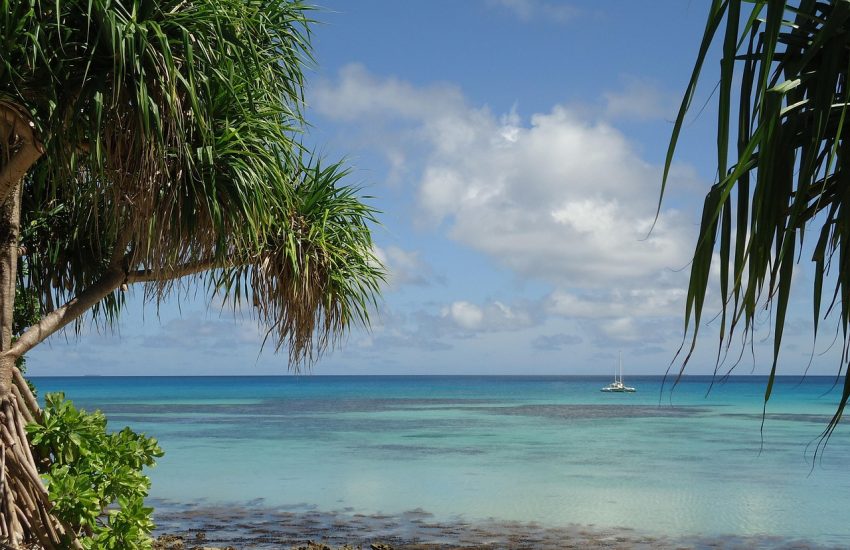
Nineteen hundred kilometers from the nearest inhabited island, a triangle of volcanoes holds the most famous statues on earth and one of history’s most mistold stories. The Rapanui, Polynesians who made the ocean’s most extreme landfall, carved nearly a thousand moai for their ancestors, invented what may be an original writing system, survived slave raids that reduced them to one hundred eleven souls, and outlasted a sheep company that fenced them into their own village.
This portrait follows the people of Te Pito o te Henua, the navel of the earth: the landfall of Hotu Matu’a, the clans beneath the statues’ gaze, the birdman race down Rano Kau’s cliff, the silent tablets of rongorongo, the stone gardens that fed an isolated world, the February festival that carries the culture, and the living town beside the world’s most visited ruins.
Contents
- Landfall at the Navel of the World
- Rapa Nui, Te Pito o Te Henua, Easter Island
- Vananga Rapa Nui and the Riddle of Rongorongo
- A Triangle of Volcanoes in the Loneliest Sea
- Quarries, Moai Roads, and the Chicken Houses of Stone
- Ten Clans Beneath the Ancestors’ Gaze
- Moai, Mana, and the Birdman of Orongo
- Body Paint, String Figures, and the Old Performances
- Carvers of Wood, Stone, and Sacred Script
- Stone Gardens, Umu Feasts, and the Sea’s Ration
- Tapati Rapa Nui, Two Weeks of the Clans
- Collapse Rewritten, Slavers, and a Century of Fences
- A Living People at the World’s Most Famous Ruin
Landfall at the Navel of the World
Sometime around 1200 AD, one or a few double-hulled canoes out of central Polynesia, probably by way of Mangareva or the Marquesas, made the most extreme landfall of the whole expansion: a treeless-horizoned speck 1,900 kilometers from the nearest inhabited island. Tradition names the founding king Hotu Matu’a, who beached at Anakena’s white sand with his household, his plants, and his gods.
The settlers named their new world Te Pito o te Henua, the navel of the earth, and the name was exact: no people on the planet lived farther from anyone else. From the landing at Anakena the clans spread around the coasts, and within a few centuries the island carried thousands of people, banana and taro gardens, and the beginnings of the greatest sculptural project in Oceania.
Everything they built, they built alone. After settlement the island seems to have had little or no outside contact for five hundred years: no trade goods arrive in the archaeology, no later canoe traditions land. Rapa Nui became Polynesia’s sealed experiment, its people improvising a civilization from basalt, obsidian, and memory.
DNA from the island’s old burials confirms the Polynesian founding and adds a South American thread woven in before European contact, evidence that someone, in one direction or the other, crossed the gap to the continent and returned, the last unwritten chapter of the voyaging age.
The sweet potato is the quiet witness of that contact: a South American crop, carried west into Polynesia centuries before Columbus, it fed the island’s driest fields under its old Quechua-echoing name kumara, botany and linguistics agreeing where the tablets stay silent.
The sweet potato is the quiet witness of that contact: a South American crop, carried west into Polynesia centuries before Columbus, it fed the island’s driest fields under its old Quechua-echoing name kumara, botany and linguistics agreeing where the tablets stay silent.

Rapa Nui, Te Pito o Te Henua, Easter Island
The island wears three names in three languages. Its own deep names are Te Pito o te Henua, the navel of the earth, and Rapa Nui, great Rapa, a nineteenth-century Polynesian coinage that the islanders made their own; the people, their language, and the island share it now as an official name.
Easter Island is the visitor’s label: the Dutch commander Jacob Roggeveen sighted the coast on Easter Sunday 1722 and named the day rather than the place. Isla de Pascua translates it on Chilean maps, and the three names in circulation mark the three claims, indigenous, European, and Chilean, that the island’s politics still balances.
The people call themselves Rapanui, and their genealogies sort them into the old mata clans descended from Hotu Matu’a’s household, lineages that still matter when land, museum bones, or festival teams are at stake.
Among Polynesians the island holds an honored extremity: the eastern point of the triangle whose other corners are Hawai’i and Aotearoa, proof of how far the canoes reached before the world’s other half arrived.
Vananga Rapa Nui and the Riddle of Rongorongo
Vananga Rapa Nui is an Eastern Polynesian language, kin to Mangarevan, Tahitian, and Maori, preserved through catastrophe by a bottleneck of barely a hundred speakers in the 1870s. It survives today in perhaps a few thousand mouths, heavily pressured by Chilean Spanish, and the island’s schools now run immersion classrooms to keep children speaking the language of Hotu Matu’a.
Its most famous artifact is a mystery: rongorongo, the script of fine glyphs, birds, fish, plants, men, incised in boustrophedon lines on wooden tablets, was kept by chanting specialists who died or were enslaved before any outsider learned to read it. Some two dozen tablets survive in the world’s museums.
Whether rongorongo is true writing, a mnemonic chant-notation, or something between, it appears to have been developed on the island itself, which would make Rapa Nui one of the very few places on earth where writing was independently invented, by the world’s most isolated community.
Attempts at decipherment continue, one glyph sequence has been read plausibly as a lunar calendar, and the tablets meanwhile do quiet modern work: their patterns fill island tattoos, carvings, and festival costumes, an alphabet of identity even while it keeps its silence.
The bottleneck cost the language its registers and much of its old vocabulary, and modern vananga has borrowed Tahitian and Spanish to fill gaps; the immersion classrooms, a dictionary project, and the festival’s insistence on Rapanui lyrics are the counterweights, and hearing teenagers argue a football match in the language is counted, correctly, as a victory.
The bottleneck cost the language its registers and much of its old vocabulary, and modern vananga has borrowed Tahitian and Spanish to fill gaps; the immersion classrooms, a dictionary project, and the festival’s insistence on Rapanui lyrics are the counterweights, and hearing teenagers argue a football match in the language is counted, correctly, as a victory.

A Triangle of Volcanoes in the Loneliest Sea
Rapa Nui is a triangle of three volcanoes, twenty-four kilometers on its longest side, adrift in the emptiest quarter of the Pacific: Chile lies 3,500 kilometers east, Tahiti 4,000 west, and the nearest inhabited neighbor, Pitcairn, 1,900 kilometers away with fewer than fifty people on it.
Terevaka’s grassy dome crowns the island, Rano Kau holds a crater lake a kilometer wide behind the cliff-edge village of Orongo, and Rano Raraku’s tuff supplied the moai. There are no reefs, no permanent streams, and no natural harbors; the sea hits basalt cliffs, and the island’s few sand beaches, Anakena chief among them, were the canoe doors of the old world.
The land is windswept grassland now, its ancient palm forest gone in the settlement centuries, and its water comes from the crater lakes and from rain caught in the porous rock; the old planters answered the scarcity with ingenuity that still marks the ground.
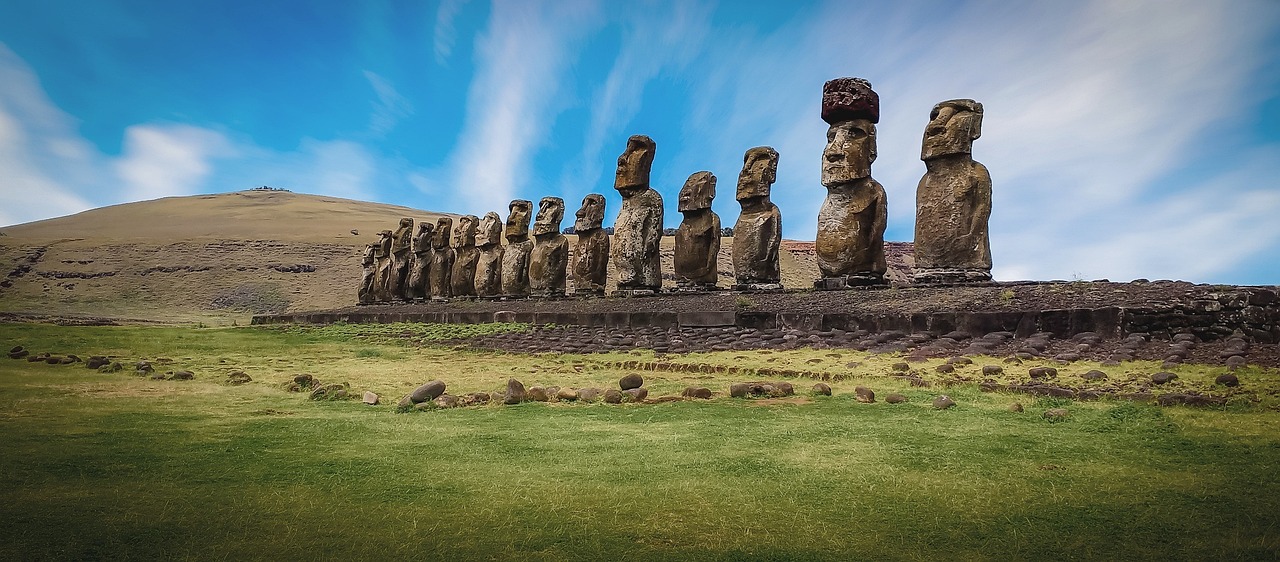
Nearly half the island is national park, inscribed by UNESCO for the roughly nine hundred moai and three hundred ahu platforms that make the whole landscape an open-air archive, co-managed since 2017 by the Rapanui community through the Ma’u Henua council.

Quarries, Moai Roads, and the Chicken Houses of Stone
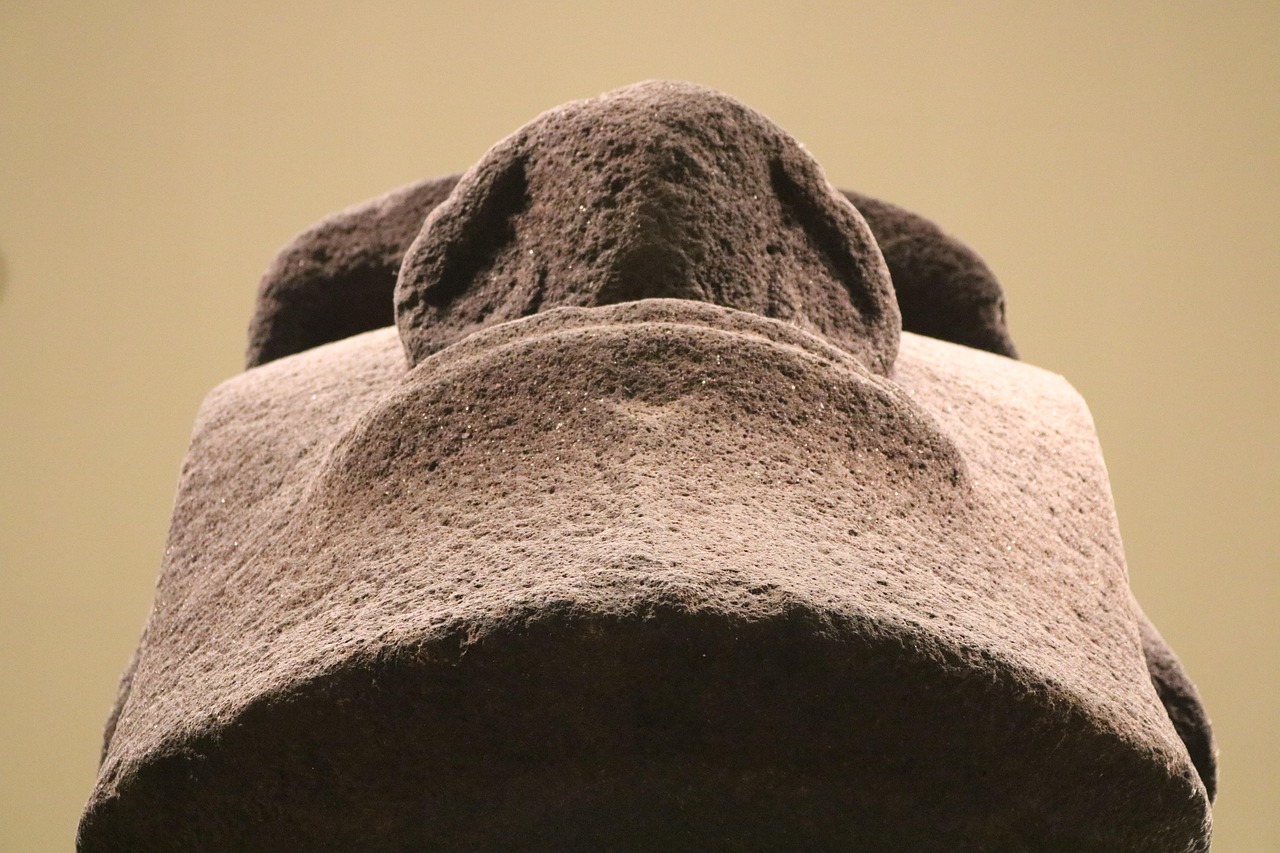
For centuries the island’s central industry was ancestors. At Rano Raraku’s quarry, crews cut moai from the volcanic tuff with basalt picks, freeing statues up to ten meters long from the rock face; nearly four hundred remain there in every stage, including El Gigante, twenty-one meters of unfinished ambition still fused to the mountain.
Finished moai traveled kilometers along prepared roads to the coastal ahu, by sledge and lever in one school of thought, or walked upright by coordinated rope teams in the experiment that made modern headlines, the statues rocking forward step by step as the old tradition always said they walked.
Around the statue economy ran a farming system engineered for a dry, windy island: millions of stones laid as mulch to hold moisture, walled manavai garden enclosures sheltering banana and paper mulberry, chicken houses of stacked stone built more solidly than the people’s own reed houses, and the boat-shaped hare paenga of the elite along the shore.
When the forest and the statue age ended, the islanders adapted rather than vanished: the archaeology shows the gardens intensifying, obsidian tools multiplying, and the population persisting in the thousands until the ships arrived, a revision that has replaced the old ecocide morality tale.
The experimental walkers moved a five-ton replica hundreds of meters with three rope teams and a chant rhythm, and the roadside moai, lying face down or face up exactly as a walking transport would drop them, have gone from evidence of chaos to evidence of engineering.
The experimental walkers moved a five-ton replica hundreds of meters with three rope teams and a chant rhythm, and the roadside moai, lying face down or face up exactly as a walking transport would drop them, have gone from evidence of chaos to evidence of engineering.

Ten Clans Beneath the Ancestors’ Gaze
The island was divided among some ten mata, clans descended from Hotu Matu’a’s sons, each holding a wedge of land from the high ground to the sea, each with its ahu and moai facing inland to watch over its own. The western and eastern clan confederations, Tu’u and Hotu Iti, contested precedence in ceremony and, late in the sequence, in war.
Rank ran by descent from the ariki mau, the paramount of the Miru clan, whose sacredness was genealogical rather than governmental; beside the chiefs stood the ivi atua priests, the tangata honui elders, and the master carvers and fishermen whose skills were clan property.
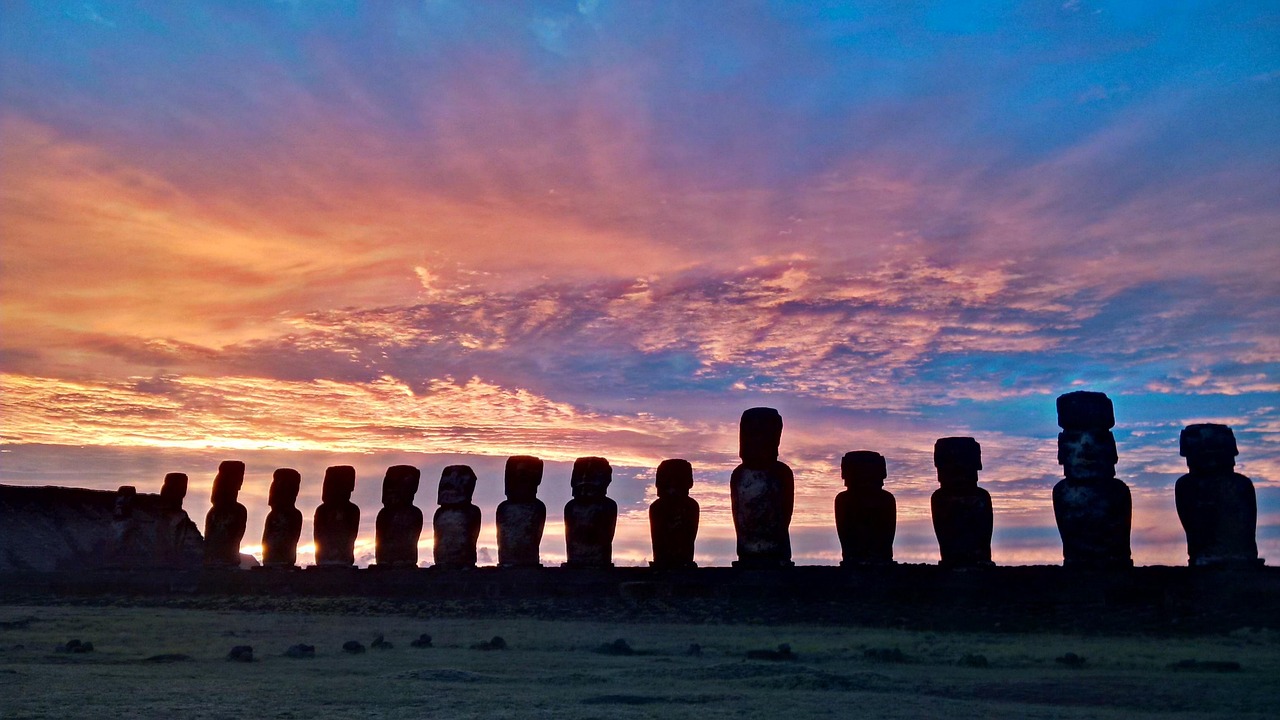
The moai were the social system in stone: each statue an ancestor of a specific lineage, raised by its descendants’ labor and fed by their gardens, its eyes opened with coral and obsidian to pour mana over the living. To topple a rival clan’s moai, as happened across the island in the eighteenth and nineteenth centuries, was to blind their dead.
The clans survive as surnames, land claims, and Tapati festival teams, and the Council of Elders that led the modern land struggle drew its authority from exactly that old map of families.
Museum shelves hold the sequence’s grimmest artifacts, the mata’a obsidian blades that multiply in the late layers, but even the war record is being reread: many mata’a are plant-working tools, and the toppling of the moai looks less like one great convulsion than a century of local scores settled clan by clan.
Museum shelves hold the sequence’s grimmest artifacts, the mata’a obsidian blades that multiply in the late layers, but even the war record is being reread: many mata’a are plant-working tools, and the toppling of the moai looks less like one great convulsion than a century of local scores settled clan by clan.

Moai, Mana, and the Birdman of Orongo
Rapa Nui religion began as ancestor veneration at planetary intensity: the moai were not gods but the honored dead, conduits of mana raised on the ahu that were at once altar, tomb, and boundary stone. Make-make, the creator, headed the pantheon, and the ordinary machinery of tapu and priesthood ordered planting, fishing, and the quarry itself.
As the statue age waned, the island invented a second religion: the birdman cult of Orongo, where each spring the clans’ champions descended the cliff of Rano Kau, swam the shark channel to the islet of Motu Nui, and waited for the first sooty tern egg. The victor’s patron became tangata manu, birdman, sacred ruler for a year, and the cliff village’s rocks are dense with birdman petroglyphs.
The competition redistributed authority annually among the clans, an astonishing institutional answer to the crisis of the old order, and it ran until the 1860s, when catastrophe and conversion ended it within a decade.
Catholic missionaries gathered the survivors of the slave raids and epidemics, and the island has been Catholic since, with its own Rapanui hymnody and a church carved with birdmen and Make-make alongside the saints; the old sacred sits in the pews rather than beneath them.
Orongo’s stone houses have been restored on their cliff between crater lake and ocean, and the birdman islets below remain seabird sanctuaries; the race is not run again, but at Tapati its memory paddles out in reed floats, and the tern’s egg keeps its place in the island’s iconography beside the cross.
Orongo’s stone houses have been restored on their cliff between crater lake and ocean, and the birdman islets below remain seabird sanctuaries; the race is not run again, but at Tapati its memory paddles out in reed floats, and the tern’s egg keeps its place in the island’s iconography beside the cross.
Body Paint, String Figures, and the Old Performances
The performing traditions carried what the tablets could not. Chanted genealogies and the kai kai string figures, cat’s-cradles accompanied by recited verse, preserved lineages and legends through the population bottleneck, taught knee to knee; children still learn them for the festival stage.
Dance and body decoration revived from the edge: takona body painting in earth pigments announces clan and story at festivals, the island’s dances mix Polynesian line and couple forms with a percussion of jawbone rattles and stone clappers, and the haunting riu laments, songs of the slave raids and exiles, are the island’s blues.
Tattoo returned with the Polynesian revival, worked in moai, birdman, and rongorongo motifs; the old practice had marked rank with dense facial and body work the missionaries suppressed.
Beneath the performance culture lies the umanga, the custom of communal work parties for houses, harvests, and festivals, and the tapu sensibility that still hedges the ahu: islanders teach visitors not to walk the platforms, for the ancestors, whatever the century, remain in residence.
Elders judge the festival’s chant and string-figure entries against the versions they learned, a quality control of memory, and recordings made with the last century’s informants are played back to trainees, the archive and the grandmother teaching in tandem.
Elders judge the festival’s chant and string-figure entries against the versions they learned, a quality control of memory, and recordings made with the last century’s informants are played back to trainees, the archive and the grandmother teaching in tandem.

Carvers of Wood, Stone, and Sacred Script
Rapa Nui carving never stopped; it only changed patrons. The old masters cut the moai kavakava, the ribbed, hollow-cheeked ancestor figures of toromiro wood whose gaunt realism startled Europe’s collectors, along with dance paddles, lizard figures, and the breast ornaments of chiefs; the first tourists, whalers and naval crews, found the islanders already producing for exchange.
Wood was always the scarcest luxury: the endemic toromiro tree, carved to extinction in the wild, survived as seeds in botanical gardens and is being replanted, a craft material returning from exile.
Stone remains the master medium, from replica moai in every scale to the revival of exact basalt toki picks by carvers testing the old quarry methods, and the island’s workshops supply a market that runs from airport stalls to museum commissions.
The finest work now cites the whole inheritance, rongorongo lines, birdman profiles, kavakava ribs, and a Rapanui carver’s chisel is, with the language and the festival, one of the three legs the culture stands on.
Provenance is the workshops’ new frontier: certification marks distinguish island-made work from imported copies, and the carvers’ association argues, with the weight of nine hundred stone ancestors behind it, that the island’s forms belong to the island’s hands.
Provenance is the workshops’ new frontier: certification marks distinguish island-made work from imported copies, and the carvers’ association argues, with the weight of nine hundred stone ancestors behind it, that the island’s forms belong to the island’s hands.

Stone Gardens, Umu Feasts, and the Sea’s Ration
The old island fed itself against the odds: sweet potato, taro, yam, and banana in stone-mulched fields and walled manavai, sugarcane for thirst, chickens in their stone fortresses, and the sea’s ration taken from cliffs and canoes, tuna and flying fish in season, eels and shellfish from the tide line, all under chiefly tapu that opened and closed the fisheries.
The earth oven, umu, remains the festival kitchen: fish, chicken, and now beef and lamb steamed over hot stones under banana leaves and earth, opened for weddings, memorials, and Tapati with the same theater as everywhere in Polynesia.
The signature modern dishes marry the island’s two coasts of identity: tunu ahi, fish grilled on hot stones, po’e banana pudding beside Chilean empanadas stuffed with local tuna, and ceviche in coconut milk splitting the difference between Lima and Papeete.
Nearly everything else arrives by ship or plane from the continent, at island prices, and the revival of manavai gardening and local fishing quotas is food security dressed as heritage, the oldest island problem returning in modern form.
Water completes the food story as it always did: the crater lakes, the old wells at the coast where fresh water seeps below the tide line, and now desalination all serve a town whose visitors drink like a city.
Water completes the food story as it always did: the crater lakes, the old wells at the coast where fresh water seeps below the tide line, and now desalination all serve a town whose visitors drink like a city.

Tapati Rapa Nui, Two Weeks of the Clans
Every February the island stages Tapati Rapa Nui, two weeks in which the community divides behind two candidate queens and competes in everything its history contains: moai-carving and kai kai on the culture side, and on the sport side the haka pei, in which young men toboggan down Maunga Pui’s grass slope on banana-trunk sleds at highway speeds.
The Tau’a Rapa Nui triathlon runs in Rano Raraku’s crater, reed-float swimming, banana-laden running, and outrigger paddling, a modern rite built from old skills, and takona body paint and riu song contests fill the evenings.
Points from every event elect the queen, crowned at festival’s end in a torchlit ceremony that is the island’s biggest night; the festival began in the 1970s as a Chilean spring pageant and was rebuilt by the islanders into the engine of cultural transmission.
Around the year sit the Catholic calendar’s feasts, the island’s church singing its Rapanui hymns, and the anniversary days of the land struggle, marked with the mixture of protest and picnic that small nations perfect.
Families switch allegiance between the two queens’ teams year to year by kinship and debt, the competition mapping the old clan wedges onto modern Hanga Roa, and a good haka pei run is discussed for a decade.
Families switch allegiance between the two queens’ teams year to year by kinship and debt, the competition mapping the old clan wedges onto modern Hanga Roa, and a good haka pei run is discussed for a decade.
Collapse Rewritten, Slavers, and a Century of Fences
The old story, ecological suicide followed by deserved collapse, has been rewritten by the island’s own archaeology: the forest did fall, but the population adapted and persisted, and the true catastrophe sailed in. Contact-era epidemics began the arithmetic, and in 1862-63 Peruvian slave raids took perhaps 1,500 islanders, a third to half of the people, to guano diggings and estates; the handful repatriated brought smallpox home.
By 1877 one hundred eleven Rapanui remained alive on the island, a bottleneck through which every islander today traces descent. The ariki line, the priests, and the last rongorongo readers were among the dead.
Chile annexed the island in 1888 by a treaty whose Rapanui text promised protection; what followed was a sheep company: the islanders confined to Hanga Roa village behind a wall while the Williamson-Balfour Company ranched the rest, a regime of fences and forced labor that lasted until 1953, with the navy governing after.
Full citizenship came only in 1966, after the schoolteacher Alfonso Rapu’s peaceful revolt; the decades since have run through land occupations, the return of park co-management in 2017, and a referendum-backed autonomy statute still being argued with Santiago, the treaty of 1888 read aloud at every step.
The bishop of Tahiti’s protests eventually stopped the raids, and Chile’s own truth commission in 2003 acknowledged the company era’s abuses; the island’s families keep the ledger in names, each lineage knowing which ancestor came back from the guano islands and which did not.
The bishop of Tahiti’s protests eventually stopped the raids, and Chile’s own truth commission in 2003 acknowledged the company era’s abuses; the island’s families keep the ledger in names, each lineage knowing which ancestor came back from the guano islands and which did not.

A Living People at the World’s Most Famous Ruin
About 7,700 people live on Rapa Nui today, roughly half of Rapanui descent, nearly all in Hanga Roa; several thousand more Rapanui live on the Chilean mainland, a diaspora of students and workers a five-hour flight from home. The island runs on tourism, which in a normal year lands over a hundred thousand visitors on a community of thousands.
The pandemic closure of 2020-22 became an accidental experiment in sovereignty: with the planes stopped, islanders returned to fishing, planting, and umanga work parties, and the reopening came with visitor caps and stay limits the community had long wanted.
The standing questions are the Pacific’s, sharpened by fame: migration pressure from the continent, museum ancestors abroad, including the moai Hoa Hakananai’a in the British Museum whose return the island formally seeks, erosion gnawing at ahu as the sea rises, and an autonomy statute negotiated with a state three time zones away.
Meanwhile the culture compounds: the immersion school graduates its cohorts, Tapati’s queens are crowned in takona and song, Ma’u Henua’s rangers tend the ancestors’ platforms, and the moai stand where their descendants raised them, watched now by the whole world but belonging, as always, to the families beneath their gaze.
Rapa Nui has also become a case study in indigenous heritage management, cited wherever descendant communities argue to run their own sacred landscapes, and its rangers now train counterparts from other islands, the navel of the world exporting, of all things, administration.
Rapa Nui has also become a case study in indigenous heritage management, cited wherever descendant communities argue to run their own sacred landscapes, and its rangers now train counterparts from other islands, the navel of the world exporting, of all things, administration.

Related Peoples of the Region
- Samoan People of the Sacred Center and Their Unbroken Fa’a Samoa
- Samoan People of the Sacred Center and Their Unbroken Fa’a Samoa
- Tongan People of the Friendly Islands and Their Kingdom That Was Never Conquered
- Tongan People of the Friendly Islands and Their Kingdom That Was Never Conquered
- Native Hawaiians of the Polynesian Triangle’s Northern Star and Their Great Recovery
- Native Hawaiians of the Polynesian Triangle’s Northern Star and Their Great Recovery
- Tahitians of Ma’ohi Nui and Their Islands at the Center of the Eastern Sea
- Tahitians of Ma’ohi Nui and Their Islands at the Center of the Eastern Sea