At the very heart of Nepal, in the broad green bowl of the Kathmandu valley, lives a people who created one of the most extraordinary urban civilizations of the Himalaya. The Newars are the original inhabitants of the valley, the builders of its temple-crowded cities, the artists whose genius filled its squares with carved wood and gilded bronze, and the keepers of a culture so rich and distinctive that it stands as one of the great achievements of Asia. Among the many peoples of Nepal, the Newars are the urban civilization at the country’s core.
For centuries, long before the modern state of Nepal existed, the Kathmandu valley was a world unto itself, and the Newars were its masters, ruling city-states that competed to build ever more magnificent palaces and temples. Their towns of Kathmandu, Patan, and Bhaktapur remain among the cultural treasures of the world. This post tells the story of the Newars as a distinct people: their language, their faith, their art, their festivals, and the civilization they built in the valley at the heart of the Himalaya.
- The people of the valley
- A tongue of its own
- The city-states of the Kathmandu valley
- Masters of stone, wood, and metal
- The pagoda that travelled across Asia
- Hindu and Buddhist at once
- The living goddess of the valley
- A calendar of festivals without end
- The feast, the guild, and the courtyard
- The Newari table
- A minority in their own valley
- Keepers of an urban civilization
The people of the valley
The homeland of the Newars is the Kathmandu valley, a fertile, oval basin set among the middle hills of Nepal at a comfortable altitude, watered by rivers and blessed with a temperate climate and rich agricultural soil. This valley, small in extent but central in importance, was for most of history the political, religious, and cultural heart of the region, a natural meeting point of trade routes between the plains of India and the high passes to Tibet. Whoever held the valley held the keys to the wider Himalaya.
The Newars are an unusual people in that they are defined less by a single ethnic or linguistic origin than by a shared civilization. Over many centuries the valley absorbed migrants and influences from both the Indian plains to the south and the Tibetan world to the north, and out of this long mingling emerged the Newar people, a community bound together by a common language, a common urban culture, and a common attachment to the valley and its way of life rather than by a single bloodline.
This makes the Newars something of a civilization in the form of an ethnic group, a people whose identity is rooted in a place and a culture into which diverse origins were fused. The valley shaped them, and they shaped the valley, filling it with the densest concentration of art, architecture, and ritual to be found anywhere in the Himalaya, and creating an urban world unlike anything else in the mountains.
A tongue of its own

The Newars speak Newari, properly called Nepal Bhasa, the language of Nepal in the old sense, when that name referred to the Kathmandu valley itself. Newari belongs to the Tibeto-Burman family, which links it to the languages of Tibet and the eastern Himalaya rather than to the Indo-Aryan Nepali that is now the national language. Yet it is a most unusual member of that family, for over centuries of contact it absorbed a great deal of vocabulary and influence from the Indo-Aryan and Sanskritic world to the south.
Unlike most of the Tibeto-Burman tongues of the region, which were unwritten until modern times, Newari possesses one of the oldest literary traditions in the entire Himalaya outside Tibet. The Newars developed their own scripts and produced a rich body of literature, chronicles, religious texts, poetry, and inscriptions stretching back many centuries, making Newari one of the few Tibeto-Burman languages with a deep documented history. This literary heritage is a great source of Newar pride.
The survival of Newari as a living language, with its own literature and its own modern revival movement, is central to Newar identity. In a valley now flooded with migrants from across Nepal and dominated in public life by the national Nepali language, the Newars have struggled to keep their ancient tongue alive, and its preservation has become a cause bound up with the survival of the whole distinctive civilization the language carries.
The city-states of the Kathmandu valley

For most of their history the Newars were organized not as a single state but as a collection of competing city-states within the valley, chief among them Kathmandu, Patan, and Bhaktapur. Each was a royal capital with its own palace, its own dynasty, and its own magnificent durbar square, the public plaza before the royal palace where temples, shrines, statues, and ceremonial buildings were crowded together in a dazzling display of devotion and artistic rivalry. The competition between these courts drove an explosion of building and craft.
The golden age of this civilization reached its height under the Malla kings, whose rule saw the valley’s cities adorned with the masterpieces that still astonish visitors today. Rather than uniting against rivals, the Malla courts poured their wealth into outdoing one another in splendour, so that three great royal cities, all within a short distance of each other, each accumulated an extraordinary heritage of palaces, pagodas, and public art. The result was a density of architectural and artistic achievement found nowhere else in the Himalaya.
This age of the city-states ended when the valley was conquered in the eighteenth century by the rising hill kingdom of Gorkha, which made Kathmandu the capital of a unified Nepal. The Newars lost their independence and their kings, but their civilization endured, and the cities they had built became the heart of the new nation. The durbar squares of the three cities remain the supreme monuments of Newar genius and among the most treasured cultural sites in all of Asia.
Masters of stone, wood, and metal

The Newars are, above all, master craftsmen, and their genius in the arts is the foundation of their fame. For centuries they were the great builders, sculptors, metalworkers, painters, and woodcarvers of the entire Himalayan region, and their skill was sought far beyond their valley. Newar artisans worked in stone, in wood, in clay, and above all in metal, casting and gilding bronze images of breathtaking refinement, and carving wooden windows, struts, and doorways of staggering intricacy.
The carved wooden windows of the Newar cities are justly famous, lattices and frames worked into dense forests of deities, animals, and ornament, each one a masterpiece of patient craft. The pottery of Bhaktapur, thrown and dried in its open squares, the gilded roofs and finials of the temples, the great bronze statues of gods and kings, and the painted scrolls of the religious tradition all testify to a people for whom art was not a luxury but the very medium of devotion and daily life.
So renowned were the Newar metalworkers that their skills were exported across the Himalaya and beyond. The most celebrated of all, the legendary artist Araniko, was summoned to the court of the Mongol emperors of China, where he is credited with carrying Newar artistic genius to the heart of Asia. The Newars, in their valley, were the great atelier of the Himalaya, and their hands shaped the sacred art of a vast region.
The pagoda that travelled across Asia
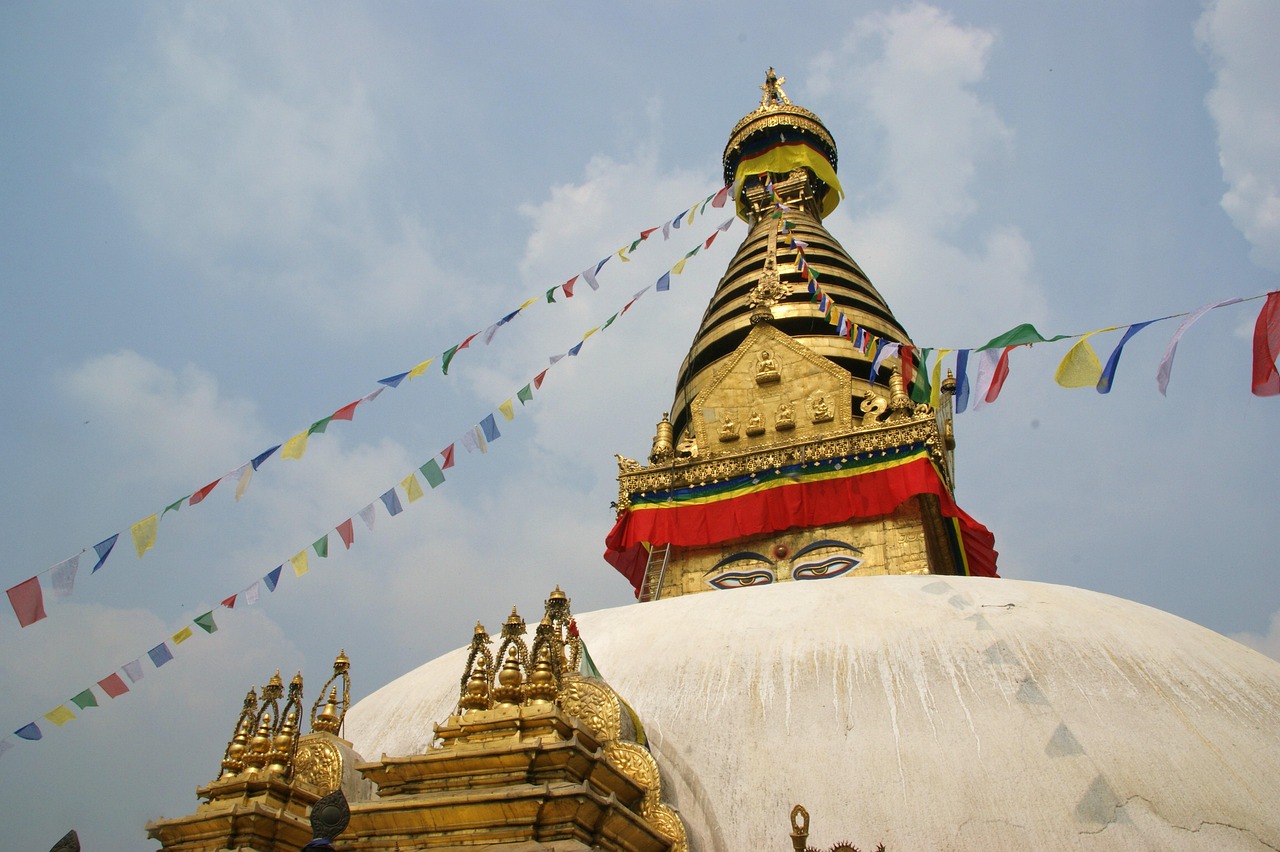
Among the Newars’ gifts to the world, none is more far-reaching than the pagoda. The multi-tiered temple with its stacked, sloping roofs, the form that the world associates with the sacred architecture of East Asia, is widely credited to Newar genius, and the valley is dense with these graceful structures. According to tradition it was a Newar architect who carried the form north into Tibet and China, where it spread and evolved into the pagodas of the wider Buddhist world.
Whether or not the legend is exact in every detail, the pagoda temple is the signature of Newar sacred architecture, and the valley contains the finest and oldest examples of the form. Rising in tiers of diminishing roofs, supported by carved wooden struts depicting deities, and crowned with gilded finials, these temples are the visual emblem of the Kathmandu valley and the most characteristic creation of Newar civilization.
The pagoda is more than a building; it is a statement of the Newar capacity to create forms of lasting beauty that travelled far beyond their makers. That a small people in a Himalayan valley should have shaped the sacred architecture of half of Asia is a measure of the reach of their artistic genius, and the temples of their cities remain among the most beautiful religious structures anywhere in the world.
Hindu and Buddhist at once
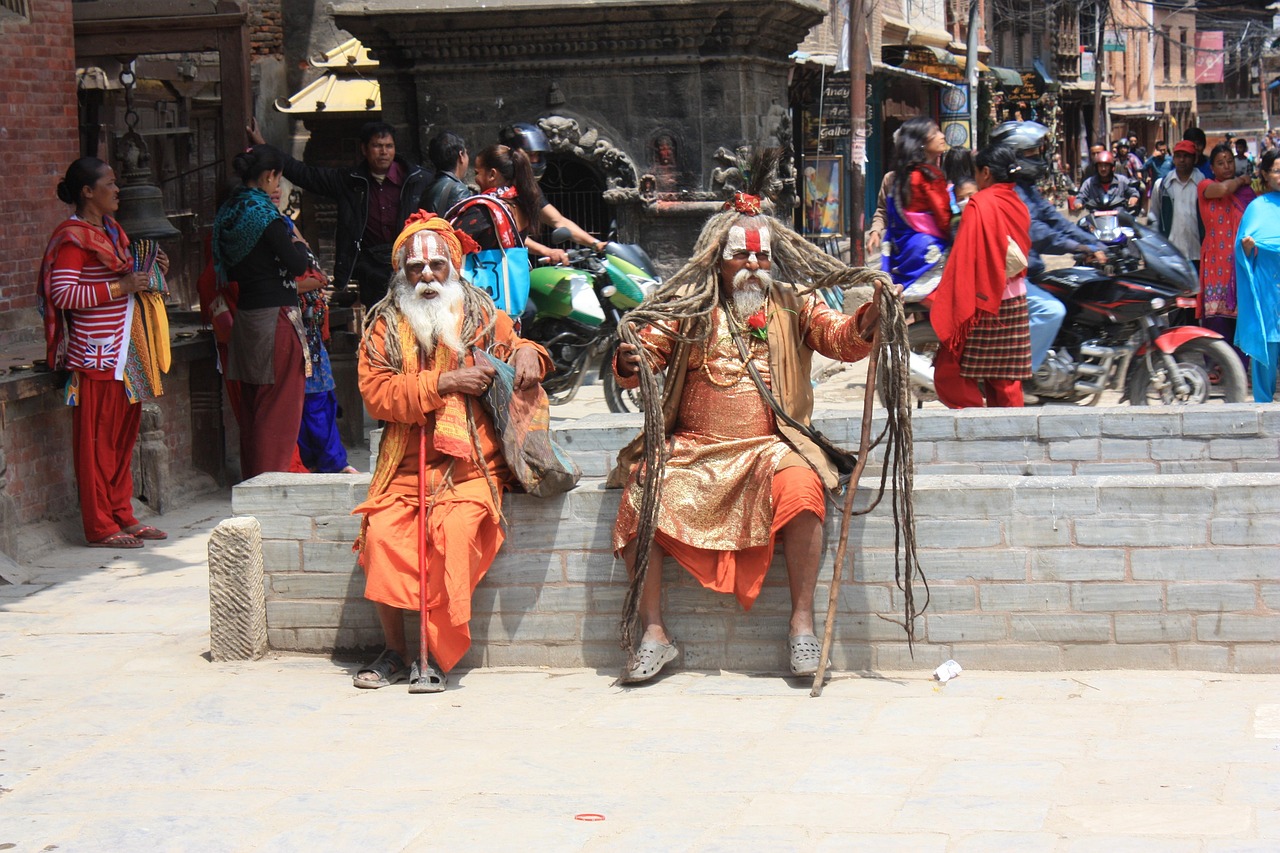
The religious life of the Newars is among the most fascinating in the world, for they are a people who are at once Hindu and Buddhist, often within the same family and even the same individual. Over many centuries the two great faiths interpenetrated so thoroughly in the valley that they became inseparable, and the Newars developed a unique religious system in which Hindu and Buddhist deities, festivals, priests, and rituals coexist and overlap in ways found almost nowhere else on earth.
Newar Buddhism is itself a remarkable survival, one of the last living traditions of the tantric Buddhism that once flourished across the Indian subcontinent before largely vanishing from the land of its birth. Preserved in the valley by hereditary communities of Buddhist priests, it represents an ancient form of the faith carried unbroken from the classical age of Indian Buddhism. Alongside it the Newars practise a rich Hinduism, and the two traditions share temples, gods, and the great festivals of the valley.
This religious complexity is expressed in the very structure of Newar society, with its hereditary priestly and craft communities, its caste-like divisions adapted to the valley’s unique blend of faiths, and its dense calendar of overlapping Hindu and Buddhist observances. To be Newar is to inhabit a religious world of extraordinary richness, in which the boundary between Hindu and Buddhist dissolves into a single, seamless devotion to the deities of the valley.
The living goddess of the valley

One of the most extraordinary of all Newar traditions is the Kumari, the living goddess. A young girl, chosen from a particular Newar Buddhist community according to strict physical and astrological criteria, is venerated as the earthly embodiment of a powerful goddess. She lives in a special house, appears at windows and festivals to bless the people, and is treated with the reverence due to a deity, until she reaches the age at which she returns to ordinary life and a new Kumari is chosen in her place.
The institution of the Kumari is a vivid expression of the Newar fusion of Hindu and Buddhist devotion, for the living goddess is honoured by Hindus and Buddhists alike and even, historically, by the kings of Nepal, who sought her blessing. She is a deity made flesh, a child goddess at the heart of the valley’s religious life, and her appearances at the great festivals are moments of intense devotion for the whole community.
Found in this form almost nowhere else in the world, the Kumari tradition is one of the most striking survivals of the ancient religious world of the Newars. It embodies their unique spiritual genius, their capacity to make the divine present and tangible, and their preservation of beliefs and practices that elsewhere have long since disappeared. The living goddess is the Newar civilization’s most haunting and beautiful creation.
A calendar of festivals without end

The Newar year is crowded with festivals, more perhaps than any other people of the Himalaya, an almost continuous round of religious processions, chariot festivals, masked dances, and communal observances that fill the cities with colour and devotion. Great chariots bearing the images of gods are dragged through the narrow streets by crowds straining at thick ropes, masked dancers embodying fierce deities move through the squares, and the whole community pours into the temples and plazas to take part.
Among the most spectacular are the great chariot festivals, in which towering wheeled structures carrying the images of protective deities are hauled through the ancient cities in events that can last for days and draw enormous crowds. Each city, each neighbourhood, and each temple has its own cycle of observances, so that scarcely a week passes without some festival, procession, or ritual filling the streets of the valley with the sights and sounds of devotion.
These festivals are the lifeblood of Newar urban culture, binding the dense communities of the cities to their gods and to one another. They are also a magnificent spectacle, among the richest living festival traditions on earth, and they keep the ancient religious world of the Newars vividly alive in the streets and squares that their ancestors built. The festival calendar is the beating heart of the Newar year.
The feast, the guild, and the courtyard
Newar society is famous for the institution of the guthi, a system of social and religious associations that bind the community together for the maintenance of temples, the organization of festivals, the conduct of funerals, and the regulation of social life. These cooperative bodies, often hereditary, are the connective tissue of Newar urban society, ensuring that the great collective tasks of religious and communal life are carried out generation after generation. The guthi is one of the secrets of how Newar civilization has endured.
Equally central is the feast, for the Newars are a people who mark every important occasion with elaborate communal eating, and their social life revolves around great gatherings at which prescribed dishes are served in a fixed order. The courtyard, around which the traditional Newar house is built, is the setting for much of this communal life, and the dense, inward-facing architecture of the Newar town fosters an intensely communal existence in which neighbours share in an endless round of ritual and festivity.
This richly organized social world, with its guilds, its guthis, its feasts, and its courtyards, is what allowed the Newars to sustain so complex a civilization in so small a space. It is a way of life built for density, for the close-packed life of the city, and it stands in striking contrast to the dispersed hill and mountain societies of the other peoples of Nepal. The Newars are, distinctively, an urban people.
The Newari table
Newar cuisine is among the most elaborate and distinctive in the Himalaya, a true urban culinary tradition with a vast repertoire of dishes reserved for festivals, feasts, and ceremonies. At its heart is beaten rice, the flattened rice that accompanies countless dishes, served alongside an astonishing variety of meats, pulses, vegetables, and pickles, many of them prepared only for particular occasions and according to time-honoured recipes.
The great Newar feast is a ceremonial event with its own order and rules, in which dish after dish is served in a prescribed sequence, from spiced meats and fried delicacies to lentil patties, pickles, and the local rice beer and spirits that accompany the meal. Particular festivals call for particular foods, and the Newar culinary calendar is as rich and complex as the religious one, with each celebration bringing its own dishes to the table.
This sophisticated cuisine, with its ceremonial feasts and its endless variety, reflects the urban, prosperous, ritually dense character of Newar civilization. Food among the Newars is not merely sustenance but a central medium of social and religious life, a way of marking every occasion and binding the community in shared celebration. The Newari feast is one of the great culinary traditions of the Himalaya.
A minority in their own valley
The Newars today face the paradox of being a minority in their own valley. The Kathmandu valley, once their exclusive world, has become the crowded capital region of modern Nepal, drawing migrants from every people and region of the country, and the Newars are now outnumbered in the cities their ancestors built. The pressures of urbanization, migration, and modernization bear heavily on their ancient civilization, threatening the language, the crafts, and the traditional urban fabric that define them.
The challenge of preserving Nepal Bhasa, the Newari language, in a valley dominated by national Nepali is acute, as is the struggle to maintain the historic cities, the guthis, and the festivals amid the relentless growth of a modern metropolis. The devastating earthquake of 2015, which damaged many of the valley’s historic temples and palaces, struck at the very heart of the Newar heritage, though the community has worked with characteristic devotion to restore its monuments.
Yet the Newars remain a vital and proud people, and their civilization, though pressed, is far from extinguished. Movements to revive the language, preserve the crafts, protect the heritage, and sustain the festivals reflect a determination to keep the unique Newar inheritance alive. Like the Meitei of the valley in India’s northeast, the Newars are a valley civilization of great refinement striving to hold its own in the modern age.
Keepers of an urban civilization
The Newars are the keepers of one of the great urban civilizations of Asia, a people who filled a single Himalayan valley with the densest concentration of art, architecture, and ritual to be found anywhere in the mountains. From their hands came the pagoda and the gilded bronze, the carved window and the living goddess, the chariot festival and the ceremonial feast, an inheritance of breathtaking richness preserved in the temple-crowded cities at the heart of Nepal.
Theirs is a civilization built not on conquest or empire but on craft, devotion, and the intense communal life of the city, sustained across centuries by guild and guthi, by festival and feast, by a unique fusion of Hindu and Buddhist faith. Unlike the dispersed hill and mountain peoples around them, and unlike the highland Ngalop of neighbouring Bhutan, the Newars are an urban people, the great city-builders of the Himalaya.
As their valley is transformed by the growth of modern Nepal, the Newars carry forward the immense burden and privilege of their heritage, striving to keep their language, their crafts, their festivals, and their unique civilization alive. They are a minority now in the cities they created, but they remain the soul of the Kathmandu valley, the keepers of an urban civilization whose temples and squares are among the wonders of the world.
You May Like
The Damara, an Ancient People of Namibia