The city of flowers blooming in fire.
According to tradition, Hayme Ana is the mother of Ertuğrul Gazi and the wife of Güdüz Alp, grandmother of Osman Gazi. His tomb is in Çarşamba Village of Domaniç district. Hayme Ana is a Turkmen (Yörük) daughter belonging to the Kayı Tribe of the Bozok branch of the Oghuzs (one of the sons of Gün Han).
Kayı Tribe first settled in the Karacadağ region in the west of Ankara. (The Haymana district in the west of Ankara took its name from this lady.) She was called “Mother STATE” because she took over the state administration for a certain period after the Ottoman Clan settled in Söğüt and Domaniç and because of the vital role she played in the establishment of the state. It is said that in the 1250s, the tribal leadership belonged to Hayme Ana.
Again, during the plateau season (probably in September), Hayme Mother Hakk passed away and was buried in Çarşamba Village, on the part of the hill overlooking the plateau. After Hayme Ana’s death, the place where she was buried was surrounded by walls. II. During the reign of Abdulhamid, a villager from Çarşamba had a document written on leather inherited from his grandfather, which he kept in his house, read to someone who came to the village. It turns out that the document belongs to Hayme Ana.
The officer goes to Istanbul, reaches Yıldız Palace and delivers the document to the sultan. Abdulhamit II has the document examined and sends a delegation here. He found the grave of his great-grandmother Hayme and had a mausoleum and social complex built on it. The marble inscription on the tomb reads:
“Şahin şeh-i Ali Hasep, Hakan-ı Mebruk’un-nesep, Abdülhamit Khan, the world is privileged in the grace of the moment,
Gazi’i square and the heavenly place of Ertuğrul,
It was at that time that the prosperity of this sanjak increased,
When we captured this Domaniç plateau, we were in awe,
The people of the opposition had pulled the wall first,
This belonged to the late Gazi, Mother Hayme,
Itsun garik-i forgiveness eternal memory Rabbi Vahit,
Shah Jahan had this tomb built for the deceased,
Eyyam, may God bless your life with joy.
God did not push a sultan to grant this goodness,
So far, the middle age has passed from history,
While he was governor, Mahmud’s servant compiled his history,
Khan Abdulhamit built this mausoleum.
Ketebehü İbrahim (year 1306) Hakkı Bursavi.
Although the exact date of its establishment cannot be determined, it dates back to B.C. It dates back to 3000 years. According to old sources, Kütahya’s name in ancient times was Kotiaeon, Cotiaeum and Koti. The oldest people who settled in the province are the Phrygians. B.C. Phrygians, who came to Anatolia in the 1200s, entered the lands of the Hittite Empire and organized themselves as a state. B.C. In 676, Kimmeler was founded by the Phrygian King III.
They defeated Midas and dominated Kütahya and its surroundings. The prevailing climate is continental and the vegetation is steppe.
During the period when Alyattes was the King of Lydia, Cimmerian rule was replaced by Lydian rule. B.C. In 546, the Persians defeated the Lydian Army and invaded Anatolia. B.C. Alexander, who defeated the Persians near the Biga Stream in 334, established superiority in the region. Alexander the Great’s B.C. After his death in 323, he passed to Antigonos, one of the commanders of Kütahya and its region. B.C. It came under Roman rule in 133. It was turned into a bishopric center.
Byzantine Emperor Romanus Diogenes, who was defeated by Alp Arslan in the Battle of Manzikert in 1071, was brought to Kütahya after his return from captivity and his eyes were blinded. Kutalmışoğlu Süleyman Şah, who founded the Anatolian Seljuk State in 1078, also captured Kütahya. It was attacked by the Crusaders in 1097. II. Kılıç Arslan took back Kütahya along with the lost lands. In 1277 II.
Gıyaseddin Keyhüsrev gave the Kütahya region to Devlet Hatun, daughter of Germiyanoğlu Süleyman Şah, to Yıldırım Bayezid, the son of Ottoman Sultan Murat I. (1381) The lands of the Germiyanoğulları Principality were given to the Ottomans as the dowry of Devlet Hatun. (Including Kütahya and its surroundings) Timur, who inflicted a heavy defeat on Bayezid in the Ankara War of 1402, captured Kütahya and became II. He gave it back to Yakup Bey. Kütahya later passed to the Ottomans and became the Sanjak Center.
Sultan II. During Beyazıt’s time, Şahkulu, a supporter of Shah Ismail, revolted in Kütahya. This rebellion was suppressed in 1511. The son of Kavalalı Mehmet Ali Pasha, the Egyptian Governor who rebelled against the Ottoman Empire in the 19th century, invaded Kütahya. Sultan II. With the Treaty of Kutahya signed with Mahmud, Egyptian soldiers left Kutahya.
During the 1848 revolutions in Europe, Hungarians also revolted. When the Hungarian National Movement was suppressed by Austria and Russia, some of the leaders of the movement took refuge in the Ottoman Government in 1849. Hungarians settled in Kütahya, especially Lajos Kossuth, stayed here until 1851.
While Kütahya was a sanjak center of the Hüdavendigar Province in 1867, II. After the Constitutional Monarchy, it became an independent sanjak. Kütahya, which was the scene of the Circassian Ethem regular army conflict in January 1921 during the War of Independence, was occupied by the Greeks after the defeat of the Turkish Grand National Assembly Western Front army in the Kütahya-Eskişehir Battles on July 17, 1921. Kütahya, which remained under occupation until the Great Offensive, was liberated on August 30, 1922.
It was made a province on October 8, 1923.
Places to Visit
Kütahya is an important milestone in Turkish history and culture. The most famous tile making center of Anatolia since the 14th century. It has developed crafts and folklore. It is a promising tourism center with its hot springs and ancient ruins…
According to legend, in ancient times in Anatolia, there lived an old woman who made extraordinarily beautiful, durable and elegant pottery, vases and jugs. She would bring three or five clay pots loaded into the saddlebags on her back to the city markets and sell them. Her handcrafted works were soon snapped up… Over time, the beauty of the old woman’s pottery and pottery spread to all the surrounding cities. People are waiting for their way…
They waited, but there were also people who were uncomfortable with this job… Especially the other potters… They couldn’t figure out the secret of the job. One day they decided to follow the old lady secretly. The old woman came to the region where today’s Kütahya is located, filled her saddlebag with the soil from here and returned home… Those who followed her immediately realized that this soil was the secret in her pottery.
In a short time, potters from all around the city flocked here and a new city emerged…
The accuracy of this legend told about Kütahya, which has an important place in the culture and history of Anatolia, is questionable, but there is no doubt that it is right and suits the beautiful city. Indeed, today Kütahya is one of the most important cultural centers of Anatolia. The development in tile making and handicrafts, high tourism potential, rich and magnificent history are the important factors that bring Kütahya to this level…
The name of Kütahya in ancient times was “Seramorum”, meaning “city of ceramics”. It was named Kotiyum during the Phrygian period. It was later called by this name during the Roman and Byzantine periods. After it became a homeland of the Turks in 1078, over time it turned into Kütayha in folk Turkish… Today, Kütayha is located at an important transportation point where the most important roads and railways leading to the Aegean and Mediterranean regions pass.
For this reason, transportation is extremely easy… Archaeological findings from the prehistoric and ancient periods of Kütahya are exhibited in Vacidiye Madrasah, an example of 14th century civil Turkish architecture, which is considered today as the Kütahya Museum. It is an extremely rich museum.
In addition to works from the Hellenistic, Roman, Byzantine, Seljuk and Ottoman periods, the unique Kütahya tiles impress the visitors… Kütahya is a very important center in Turkish tile art. The city maintains this importance today. Tile making, which has been carried out since the Phrygian period, made a big leap after the 14th century. In the 18th century, it surpassed the declining Iznik tile making… By the 20th century, it had become a single tile making center in Anatolia.
But the extreme modernization that started after the 1970s dealt a great blow to Kütahya tile making. Today’s tourism development has given new life to the sector… Kütahya is also an important weaving center of Anatolia. Carpet weaving, cloth weaving, needle lace are among the handicrafts that are the source of income for the local people…
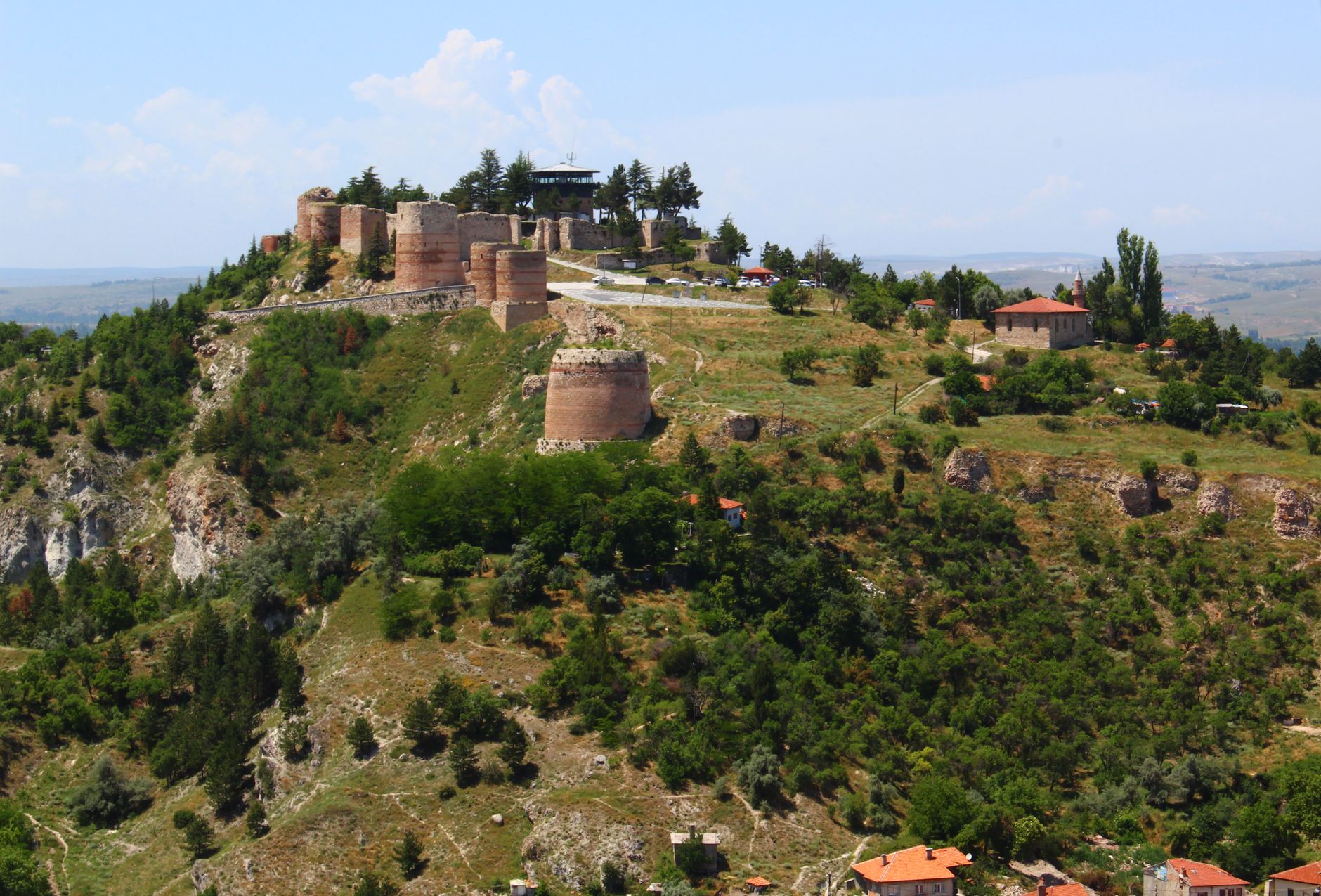
All of the historical buildings seen in the city today are from the Turks. The magnificent Kütahya Castle with its many bastions is a Byzantine work. The castle, which should definitely be visited and seen, was made into its current state by making additions and strengthening during the Seljuk, Germiyanoğulları and Ottoman periods.
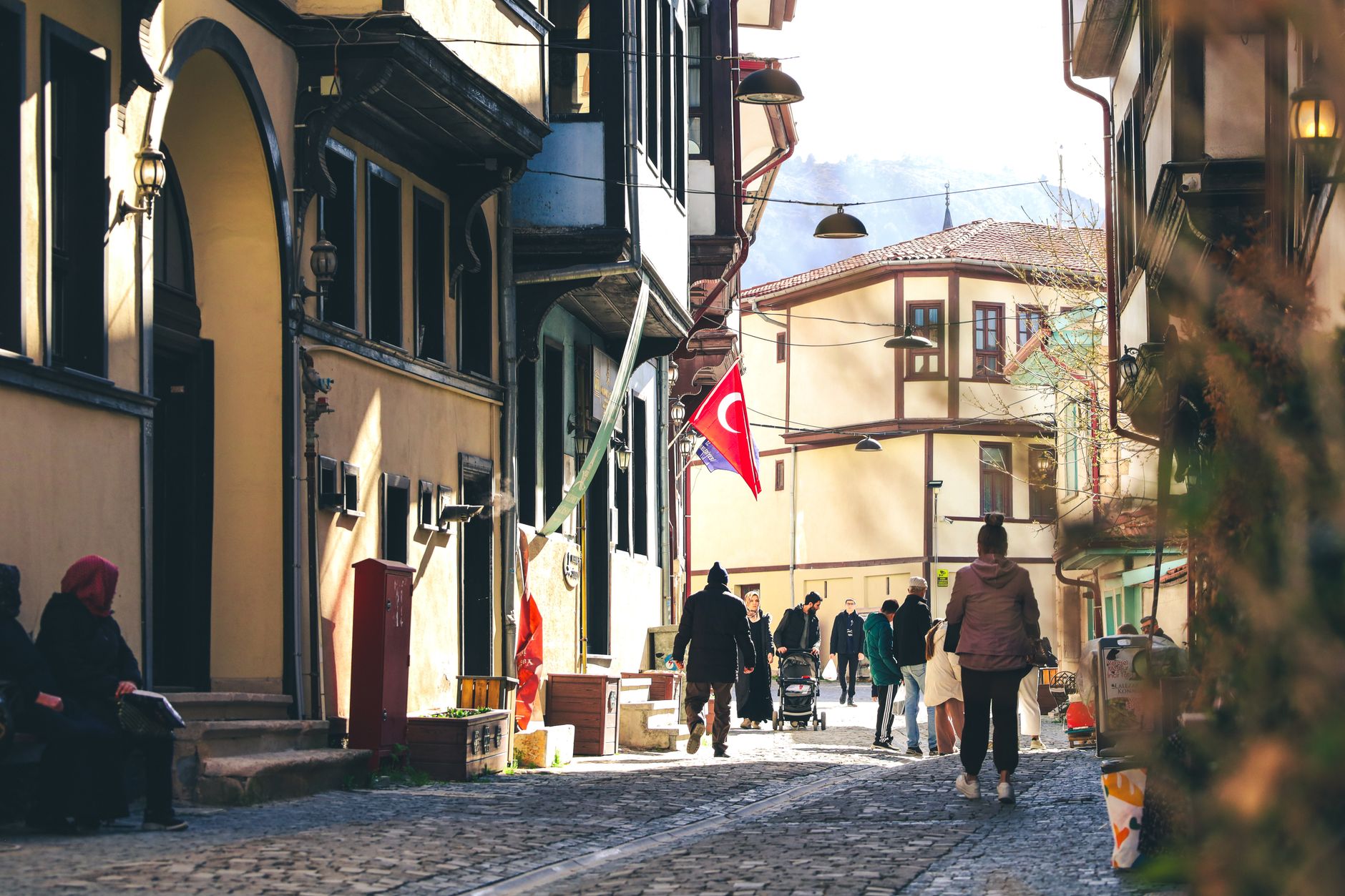
There are many historical buildings in Kütahya, where the most beautiful house examples of traditional Turkish architecture are located. Balıklı Mosque, İmaret Masjid, Ulucami, Karagöz Ahmet Pasha Mosque, Small and Large Covered Bedestens, Kurşunlu Mosque, Lala Hüseyin Pasha Mosque and its bath, which is reported to be the building of Mimar Sinan, are examples of Turkish architecture that come to mind immediately… 19.
The house where Hungarian statesman Layos Kossuth lived, who took refuge in the Ottomans in the 19th century, has now been turned into a museum in his memory… Kütahya is also a city of thermal springs. Ilıcaköy, Kaynarca, Göbel and Yoncalı hot springs in the city and its districts are good for gallbladder, kidney and many painful diseases…
Temnos and Aizani, ancient settlements near the city, are archaeological sites worth seeing.
AIZANOIAizani contains the best preserved ancient ruins in our country today. The Temple of Zeus attracts the admiration of many local and foreign travelers. Aizani was also an important religious center in the early ages of Christianity. It preserved this importance in the Byzantine age as well. The ancient city of Aizanoi, located 59 km away from the city center of Kütahya, was known as the Land of the Mother Goddess with names such as Aizana, Azana, Ada-wana. Pergamonians, Bithynians and B.C.
The city, which was taken over by the Romans in 133, enjoyed its heyday in AD. He lived in the second and third centuries. Roman emperor Hadrian had the temple of Zeus built. Most of the 48 columns of the temple, which is located on a 35×53 meter podium, have survived and have survived to the present day as the best preserved work among similar temples.
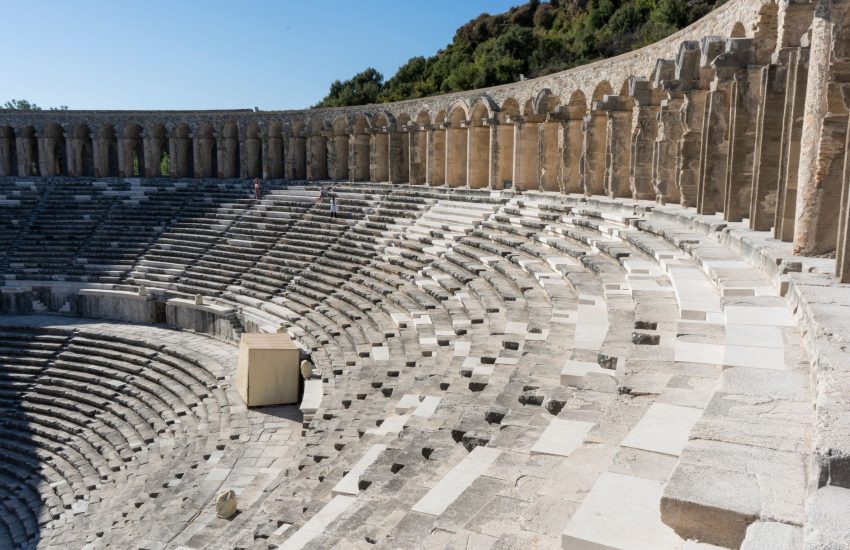
The acroteria in front of the temple, the lower floor of the temple of Zeus, the inscriptions on the inner walls, the reliefs and figured column heads in the surrounding area, the Aizanoi theater, floor mosaics, grave stelae, inscriptions, Macellum (round food market) and ancient bridges are among the works that can be seen. Many ruins obtained from the ancient city are exhibited in the Kütahya Museum today…
For those who are interested in Kütahya Tiles and Porcelain, hand-decorated dinnerware and tea sets can be purchased at Kütahya Porcelain.
Kütahya Hotels and Pensions Contact Information
You May Like
Amasya Hotel Pension Accommodations