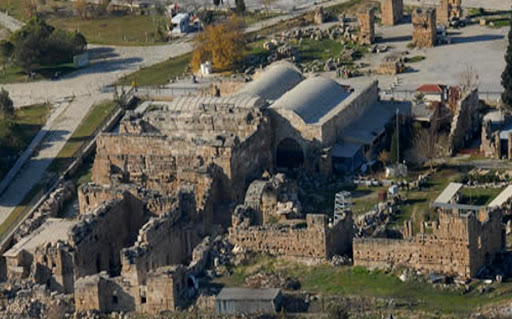
The Great Bath Complex: Today, there are traces that the interiors of the building, whose massive walls and some of its vaults have survived, were covered with marble. The plan of the bath is like other typical Roman baths. First, there is a large courtyard at the entrance, a closed rectangular area with large halls on both sides and the main bath structure. On the side wings of the Palaestra, two large halls, one in the south and the other in the north, were reserved for the emperor and ceremonies. The remains of the bath complex MS. It is dated to the 2nd century. The vaulted indoor spaces adjacent to the grand hall are used as museums today.
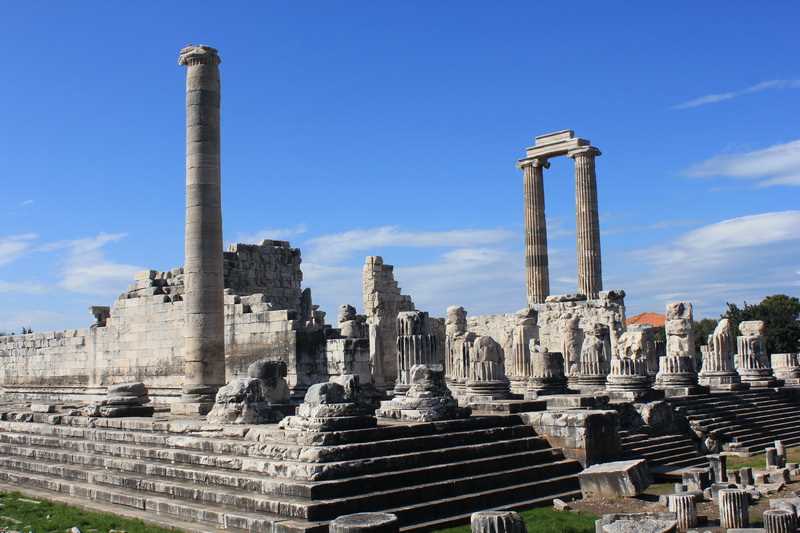
Temple of Apollo: The current temple was built on Plutonion, known as the ancient and religious cave. In this place, which is the oldest religious center of the locals, Apollo met with the Mother Goddess of the region, Kybele. Ancient sources report that the Mother Goddess Kybele priest descended into this cave and was not affected by poisonous gas. Remains of the upper structure in the Temple of Apollo MS. It does not go back to the 3rd century. You can climb the temple area with wide steps.
Theater: It is a large building that can be preserved with its entire facade leaning on the hillside. To the construction of MS. After the great earthquake in 60 AD, in the Flavius period. Started in 62 AD. It was completed in 206. It has 50 rows of seats and is divided into 7 sections by 8 stairs. The diozoma, which passes through the middle of the cavea, is entered by a vaulted passage on both sides. Between the columns are decorated with sculptures, and plenty of statues were found during excavations here. There are marble reliefs on the walls behind the stage.
Churches: In the city center, there is a Cathedral from the 6th and 7th centuries, the Direkli Church and two more churches. Also MS. At the beginning of the 6th century, the central hall of the Great Bath Complex was transformed into a church. There are also small chapels in the northern part.