Let me start with a confession. For most of my life, when I thought about ancient China, my mind went straight to the obvious postcards: the Great Wall snaking over the hills, the terracotta army standing at silent attention, the Forbidden City with its endless red walls. All of it magnificent, all of it worth the awe. But all of it, it turns out, is relatively recent by the standards of the story I want to tell you today. Because thousands of years before the first emperor unified China, before a single brick of the Great Wall was laid, there was already a civilization in the Yangtze River delta building a walled city, digging canals, farming rice on an industrial scale, and carving jade with a delicacy that can still stop you in your tracks.
Its name is Liangzhu, and if you have never heard of it, you are in very good company. For decades even specialists underestimated it. It was only in 2019 that the ruins were finally added to the UNESCO World Heritage list, and the citation said something that genuinely rearranged how I think about the ancient world: Liangzhu represents a state-level society that existed in the Yangtze basin more than 5,000 years ago. Five thousand years. That places it in the same breathtaking company as early Egypt, Mesopotamia, and the Indus Valley — a true cradle of civilization, hiding in plain sight in eastern China.
So let us go there together. I want to show you the water city these people built, the jade they seem to have been almost obsessed with, and the strange, haunting way their whole world vanished under mud and was very nearly forgotten forever.
- A Discovery That Rewrote the Map
- The Water City of the Yangtze
- The Oldest Dams in the World
- A Kingdom Built on Rice
- The Jade Obsession
- The Mystery of the Cong
- Power, Belief, and a Society With Layers
- Drowned by the River That Made It
- The Long Shadow of Liangzhu
- Did They Have Writing?
- Liangzhu Among the World’s First Civilizations
- Why Liangzhu Matters
A Discovery That Rewrote the Map
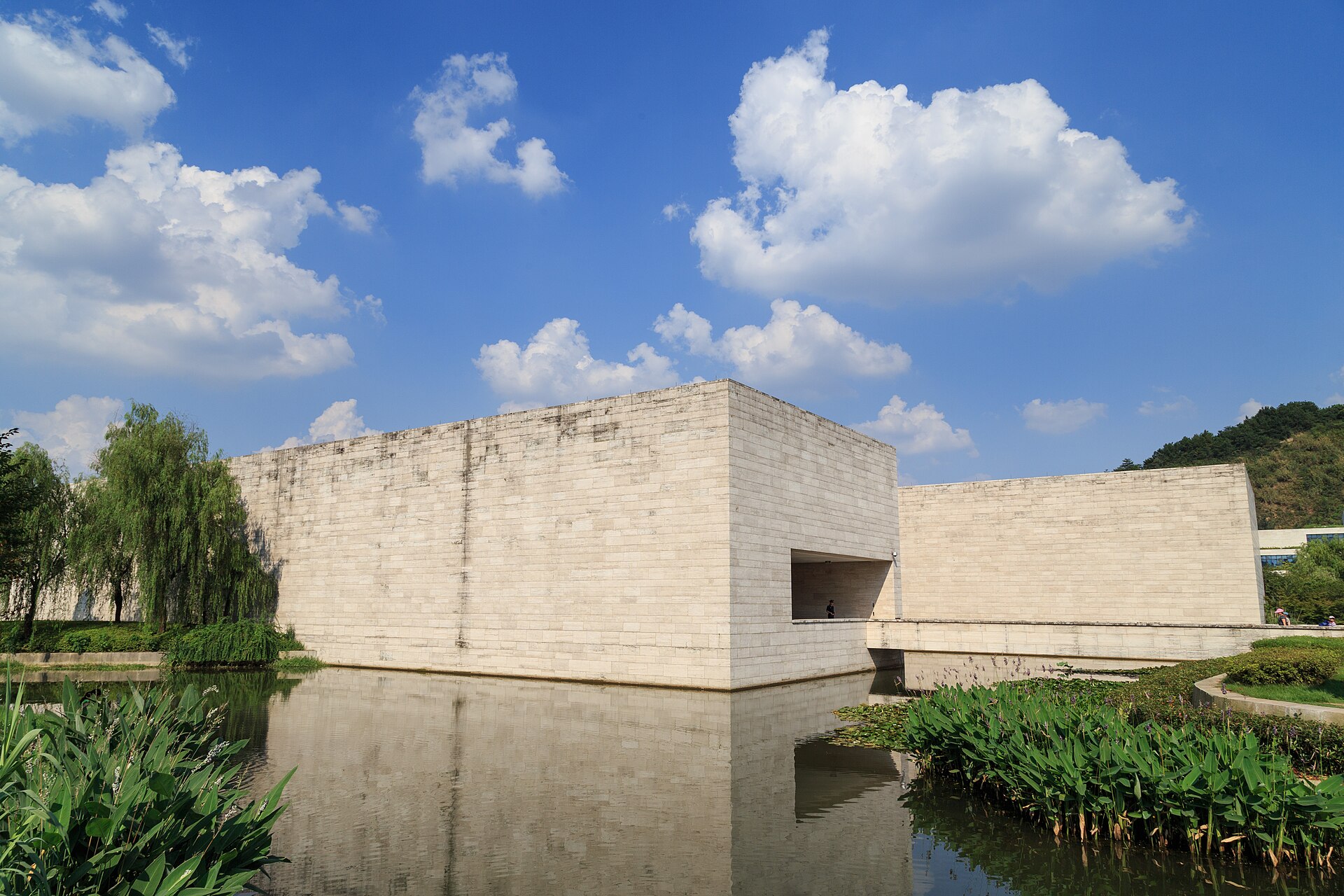
The story of how we found Liangzhu is, in a quiet way, a lovely one. Back in 1936, a young local man named Shi Xingeng was poking around the marshy countryside near the town of Liangzhu, in Zhejiang province, when he began turning up pieces of black pottery and stone tools. He had no way of knowing it, but he had stumbled onto the edge of something enormous. He carried out the first excavations, gave the culture its name, and then — as happened to so many promising lives in that era — died young, before the true scale of what he had found could be understood.
For decades afterward, Liangzhu was treated as an interesting but minor Neolithic culture, one of many scattered across ancient China. It was only as excavations continued through the twentieth century, and especially as they accelerated in recent decades, that the real picture came into focus. Beneath the rice paddies and the river silt lay not a village, not a scattering of huts, but the remains of a genuine city, complete with a walled center, suburbs, cemeteries, workshops, and a water-management system so ambitious it beggars belief.
What makes this discovery so important is not just the age, though five thousand years is stunning enough. It is what the age implies. For a long time, the standard story of Chinese civilization began further north, along the Yellow River, and started later. Liangzhu forced a rewrite. Here was a sophisticated, organized, state-level society thriving in the south, along the Yangtze, at a time when — by the old textbooks — nothing of the sort was supposed to exist yet. Sometimes a single site can quietly overturn a whole chapter of history. Liangzhu is one of those.
The Water City of the Yangtze
If Mohenjo-daro was a city obsessed with drains, Liangzhu was a city that fell in love with water on an even grander scale. The Yangtze delta is a landscape of rivers, lakes, and marshes, and rather than fighting that watery world, the people of Liangzhu embraced it and engineered it. Their city was threaded through with canals. Boats, not carts, seem to have been the natural way to move goods and people. In a very real sense, this was the Venice of the Neolithic — a settlement where the streets were partly made of water.
At the heart of it all was an enormous walled precinct, sometimes called the palace or citadel area, raised up on a huge earthen platform above the floodplain. The scale is hard to take in. The inner city alone covered an area of roughly three square kilometers, and the walls that enclosed it were not thin garden fences but massive earthworks, wide enough to walk along, built up from clay and faced at the base with stone. Around this core spread outer districts, and around those, the fields and the water works that fed the whole system.
What moves me about this is the sheer coordination it must have taken. You do not throw up kilometers of earthen wall, dig a network of canals, and raise a city on a platform by accident, or with a few families working in their spare time. This required thousands of people, organized labor, planning that stretched across generations, and someone — some authority, some shared purpose — capable of holding all that effort together. The water city is not just impressive engineering. It is the physical proof of a society advanced enough to dream big and disciplined enough to make the dream real.
The Oldest Dams in the World
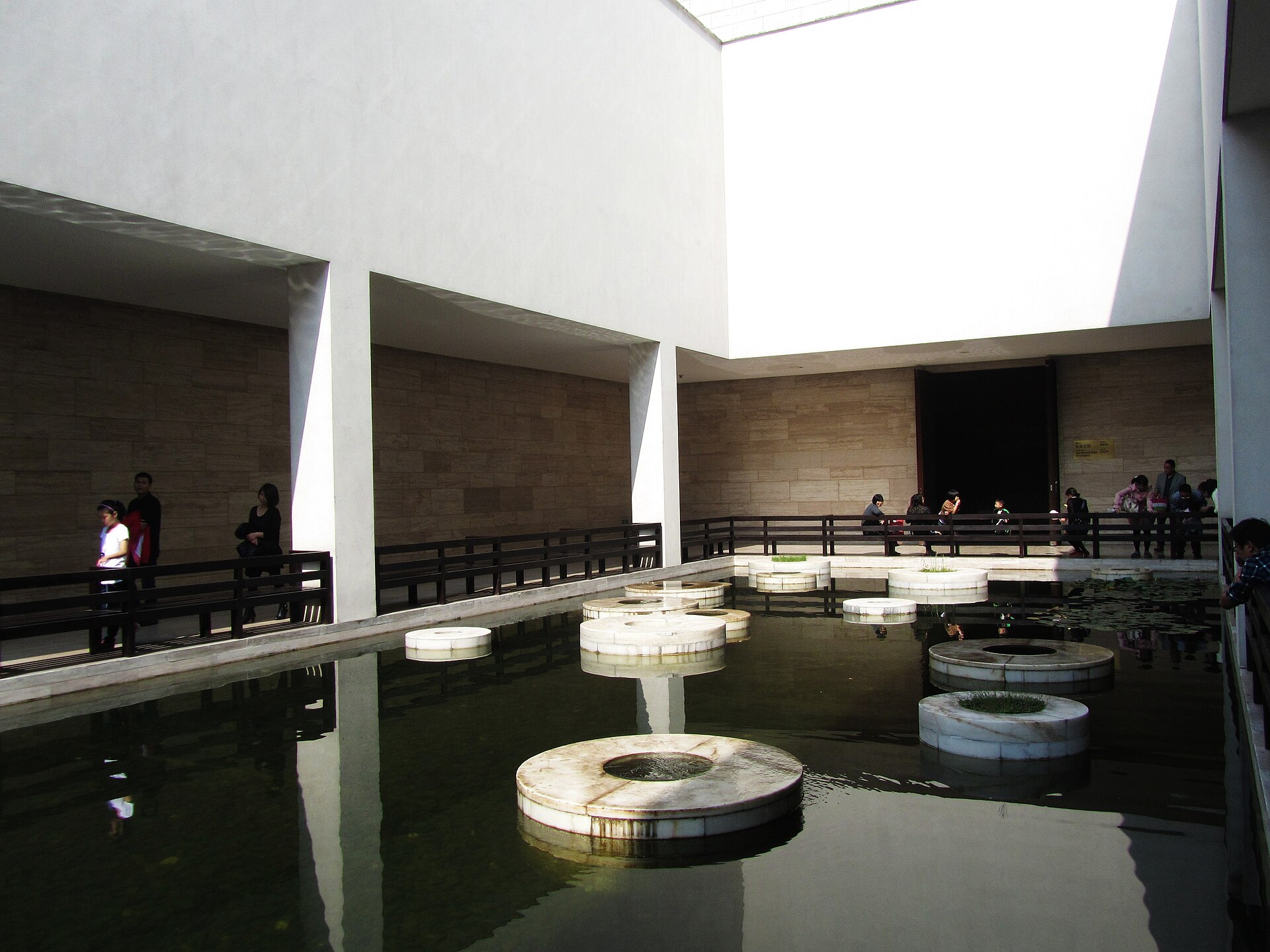
Here is the detail that, when I first read it, made me put the book down and just sit with it for a minute. The people of Liangzhu built dams. Not little earthen banks, but a genuine, large-scale hydraulic system of dams and levees in the hills above their city — and it is now considered one of the oldest and largest water-management systems anywhere in the ancient world, older than five thousand years.
Think about why you would build such a thing. The Yangtze delta is blessed with water, but it is also cursed by it. The monsoon can dump staggering amounts of rain in a short season, and a river that gives you rice in spring can drown your fields and your homes in summer. The Liangzhu engineers understood this rhythm intimately, and they answered it with a system designed to hold back the floodwaters in the wet season and release them in a controlled way, protecting the city and feeding the fields. High dams up in the valleys, low dams and long levees down on the plain, all working together as a single coordinated network.
To build this, they used a clever technique that still impresses engineers today. They packed reeds and grasses into long sausage-like bundles wrapped in mud, then stacked them to form the core of the dams. It gave the structures strength and helped them resist the pull and pressure of the water, rather like reinforced construction does today. These were people reading the landscape, anticipating the seasons, and shaping the flow of rivers to their will — five thousand years ago, without metal tools, without written blueprints as far as we know, working with mud, stone, reeds, and an astonishing amount of accumulated wisdom.
A Kingdom Built on Rice
None of this — not the city, not the dams, not the jade we are about to get to — would have been possible without one humble, world-changing plant: rice. Liangzhu was, at its core, a rice civilization, and the scale of its farming was extraordinary. At one site associated with the culture, archaeologists uncovered a vast quantity of burnt rice, so much of it that they estimated it represented the storage of a huge granary. This was not subsistence farming, a family growing just enough to survive. This was surplus, organized, stored, and controlled.
And surplus is the secret engine of civilization. When a society can grow far more food than the farmers themselves need, it frees other people to do other things. Someone can spend their days carving jade instead of planting seedlings. Someone can organize the labor gangs that build the dams. Someone can become a priest, a chief, an artisan, an administrator. The paddy fields of Liangzhu, glittering with water under the delta sky, were quietly underwriting the whole magnificent structure — the walls, the canals, the ceremonies, the art. Rice fed the farmers, and the surplus fed civilization itself.
The Liangzhu people managed their fields with the same care they brought to everything else, using their water systems to irrigate and drain, turning the marshy delta into one of the most productive agricultural landscapes of the ancient world. In a sense, they were the ancestors of a tradition of intensive rice cultivation that would go on to feed much of East Asia for thousands of years and does so to this day. When you eat a bowl of rice, you are, in a small way, tasting the legacy of Liangzhu.
The Jade Obsession
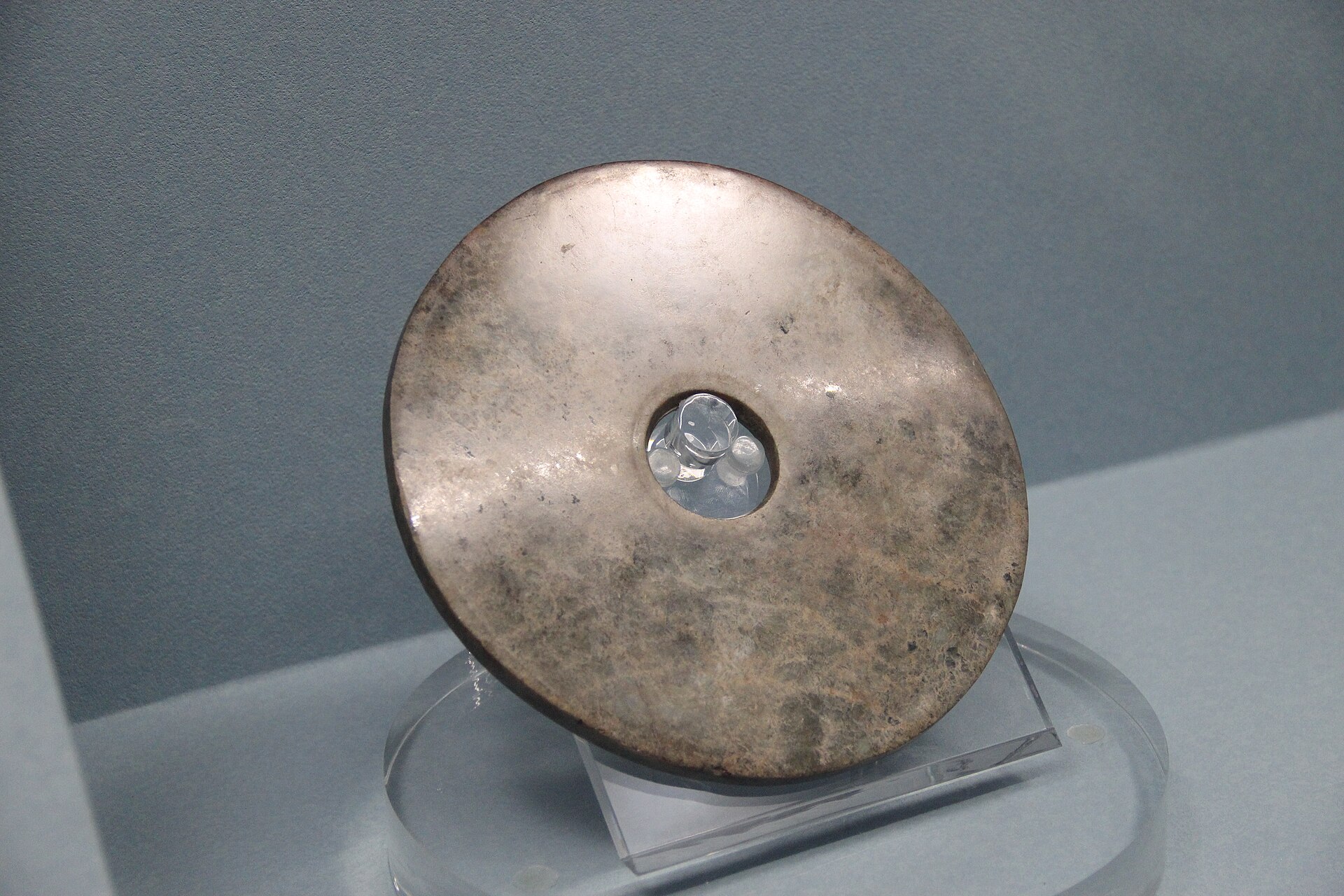
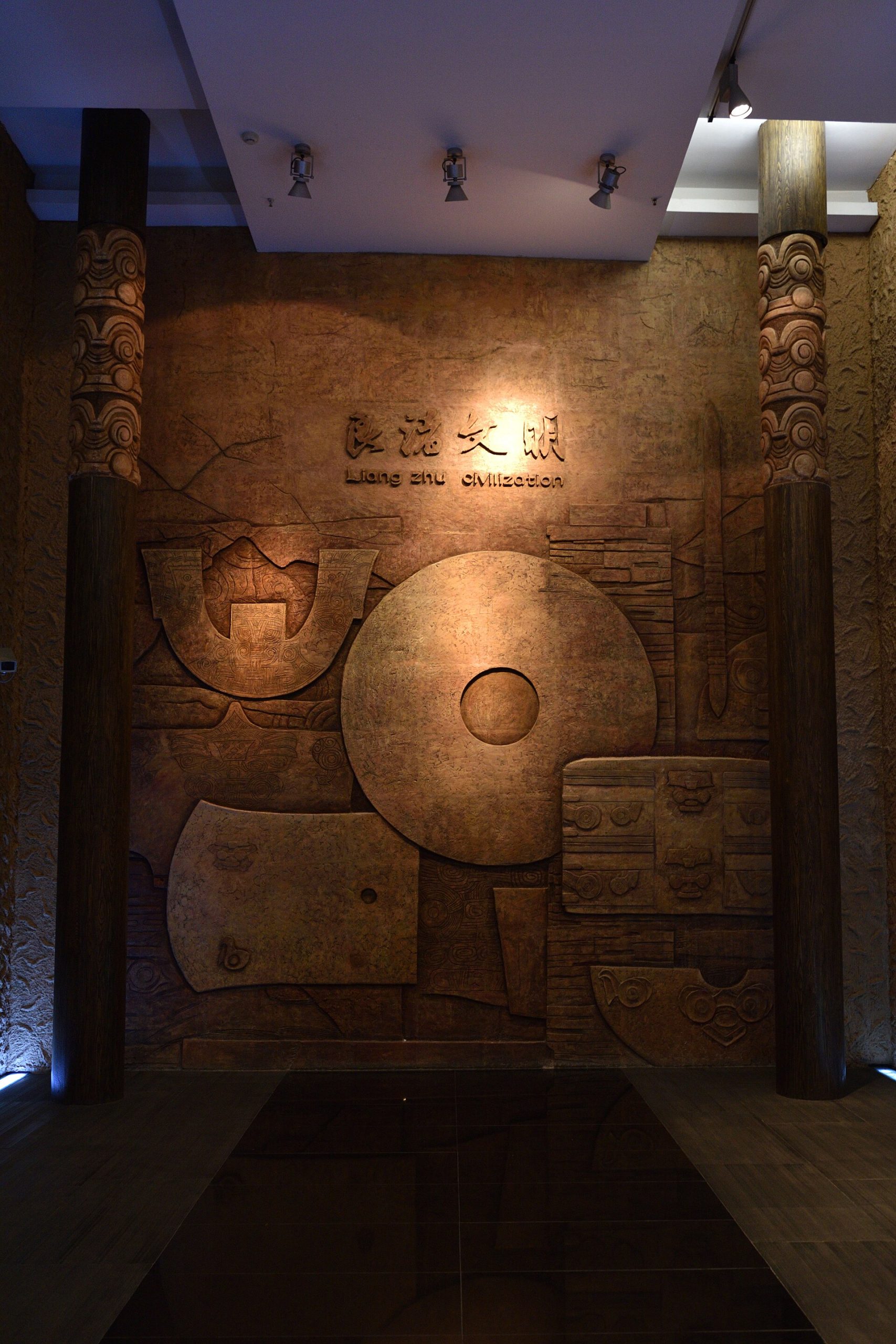
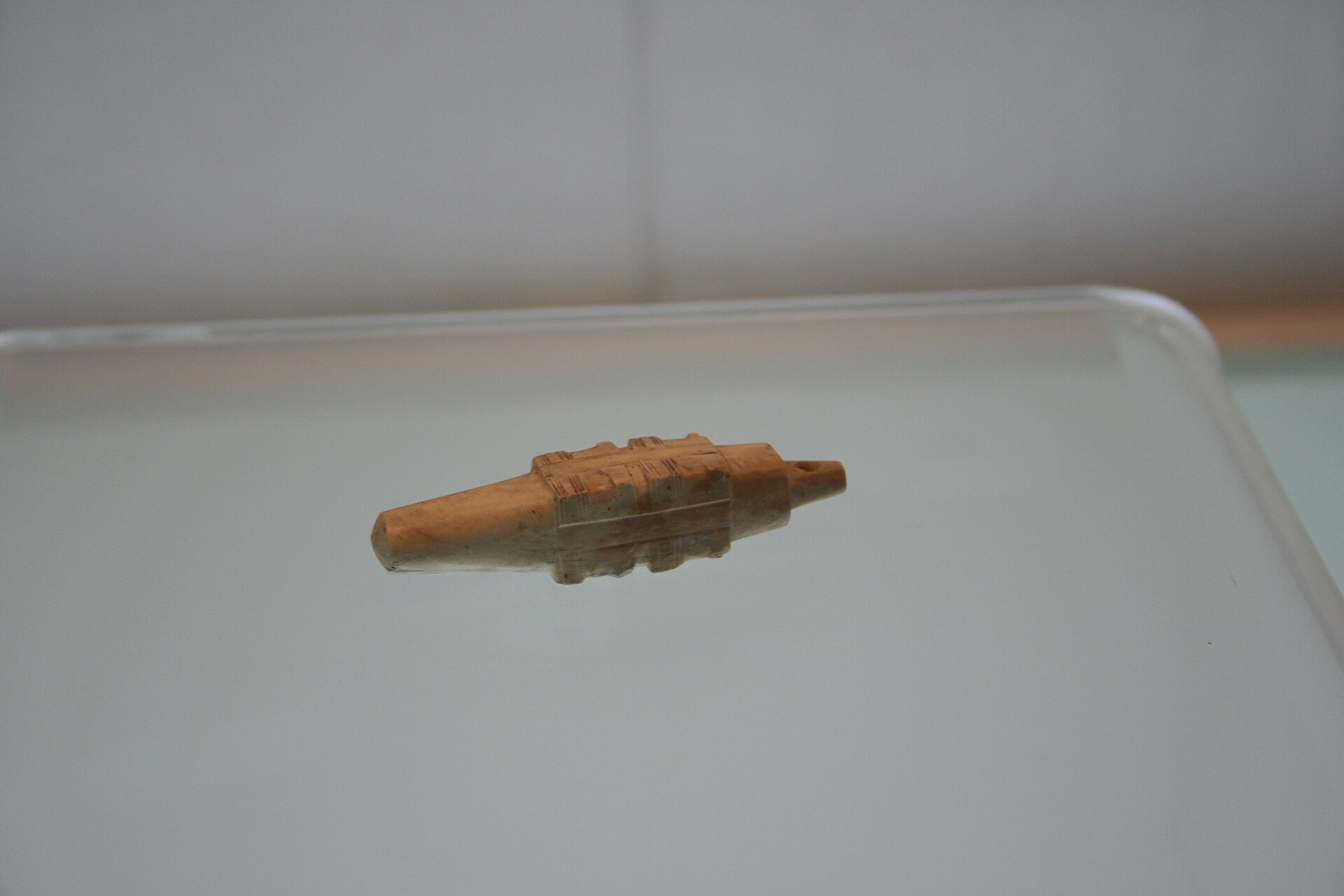
Now we arrive at the thing that Liangzhu is most famous for, the thing that makes collectors and archaeologists go a little starry-eyed: the jade. These people loved jade with a passion that borders on the religious, and honestly, once you have seen their work, it is hard not to fall a little under the same spell. They carved it into rings, beads, pendants, axes, and above all into two mysterious forms that have become the signatures of the culture: flat discs called bi, and tall, square-sided tubes called cong.
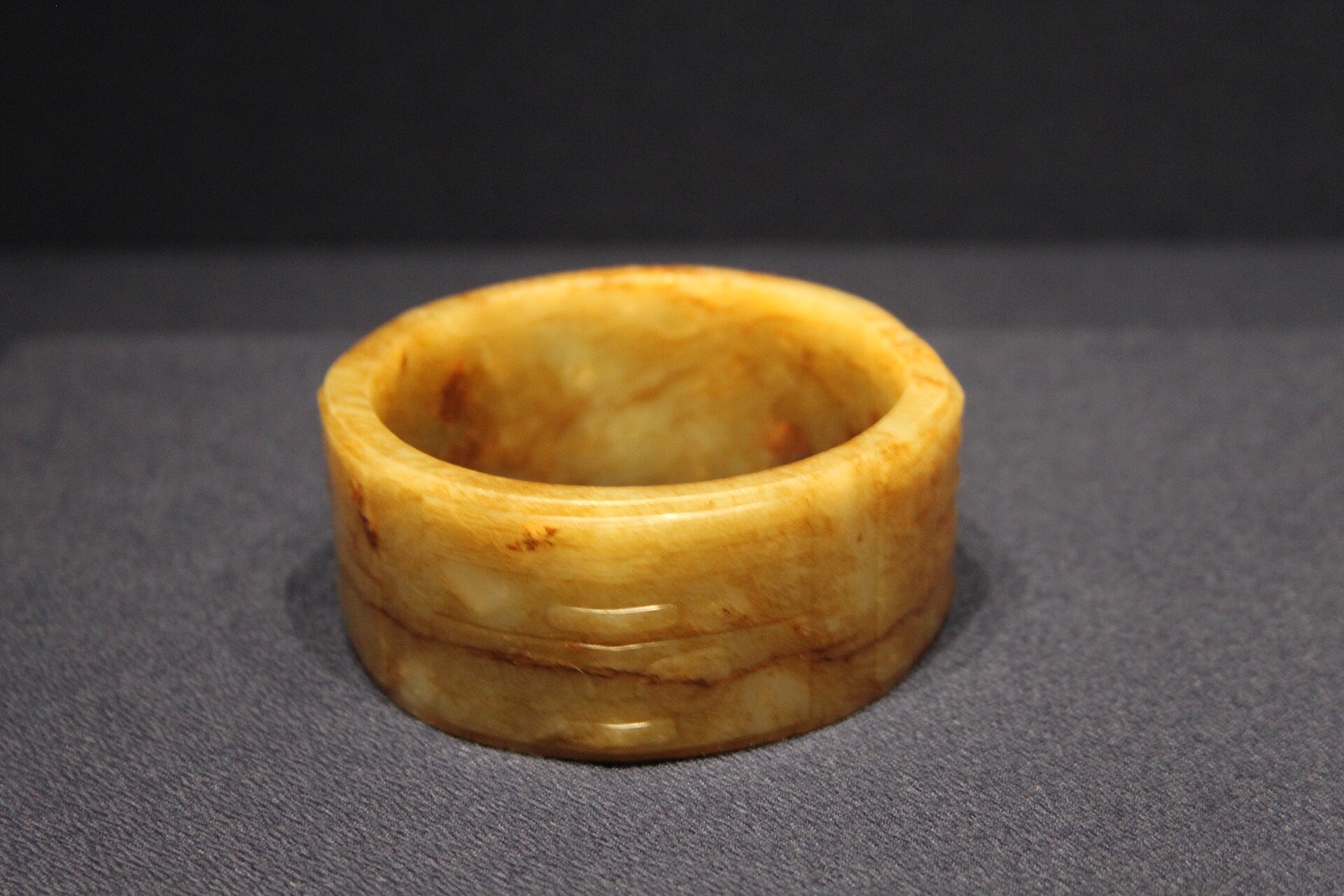
Here is what you have to understand to feel the weight of this. Jade is brutally hard. It is far harder than the copper or stone tools these people had available. You cannot simply carve it the way you whittle wood. To shape jade, the Liangzhu craftsmen had to grind it, slowly, patiently, using abrasive sand and sheer stubborn persistence, wearing the stone down over what must have been days, weeks, even months for a single fine piece. And then, having ground the shape, they covered its surface with carvings so fine that some of the details are hard to see clearly without magnification.
Let that sink in. Five thousand years ago, without magnifying lenses, without metal chisels, someone sat down and incised into stone a design so precise and so tiny that we struggle to make it out today with the naked eye. The patience required is almost beyond my comprehension. These were not casual decorations knocked out in an afternoon. Each major piece of Liangzhu jade represents an enormous investment of time, skill, and devotion — the kind of investment a society only makes in things it considers profoundly important.
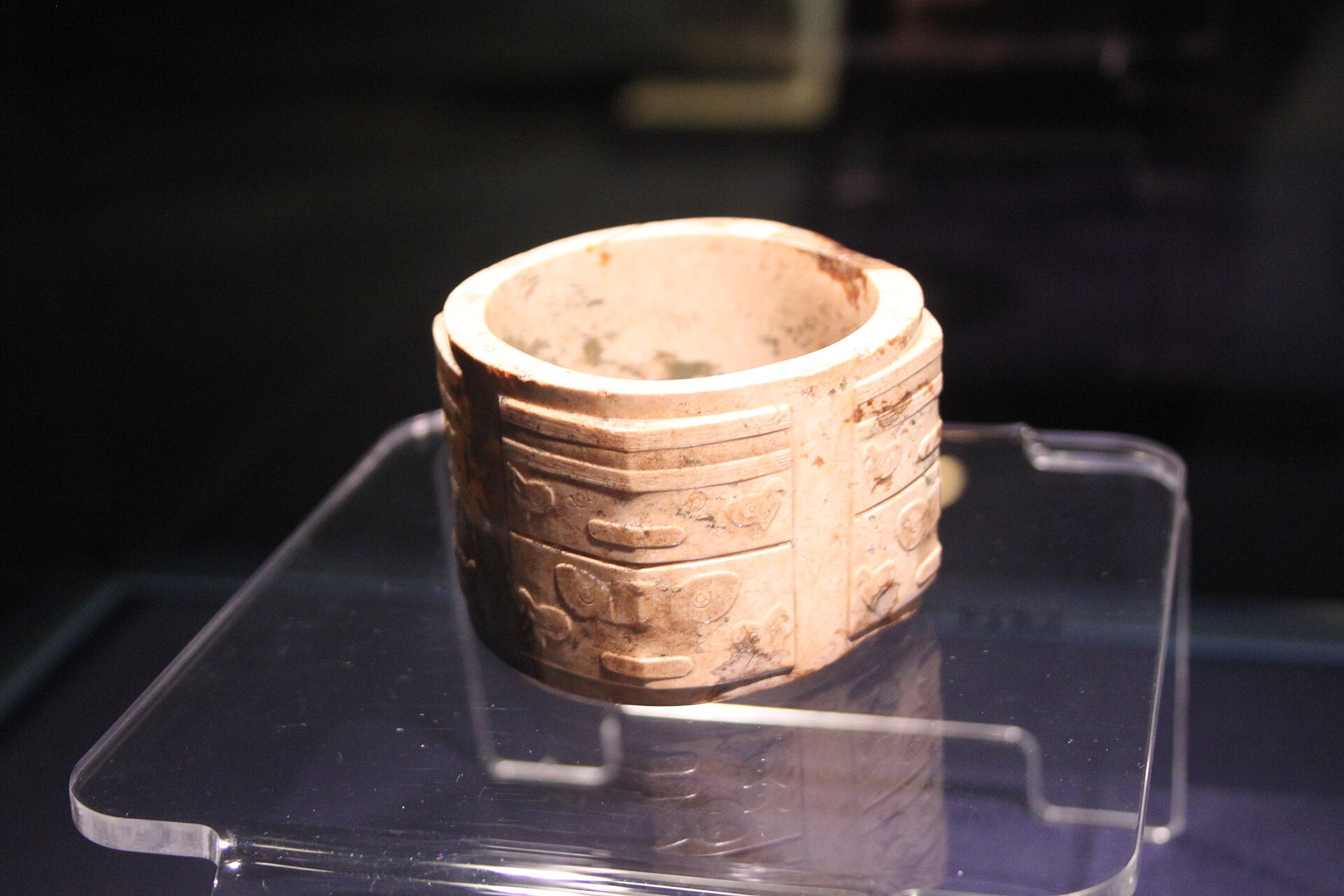
And what did they carve, over and over, into these precious objects? A face. A strange, recurring image that scholars call the taotie or the god-and-beast motif — a combination of what looks like a human or deity figure above and a fierce animal mask below, with huge round eyes. It appears again and again across the culture, on cong after cong, like a signature, or a prayer, or the emblem of a god whose name we will never know. Whatever it meant, it clearly mattered enormously to these people. It is the closest thing we have to hearing their beliefs spoken aloud.
The Mystery of the Cong
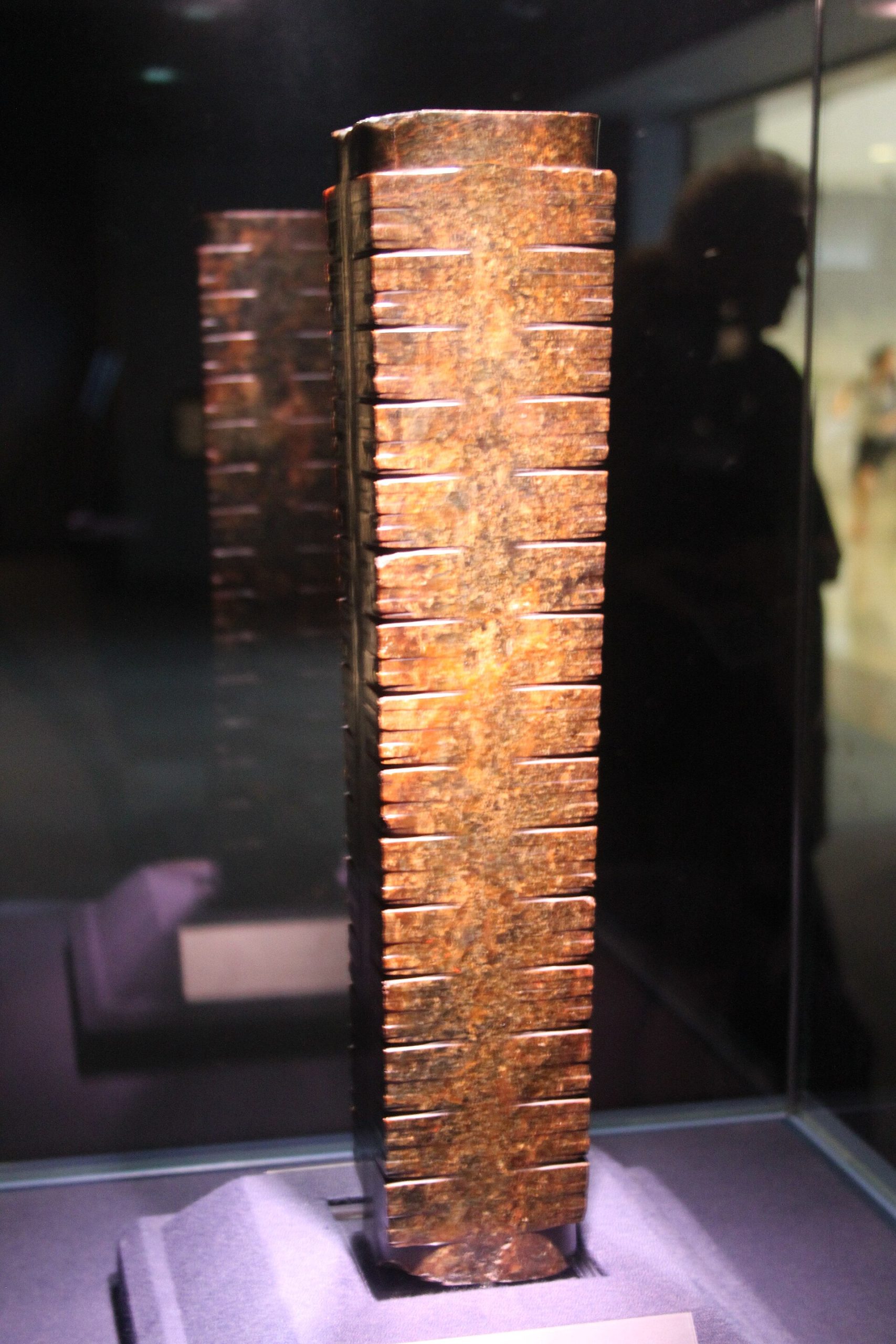
Of all the Liangzhu jades, the cong is the one that keeps me up at night, in the best possible way. Picture it: a tube, square on the outside, round on the inside, sometimes short and sometimes built up in tall tiers, with that eerie face motif carved at its corners. They are beautiful and unmistakable and utterly, maddeningly mysterious, because we have absolutely no idea what they were for.
There is no shortage of theories, and I find all of them fascinating precisely because none of them can be proven. Some scholars suggest the cong had a cosmological meaning, with its square outside representing the earth and its round inside representing the heavens — a little model of the universe held in the hand. Others think these objects were symbols of authority and rank, markers that distinguished the powerful dead from the ordinary ones. Some imagine them as ritual instruments used by shamans to communicate with the spirit world, channels between the human realm and whatever lay beyond it.
The truth is, we are guessing, and we are guessing about the deepest and most intimate part of these people: what they believed, what they feared, what they hoped happened after death. The cong were buried with the dead, often in large numbers with the most important individuals, so they clearly belonged to the world of the sacred and the afterlife. But the specific meaning that once made them so precious has drained away with the centuries, leaving only the beautiful, silent objects behind. We can hold a god in our hands and still not know its name.
Power, Belief, and a Society With Layers
One of the ways archaeologists read a lost society is by looking at its graves, and here Liangzhu tells a clear and rather human story. Not everyone was buried the same way. Some individuals went into the earth with dozens upon dozens of exquisite jade objects, laid out around their bodies in careful arrangements, in tombs set on high, prominent mounds. Others were buried with little or nothing at all, in humbler ground. The message is unmistakable: this was a society with layers, with an elite and a commoner class, with people who commanded jade and labor and others who provided it.
This matters because it is one of the clearest signs that Liangzhu had crossed a threshold — from a village society of rough equals into something more like a state, with concentrated power, social ranking, and probably a religious hierarchy binding it all together. The jade was not just pretty. It was a technology of power. Whoever controlled the workshops that produced these labor-intensive treasures, and the right to be buried with them, controlled something that everyone in that world recognized as sacred and prestigious. Jade was, in effect, a currency of status and belief rolled into one.
I find this both impressive and a little sobering. The same surplus that let Liangzhu build dams and carve masterpieces also let it build inequality, concentrating wealth and religious authority in the hands of a few. That is not a criticism unique to them; it is one of the oldest patterns in the human story, repeated in almost every early civilization we have looked at in this series. But there is something poignant about seeing it written so plainly in jade, in the gap between the tomb heaped with treasure and the empty grave beside it. These were recognizably people, with all the beauty and all the imbalance that being people entails.
Drowned by the River That Made It
So what happened to this shimmering water kingdom? How does a civilization capable of building the oldest dams in the world simply disappear? The answer, in a bitter irony that I cannot stop turning over, seems to be water — the very thing that made Liangzhu possible in the first place.
Around 4,300 years ago, after roughly a thousand years of flourishing, Liangzhu collapsed with striking speed. And the leading explanation points to a catastrophe of climate and flood. Studies of the sediments in the region have found evidence of a period of massive flooding — possibly driven by an unusually intense stretch of monsoon rains, dumping more water onto the delta than even the Liangzhu dams could hold. Layers of mud and clay were laid down over the settlements, the signature of water swallowing the land.
Imagine it from the inside. For a thousand years your ancestors had mastered the water, bent the rivers to their needs, grown fat harvests of rice in fields they themselves had drained and shaped. Water was your servant. And then, over some span of years that must have felt like the anger of the gods, the water stopped obeying. The floods came and kept coming, overwhelming the dams, drowning the fields, turning the rice paddies into swamp. A civilization built on the delicate balance between people and river lost that balance, and there was nothing to be done. The people scattered, the great city fell silent, and the mud rose over the jade and the walls and the dams, and buried them for four thousand years.
The Long Shadow of Liangzhu
Here is what saves this from being purely a tragedy. Civilizations rarely vanish as cleanly as the mud makes it look. Even after the water city drowned, something of Liangzhu lived on, carried forward in ideas and objects rather than in walls and canals. And nowhere is this clearer than in the jade.
The reverence for jade that Liangzhu raised to such heights did not die with the flood. It flowed on, down through the centuries, into the later cultures of ancient China, and eventually into Chinese civilization as we know it. That deep cultural love of jade — the sense that it is not merely a pretty stone but something morally and spiritually significant, associated with virtue, purity, and heaven — has roots that reach back into the Neolithic delta. The cong and the bi, those enigmatic shapes, were remembered and remade by later peoples who no longer knew exactly what the originals had meant but sensed that they mattered. In a way, Liangzhu whispered into the ear of everything that came after it.
This is one of the quiet lessons of archaeology that I have come to love. A civilization can fall, its cities can drown, its language and its gods can be forgotten, and yet its ideas can slip downstream into the future like seeds carried on a flood, taking root in soil the original people never saw. The engineers and jade-carvers of Liangzhu never knew that a hundred generations later, people would still treasure jade in part because they once did. But that is exactly the kind of immortality that history sometimes grants.
Why Liangzhu Matters
When I sit back and try to sum up why Liangzhu has grabbed hold of me the way it has, it comes down to a feeling of correction — the healthy jolt of realizing the world was richer and more surprising than I had been taught. I had a tidy little map of where and when civilization began, and Liangzhu redrew it. It planted a full-blown, state-level, city-building, dam-engineering, jade-carving society in a place and a time I had not thought to look, and it did so with quiet, undeniable evidence pulled straight out of the ground.
It also stands as a humbling reminder of how much we have lost and how much luck is involved in what survives. For most of modern history, nobody knew Liangzhu had existed. It took a chance discovery by a young man in the 1930s, decades of patient digging, and finally the world’s recognition in 2019 to pull this civilization back into the light. How many other Liangzhus are still out there, drowned under mud or buried under fields, waiting for someone to notice the black pottery and the ground-down jade and wonder what lies beneath? The ancient world is not a closed book. It is one we are still, thrillingly, learning to read.
And finally, Liangzhu moves me because it is so deeply, recognizably human. These were people who feared the flood and tried to master it, who loved beautiful things enough to grind stone for months to make them, who buried their dead with treasure and carved the face of a god they believed in over and over into jade. They built something magnificent, they lost it to forces larger than themselves, and they left behind objects so beautiful that we are still moved by them five thousand years later. If that is not worth remembering, I do not know what is.
Did They Have Writing?
There is one more tantalizing thread I cannot leave out, because it touches on the oldest question in the study of civilization: could the people of Liangzhu write? On some of their pottery and jade, archaeologists have found incised marks and symbols — little signs that were clearly made on purpose and that sometimes appear in short sequences, almost like the beginning of a message. Some Chinese scholars have argued, with real excitement, that these could represent an early form of proto-writing, a system of symbols carrying meaning that predates the mature Chinese script by thousands of years.
I want to be careful here, because this is exactly the kind of claim where hope can outrun evidence. Most experts are cautious. A handful of marks, however suggestive, is not the same as a developed writing system, and the sequences we have are short and rare. It is entirely possible these symbols were ownership marks, clan emblems, or simple counting notations rather than true writing. We saw the same frustrating ambiguity with the Indus script, where signs that look like writing have resisted every attempt to read them.
But the mere possibility is thrilling. If the Liangzhu symbols really were an early step toward writing, they would push the story of literacy in East Asia deep into the Neolithic and hint at a continuity of ideas stretching from these delta people all the way to the characters used across the Chinese-speaking world today. Whether or not that connection holds, the marks remind us how much of Liangzhu remains genuinely unknown. Every excavation season, the ground gives up a little more, and the picture keeps getting richer, stranger, and more human.
Liangzhu Among the World’s First Civilizations
It is worth pausing to place Liangzhu on the wider map, because doing so reveals something wonderful about the human story. At roughly the same moment in history, on different continents and in total ignorance of one another, human beings were independently crossing the same threshold. In Mesopotamia, the first cities were rising between the Tigris and Euphrates. In Egypt, the ingredients of the pharaonic state were coming together along the Nile. In the Indus Valley, planned cities with their famous drains were being laid out. And in the Yangtze delta, Liangzhu was building its water city, its dams, and its jade-drenched tombs.
No one told these societies to do this. There was no shared memo, no common teacher. Yet again and again, when human populations grew dense enough and food surplus grew large enough, people reached for the same tools: cities, monumental building, social hierarchy, organized religion, long-distance trade, and the control of water. Liangzhu is a magnificent, independent instance of that pattern, proof that the impulse toward civilization welled up in the human species in many places at once. It is not a copy of Mesopotamia or a footnote to the Yellow River cultures. It is its own original masterpiece, composed in the same key as its distant siblings but in a melody entirely its own.
Seen that way, Liangzhu is not just a Chinese story. It is a human one. It belongs on the same shelf as Uruk and Mohenjo-daro and the pyramid builders, a chapter in the shared adventure of our species learning, for the very first time, how to live together in the thousands and to leave something lasting behind.
A Civilization Worth Remembering
The Great Wall and the terracotta army will always draw the crowds, and rightly so. But the next time you think about the deep past of China, I hope a second image rises alongside them: a green delta laced with canals, a walled city on its earthen platform, dams holding back the monsoon, endless rice paddies shining under the sky, and somewhere within it all, a craftsman bent over a piece of jade, grinding a god’s face into stone. That is Liangzhu. It came first, it burned bright for a thousand years, and it deserves to be remembered by name.
Related reading from our “World’s Oldest Places” series
If Liangzhu has left you hungry for more of the ancient world’s great firsts, the rest of this series wanders through them one by one. Have a look at: Göbekli Tepe: The World’s Oldest Temple and How It Rewrote History, Stonehenge: How and Why This Ancient Stone Circle Was Really Built, Çatalhöyük: The 9,000-Year-Old Town With No Streets, Newgrange: The 5,000-Year-Old Tomb Built to Catch the Solstice Sun, Jericho: The World’s Oldest City and Its 10,000-Year-Old Wall, The World’s Oldest Art: Inside the Painted Caves of Lascaux and Chauvet, The Megalithic Temples of Malta: Older Than the Pyramids, Skara Brae: The 5,000-Year-Old Village Known as the Scottish Pompeii, Uruk and Sumer: The First Cities and the Birth of Writing, Karahan Tepe: The Astonishing Sister of Göbekli Tepe, Mohenjo-daro: The 4,500-Year-Old City That Was Centuries Ahead of Its Time. And on the far side of the world, you can meet Caral, the oldest city in the Americas, which rose in the Peruvian desert at the very same time as the pyramids of Egypt. And on the island of Crete you can explore Knossos, the Minoan palace behind the myth of the Minotaur, the labyrinthine home of Europe’s first great civilization. And out in the salt deserts of India, you can discover Dholavira, the Indus city that beat the desert with water engineering.
Browse more under our tags: Ancient China, Archaeology, and Ancient Cities. For a place that stretches the imagination even further, there’s Nan Madol, an entire city built on a coral reef in the open ocean.