Here is a fact that took me a while to really absorb, because it quietly upends the tidy timeline most of us carry in our heads. At the very same time that the Egyptians were hauling limestone blocks to build the Great Pyramid at Giza, on the other side of the planet, in a dusty river valley on the coast of Peru, people were building pyramids of their own. They had never heard of Egypt. Egypt had never heard of them. And yet there they were, two young civilizations, an ocean and a world apart, both reaching for the sky with monumental stone and earth at almost exactly the same moment in human history.
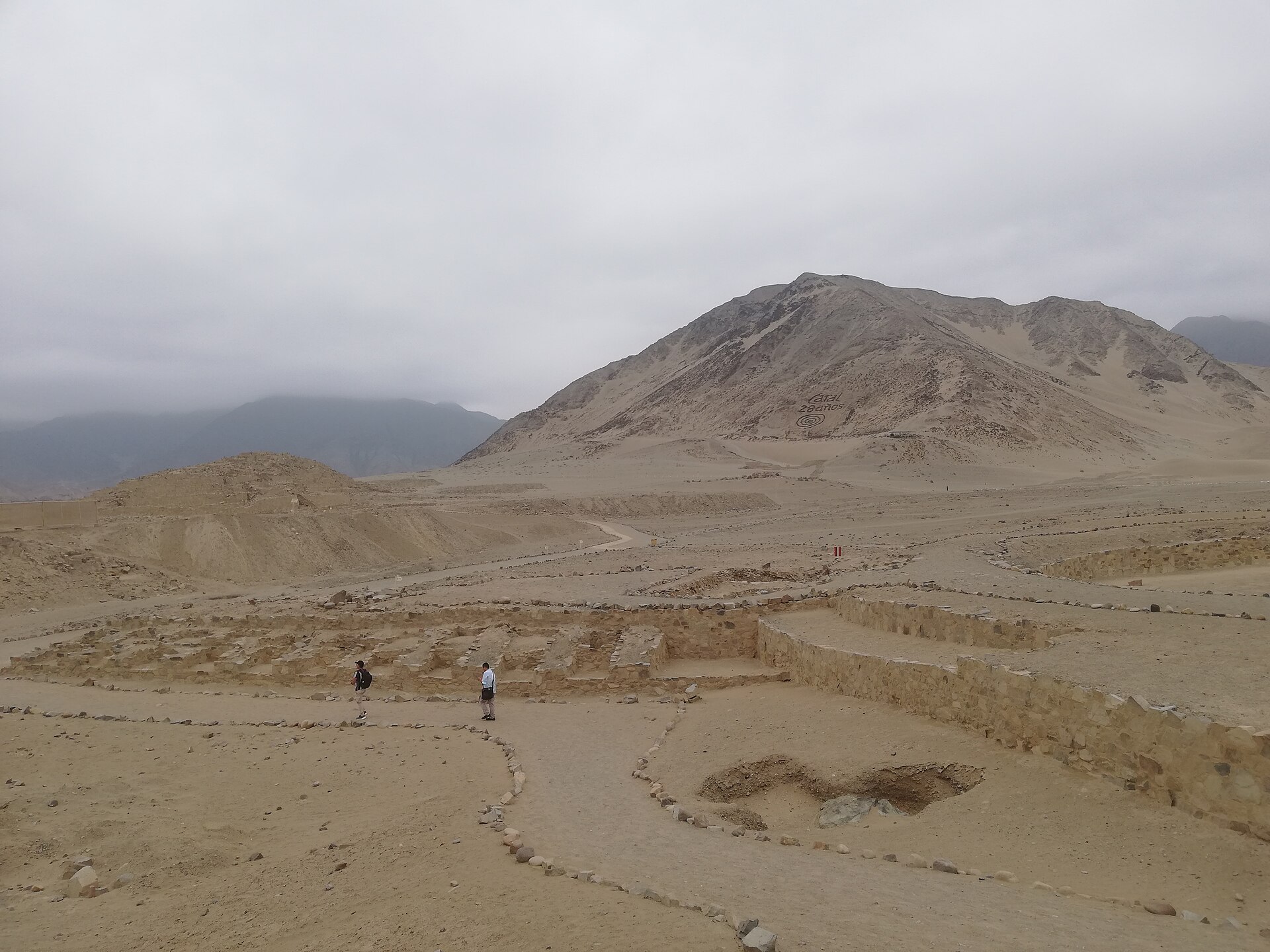
The place is called Caral, and it sits in the Supe Valley, a little inland from the Pacific coast of Peru. It is the flagship of what we now call the Norte Chico or Caral civilization, and it holds a staggering title: it is the oldest known city in all of the Americas, roughly five thousand years old. Before the Inca, before the Maya, before the Aztecs — long, long before any of the famous names of ancient America — there was Caral, already building, already organizing, already gathering thousands of people together into something that deserves to be called a city.
I find this genuinely thrilling, and a little humbling, because for most of modern history nobody had any idea it was there. So let me take you to Caral. I want to walk you through its pyramids and its sunken plaza, show you the strange and beautiful things these people left behind, and talk about the biggest surprise of all — the thing that is missing from Caral, and what its absence might mean.
The Oldest City in the Americas
Let us start with why Caral matters so enormously, because the claim is a big one and it deserves to be spelled out plainly. When archaeologists carefully dated the organic material buried in Caral’s great mounds, the numbers came back at around 2600 BCE, and possibly the settlement began stirring even earlier. That places the height of Caral squarely in the same era as the age of the pyramid builders in Egypt and the early cities of Mesopotamia. In other words, Caral is not just old. It is old enough to sit at the same table as the very first civilizations humanity ever produced, anywhere on Earth.
What makes this so remarkable is that it happened in total isolation. The people of the Supe Valley did not learn city-building from anyone. There was no older civilization next door to copy, no traders arriving with blueprints from across the sea. Whatever they built, they figured out entirely on their own, from scratch, out of their own heads and hands. When human beings on one continent invent the city independently of every other human being on the planet, that tells you something profound about our species — that the pull toward gathering, organizing, and building monuments together seems to well up in us again and again, wherever we take root.
And for the longest time, we had no idea. The mounds of Caral sat in the desert looking, to the untrained eye, like natural hills. It was not until the 1990s that the Peruvian archaeologist Ruth Shady began seriously excavating the site, and slowly, painstakingly, revealed that these were not hills at all but enormous stepped pyramids, deliberately built, unimaginably old. Her work rewrote the entire story of civilization in the Americas, pushing its origins back by thousands of years. Sometimes one determined person with a trowel and a lot of patience can change history. Ruth Shady is one of those people.
Pyramids in the Desert
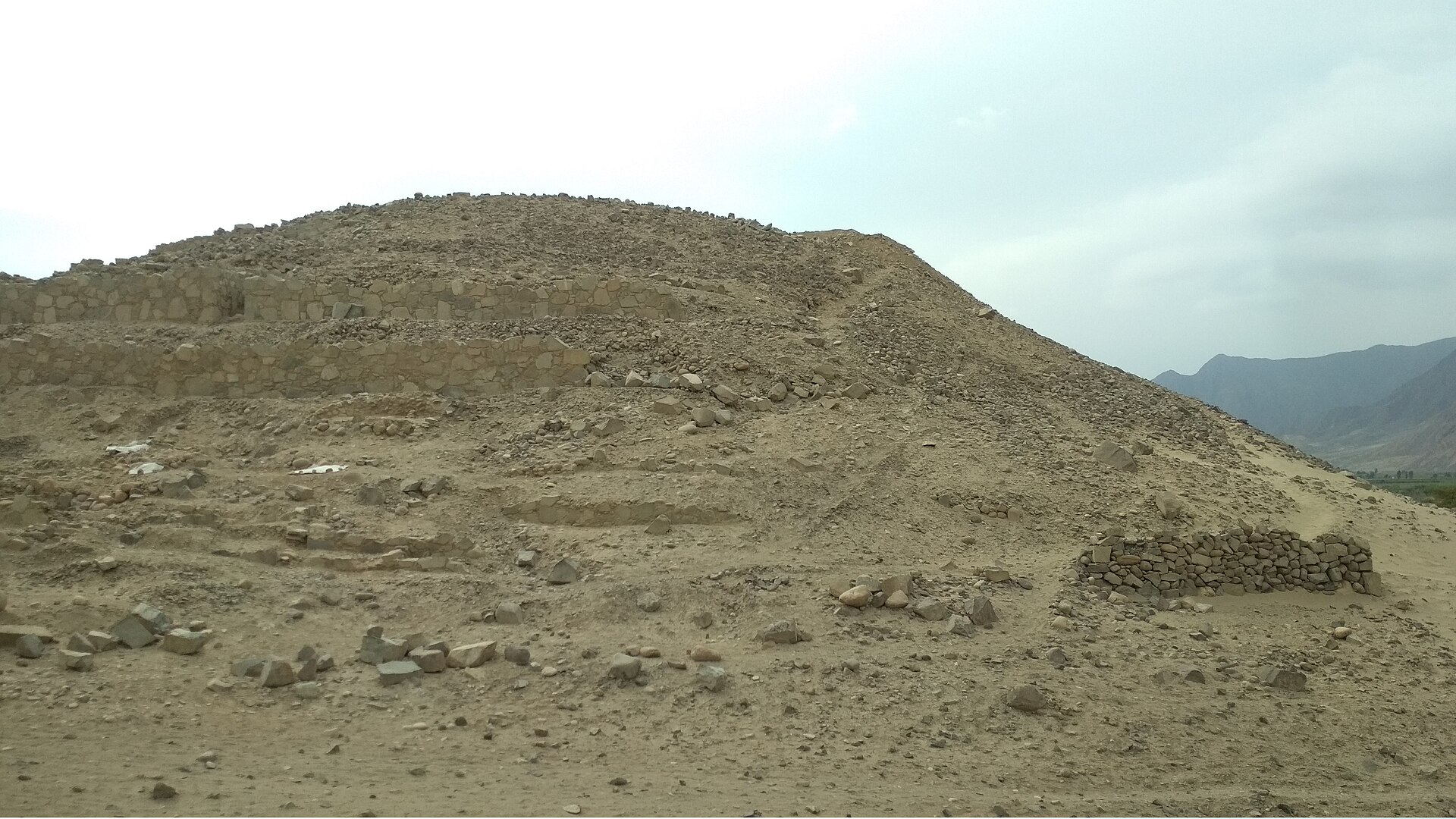
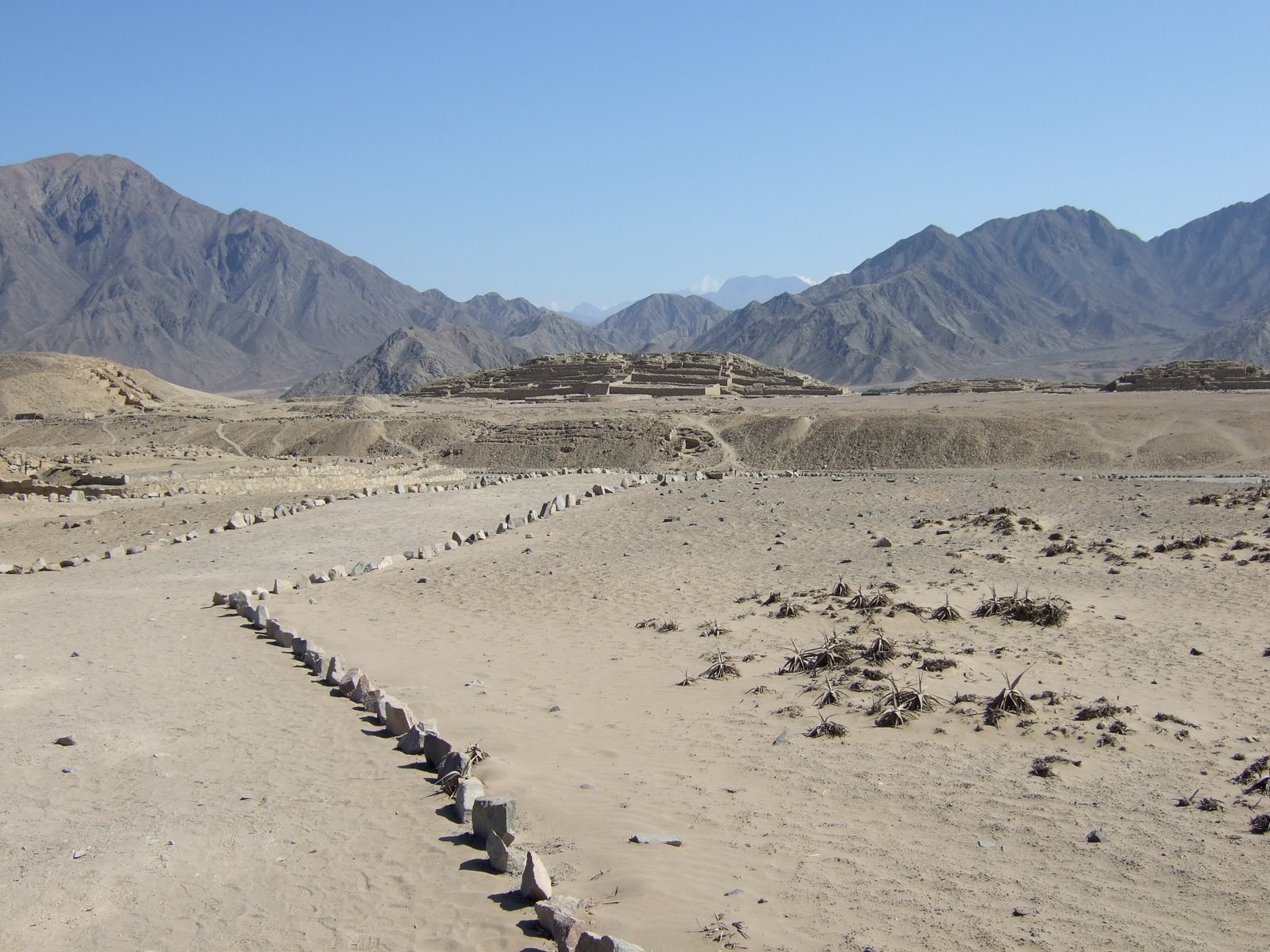
The heart of Caral is its pyramids, and I want you to picture them properly, because they are easy to underestimate from a photograph. There are half a dozen major pyramid mounds arranged around the site, the largest of them rising to a height that would put it level with a modern apartment block, spread across a base big enough to swallow several football fields. These are not the smooth, pointed pyramids of Egypt. They are broad, flat-topped, stepped platforms, built up in tiers, with staircases climbing their fronts to ceremonial spaces and rooms at the summit.
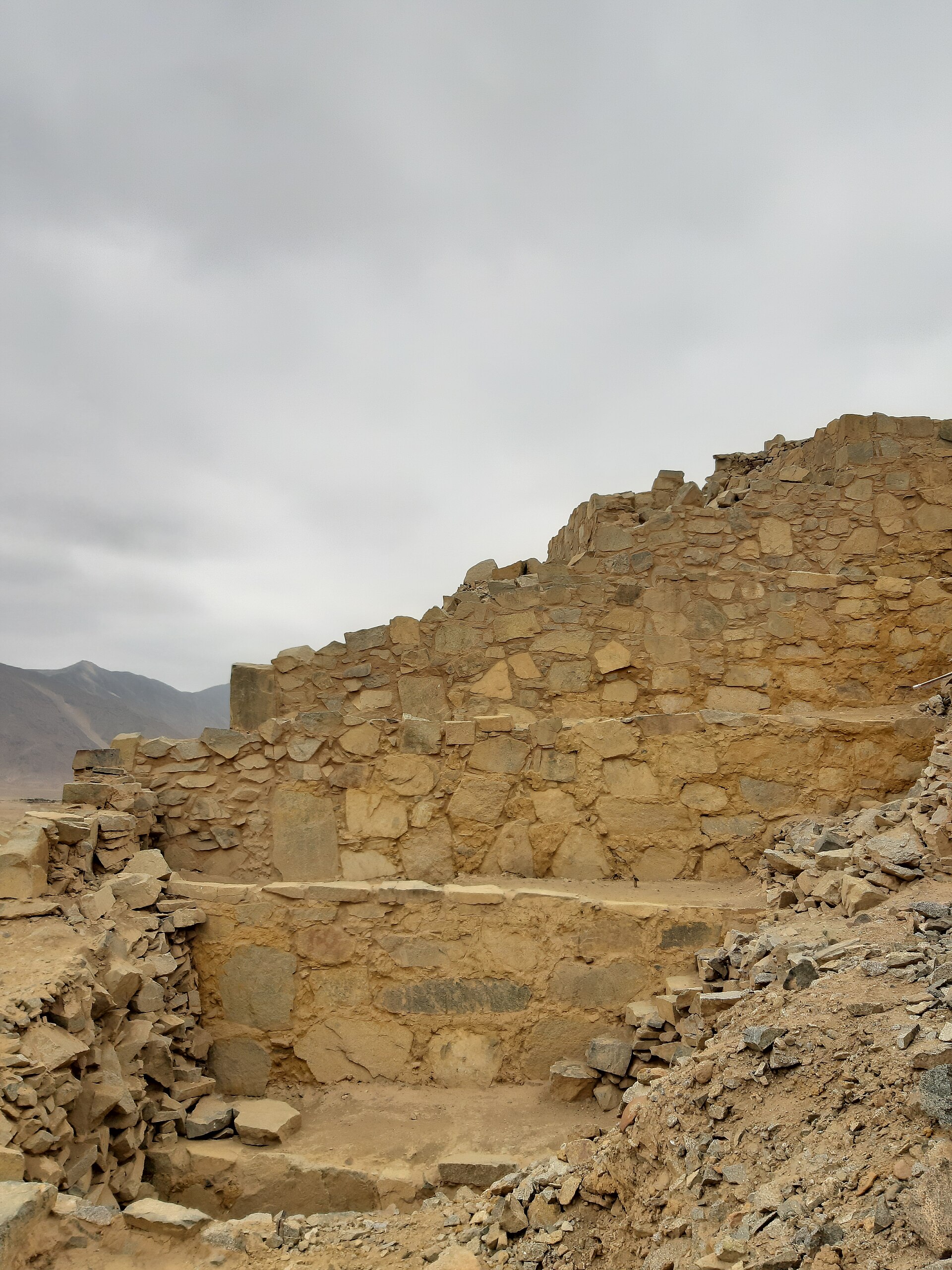
Standing before one of these mounds, the first question that hits you is simply: how? These people had no metal tools, no wheels, no draft animals to haul heavy loads. Everything was done with stone, wood, plant fibre, and human muscle. To raise a pyramid under those conditions took the coordinated labour of a great many people over a long stretch of time, along with someone or something capable of organizing that labour, feeding those workers, and holding the whole shared project together across the years it must have taken to complete. A pyramid is never just a pile of stone. It is frozen social organization, the physical proof of a society that had learned how to pull together toward a common goal.
And they clearly cared about how these monuments looked and felt. The pyramids were plastered and, in places, painted, so that in their day they would not have been the bare brown mounds we see now but bright, finished, imposing structures dominating the valley. Climb to the top of the main pyramid in your imagination, and you would have looked out over the whole city spread below, the plazas, the residential districts, the green ribbon of the irrigated valley, and the desert stretching away to the mountains. It was a stage built for power and ceremony, and it worked.
The Sunken Circular Plaza
If the pyramids are the muscle of Caral, the sunken circular plazas are its soul, and they are the feature I find myself most drawn to. In front of the largest pyramids, the builders dug great round amphitheatres down into the ground, ringed by low walls and reached by little staircases. Imagine a circular arena, sunk below the level of the surrounding ground, where crowds could gather and look inward and down toward whatever was happening at the centre. It is an architecture of assembly, of coming together, of shared attention.
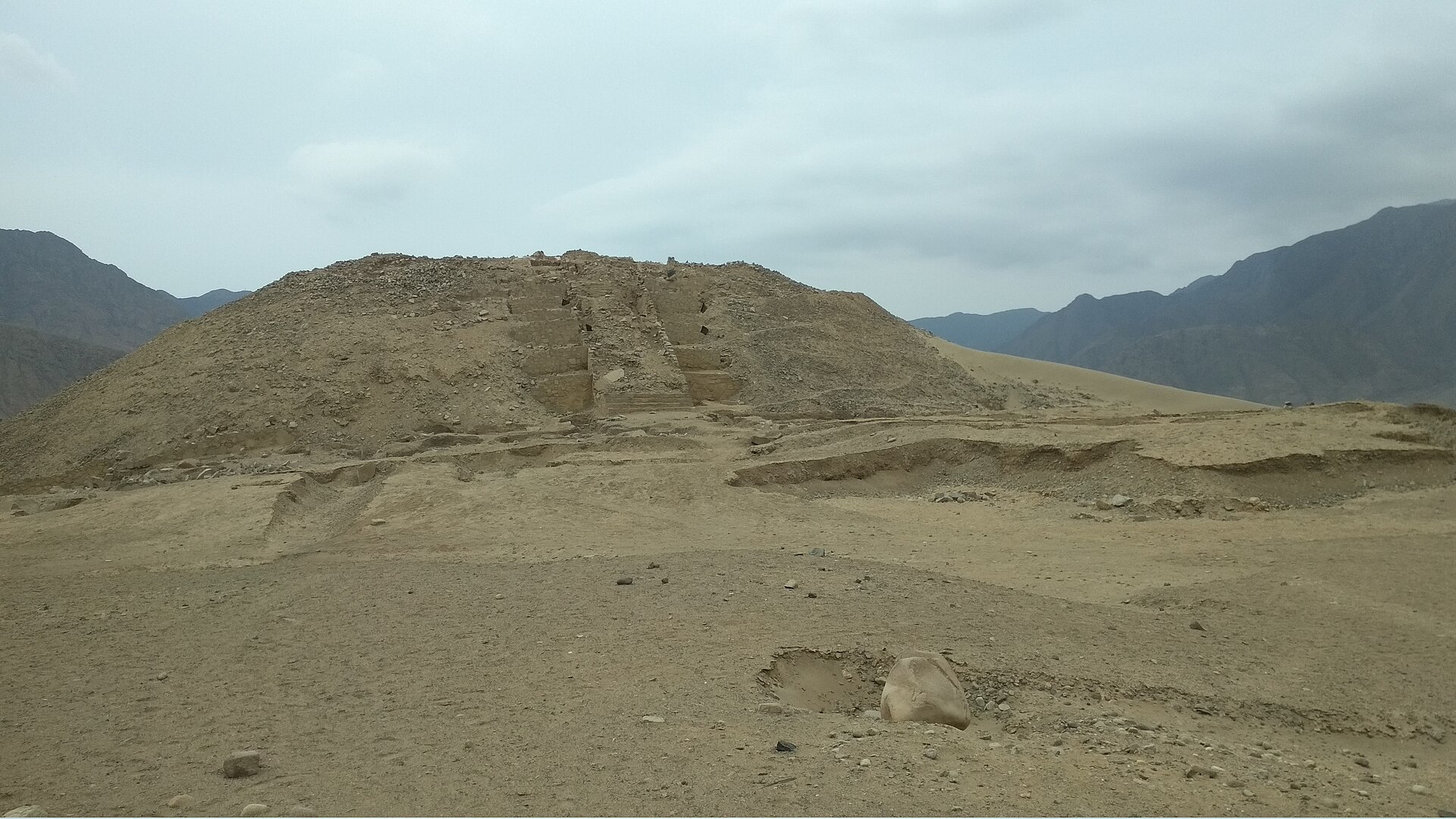
Nobody wrote down what happened in these plazas, so we are reading their purpose from their shape, the way you might guess the use of a theatre or a stadium from its bones. But the shape speaks loudly. A sunken circular space, built to hold a crowd all facing the same centre, is a space designed for collective ritual — for ceremony, for performance, for the kind of communal experience that binds a people together and reminds them they are one. Whatever specific gods or spirits the people of Caral honoured, they honoured them together, in the round, as a community.
There is something deeply moving to me about that. Strip away five thousand years, and what you have is a place where human beings gathered in a circle to share something larger than themselves. We still do it. We do it in stadiums and concert halls and places of worship. The specific beliefs of Caral are lost, but the impulse behind that sunken plaza — the need to come together and feel part of something — is one we would recognize instantly. In that respect, the people of Caral were not so different from us at all.
The Secret of the Shicras
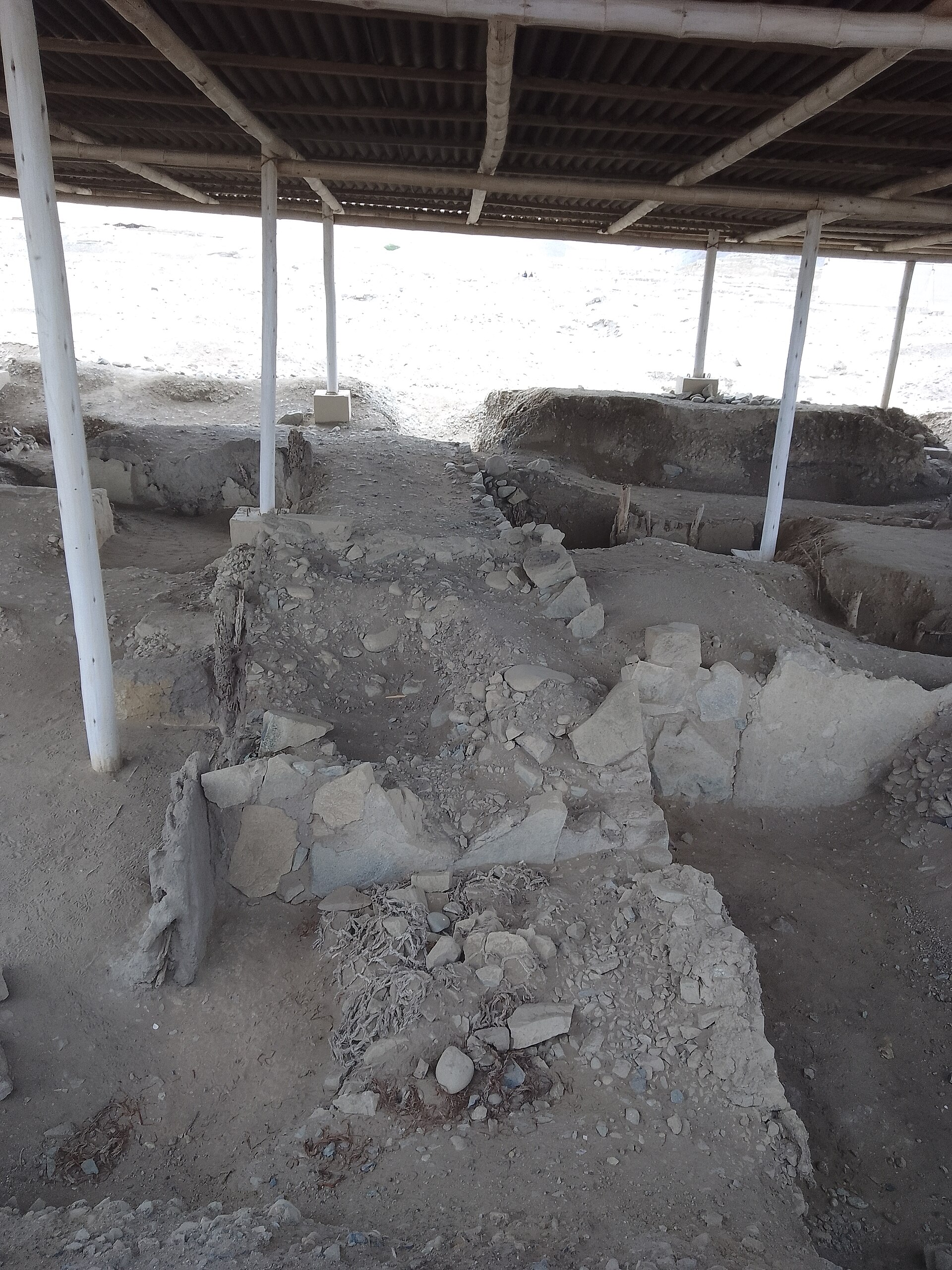
Now here is a detail I love, one of those small pieces of ancient cleverness that makes you grin when you understand it. When archaeologists dug into the pyramids of Caral, they found that the builders had filled the structures using a very particular technique. They wove bags out of reeds and plant fibre — these woven bags are called shicras — filled them with stones, and then stacked these stone-filled bags together to form the core and fill of the platforms.
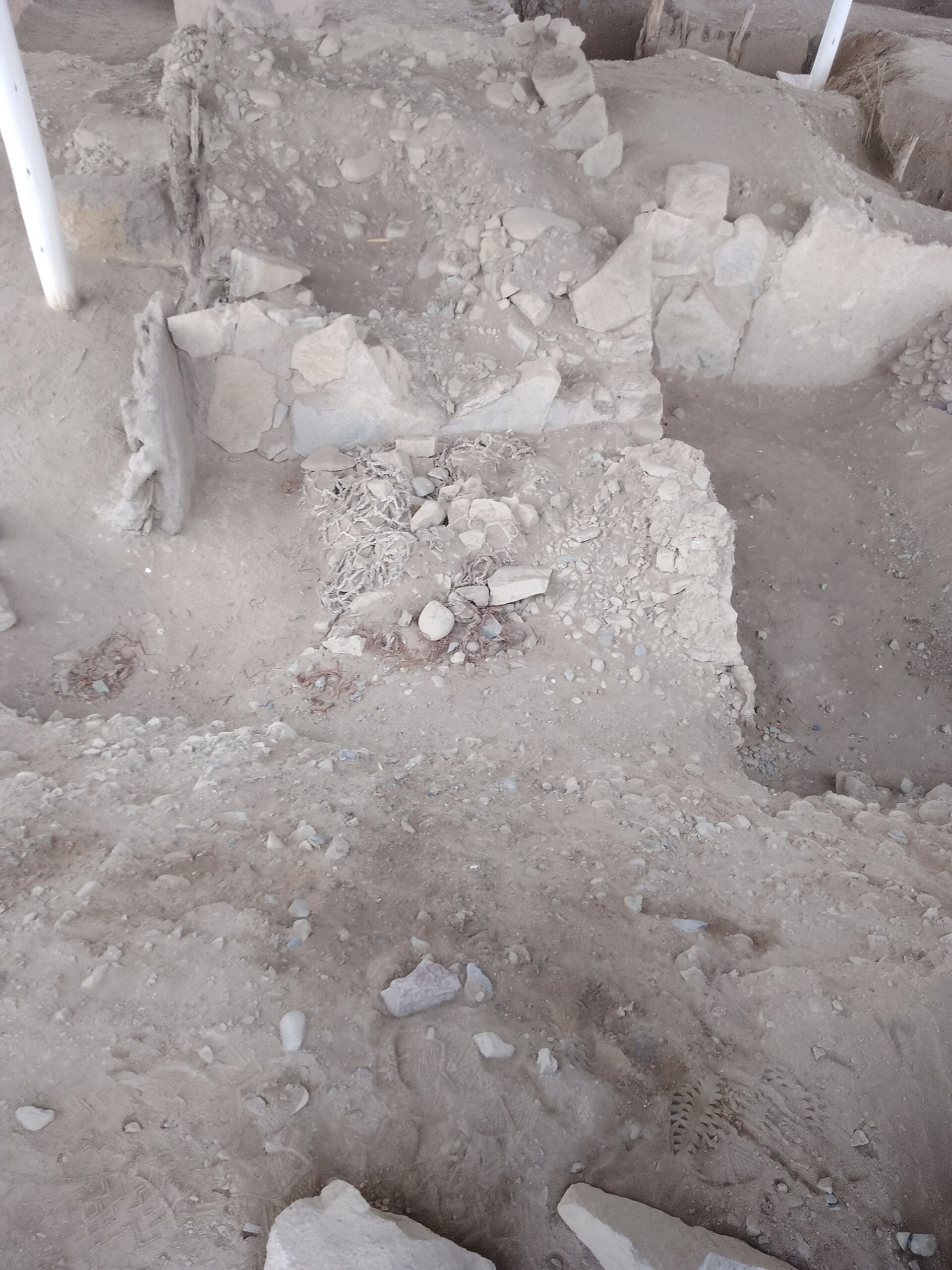
At first glance this might seem like a quaint, primitive way to build. It is anything but. This is earthquake country. Peru sits on one of the most seismically active zones on the planet, and any structure built to last there has to somehow survive the ground heaving beneath it. And it turns out that a mass of loose stones held in flexible woven bags behaves beautifully during an earthquake. Instead of a rigid mass that cracks and collapses, you get a fill that can shift and settle and absorb the shaking, the individual bags moving slightly against one another and dissipating the energy rather than fighting it. It is, in effect, a five-thousand-year-old form of seismic engineering.
I cannot tell you for certain that the people of Caral fully understood the physics of what they were doing, that they sat down and reasoned it out the way an engineer would today. But they lived with earthquakes, they built for the long term, and they hit upon a technique that worked, generation after generation, keeping their monuments standing through the tremors that must have regularly rolled through their valley. Whether it was deliberate genius or hard-won trial and error, the result is the same: a clever, resilient way of building that let their pyramids endure for fifty centuries. That is not primitive. That is wisdom, woven out of reeds and stone.
A City That Ran on Fish and Cotton
Every city needs a way to feed and support itself, and Caral’s answer to that question is one of the most fascinating things about it. When you think of an ancient civilization, you probably imagine fields of grain — wheat in Egypt, barley in Mesopotamia, rice in China. Caral had agriculture too, but its economy leaned on a wonderfully unexpected pairing: fish and cotton.
The Pacific coast of Peru is home to one of the richest fisheries on Earth, where cold, nutrient-heavy currents bring vast shoals of small fish like anchovies close to shore. The coastal communities harvested these fish in enormous quantities, dried them, and traded them inland. And what did the inland farmers of the Supe Valley grow to trade back? Cotton. They grew cotton in their irrigated fields, and that cotton was spun and woven into the nets and lines the fishermen needed to catch the fish in the first place. Do you see the beautiful circle in that? The farmers grew the cotton that made the nets that caught the fish that fed the farmers. Coast and valley, locked together in a single interdependent economy, each needing what the other produced.
This is a subtle but important point, because it tells us that Caral was not an isolated town scraping by on its own. It was a hub in a network, a place where goods flowed in and out, where the surplus of the sea and the surplus of the fields met and were exchanged. That kind of trade requires trust, organization, and probably some authority to oversee it all — exactly the sort of complexity that turns a village into a civilization. The humble anchovy and the cotton boll, working together, helped underwrite the pyramids.
It also gently overturns an old assumption. Scholars used to think that intensive grain farming was the essential first step toward civilization everywhere, the one indispensable foundation. Caral suggests it is not so simple. Here was a complex, monument-building society that leaned heavily on maritime resources and industrial cotton rather than on great fields of staple grain. There is more than one road to civilization, it turns out, and the people of the Supe Valley found their own.
Flutes, Fire, and the Sound of Caral
One of the things I love most about archaeology is when it manages to recover not just how people lived, but how their world sounded, smelled, and felt. And Caral gives us one of those precious gifts. Buried at the site, archaeologists found a collection of flutes made from the wing bones of pelicans and condors, along with cornets fashioned from animal horns. Instruments. Music.
Think about what that means. These were not people who lived only to labour and survive. They made music. In that great sunken plaza, on ceremonial nights, the air would have filled with the sound of bone flutes and horn cornets, echoing off the walls, rising toward the pyramids. There would have been fire, too — the people of Caral built special hearths and fire altars, some of them cleverly designed with underground channels to feed air to the flames so a fire could be kept burning steadily without anyone having to bend down and blow on it. Picture it: a crowd gathered in the round as darkness fell, firelight flickering on the pyramid steps, the strange sweet notes of pelican-bone flutes drifting over everything.
That image collapses the distance between us and them faster than any list of dates or dimensions. Music and firelight and a crowd gathered together in the dark — that is not the behaviour of remote, alien ancestors. That is us, five thousand years ago, doing the deeply human things we still do. When I read about those little flutes carved from bird bones, I do not see a dead civilization. I hear one, faintly, still playing.
The City With No Walls and No War
Now we come to the greatest surprise of Caral, the thing that is missing, and it is the same haunting absence we found when we walked through Mohenjo-daro in the Indus Valley. When archaeologists excavated Caral, they went looking, as they always do, for the signs of war. Defensive walls. Weapons. Fortifications. Burned buildings. Mutilated bodies. The grim, familiar wreckage that so many ancient cities leave behind. And at Caral, across roughly a thousand years of occupation, they found almost none of it.
There are no great defensive walls ringing the city. There is no cache of weapons made for battle. There is no monumental art glorifying a warrior-king trampling his enemies, no evidence of a city sacked and destroyed by an army. For a settlement of this size and importance, flourishing for a millennium, the near-total absence of warfare is genuinely astonishing. It has led some researchers to describe Caral as a society that was, for its time, strikingly peaceful — a civilization that seems to have held itself together and prospered without organizing its whole existence around violence.
I want to be careful here, the same way I was careful with the Indus Valley, because the absence of evidence can mislead us and there is always more to learn. But the pattern is striking, and it invites a beautiful question. What held Caral together, if not the sword? The best guess is that the glue was religion and shared ritual rather than military force — that the pyramids and the plazas and the ceremonies were the thing that bound thousands of people into a single society, giving them a common identity and a common purpose powerful enough that they did not need walls. Belief, not battle. If that is even partly true, then Caral is a quietly radical thing to find in the human story: a great early civilization that seems to have chosen, or stumbled into, a gentler path.
A Knot in Time
Here is one more tantalizing thread, and it reaches all the way from Caral to the mighty Inca empire thousands of years later. The Inca, as many people know, did not use writing in the way we usually think of it. Instead, they kept records using an ingenious system of knotted strings called quipu, where the type, position, and colour of the knots encoded numbers and, quite possibly, other information. It was a way of storing data in cord rather than in symbols on a page.
And at Caral, archaeologists believe they may have found one of these knotted-string devices — a quipu, or something very like it, thousands of years older than the Inca. If that identification holds, and scholars still debate the details, it would mean that this way of recording information in knots has roots stretching back to the very dawn of Andean civilization, carried forward across five thousand years and countless generations until it reached the record-keepers of the Inca. It would be a thread of cultural memory, quite literally a thread, running through the entire history of civilization in the Andes.
Whether or not that early object is truly a quipu, the possibility captures something important about Caral: it was not a dead end. The people of the Supe Valley were the beginning of a long, unbroken conversation in the Andes, the first speakers in a dialogue that would continue through a thousand later cultures and eventually reach one of the greatest empires the Americas ever knew. Caral did not just rise and vanish. It planted seeds.
How It Faded
So what happened to Caral? After a thousand years of building and gathering and playing bone flutes in the firelight, the city was eventually abandoned, and the reasons echo the ends of so many of the ancient places we have visited. There was no dramatic conquest, no single catastrophe that we can point to. Instead, the likeliest story is one of slow environmental change grinding away at the foundations of a life.
The coast of Peru is vulnerable to powerful climate swings, including the great disruptions we now associate with El Niño, which can bring devastating floods to the desert and wreck the delicate fisheries offshore. Over time, shifting conditions, prolonged drought, sand encroaching on the fields, and the failing of the marine harvest could have made the old way of life in the Supe Valley harder and harder to sustain. Bit by bit, the balance that had supported the city for a millennium came undone, and the people drifted away to other valleys and other opportunities, leaving the pyramids to the wind and the sand.
But the story does not end with abandonment, and this is the part that redeems it. The people of Caral did not disappear from history. They carried their knowledge, their techniques, and their traditions with them, and those things took root elsewhere along the coast and up into the highlands. The Andean civilization they had helped begin kept growing and evolving for thousands of years after Caral itself fell silent. In that sense, Caral did not really die. It simply grew up, moved on, and became the ancestor of everything that followed.
Why Caral Matters
When I try to put my finger on why Caral moves me so much, it comes down to two things. The first is the sheer, staggering fact of it: a city as old as the pyramids of Egypt, built independently on the far side of the world by people who invented civilization entirely on their own. That fact alone should be famous. It should be in every child’s picture of the ancient world, right alongside the Sphinx and the ziggurats. That it is still so little known feels like a debt we owe these people, one worth paying by simply telling their story.
The second thing is the shape of the society they built. No walls. Little sign of war. A city that seems to have held itself together with music and ceremony and shared belief rather than with armies and conquest. Whether or not that picture is perfectly accurate, the very possibility of it is precious. It reminds us that there was never only one way to be a civilization, that our ancestors experimented with different ways of living together, and that some of them may have found something gentler than the endless cycle of warfare we so often assume is humanity’s default. Caral holds open a door to a different kind of past, and maybe, if we are wise, a different kind of future.
The Woman Who Woke the City
I want to linger for a moment on the human story of how Caral came back to us, because it is easy to talk about ancient cities as though they simply reveal themselves, when in truth they are dragged back into the light by the stubborn devotion of real, living people. In the case of Caral, that person is Ruth Shady, a Peruvian archaeologist who first walked into the Supe Valley in the mid-1990s and saw, where others saw only dusty hills, the outlines of something extraordinary.
She began digging with almost no money, few resources, and plenty of doubters. Excavating a site as vast as Caral is slow, painstaking, expensive work, and for years she pushed forward on determination as much as anything else. When her team finally sent organic samples off for radiocarbon dating and the results came back placing the city at around 2600 BCE, it must have been one of those rare, electric moments when a single number changes everything. Overnight, the story of civilization in the Americas grew thousands of years older, and a nameless cluster of mounds became the oldest known city in the New World.
Shady’s work did not come without cost, including threats and struggles to protect the site from those who would rather exploit it, but she persisted, and today Caral is recognized by UNESCO as a World Heritage Site and cherished as a national treasure of Peru. I think it is worth remembering her name alongside the city she revealed, because Caral is a reminder that the ancient past is not simply out there waiting to be found. It has to be fought for, dug up, dated, protected, and told, by people willing to give years of their lives to the task. Every ancient wonder you have ever marvelled at reached you through the hands of someone like Ruth Shady.
The First City of a New World
The next time someone talks about the great cradles of civilization and rattles off Egypt, Mesopotamia, the Indus, and China, I hope you will gently add one more name to the list. Out on the desert coast of Peru, in a quiet valley threaded with a green river, people who had never heard of any of those places built their own pyramids, dug their own sunken plazas, wove their own clever earthquake-proof foundations, and gathered in the firelight to the sound of flutes carved from the bones of birds. They did it first in all the Americas, and they did it alone. Caral earned its place among the origins of the human adventure, and it is long past time we remembered it by name.
If Caral has stirred something in you — that itch to know how our ancestors first learned to live together and build things meant to outlast them — there is a whole world of other beginnings waiting for you. You could travel back even further to Göbekli Tepe, the astonishing hilltop sanctuary in Turkey that may be the oldest temple ever raised, or to its newly uncovered neighbour Karahan Tepe. You might wander the streets of Jericho, arguably the oldest city on Earth, or lose yourself in the doorway-less rooms of Çatalhöyük. If it is monuments you love, there is Stonehenge, the solstice-catching tomb of Newgrange, and the island temples of Malta that are older than the pyramids. And if it is lost cities that call to you, meet the drowned water-world of Liangzhu in ancient China, the drain-laced streets of Mohenjo-daro in the Indus Valley, the very first cities of Uruk and Sumer, where writing was born, the stone village of Skara Brae on windswept Orkney, and the painted caves of Lascaux and Chauvet, where the whole human story of art begins. And on the island of Crete you can explore Knossos, the Minoan palace behind the myth of the Minotaur, the labyrinthine home of Europe’s first great civilization. And out in the salt deserts of India, you can discover Dholavira, the Indus city that beat the desert with water engineering.
You can also follow more of these ancient trails through our Ancient Cities and Archaeology tags. You might also wander out to Nan Madol, the black-basalt city islanders raised on a flooding Pacific reef.