High in the mountains of southern Africa, where the great escarpment of the Drakensberg rises to the highest peaks south of Kilimanjaro, lives a people whose kingdom was forged in the mountains as a refuge from the storms of war. They are the Sotho, or Basotho, the nation of the mountain kingdom of Lesotho and of the neighbouring highveld, a people of herders and farmers wrapped in their famous blankets, who under a single wise king built a nation in the high country and held it against every enemy. Among the peoples of the south, the Basotho are the great mountain nation.
This is the story of the Basotho and the kingdom in the sky they built. It is a story of the great king Moshoeshoe, who out of the chaos of the Mfecane gathered the broken and the destitute upon the mountain fortress of Thaba Bosiu and forged them into a nation by wisdom and generosity rather than the spear, of the creator Molimo and the ancestral balimo and the healers who read the bones, and of the blanket, the conical mokorotlo hat, and the hardy pony that are the emblems of the nation. It is the story of a mountain people who held their kingdom against Zulu, Boer, and Briton alike.
Contents
- The People of the Mountain Kingdom
- Sotho, Basotho, and the Nation of Moshoeshoe
- Sesotho, a Language of the Southern Highveld
- The Mountains of Lesotho and the Highveld
- Moshoeshoe, the Mountain, and the Making of a Nation
- Chiefs, Clans, and the Homestead of the Basotho
- The High God, the Ancestors, and the Healers
- The Blanket, the Hat, and the Pony
- Weavers, Potters, and the Painters of the Wall
- Sorghum, Maize, and the Table of the Highlands
- The Initiation, the Feasts, and the Dances
- From the Wars of the Mfecane to Independent Lesotho
- The Basotho of Lesotho and South Africa
The People of the Mountain Kingdom
High in the mountains of southern Africa, where the great escarpment of the Drakensberg rises to the highest peaks south of Kilimanjaro, lives a people whose kingdom was forged in the mountains as a refuge from the storms of war. They are the Sotho, or Basotho, the nation of the mountain kingdom of Lesotho and of the neighbouring highveld of South Africa, a people of herders and farmers wrapped in their famous blankets, who under a single wise king built a nation in the high country and held it against every enemy. Among the peoples of the south, the Basotho are the great mountain nation.
The Basotho are a Bantu people of the Sotho-Tswana branch, close kin to the Tswana to the north and the Pedi or northern Sotho to the northeast, with whom they share a common language family and much of their culture, and distinct from the Nguni peoples such as the Zulu and Xhosa to the east. They came together as a nation only in the early nineteenth century, when the upheavals of the age drove many scattered clans and refugees to gather for safety around one remarkable leader in the mountains.
Their story is one of a nation created almost from nothing by the genius of a single man, the great king Moshoeshoe, who gathered the broken peoples of a time of war into one nation upon a mountain fortress, defended them with wisdom and diplomacy against Zulu, Boer, and Briton alike, and left them a kingdom that survives to this day as the independent country of Lesotho. To understand the Basotho is to understand a mountain nation forged in adversity and held together by the memory of its founder-king.
Sotho, Basotho, and the Nation of Moshoeshoe
The people call themselves the Basotho, the people of Sotho, a single person being a Mosotho, and their language Sesotho, all built with the prefixes of the Bantu tongue on the root Sotho. The name in this southern form belongs above all to the nation that Moshoeshoe forged, the southern Sotho, though the wider Sotho-Tswana family embraces the Tswana of Botswana and the northern Sotho, the Pedi, as well, closely related peoples of a common origin and language stock spread across the interior plateau of the south.
The Basotho of Lesotho and the neighbouring highveld are the southern Sotho, and they came together as a single people out of many origins, for the nation that Moshoeshoe built was made from the fragments of clans and peoples scattered and broken by the wars of the Mfecane, gathered and welded into one under his leadership and his name. Beneath the shared identity of the Basotho lie the many clans, each with its own totem animal, the crocodile, the lion, and others, by which people know and greet one another.
The name Basotho carries the memory of the mountain kingdom and its founder, and it marks the people as a distinct nation among the many of the south, wrapped in their blankets and crowned by the memory of Moshoeshoe. In the name Basotho, the many clans and refugees who once gathered on the mountain recognise their belonging to the nation that one great king created out of the chaos of a violent age.

Sesotho, a Language of the Southern Highveld
The Basotho speak Sesotho, a Bantu language of the Sotho-Tswana group of the Niger-Congo family, closely related to the Tswana and the northern Sotho, and it is one of the major languages of the region, an official language both of the kingdom of Lesotho and of South Africa, spoken by many millions across the mountain kingdom and the neighbouring highveld. As a Sotho-Tswana language it is distinct from the Nguni tongues such as Zulu and Xhosa, though centuries of contact have brought them close in many things.
Sesotho carries a rich oral heritage, above all the tradition of praise-poetry, the lithoko, the soaring praises composed for chiefs and kings and above all for Moshoeshoe and the heroes of the nation, recited in a sonorous and allusive style that is one of the glories of the culture, and the proverbs, the riddles, and the folktales of the people fill out a deep literature of the spoken word. The Basotho are famous too for their songs, above all the accordion-driven famo music of the modern age.
With the coming of the missionaries the language was among the first African languages to be written and to gain a printed literature, for the French missionaries who befriended Moshoeshoe reduced Sesotho to writing early, and it developed newspapers, poetry, and prose, including the works of a distinguished tradition of Basotho authors. Today Sesotho flourishes in print, in music, and in the daily life of the mountain kingdom and beyond. In its praises, its proverbs, and its literature, Sesotho is a proud vehicle of the Basotho nation.

The Mountains of Lesotho and the Highveld
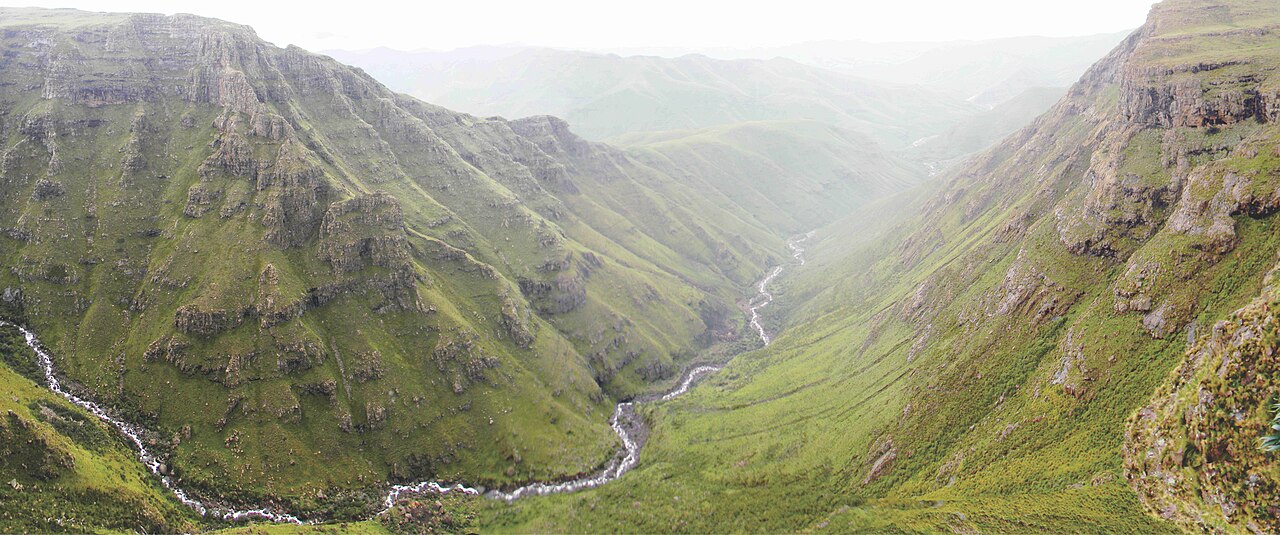
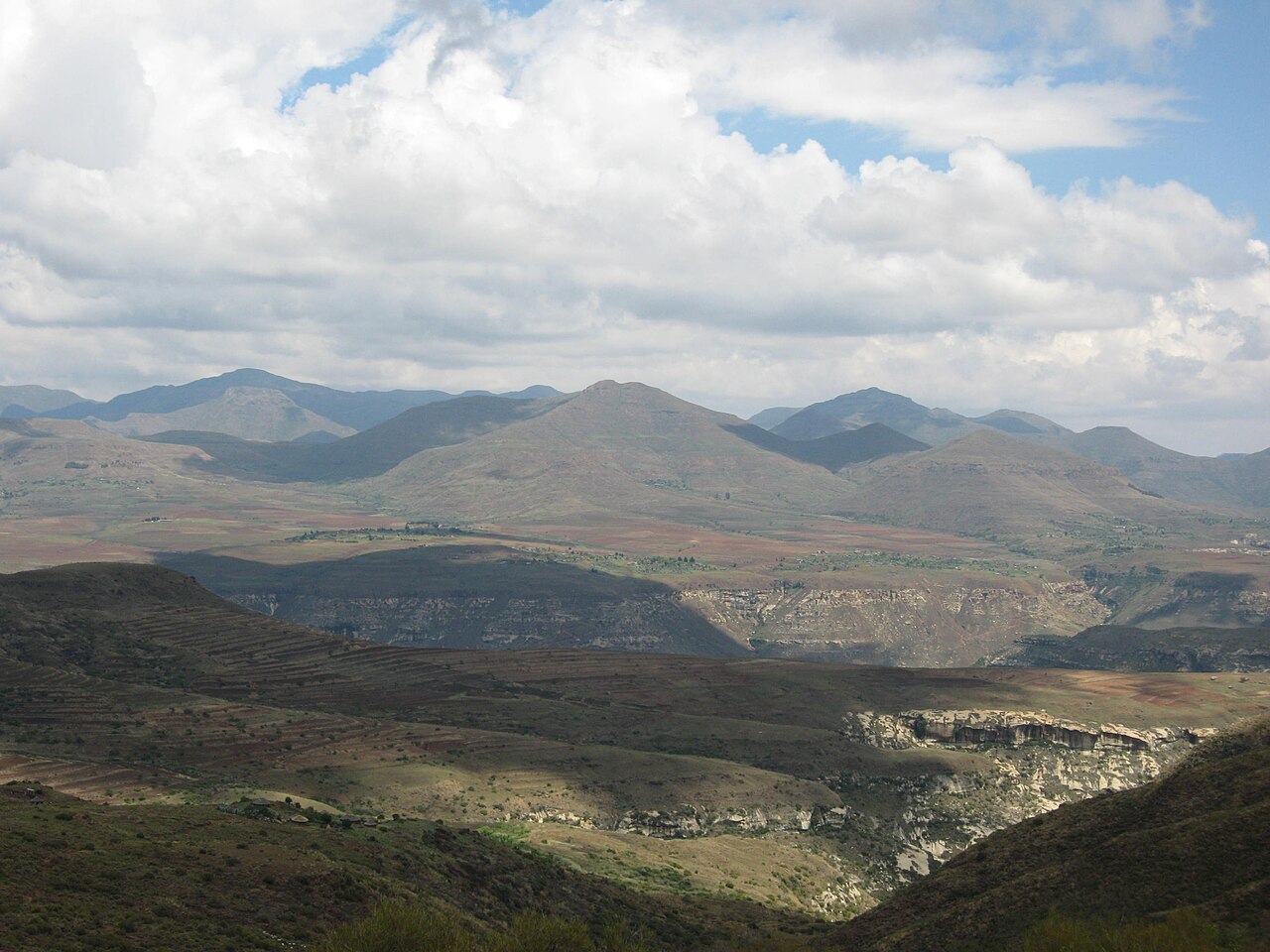
The Basotho homeland is the high mountain country of southern Africa, above all the kingdom of Lesotho, a land so lofty that it is often called the Kingdom in the Sky, for it is the only country in the world lying entirely above a thousand metres, a rugged realm of towering peaks, deep valleys, and high plateaus in the heart of the Drakensberg and the Maloti mountains. Beyond the mountain kingdom the Basotho spread out onto the neighbouring highveld of the Free State in South Africa, a high, open grassland country of wide horizons.
The mountains are the making of the Basotho, for it was to these heights that the broken peoples fled in the time of war, and the great flat-topped mountain of Thaba Bosiu, the Mountain of the Night, became the fortress and the birthplace of the nation, an impregnable natural stronghold upon which Moshoeshoe gathered his people and turned back every attack. The high country is cold, and snow falls on the peaks in winter, so that the Basotho, wrapped in their thick blankets and mounted on their hardy ponies, became a people of the mountain cold.
This is a country of the herder and the grain-farmer, its high grasslands grazing the cattle, sheep, and goats that are the wealth of the people, and its valleys growing the sorghum, maize, and wheat of the fields, though the mountains are steep and the arable land is scarce and precious. The rivers of the region rise in these heights, for Lesotho is the water-tower of the south. On this high, cold, and beautiful mountain country, the Basotho built their kingdom in the sky.
Moshoeshoe, the Mountain, and the Making of a Nation
The old Basotho world was created by the statesmanship of one extraordinary man, Moshoeshoe, who in the early nineteenth century, amid the terrible upheavals of the Mfecane that scattered and destroyed so many peoples, gathered the broken clans and refugees around him and forged them into a nation upon the mountain fortress of Thaba Bosiu. Where other leaders of the age built by conquest and the spear, Moshoeshoe built above all by wisdom, generosity, and diplomacy, welcoming the fugitive and the destitute, binding them to him by kindness and by cattle, and defending them by a masterful reading of friend and foe.
The kingdom Moshoeshoe built was ordered through the chiefs, many of them his own sons and kin whom he placed over the districts and the gathered peoples, all owing loyalty to the paramount king, and through the councils and the great assembly of the men, the pitso, where the affairs of the nation were debated in the open, for the Basotho prized discussion and consent. The king ruled as the father of his people, the giver of land and cattle, the judge of disputes, and the guardian of the nation, and his authority rested on respect and loyalty as much as on power.
Beneath the king and the chiefs lay the homesteads, the clans, and the cattle that were the foundation of Basotho life, and the people lived by their herds and their fields, bound to their chiefs by the loan of cattle and the grant of land in a web of obligation and loyalty. The mountain fortress, the wise king, the assembly, and the herd were the pillars of the nation. In Moshoeshoe, the mountain of Thaba Bosiu, and the gathering of the broken peoples, the old Basotho world was built.
Chiefs, Clans, and the Homestead of the Basotho
Basotho society was built on the homestead, the chiefdom, and the bond of cattle, and its foundation was the extended family living in its cluster of houses on the mountain slope or the highveld plain, with its fields and its herds. Cattle were the measure of wealth and standing, the currency of bride-wealth, and the food of ceremony, and they bound the society together through the custom of mafisa, by which a wealthy man or a chief loaned cattle to the poorer to herd and to use, creating ties of obligation and loyalty that knit the nation together and that Moshoeshoe used with genius to bind his people to him.
Descent was reckoned through the father, and every Mosotho belonged to a clan marked by its totem animal, the crocodile of the royal Koena clan, the lion, the elephant, and others, by which people recognised their kinship, and marriage, sealed by the cattle of the bohali or bride-wealth, joined lineages and was the foundation of the family. The chiefs, drawn from the royal and noble clans, governed the districts and the people in the name of the king, and the assembly of the men gave the ordinary Mosotho a voice.
The values of Basotho society were those of a mountain people forged in adversity, loyalty to the king and the chief, the honouring of cattle and the ancestors, hospitality and the welcome of the stranger that Moshoeshoe had made the mark of the nation, and the eloquence prized in the assembly. Respect for elders and chiefs, the bonds of clan and cattle, and the rites of passage ordered daily life. In the homestead, the herd, the clan, and the loyalty to the king, the Basotho wove a nation from many peoples.

The High God, the Ancestors, and the Healers
The traditional religion of the Basotho centred on a supreme creator, Molimo, the distant maker of all things, and above all on the ancestors, the balimo, the spirits of the departed dead of the family and the lineage, who remained an ever-present power in the life of the living, watching over their descendants, blessing them with health, cattle, and rain, and requiring to be honoured with sacrifice and ritual. The bond with the ancestors, expressed in the slaughter of the beast and in the offerings of beer, was the very heart of Basotho religion, and the dead were felt to be always near.
The mediators with the unseen world were the diviners and the healers, and the ngaka, the traditional doctor and diviner, was a figure of great importance, called to the vocation and trained in the reading of the bones, the interpretation of dreams and misfortune, and the vast knowledge of the medicines of the mountain herbs, for the Basotho held deep faith in the power of the ancestors and in the dangers of witchcraft and the unseen. The healer served the community in sickness, in trouble, and in the great passages of life.
Christianity came early to the Basotho, for Moshoeshoe himself welcomed the French Protestant missionaries and the Catholics to his kingdom, using them as advisers and allies even as he kept his own beliefs, and the mission became a great force in the making of the nation, so that today the great majority of the Basotho are Christians, often weaving the new faith together with the old reverence for the ancestors. Yet the ngaka still reads the bones and the beast is still slaughtered for the balimo, and the two worlds live side by side.
The Blanket, the Hat, and the Pony
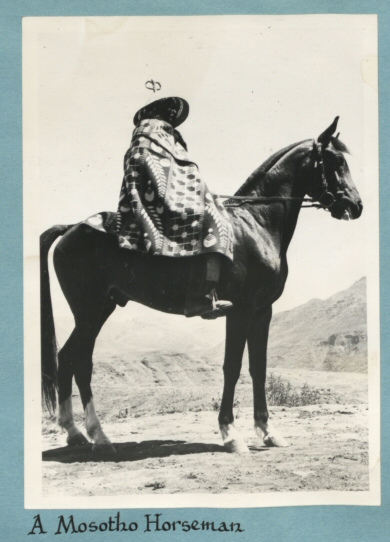
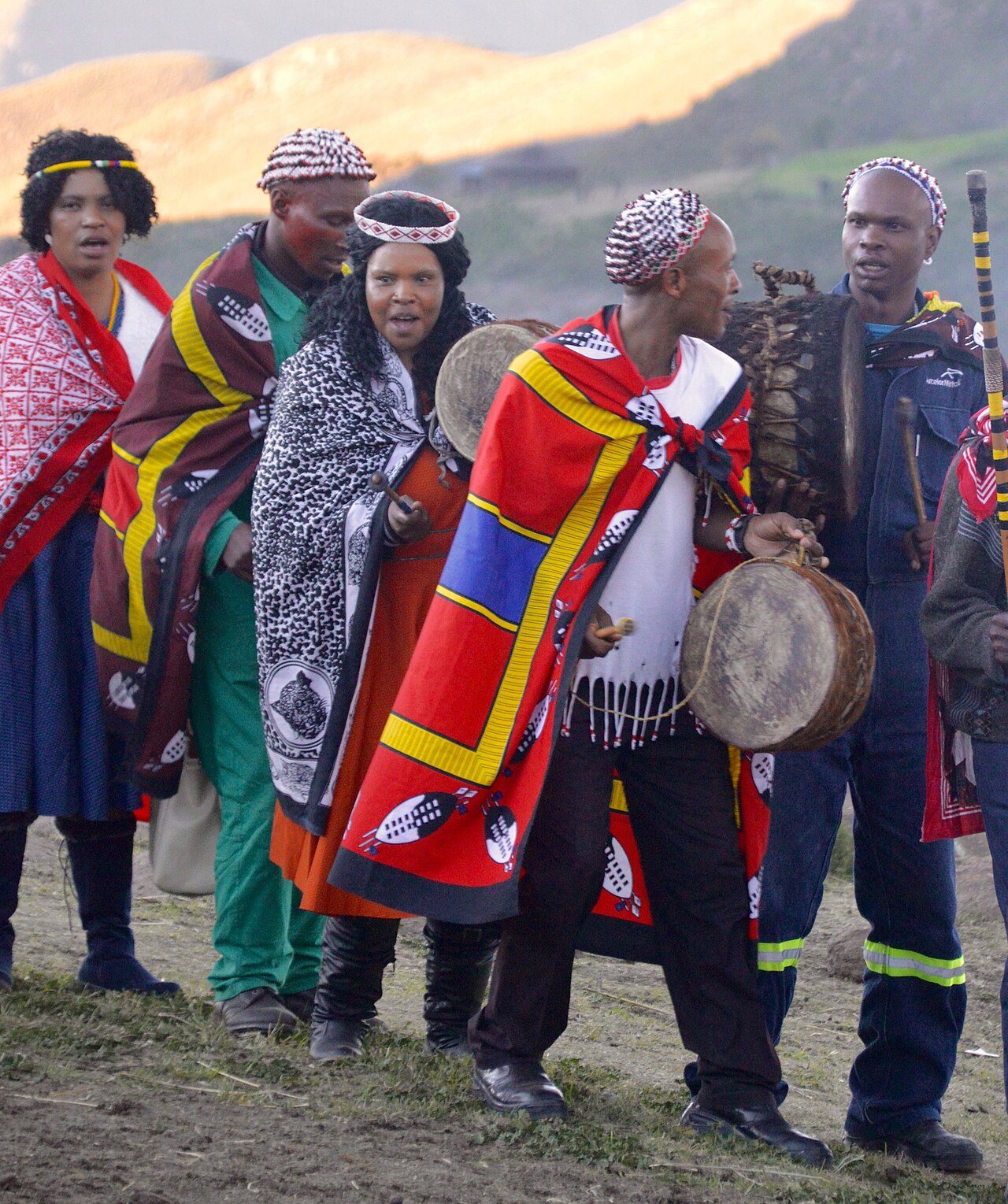
No emblem of the Basotho is more famous than the blanket, the thick, brightly patterned woollen blanket worn wrapped about the body against the cold of the mountains, which has become the very badge of the nation, a garment at once practical, beautiful, and deeply symbolic. The Basotho blanket, with its distinctive designs, is worn by all, and particular blankets mark the stages of life, the newborn, the initiate, the bride, and the chief each having their proper cloth, so that the blanket speaks a language of status and occasion, and to wrap a person in a blanket is to honour them.
The conical straw hat, the mokorotlo, is the other great emblem of the Basotho, its distinctive pointed shape, said to be modelled on a mountain near Thaba Bosiu, so bound up with the nation that it appears on the flag of Lesotho, and the pony, the hardy Basotho pony bred for the steep mountain paths, is a third, for the Basotho became a nation of horsemen, riding wrapped in their blankets across the high country. Together the blanket, the hat, and the pony make the classic image of the Mosotho of the mountains.
Music, dance, and the praise-poem fill the ceremonial life of the people, from the soaring lithoko praises of the king recited by the praise-singer to the songs and dances of the initiations and the feasts, and the famo music of the accordion that is the popular sound of the modern Basotho. The courtesies of a dignified people, the welcome of the stranger, and the marking of every passage of life carry the values of the nation. In the blanket, the hat, and the pony, the Basotho keep the vivid traditions of the mountain kingdom.

Weavers, Potters, and the Painters of the Wall
The crafts of the Basotho are shaped by the mountain life and by the distinctive arts of the nation. The most famous of their traditional arts is litema, the wall-decoration practised by the women, who adorn the outer walls of their houses with geometric and floral patterns pressed, engraved, and painted into the mud plaster and often coloured with natural earths, a mural art of great beauty that turns the homestead into a work of decoration, renewed and changed with the seasons and the occasions.
The making of the conical hat, the mokorotlo, from the grasses of the mountain is a proud craft, its distinctive pointed shape woven with skill and become the emblem of the nation, and the weaving of the grasses and reeds into baskets, mats, and containers is a widespread art of the household. The Basotho blanket, though now woven in the mills, is the great garment of the people, and its wearing and its meanings are a living tradition.
The women were the potters, shaping and firing the clay vessels of the household, above all the pots in which the sorghum beer was brewed, and the working of the beadwork, the sewing and adorning of garments, and the plaiting of the grasses filled the crafts of the home. The men worked the hides into karosses and garments of skin against the mountain cold, carved the wooden vessels and the tools, and the smiths forged the iron of the fields and the hunt. In litema mural, woven hat, and clay pot, the crafts of the Basotho adorned and equipped a mountain people.

Sorghum, Maize, and the Table of the Highlands
The food of the Basotho is the food of a mountain people of the grain and the herd, and its foundation is the grain porridge, above all the stiff maize porridge, the papa, that is the daily bread of the people, eaten with sauces, with vegetables, and with meat, along with the older grain of sorghum that filled the same place before maize and that remains beloved. Sorghum in particular is the grain of the traditional drink and of the thin, sour porridge and the fermented sorghum drink, the motoho, that is a cherished food of the Basotho.
Around the porridge the Basotho grew and gathered the other foods of the highlands, the beans, the peas, the pumpkins, the wild spinach and greens that are cooked as a relish, the wheat that the mountains also gave, and the wild plants of the veld. Cattle, sheep, and goats provided the wealth and the meat of the people, the beast slaughtered above all for ceremony and the honouring of the ancestors, while milk, and the thick sour milk in particular, gave the herd its everyday place at the table.
The great traditional drink was the sorghum beer, brewed by the women, thick and nourishing and mildly alcoholic, drunk at every gathering and offered to the ancestors, and the sour sorghum porridge and drink refreshed the day. In the cold of the mountains the warm porridge and the nourishing beer sustained a hardy people. In maize and sorghum porridge, sour milk, the ceremonial beast, and the sorghum beer, the food of the Basotho is the taste of the mountain highlands.

The Initiation, the Feasts, and the Dances
The great ceremonial occasions of the Basotho are the rites of passage that mark the stages of life, and above all the initiation of the young into adulthood, the lebollo, in which the youths, both boys and girls in their separate schools, are secluded in a lodge, taught the knowledge, the songs, and the duties of adulthood, and brought back to the community as men and women, their emergence celebrated with feasting, song, and the wearing of the proper new garments. The initiation school is one of the central and most cherished of Basotho institutions.
The other passages of life, the birth and naming of children, the great weddings that join lineages and set the cattle of the bride-wealth flowing, and the funerals that honour the dead and send them to the ancestors, are all marked by their own rituals of the homestead, with the sacrifice of the beast, the brewing of beer, feasting, song, and dance. The ancestors are honoured through the sacrifices and the feasts that keep the living in right relation with the dead.
Music and dance fill these gatherings, from the deep songs and the praise-poems recited by the imbongi to the vigorous dances of the men and the women and the famo accordion music of the modern age, and the great national days of the kingdom, above all the celebration of Moshoeshoe and the founding of the nation, gather the Basotho in pride. With the coming of Christianity the feasts of the church were added to the calendar. Through the initiation, the rites of the homestead, and the national days, the Basotho mark the passages of life and the memory of their founding.

From the Wars of the Mfecane to Independent Lesotho
The history of the Basotho as a nation begins in the terrible upheavals of the early nineteenth century, the Mfecane or Difaqane, the time of the crushing, when the rise of the Zulu kingdom and the wars that followed scattered and destroyed the peoples of the interior in a storm of violence and famine. Out of this chaos the young chief Moshoeshoe gathered the broken clans and refugees around him and, from about 1824, made the mountain fortress of Thaba Bosiu the stronghold of a new nation, defending it by wit and diplomacy against Zulu raiders, cannibal bands, and every foe.
The greatest threat came from the Boer settlers who pressed into the highveld from the 1830s, coveting the land and the cattle of the Basotho, and Moshoeshoe fought and negotiated through decades of border war to preserve his kingdom, at last, when the Boers threatened to overwhelm him, making the fateful choice to place his people under the protection of the British crown in 1868, so saving the heart of his nation from conquest even at the cost of much of its land. Moshoeshoe died in 1870, having created and preserved a nation.
Under British rule as the protectorate of Basutoland, the Basotho kept their king, their chiefs, and their identity, and in 1966 the country became independent as the Kingdom of Lesotho, a small mountain nation entirely surrounded by South Africa, while great numbers of Basotho lived also in the neighbouring Free State. Through the storms of the Mfecane, the wars with the Boers, and the colonial age, the Basotho held the nation that Moshoeshoe built. From the mountain fortress to independent Lesotho, they have carried the memory of their founder-king.

The Basotho of Lesotho and South Africa
Today the Basotho are a nation divided between two states, for the mountain kingdom of Lesotho, an independent country entirely surrounded by South Africa, is home to some two million Basotho, while an even larger number live across the border in South Africa, above all in the Free State and the great cities, where Sesotho is one of the official languages and the Basotho are one of the major peoples. The kingdom of Lesotho, ruled still by the descendants of Moshoeshoe as a constitutional monarchy, keeps the flame of the nation and its founder alive.
The modern history of the Basotho has been shaped by the poverty and the ruggedness of their mountain land, which has little arable ground and few resources beyond its water and its people, so that for generations the men of Lesotho went in great numbers to labour in the mines of South Africa, their wages sustaining the mountain kingdom, and the ties between Lesotho and its giant neighbour remain close and complex. The challenges of poverty, of migrant labour, and of a small economy bear heavily on the people, yet their resilience and their pride endure.
Through all the changes of the modern age the culture of the Basotho flourishes. The Sesotho language thrives on both sides of the border, the blanket and the conical hat remain the beloved emblems of the nation, the pony still carries the herder across the mountains, the litema still adorns the walls, and the memory of Moshoeshoe, the wise founder who built a nation from the broken and defended it by kindness and craft, remains the deepest source of Basotho pride. Heirs to the kingdom in the sky, the Basotho carry their mountain heritage into the modern world.

Related Peoples of the Region
- Zulu of the Green Hills and Their Kingdom Forged by Shaka
- Xhosa of the Eastern Cape and Their Clicking Tongue and Rite of Manhood
- Shona of the Zimbabwe Plateau and Their Cities of Stone
- Ndebele of the Highveld and Their Painted Homes
- Tswana of the Kalahari Plateau and the Kgotla
- Swazi of Eswatini and the Kingdom of the Two Rulers
More Peoples of the World
You May Like
Tu of the Qinghai Valleys and Their Rainbow Sleeves