On the northeastern edge of the Tibetan plateau, in the loess hills and valleys of Qinghai and Gansu, live the Tu, known in their own tongue as the Monguor, one of the smaller ethnic minorities of China. Speakers of a Mongolic language and heirs to a composite heritage of steppe, plateau, and farmland, they are a distinctive frontier people who trace their descent from the Mongols and the ancient Xianbei.
Tibetan Buddhists who keep the great Kumbum monastery in their midst, celebrants of the harvest festival of Nadun, reckoned among the longest festivals in the world, and famous for the “rainbow sleeves” of their women’s costume, the Tu blend the traditions of Mongol, Tibetan, and Chinese worlds. This article traces their origins, language, homeland, society, religion, and traditions, and the story of a distinctive people of the Qinghai frontier.
The Tu on Film
Contents
- Origins
- The Name
- The Language
- The Homeland
- The Old Way of Life
- Society and Community
- Religion and Belief
- Traditions
- Crafts
- Food
- Festivals
- History
- Today
Origins

The Tu, known in their own language as the Monguor and to scholars often as the Monguor people, are one of the smaller officially recognised ethnic minorities of China, a people of the Qinghai-Gansu borderland on the northeastern edge of the Tibetan plateau, concentrated above all in the Huzhu Tu Autonomous County and the surrounding districts of Qinghai. Numbering some hundreds of thousands, and speaking a Mongolic language, they are a distinctive people of mixed heritage, blending Mongol, Tibetan, Han Chinese, and other influences into a culture all their own.
The origins of the Tu are much debated, but the community is generally held to descend from Mongol and earlier steppe peoples, above all the Xianbei and the Mongol garrisons and settlers of the region, who over the centuries mingled with the Tibetan, Han, and other populations of the Qinghai frontier. The Tu themselves cherish a tradition of descent from the ancient Xianbei, and their Mongolic language, their Tibetan Buddhist faith, and their distinctive customs reflect this rich and composite heritage, forged over centuries on the meeting-ground of the steppe, the plateau, and the Chinese world.
The Name

The name Tu, meaning “earth” or “native” in Chinese, is the official designation given to the people, while they call themselves Monguor or by related names reflecting their Mongol heritage, and are known by various local names besides. The name Monguor, and the people’s own traditions, point to their connection with the Mongols and the older steppe peoples of the region.
As an identity, Tu or Monguor denotes this Mongolic-speaking people of the Qinghai-Gansu borderland, distinct from the neighbouring Tibetans, Han, Hui, and Mongols, though sharing elements with each, and united by a common language, a common Tibetan Buddhist faith blended with folk religion, and a distinctive body of custom and tradition. The Tu are conscious of their heritage as descendants of the steppe peoples and of the ancient Xianbei, and this identity, rooted in their Mongolic origins and their distinctive frontier culture, binds the community together on the northeastern edge of the Tibetan plateau.
The Language

The Tu speak Monguor, a Mongolic language of the same family as Mongolian, reflecting the community’s steppe origins, though heavily influenced over the centuries by Tibetan and Chinese, from which it has borrowed much vocabulary. Spoken in a number of dialects across the Tu districts, it is the everyday tongue of the community, while Chinese serves as the language of education, administration, and wider communication, and many Tu know Tibetan as well, above all for religious purposes.
Traditionally an unwritten language preserved in a rich oral tradition of song, story, and epic, Monguor has in modern times been the subject of efforts to create a written form, using the Latin script, though Chinese remains the dominant written language. The community possesses a treasury of oral literature, including songs, folk tales, and the ritual traditions of its religion. The Mongolic Monguor language, distinct from those of the Tu’s Tibetan and Chinese neighbours yet interwoven with their influences, is a central marker of the community’s identity and of its steppe heritage.
The Homeland

The homeland of the Tu is the northeastern edge of the Qinghai-Tibetan plateau, above all the hilly, semi-arid country of eastern Qinghai around the Huzhu Tu Autonomous County and the neighbouring parts of Gansu, a land of loess hills, river valleys, and highland pastures, lying at a meeting-point of the Tibetan plateau, the Mongolian steppe, and the Chinese world. It is a country of cold winters and short summers, where agriculture is possible in the valleys and pastoralism on the heights.
This frontier environment, at the crossroads of great cultural regions, shaped the composite heritage of the Tu, who drew on the traditions of steppe, plateau, and farmland alike. The community settled in the valleys and hills as farmers and herders, building their villages amid the loess country, and the great monasteries of Tibetan Buddhism, above all the famous Kumbum (Ta’er) monastery near Xining, are woven into their sacred landscape. This borderland of hill, valley, and plateau, at the meeting of the steppe and the Tibetan and Chinese worlds, is the homeland of the Tu people.
The Old Way of Life

The traditional life of the Tu combined settled agriculture with pastoralism, reflecting both their steppe heritage and their long settlement on the farmlands of the Qinghai frontier. In the valleys and on the terraced hillsides the Tu grew barley, wheat, potatoes, rape, and the other hardy crops of the highland climate, while keeping sheep, cattle, horses, and other livestock, some communities inclining more to farming and others, in the higher country, more to herding.
This combination of the plough and the herd, of the settled village and the mountain pasture, reflected the Tu’s position between the agricultural Chinese world and the pastoral steppe and plateau, and their skill in both. The horse, in keeping with their Mongol heritage, held an honoured place, and horsemanship and the raising of livestock were valued. Village life, tied to the agricultural seasons and the round of religious festivals, and centred on the family and the local monastery, formed the pattern of traditional Tu society, a life poised between the farm and the pasture on the northeastern edge of the plateau.
Society and Community

Tu society is organised around the family, the village, and the monastery, and is marked by strong ties of kinship and by the blending of steppe, Tibetan, and Chinese social influences characteristic of the frontier. The extended family and the village community, bound by cooperation in agriculture and in the observance of religious festivals, are the foundations of social life, and the local Tibetan Buddhist monastery, to which families sent sons as monks, was a central institution.
The community traditionally recognised local headmen and, in earlier times, hereditary chiefs, the tusi, who governed the Tu districts under the loose authority of the Chinese empire, a system that gave the Tu a degree of self-government and preserved their distinct identity. Women play an important role in the agricultural and domestic economy, and the elaborate traditional dress of the Tu women, above all their strikingly colourful sleeves, is famous. Bound by family, village, monastery, and, historically, the tusi chieftains, and blending the traditions of steppe and plateau, Tu society preserves the distinctive character of a frontier people.
Religion and Belief
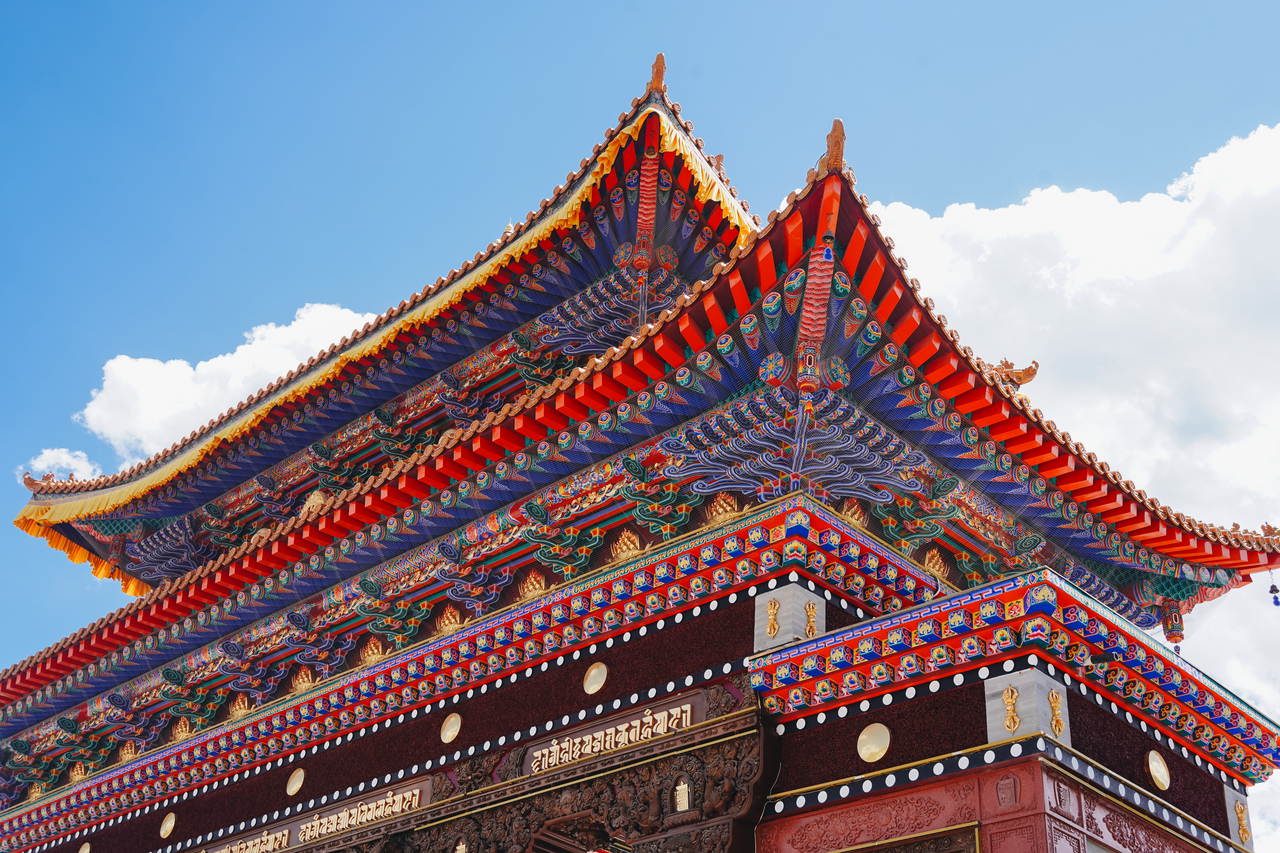
The religion of the Tu is predominantly Tibetan Buddhism, of the Gelug school, which they share with their Tibetan and Mongol neighbours and which permeates the life of the community, alongside a rich substratum of folk religion, shamanism, and the veneration of local deities and spirits inherited from the community’s older traditions. The great monasteries of the region, above all Kumbum monastery, one of the holiest sites of the Gelug school, are central to Tu religious life, and it was common for a son of the family to become a monk.
Alongside the Buddhism of the monasteries, the Tu preserve a lively folk religion, with its shamans, its village deities and guardian spirits, and its rituals tied to the agricultural cycle and the well-being of the community, above all the ceremonies of the great harvest festival. The blending of Tibetan Buddhism with this older folk and shamanic tradition, and the veneration of both the Buddhist deities and the local spirits, gives Tu religion its distinctive and composite character, reflecting the community’s position at the meeting of cultures.
Traditions

The traditions of the Tu are expressed above all in their festivals, their song and dance, and their remarkable costume, and reflect the community’s composite heritage of steppe, plateau, and farmland. The Tu are known for their folk songs, sung at festivals and in daily life, for their dances, and for a rich oral tradition of story and epic, and above all for the great harvest festival of Nadun, one of the longest festivals in the world, held over many weeks in the autumn and marked by masked dances, ritual, and communal celebration.
The costume of the Tu women is one of the most famous expressions of their tradition: the sleeves of their garments are worked in bands of brilliant colour, the “rainbow sleeves” that are the emblem of the Tu and among the most distinctive dress in all of China. The customs surrounding the family, marriage, and the festivals, and the horsemanship and archery reflecting the community’s steppe heritage, further mark Tu tradition. Through these traditions of festival, song, and the colourful costume, the Tu express their distinctive frontier culture.
Crafts

The crafts and material culture of the Tu are seen above all in their famous embroidery and their distinctive dress, in which the community’s artistry is most fully expressed. The women of the Tu are skilled embroiderers, and their needlework, above all the multi-coloured banded sleeves, the “rainbow sleeves,” and the ornamented garments, headdresses, and accessories of their costume, is renowned as one of the most colourful and distinctive folk-art traditions of China’s minorities.
Beyond embroidery, Tu material culture reflects the community’s agricultural and pastoral life and its Tibetan Buddhist faith: the making of the tools of farming and herding, work in wood and other materials, the crafting of the ritual objects and adornments of religious life, and the building of the loess-country houses and the adornment of the monasteries. The gear of horsemanship, in keeping with the steppe heritage, and the objects of the household complete their material world. These crafts, above all the celebrated rainbow-sleeve embroidery, reflect the artistry and the composite heritage of the Tu people.
Food

Tu cuisine is a highland food culture of the Qinghai frontier, built on the hardy grains and the livestock of the plateau edge and blending the tastes of the Chinese, Tibetan, and steppe worlds. Barley and wheat are the staples, eaten as noodles, breads, and the roasted-barley flour shared with the Tibetan world, along with potatoes and the other highland crops, and the meat and dairy of the community’s sheep, cattle, and other livestock.
Noodles in many forms, above all the hand-pulled and knife-cut noodles of the region, wheaten breads, mutton and beef dishes, and dairy products such as milk, butter, and yoghurt make up the Tu table, hearty food suited to the cold highland climate. Barley liquor and tea, in the manner of the region, accompany meals and festivals, and the Tu are known for their hospitality and their drinking songs. This cuisine, rooted in the barley, wheat, and livestock of the plateau edge and blending the traditions of the frontier, reflects the environment and the composite heritage of the Tu people.
Festivals

Festivals fill the Tu year, tied to the agricultural cycle, the Tibetan Buddhist calendar, and the community’s folk traditions, and marked by ritual, feasting, song, and dance. The greatest and most distinctive is Nadun, the harvest thanksgiving festival of the Tu, held over many weeks in the late summer and autumn as one village after another celebrates, so that it is reckoned among the longest festivals in the world, marked by processions, masked dances representing gods and heroes, and rituals of thanksgiving for the harvest.
Alongside Nadun, the Tu observe the great festivals of Tibetan Buddhism at the monasteries, with their prayers, masked dances, and pilgrimages, and the festivals of the agricultural year and the Chinese calendar shared with their neighbours. The occasions of marriage and the family, celebrated with the community’s songs and customs, are also great festivities. Through this calendar of festival, above all the extraordinary harvest festival of Nadun with its masked dances, the Tu express their agricultural heritage, their Buddhist faith, and their distinctive frontier culture.
History

The history of the Tu is bound up with the movements of the steppe peoples and the frontier of the Chinese and Tibetan worlds. The community is generally held to descend from the Xianbei and, above all, from the Mongol garrisons and settlers who came to the Qinghai-Gansu region during the age of the Mongol empire and the Yuan dynasty, mingling over the following centuries with the Tibetan, Han, and other populations of the frontier to form the distinctive Tu people.
Under the Ming and Qing dynasties, the Tu districts were governed through hereditary native chieftains, the tusi, who ruled under the authority of the Chinese empire and helped preserve the community’s distinct identity, and the Tu were drawn into the religious world of Tibetan Buddhism centred on the great monasteries. In the modern era, under the People’s Republic, the Tu were recognised as one of China’s official ethnic minorities, and autonomous counties, above all Huzhu, were established for them. This history, of descent from the steppe peoples, settlement on the frontier under the tusi chiefs, and recognition as a modern minority, is central to Tu identity.
Today

Today the Tu are a recognised ethnic minority of China, numbering some hundreds of thousands, concentrated in the Huzhu Tu Autonomous County and the surrounding districts of Qinghai and Gansu, and are a small but distinctive community proud of their heritage. The Monguor language, the Tibetan Buddhist faith, the great harvest festival of Nadun, and above all the famous rainbow-sleeve costume of the women endure as the marks of Tu identity, and the community’s culture has become an attraction for visitors to the Qinghai highlands.
Like other small minorities of China, the Tu face the challenges of the modern era, including the pull of migration and the Chinese-language world, the pressures on the traditional language and way of life, and the balance between development and the preservation of their heritage. Yet the community retains a strong sense of its distinct identity, rooted in its Mongolic language, its Buddhist faith, its festivals, and its colourful traditions, and efforts to sustain the Monguor language and the community’s culture continue. Heirs to the steppe peoples and to a rich frontier heritage at the meeting of the Mongol, Tibetan, and Chinese worlds, the Tu people carry their distinctive identity into the modern age.
Related Peoples of the Region
- A Civilization of the Silk Road Oases, the Story of the Uyghurs
- The Forest Nomads of the Endless Taiga, the Story of the Evenki
- People of the Volga and the Golden Horde, the Story of the Tatars of Russia
- The Persians of the East, the Story of the Tajik People of Central Asia
- People of the Silk Road Cities, the Story of the Uzbeks of Central Asia
- People of the High Mountains, the Story of the Kyrgyz of the Tian Shan
- Free People of the Steppe, the Story of the Kazakhs of Central Asia
- The Hani, Masters of the Yunnan Rice Terraces
More Peoples of the World
- A Fifth of Humanity, the Story of the Han Chinese
- How the Maori Sailed Across the Pacific to Reach New Zealand
- Zulu of the Green Hills and Their Kingdom Forged by Shaka
- The People Who Never Vanished, the Story of the Maya
- Long Before the Arabs Came, North Africa Belonged to the Amazigh
- The People Who Emerged Into This World, the Story of the Navajo
- Meet the Ainu, an Indigenous People at Japan’s Northern Edge
You May Like
The Zaza, a Mountain People of Eastern Anatolia


One thought on “The Tu (Monguor), a Frontier People of the Qinghai Highlands”