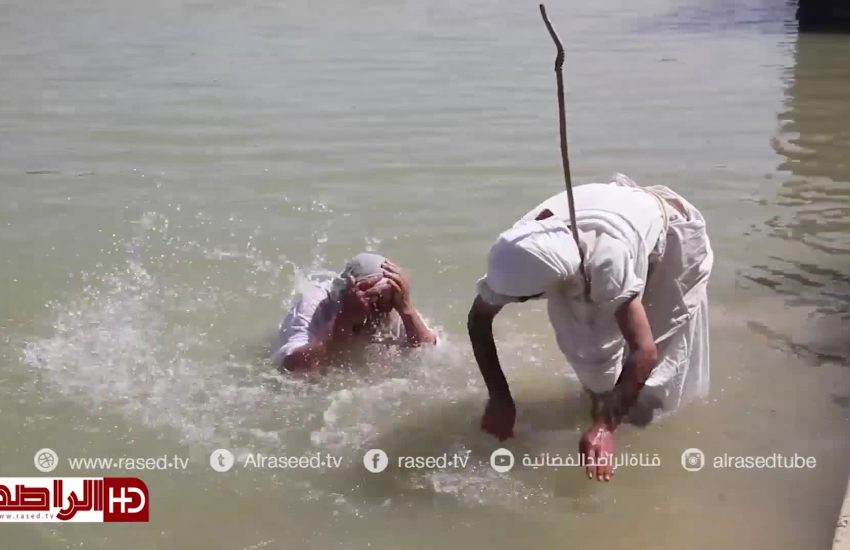
Where the Tigris and Euphrates spread into a vast maze of reeds and shallow lakes in southern Iraq live the Marsh Arabs, the Madan, a people of the water whose way of life may reach back to ancient Sumer. On islands built of reed they herd water buffalo, fish the channels and raise the great arched reed halls called mudhif.This ancient world was all but destroyed when Saddam Hussein drained the marshes after the 1991 uprising, scattering the people and turning the wetlands to salt desert. Since 2003 the waters have partly returned, and the Madan have come back to rebuild, carrying one of humanity`s oldest ways of life into a fragile present.
The Marsh Arabs on Film
Contents
- Origins
- The Name
- The Language
- The Homeland
- The Old Way of Life
- Society and Community
- Religion and Belief
- Traditions
- Crafts
- Food
- Festivals
- History
- Today
Origins

The Marsh Arabs, known in Arabic as the Madan, are the people of the great wetlands of southern Iraq, where the Tigris and Euphrates rivers spread out into a vast maze of reed marshes and shallow lakes before reaching the sea. For thousands of years they have made their home on the water, in one of the most distinctive human environments on earth.
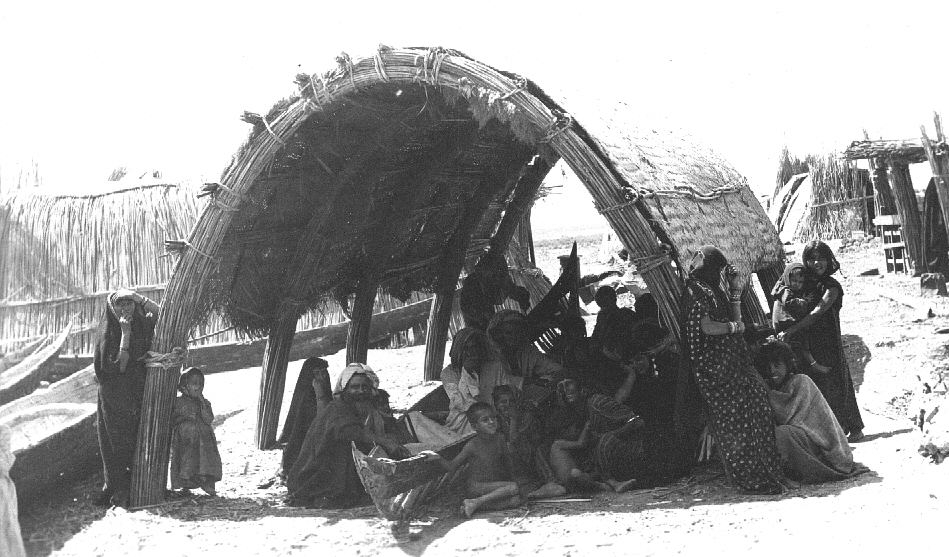
Many believe the Marsh Arabs preserve a way of life reaching back to ancient Sumer and Babylon, whose civilisations arose in this same land of Mesopotamia. Their reed houses, canoes and buffalo herds echo images carved on Sumerian monuments five thousand years old, making the marshes a living link to the dawn of civilisation.
The Name

The people are known in Arabic as the Madan, and in English as the Marsh Arabs, after the wetlands they inhabit. They live in the marshes of southern Iraq, the Ahwar, around the towns of Nasiriyah, Amarah and Basra, and the marsh town of Chibayish.
Their homeland is formed by several great marsh systems, the Central Marshes, the Hammar Marshes and the Hawizeh Marshes, fed by the Tigris and Euphrates. Within this watery country the Madan built their villages on islands of reed, moving between them by canoe.
The Language
The Marsh Arabs speak a distinctive dialect of Iraqi Arabic, marked by features of its own that set the speech of the marshes apart. Their language carries the poetry, songs and oral traditions of a people whose life is bound to the water and the reeds.
Like other Iraqis they share in the wider Arabic culture of the region, but the isolation of the marshes long preserved local ways of speech and custom. The language of the Madan remains a marker of their particular identity within the Arab world.
The Homeland
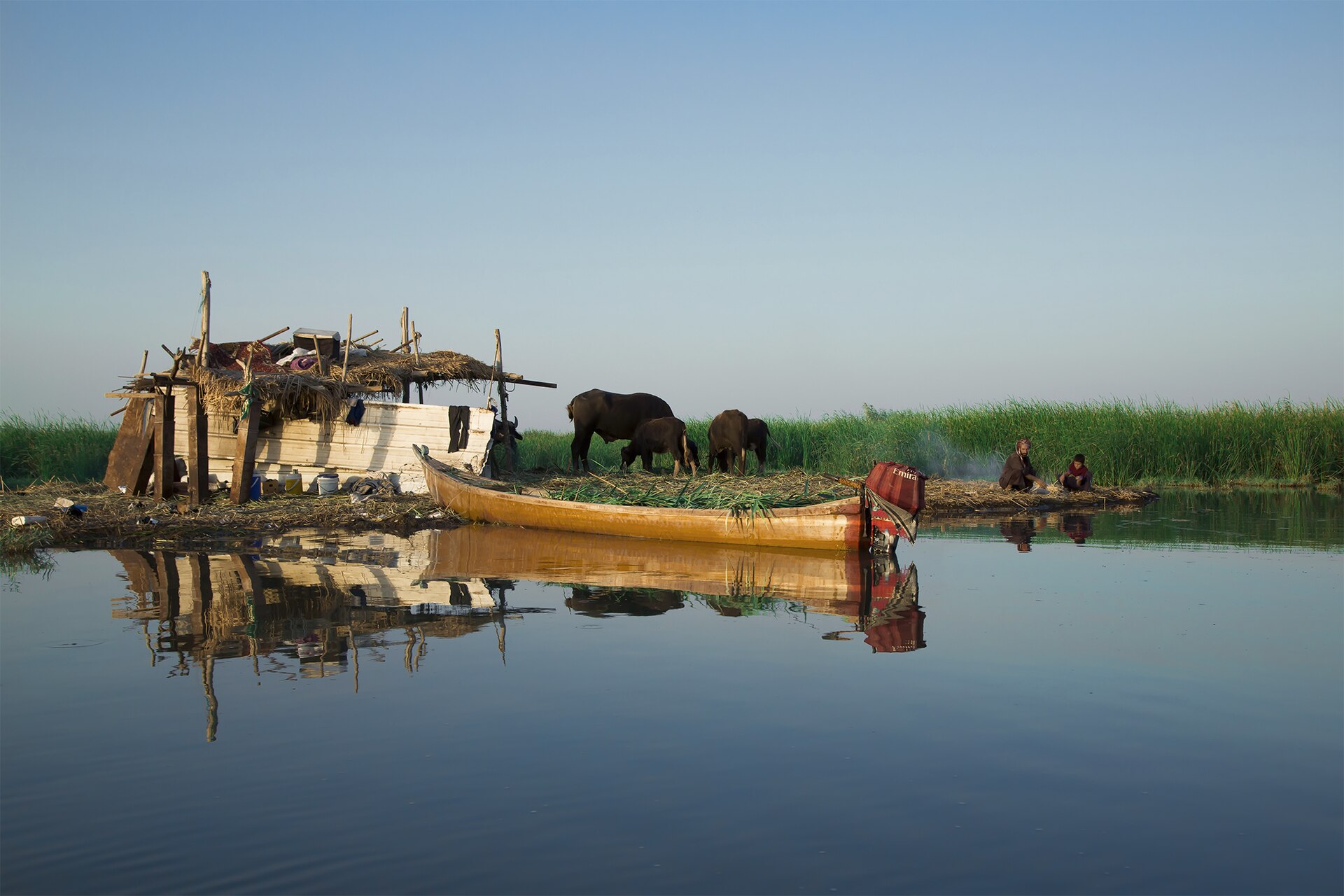
The Marsh Arab homeland is a world of water and reed, where the twin rivers of Mesopotamia spread into shallow lakes, channels and beds of towering reeds beneath a wide sky. Fish, waterfowl and reed abound, and the marshes teem with life in the midst of an otherwise arid land.
This is a country navigated by canoe, where dry land is scarce and the people live on islands built up from reeds and mud. The marshes formed a refuge and a distinct world within Iraq, and their unique blend of water, reed and open sky shaped every aspect of the Madan way of life.
The Old Way of Life
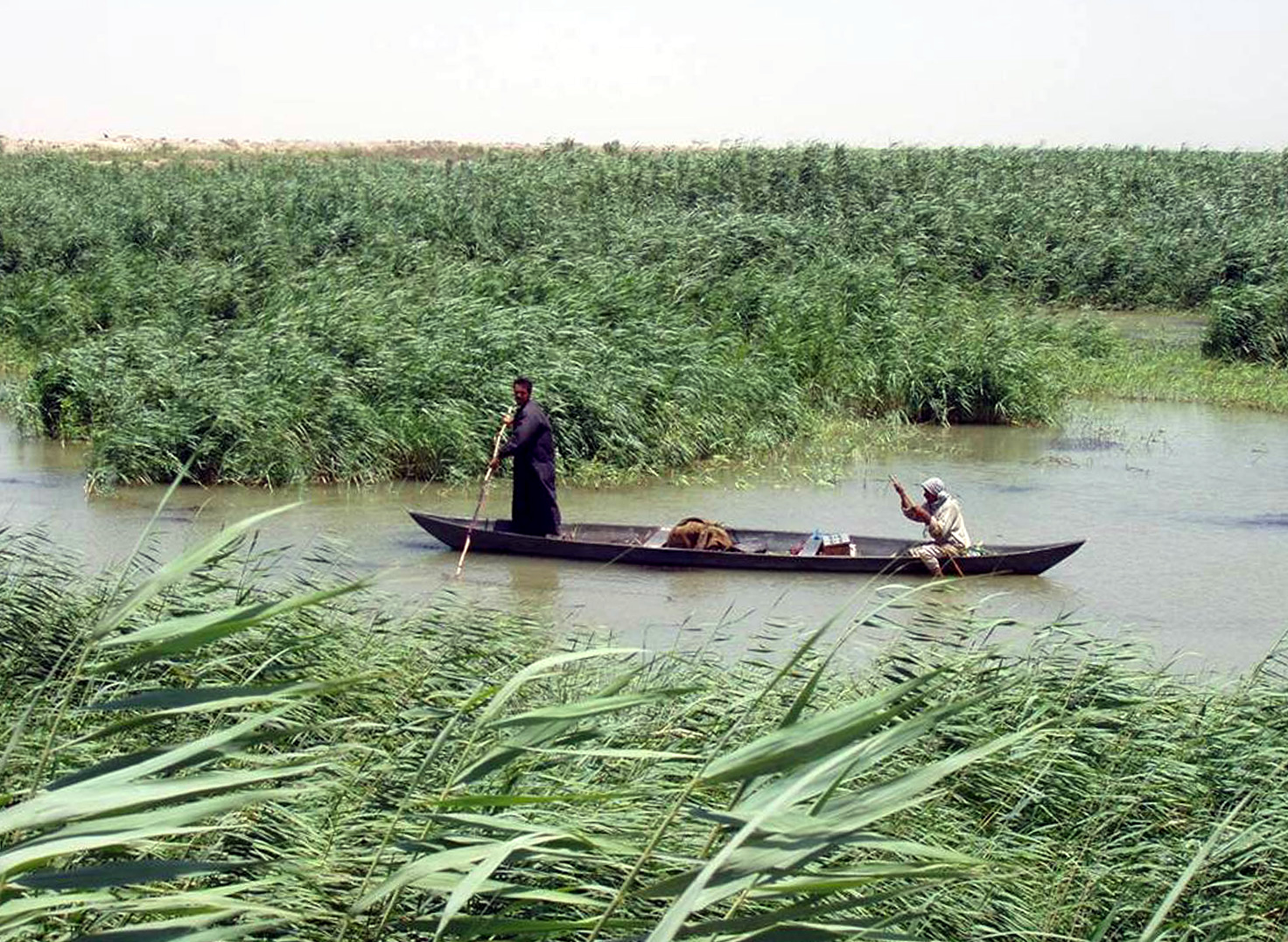
The Marsh Arabs lived by fishing, by herding water buffalo, and by harvesting the reeds that grew all around them. The water buffalo was central to their economy, providing milk and dung for fuel, kept on the reed islands and led out to graze in the marsh, while fish and waterfowl filled the diet.
Reed was the great material of marsh life, used to build houses and islands, to weave mats, and to feed the buffalo. On the margins the people grew rice and dates, and they travelled everywhere in the mashoof, the slender canoe of the marshes. This life, self-sufficient among the reeds, changed little over the centuries.
Society and Community

Marsh Arab society was organised into tribes and clans, led by sheikhs, with strong codes of honour, hospitality and mutual obligation. At the centre of social life stood the mudhif, the great arched guest house built entirely of reeds, where the sheikh received visitors and the men of the community gathered.
The mudhif, with its ribbed vaults of bundled reeds, is one of the most remarkable buildings of the Middle East, its form unchanged since the days of Sumer. Around it revolved the hospitality, council and ceremony that bound the tribe together, and it remains the enduring symbol of Marsh Arab society.
Religion and Belief

The Marsh Arabs are Shia Muslims, and their religious life is bound to the great Shia shrines of southern Iraq, above all those of Najaf and Karbala, to which they are deeply devoted. The rhythms of the Islamic and Shia calendar, and the mourning ceremonies of Ashura, mark the year.
Faith and custom are woven together in the life of the marshes, and older beliefs and practices persist alongside orthodox Islam. The mudhif and the codes of honour and hospitality carry a moral and social force that complements the religious devotion of the Madan.
Traditions

The traditions of the Marsh Arabs are inseparable from the reed. The building of the mudhif, with its soaring arches raised without wood or nails, is a communal art passed down the generations, and the interior of the great reed hall is among the most striking sights of the region.
Poetry, song and the recitation of tribal lore, together with the ceremonies of hospitality centred on the mudhif, express the culture of the marshes. Through these traditions, and above all through the reed architecture that has endured since ancient times, the Madan sustain their distinctive heritage.
Crafts

Reed-working is the great craft of the Marsh Arabs, who build their houses, guest halls and even the islands beneath them from the giant reeds of the marsh, and weave reed into the mats that cover floors and walls. The construction of the mudhif is the supreme expression of this craft.
Boat-building is another key skill, for the mashoof canoe is essential to life on the water, and the people also work in the other materials of the marsh. This craftwork, drawn almost entirely from the reed and the water, reflects a way of life shaped wholly by the wetland environment.
Food

The food of the Marsh Arabs comes from the water and the herd: fish from the marshes, above all grilled as the celebrated masgouf, the milk and products of the water buffalo, and the rice and dates grown on the margins. Waterfowl added to the diet in season.
Bread, rice and dairy round out the fare, and hospitality, offered generously in the mudhif, is central to Madan life. The sharing of food, and above all of the grilled fish and buffalo milk of the marshes, marks the bonds of family, tribe and guest.
Festivals

The communal life of the Marsh Arabs is marked by the ceremonies of hospitality in the mudhif, by weddings and other rites of the life cycle, and by the great occasions of the Shia religious calendar, above all the mourning of Ashura. These gatherings bring the tribe and community together.
Feasting, poetry and the codes of honour and welcome give shape to Madan social life, and the reed guest house is the setting for its most important occasions. Through these gatherings the Marsh Arabs affirm the bonds of kinship, faith and tradition.
History
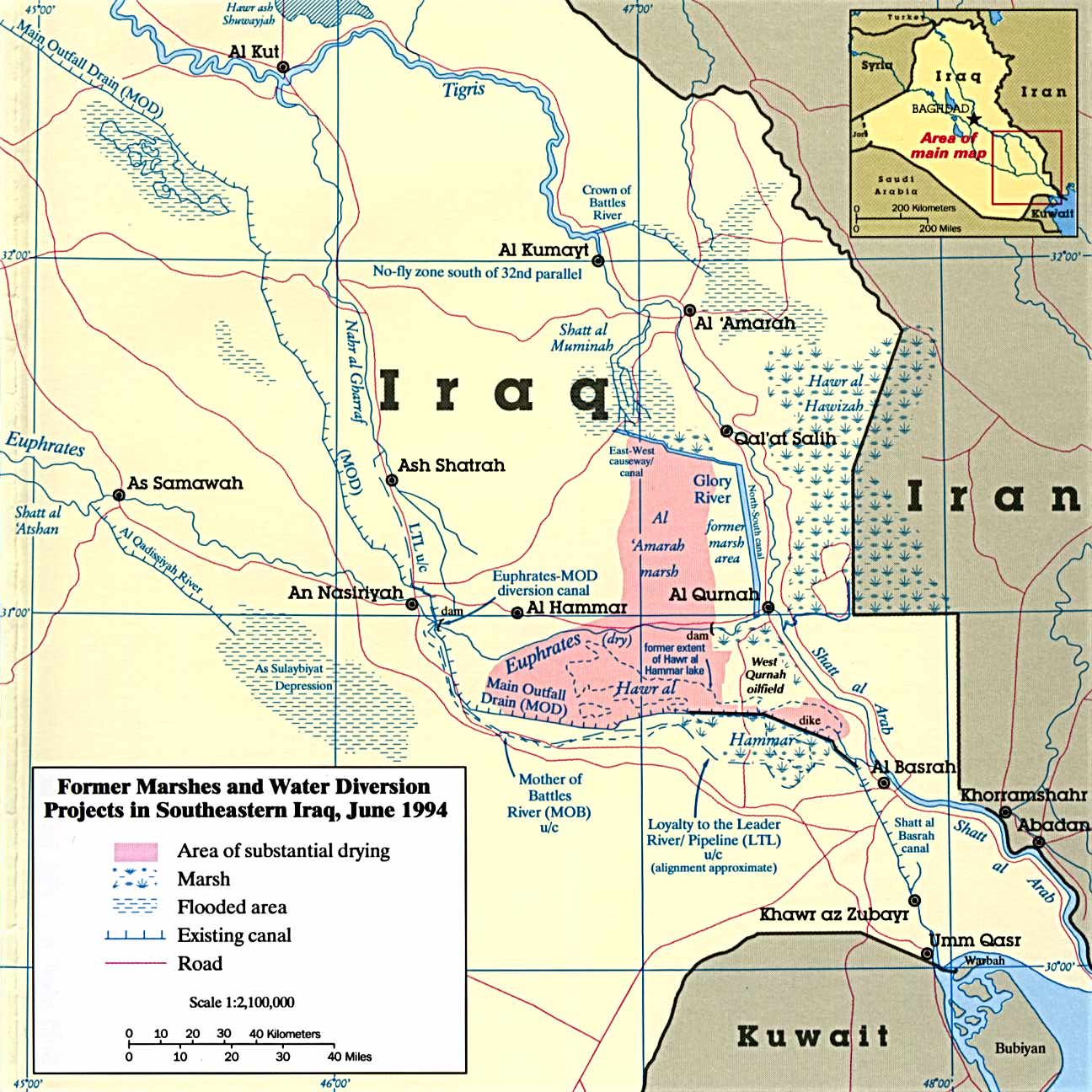
For millennia the Marsh Arabs lived largely apart in their watery world, preserving ancient ways even as empires rose and fell around them, and their life was famously described by travellers in the mid-twentieth century. Then came catastrophe: after the Shia uprising of 1991, the government of Saddam Hussein drained the marshes with dams and canals, both to punish the people and to deny refuge to rebels.
By the year 2000 the great marshes had been reduced to dry, salt-crusted desert, an ecological and human disaster that scattered the Madan, driving hundreds of thousands into exile and the cities. It was one of the worst environmental crimes of the age, and it seemed the ancient world of the marshes might be lost forever.
Today
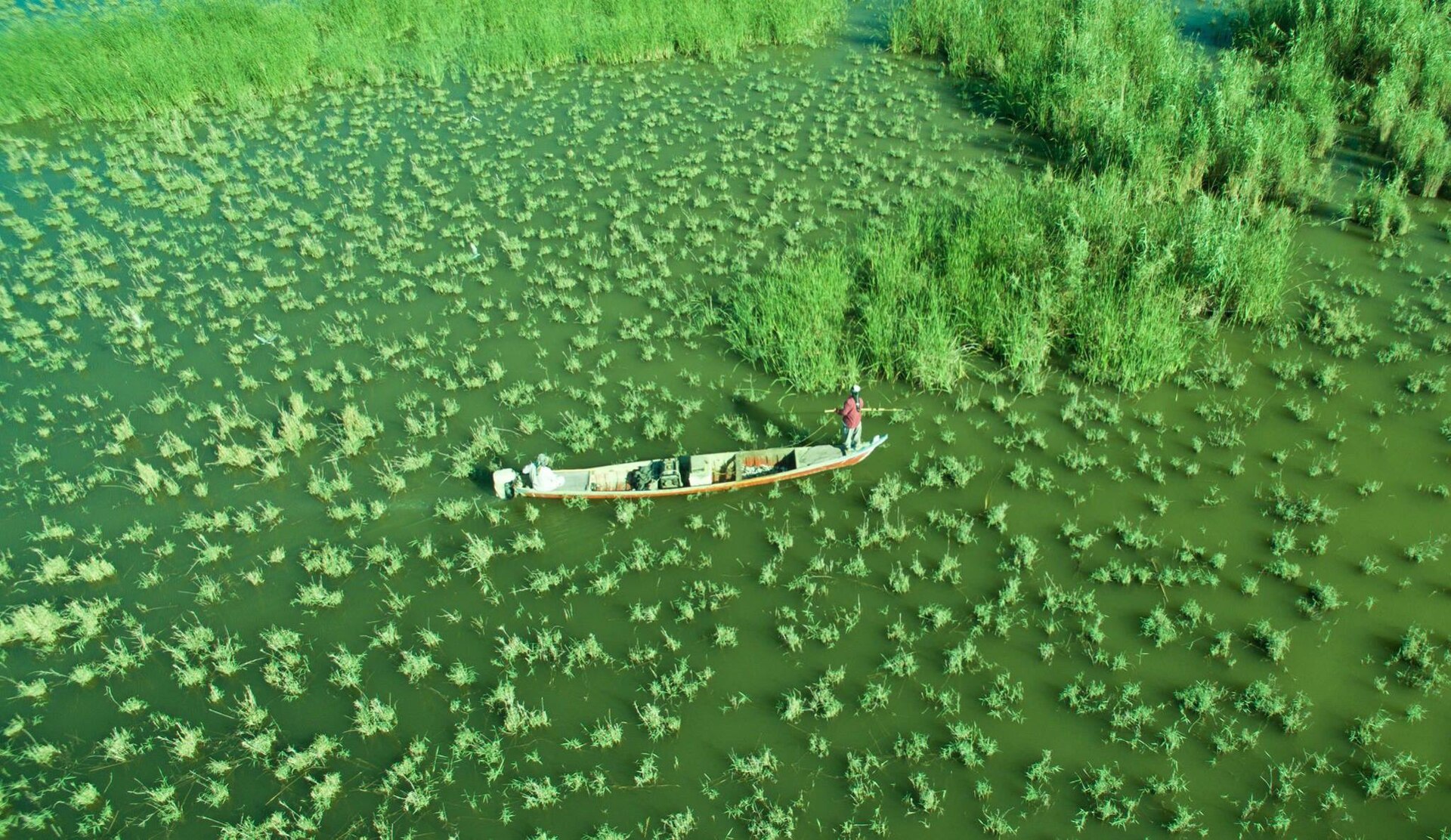
After 2003 the Marsh Arabs and their allies breached the dikes, and water returned to parts of the marshes, which have been partly restored; in 2016 the Ahwar of southern Iraq were recognised as a UNESCO World Heritage site. Some Madan have returned to rebuild their villages and herds among the reviving reeds.
Yet the future of the marshes remains uncertain, threatened by upstream dams, drought and the changing climate that lower the rivers and raise the salt. The Marsh Arabs work to sustain their reed houses, their buffalo and their ancient way of life, carrying one of the world’s oldest human heritages into a fragile present.
Related Peoples of the Region
- The Yazidis, Keepers of an Ancient Faith in Iraq
- The Bedouin, Nomads of the Arab Desert
- The Druze, a Mountain People of the Secret Faith
- People of the Carpet and the Golden Horse, the Story of the Turkmen
- The Kabardians, Circassian Horsemen of the North Caucasus
- People of the High Mountains, the Story of the Hazaras of Afghanistan
- Guardians of the Passes, the Story of the Pashtuns of Afghanistan and Pakistan
- People of the Arid Frontier, the Story of the Baloch
More Peoples of the World
- A Fifth of Humanity, the Story of the Han Chinese
- How the Maori Sailed Across the Pacific to Reach New Zealand
- Zulu of the Green Hills and Their Kingdom Forged by Shaka
- The People Who Never Vanished, the Story of the Maya
- Long Before the Arabs Came, North Africa Belonged to the Amazigh
- The People Who Emerged Into This World, the Story of the Navajo
- Meet the Ainu, an Indigenous People at Japan’s Northern Edge
You May Like

The Qashqai, Nomadic Weavers of Southern Iran