In the central North Caucasus, beneath the twin summits of Mount Elbrus, live the Kabardians, the easternmost and once the most powerful branch of the Circassian nation. Famed as horsemen and nobles, keepers of an ancient code of honour, they long dominated the mountains and plains of their homeland.
Theirs is a heritage of the Nart epics, the elegant cherkeska coat, and the stately dances of the Caucasus, shadowed by the great tragedy of the Circassian exile of 1864. To know the Kabardians is to meet one of the proudest and most storied peoples of the mountains.
The Kabardians on Film
Contents
- Origins
- The Name
- The Language
- The Homeland
- The Old Way of Life
- Society and Community
- Religion and Belief
- Traditions
- Crafts
- Food
- Festivals
- History
- Today
Origins
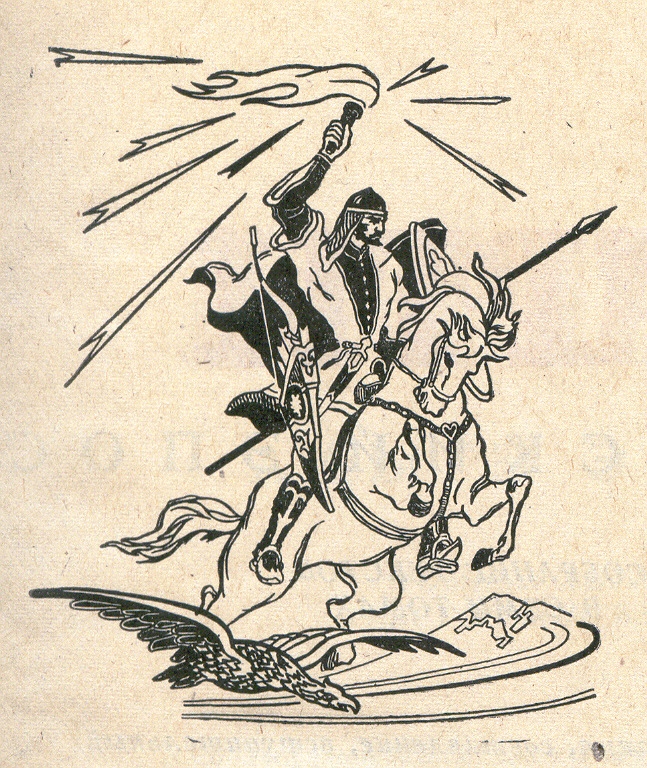
The Kabardians are the easternmost branch of the Circassians, one of the indigenous peoples of the northwestern Caucasus. Speaking a language of the Northwest Caucasian family, they belong to the wider Adyghe or Circassian nation whose roots in these mountains and foothills reach back thousands of years.
Among the Circassian peoples the Kabardians long held a leading place, their princes dominating a broad territory of the central North Caucasus. Their culture, preserved in the ancient Nart sagas and in a proud code of chivalry, made them one of the most influential peoples of the region.
The Name

The Kabardians take their name from Kabarda, the historic territory they settled in the central North Caucasus. They are also known, with their kin, as Circassians or by their own name Adyghe, which the whole Circassian people use for themselves.
The Kabardians are sometimes called the Eastern Circassians, in distinction to the western Adyghe groups. Whatever the term, their identity is bound up with the Circassian nation, its language, and its distinctive code of honour and custom.
The Language
The Kabardians speak Kabardian, also called East Circassian, a language of the Northwest Caucasian family renowned for its remarkable array of consonants and its very few vowels. It is closely related to the other Circassian dialects and to Abkhaz.
Kabardian has a written literature and is taught in schools in Kabardino-Balkaria, and it carries a rich oral tradition, above all the epic Nart sagas shared across the Caucasus. Russian serves as the wider language of state and education.
The Homeland

The Kabardian homeland lies in the central North Caucasus, in the Russian republic of Kabardino-Balkaria and neighbouring areas, a land of foothills and plains rising to the great peaks of the main Caucasus range. Towering over it is Mount Elbrus, the highest mountain in Europe.
This is a country of fertile valleys, upland pastures, and swift mountain rivers, long suited to horse-breeding and farming. The capital, Nalchik, sits where the plains meet the mountains, the centre of Kabardian life.
The Old Way of Life
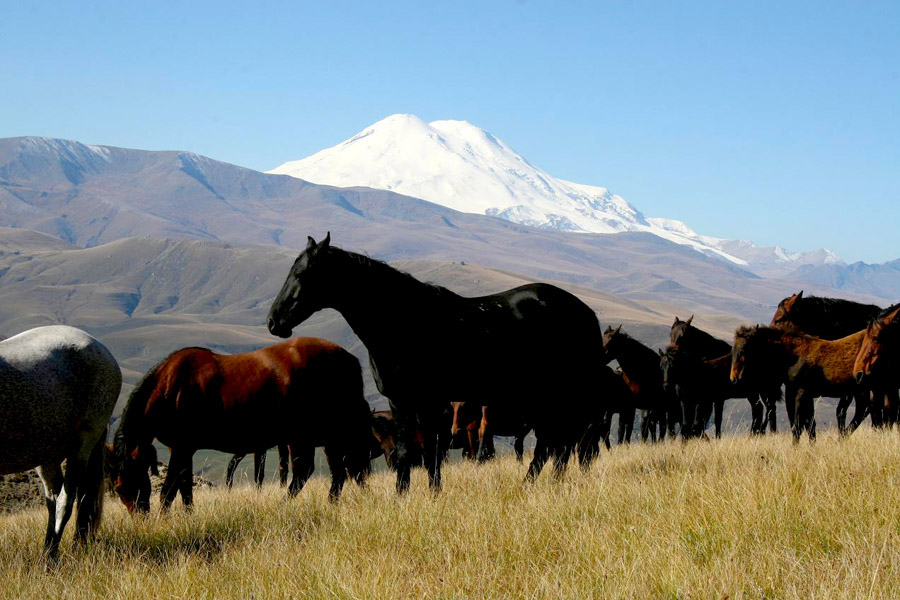
The Kabardians were traditionally a society of horse-breeders, herders, and farmers, famous above all for the Kabardian horse, a hardy and elegant mountain breed prized throughout the Caucasus and beyond. Cavalry and horsemanship were central to their way of life.
Society was aristocratic, dominated by princes and nobles whose retainers and dependents worked the land and tended the herds. Life was governed by Adyghe Khabze, the strict traditional code of conduct that regulated every aspect of behaviour, honour, and hospitality.
Society and Community
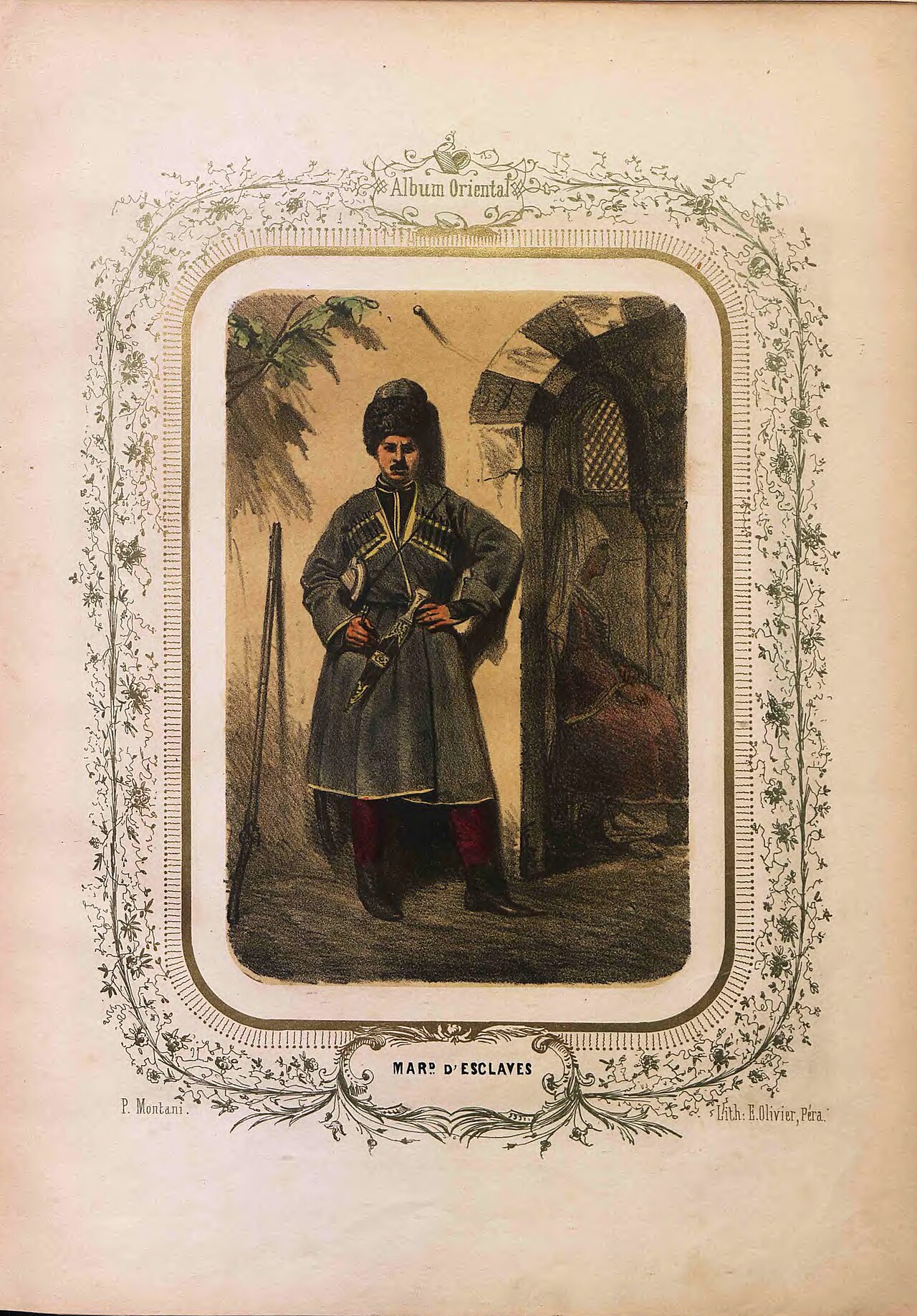
Kabardian society was among the most strongly hierarchical of the Caucasus, headed by princes, then several ranks of nobility, free commoners, and dependents. This aristocratic order, and the martial culture that went with it, gave the Kabardians great influence over their neighbours.
Binding all was the Adyghe Khabze, the unwritten code of Circassian etiquette prescribing respect for elders, restraint, courage, and above all hospitality. To this day, honour, dignity, and the proper conduct laid down by custom remain central to Kabardian identity.
Religion and Belief

Today the Kabardians are predominantly Sunni Muslims, Islam having spread among them from the seventeenth and eighteenth centuries. Before that they followed a blend of Christianity and older indigenous beliefs, traces of which survive in custom and folklore.
Mosques stand in Kabardian towns and villages, and the central mosque of Nalchik is a landmark of the community. Yet for the Kabardians, as for other Circassians, the ancient code of Adyghe Khabze has often stood alongside religion as a guide to right living.
Traditions
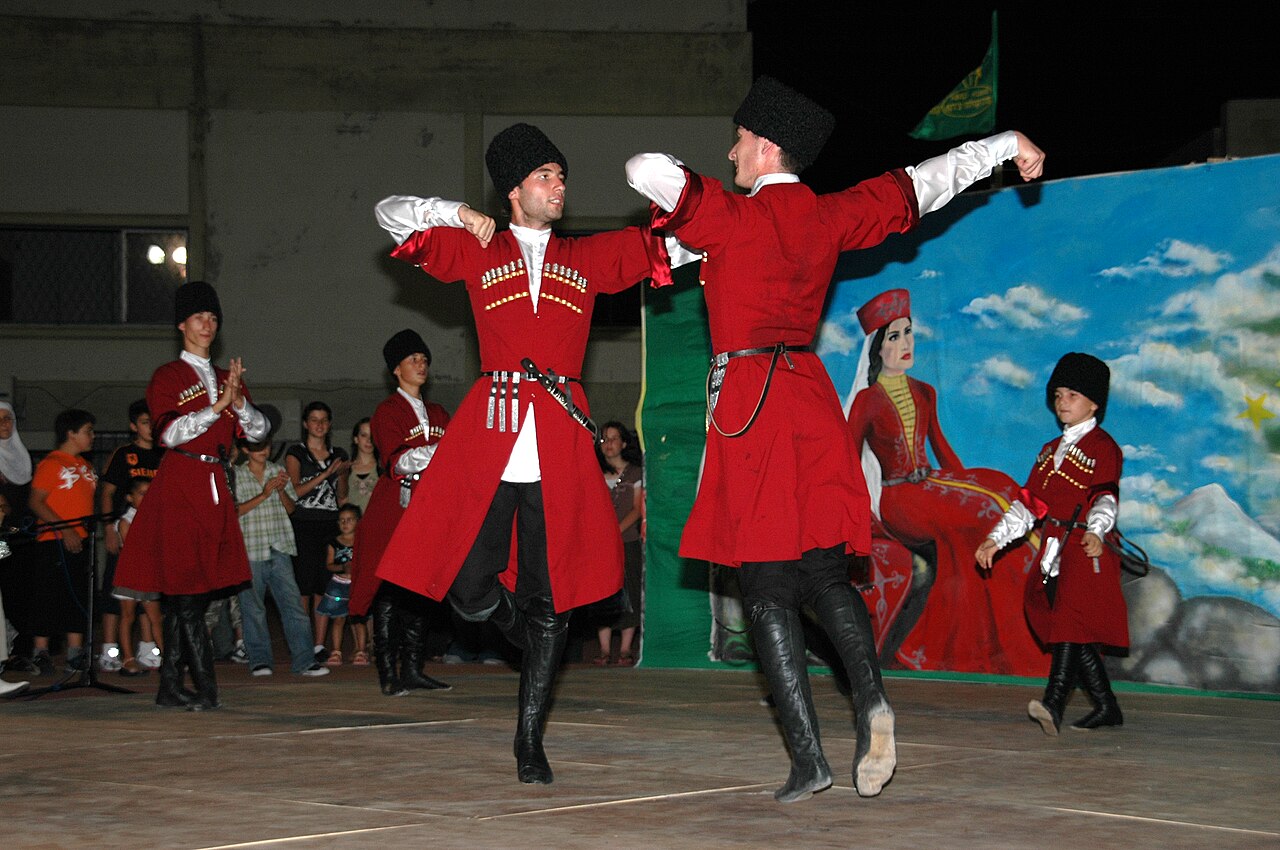
Kabardian tradition is rich in music, dance, and horsemanship. The stately and fiery Circassian dances, performed in flowing costume to the accordion and drum, are a proud emblem of the people and are danced at every wedding and celebration. Displays of riding and skill on horseback are equally cherished.
The Nart sagas, epic tales of heroes and giants shared across the Caucasus, form the great treasury of Kabardian oral literature. Weddings, with their elaborate etiquette, music, and dance, remain the high points of traditional life.
Crafts
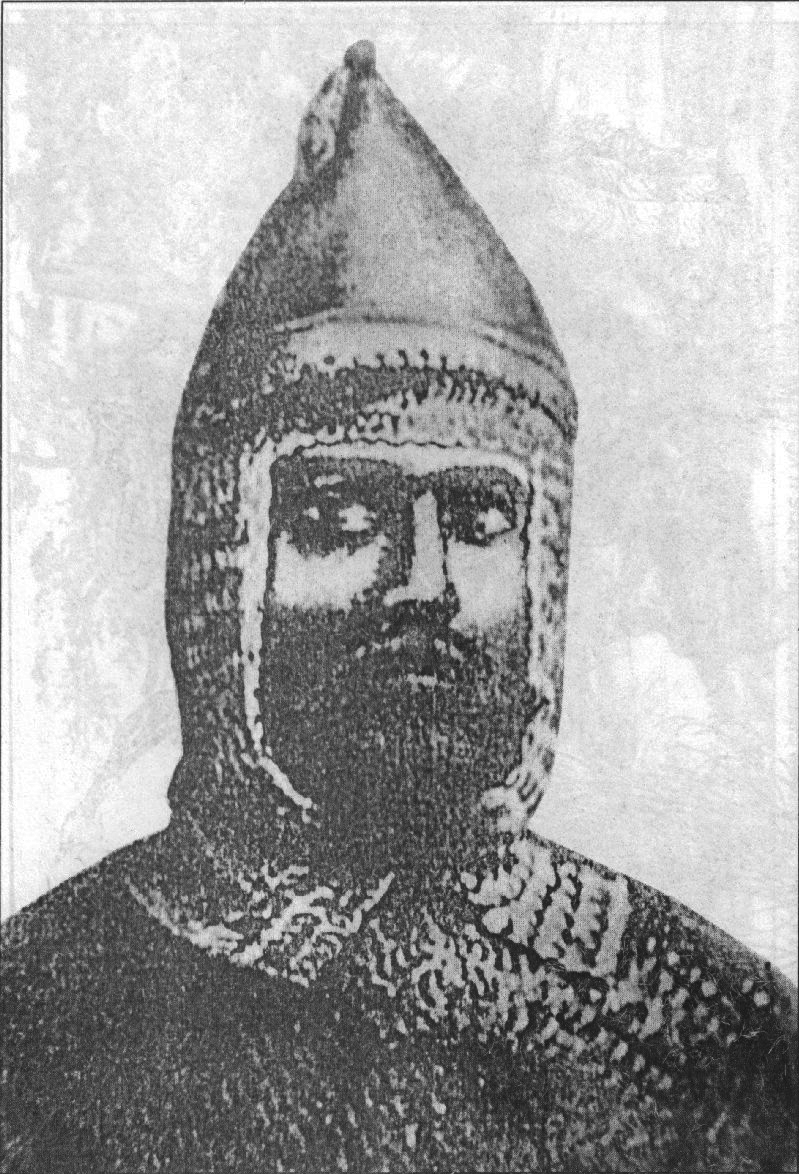
Kabardian craft centred on the needs of an aristocratic and martial society. Fine weaponry, ornamented daggers and sabres, silver-mounted belts, and horse trappings were the work of skilled artisans, while the tailoring of the elegant cherkeska coat, with its rows of cartridge holders, was a distinctive art.
Women were skilled in gold embroidery, decorating costumes and accessories with intricate patterns, and in the making of felt and textiles. These crafts expressed the elegance and pride that marked Kabardian culture.
Food

Kabardian cuisine is the hearty fare of a pastoral mountain people, built on meat, dairy, and grain. A characteristic dish is a firm millet or maize paste served with meat and a sharp garlic-and-sour-milk sauce, alongside boiled lamb or chicken and rich broths.
Cheeses, dried and smoked meats, and pastries feature strongly, and food is central to the elaborate hospitality prescribed by custom. A guest at a Kabardian table is honoured and generously fed as a matter of pride.
Festivals
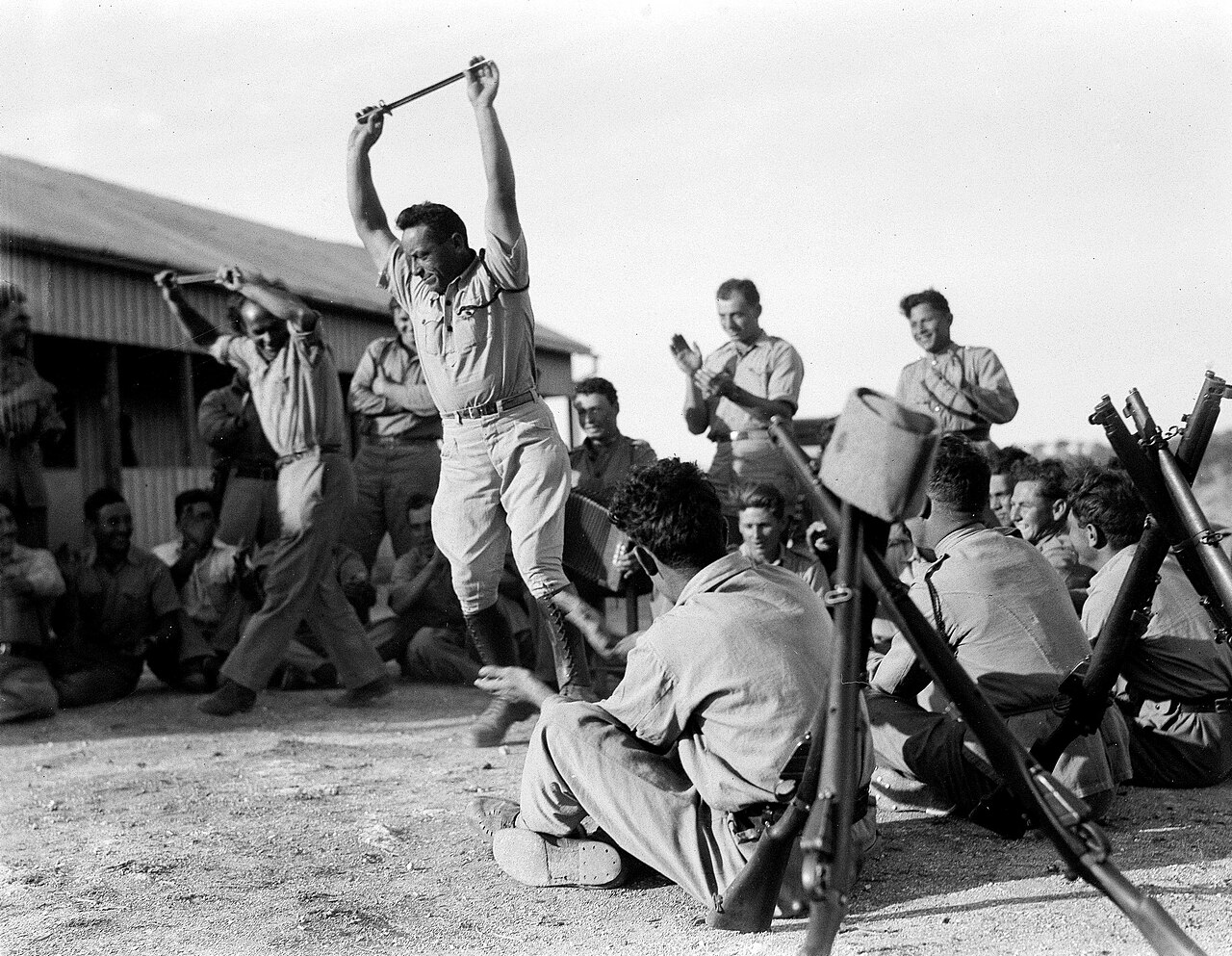
The Kabardians celebrate the Muslim festivals of Eid, and mark the milestones of life, above all weddings, with music, dance, feasting, and the strict etiquette of Adyghe Khabze. Displays of horsemanship and communal dancing are central to these gatherings.
In modern times the Circassian peoples also observe days of remembrance and cultural celebration that affirm their national identity, drawing together Kabardians at home and in the worldwide diaspora. Song, dance, and costume are everywhere on display.
History

For centuries the princes of Kabarda were among the most powerful figures of the North Caucasus, their influence reaching far across the region. From the sixteenth century they entered into relations with Muscovy, and Kabarda gradually came under growing Russian influence.
The nineteenth century brought catastrophe to the Circassian peoples. In the long Russian conquest of the Caucasus, ending in 1864, the majority of the Circassians, including many Kabardians, were killed or expelled to the Ottoman Empire in a vast deportation now widely recognised as a genocide, scattering the nation across the Middle East.
Today
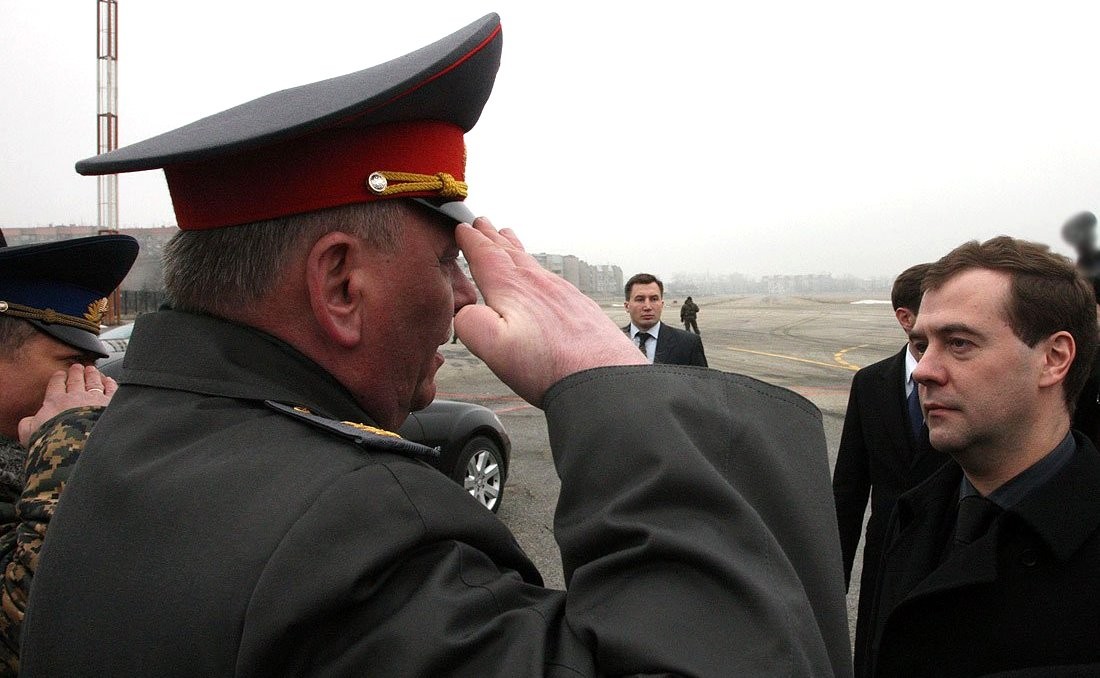
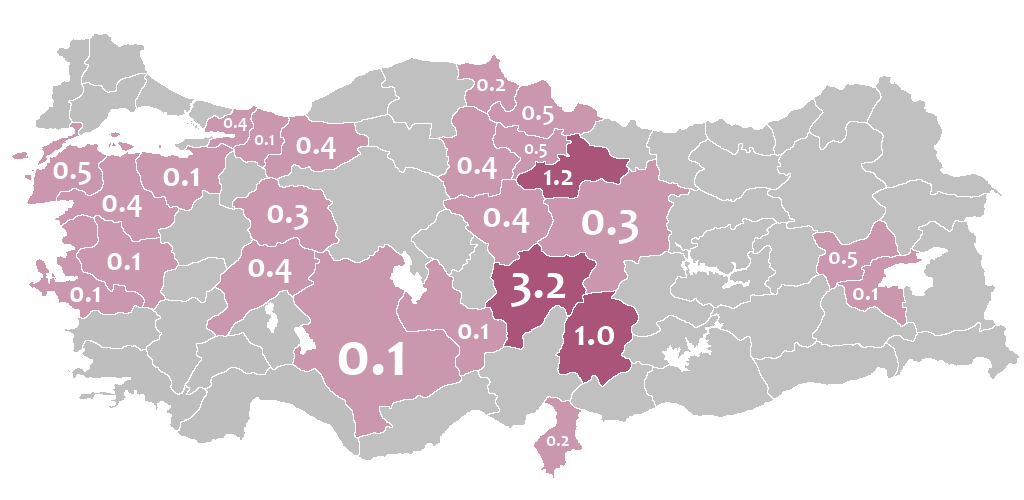
Today the Kabardians number several hundred thousand in their homeland, forming the largest people of the republic of Kabardino-Balkaria, with a far larger Circassian diaspora spread across Turkey, the Middle East, and beyond. The memory of the exile of 1864 remains central to Circassian identity.
Modern Kabardians work to preserve their language, their horse-breeding heritage, and above all the code of Adyghe Khabze that defines them. Their dances, their epics, and their proud traditions of honour and hospitality keep alive the spirit of one of the great peoples of the Caucasus.
Related Peoples of the Region
More Peoples of the World
You May Like

The Damara, an Ancient People of Namibia



2 thoughts on “The Kabardians, Circassian Horsemen of the North Caucasus”