In the hills and river plains of southeastern Myanmar and along the Thai border live the Karen, one of the largest and most varied of Myanmar’s peoples. Farmers of the uplands and lowlands, weavers of bright cloth, and followers of Buddhist, Christian, and animist faiths, they share a strong sense of common identity.
Theirs is a heritage of hill villages and backstrap looms, of bronze frog-drums and the wrist-tying rite, shadowed by one of the world’s longest civil wars and the scattering of many Karen into exile. To know the Karen is to meet a resilient people of Myanmar’s frontier hills.
The Karen on Film
Contents
- Origins
- The Name
- The Language
- The Homeland
- The Old Way of Life
- Society and Community
- Religion and Belief
- Traditions
- Crafts
- Food
- Festivals
- History
- Today
Origins
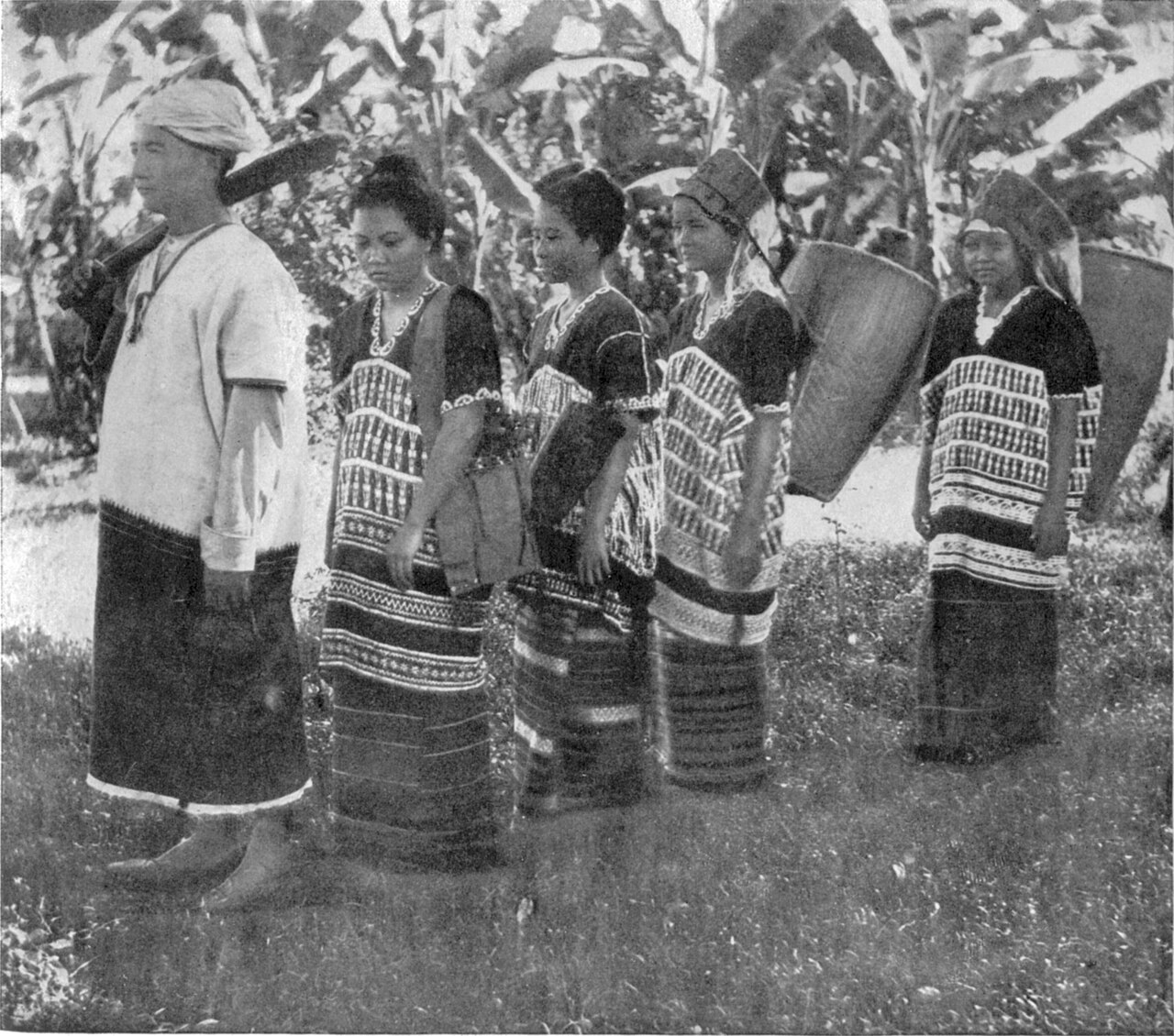
The Karen are a people of the hills and plains of southeastern Myanmar and the Thai borderlands, one of the largest ethnic minorities in Myanmar. They are not a single tribe but a family of related groups, speaking languages of the Karenic branch of the Sino-Tibetan family and sharing a broad sense of common identity.
The Karen are believed to have migrated southward into their present lands over many centuries, settling the hills and river valleys between the Bamar lowlands and the Thai world. Long living as farmers in scattered hill and valley communities, they developed a distinct culture and, in modern times, a strong sense of nationhood.
The Name

The name Karen covers several related peoples, above all the Sgaw and the Pwo Karen, along with smaller groups such as the Kayah and the Kayan. The Karen call themselves by their own names, and the broad term Karen has come to express a shared identity that grew especially strong in the modern era.
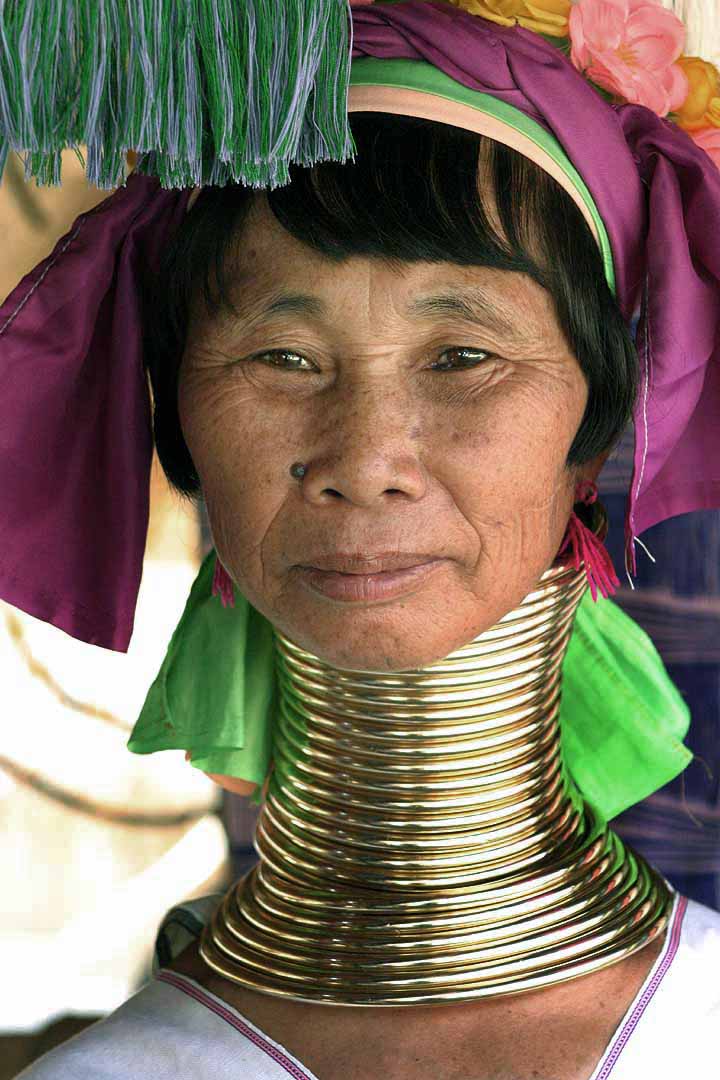
The Kayan, a Karen subgroup, are famous worldwide for the brass coils worn by their women to lengthen the appearance of the neck, and are often called the long-necked people. Yet the Karen are a large and varied nation, most of whom share no such custom.
The Language

The Karen languages belong to the Karenic branch of the Sino-Tibetan family, a group distinct from Burmese though distantly related. The main languages, Sgaw and Pwo Karen, are tonal and are written in scripts adapted from the Burmese alphabet, in part by nineteenth-century Christian missionaries.
Missionaries created a written form of Karen and translated the Bible into it, which helped spread literacy and strengthen a sense of Karen identity. Today Karen is spoken in many dialects across Myanmar and Thailand, and remains central to the culture of the people.
The Homeland
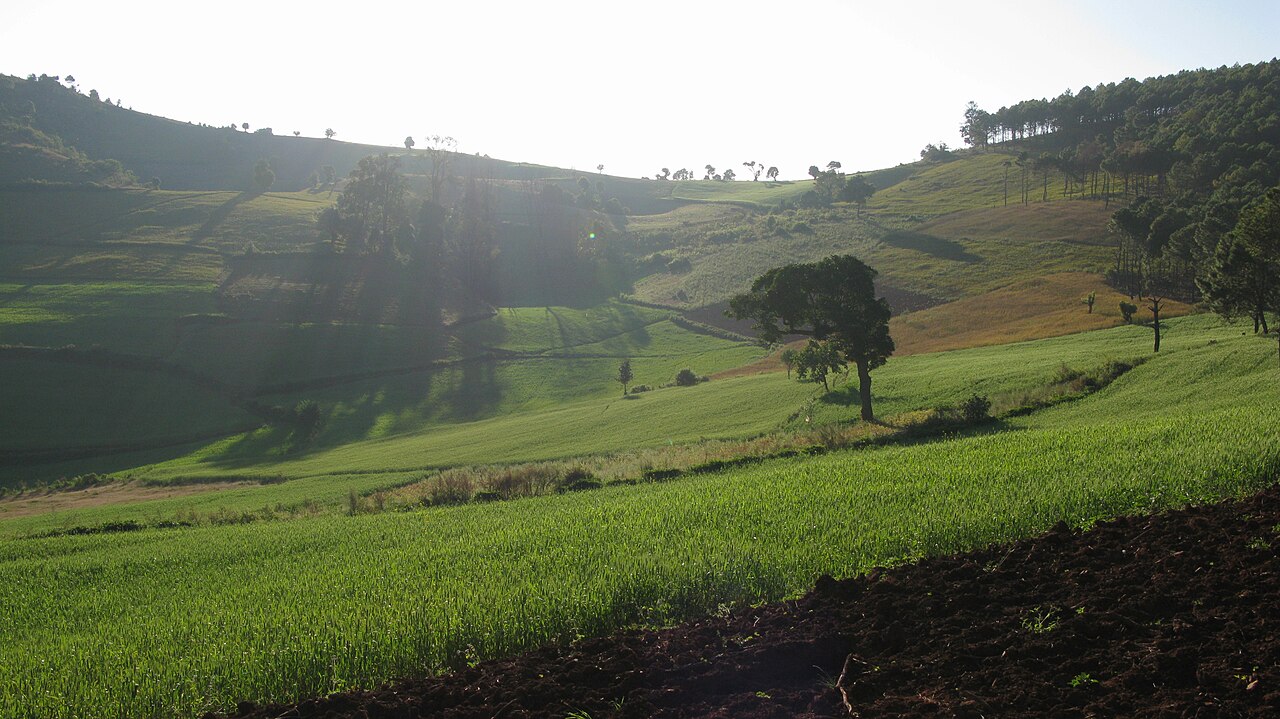
The Karen homeland stretches across the hills and plains of southeastern Myanmar, above all in Kayin State and the delta and lowlands to its west, and across the border into the hills of western Thailand. It is a land of forested mountains, river valleys, and rice fields, from the karst hills around Hpa-An to the highland forests of the frontier.
Many Karen live in the lowland plains and delta as settled rice farmers, while others inhabit the hills as upland cultivators. The borderlands between Myanmar and Thailand, long a zone of conflict and refuge, are home to many Karen communities.
The Old Way of Life
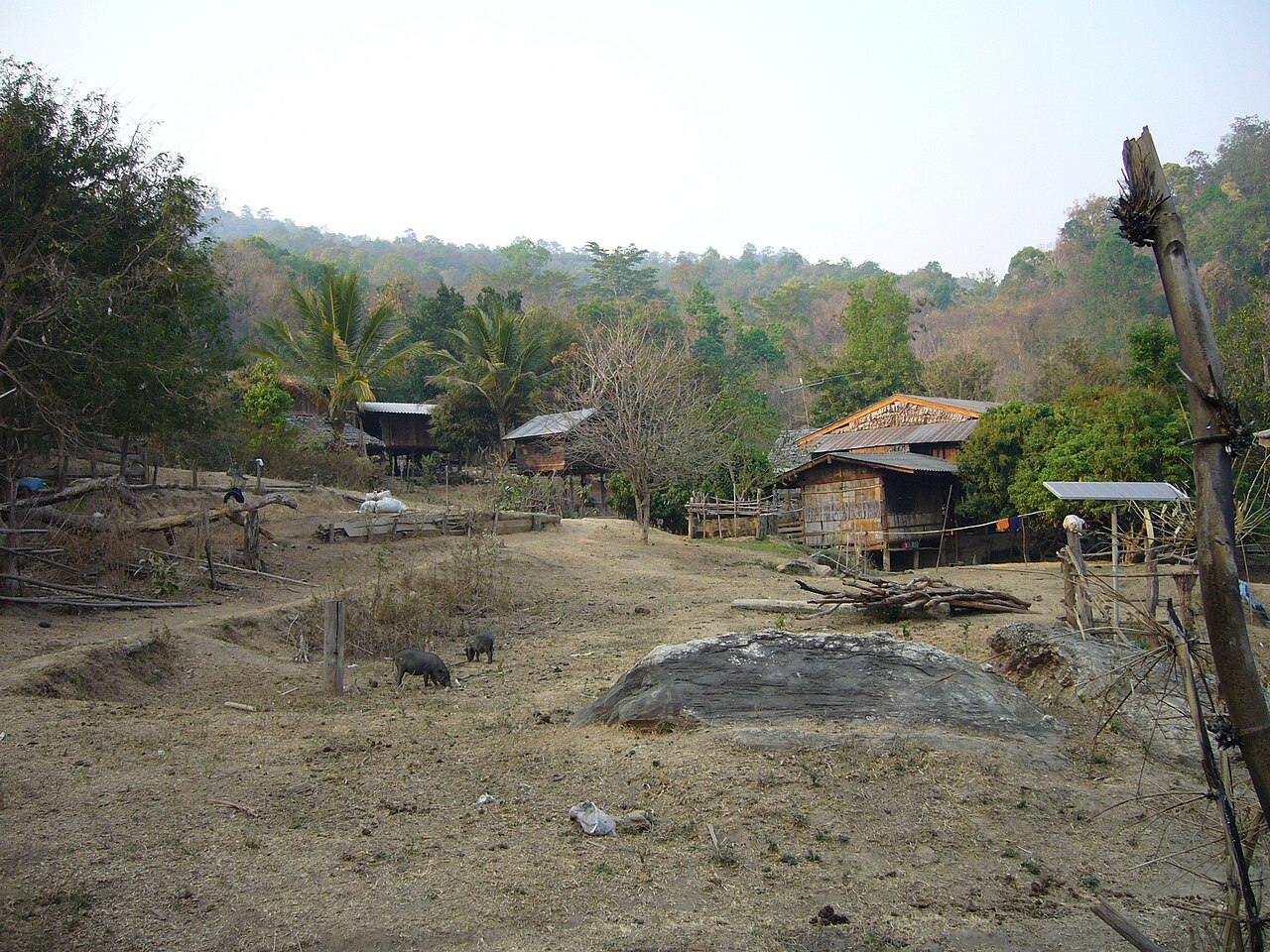
Traditionally the Karen were farmers, some growing wet rice in the lowland valleys and delta, others practising shifting cultivation of hill rice in the forested uplands. Village life, centred on farming, the forest, and the spirits believed to inhabit the land, shaped the traditional world of the Karen.
The hill Karen lived in villages of wooden and bamboo houses raised on stilts, moving their fields through the forest in a careful cycle. Elephants were long used in the teak forests, and the Karen were known as skilled woodsmen and farmers of their mountain and valley homes.
Society and Community
Karen society is traditionally organised around the village and the extended family, without the strong hierarchies of some neighbouring peoples. Kinship, in many Karen groups traced through the mother’s line, and the bonds of the village community were central to social life.
Elders and, in Christian communities, the church leaders held respected roles, while animist communities looked to ritual specialists who dealt with the spirits. A strong sense of Karen identity, forged in modern times through shared religion, language, and political struggle, binds the varied groups together.
Religion and Belief

The Karen are religiously diverse. Many are Buddhists, sharing the faith of their Bamar and Thai neighbours; a significant minority, converted by nineteenth-century missionaries, are Christians, especially Baptists; and others keep the older animist beliefs in the spirits of nature and the ancestors.
Christianity in particular played a powerful role in shaping modern Karen identity, spreading literacy and a sense of nationhood. The three traditions, Buddhist, Christian, and animist, coexist among the Karen, and religion is closely bound up with the community’s sense of itself.
Traditions

Karen tradition is rich in music, weaving, and communal ritual. The Karen are known for their songs and for instruments such as the frog-shaped bronze drum and various harps and lutes, played at festivals and gatherings. The wrist-tying ceremony, in which threads are tied around the wrists to call back and bind the soul, is an important custom.
Distinctive woven dress, differing between groups and marking the unmarried and the married, is worn with pride, and the Karen New Year is celebrated with dance, music, and feasting. These traditions express the identity of a people scattered across hills and borders.
Crafts
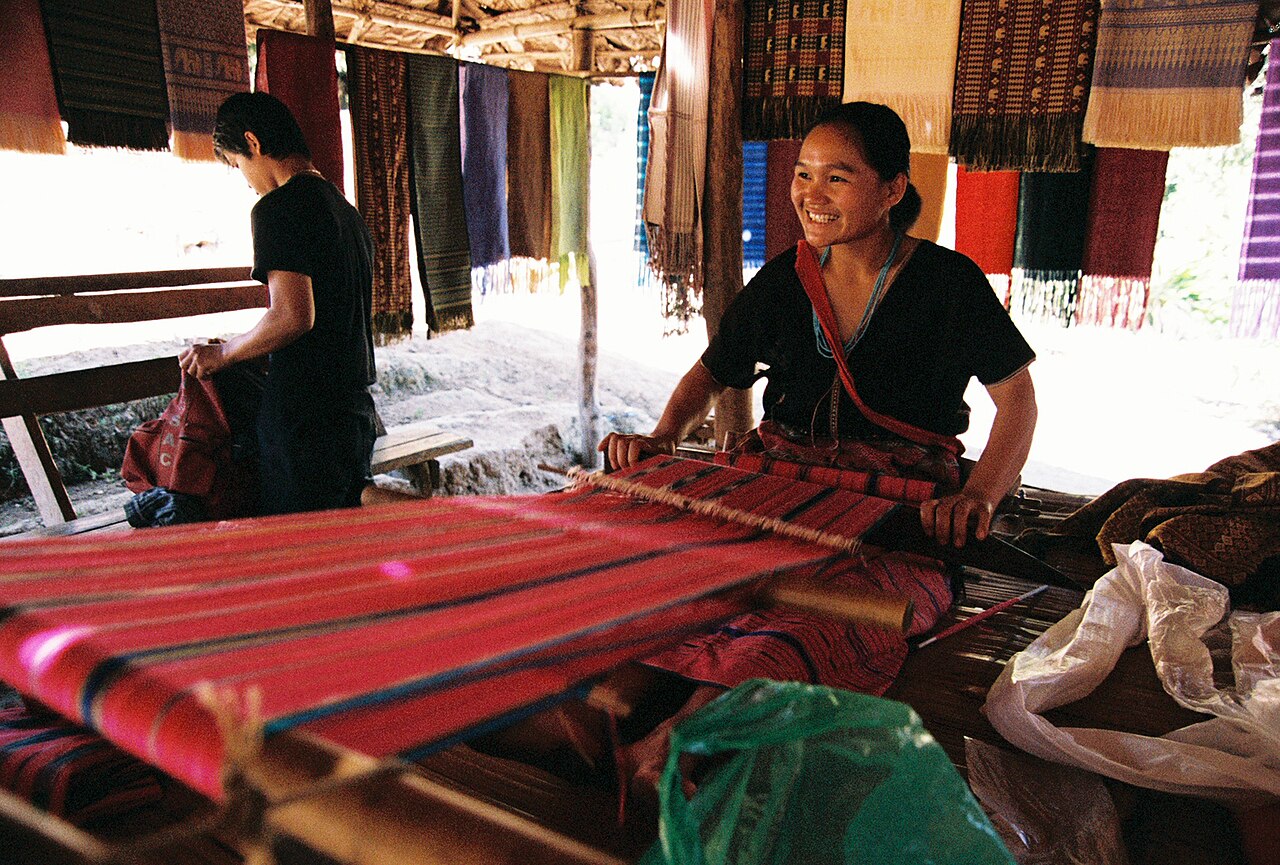
The signature Karen craft is weaving. On simple backstrap looms, Karen women weave tunics, shawls, and bags in bold patterns, and the woven dress of each group carries its own colours and designs, distinguishing the many Karen peoples from one another.
Basketry, the working of bamboo and wood, and the making of musical instruments and the famous bronze frog drums all belong to Karen material culture. These crafts, tied to daily life, festival, and ritual, remain a treasured part of the heritage.
Food

Karen cuisine is simple hill and village fare, built on rice, vegetables, chillies, and the produce of forest and field. Rice is the staple, eaten with soups, curries, and relishes of fish paste, herbs, and greens gathered from the wild, often flavoured with chilli and lemongrass.
Fish from the rivers, bamboo shoots, and forest vegetables feature strongly, and food is prepared plainly but with fresh, sharp flavours. Sharing a meal is central to the hospitality of Karen village life.
Festivals

The great festival of the Karen is the Karen New Year, held at the start of the dry season, when communities gather in traditional dress for dancing, music, feasting, and the celebration of Karen identity. It has become an important occasion both at home and among the Karen diaspora.
The wrist-tying ceremony, held at certain seasons to strengthen the soul, and the festivals of the Buddhist and Christian calendars are also important. Through these celebrations, the varied Karen communities affirm their culture and their unity.
History

For centuries the Karen lived under the shadow of the more powerful Bamar kingdoms, often as subordinate hill and valley peoples. The arrival of British rule and Christian missionaries in the nineteenth century transformed Karen society, spreading education and fostering a strong sense of national identity, and many Karen served in the colonial forces.
After Myanmar’s independence in 1948, the Karen, fearing domination by the Bamar majority, launched one of the world’s longest-running insurgencies in pursuit of autonomy or independence. Decades of conflict brought immense suffering, driving many Karen into refugee camps in Thailand and into a global diaspora.
Today

Today the Karen number several million in Myanmar, with large communities in Thailand and a growing diaspora in countries such as the United States, Australia, and the Nordic lands, formed by refugees from the long war. In their homeland many still farm the hills and plains of the southeast.
Modern Karen life remains shaped by the unresolved conflict in Myanmar and by the experience of displacement, yet the people work everywhere to preserve their language, their weaving, their music, and their New Year. Their strong sense of identity, forged through faith and struggle, continues to define one of Myanmar’s great peoples.
Related Peoples of the Region
- The Kumyks
- The Kabardians
- The Karachay-Balkars
- The Sinhalese
- The Sri Lankan Tamils
- The Maldivians
- The Bamar
- The Shan
More Peoples of the World
You May Like
The Damara, an Ancient People of Namibia


One thought on “The Karen, a Hill People of Myanmar and the Thai Border”