Along the great river Irrawaddy, in the heart of Myanmar, live the Bamar, the largest people of the country and the makers of its dominant language and culture. Devout Buddhists and builders of the temple-city of Bagan, they have shaped the history of this land for a thousand years.
Theirs is a heritage of golden pagodas and saffron-robed monks, of classical dance and marionette theatre, of thanaka-painted cheeks and the water-splashing joy of Thingyan. To know the Bamar is to enter the mainstream of Burmese civilisation, rich, devout, and deeply rooted in its river valley home.
Myanmar on Film
Contents
- Origins
- The Name
- The Language
- The Homeland
- The Old Way of Life
- Society and Community
- Religion and Belief
- Traditions
- Crafts
- Food
- Festivals
- History
- Today
Origins

The Bamar, or Burmese, are the largest ethnic group of Myanmar, making up around two-thirds of the population and giving the country its dominant language and culture. A people of the great central river valleys, they have shaped the history of Myanmar for a thousand years.
The Bamar are believed to have migrated southward from the borderlands of China and Tibet into the valley of the Irrawaddy in the early medieval centuries. There they absorbed the older civilisation of the Pyu and the Mon, embraced Theravada Buddhism, and founded at Bagan one of the great kingdoms of Southeast Asia, whose thousands of temples still stand today.
The Name
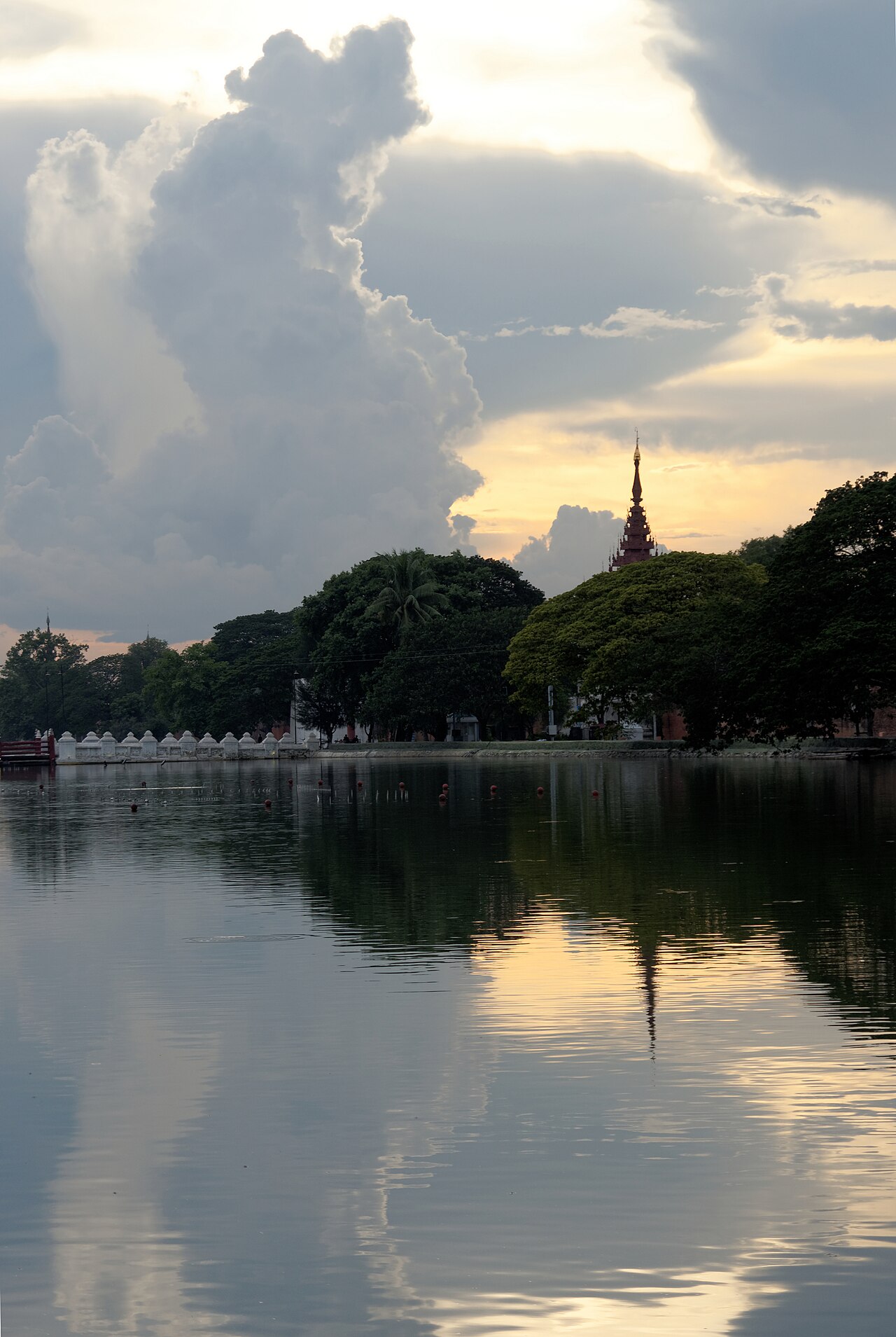
The people are known as the Bamar, and the words Bamar and Myanmar are two forms of the same ancient name, one colloquial and one formal. From this name come both Burma and Myanmar, the two names of the country, and Burmese, the usual English term for the people and their language.
The Bamar identity is closely tied to the Burmese language and to Theravada Buddhism, and to the long line of kingdoms centred on the Irrawaddy. Their culture became the mainstream culture of the modern nation, though Myanmar is home to many other peoples besides.
The Language

The Burmese language belongs to the Tibeto-Burman family, brought by the Bamar from the north and developed over the centuries in the Irrawaddy valley. It is written in a distinctive rounded script, its curved letters shaped by the old practice of writing on palm leaves, which split under straight strokes.
Enriched by Pali, the sacred language of Theravada Buddhism, Burmese has a long literary tradition of religious texts, chronicles, and poetry. It is the official language of Myanmar and the mother tongue of the Bamar, uniting the peoples of the country as a common language.
The Homeland

The Bamar homeland is the great central plain of Myanmar, the valley and delta of the Irrawaddy River, which flows the length of the country from the northern mountains to the sea. This fertile lowland, watered by the river and the monsoon, has always been the heart of Burmese civilisation.
Here lie the historic royal cities of Bagan, Mandalay, and others, along with the great port of Yangon in the delta. The dry central zone, the wet rice-growing delta, and the mighty river itself form the landscape that shaped the Bamar way of life.
The Old Way of Life

For most of their history the Bamar were farmers, above all growers of rice in the fertile lands of the Irrawaddy valley and delta. The river was the great highway of the country, carrying boats laden with rice, teak, and goods between the towns and villages strung along its banks.
Village life centred on the paddy field, the market, and the Buddhist monastery, which served as school as well as place of worship. This settled, rice-growing, temple-centred life shaped Bamar society for many centuries.
Society and Community

Bamar society traditionally centred on the village, the family, and the Buddhist monastery, without the rigid caste divisions of India. The monkhood held great prestige, and it was expected that every Bamar boy would spend a period as a novice monk, an initiation at the heart of the culture.
Women in Bamar society have long enjoyed a relatively high status, keeping their own names and playing an active role in trade and family affairs. Respect for elders, for monks, and for Buddhist merit-making shapes the values of Bamar life. A distinctive mark of the culture is thanaka, the pale cosmetic paste worn on the face.
Religion and Belief

The Bamar are overwhelmingly Theravada Buddhists, and Buddhism is utterly central to their identity and daily life. The land is covered with pagodas and monasteries, from the golden Shwedagon in Yangon to the temple-studded plain of Bagan, and the giving of alms to monks is a daily act of devotion.
Merit-making, meditation, and the veneration of the Buddha and the monastic order structure the religious life of the Bamar. Older beliefs in spirits called nats survive alongside Buddhism, honoured in shrines and festivals throughout the country.
Traditions
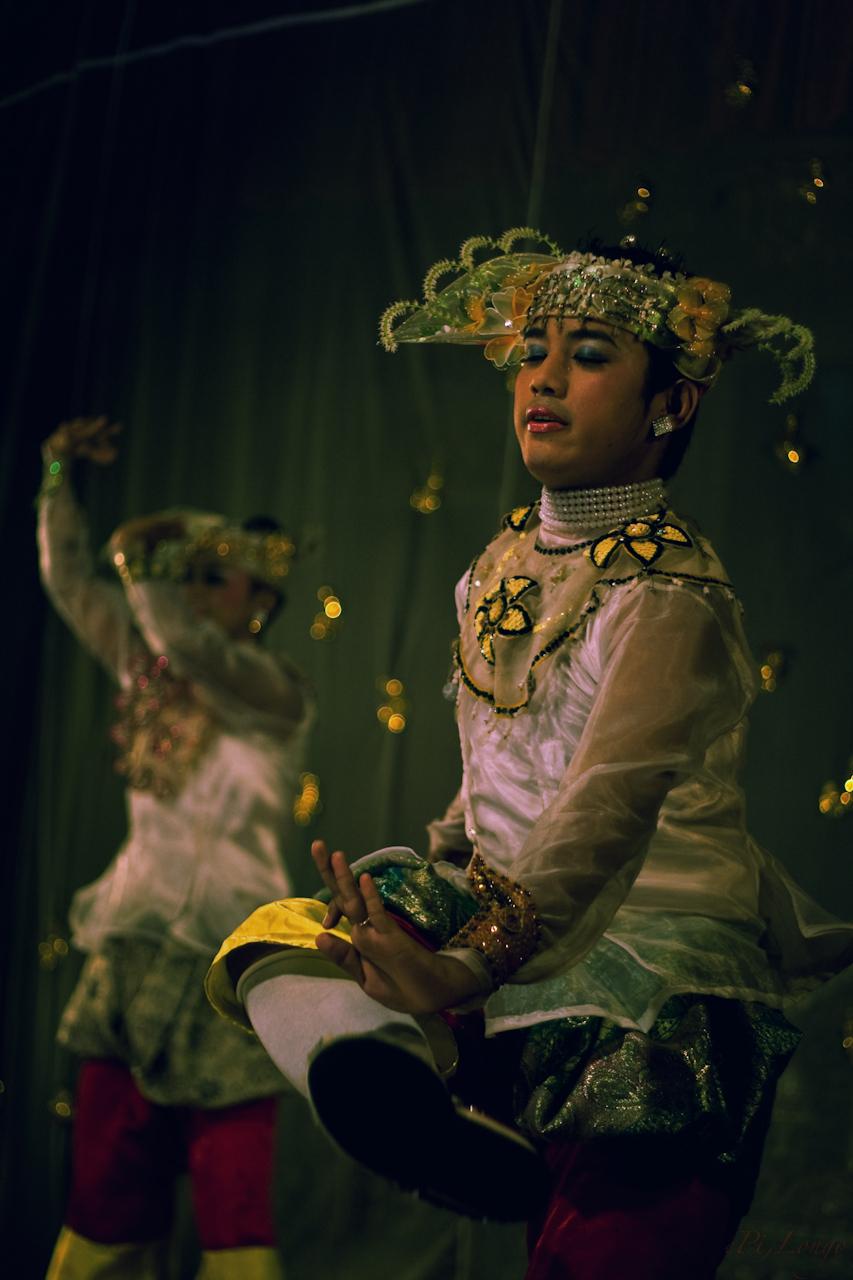
Bamar tradition is rich in classical dance, music, and theatre. Elegant court dances, performed to the sound of the hsaing waing ensemble with its circle of tuned drums, and the beloved marionette theatre carry stories from Buddhist legend and royal history. Music and drama accompany festivals and celebrations.
The novice-monk ceremony, in which boys enter the monastery in imitation of the prince who became the Buddha, is among the great occasions of Bamar life. Traditional dress, the wrapped longyi worn by men and women alike, and the customs of Buddhist life mark the culture.
Crafts

The Bamar are renowned for fine craftsmanship. Traditional marionettes, intricately carved and richly costumed, are a celebrated art, and Burmese lacquerware, made by layering and carving lacquer over bamboo, is prized for its beauty. Gold leaf, applied by devotees to pagodas and images, is beaten in the workshops of Mandalay.
Wood and stone carving, silverwork, weaving, and the making of parasols and religious objects all belong to Bamar material culture. Many of these crafts, patronised for centuries by kings and monasteries, remain living traditions.
Food

Burmese cuisine blends the flavours of its neighbours India, China, and Thailand into something distinctly its own, built on rice, fish, and a love of savoury, sour, and pungent tastes. The national dish is mohinga, a fish and rice-noodle soup eaten above all at breakfast from streetside stalls.
Curries rich in oil, salads dressed with fermented tea leaves, and an array of relishes and fritters fill the Bamar table. Fermented fish paste gives many dishes their depth, and food is central to hospitality and to the offerings made at festivals.
Festivals

The great festival of the Bamar is Thingyan, the water festival that marks the Burmese New Year in April, when people douse one another with water to wash away the old year in joyful celebration. Pagoda festivals, held at temples across the country, fill the calendar with markets, performances, and devotion.
The full-moon days of the Buddhist calendar, the festival of lights at the end of the rains, and the novice-monk ceremonies are all important occasions. Through these festivals the Bamar express the deep bond between their culture and their Buddhist faith.
History

From the kingdom of Bagan, through later dynasties centred on Ava, Pegu, and finally Mandalay, the Bamar built a series of powerful Buddhist kingdoms that dominated the region and at times conquered their neighbours. Their kings were great patrons of Buddhism and builders of pagodas.
In the nineteenth century the British conquered Burma in three wars, ending the monarchy and ruling the country as part of their Indian empire. Independence came in 1948, but the decades since have been marked by military rule, civil conflict with ethnic minorities, and long struggles for democracy.
Today

Today the Bamar number around thirty-five million, the dominant people of Myanmar, a country of some fifty-five million that is also home to many other ethnic groups. Most Bamar still live in the towns and villages of the Irrawaddy valley and delta, farming, trading, and working in the cities.
Modern Myanmar has been shaped by decades of military rule, brief democratic opening, and renewed turmoil, and the Bamar majority stands at the centre of the nation’s fortunes and its conflicts. Their language, their Buddhist faith, and their rich artistic heritage remain the defining features of one of Southeast Asia’s great peoples.
Related Peoples of the Region
- The Lurs
- The Lezgins
- The Kumyks
- The Kabardians
- The Karachay-Balkars
- The Sinhalese
- The Sri Lankan Tamils
- The Maldivians
More Peoples of the World
You May Like
The Damara, an Ancient People of Namibia