On the broad plateau of eastern Myanmar live the Shan, a Tai people and close kin of the Thai and the Lao, the largest minority in the country after the Bamar. In a land of rolling hills, rice valleys, and the tranquil waters of Inle Lake, they built a patchwork of Buddhist princely states.
Theirs is a heritage of golden pagodas and princely courts, of leg-rowing fishermen and lotus-fibre weaving, and of the splendid Poy Sang Long ceremony in which boys become monks dressed as princes. To know the Shan is to meet the Tai world of Myanmars eastern uplands.
Shan State on Film
Contents
- Origins
- The Name
- The Language
- The Homeland
- The Old Way of Life
- Society and Community
- Religion and Belief
- Traditions
- Crafts
- Food
- Festivals
- History
- Today
Origins

The Shan are a Tai people of eastern Myanmar, closely related to the Thai of Thailand and the Lao of Laos. They form the largest minority in Myanmar after the Bamar, and their homeland, the broad plateau of Shan State, makes up a large part of the country’s east.
The Shan are part of the great Tai migration that spread southward from what is now southern China over the medieval centuries, settling the river valleys and plateaus of mainland Southeast Asia. In their new home they founded a patchwork of small principalities, adopted Theravada Buddhism, and became a distinct people between the Bamar lowlands and the Chinese and Thai worlds.
The Name

The name Shan is the Burmese form of the word Siam, and the Shan call themselves Tai, the name shared by their kinfolk across the region. Their land was long divided among many small states, each ruled by a hereditary prince known as a saopha, or sawbwa in Burmese.
These princely states, scattered across the hills and valleys of the plateau, gave the Shan country its character for centuries. To be Shan is to belong to this Tai world of the eastern uplands, distinct from the Bamar of the plains.
The Language

The Shan language belongs to the Tai family, closely related to Thai and Lao and quite distinct from the Tibeto-Burman speech of the Bamar. It is a tonal language written in its own script, derived from ancient Indian models and related to the scripts of the other Tai peoples.
Shan has a long tradition of religious and literary writing, preserved in manuscripts kept in the monasteries. The language, along with Buddhism, is a central marker of Shan identity, binding the people across the many valleys of their plateau.
The Homeland

The Shan homeland is the Shan Plateau, a vast upland of rolling hills, forested ranges, and fertile valleys in eastern Myanmar, bordering China, Laos, and Thailand. Cooler and higher than the Bamar lowlands, it is a land of rice-growing valleys set among the hills.
At its heart lies the famous Inle Lake, whose people fish, farm floating gardens, and row their boats with a distinctive leg-rowing technique. Towns such as Taunggyi and Kengtung, and the many valleys of the plateau, form the world of the Shan.
The Old Way of Life

Traditionally the Shan were wet-rice farmers of the plateau valleys, growing rice in irrigated fields much as their Tai kinfolk did across the region. The valley, with its paddy fields, market town, and Buddhist monastery, was the basic unit of Shan life, ruled over by the local prince.
On Inle Lake, a remarkable way of life grew up around the water, with villages on stilts, floating gardens, and fishermen who row standing with one leg wrapped around the oar. Trade along the caravan routes between Burma, China, and Siam also shaped the Shan economy.
Society and Community

Shan society was traditionally organised around the princely states, each headed by a saopha, with a nobility, officials, and a population of farming villagers. The valley communities, centred on their monasteries, were the heart of everyday life.
Buddhism, the monastery, and the customs shared with the wider Tai world shaped Shan society, and the monkhood held great prestige. Family, village, and faith, rather than a strong central state, bound the Shan people together across their scattered valleys.
Religion and Belief
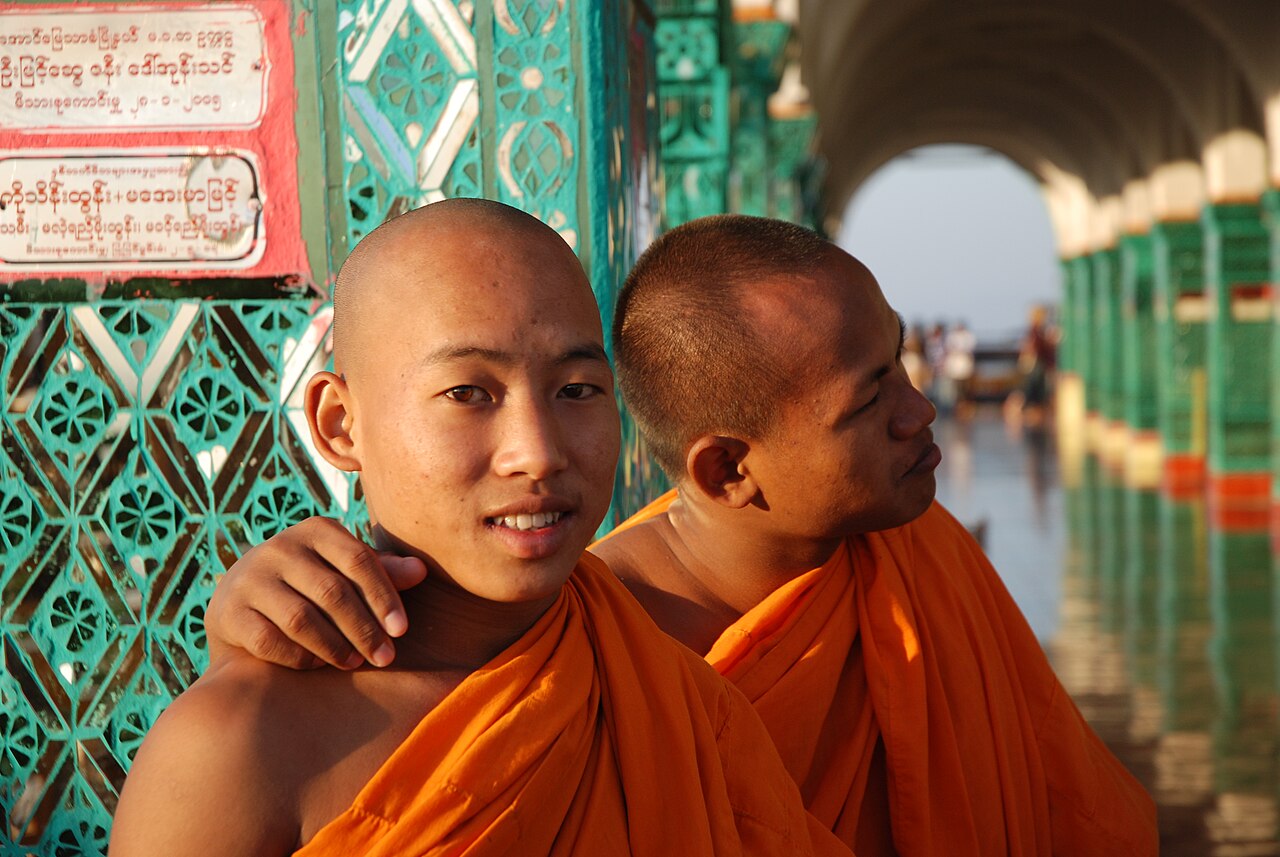
The Shan are devout Theravada Buddhists, sharing the faith of the Bamar and of their Tai kinfolk in Thailand and Laos. Golden pagodas and monasteries stand in every town and village, and the monastery has long been the centre of learning and community life.
Merit-making, the support of monks, and the great Buddhist festivals structure Shan religious life. As elsewhere in the region, older beliefs in local spirits survive alongside Buddhism, honoured in shrines and seasonal rites.
Traditions

The most striking Shan tradition is the Poy Sang Long, the novice ordination ceremony in which boys, dressed as princes in imitation of the young Buddha, are paraded in splendour before entering the monastery. Music, dance, and processions accompany this and other festivals.
Shan dance and music, the martial art and dance of the sword, and the customs surrounding Buddhist life mark the culture. Traditional dress, distinctive in each area, and the rituals of the farming year express the identity of the Shan.
Crafts

The Shan are skilled weavers, and the textiles of the plateau, especially the silk and lotus-fibre weaving of Inle Lake, are famous. Lotus robes, woven from the fibres of the lake’s water lilies, are among the most remarkable textiles in the world.
Silverwork, lacquerware, the making of paper umbrellas, and fine metalwork all belong to Shan craft, along with the boat-building and floating-garden agriculture of Inle Lake. These crafts, tied to daily life and to the monasteries, remain part of Shan heritage.
Food

Shan cuisine is distinct within Myanmar, lighter and more sour and tied to the Tai world. Its best-known dishes include Shan noodles, rice noodles served with a savoury sauce of marinated meat, and Shan tofu, made not from soy but from yellow split peas, eaten as a warm pudding or cut and fried.
Fermented soybean, pickled vegetables, and dishes of rice and fresh herbs fill the Shan table, reflecting the cool climate of the plateau. Shan food is popular across Myanmar and beloved for its fresh, tangy flavours.
Festivals

The great festivals of the Shan follow the Buddhist calendar, above all the Poy Sang Long novice ordinations held in the hot season, when whole communities celebrate the boys entering the monastery. Pagoda festivals draw crowds for markets, performances, and devotion.
The Shan New Year, tied to the Tai calendar, is celebrated with music, dance, and feasting, and Inle Lake hosts a spectacular festival in which images of the Buddha are rowed around the lake in a great gilded barge. These festivals express the deep faith and identity of the Shan.
History

For centuries the Shan states, dozens of small principalities under their saophas, dominated the eastern uplands, at times paying tribute to the Burmese kings, at times acting independently, and even, in earlier centuries, ruling parts of Burma itself. The princes kept their courts and their power through the medieval and early modern periods.
Under British rule the Shan states were governed separately from Burma proper, their princes retained. After independence in 1948 the states were merged into the Union of Burma, and the loss of Shan autonomy fed decades of insurgency and conflict that continue to trouble the region today.
Today

Today the Shan number several million, the largest people of Shan State and a significant minority in Myanmar, with communities also in Thailand and China. Many still farm the valleys of the plateau, while others have moved to the towns or across the border in search of work and safety.
Modern Shan life is shadowed by the long conflict between ethnic armed groups and the central state, and by the upheavals of Myanmar’s troubled politics. Yet the Shan continue to preserve their Tai language, their Buddhist faith, their weaving, and their festivals, keeping alive the identity of one of Myanmar’s great peoples.
Related Peoples of the Region
- The Lezgins
- The Kumyks
- The Kabardians
- The Karachay-Balkars
- The Sinhalese
- The Sri Lankan Tamils
- The Maldivians
- The Bamar
More Peoples of the World
You May Like
The Damara, an Ancient People of Namibia