In the remote mountains of western Myanmar, along the borders with India and Bangladesh, live the Chin, a family of related hill peoples divided into many clans and tongues. Isolated for centuries among steep forested ridges, they preserved a rich diversity of custom before becoming one of Asia’s most Christian communities.
Theirs is a heritage of hill farming and feasts of merit, of backstrap weaving and the vanishing tradition of women’s facial tattoos, now bound together by the church and by Chin National Day. To know the Chin is to enter the highland world of Myanmars western frontier.
Chin State on Film
Contents
- Origins
- The Name
- The Language
- The Homeland
- The Old Way of Life
- Society and Community
- Religion and Belief
- Traditions
- Crafts
- Food
- Festivals
- History
- Today
Origins

The Chin are a people of the rugged mountains of western Myanmar, along the border with India and Bangladesh, and are closely related to the Mizo and Kuki peoples across the frontier. Speaking languages of the Kuki-Chin branch of the Sino-Tibetan family, they are not a single tribe but a family of many related groups sharing a common broad identity.
The Chin are believed to have settled their remote highlands over many centuries, living in scattered village communities divided by the deep valleys and high ridges of their homeland. Isolation in these mountains preserved a rich diversity of clans, dialects, and customs among the Chin peoples.
The Name

The name Chin is used broadly for the many related groups of the western hills, who also call themselves by their own names such as Zomi, Laimi, and Cho. Across the border in India the same wider family is known as Mizo and Kuki, so that the Chin are part of a people divided by international frontiers.
Within Myanmar, Chin identity is tied to Chin State and to the shared experience of the mountain peoples of the west. The many clans and groups, once fiercely independent of one another, have come in modern times to share a common sense of being Chin.
The Language

The Chin languages belong to the Kuki-Chin branch of the Sino-Tibetan family, and there are dozens of them, some so different that speakers of one cannot understand another. Major languages include Falam, Hakha, Tedim, and Mindat Chin, among many others.
This great diversity of tongues reflects the isolation of the mountain valleys. Christian missionaries created written forms for several Chin languages and translated the Bible into them, spreading literacy, and Burmese and English also serve as wider languages of communication.
The Homeland

The Chin homeland is Chin State and the neighbouring hills of western Myanmar, one of the most remote and mountainous regions of the country. It is a land of steep forested ranges, deep valleys, and high peaks, crowned by Nat Ma Taung, or Mount Victoria, the highest mountain in western Myanmar.
Cool, rugged, and hard to reach, the Chin Hills long kept their people apart from the lowland world. Towns such as Hakha, Falam, and Mindat, perched among the ridges, are the centres of a homeland where villages cling to the mountainsides.
The Old Way of Life

Traditionally the Chin were hill farmers, practising shifting cultivation of rice, maize, and millet on the steep mountain slopes, clearing and burning patches of forest in a careful cycle. Hunting, gathering, and the raising of pigs and mithun, a kind of semi-wild cattle, supplemented their farming.
Village life, centred on the clan and the longhouse, was governed by chiefs and elders and shaped by the animist beliefs and feasts of the pre-Christian era. The giving of great feasts of merit, at which mithun were sacrificed, brought honour and status in traditional Chin society.
Society and Community

Chin society was traditionally organised around the village, the clan, and, in many groups, hereditary chiefs, with a strong emphasis on kinship and clan loyalty. The many clans and groups, each with its own customs, made up a diverse and fiercely independent people.
Feasting, the exchange of gifts, and the honour won through generosity and bravery shaped social standing. In modern times, conversion to Christianity and the shared experience of the mountain peoples have fostered a broader Chin identity across the old divisions of clan and valley.
Religion and Belief

The great majority of Chin are Christians, above all Baptists, converted by American and other missionaries from the late nineteenth and twentieth centuries. Chin State is one of the most heavily Christian regions of Myanmar, and the church is central to community life.
Before conversion the Chin followed animist beliefs, honouring the spirits of the mountains, forests, and ancestors through sacrifice and feast, and traces of these older ways survive in custom and memory. A minority of Chin remain animist or Buddhist, but Christianity has become a defining mark of Chin identity.
Traditions

Among the most striking Chin traditions was the tattooing of women’s faces with intricate patterns, once practised by several groups and now surviving only among the oldest women. Distinctive woven dress, ornaments, and the great feasts of merit marked traditional Chin culture.
Music, dance, and the customs surrounding feasting, marriage, and death remain important, blended in modern times with Christian practice. Chin National Day, marking the people’s shared identity, is celebrated with dance, sport, and traditional dress at home and in the diaspora.
Crafts
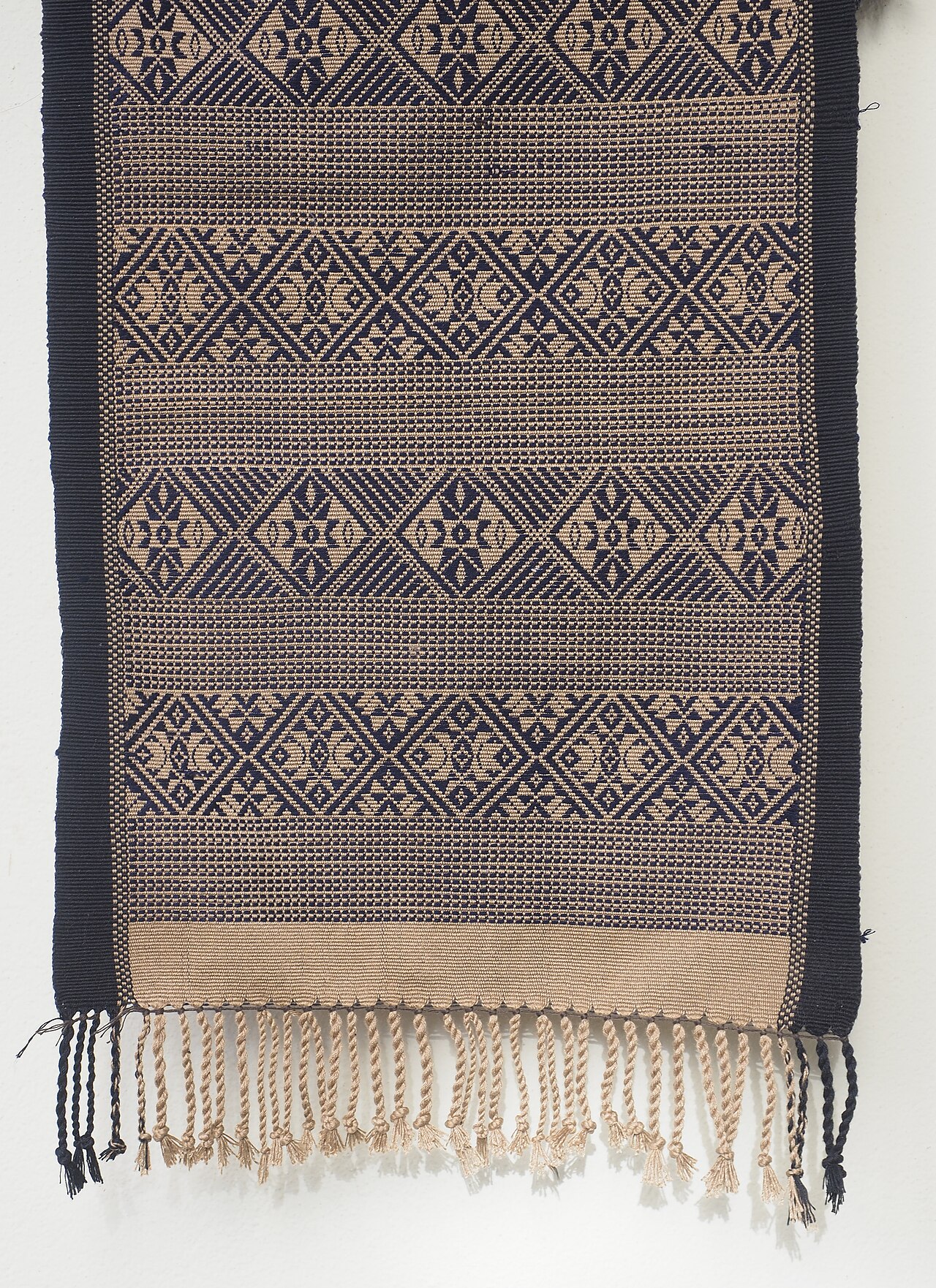
The Chin are skilled weavers, and the textiles of the different groups, woven on backstrap looms in bold geometric patterns, are among their finest crafts. Each group has its own distinctive designs and colours, and the woven blankets and garments are treasured markers of identity.
Basketry, the working of cane and bamboo, metalwork, and the making of ornaments and ritual objects all belonged to Chin material culture. These crafts, tied to daily life and festival, remain part of the heritage of the mountain peoples.
Food

Chin cuisine is the simple, hearty fare of a hill farming people, built on rice, maize, and millet, with vegetables, beans, and the meat of pigs and mithun. A characteristic dish is sabuti, a thick stew of maize or other grains cooked slowly with beans and meat.
Boiled vegetables, fermented foods, chillies, and forest herbs fill the Chin table, and food is central to the great feasts and celebrations. Sharing food and drink is at the heart of Chin hospitality and community life.
Festivals
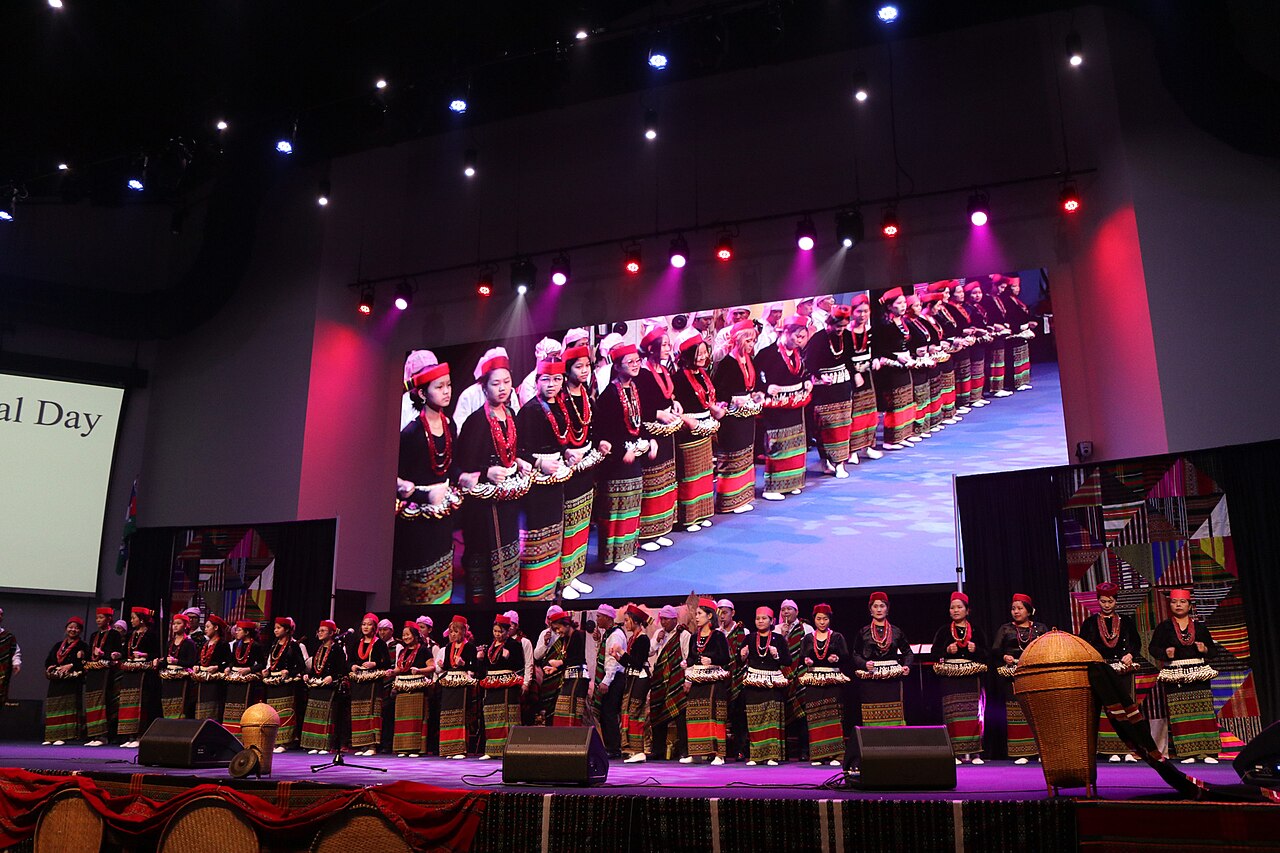
The great modern festival of the Chin is Chin National Day, held each February, which unites the many Chin groups in celebration of their shared identity with traditional dress, dance, wrestling, and sport. It is observed both in Chin State and among the far-flung Chin diaspora.
Christian festivals, above all Christmas, are celebrated with great devotion, and older harvest and feast traditions survive in blended form. Through these festivals the diverse Chin peoples affirm their unity and their culture.
History

For centuries the Chin lived as independent hill peoples, their clans and villages beyond the control of the lowland kingdoms. In the late nineteenth century the British extended their rule over the Chin Hills, and Christian missionaries began the transformation of Chin society through conversion and education.
After Myanmar’s independence in 1948 the Chin, like other minorities, struggled for autonomy and rights, and Chin State became one of the poorest and most neglected regions of the country. Decades of military rule, poverty, and, more recently, the turmoil following the 2021 coup have driven many Chin to flee across the border and abroad.
Today

Today the Chin number perhaps a million and a half in Myanmar, with large communities across the border in India and a growing diaspora in countries such as the United States, Malaysia, and Australia. Chin State remains remote and poor, and out-migration has long drawn its people away in search of work and safety.
Modern Chin life has been deeply marked by the recent conflict in Myanmar, in which the Chin have been prominent in resistance to military rule. Yet through church, language, weaving, and Chin National Day, at home and abroad, they continue to preserve the identity of one of Myanmar’s most distinctive mountain peoples.
Related Peoples of the Region
- The Kabardians
- The Karachay-Balkars
- The Sinhalese
- The Sri Lankan Tamils
- The Maldivians
- The Bamar
- The Shan
- The Karen
More Peoples of the World
You May Like
The Damara, an Ancient People of Namibia