Few names from the ancient world carry as much weight as Babylon. For thousands of years it was a byword for splendour, power and sometimes decadence, a great city on the Euphrates whose kings gave the world one of its first law codes and one of its legendary wonders.
The real Babylon lies in ruins in modern Iraq, its mud-brick walls and palaces long collapsed. Yet through excavation, ancient texts and the dazzling blue gate now standing in Berlin, we can still glimpse the city that shaped Mesopotamian civilisation.

Table of Contents
- The Legendary City of Mesopotamia
- Babylon on the Euphrates
- Hammurabi and the First Great Law Code
- Nebuchadnezzar and the Golden Age
- The Ishtar Gate and the Processional Way
- The Hanging Gardens: Wonder or Myth
- Etemenanki: The Tower of Babel
- The Lion of Babylon and Babylonian Art
- Fall to Persia, Alexander, and Decline
- Excavation, Reconstruction, and UNESCO
- Nearby Places
- Closing Thoughts
The Legendary City of Mesopotamia
Babylon lay in the heart of Mesopotamia, the fertile land between the Tigris and Euphrates rivers where some of the world’s earliest cities arose. Over many centuries it grew from a small town into the greatest metropolis of the ancient Near East.
Its fame spread far beyond its walls. The city appears again and again in the Bible and in the writings of Greek historians, becoming a symbol of both magnificence and pride that has echoed through Western culture ever since.
Babylon on the Euphrates
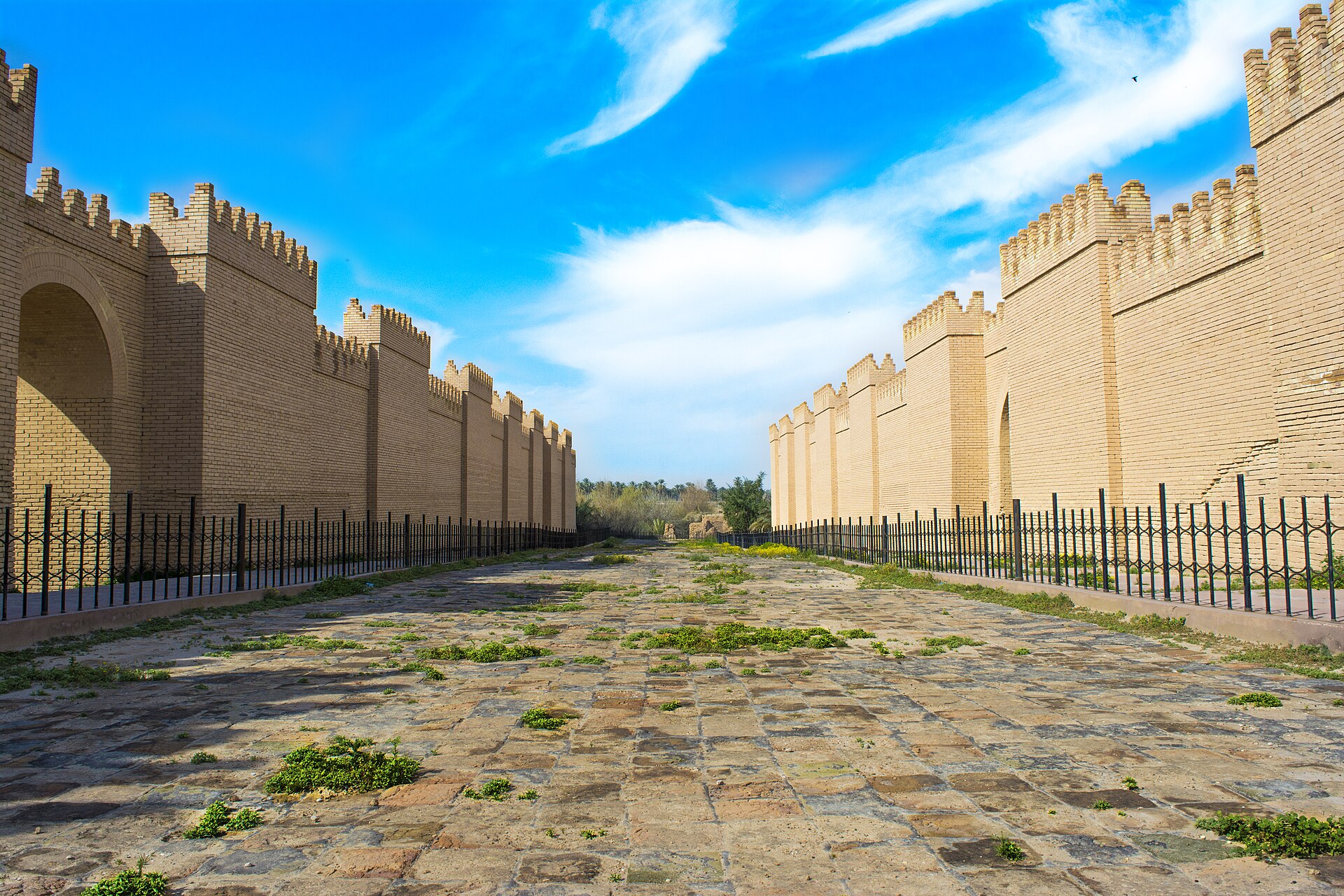
The city straddled the Euphrates, which flowed through its centre and fed the canals and fields that sustained its people. Massive walls, later famous throughout the ancient world, enclosed temples, palaces and crowded streets.
Babylon was a city of mud brick, the building material of a land without stone. This made it vulnerable to time and weather, so that today much of it survives only as low mounds and foundations rather than standing monuments.
Hammurabi and the First Great Law Code
Babylon first rose to greatness under King Hammurabi, who ruled in the eighteenth century BC and united much of Mesopotamia under his rule. He is best remembered for the law code that bears his name.
Carved onto a tall stone stele, the Code of Hammurabi set out laws and punishments for the society he governed, from trade and property to family and crime. It is one of the earliest and most complete legal codes to survive from the ancient world.

Nebuchadnezzar and the Golden Age
Babylon reached its greatest glory much later, under King Nebuchadnezzar II in the sixth century BC. A brilliant conqueror and builder, he expanded the empire and rebuilt the city on a scale of unmatched splendour.
He raised great palaces, strengthened the walls and adorned Babylon with monuments faced in glazed brick. It is the city of Nebuchadnezzar, dazzling and immense, that most later legends of Babylon describe.

The Ishtar Gate and the Processional Way
The most famous surviving creation of Babylon is the Ishtar Gate, a monumental entrance covered in brilliant blue glazed bricks and decorated with images of bulls and dragons. Through it ran the Processional Way, lined with striding lions.
Along this route the images of the gods were carried in great festival processions. The gate and its lions, excavated and reconstructed in Berlin, give the clearest impression we have of the colour and grandeur of Nebuchadnezzar’s city.


The Hanging Gardens: Wonder or Myth
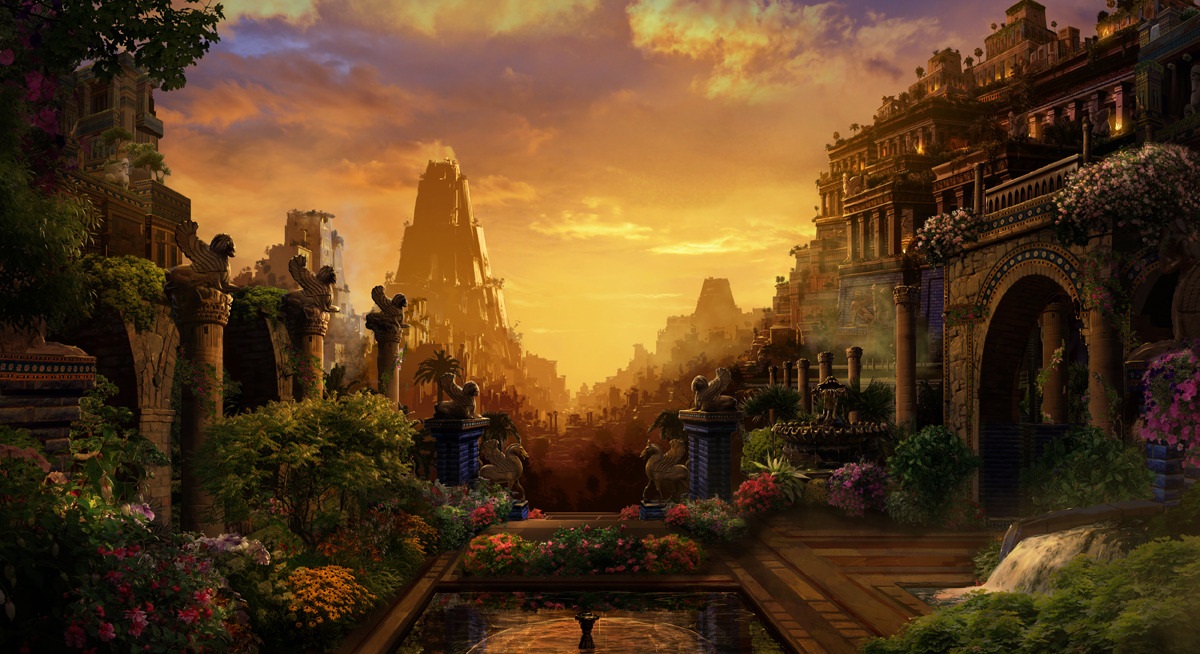
Ancient writers listed the Hanging Gardens of Babylon among the Seven Wonders of the World, describing terraces of lush greenery rising like a green mountain, said to have been built by Nebuchadnezzar for a homesick queen.
Yet no certain trace of the gardens has ever been found in Babylon, and some scholars suspect the legend may confuse Babylon with another city. Whether real or imagined, the Hanging Gardens remain one of the most enduring images of the ancient world.

Etemenanki: The Tower of Babel
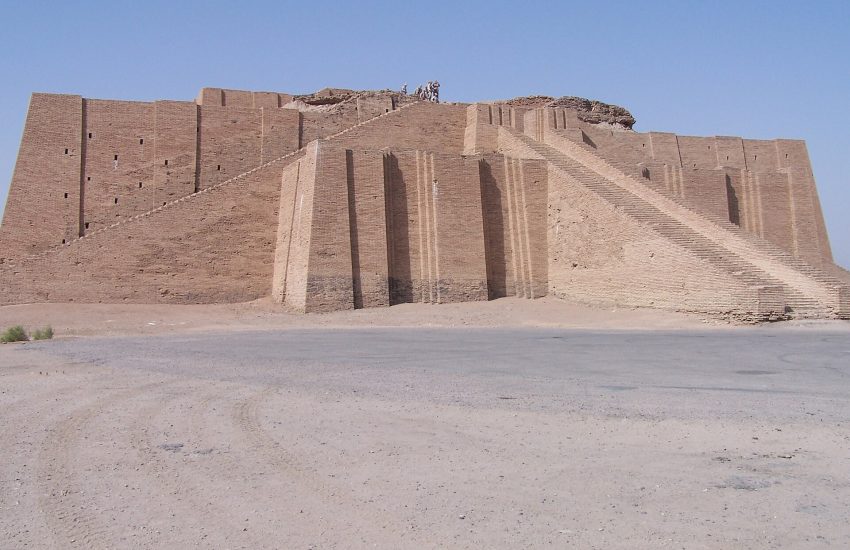
At the religious heart of Babylon stood Etemenanki, a huge stepped temple-tower, or ziggurat, dedicated to the city’s chief god Marduk. Rising in great tiers, it dominated the skyline of the city.
Many scholars believe this tower inspired the biblical story of the Tower of Babel, the great structure whose builders sought to reach heaven. Today only its foundations remain, but its memory shaped a story known around the world.
The Lion of Babylon and Babylonian Art
Among the most striking objects associated with the city is the ancient stone statue known as the Lion of Babylon, which has become a national emblem in modern Iraq. It reflects the power and symbolism of the lion in Mesopotamian art.
Babylonian craftsmen were masters of glazed brick, sculpture and fine metalwork, and they preserved and developed the long artistic and scientific traditions of Mesopotamia, including advances in astronomy and mathematics.

Fall to Persia, Alexander, and Decline
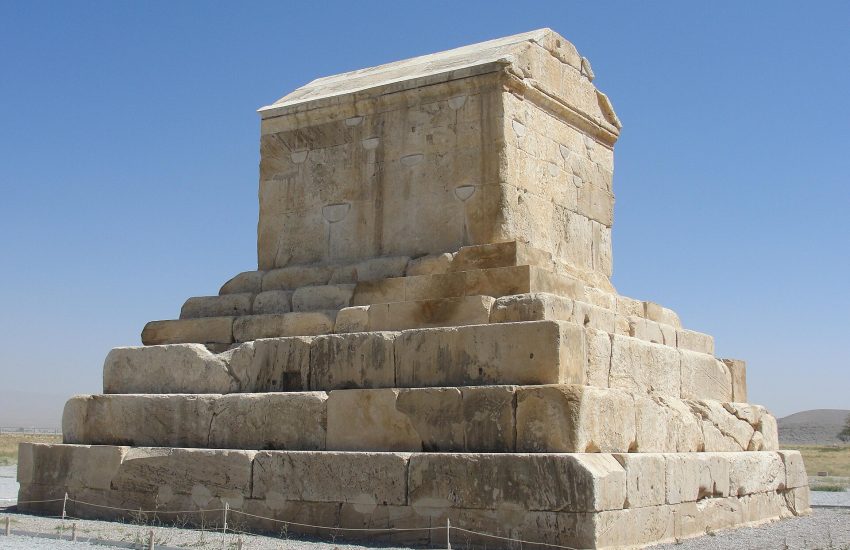
In 539 BC Babylon fell to the Persian king Cyrus the Great, and though it remained an important city, it was no longer the capital of an independent empire. Two centuries later Alexander the Great captured it and reportedly planned to make it a capital.
But Alexander died in Babylon in 323 BC, and his empire fractured. As power shifted to new cities, Babylon slowly declined, its great buildings crumbling and its population drifting away over the following centuries.
Excavation, Reconstruction, and UNESCO
From the nineteenth century, archaeologists began to excavate the mounds of Babylon, and a German expedition uncovered the Ishtar Gate and Processional Way, whose bricks were taken to Berlin and rebuilt in a museum there.
In the twentieth century parts of the site were controversially rebuilt on top of the ancient ruins. Babylon was finally inscribed on the UNESCO World Heritage List in 2019, at last recognising the global importance of one of history’s most famous cities.
Nearby Places
- Leptis Magna — another once-great city buried and half-forgotten, later revealed by the archaeologist’s spade.
- Thebes — the great temple-city of Egypt, a contemporary rival to Babylon in the ancient Near East.
- Masada — a fortress of the same Near Eastern world whose peoples had once been exiled to Babylon.
Closing Thoughts
Babylon is a city that lives as much in legend as in stone: the home of Hammurabi’s laws, the setting of the Tower of Babel and the Hanging Gardens, and the glittering capital of Nebuchadnezzar.
Though its mud-brick walls have largely melted back into the plain, the blue lions of its Processional Way and the memory of its wonders still shape our idea of the ancient world. Few names have echoed so long or so loudly through human history.


5 thoughts on “Babylon: The Legendary City of Hammurabi, Nebuchadnezzar, and the Tower of Babel”