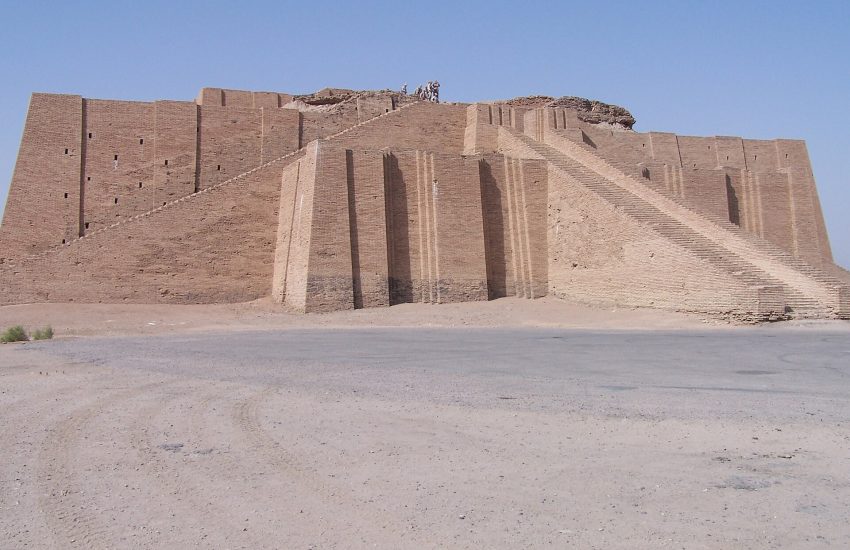
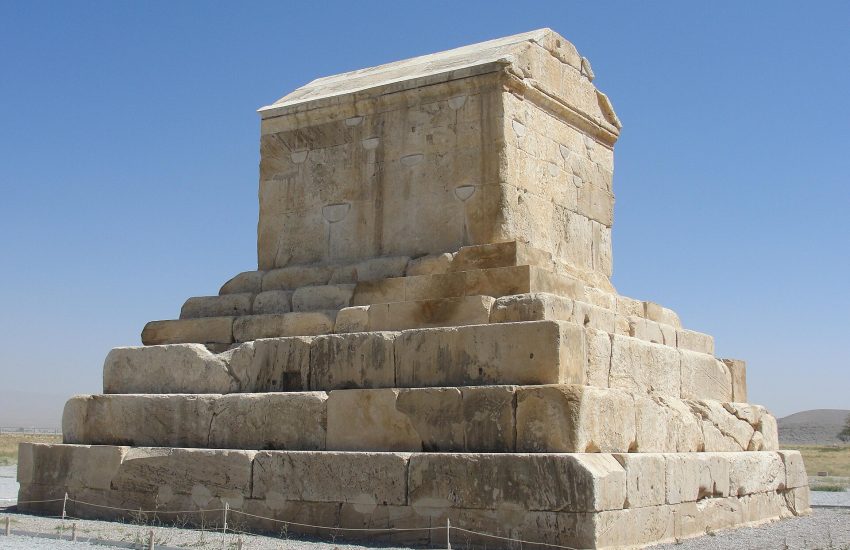
On a bluff above the Euphrates River in eastern Syria stood Dura-Europos, a frontier city so well preserved by the desert sand that it has been called the Pompeii of the Syrian desert. Within its walls, side by side, stood pagan temples, one of the oldest synagogues ever found, and the earliest known Christian church, all decorated with astonishing wall paintings.
Dura-Europos is one of the most important archaeological sites for understanding the ancient world’s religions and its everyday life. A meeting place of Greek, Roman, Persian, Jewish, Christian and local cultures, it offers an unmatched cross-section of a truly cosmopolitan frontier society.

Table of Contents
- The Pompeii of the Desert
- A Fortress on the Euphrates
- Greek Colony to Roman Garrison
- The Palmyrene Gate and the Walled City
- A Meeting of Many Faiths
- The Synagogue and Its Astonishing Frescoes
- The Earliest Christian House Church
- Roman Frescoes and Everyday Life
- The Siege and the Sudden Fall
- Rediscovery and Recent Damage
- Getting There
- Nearby Places
- Closing Thoughts
The Pompeii of the Desert
Dura-Europos was destroyed and abandoned in the third century AD, then buried by the sand for some seventeen hundred years. Because it was never reoccupied, it survived in extraordinary detail, its buildings, paintings and objects preserved as if frozen in time.
This exceptional preservation earned it comparison with Pompeii. Where most ancient cities were rebuilt and reused, Dura-Europos was sealed at a single moment, giving archaeologists a uniquely complete picture of ancient urban life.

A Fortress on the Euphrates
The city occupied a naturally defensible position on a plateau above the Euphrates, with steep ravines on two sides and the river below. This made it a strong point on a key route between the Mediterranean and Mesopotamia.
Its location placed it on the shifting frontier between the Roman world and the Persian empires. For centuries it was a strategic garrison town, controlling movement along the great river.

Greek Colony to Roman Garrison
Dura-Europos was founded around 300 BC as a colony of the Seleucids, the Greek dynasty that ruled the region after Alexander the Great. Laid out on a grid plan, it began as a Hellenistic town.
Later it came under Parthian and then Roman control, becoming an important Roman garrison on the eastern frontier. Each phase left its mark, layering Greek, Parthian and Roman influences within the same walls.

The Palmyrene Gate and the Walled City
The main entrance to the city was the Palmyrene Gate, so called because the road through it led to nearby Palmyra. Massive walls of stone and mud brick ringed the town, strengthened in the face of Persian threats.
Within the walls lay a regular grid of streets, houses, markets, temples and, in its final phase, a Roman military quarter. The defences would be put to a terrible test in the city’s last days.

A Meeting of Many Faiths
What makes Dura-Europos so remarkable is its religious diversity. Within a single modest town stood temples to a whole array of gods, Greek, Roman, Palmyrene and Mesopotamian, alongside a synagogue and a Christian church.
This astonishing coexistence, all preserved together, offers a rare snapshot of the religious world of the Roman East, where many faiths lived side by side in the same streets.
The Synagogue and Its Astonishing Frescoes
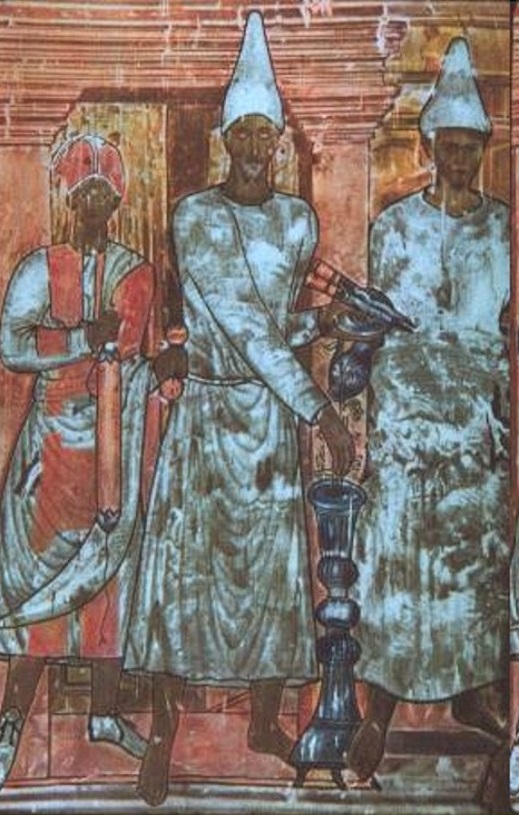
The greatest treasure of Dura-Europos is its synagogue, whose walls are covered with elaborate paintings of scenes from the Hebrew Bible. This was a stunning discovery, for it showed that some ancient Jewish communities used rich figurative art, contrary to long-held assumptions.
The frescoes, depicting Moses, the Exodus, and many other stories, are among the most important works of ancient Jewish art ever found. They have transformed scholars’ understanding of Judaism in the Roman period.

The Earliest Christian House Church
Equally significant is a private house at Dura-Europos that was converted into a Christian place of worship. Dating to around 240 AD, it is the earliest known purpose-adapted Christian church building yet discovered.
Its baptistery is decorated with some of the oldest surviving Christian paintings, showing scenes such as the Good Shepherd. This humble house church is a precious witness to Christianity in the crucial period before it became a public religion.
Roman Frescoes and Everyday Life
Beyond its religious buildings, Dura-Europos preserved vivid paintings of soldiers, officials and gods, as well as everyday objects, documents, weapons and even clothing, all protected by the sand.
These finds give an unusually intimate picture of life in a Roman frontier town, from military service and religious ritual to trade and daily routine. Few sites offer such a rounded view of the ancient everyday.

The Siege and the Sudden Fall
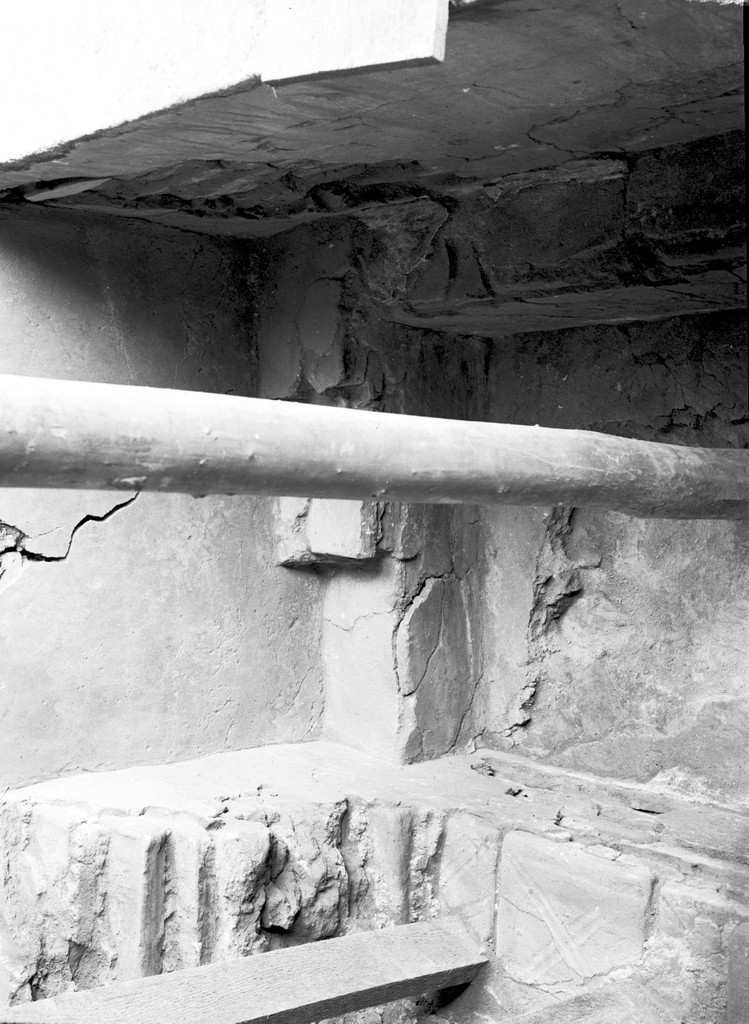
Dura-Europos met a violent end around 256 AD, when the Sasanian Persians besieged and captured it. The defenders piled earth against the inside of the walls to strengthen them, burying and preserving the synagogue and church in the process.
The siege has yielded chilling evidence, including tunnels dug by attackers and defenders, and signs of what may be the earliest known use of chemical warfare, when noxious fumes were used against Roman soldiers underground. After its fall the city was abandoned forever.
Rediscovery and Recent Damage
Dura-Europos was rediscovered in the twentieth century, and major excavations uncovered its remarkable buildings and paintings, many of which were removed to museums for safekeeping, including the reconstructed synagogue.
Tragically, during the recent Syrian conflict the site suffered extensive looting, with much of its surface torn up by illegal digging. The damage to this irreplaceable site has been a serious loss to world heritage.
Getting There
Dura-Europos lies in the Deir ez-Zor Governorate of eastern Syria, near the town of Salhiyeh, on the west bank of the Euphrates close to the Iraqi border. It stands in a remote and, in recent years, deeply troubled region.
Access depends entirely on the security situation, which has made visits extremely difficult or impossible for long periods. Anyone considering a visit must check current conditions and official guidance with great care.
Coordinates: 34.7472, 40.7297 — open Dura-Europos in Google Maps.
Nearby Places
- Palmyra — the great caravan city to which Dura-Europos was linked by road, sharing its blended desert culture.
- Hatra — another frontier city of many faiths caught, like Dura-Europos, between Rome and Persia.
- Jerash — another superbly preserved city of the Roman Near East, often called a Pompeii of the East.
Closing Thoughts
Dura-Europos is a unique window onto the ancient world: a single desert town where the gods of Greece, Rome and the East, the God of Israel and the new faith of Christianity were all worshipped side by side, their paintings preserved by the very sand that buried the city.
Its synagogue and house church rewrote the history of ancient religion. Though wounded by modern conflict, Dura-Europos remains one of the most precious archaeological sites ever found, a frozen moment of the crowded, cosmopolitan world of the Roman frontier.