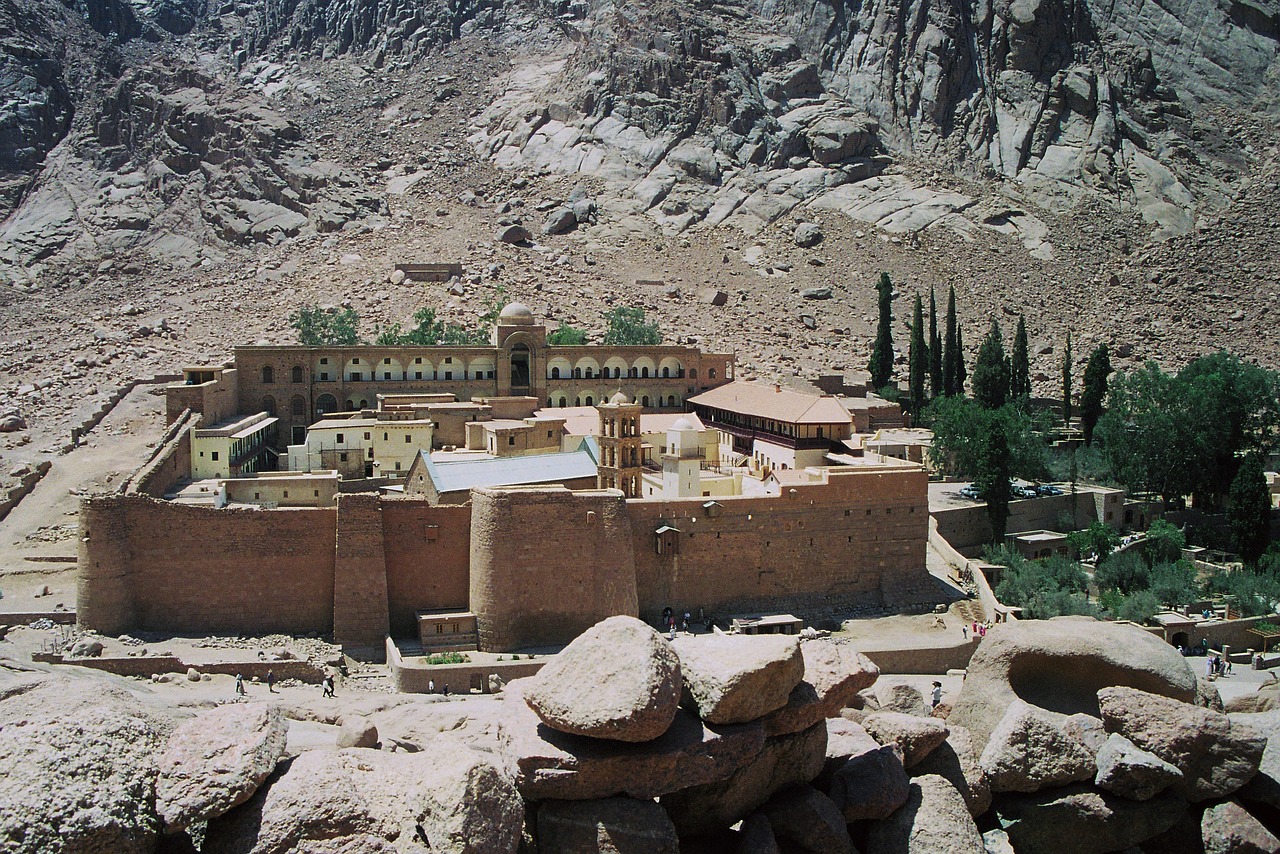
Saint Catherine’s Monastery, set beneath Mount Sinai in southern Egypt, is among the oldest working monasteries in the world and a place revered across three faiths. Combined with a sunrise climb of the mountain, it makes an unforgettable journey into one of the most storied landscapes in religious history. This guide brings together what you need to plan a visit.
In This Series
Our Sinai collection covers the monastery, the mountain, and the practical side of a trip:
More Sinai Guides
- Saint Catherine’s Monastery at Mount Sinai
- Climbing Mount Sinai: A Pilgrim’s Guide
- Where to Stay near Saint Catherine’s Monastery & Mount Sinai
Who Comes Here
Orthodox and other Christian pilgrims, travellers drawn to the shared heritage of Moses and the Burning Bush, and lovers of desert mountain landscapes all make the journey to Sinai.
When to Visit
Spring and autumn offer the most comfortable conditions. Summer days are very hot, while winter nights at altitude can be bitterly cold, especially on a sunrise climb. The monastery keeps limited hours and closes on some holy days.
Getting There & Safety
The town of Saint Catherine is reached by road across the Sinai, often as part of an organised tour. Because the region is sensitive, travellers should check their government’s current travel advice and use reputable local operators.
Explore More Sacred Sites
- The Church of the Holy Sepulchre, Jerusalem
- The Church of the Nativity, Bethlehem
- The Vatican & St. Peter’s Basilica
- The Basilica of the Annunciation, Nazareth
- Santiago de Compostela
- Lourdes
- Fatima
- Mont-Saint-Michel
- Ephesus & the House of the Virgin Mary
- Assisi
- Guadalupe
- Meteora, Greece
- Częstochowa, Poland
- Loreto, Italy
- Knock, Ireland
- Etchmiadzin, Armenia
- Canterbury, England
- Lalibela, Ethiopia
- Sergiev Posad, Russia
- Kyiv Pechersk Lavra, Ukraine
- San Giovanni in Laterano, Rome
- Mount Athos, Greece
- All Christian Holy Sites – Complete Guide


2 thoughts on “Visiting Saint Catherine’s Monastery & Mount Sinai: A Complete Guide”