A project led by the University of Oxford sheds light on the spread and influence of Celtic art. The most interesting question hoped to be answered in the project is whether Celtic art has a connection with the Eurasian geography.
Wandsworth shield decoration. River Thames, London, BC 300-200, Bronze; Image: British Museum
Until now, Celtic works have been examined through the developments in European art, but in this research, the relations between Celtic art and the works of art we encounter in the Eurasian steppes in the Iron Age are also addressed.
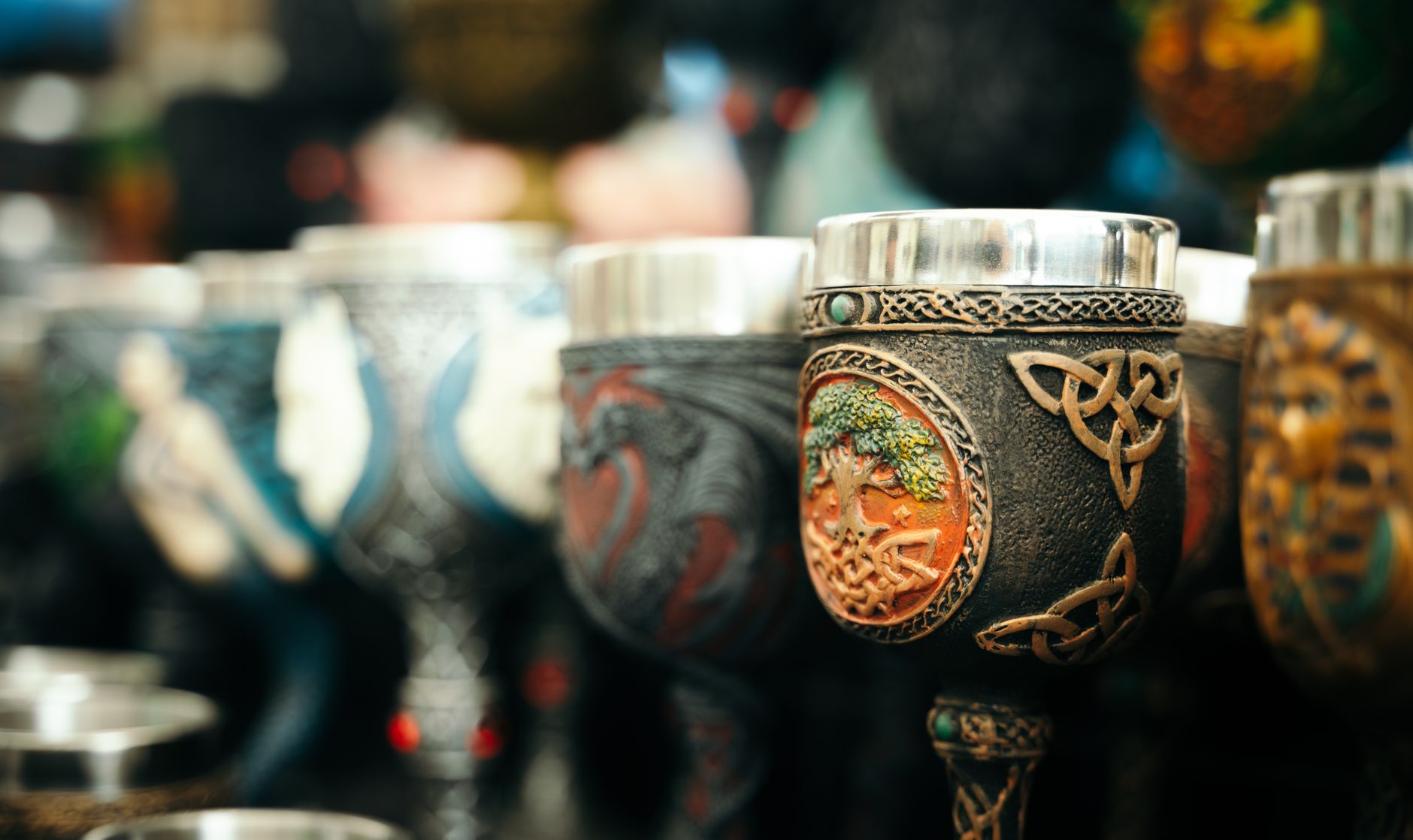
Within the scope of this research, artifacts unearthed in various excavations or found in museums, which are called Celtic artifacts because they contain images of animals and plants depicted with spirals, circles, interlocking patterns or spirals, will be examined. One of the main topics they research is the relationship between the Central European Celts and their Eurasian nomadic neighbors.
These nomads, generally known as Scythians or Sarmatians, lived in the part of the steppes closest to Europe, extending from the east of Central Asia and China to Europe. It is thought that the connection roads, which were used for many years between these semi-deserts and steppes, which later became a part of the Silk Road, played an important role in the development of artistic and cultural interactions between the East and the West.
Bronze bridle ring, Britain, Iron Age. Image: Ashmolean Museum, University of Oxford
Roman glass artefacts, Chinese silk and Central Asian textiles, as well as many local artifacts, have been unearthed in Iron Age tombs in the mountains of Siberia, Mongolia and Kazakhstan. Although the local works are different from Celtic art, the complex patterns on them remind us of the spiral styles used in Celtic art.
Researchers will investigate how, if any, these distant artistic expressions are connected to each other. The team will also examine museum collections in France, Germany, Switzerland, Austria and the Czech Republic within the scope of the “European Celtic Art in Context” project. Again, within the scope of this project, all data on this subject will be collected together in order to create a comprehensive database on Celtic art in Europe.
This study will also focus on finds of Celtic art outside the region traditionally considered the Celtic world. Project leader Chris Gosden, Professor of Archeology at the University of Oxford, said: ‘Celtic art in Europe is tightly associated with countries such as Scotland and Ireland, but we are now taking a broader look at whether there were interconnected art styles in Europe and Asia.
We suspect that the descriptions relate to actions and perhaps altered states of consciousness. “The depictions used in Celtic art may be related to animistic beliefs, that is, a world where spirits live in the material world and the boundaries between humans, animals, plants and objects are blurred,” he says.
Wittenham Sword, found in a river in Oxfordshire, Late Iron Age. Image: Ashmolean Museum, University of Oxford
Celtic art in Europe BC. It is thought to have emerged around 500, when a new “realism” movement began in Mediterranean art. Although the two artistic movements were related, the inspiration for the creation of Celtic art was in stark contrast to the Classical art of Greece and Rome.
Both Celtic art and Classical art emerged with the interaction of two continents, but Celtic art, with its morphing depictions, crossed the steppes and reached the borders of China. This project, which examines the effects of the East on Celtic art, also intersects with the major research project of Oxford Professor Dam Jessica Rawson, which examines the effects of Central Asian steppe culture on the development of China. Source: http://arkeofili.com/?p=9538
You May Like

Chittorgarh Fort: The Largest Fort in India and the Legend of the Jauhar