The Swedes are a people who have shaped the world far out of proportion to their numbers. From the longhouses and longships of the Viking Age, when Swedish adventurers rowed down the great rivers of the east to trade and raid as far as the Caspian Sea, to the cold calculations of a seventeenth-century military superpower that dominated the Baltic, to the gentle modern image of a society famous for its welfare state, its design, and its quiet pursuit of fairness, the Swedes have repeatedly remade themselves. They are a small nation, fewer than eleven million people clinging to the long, cold spine of the Scandinavian Peninsula, and yet their language carries a thousand years of history, their companies and inventions reach into every home on earth, and their distinctive way of organizing society has become a reference point in debates about how human beings should live together. To understand the Swedes is to understand a people forged by long winters and short, luminous summers, by forest and water and silence, who turned the discipline that survival demanded into a civilization admired and argued over around the globe.
A People of the Far North
The Swedes are the largest of the Scandinavian peoples, the inhabitants of the Kingdom of Sweden, a long country stretching from the mild, fertile plains of the south to the Arctic wilderness of the far north, where the sun does not set in midsummer and barely rises in the depths of winter. They speak Swedish, a North Germanic language closely related to Danish and Norwegian, so close indeed that Swedes, Danes, and Norwegians can often understand one another with a little effort, a linguistic family bond that reflects a shared Scandinavian heritage stretching back to the Old Norse of the Viking Age. Around ten million people live in Sweden today, and millions more around the world, above all in the United States, claim Swedish descent from the great waves of emigration that left the country in the nineteenth and early twentieth centuries.
In This Article
- A People of the Far North
- Ancient Roots and the First Swedes
- The Viking Age and the Eastern Road
- The Coming of Christianity and a Kingdom
- Union, Rebellion, and the Rise of the Vasa Kings
- The Age of Greatness
- From Empire to Neutrality
- Hunger, Emigration, and the New World
- Industry, Invention, and Transformation
- The People’s Home and the Swedish Model
- The Swedish Language and Way of Speaking
- Lagom, Jantelagen, and the Swedish Soul
- Design, Style, and Swedish Creativity
- Light, Darkness, and the Turning Year
- The Sami and the North
- A Changing Nation
- The Swedes in the World Today
- An Enduring People

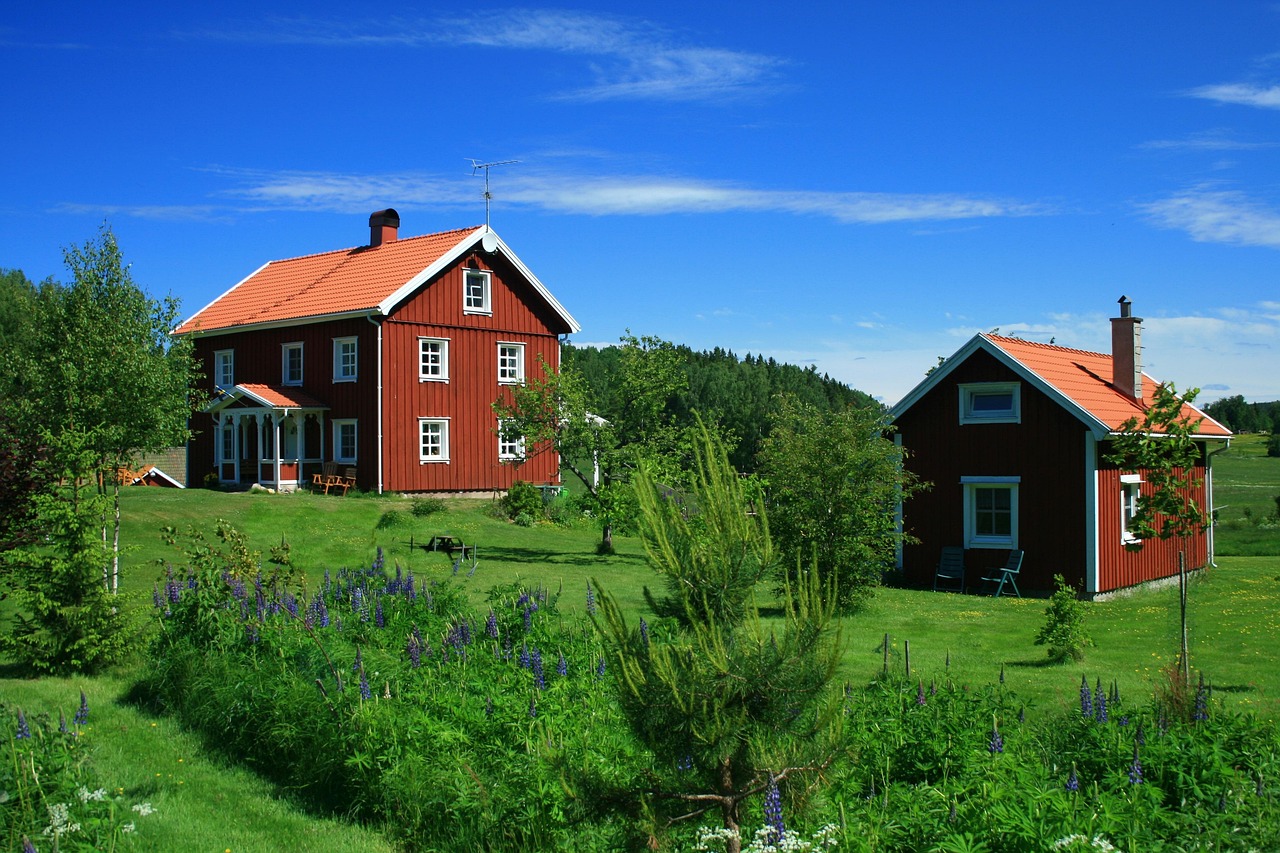
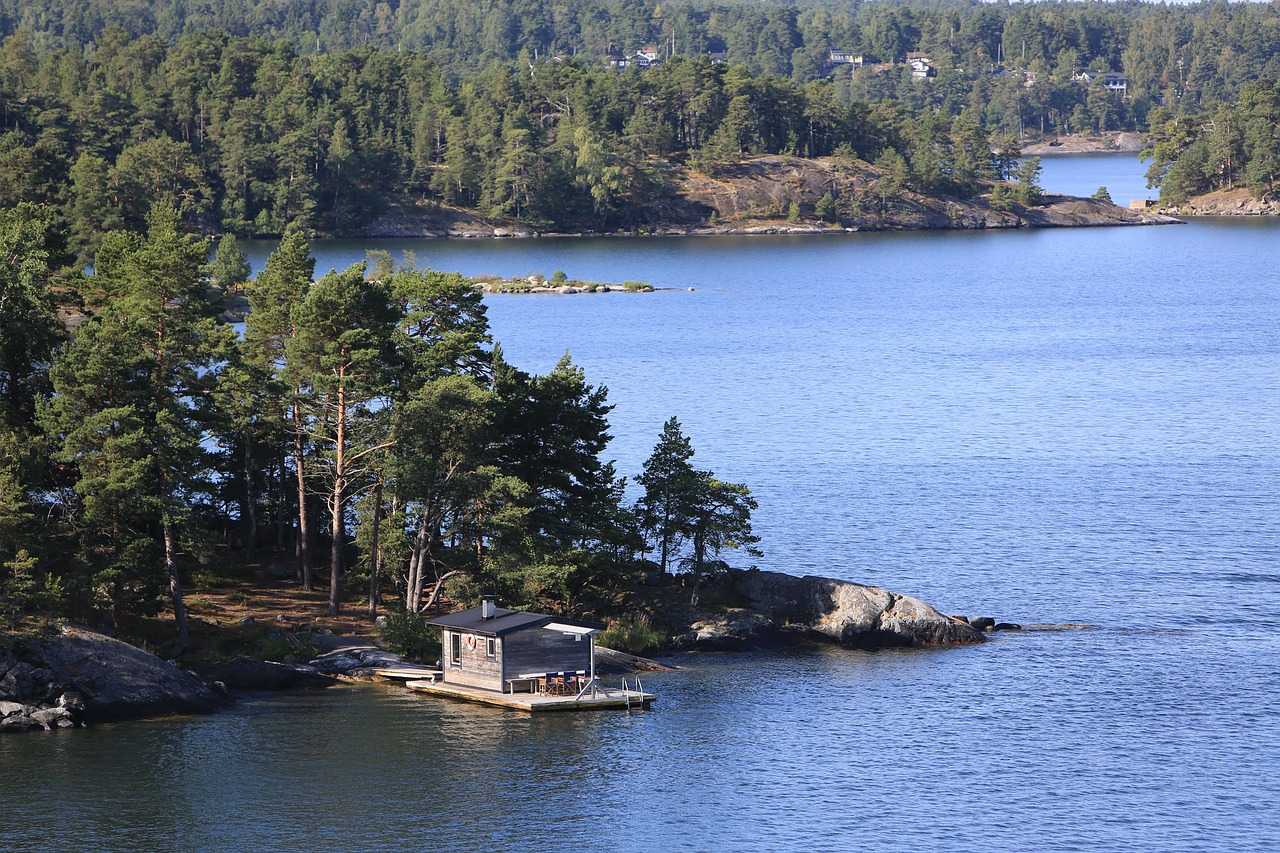
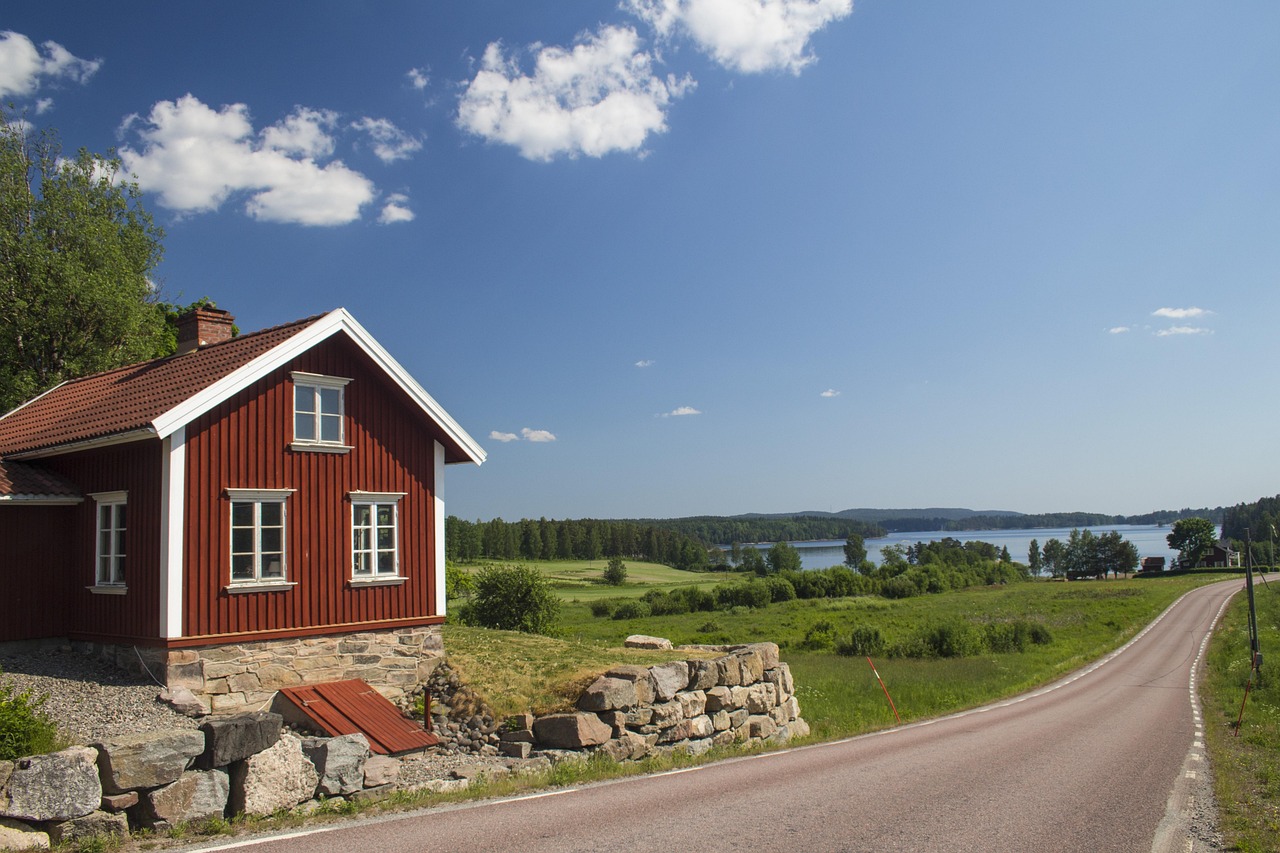
Geography has shaped the Swedes as deeply as any king or war. Sweden is a vast, thinly populated land, one of the largest countries in Europe by area but among the least densely settled, and the great majority of its people live in the milder southern third, leaving immense expanses of forest, lake, and mountain almost empty. Forest covers more than half the country, and water is everywhere, in tens of thousands of lakes and along a coastline broken into countless islands and skerries. This is a land of long distances and small communities, of nature pressing close against every town, and the Swedish relationship to this landscape, the forest as larder and refuge, the lake and the sea as highway and playground, the changing light of the seasons, runs through the whole of the national character. The Swedes are famous for their love of nature and their need for it, and a right enshrined in custom and law, the freedom to roam, allows everyone to walk, camp, and gather in the open country regardless of who owns it, a principle that expresses something essential about how the Swedes see themselves and their land.
The climate, too, has left its mark. The long, dark, cold winters and the brief, intense, light-soaked summers have bred a culture that values preparation, self-reliance, and the careful management of scarce resources, alongside an almost desperate joy in the return of warmth and light. The Swedish summer, with its endless evenings and the great festival of Midsummer, is celebrated with an intensity that only people who have endured the darkness can fully understand, and the rhythm of the seasons, of withdrawal and emergence, of long indoor months and short outdoor weeks, structures Swedish life and feeling to this day.
Ancient Roots and the First Swedes
Human beings have lived in what is now Sweden since the great ice sheets retreated at the end of the last Ice Age, some ten thousand years ago, when hunters followed the receding ice northward into a newly habitable land. Over the following millennia these early peoples developed farming, raised the great stone monuments and burial mounds that still dot the landscape, and left behind the mysterious rock carvings whose ships, animals, and figures hint at beliefs now lost to us. By the Bronze Age and Iron Age, settled agricultural communities had taken root across the southern and central parts of the country, trading amber, furs, and iron with the wider world and developing the seafaring skills that would one day make their descendants famous.
According to most historians, the people who would become the Swedes emerged from a number of related tribes inhabiting the region, among them the Svear, centered on the area around Lake Malaren in the east, and the Gotar to the south. It is from the Svear that both the English name Sweden and the Swedish name for the country, Sverige, meaning the realm of the Svear, ultimately derive. The gradual coming together of these peoples into a single kingdom was a slow process stretching over centuries, and the early history is shadowy, known mainly through later sagas, fragmentary chronicles, and archaeology rather than firm contemporary record. What is clear is that by the early medieval period a distinct Norse-speaking culture had taken firm hold across the region, sharing in the language, religion, and way of life of the wider Scandinavian world.
The Viking Age and the Eastern Road
The Swedes burst onto the stage of world history during the Viking Age, the remarkable period from roughly the late eighth to the eleventh century when Scandinavian seafarers raided, traded, explored, and settled across an enormous swathe of the world. While the Vikings of Norway and Denmark are most associated in popular memory with raids on the British Isles and western Europe, the Swedes turned their gaze eastward, and their story is one of the great and often overlooked sagas of the age. Following the rivers that flowed south and east from the Baltic, Swedish traders and warriors, known in the east as the Rus or Varangians, penetrated deep into the lands that are now Russia, Ukraine, and beyond.
Down the great river systems they traveled in their long, shallow boats, portaging between waterways, founding and fortifying trading towns, and reaching at last the rich markets of the Byzantine Empire and the Islamic Caliphate. Arab silver flowed back to Sweden in such quantities that hoards of it are still dug from Swedish soil today, mute testimony to the reach of these eastern ventures. Swedish Varangians served as the elite bodyguard of the Byzantine emperors in Constantinople, the city they called Miklagard, the great city, and according to many historians the very name of Russia derives from the Rus, the name given to these Scandinavian newcomers. It was an extraordinary projection of energy from a small northern people, and it bound Sweden into a network of trade and contact stretching from the forests of the north to the deserts of the Middle East.
The Viking Age was not only about raiding and trading abroad. At home it was a period of rich artistic achievement, of intricate metalwork and wood carving, of the soaring poetry of the skalds, and of a complex pagan religion centered on gods such as Odin, Thor, and Freyr, whose great temple, according to medieval accounts, stood at Uppsala in the Swedish heartland. The runestones that the Vikings raised across the Swedish countryside, carved with memorials to the dead and accounts of journeys to distant lands, remain among the most evocative monuments of the age, their inscriptions speaking across the centuries of men who died in the east, in England, or on the long road to Byzantium. These stones, more numerous in Sweden than anywhere else, are a uniquely Swedish window onto the Viking world.
The Coming of Christianity and a Kingdom
Over the eleventh and twelfth centuries Sweden, like the rest of Scandinavia, gradually converted to Christianity, a slow and sometimes contested transformation that drew the country into the cultural orbit of Latin Europe. The old gods did not yield easily, and for a time Christian and pagan worship coexisted, but in the end the new faith prevailed, churches rose across the land, and Sweden became part of Western Christendom. With Christianity came literacy in Latin, the institutions of the Church, and closer ties to the kingdoms of continental Europe, and the consolidation of royal power slowly knit the disparate provinces into something resembling a unified kingdom.
Medieval Sweden was a realm of powerful regional provinces, each with its own ancient laws and assemblies, and the authority of its kings was often limited and contested. This early tradition of provincial law and popular assembly, of free farmers who owned their own land and had a voice in their own affairs, left a deep mark on Swedish political culture, and historians have often traced the later Swedish emphasis on the rule of law and on the dignity of the ordinary citizen back to these medieval roots. Unlike much of feudal Europe, Sweden never developed serfdom on the continental model, and the figure of the independent Swedish farmer, free, self-reliant, and conscious of his rights, became an enduring element of the national self-image.
Union, Rebellion, and the Rise of the Vasa Kings
In the late Middle Ages Sweden became part of a great Scandinavian experiment in unity. In 1397 the three kingdoms of Sweden, Denmark, and Norway were joined under a single monarch in the Kalmar Union, an attempt to unite the Nordic lands against the growing commercial power of the German towns of the Hanseatic League. But the union, dominated in practice by Denmark, sat uneasily with the Swedes, who chafed at foreign rule and at the heavy hand of Danish kings. Resentment simmered for generations and burst into open revolt more than once.
The decisive break came in the early sixteenth century. In 1520 the Danish king crushed Swedish resistance and, in an act remembered with lasting horror as the Stockholm Bloodbath, executed scores of Swedish nobles and leading men. The massacre shocked the country and ignited a war of liberation led by a young nobleman named Gustav Vasa, who rallied the farmers and miners of the provinces against Danish rule. By 1523 the rebellion had triumphed, the Kalmar Union was shattered, and Gustav Vasa was elected King of Sweden, founding a dynasty and an independent Swedish state that would endure. He is remembered as the father of the modern Swedish nation, the man who secured its independence and laid the foundations of a strong central monarchy.

Gustav Vasa transformed Sweden. He broke the power of the Catholic Church, seizing its vast lands and wealth and bringing the Protestant Reformation to Sweden, which became, and long remained, a staunchly Lutheran country. He built a centralized administration, a national army, and a royal treasury, turning a loose medieval realm into a coherent early modern state. The Vasa dynasty he founded would produce some of the most consequential rulers in Swedish history, and under them a small, poor, northern kingdom would rise, astonishingly, to become one of the great powers of Europe.
The Age of Greatness
The seventeenth century is remembered by the Swedes as the Stormaktstiden, the Age of Greatness, the period when Sweden became a military superpower that dominated the Baltic and intervened decisively in the affairs of Europe. The architect of this rise was King Gustavus Adolphus, often called Gustavus the Great, a brilliant general and reformer who modernized the Swedish army into one of the most effective fighting forces of the age and led it into the great religious and political conflict that engulfed Europe, the Thirty Years War. Marching into Germany as the champion of the Protestant cause, Gustavus Adolphus won a series of stunning victories that made Sweden a power to be reckoned with across the continent, until he fell in battle in 1632, dying at the height of his fame.
Under Gustavus Adolphus and his successors, Sweden built an empire around the Baltic Sea, controlling territories that today belong to Finland, the Baltic states, Russia, Germany, and Poland, and turning the Baltic, as the Swedes proudly said, into a Swedish lake. For a small nation of perhaps a million and a half people, sustaining such a position demanded extraordinary military organization, heavy taxation, and the conscription of its farmers into long wars far from home. The Swedish state of this era was a formidable war machine, disciplined, efficient, and feared, and the experience of being, for a few generations, a great power left a lasting imprint on the national memory.
The Age of Greatness reached its dramatic climax and its end under King Charles the Twelfth, a warrior-king of legendary boldness who spent almost his entire reign on campaign. Brilliant in the field but ultimately overreaching, he led Sweden into the long and ruinous Great Northern War against a coalition of enemies, above all the rising power of Russia under Peter the Great. After early triumphs, the Swedish army was destroyed deep in the east at the catastrophic Battle of Poltava in 1709, and the tide turned irreversibly. Charles died in 1718, and with him died the Swedish empire. By the time the wars ended, Sweden had lost most of its overseas possessions and its position as a great power, and Russia had replaced it as the dominant force in the north. The Age of Greatness was over, but it had given the Swedes a heroic chapter that still looms large in their history.
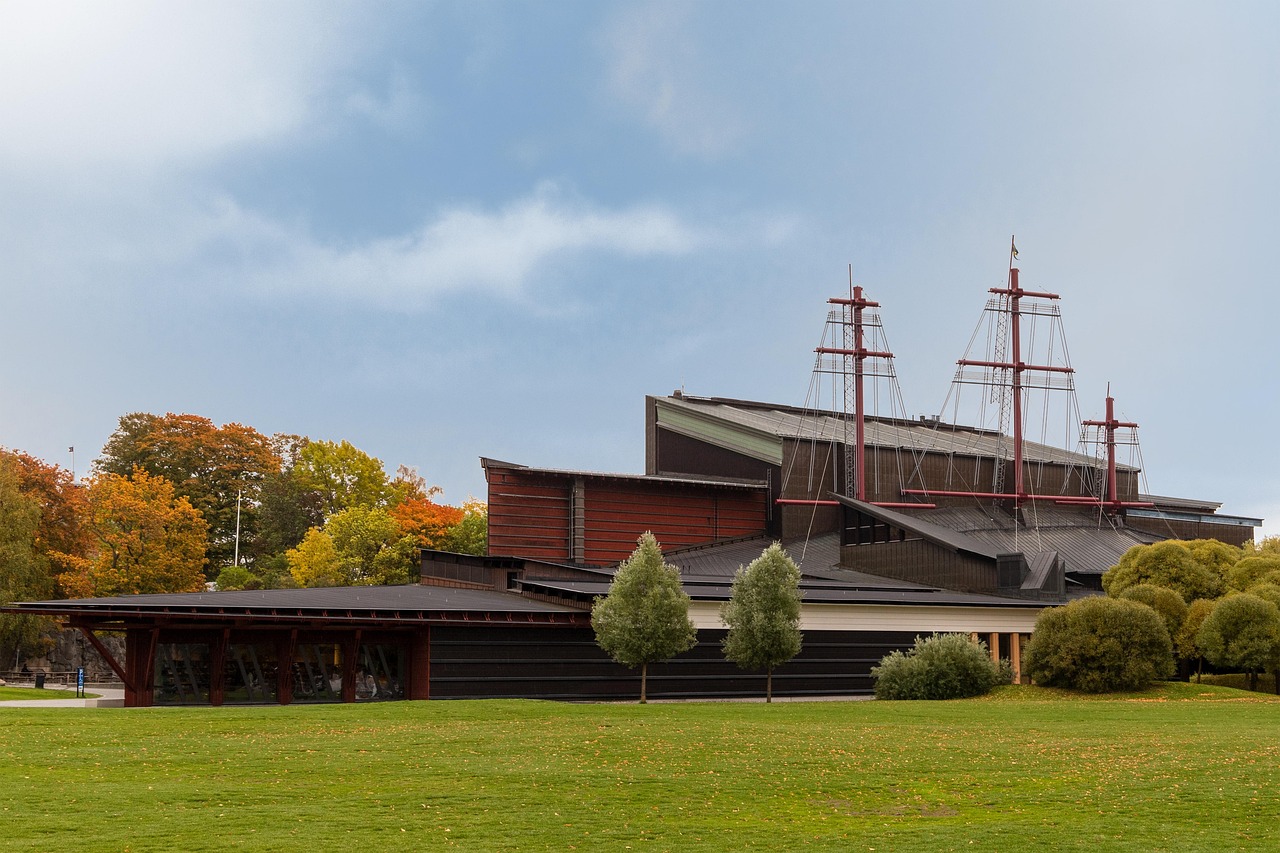
One vivid relic of this imperial age survives in Stockholm to this day. The great warship Vasa, the pride of the navy, sank in Stockholm harbor on its very maiden voyage in 1628, top-heavy and badly designed, capsizing within minutes before the eyes of the watching crowds. For more than three centuries it lay on the bottom, until it was raised, almost miraculously intact, in the twentieth century, and today the salvaged ship, preserved in its own museum, stands as the most complete surviving vessel of its era anywhere in the world, a haunting monument to the ambition and the hubris of Sweden age of greatness.
From Empire to Neutrality
The eighteenth and nineteenth centuries saw Sweden adjust painfully to its new status as a smaller power on the edge of Europe. The loss of empire was followed by political turbulence, including a long period when the power of the monarchy was sharply curtailed and the parliament and political factions held sway, an era the Swedes call the Age of Liberty. In 1809 Sweden suffered another grievous blow, losing Finland, which had been an integral part of the kingdom for six hundred years, to Russia. This loss was a profound shock, but it also marked a turning point, for in its aftermath Sweden adopted a new constitution and, crucially, turned away from the path of war.
From the early nineteenth century onward Sweden embraced a policy of neutrality and non-alignment that would become one of the defining features of its modern identity. After centuries of near-constant warfare, the Swedes fought their last war in 1814 and then kept out of armed conflict for the next two hundred years, remaining neutral through both World Wars and the Cold War. This long peace, almost unique in Europe, allowed Sweden to devote its energies to internal development rather than military adventure, and the policy of neutrality, of standing apart from the quarrels of the great powers, became deeply woven into how the Swedes understood their place in the world.

Hunger, Emigration, and the New World
For all its peace, nineteenth-century Sweden was a poor country, and for great numbers of its people life was hard. The population grew rapidly, but the land, much of it forest and rock, could not easily feed everyone, and a series of harvest failures brought real hunger. The result was one of the largest emigrations in European history relative to population. Between the middle of the nineteenth century and the early twentieth, well over a million Swedes, a staggering proportion of the nation, left their homeland, the overwhelming majority bound for the United States, where they cleared farms in the forests of Minnesota and the upper Midwest and built new lives in a land of opportunity.
This great departure left a deep mark on both Sweden and America. In the United States, Swedish immigrants and their descendants became a substantial and influential community, and to this day millions of Americans trace their roots to those who crossed the Atlantic in search of bread and freedom. In Sweden, the emigration was a national trauma and a spur to reform, a painful reminder of poverty and limited opportunity that fueled the determination, in the generations that followed, to build a country in which ordinary people would no longer be forced to choose between hunger at home and exile abroad. The memory of the emigrants, captured in literature and song, remains a poignant thread in the Swedish story.
Industry, Invention, and Transformation
Even as its people were leaving, Sweden was beginning the industrial transformation that would lift it, within a few generations, from one of the poorest countries in Europe to one of the richest. Blessed with abundant timber, iron ore, and fast-flowing rivers that could be harnessed for power, Sweden built industries in forestry, paper, steel, and engineering, and a remarkable culture of invention and enterprise took hold. Swedish inventors and engineers produced a stream of innovations that founded great companies and changed daily life around the world.
The roll of Swedish industrial achievement is striking for so small a nation. Alfred Nobel invented dynamite and built an industrial empire, leaving his fortune to establish the prizes that bear his name and that have made Stockholm, each year, a center of world attention in science, literature, and peace. Swedish firms became global giants in fields from telecommunications and ball bearings to automobiles, home appliances, and, later, furniture and fashion, names recognized in households across the planet. This combination of natural resources, engineering skill, and a stable, peaceful society allowed Sweden to industrialize with extraordinary success, and the prosperity it generated became the foundation on which the modern Swedish welfare state would be built.
The People’s Home and the Swedish Model
The defining achievement of modern Sweden, and the thing for which the Swedes are perhaps best known in the wider world, is the welfare state, the comprehensive system of social protection and equality that came to be called, in a powerful Swedish phrase, the folkhemmet, the people’s home. The image was of the nation as a good home, in which no one is favored or neglected, in which all are treated as members of the same family with a claim on its care. Built over the twentieth century, largely under the long dominance of the Social Democratic movement working in cooperation with strong trade unions and, importantly, with employers, this model sought to combine a dynamic capitalist economy with extensive public services, high taxes, and a determined effort to reduce inequality.
The results transformed Swedish life. Universal health care, free education, generous pensions, support for families and the unemployed, and one of the most ambitious systems of social provision anywhere created a society of remarkable security and equality, consistently ranked among the most prosperous, healthiest, and happiest in the world. The Swedish model became internationally famous, admired by some as proof that a society could be both wealthy and fair, criticized by others as too costly or too constraining, and endlessly studied as an alternative path between unbridled capitalism and state socialism. Whatever one makes of it, the welfare state reshaped the Swedes into one of the most egalitarian peoples on earth and gave them a powerful sense of collective responsibility that endures, even as the model has been reformed and debated in recent decades.
The Swedish Language and Way of Speaking
Swedish is a North Germanic language, the most widely spoken of the Scandinavian tongues, and it is one of the threads that binds the Swedes most closely to their Nordic neighbors. Its musical, sing-song quality, with the distinctive rising and falling pitch that gives spoken Swedish its characteristic lilt, often strikes foreign ears as melodic. Mutually intelligible to a large degree with Danish and Norwegian, Swedish is part of a continuum of closely related languages that allows Scandinavians a sense of shared kinship across borders, even as each nation cherishes its own distinct speech. Within Sweden itself, regional dialects vary considerably, from the soft tones of the south, which shade toward Danish, to the distinctive accents of the north and the islands.
The way the Swedes use language reflects something of their character. Swedish communication tends to be understated, sincere, and averse to boasting, exaggeration, or empty politeness. Swedes are often described as reserved by the standards of more demonstrative cultures, valuing silence, listening, and careful, honest speech over small talk and effusion, though this reserve typically gives way to genuine warmth and loyalty among friends. The Swedes have a near-universal command of English, which they learn from an early age and use with great fluency, a reflection both of their small language community and of their long engagement with the wider world, and this openness to other tongues has made them among the most internationally connected of peoples.
Lagom, Jantelagen, and the Swedish Soul
If any single word captures the Swedish sensibility, it is lagom, an almost untranslatable term meaning something like just the right amount, neither too much nor too little, a quality of moderation, balance, and sufficiency that the Swedes prize in everything from a cup of coffee to a way of life. Lagom expresses a deep cultural preference for the middle way, for the avoidance of extremes and excess, for a quiet, sustainable enough rather than a striving for more. It runs through Swedish design, Swedish social life, and Swedish ideas of fairness, and it stands in revealing contrast to the more competitive, more is better ethos of some other cultures.
Closely related, and more double-edged, is the famous Jante Law, the Jantelagen, an unwritten code, named from a satirical novel, that frowns on individual boastfulness and the idea that anyone is better or more special than anyone else. At its best, the Jante Law expresses the Swedish commitment to equality, humility, and the common good, the sense that no one should put themselves above the group. At its worst, Swedes themselves acknowledge, it can shade into a stifling conformity and a suspicion of ambition and success. Together, lagom and the Jante Law point to a culture that places the collective and the egalitarian above the individual and the exceptional, a value system that helps explain both the remarkable social solidarity of Swedish society and the gentle pressure toward sameness that some find within it.
Design, Style, and Swedish Creativity
Out of these values has grown one of Sweden most admired cultural exports: a distinctive approach to design. Swedish and broader Scandinavian design is famous worldwide for its clean lines, simplicity, functionality, and quiet beauty, for objects that are useful, well-made, affordable, and unpretentious, democratic design intended to bring good form into ordinary homes rather than to dazzle the wealthy. This philosophy, rooted in the same egalitarian spirit as the welfare state, the conviction that beauty and quality should be available to all, has shaped everything from furniture and glassware to architecture and, through globally familiar brands, the interiors of homes on every continent.
Swedish creativity extends far beyond design. In music, Sweden has become a global powerhouse out of all proportion to its size, producing not only beloved pop groups whose songs are known everywhere but also an extraordinary industry of songwriters and producers who craft hits for stars around the world, making Sweden one of the largest exporters of popular music on earth. In literature, the Swedes have given the world everything from the children classics beloved across generations to the dark, brooding crime novels that launched the global phenomenon of Nordic noir. In film, Sweden produced one of the towering figures of world cinema, the director Ingmar Bergman, whose austere, profound explorations of faith, death, and the human soul are among the masterpieces of the art form. For a small northern nation, the cultural footprint is remarkable.
Light, Darkness, and the Turning Year
The rhythm of the Swedish year, swinging between the deep darkness of winter and the brilliant light of summer, gives Swedish culture its distinctive emotional shape and its cherished traditions. The long, dark winter is met with the cultivation of coziness and warmth, of candlelight and gathering indoors, and with festivals of light that pierce the gloom. Foremost among these is the celebration of Saint Lucia in December, when, in the darkest days of the year, processions of children and young people dressed in white, led by a girl crowned with candles, sing through homes, schools, and churches, bringing light into the darkness in one of the most beautiful and beloved of Swedish customs.

But it is the coming of summer that releases the full joy of the Swedish soul. Midsummer, celebrated near the longest day of the year, is the great festival of the Swedish calendar, a near-magical occasion when the whole country decamps to the countryside, raises and dances around the flower-decked maypole, gathers wildflowers, feasts on pickled herring and new potatoes, and revels in the endless northern light that, in the far north, never fades to true night at all. Midsummer is the moment when the Swedes celebrate nature, fertility, and the return of warmth with an abandon that startles those who know them only by their winter reserve, and it expresses, more than any other day, the deep bond between the Swedes and the seasons of their northern land.
The Sami and the North
An honest account of the Swedes must acknowledge that they have never been the only people of their land. In the far north live the Sami, the indigenous people of Arctic Scandinavia, whose ancestors herded reindeer and lived across these northern lands long before the Swedish state extended its reach over them. As Sweden expanded northward over the centuries, the Sami came under Swedish rule, and their history within Sweden, like that of indigenous peoples in many countries, includes real injustice, periods of forced assimilation, the suppression of their language and culture, and the loss of control over their traditional lands. Sweden in past eras pursued policies, including discredited racial pseudoscience, that caused lasting harm to the Sami, a chapter the country has increasingly come to confront. Today the Sami are recognized as an indigenous people with their own parliament and a renewed pride in their language and traditions, though questions of land, reindeer herding rights, and historical justice remain live and sometimes contentious. The presence of the Sami is a reminder that the Swedish nation, for all its modern image of harmony, was built in part through the absorption of other peoples, and that its story is more complex than a simple tale of a single homogeneous folk.

A Changing Nation
Modern Sweden has been transformed in recent decades by immigration, which has changed the face of a country that was, within living memory, strikingly homogeneous. From the mid-twentieth century onward, Sweden welcomed first labor migrants and then, in keeping with its strong humanitarian traditions and self-image as a moral conscience among nations, large numbers of refugees fleeing war and persecution from around the world. As a result, a substantial share of Sweden population today is foreign-born or of immigrant background, and cities such as Stockholm, Gothenburg, and Malmo have become genuinely multicultural.
This transformation has brought both enrichment and tension. Immigration has made Sweden more diverse, more connected to the wider world, and in many ways more vibrant, but it has also strained the famous Swedish model, raised difficult questions about integration, and fueled political debates, sometimes bitter, about national identity, social cohesion, and the limits of the welfare state. The country that long prided itself on consensus has seen the rise of sharper political divisions over these issues, and the Swedes, like other Europeans, continue to wrestle with how to reconcile their humanitarian ideals, their commitment to equality, and the practical challenges of building a shared society from increasingly varied origins. It is one of the central dramas of contemporary Swedish life, and how it unfolds will shape the nation the Swedes become.
The Swedes in the World Today
The Sweden of the present day is a stable, prosperous, technologically advanced constitutional monarchy, consistently near the top of international rankings for quality of life, human development, gender equality, environmental performance, and innovation. It remains a constitutional monarchy, with a king as ceremonial head of state and a vigorous parliamentary democracy, and it has retained, even as it has reformed, much of the egalitarian, socially conscious character that made it famous. Swedish companies, music, design, and ideas continue to reach far beyond the country borders, and the Swedish voice in the world, on the environment, on human rights, on international cooperation, carries a moral weight out of all proportion to the nation size.
In recent years the Swedes have also revisited some of their oldest assumptions. The long tradition of military neutrality, maintained through two World Wars and the Cold War, gave way in a changed security environment to a historic decision to seek membership in the Western defense alliance, marking one of the most significant shifts in modern Swedish foreign policy and the end of an era of non-alignment that had lasted two centuries. The country continues to position itself as a leader on climate and sustainability, drawing on its deep cultural bond with nature, and to grapple with the social questions that come with being an open, diverse, modern society. Through all these changes, the underlying Swedish commitment to fairness, to consensus, to the careful balancing of interests, the spirit of lagom applied to a whole society, remains recognizably intact.
An Enduring People
The Swedes are, in the end, a people of striking contrasts held in balance. They are the descendants of Vikings who once terrorized and traded across half the known world, and the builders of one of the gentlest and most cooperative societies on earth. They were, for a brief and brilliant moment, a great military power that made the Baltic its own, and they became the architects of a two-hundred-year peace and a model of neutrality. They live in a land of darkness and light, of long withdrawal and brief, ecstatic emergence, and their culture carries the marks of both. They prize equality, moderation, and the common good, and yet they have produced inventors, artists, and entrepreneurs of singular brilliance. They are reserved and yet warm, modest and yet world-shaping, a small nation on the cold northern edge of Europe whose ideas about how to live, how to design, how to organize a fair society, and how to care for one another have rippled out across the whole of humanity.
To understand the Swedes is to understand how a people forged by a hard and beautiful land turned the discipline of survival into a civilization, how the freedom of the medieval farmer grew into the equality of the modern citizen, and how a nation that once sought greatness on the battlefield came to seek it instead in fairness, design, and peace. Their story is far from finished, and the challenges of immigration, integration, and a changing world will test the Swedish model in the years ahead. But the Swedes have remade themselves before, more than once, and the qualities that have carried them through a thousand years of history, their resilience, their pragmatism, their quiet idealism, and their enduring love of their northern land, suggest a people well equipped to meet whatever the future brings.
You May Like
The Zaza, a Mountain People of Eastern Anatolia


One thought on “From Viking Raiders to the People’s Home, the Swedish Story”