There is a strange loop running through modern science. The brain inspired the first artificial neural networks decades ago, and now those networks have grown so powerful that researchers are turning them back around to study the brain itself. Sitting right in the middle of that loop is neurochemistry, the messy, beautiful business of how molecules like dopamine, serotonin, and glutamate carry signals between cells. For a long time this chemistry felt impossibly far from the clean world of computer code. Today, a growing community of scientists is trying to translate the brain’s chemical language into mathematics, software, and machine learning models. This article is about that translation effort: how it works, why it is hard, what it has already achieved, and where it might lead.
Table of Contents
- Two Languages, One Problem
- What Neurochemical Data Actually Looks Like
- Turning a Synapse Into Equations
- The Dopamine Connection to Machine Learning
- From Real Neurons to Artificial Ones
- Neuromorphic Hardware: Chips That Think Chemically
- Wiring Diagrams and Digital Brains
- AI That Reads the Brain’s Chemistry
- The Living Data Pipeline of Brain-Computer Interfaces
- The Limits and the Hype
- Where This Is All Heading
- Closing Thoughts
Two Languages, One Problem
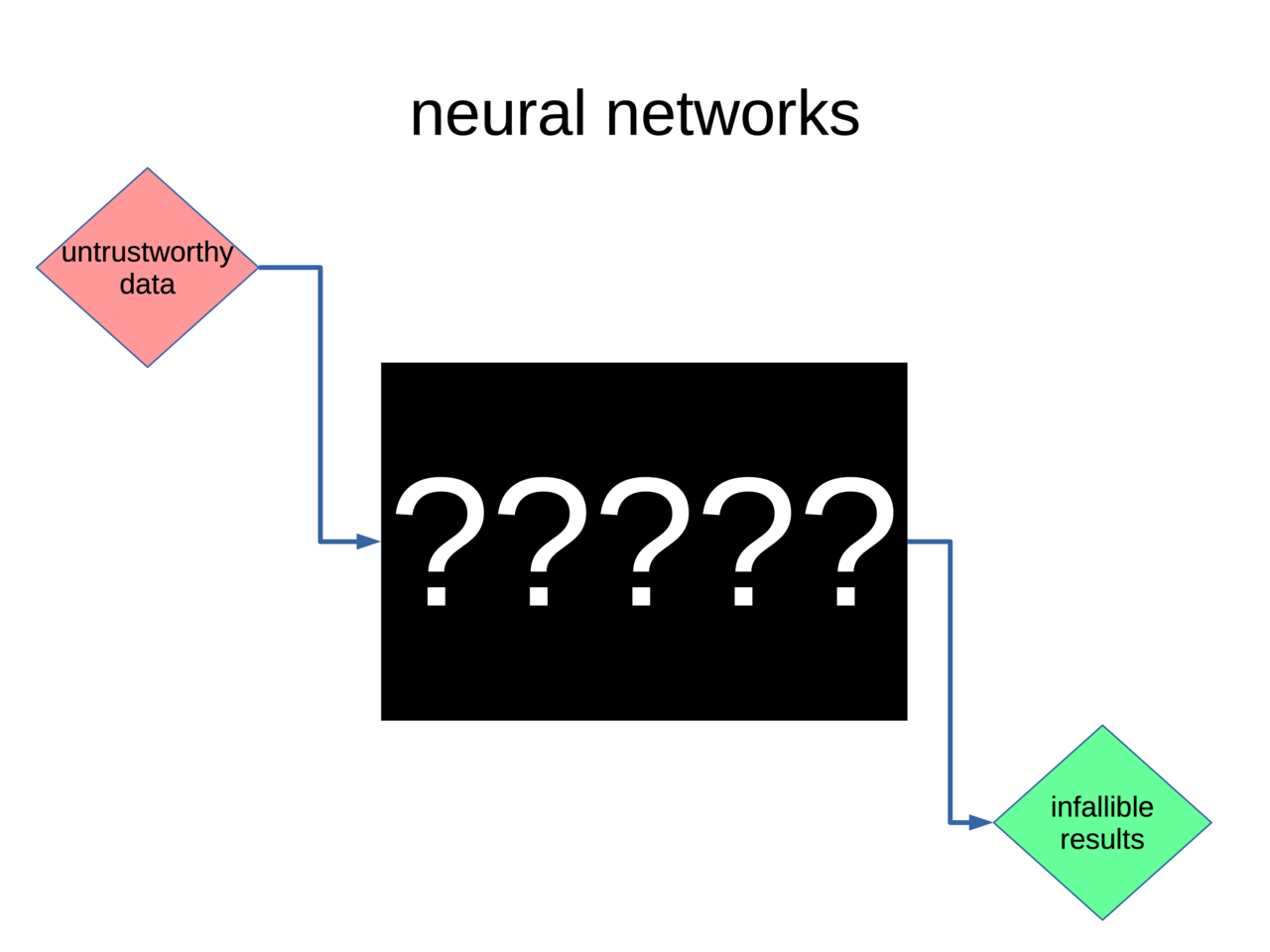
To understand the challenge, it helps to see just how differently brains and computers handle information. A computer chip runs on crisp, binary logic: a voltage is either high or low, a bit is either one or zero, and a master clock keeps everything marching in lockstep. The brain does almost none of this. It runs on a wet chemistry of ions sloshing across membranes, neurotransmitters spilling across tiny gaps, and timing that is loose, noisy, and analog. Where a processor is precise and brittle, the brain is approximate and resilient.
So when scientists talk about moving neurochemical data into computer programs and AI models, they are really trying to bridge two languages that do not naturally speak to each other. One is the language of biology, full of concentrations, receptors, and reaction rates. The other is the language of computation, full of variables, weights, and functions. The whole field of computational neuroscience exists in the space between them, and it has spent decades building the dictionaries that let one be expressed in terms of the other. You can explore more of this territory through our computational neuroscience coverage.
What Neurochemical Data Actually Looks Like
Before you can feed neurochemistry into a model, you have to measure it, and that turns out to be genuinely difficult. Chemistry inside a living brain happens fast, at tiny scales, and in places that are hard to reach without disturbing the very thing you want to observe. Researchers have built an impressive toolkit anyway. Microdialysis can sample the fluid around neurons to see which chemicals are present. A technique called fast-scan cyclic voltammetry can track split-second changes in dopamine using a tiny carbon electrode. And newer fluorescent sensors, engineered proteins that light up when a specific neurotransmitter binds to them, let scientists literally watch chemical signaling flicker across the brain in real time.
Each method produces a different kind of data. Some give you a concentration over time at a single point. Others give you a sprawling movie of activity across a whole region. Then there are the indirect measures, like brain imaging, that track blood flow and oxygen as stand-ins for activity rather than measuring chemicals directly. All of this raw information arrives in formats that a computer can store, but storing numbers is not the same as understanding them. The hard part is figuring out what structure hides inside the noise, and that is where modeling begins.
Turning a Synapse Into Equations
The single synapse is where neurochemistry and mathematics first shook hands. A synapse is the junction where one neuron passes a message to the next, usually by releasing a puff of neurotransmitter that drifts across a microscopic gap and lands on receptors on the other side. It sounds simple, but an enormous amount happens in that moment: molecules are released in packets, they diffuse, they bind, they are cleared away, and the receiving neuron sums up everything it is hearing from thousands of such junctions at once.
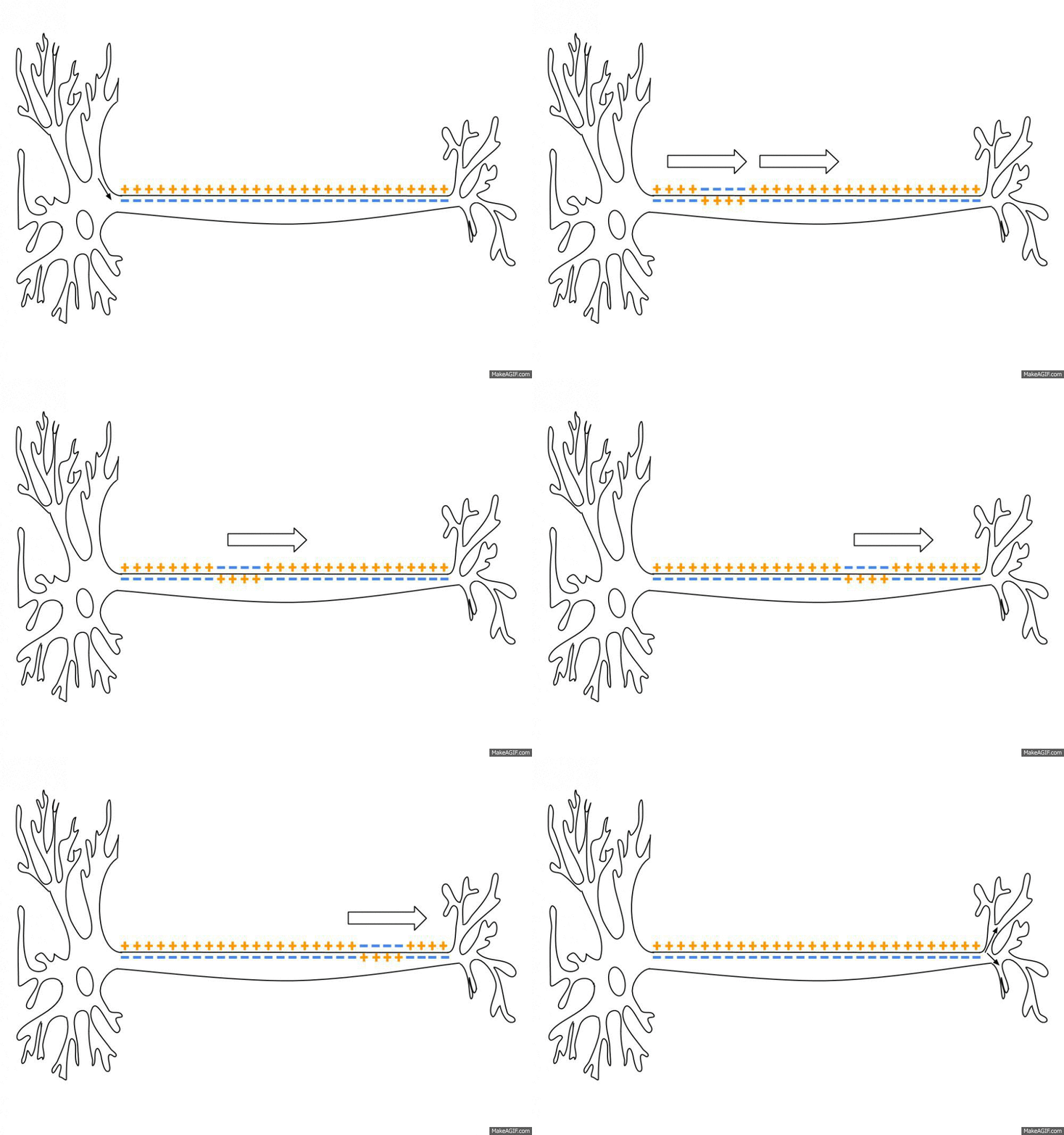
The landmark moment came in the mid-twentieth century, when two physiologists worked out a set of equations describing how a neuron generates an electrical spike by moving ions across its membrane. Their model was so accurate that it still anchors the field today, and it earned them a Nobel Prize. What made it revolutionary was the idea that something as alive and squishy as a nerve cell could be captured in clean mathematics. Once you have equations like that, you can put them inside a computer and simulate a neuron firing without ever touching a real one.
From there, models grew in ambition. Researchers wrote rules for how synapses get stronger or weaker with use, a chemical process underlying learning and memory. They built models of how dopamine or serotonin modulates whole networks, not by carrying a single message but by shifting the mood and gain of large populations of neurons at once. Each of these models is a small act of translation, taking a chemical reality and re-expressing it as something a machine can run. The trade-off is always the same: a more detailed model is more faithful but slower and harder to scale, while a simpler model runs fast but throws away biological richness.
The Dopamine Connection to Machine Learning
Here is one of the most remarkable stories in all of science, because it runs in both directions at once. In the 1990s, neuroscientists studying dopamine noticed that the chemical did not simply signal reward. Instead, dopamine neurons seemed to fire in proportion to how surprising a reward was, going quiet when things turned out as expected and dipping when an expected reward failed to arrive. We covered this rethink in our piece on dopamine and neurochemistry.
At almost the same time, computer scientists working on a branch of machine learning called reinforcement learning had developed an algorithm built on almost exactly the same idea. Their method, known as temporal difference learning, taught software agents by computing a reward prediction error: the gap between what was expected and what actually happened. When researchers compared the math of this algorithm to the behavior of real dopamine neurons, the resemblance was uncanny. The brain appeared to be running, in chemistry, a computation that engineers had derived independently in code.
This convergence was a gift to both fields. For neuroscientists, it offered a precise, testable theory of what dopamine is for. For AI researchers, it suggested they were on the right track, since the brain had seemingly arrived at the same solution through evolution. Reinforcement learning went on to power some of the most famous achievements in modern AI, including systems that mastered complex games. And every time one of those systems learns from a reward signal, it is echoing a principle first glimpsed in the firing of dopamine cells. You can read more in our reinforcement learning coverage.
From Real Neurons to Artificial Ones
It is worth being honest about how much, and how little, today’s artificial neural networks actually borrow from neurochemistry. The artificial “neurons” in a deep learning model are cartoonishly simple compared to the real thing. A biological neuron is a living cell with branching structures, thousands of chemical synapses, and behavior shaped by dozens of neurotransmitters and the genes switched on inside it. An artificial neuron, by contrast, is mostly just a number that gets multiplied, added, and passed through a simple function. The inspiration is real, but the gap is enormous.
That gap is exactly what a lot of current research is trying to narrow, and neurochemistry is one of the richest sources of ideas for doing so. Real brains use chemical neuromodulators to change how they learn depending on context, turning plasticity up when something important is happening and down when it is not. Some researchers are now building artificial systems with similar tricks, letting a network adjust its own learning rate on the fly the way a dopamine or acetylcholine signal might. Others are exploring how the brain’s use of inhibition, balance, and noise could make artificial networks more efficient and robust.
The point is not to copy the brain slavishly. Airplanes do not flap their wings, and there is no reason an intelligent machine must reproduce every detail of biology. But the brain remains the only example we have of a system that learns flexibly, runs on very little power, and keeps working when parts of it fail. Mining its chemistry for principles, rather than blueprints, is one of the most promising strategies in the field. Our artificial intelligence section follows these developments closely.
Neuromorphic Hardware: Chips That Think Chemically
Most AI today runs on hardware that is, at heart, deeply unlike a brain. Graphics processors crunch through enormous piles of numbers very fast, but they do so by shuttling data back and forth between memory and computation, burning a lot of energy in the process. A human brain, by comparison, runs on roughly the power of a dim light bulb. That staggering efficiency has inspired a different kind of computer chip, one designed from the ground up to imitate how neurons and synapses actually work. This field is called neuromorphic computing.
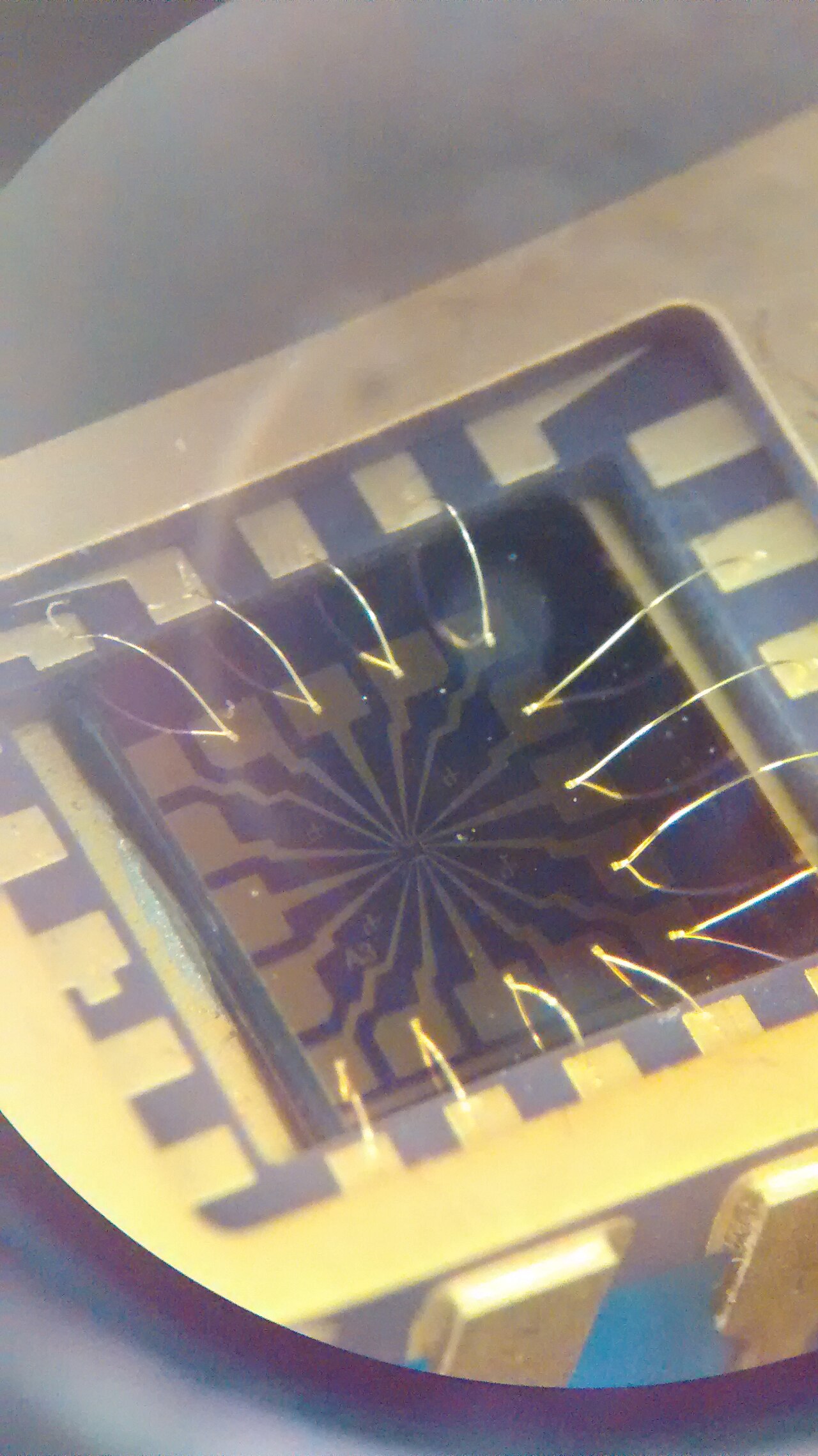
Neuromorphic chips try to bake the lessons of neurochemistry into silicon. Instead of separating memory and processing, they put them together, the way a synapse both stores a connection’s strength and uses it. Instead of a constant march of clock cycles, they communicate in spikes, brief bursts of activity that mirror how real neurons fire only when they have something to say. Some designs even use exotic materials whose physical properties change with use, mimicking the way a biological synapse strengthens or weakens over time.
The payoff, in principle, is huge gains in energy efficiency, which matters enormously as AI systems balloon in size and power consumption. A chip that processes information the way a brain does could run sophisticated models on a tiny battery, opening the door to smart sensors, hearing aids, and robots that think locally rather than phoning home to a giant data center. The field is still young, and these chips are not yet competitive for every task, but they represent one of the most direct attempts to turn neurochemical principles into working machines. Follow along in our neuromorphic computing coverage.
Wiring Diagrams and Digital Brains
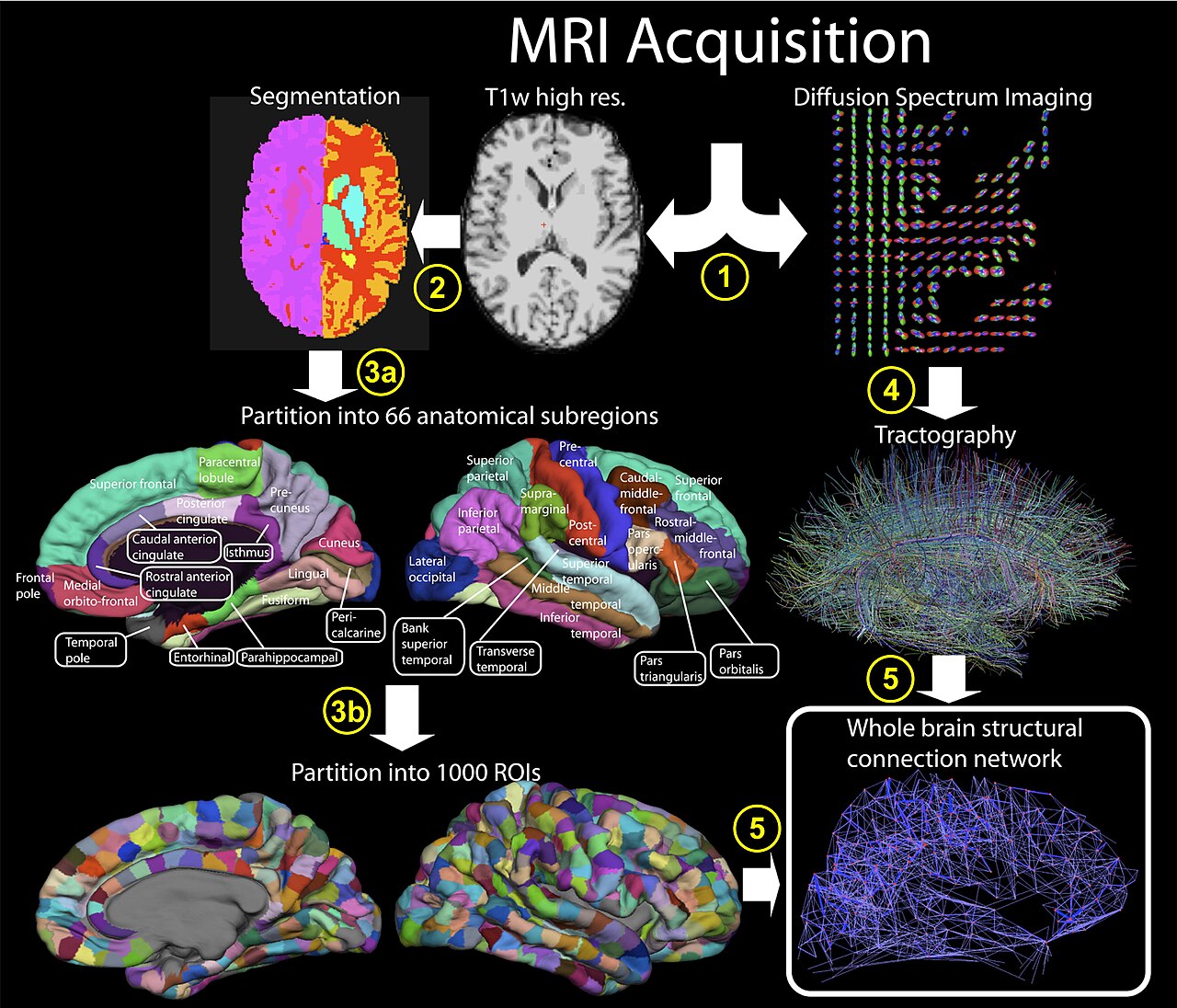
One of the boldest dreams in this whole enterprise is to build a complete map of a brain’s wiring, a connectome, and then bring it to life inside a computer. The logic is appealing: if you know exactly how every neuron connects to every other, and you understand the chemistry of those connections, perhaps you could simulate the whole thing and watch it behave. It is the ultimate act of translating biology into software.
Reality has been humbling but also genuinely thrilling. Scientists have now mapped the complete connectome of a fruit fly’s brain, an achievement that seemed impossibly distant not long ago. These maps are extraordinary resources, letting researchers trace circuits and test ideas in simulation. But a wiring diagram alone is not enough, because the same circuit can behave completely differently depending on which neurochemicals are washing over it at a given moment. A connectome tells you the roads; the chemistry tells you the traffic, the weather, and the speed limits, all of which change constantly.
This is why large-scale brain simulation projects have learned to temper their promises. Building a digital brain is not just a matter of copying connections; it requires capturing the dynamic chemical state that makes those connections mean something. Still, every fruit fly map and every detailed simulation pushes the translation forward, turning more of the brain’s living complexity into data that algorithms can explore.
AI That Reads the Brain’s Chemistry
So far we have mostly talked about feeding brain principles into AI. But the relationship flows the other way too, and increasingly the most practical wins come from using AI to make sense of neurochemical data. The brain produces overwhelming floods of information, far more than any human could sift through by hand, and machine learning is extraordinarily good at finding patterns in floods of information.
Consider the new fluorescent sensors that light up when neurotransmitters are released. They generate vast movies of chemical activity, and AI tools can comb through that footage to detect signaling events, classify them, and link them to behavior. In drug discovery, machine learning models trained on chemical and biological data help predict how a candidate molecule might interact with the receptors that neurotransmitters use, potentially speeding the hunt for new treatments for depression, addiction, or Parkinson’s disease. Models can also scan brain-activity recordings to flag the subtle signatures of disorders that a clinician might miss.
In all these cases, AI acts less like an artificial brain and more like a tireless research assistant, one that can hold millions of data points in mind at once. The neurochemical data is the raw material; the model is the lens that brings hidden structure into focus. As measurement tools keep improving, this partnership is only going to grow more important, because the bottleneck in neuroscience is shifting from collecting data to understanding it.
The Living Data Pipeline of Brain-Computer Interfaces
Nowhere does the translation between brain and machine feel more vivid than in brain-computer interfaces. These systems read signals directly from neural tissue and convert them into commands, letting a paralyzed person move a cursor, control a robotic arm, or even produce speech through thought alone. They are the most literal example of neural data flowing into a computer program in real time.
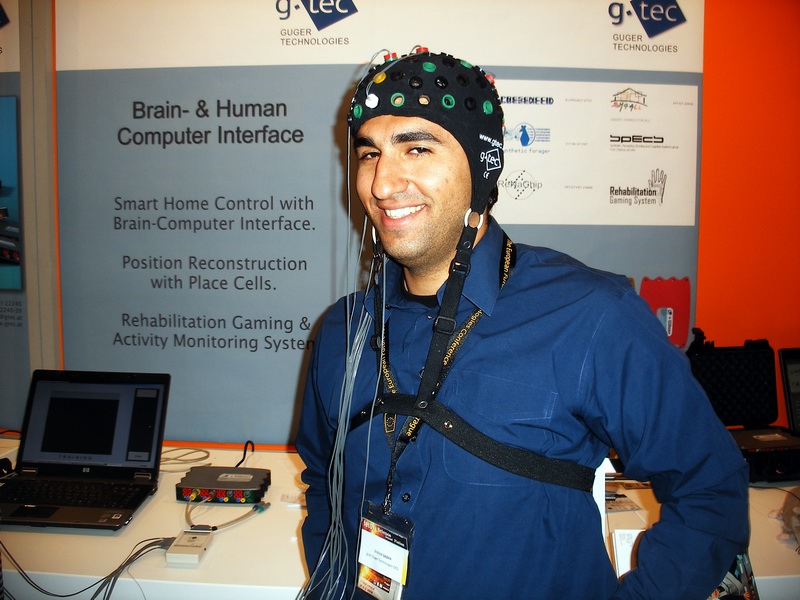
The chemistry sits underneath everything these devices do, even when they are reading electrical signals rather than molecules directly. Every spike a sensor detects is the downstream result of neurotransmitters doing their work at countless synapses. The interface captures the electrical echo of that chemistry and hands it to software, where machine learning models decode the user’s intention. Crucially, these models often improve over time, learning the specific quirks of one person’s brain, which is itself a kind of ongoing translation between a unique nervous system and a generic computer.
The progress here has been startling, with recent systems decoding intended speech and movement at speeds that felt like science fiction only a few years ago. Yet the field also runs straight into the limits of our chemical understanding. Electrical recordings capture only a sliver of what the brain is doing, missing most of the rich neuromodulatory signaling that shapes thought and emotion. Pushing brain-computer interfaces further will likely require better ways to sense and interpret that chemistry, not just the electrical sparks on top of it. Explore more in our brain-computer interface coverage.
The Limits and the Hype
It would be easy to read all of this and conclude that we are on the verge of uploading minds or building digital brains. We are not, and it is worth being clear-eyed about why. The central obstacle is complexity. The human brain contains roughly eighty-six billion neurons, each with thousands of connections, all bathed in dozens of interacting chemicals whose effects depend on context in ways we are only beginning to chart. Every model is a simplification, and every simplification leaves something out.
There is also a deeper conceptual gap. We can describe how a synapse releases dopamine in exquisite detail, and we can write algorithms inspired by that process, but describing a mechanism is not the same as understanding how billions of them give rise to a thought, a feeling, or a decision. Translating data is one thing; translating meaning is another, and the second remains largely mysterious. A model can reproduce a behavior without truly explaining it, which is a humbling reminder that fidelity and understanding are not the same.
Then there are practical and ethical limits. Measuring neurochemistry in living human brains is invasive and constrained, so much of our data comes from animals or from indirect proxies that blur the chemical picture. And as these technologies grow more capable, especially brain-computer interfaces, serious questions arise about privacy, consent, and what it means to let machines read and influence neural activity. Sober progress in this field has to carry those concerns alongside the technical excitement.
Where This Is All Heading
For all those caveats, the trajectory is unmistakable. Measurement tools are getting sharper, letting researchers watch more neurotransmitters in more places at finer resolution. Models are getting richer, incorporating more of the brain’s chemical subtlety rather than abstracting it all away. And the two-way traffic between neuroscience and AI is accelerating, with each field handing the other new tools and new questions. The dopamine story showed that this exchange can produce ideas neither side would have reached alone, and there is little reason to think it was the last such convergence.
In the near term, the most tangible benefits will probably come in medicine and engineering rather than in grand simulations of consciousness. Better models of neurochemistry could sharpen the search for drugs that treat mental illness with fewer side effects. Neuromorphic chips could make AI dramatically more efficient. Brain-computer interfaces could restore lost abilities to people with paralysis or injury. Each of these is a concrete payoff from learning to render the brain’s chemistry in a form that machines can use.
Further out, the dream of a faithful digital model of a brain remains alive, even if it is far off. Getting there will demand not just more data but better theories, frameworks that explain why the chemistry is arranged the way it is, not merely what it does. That kind of understanding tends to arrive slowly and unpredictably, often from unexpected directions. If history is any guide, the next big leap may come from someone noticing, as happened with dopamine, that a pattern in the brain matches a pattern in a piece of code.
Closing Thoughts
The effort to move neurochemical data into computer programs and AI models is really an effort to translate one of nature’s most intricate creations into a language we can manipulate, test, and build with. It has already produced genuine wonders: algorithms that learn like brains do, chips that whisper in spikes, interfaces that turn thought into action. It has also run headlong into the brain’s staggering complexity, a reminder that we are early in this journey rather than near its end. What makes the work so compelling is its strange circularity. The brain taught us how to build thinking machines, and now those machines are helping us decode the brain. Each turn of that loop brings the chemistry of the mind a little closer to the logic of the computer, and leaves us with a richer appreciation of just how extraordinary the original wetware really is. For more, browse our coverage of neuroscience, computational neuroscience, and artificial intelligence.