Neurophysiology is the study of how nerve cells actually do their work: how they generate electrical spikes, how they pass signals across networks, and how those signals add up to perception, memory, and action. Artificial intelligence is the attempt to build machines that perceive, remember, and act. For more than half a century these two fields have been quietly feeding each other, and lately the exchange has turned into a flood. This article looks at how discoveries about the living brain’s physiology have been adapted into AI systems, backed by the real scientific papers that mark each turning point. The story is not one of simple copying; it is a tale of inspiration, abstraction, and the occasional astonishing convergence.
Table of Contents
- It All Starts With a Spike
- The Visual Cortex and the Birth of Deep Vision
- When AI Models Began Predicting the Brain
- Reward, Prediction, and the Dopamine Algorithm
- Predictive Coding: A Brain That Guesses
- Grid Cells and Machines That Navigate
- Spiking Networks: The Third Generation
- The Hidden Power of a Single Neuron
- A Genuinely Two-Way Street
- Where the Analogy Breaks Down
- What Comes Next
- Closing Thoughts
It All Starts With a Spike
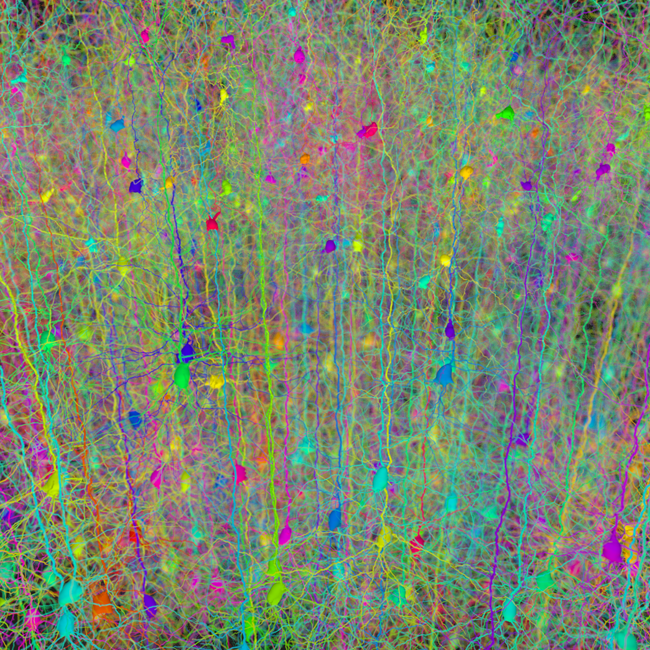
Everything in neurophysiology begins with the action potential, the brief electrical pulse a neuron fires to communicate. The foundational description of how this works came from Alan Hodgkin and Andrew Huxley, who in 1952 published a quantitative model of how ions crossing a nerve membrane produce that spike (Hodgkin & Huxley, Journal of Physiology, 1952). Their equations were so accurate that they remain a cornerstone of the field, and the work earned a Nobel Prize. What mattered for AI was the deeper lesson: a living, firing neuron could be captured in clean mathematics and, therefore, simulated on a machine.
That insight set the stage for everything that followed. Once you can write down how a neuron behaves, you can ask whether a simplified version of it might be useful for computing. Early artificial neurons stripped the biology down to a bare skeleton, keeping only the idea that a unit sums up its inputs and fires if the total crosses a threshold. It was a crude caricature of Hodgkin and Huxley’s rich picture, but it was enough to launch the entire enterprise of neural-network computing. You can follow these themes in our neurophysiology coverage.
The Visual Cortex and the Birth of Deep Vision
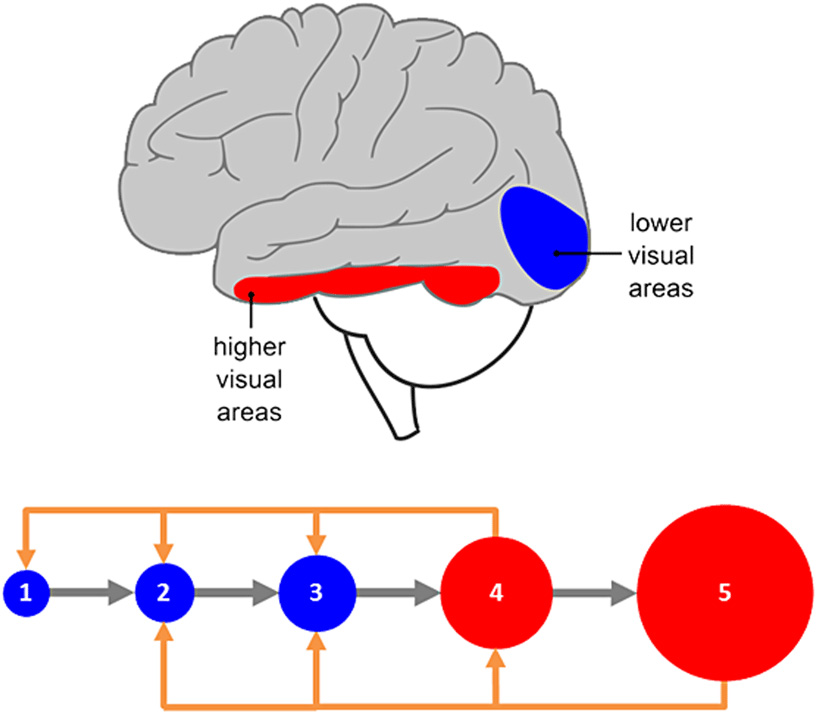
Perhaps the most influential discovery in this whole history came from two physiologists, David Hubel and Torsten Wiesel, who recorded from neurons in a cat’s visual cortex and found that individual cells responded to specific features, like edges at particular angles (Hubel & Wiesel, Journal of Physiology, 1962). Even more striking, they showed that the visual system is built in layers, with simple cells detecting basic features and more complex cells combining those into richer patterns. This hierarchy, simple parts assembling into sophisticated wholes, became one of the most fertile ideas in modern AI.
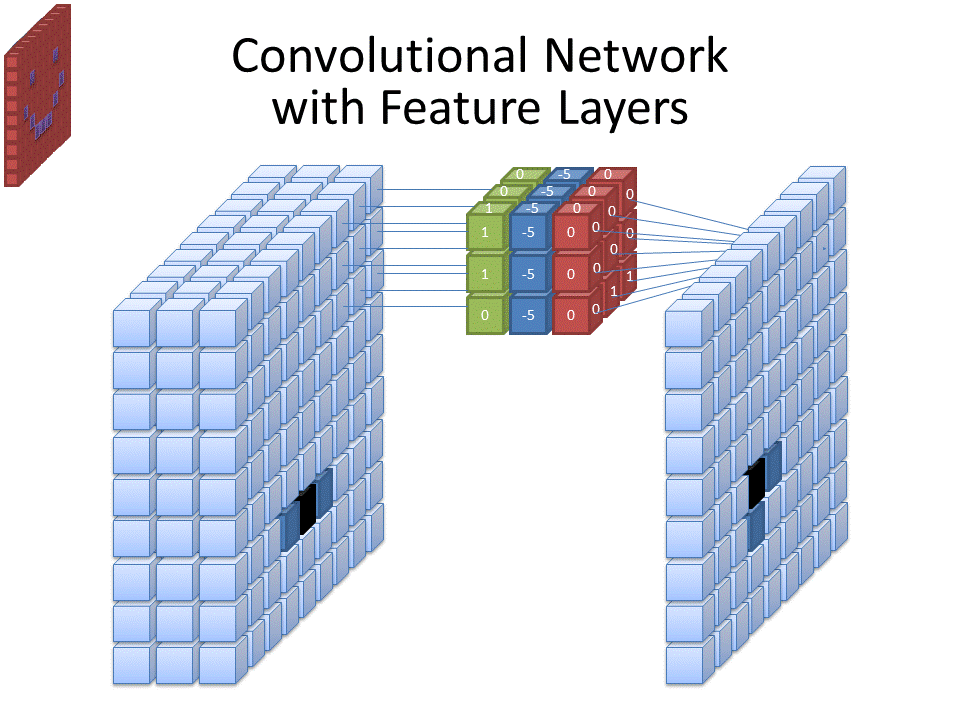
Decades later, that physiological picture was reborn as the convolutional neural network, the architecture behind the deep-learning revolution in computer vision. A convolutional network processes an image in stacked layers, with early layers picking up edges and textures and later layers assembling them into objects, almost exactly the scheme Hubel and Wiesel observed in living tissue. The resemblance is not coincidental; the designers were explicitly inspired by the layered visual cortex. It is one of the clearest cases of a neurophysiological finding being adapted, decades on, into a transformative piece of engineering.
When AI Models Began Predicting the Brain
For a long time the inspiration flowed mostly one way, from brain to machine. Then something remarkable happened: the machines got good enough to predict the brain. In an influential study, Daniel Yamins and James DiCarlo showed that deep neural networks trained to recognize objects ended up developing internal representations that closely matched the activity of real neurons in the primate visual cortex (Yamins & DiCarlo, Nature Neuroscience, 2016). The networks were never told to imitate the brain; they were simply trained to see well, and brain-like structure emerged on its own.
This was a profound moment for both fields. For neuroscientists, it offered a new kind of tool: a working model whose internal states could be compared, layer by layer, against measurements from living brains. For AI researchers, it suggested that the solutions their networks found were not arbitrary but reflected something deep about how vision has to work. The paper helped launch a whole research program of using goal-driven deep networks as scientific models of sensory systems, blurring the line between building intelligence and explaining it. We track this overlap in our computational neuroscience section.
Reward, Prediction, and the Dopamine Algorithm
One of the most celebrated convergences between neurophysiology and AI involves the chemical dopamine. In a landmark paper, Wolfram Schultz, Peter Dayan, and Read Montague proposed that the firing of dopamine neurons encodes a reward prediction error, the difference between expected and received reward (Schultz, Dayan & Montague, Science, 1997). Strikingly, this was almost exactly the quantity at the heart of an existing machine-learning method called temporal difference learning, developed independently by computer scientists.
The brain, it seemed, had stumbled onto the same learning rule that engineers had derived from pure theory. This insight gave neuroscientists a precise computational account of what dopamine does, and it gave AI researchers confidence that reinforcement learning was tapping into a genuinely powerful principle. We explored the biology of this in our piece on dopamine and neurochemistry. The practical impact was enormous: reinforcement learning, built on prediction errors, later powered AI systems that mastered complex games and control problems, every one of them echoing a pattern first seen in the firing of midbrain neurons.
Predictive Coding: A Brain That Guesses
A related and equally influential idea is predictive coding, the notion that the brain is not a passive receiver of sensory information but an active prediction machine. In a foundational paper, Rajesh Rao and Dana Ballard proposed that the visual cortex constantly generates predictions about incoming signals and only passes forward the errors, the parts it got wrong (Rao & Ballard, Nature Neuroscience, 1999). In this view, perception is less about building an image from scratch and more about correcting a running guess.
This framework has had a long reach into AI. The idea that a system should learn by predicting its own inputs and minimizing surprise underlies many modern self-supervised learning methods, where models train themselves by guessing missing or future parts of their data. Whether the brain literally implements predictive coding is still debated, but as an organizing principle it has been extraordinarily productive, shaping both theories of cortical function and the design of learning algorithms that need no human-labeled examples to improve.
Grid Cells and Machines That Navigate
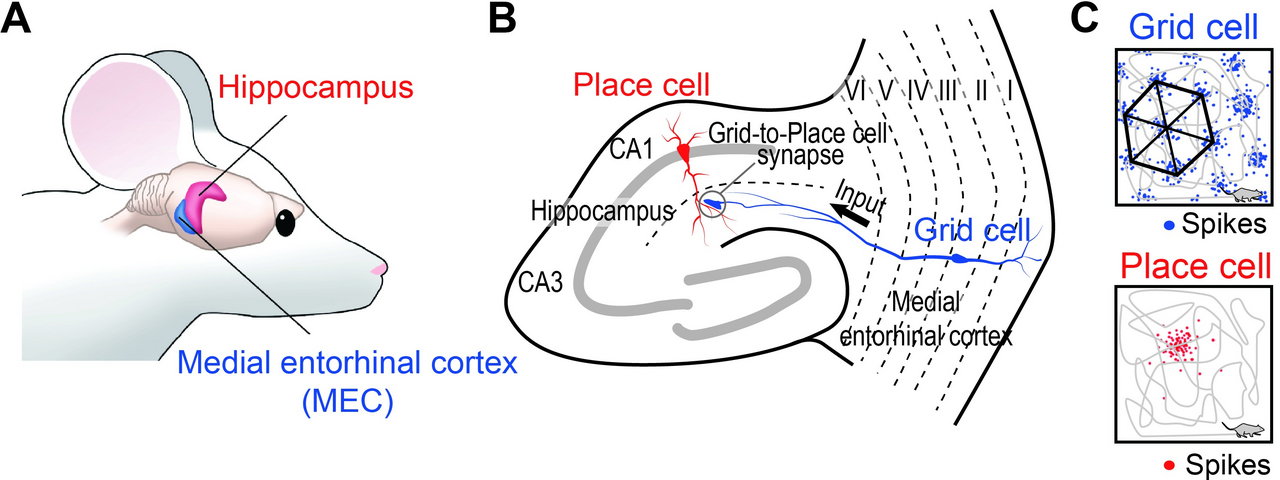
Few results capture the two-way traffic between neurophysiology and AI as vividly as the story of grid cells. In the mammalian brain, specialized neurons in a region called the entorhinal cortex fire in a stunning hexagonal pattern as an animal moves through space, forming a kind of internal coordinate system for navigation. The discovery of these cells reshaped our understanding of how brains map the world.
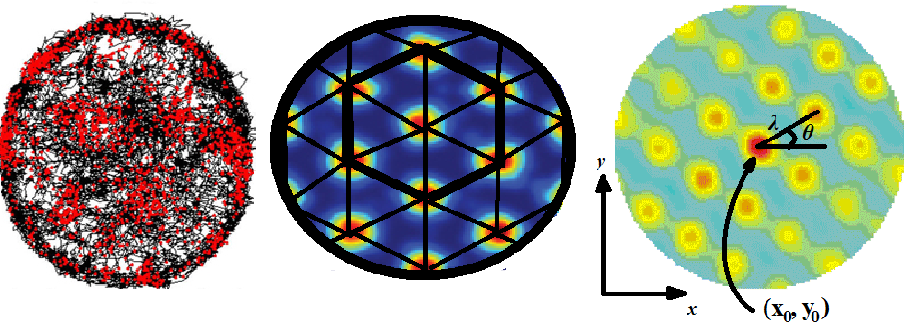
Then came a surprise from the AI side. A team trained an artificial agent to navigate using deep reinforcement learning, and grid-like representations spontaneously emerged inside the network, strongly resembling the real grid cells of the brain (Banino et al., Nature, 2018). The agents that developed these representations also navigated more skillfully, even finding shortcuts. As with the visual cortex models, nobody hand-built grid cells into the system; they arose because they are an efficient solution to the problem of navigation. The finding suggested that grid-like coding may be a fundamental computational strategy, one that both evolution and machine learning independently discover.
Spiking Networks: The Third Generation
Most of today’s AI uses artificial neurons that output smooth numbers, a far cry from the sharp electrical spikes of real neurophysiology. Wolfgang Maass argued that networks of spiking neurons, which communicate with discrete pulses in time the way biological neurons do, represent a distinct and more powerful class of model, which he called the third generation of neural network models (Maass, Neural Networks, 1997). The key idea is that real neurons encode information not just in how often they fire but in the precise timing of their spikes, a dimension that standard artificial networks largely ignore.
Adapting this to AI has become a serious research direction, especially for energy-efficient computing. Because spiking neurons are silent unless they have something to communicate, hardware built around them can be remarkably frugal with power, mirroring the brain’s own efficiency. This is the principle behind much neuromorphic engineering, and it has motivated a generation of researchers to develop ways to train spiking networks effectively, a genuinely hard problem because the sharp, all-or-nothing nature of a spike does not play nicely with the smooth mathematics that standard deep learning relies on. Follow this thread in our spiking neural networks coverage.
The Hidden Power of a Single Neuron
One of the most humbling recent findings concerns just how much computation a single real neuron performs. In artificial networks, one neuron is a trivial unit. But neurophysiology has long hinted that biological neurons, with their elaborate branching dendrites, are far more capable. A striking study put a number on this by showing that accurately mimicking the input-output behavior of a single cortical pyramidal neuron required a deep artificial network several layers deep (Beniaguev, Segev & London, Neuron, 2021).
The implication is remarkable: one biological neuron is, computationally, something like a small multi-layer network in its own right. The dendrites are not passive wires but active processors that combine and transform signals in nonlinear ways. This has obvious consequences for AI. It suggests that the dramatic simplification at the heart of artificial neurons throws away a lot of computational richness, and it hints that future architectures incorporating dendrite-like processing within each unit might be far more powerful or efficient than today’s designs. Researchers are now actively exploring exactly this idea.
A Genuinely Two-Way Street
It is tempting to frame all of this as the brain handing gifts to engineers, but the relationship is genuinely reciprocal, and influential voices have argued it should stay that way. In an influential review, Demis Hassabis and colleagues laid out the case that neuroscience and AI have historically advanced together and should continue to inform each other, with brain research offering inspiration and validation for artificial systems (Hassabis et al., Neuron, 2017). Their argument is that the brain remains our best proof that flexible, general intelligence is even possible, and so it is a natural source of clues for building it.
The traffic now runs strongly in both directions. Neurophysiologists use trained AI models as hypotheses about how brain circuits compute, comparing artificial activations to real recordings. AI researchers, in turn, raid neuroscience for ideas about memory, attention, navigation, and learning. Each side keeps the other honest: a brain theory that cannot be made to work in a model is suspect, and an AI design that looks nothing like any known biology may be missing something important. We follow both halves of this in our artificial intelligence coverage.
Where the Analogy Breaks Down
For all these triumphs, honesty demands acknowledging how far apart brains and machines remain. Artificial neurons are cartoons of the real thing, as the dendrite research makes painfully clear. Real neurophysiology involves dozens of cell types, intricate timing, chemical modulation, and feedback loops that today’s networks barely touch. When a deep network’s internal activity resembles the visual cortex, that is a meaningful and exciting result, but it does not mean the network works the way the brain does in any complete sense.
There is also a risk of reading too much into convergences. When grid-like codes emerge in a navigating agent, it is genuinely informative, yet it does not prove the brain uses the identical algorithm; it shows that the problem favors such solutions. The history of this field is full of seductive analogies that turned out to be partial. The most careful researchers treat the brain as a source of hypotheses to be tested, not a blueprint to be copied, precisely because the differences are as instructive as the similarities. Energy use is one stark example: the brain runs on roughly the power of a light bulb, while large AI systems consume orders of magnitude more, a gap that points to physiological principles we have not yet captured.
What Comes Next
Looking ahead, several of these threads seem poised to converge. The recognition that single neurons are powerful computers, the push toward spike-based processing, and the drive for energy efficiency all point in a similar direction: AI architectures that take the messy details of neurophysiology more seriously rather than abstracting them away. If the dramatic simplifications of current artificial neurons are leaving capability on the table, then richer, more biologically grounded units could open new doors.
At the same time, AI will keep serving as a laboratory for neuroscience. As models grow more capable, they become better stand-ins for testing theories of perception, memory, and decision-making that would be impossible to probe directly in a living brain. The grid-cell and visual-cortex studies are likely just early examples of a much broader practice in which artificial systems and biological recordings are compared side by side to sharpen our understanding of both. Tools for recording from living brains at ever-larger scale will feed this loop with richer data than ever before.
The deepest open question is whether intelligence, wherever it arises, tends to converge on a common set of solutions. The repeated discovery that AI systems trained on hard problems spontaneously develop brain-like representations hints that the answer might be yes, at least in part. If so, then the dialogue between neurophysiology and AI is not just useful but fundamental, two different routes toward the same underlying principles of how minds work.
Closing Thoughts
The adaptation of neurophysiology into artificial intelligence is one of the great cross-disciplinary stories of modern science. It runs from Hodgkin and Huxley’s equations for a single spike, through Hubel and Wiesel’s layered visual cortex and its rebirth as deep vision, to dopamine’s prediction errors, predictive coding, emergent grid cells, spiking networks, and the surprising depth hidden inside a single neuron. Each step was grounded in careful experiments on living tissue, and each found an unexpected second life in machines. What makes the field so compelling is that the borrowing now flows both ways: the brain still teaches the machines, but the machines have started to teach us about the brain. We are, in a real sense, watching two mirrors face each other, and the reflections are growing sharper with every passing year. For more, explore our coverage of neuroscience, computational neuroscience, and deep learning.