No people in Africa reaches farther than the Fulani. From the Atlantic coast of Senegal to the plains of Sudan, across some twenty countries and four thousand kilometers of savanna, live tens of millions who share a language, a cattle culture, and a code of dignity, and who recognize one another as kin across the whole width of the continent. They are herders who founded empires, nomads who produced scholars and kings, a nation scattered among dozens of others yet unmistakably one.
This portrait follows the Fulbe of the Sahel: their western origins and long march east, Fulfulde and its noun-class grammar, the cattle life and the pulaaku code of self-mastery, the milk economy in women’s hands, their carriage of Islam and their jihad empires, the gerewol male beauty contest and the river cattle crossings, and a pastoral people navigating a warming, crowded, and increasingly dangerous land.
Contents
- Herders of a Continent’s Widest Reach
- Fulani, Fulbe, Peul, the Many Names of One People
- Fulfulde and the Speech That Crossed a Continent
- From Senegal’s Coast to the Nile’s Approaches
- Cattle, the Bush Camp, and the Pulaaku Code
- Lineages, Castes, and the Silent Discipline
- Carriers of Islam Across the Sahel
- The Sharo Whip, the Gerewol, and the Milkmaid’s Route
- Gold, Leather, and the Art of the Calabash
- Milk, Millet, and the Nomad’s Bowl
- Beauty Contests of Men and the Cattle Crossings
- Jihad States, Empires, and the Herder’s Long March
- Two Hundred Million Cattle and a Sahel in Crisis
Herders of a Continent’s Widest Reach
No people in Africa is spread so wide as the Fulani. From the Atlantic coast of Senegal to the highlands of Cameroon and the plains of Sudan, across some twenty countries and more than four thousand kilometers, live communities who call themselves Fulbe, share a language, a cattle culture, and a code of conduct, and recognize one another as kin across the whole breadth of the continent’s savanna belt.
Their origins lie in the far west, in the Senegal River valley of Senegal, Mauritania, and Guinea, where herders speaking an Atlantic language of the Niger-Congo family emerged more than a thousand years ago, likely blending Saharan pastoralist and West African farming ancestry into a distinct cattle-keeping people.
From that western cradle they moved east in a slow migration of centuries, following the grass and the cattle across the Sahel, until Fulani communities dotted the whole grassland corridor south of the Sahara, some still fully nomadic, others settled into towns they came to rule.
That double life, the nomad with his herd and the scholar-prince in his city, is the Fulani signature: one of the last great pastoral peoples of the planet, and at the same time the founders of empires and universities across half of West Africa.
Scholars still debate the exact recipe of Fulani origins, the mix of Saharan cattle-keeper, West African farmer, and perhaps North African strains that produced a people often lighter-skinned and straighter-haired than their neighbors, a difference the Fulani themselves have long marked and that has fed both their pride and, in harder times, their scapegoating. What is not in doubt is the antiquity of the cattle bond that defines them.

Fulani, Fulbe, Peul, the Many Names of One People
The people call themselves Fulbe in the plural, Pullo in the singular; the outside names multiply with the languages of their neighbors. The Hausa call them Fulani, the name that traveled into English; the French of the western regions call them Peul; Arabic writers said Fellata, and other tongues add Fula, Fulani, and Filani besides.
One people, then, wears half a dozen names, a fair reflection of a nation scattered among dozens of others; a Pullo in Senegal, a Peul in Mali, a Fulani in Nigeria, and a Mbororo in Cameroon are the same people answering to their neighbors’ vocabularies.
The Mbororo name marks a distinction the Fulani themselves keep: the cattle nomads of the deep bush, proud keepers of the old wandering life, against the settled town Fulani who took to trade, scholarship, and rule.
Whatever the spelling, the self-name Fulbe and the language name Fulfulde or Pulaar bind the whole across every border, and a herder can travel the width of the Sahel and find, at each night’s camp, someone who answers to the same word.
Fulfulde and the Speech That Crossed a Continent
Fulfulde, called Pulaar in the west, is an Atlantic language of the Niger-Congo family, and its most striking feature is a system of noun classes, more than twenty of them, that sort every noun into a category marked by its ending, a grammatical machinery its neighbors’ languages mostly lack.
Spread across the width of the Sahel, it varies by region into a chain of dialects, Pulaar in Senegal, Pular in Guinea, Fulfulde in Mali, Niger, and Nigeria, mutually intelligible enough that a herder’s speech carries from the Atlantic toward Lake Chad.
It is a language of poetry and cattle: praise songs for prize bulls, pastoral verse recited at the camps, and a vast specialized vocabulary for the colors, markings, horns, and moods of cattle, the wealth the whole culture is built on.
Tens of millions speak it as a first language and many more as a trade tongue, and it is written in both Arabic-derived ajami script, used for centuries by Fulani scholars, and in Latin letters today; from Senegal to Sudan, Fulfulde is one of Africa’s true cross-continental languages.
The noun-class system is the language’s fingerprint: a word for person, thing, animal, or liquid each carries its own class marker, and the same root shifts shape as it moves between classes, a grammar that has made Fulfulde a favorite puzzle of linguists and a marker that ties the scattered dialects unmistakably together.

From Senegal’s Coast to the Nile’s Approaches
The Fulani homeland is not a country but a climate zone: the Sahel and savanna belt that runs across Africa just south of the Sahara, a band of grass and scattered thorn trees where cattle can graze and herders can move, stretching from the Atlantic surf of Senegal to the grasslands approaching the Nile in Sudan.
Within it lie their historic strongholds: the Futa Toro of the Senegal valley, the Futa Jallon highlands of Guinea, the Macina floodplain of the inland Niger delta in Mali, and the Sokoto country of northern Nigeria, each a Fulani heartland that became, at one time or another, a Fulani state.
The land dictates the life: the herds move north into fresh pasture with the rains and south to the rivers in the dry season, a pendulum swing of transhumance that the whole pastoral calendar is built around, and that increasingly collides with the farms expanding into the old cattle corridors.
Beyond the Sahel proper, Fulani communities reach into the Cameroon highlands, the Central African Republic, and the Nile Sudan, the eastern tip of a migration that never quite stopped, some clans still pushing the frontier of the grass eastward as their ancestors did a thousand years ago.
The transhumance routes are ancient rights of way, remembered and negotiated across generations, and their survival is now the central political question of the Sahel: as farms plow across the old corridors and states fail to protect the passages, the pendulum swing of herd and season that sustained the Fulani for a millennium is breaking down.

Cattle, the Bush Camp, and the Pulaaku Code
The old Fulani world turns on cattle. The zebu herds, humped and long-horned, are wealth, kin, and calendar at once: a family’s standing is read in its herd, marriages are sealed in cattle, and the animals are known individually by name, color, and lineage as members of the household.
The Mbororo nomads live the purest form of it, moving camp with the seasons across the bush, the women’s calabashes and mats loaded on pack oxen, the men and boys driving the herd between pasture and water on a route memorized from childhood; the settled Fulani farm and trade but keep the cattle ideal at the culture’s heart.
Governing it all is pulaaku, the code of being Fulani: reserve, patience, and self-mastery, the discipline that forbids showing pain, hunger, or strong emotion, the modesty that governs speech and dress, and the dignity a Pullo is expected to carry through hardship without complaint.
To have pulaaku is to be truly Fulbe; the herder who endures thirst, drought, and loss without breaking his composure embodies the ideal, and the code’s demands, semteende the sense of shame, munyal patience, hakkilo good sense, are taught as the marrow of the identity.
Pulaaku is not written in any book yet governs every camp: it is taught by example, enforced by shame, and measured in a herder’s bearing, and the Fulani say that a person who has lost pulaaku has ceased, in the way that matters, to be Fulbe at all, whatever their blood.

Lineages, Castes, and the Silent Discipline
Fulani society runs through patrilineal clans and lineages, the herding families grouped into named descent groups that share cattle marks, migration routes, and obligations, and beyond them into the broad division between the cattle Fulani of the bush and the town Fulani of the settled life.
The settled world added castes: alongside the free Fulani nobility stood client artisan groups, weavers, smiths, bards, and, in the era of the empires, the enslaved, a stratified order the herding camps kept more loosely than the courts and cities did.
The bard, the maabo or gawlo, holds the memory: praise singers who keep the genealogies, recite the deeds of ancestors, and sing the honor of patrons, the human archive of a people whose history ran by mouth long before it ran by pen.
Women hold the milk economy: the herds belong to the men, but the milk, butter, and cheese are the women’s to process, carry, and sell, and the Fulani milkmaid with her calabashes walking to the village market is one of the Sahel’s defining sights, the dairy trade a female domain across the whole Fulani world.
The bard’s memory is a living institution: at a naming or a wedding the maabo will recite a family’s descent back through generations, praising and, when unpaid, pointedly withholding praise, so that a lineage’s honor is quite literally in the singer’s keeping, and generosity to the bards is itself a mark of nobility.
Carriers of Islam Across the Sahel
The Fulani are among Africa’s most important carriers of Islam. Converted early in their western homelands, the settled Fulani became the Sahel’s great Muslim scholars, clerics, and teachers, and it was Fulani reformers who, in a chain of holy wars across the eighteenth and nineteenth centuries, remade the religious map of West Africa.
The town Fulani produced dynasties of learning: Quranic schools, libraries of Arabic and ajami manuscripts, and scholars whose works on law, theology, and Sufism circulated across the Sahel; Usman dan Fodio, the Fulani cleric who founded the Sokoto Caliphate, was as much a poet and jurist as a warrior.
The Sufi brotherhoods, the Qadiriyya and Tijaniyya, spread largely through Fulani channels, and their chanting circles, saints’ shrines, and teacher-student chains remain central to Sahel Islam, carried along the same routes as the cattle and the trade.
Among the deep-bush Mbororo the faith sits more lightly over older layers, protective amulets, bush spirits, and the diviner’s craft persisting beside the prayer mat, and the tension between the scholarly Islam of the towns and the folk practice of the camps runs through Fulani religious history to the present.
The Fulani jihads reshaped a subcontinent’s faith: what had been a religion of merchants and courts became, through Fulani reform movements, the faith of the countryside, and the manuscript libraries of Timbuktu, Sokoto, and Hamdallahi that these movements produced are now recognized as one of Africa’s great intellectual archives.
The Sharo Whip, the Gerewol, and the Milkmaid’s Route
The most famous Fulani tradition inverts the world’s usual order: at the gerewol of the Wodaabe, a Mbororo group of Niger and Chad, the men are the beauties. Painted, adorned, and dressed in their finest, young men line up to dance for hours in the sun, rolling their eyes and flashing their teeth, competing to be chosen by the women as the most beautiful.
The sharo, or soro, tests the other Fulani virtue: young men submit to being beaten with staves before the watching village, standing unflinching to prove the pulaaku mastery of pain, a rite of passage into manhood and, often, into the right to marry.
The worso and the annual cattle crossings gather the clans: seasonal reunions where scattered camps converge, marriages are arranged, herds are counted, and the year’s news travels, the pastoral calendar’s great social clearing-houses.
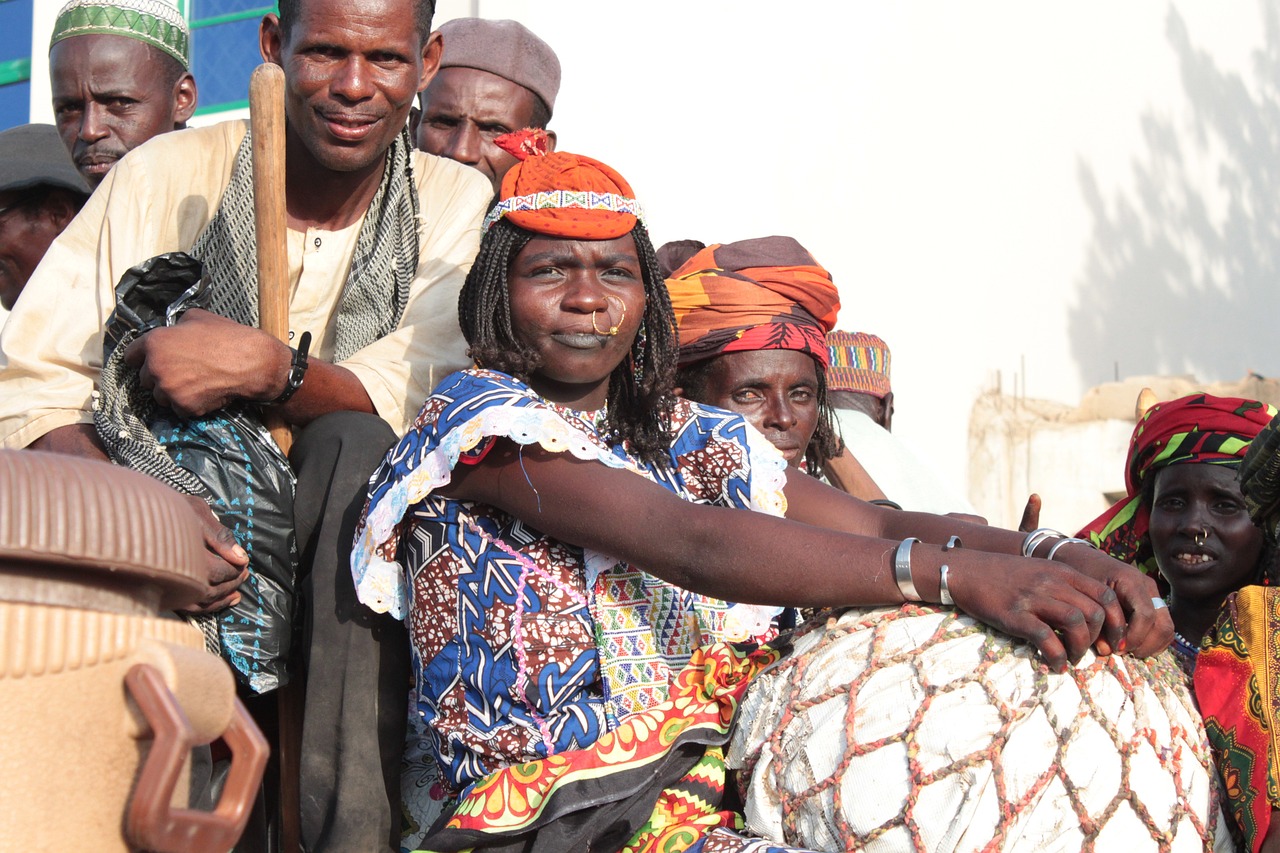
Music and adornment thread through it all: the herder’s flute and the one-string fiddle, the women’s elaborate braided hairstyles hung with coins and amber, the men’s leather and silver, and the henna and lip-darkening that turn the festival grounds into a display of a people who, beneath the code of reserve, prize beauty intensely.
The Wodaabe hold themselves the purest of the Fulbe, the ones who kept the bush life whole, and their gerewol has become the image of the whole people to the outside world, filmed and photographed until the painted dancer stands, a little unfairly, for a nation of forty million most of whom have never danced it.

Gold, Leather, and the Art of the Calabash
Fulani craft serves a mobile life and a love of adornment. The women’s gold is the signature: the great crescent earrings of twisted gold, kwottenai kanye, hammered by Fulani and client smiths, worn heavy at the ears and counted as portable family wealth, the most recognizable jewelry in West Africa.
Leather is the herder’s material: worked hides for sandals, bags, amulet cases, and the fringed and tooled cushions and mats of the camp, and the client leatherworker castes turned cattle skin into the furniture of a life that packed onto oxen.
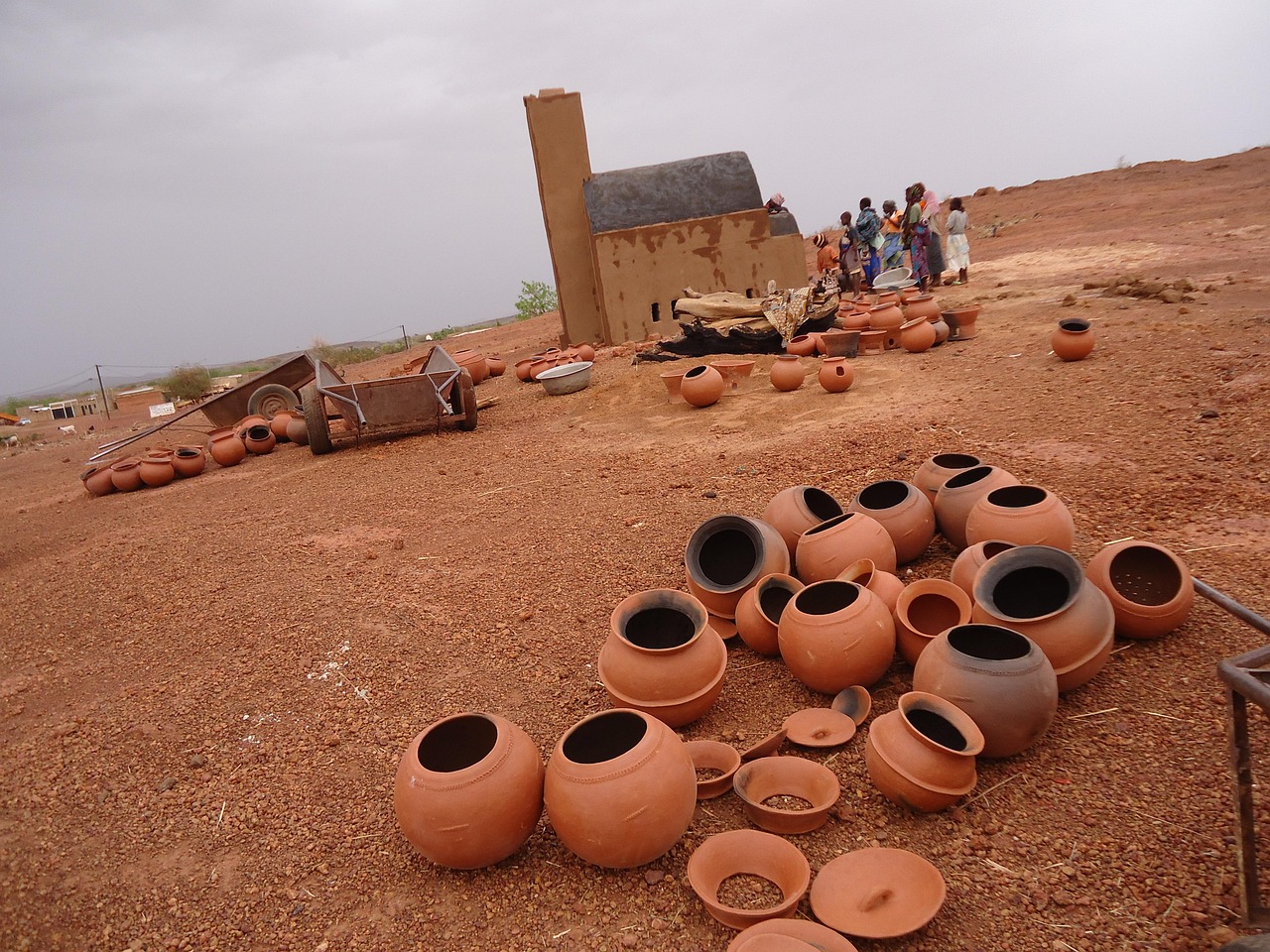
The calabash, the dried gourd, is the culture’s vessel and canvas: milk bowls and butter churns decorated with pyrography and carving, ranked and displayed as a bride’s wealth, stacked in pyramids that measure a woman’s standing.
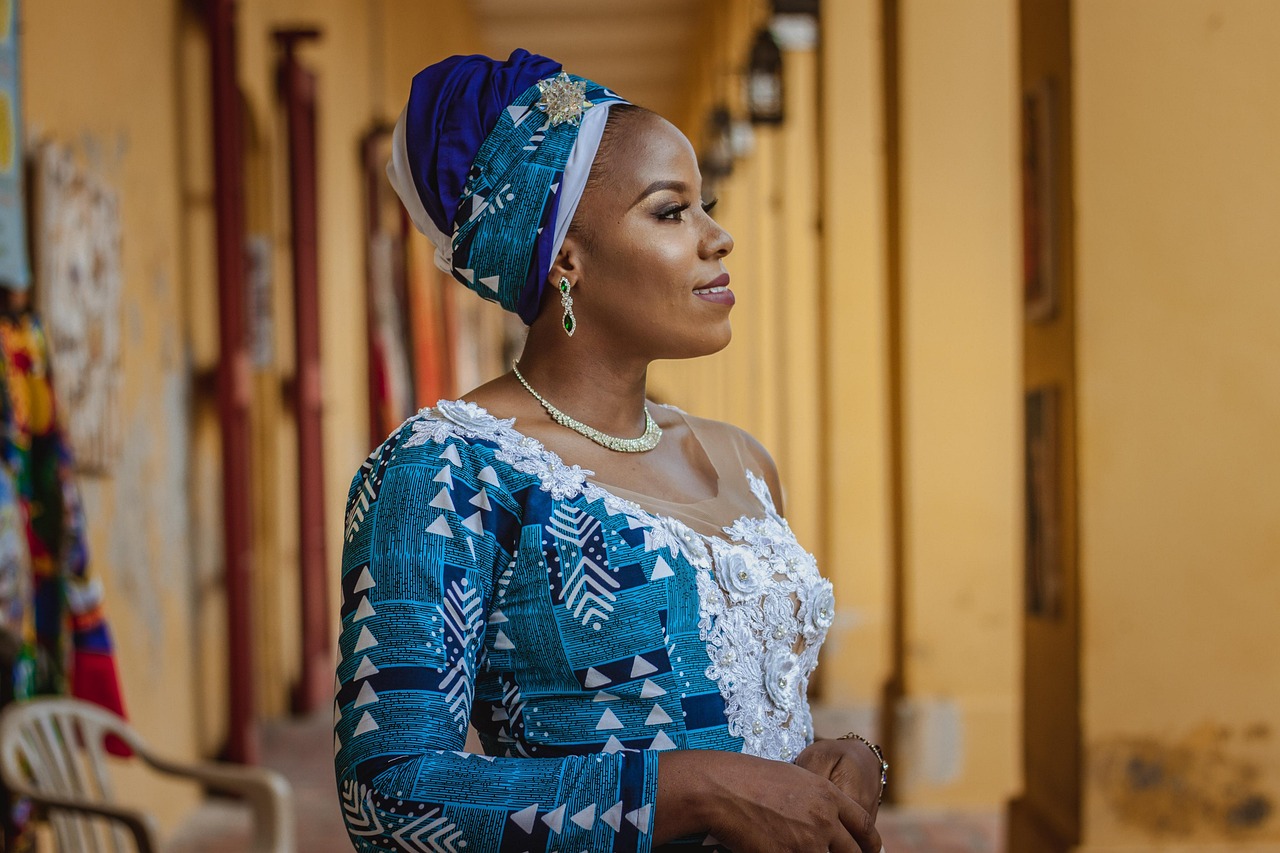
Weaving and dyeing clothe the settled Fulani in indigo and stripe, the women’s headscarves and wrappers and the men’s embroidered robes, and the braided, coin-hung, amber-heavy hairstyles of Fulani women are themselves a craft, sculpture worn on the head and read as a map of clan and status.
A Fulani woman’s wealth is worn and displayed: the gold crescents at her ears, the amber and coral in her hair, the ranked calabashes of her marriage stacked in the tent, all of it portable, all of it hers, a banking system in ornament suited to a people who could not carry land.
Milk, Millet, and the Nomad’s Bowl
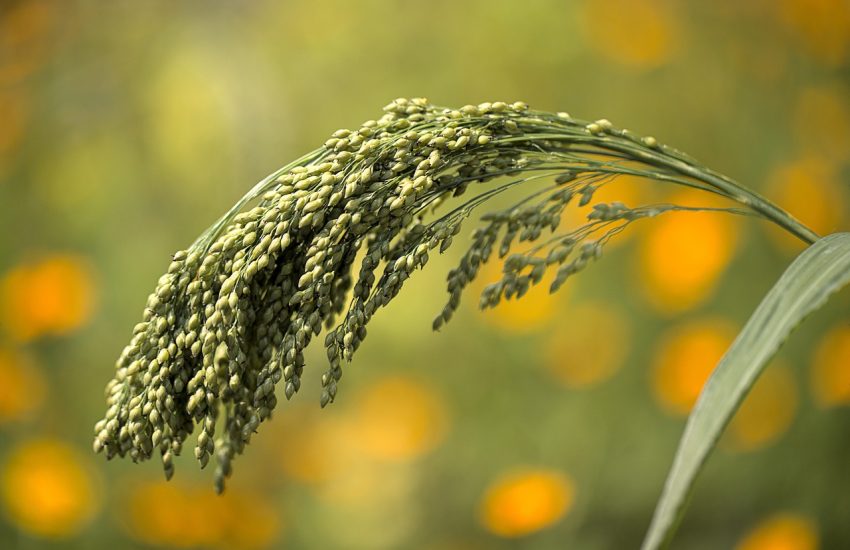
The Fulani diet is built on milk. Fresh, soured, and churned to butter, the produce of the herd is the pastoralist’s staple, and the classic meal is nyiiri, a stiff porridge of millet or sorghum, eaten with a sauce and a bowl of curdled milk, the dairy and the grain the two poles of the table.
The women’s milk trade barters the surplus for grain, vegetables, and salt in the village markets, and the exchange of pastoral milk for farmers’ millet is the oldest transaction of the Sahel, the economic hinge between the herder and the sower.
Fermented milk, kossam, sweetened and poured over grain or drunk alone, is the comfort food and the traveler’s ration, and butter serves for cooking, trade, and the cosmetics and hair-dressing the culture prizes.
Meat is not everyday food: cattle are wealth, not dinner, slaughtered for feasts, funerals, and honored guests rather than routine meals, and the true measure of Fulani hospitality is the bowl of milk pressed on the arriving stranger, the herder’s first and oldest courtesy.
The milk-for-grain exchange bound herder and farmer in mutual need for centuries, each supplying what the other could not grow, and the breakdown of that old complementarity into competition and violence is, at bottom, the tragedy of the modern Sahel written in the ledger of the marketplace.

Beauty Contests of Men and the Cattle Crossings
The gerewol is the festival the world knows: at the end of the rains, the Wodaabe clans of Niger and Chad gather, and the young men spend hours in makeup and ornament before dancing in long lines through the day, judged by young women who step forward to name the most beautiful, a male beauty pageant found nowhere else on earth.
The cattle crossings are the working festivals: at the Diafarabe crossing of the Niger in Mali, the herds return from months in the dry-season pastures and swim the river in a great tide of horns while the town watches, the herders judged on the condition of their cattle and the fattest herd’s owner crowned, a pastoral homecoming centuries old.
The worso reunions bring the scattered lineages together for naming ceremonies, marriages, and the arrangement of the year’s alliances, and the sharo whipping contests turn a village square into an arena of endurance and courtship.
Islamic feasts overlay the pastoral calendar, the two Eids kept camp and town alike with prayer, slaughter, and visiting, and the whole festival year moves with the cattle, gathering the nomads wherever the grass and the season bring them together.
Diafarabe’s crossing is dated by the elders and awaited by the whole delta: the first herd to ford, the condition of the cattle after months away, and the reunions of families separated by the long transhumance make it a new year of the pastoral calendar, tourism and tradition sharing the riverbank.

Jihad States, Empires, and the Herder’s Long March
Fulani history is a march east and a succession of states. From the western Futa homelands the herders spread across the Sahel over centuries, and where they settled in numbers they eventually rose: in the eighteenth century the scholars of Futa Jallon and Futa Toro founded Islamic states, imamates ruled by clerics, the first of the Fulani jihad polities.
The greatest came in 1804, when Usman dan Fodio, a Fulani scholar in Hausaland, launched a holy war that overthrew the Hausa kings and founded the Sokoto Caliphate, the largest state in nineteenth-century Africa, its emirates ruled by Fulani dynasties that govern, as traditional rulers, to this day. The Macina Empire in Mali and the Toucouleur Empire of al-Hajj Umar Tall followed, a chain of Fulani conquests that Islamized and reorganized much of West Africa.
European conquest ended the empires: the French and British broke the Fulani states between the 1890s and 1900s, but kept the Fulani emirs as instruments of indirect rule, so that colonial power flowed through the very dynasties it had defeated, and Fulani aristocracies survived into the independent nations.
Independence left the Fulani spread across a dozen new states as citizens and often minorities, their emirs still honored in Nigeria, their herders crossing borders the maps had drawn across the old cattle routes, a nation without a country entering the modern age.
The Sokoto Caliphate’s afterlife is visible every Friday: its emirs still ride in the durbar processions of northern Nigeria, their turbaned cavalry and long trumpets a pageant of the nineteenth-century state, and the caliph’s descendant, the Sultan of Sokoto, remains the spiritual head of Nigeria’s Muslims, a Fulani institution surviving two centuries and a colonial conquest.

Two Hundred Million Cattle and a Sahel in Crisis
The Fulani today number perhaps forty million and more, spread across some twenty countries from Senegal to Sudan, one of the largest pastoral peoples on the planet and the keepers of a great share of West Africa’s cattle. They range from fully nomadic Mbororo camps to presidents, professors, and business dynasties in the region’s capitals.
Their settled kin are woven into national life: Fulani have led Nigeria, Guinea, Senegal, Cameroon, and more, the Sokoto emirs remain among Nigeria’s most revered traditional rulers, and Fulani scholars, merchants, and politicians sit at the center of Sahel affairs.
But the herding life is in crisis. Climate change and the spreading Sahara shrink the pastures, farms expand into the old cattle corridors, and clashes between herders and farmers over land and water have turned deadly across the middle belt of Nigeria and the wider Sahel, some of it entangled with the region’s jihadist insurgencies and with ethnic scapegoating of the Fulani as a people.
Caught between an ancient way of life and a warming, crowded, conflicted land, the Fulani navigate the century as they have every other, moving with the grass and holding to the code: the herds still cross the rivers, the milkmaids still walk to market, the young men still paint their faces to dance, and pulaaku still asks the Pullo to carry it all with composure.
The herder-farmer conflict has become one of Africa’s deadliest and least understood crises: not simply ethnic or religious but a collision of ways of life over shrinking land, worsened by climate, arms, and politics, and the Fulani, blamed collectively for the violence of some, have found their whole people caught in a dangerous generalization across the Sahel.