In the forests and cities of southwestern Nigeria arose one of Africa’s most brilliant civilizations, a nation of crowned cities that produced sculpture to rival the world’s finest, a religious system that would cross the Atlantic and become a world faith, and a culture of kings, markets, masquerades, and art of extraordinary depth. The Yoruba, the children of Oduduwa, trace their world to the holy city of Ife, where they say the earth itself was made.
This portrait follows the Yoruba of the southwest: the classical bronzes of Ife and the empire of Oyo, a tonal language that survived in the chants of the diaspora, the walled cities of oba and compound and market, the orisha and Ifa divination that conquered the Americas, egungun masquerades and the talking drum, pounded yam and the New Yam Festival, and a global people of fifty million whose gods, art, and culture now reach around the world.
Contents
- Children of Oduduwa and the City of Ife
- Yoruba, Anago, Nago, the Names of a Nation
- A Tonal Tongue That Crossed the Atlantic
- The Forest Cities of the Southwest
- Kings, Compounds, and the Great Markets
- Lineage, the Oba, and the Balance of Powers
- The Orisha, Ifa Divination, and the New Faiths
- Egungun Masquerades and the Talking Drum
- Bronze of Ife, Beadwork, and Adire Cloth
- Pounded Yam, Egusi, and the Feast of the New Yam
- Osun-Osogbo and the Calendar of the Gods
- Empires of Oyo, Civil Wars, and the Diaspora
- A Global People of Fifty Million
Children of Oduduwa and the City of Ife
The Yoruba are one of Africa’s great city-building peoples, and in their own telling the world itself began in their homeland. At Ile-Ife, tradition holds, the god Oduduwa descended from heaven, lowered a chain, and let down earth upon the primordial waters, creating dry land and founding the first city; from Ife the crowned kings of all the Yoruba states trace their descent, and the Yoruba call themselves omo Oduduwa, the children of Oduduwa.
Behind the myth stands a real and ancient civilization: by the eleventh and twelfth centuries Ife was a walled city producing some of the most naturalistic sculpture in world art, its bronze and terracotta heads of astonishing refinement, evidence of a wealthy, organized, and artistically brilliant urban society at a time when much of the world built nothing to match it.
From Ife the Yoruba spread across the forests and savanna of what is now southwestern Nigeria, Benin, and Togo, founding a constellation of city-kingdoms, each with its crowned oba tracing legitimacy to Ife, a network of urban states unusually dense and unusually old for the West African forest.
They became, and remain, one of the most urbanized peoples of pre-colonial Africa: a nation of cities, kings, markets, and art, whose civilization at Ife and later at Oyo ranks among the high achievements of the continent.
The Ife heads confronted the twentieth-century world with a problem it was not ready for: when the German ethnographer Frobenius found them in 1910 he decided they must be relics of Atlantis, so unwilling was European scholarship to credit medieval Africans with such naturalism, and it took decades for the art world to accept that Ife’s sculptors had simply been that good.

Yoruba, Anago, Nago, the Names of a Nation
The name Yoruba was originally applied by outsiders, the Hausa to the north, to the people of the Oyo kingdom, and it spread through Hausa and then European usage until it covered the whole related family of city-states who shared a language and the Oduduwa origin. Only in the nineteenth century did the Yoruba themselves broadly adopt it as a single national name.
Before that, people identified by their city and kingdom, Oyo, Ijebu, Egba, Ekiti, Ijesha, Ondo, and the rest, subgroups that spoke dialects of one language and shared a culture but knew themselves first as citizens of their own crowned town.
In the diaspora other names traveled: the enslaved Yoruba carried to Cuba, Brazil, and beyond were called Lucumi, Nago, and Anago, names under which their religion and culture survived and flourished across the Atlantic, so that the Yoruba nation is known by different names on different shores.
Today omo Oduduwa binds the whole, a claim of common descent from the founder of Ife that unites the once-rival cities into one people, and the modern Yoruba embrace both the shared name and the proud particularity of their individual kingdoms.

A Tonal Tongue That Crossed the Atlantic
Yoruba is a tonal language of the Niger-Congo family’s Volta-Niger branch, spoken by tens of millions in Nigeria, Benin, and Togo, and it uses three tones, high, mid, and low, to distinguish words spelled with the same letters, so that meaning rides on pitch as much as on sound, a music built into the grammar.
It is a language of proverb and poetry: oral literature of immense richness, the oriki praise poems that recite the attributes and history of a person, lineage, or town, the ese Ifa verses of the divination corpus running to thousands of memorized poems, and a tradition of rhetoric prized in a culture where the well-turned proverb settles arguments.
Written in a Latin orthography with tone marks and subscript dots since the nineteenth century, Yoruba has a substantial literature, one of Africa’s first novels in an indigenous language, a vast newspaper and religious press, and a thriving film industry, Nollywood’s Yoruba wing, that carries the language to a global audience.
Across the Atlantic the language survived as liturgy: the Lucumi of Cuba and the Nago of Brazil preserved Yoruba in the chants and prayers of their religion long after daily speech faded, so that ritual Yoruba is still sung in Havana and Bahia, a tongue that crossed the ocean in the memory of the enslaved.
The three tones make Yoruba a singer’s and a drummer’s language: because pitch carries meaning, the talking drum can reproduce speech by reproducing its tones, and Yoruba praise poetry, sung and drummed, blurs the line between language and music in a way that has fascinated linguists and musicians alike.
The Forest Cities of the Southwest
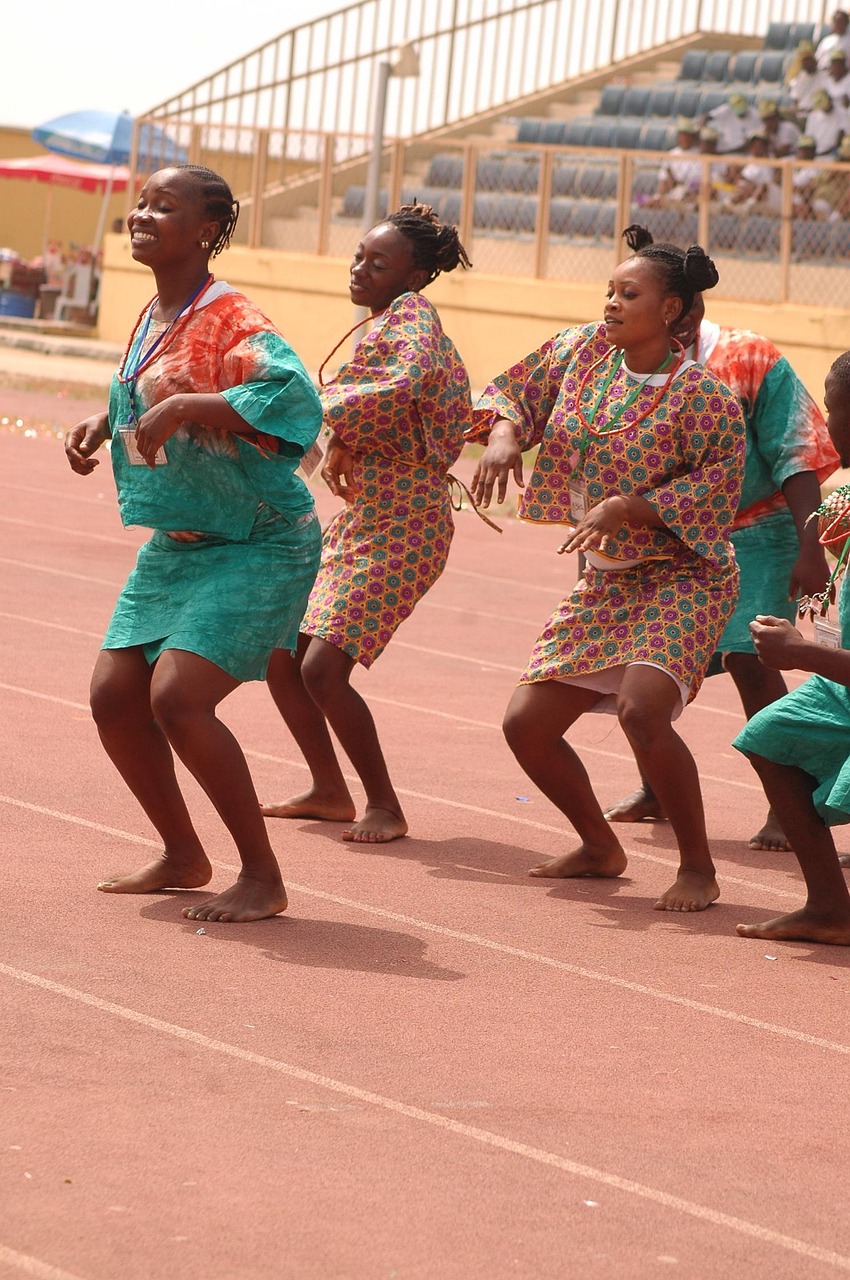
The Yoruba homeland is the southwest of Nigeria and the neighboring reaches of Benin and Togo, a land of forest giving way to savanna in the north, watered by rivers and dotted, unusually for the region, with large old cities, Ife, Oyo, Ibadan, Abeokuta, Ijebu-Ode, Ogbomosho, and the great modern megacity of Lagos on its lagoon.
It is a landscape of towns: the Yoruba built and lived in cities to a degree rare in pre-colonial Africa, walled urban centers surrounded by farmland worked by townsmen who walked out to their plots, so that the countryside was, in effect, the hinterland of the cities rather than a separate rural world.
The forest gave the wealth: kola nut and palm oil, the great cash crops of the pre-colonial and colonial economy, cocoa in the modern era, and the trade in these products, moving south to the coast and the Atlantic economy, made the Yoruba cities rich and drew them into the wider world early.
Lagos, founded on its lagoon islands and grown into one of the largest cities on earth, is the homeland’s modern heart, a Yoruba city that became Nigeria’s commercial capital and a magnet for the whole nation, the urban Yoruba tradition scaled up to the megacity.
Ibadan deserves its own note: grown in the nineteenth-century wars into one of the largest cities in tropical Africa before colonial rule, a vast expanse of brown-roofed compounds, it embodied the Yoruba genius for urban scale long before Lagos eclipsed it, a war-camp that became a metropolis.

Kings, Compounds, and the Great Markets
The old Yoruba world was organized around the crowned city. At its center stood the oba, the sacred king, in his palace, the afin, a ruler whose person was hedged with taboo, whose face was traditionally veiled by a beaded crown, and who embodied the town’s link to Ife and the gods.
The city was built of compounds: the agbo ile, large walled clusters of related families around shared courtyards, each descended from a common ancestor, each with its head, its lands, and its place in the town’s quarters, the lineage compound the social and physical building block of the Yoruba city.
The market was the city’s other pole: great periodic markets, often held in the shadow of the palace, run largely by women, where the produce of the farms, the goods of the craft guilds, and the trade of the wider world changed hands, and where the market women’s associations wielded real economic and political power.
Farming, though the townsmen’s work, was seasonal and communal, yam and grain and the tree crops of the forest, and the whole economy, urban, commercial, and agricultural at once, supported the dense city life and the courts, guilds, priesthoods, and armies that filled it.
The beaded veil of the oba’s crown expresses the theory of Yoruba kingship precisely: the king’s face is too charged with sacred power to be seen directly, so the ade crown’s curtain of beads shields the beholder, and the bird figures atop it recall the mothers whose hidden power the king must hold in balance.

Lineage, the Oba, and the Balance of Powers
Yoruba society balances the king against a web of countervailing powers. The oba reigns, but he rules with and against councils of chiefs, the Oyo Mesi of old Oyo the most famous, title-holders who could check the king and, in extremity, require his abdication or death, a constitutional balance that fascinated outsiders.
Age, lineage, and achievement all confer status: the elders of the compound, the chiefs of the town, the wealthy traders and successful warriors, the priests of the cults, and the heads of the craft guilds each hold their sphere, and titles, many of them purchasable or earned, ranked a person in a society acutely conscious of precedence.
Women held their own domains of power: the market women’s associations under their iyalode leader, the priestesses of the cults, and the queen mothers of the palace gave women organized influence over commerce, religion, and even politics that few contemporary societies matched.
Beneath the free population lay, before its abolition, the enslaved, and above the everyday world moved the secret societies, the Ogboni among them, whose elders held religious and judicial authority, a hidden government of the town running beside the visible court of the king.
The check on the king was real and sometimes fatal: in old Oyo the council of the Oyo Mesi could present the Alaafin with an empty calabash or parrot’s eggs, a signal that he had lost their confidence and must take his own life, a constitutional device that kept even the sacred king answerable to the chiefs of the realm.

The Orisha, Ifa Divination, and the New Faiths
The Yoruba gave the world one of its great religious systems. Above a remote high god, Olodumare, stand the orisha, hundreds of divinities who govern the forces of the world and the affairs of humanity: Ogun of iron and war, Sango of thunder, Osun of the river and love, Yemoja of the waters, Esu the trickster and messenger, each with its priesthood, festivals, and devotees.
At the system’s heart is Ifa, the divination that connects humans to the gods: the babalawo, the diviner, casts palm nuts or a divining chain and reads the pattern to select from the vast memorized corpus of Ifa verses the counsel and sacrifice a situation requires, a body of oral literature and philosophy recognized by UNESCO as a masterpiece of human heritage.
The religion crossed the Atlantic in the hold of the slave ships and, remarkably, conquered: as Santeria in Cuba, Candomble in Brazil, and their cousins across the Americas, the worship of the orisha survived, syncretized with Catholic saints, and thrives today among millions, one of the few African religions to become a world religion.
At home the orisha now share the Yoruba with Islam and Christianity, adopted from the eighteenth century onward until the Yoruba became one of Africa’s most religiously mixed peoples, Muslim, Christian, and traditionalist often within one family, the old gods honored at festivals even by those who pray in mosque and church, a striking religious tolerance built into the culture.
The survival and spread of the orisha religion is one of history’s great cultural reversals: a faith carried in chains across the Atlantic not only endured but grew, until today more people may worship Yoruba gods in the Americas than some had imagined remained in Africa, and Cuban and Brazilian devotees now make pilgrimages back to Ife and Osogbo to reconnect with the source.
Egungun Masquerades and the Talking Drum
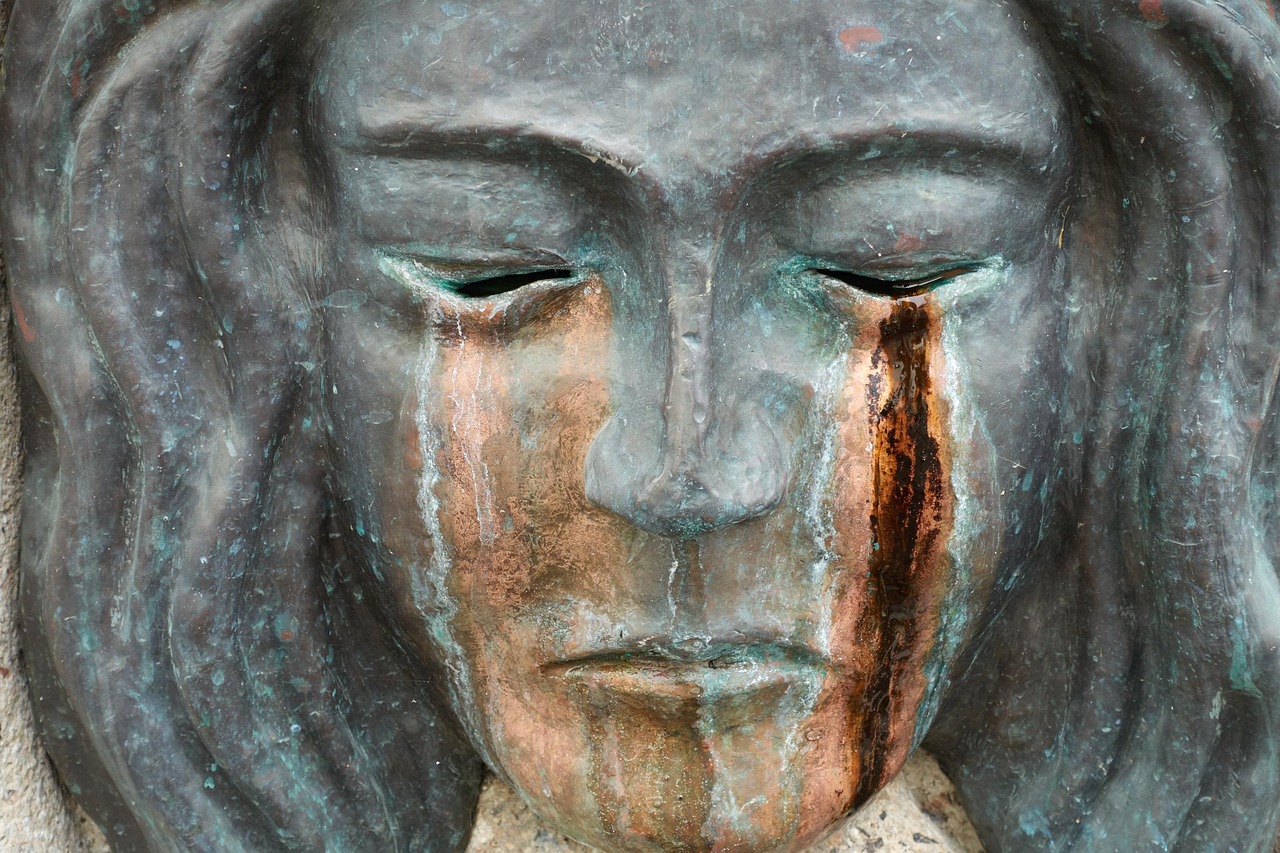
The masquerade is the Yoruba tradition made visible. The egungun, the masked embodiments of the ancestors, come out in swirling layered costumes at their festivals, danced by initiates whose identity is hidden, to bless, to judge, and to represent the returning dead among the living, one of the world’s great masking traditions.
The Gelede masquerade honors the power of women, the mothers, the aje, with carved headdresses and satirical dance that both praises and placates the female forces the Yoruba hold responsible for fertility and for danger alike, a spectacle so distinctive it too is on UNESCO’s heritage lists.
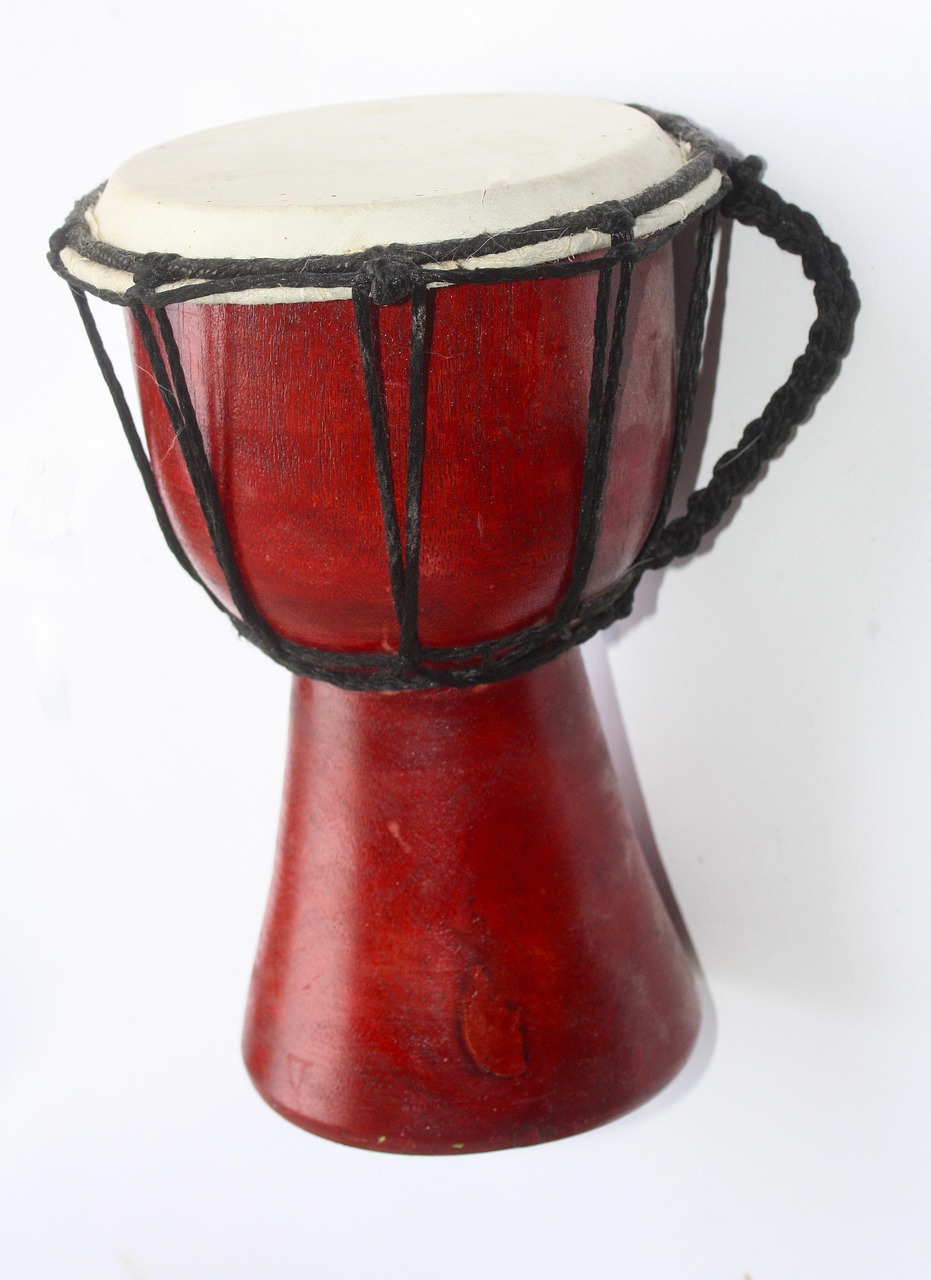
Music drives it all, above all the dundun talking drum, the hourglass drum whose tension cords let a master drummer bend its pitch to mimic the tones of Yoruba speech, so that the drum literally talks, reciting praises and proverbs across the festival ground.
Beadwork, body art, and the elaborate protocols of greeting, the prostration of a young man, the kneeling of a young woman, before elders, complete a culture of intense ceremony, where respect, praise, and the marking of every rank and passage are performed with an artistry the whole society cultivates.
Gelede’s honoring of the mothers reveals a deep Yoruba idea: that women, as sources of life, hold a spiritual power that can nurture or destroy, and that the community must praise and placate it, so the masquerade’s satire and beauty are, at bottom, a negotiation with the female forces the culture holds in awe.
Bronze of Ife, Beadwork, and Adire Cloth
Yoruba art is among Africa’s most celebrated, and its summit is the bronze and terracotta of Ife: the naturalistic royal heads cast in the twelfth to fifteenth centuries, so lifelike that European scholars long refused to believe Africans had made them, are now recognized as one of the world’s great sculptural traditions, the equal of anything cast in medieval Europe.
Woodcarving fills the living tradition: the carved doors and veranda posts of the palaces, the masks and headdresses of the masquerades, the ibeji twin figures, and the divination trays and bowls, worked by hereditary carvers whose art the twentieth-century master Olowe of Ise carried to international fame.
Beadwork clothes the sacred: the beaded crowns of the obas with their veils and bird finials, the diviners’ bags, and the regalia of priests and chiefs, glass beads worked into the emblems of kingship and divinity, an art reserved for the highest ranks.
Cloth is the everyday masterpiece: adire, the indigo resist-dyed cloth patterned by tie, stitch, and starch, and aso oke, the handwoven strip cloth of silk and cotton woven into the gowns and wrappers of ceremony, the Yoruba love of dress turning textile into one of the culture’s proudest arts.
Adire cloth has become a global fashion signature: the indigo resist-dyeing of Abeokuta and its sister towns, once everyday wear, now appears on international runways and in design collections, one of many Yoruba arts that have moved from the local market to the world stage without losing their roots at home.

Pounded Yam, Egusi, and the Feast of the New Yam
The Yoruba table is ruled by the yam. Pounded into iyan, the smooth stiff dough eaten with a soup, the yam is the prestige food, the centerpiece of feasts and the crop whose harvest is marked by festival, and the pounding of yam in the tall mortar is the sound of a Yoruba kitchen preparing for a celebration.
The soups carry the flavor: egusi of ground melon seed, ewedu of the jute leaf, gbegiri of beans, and the pepper-rich stews of the forest, eaten with pounded yam, with amala of yam flour, or with the fermented cassava and maize doughs, eba and the rest.
Palm oil and pepper run through the cuisine, and the forest and market supply the range, moin-moin and akara of beans, jollof rice claimed as a national glory, efo riro the greens, and the bushmeat, fish, and snails of the forest larder.
The New Yam Festival marks the year: no one eats the new harvest until the king and the priests have offered the first yams to the ancestors and gods, and the whole community then feasts, the agricultural calendar and the religious one meeting over the year’s first pounded yam.
Jollof rice has become a pan-West-African passion and rivalry, and the Yoruba stake a proud claim in the contest, but at home the true prestige dish remains pounded yam with a rich soup, the food without which no important celebration is complete and by which a host’s generosity is measured.

Osun-Osogbo and the Calendar of the Gods
The Yoruba festival calendar is a cycle of the gods. Greatest among them is Osun-Osogbo, the annual festival of the river goddess Osun at her sacred grove in Osogbo, when the whole city and pilgrims from across the world process to the river, the votary maiden carries the sacrifice, and the goddess is petitioned for the fertility and prosperity of the town, a festival so important its grove is a UNESCO World Heritage Site.
Each orisha has its season: the festivals of Ogun with their dogs and iron, of Sango with his thunder-axe dances, of Obatala in white, and the egungun and Gelede masquerades that bring out the ancestors and honor the mothers, filling the year with color, drumming, and sacrifice.
The New Yam Festival marks the harvest across the towns, the king and priests offering the first yams before the people may eat, and the coronations, funerals of kings and chiefs, and title-takings punctuate the calendar with pageantry that can fill a city for days.
The Muslim and Christian calendars now overlay the old, kept with the same Yoruba flair for celebration, so that a Yoruba town’s year is a near-continuous round of festivity, sacred and social, the culture’s genius for ceremony given full expression.
Osun-Osogbo has become a homecoming for the global orisha community: alongside the townspeople, devotees from Cuba, Brazil, the United States, and Europe now throng the sacred grove each August, so that the river goddess’s festival has quietly become one of the great gatherings of the African diaspora.

Empires of Oyo, Civil Wars, and the Diaspora
Yoruba history runs from Ife’s classical age through the rise of Oyo, the savanna kingdom in the north that, from the seventeenth century, built an empire on cavalry and trade, dominating its neighbors, taxing the routes to the coast, and growing rich on the Atlantic commerce, including the traffic in slaves, until it was the most powerful Yoruba state.
In the early nineteenth century Oyo collapsed, undone by internal revolt and the pressure of the Fulani jihad from the north, and Yorubaland fell into a long era of civil wars among the successor states, Ibadan, Abeokuta, Ijaye, and the rest, wars that fed tens of thousands of Yoruba captives into the Atlantic slave trade and scattered the nation across the Americas.
It was in this era that the Yoruba diaspora was seeded: the enslaved carried to Cuba, Brazil, Trinidad, and Sierra Leone took their gods, language, and arts with them, and the returning freed slaves of Sierra Leone and Brazil, the Saro and Aguda, brought Christianity, literacy, and new ideas back, making the Yoruba unusually connected to the Atlantic world.
British power reached Lagos in 1861 and spread over Yorubaland by the century’s end, ending the wars and folding the kingdoms into colonial Nigeria; the obas kept their thrones under indirect rule, and the educated Yoruba became leaders of Nigerian nationalism, carrying the nation into independence at the forefront of its politics and culture.
The returning diaspora shaped modern Yorubaland profoundly: the Saro from Sierra Leone and the Aguda from Brazil brought back Christianity, European education, Brazilian architecture, and a cosmopolitan outlook, and their descendants became lawyers, clergy, journalists, and nationalists, so that the Atlantic slave trade’s Yoruba victims returned, in part, as the builders of the modern nation.

A Global People of Fifty Million
The Yoruba today number well over fifty million, the majority in southwestern Nigeria with sizable populations in Benin and Togo and a vast diaspora across the Americas and the wider world, one of Africa’s largest peoples and among its most globally influential.
Their cultural reach is extraordinary: the orisha religions of Cuba, Brazil, and the United States carry Yoruba gods to millions of non-Africans, Yoruba art fills the world’s museums, Nollywood and Yoruba music, from juju and fuji to Afrobeats, shape global popular culture, and Yoruba writers, from the Nobel laureate Wole Soyinka onward, sit at the center of African literature.
At home the Yoruba are among Nigeria’s most educated and urbanized peoples, prominent in business, the professions, and politics, Lagos their megacity engine, and the obas still reign, their palaces and festivals thriving, the Ooni of Ife and the Alaafin of Oyo among the most revered traditional rulers in Africa.
The old balance of the culture endures: the three faiths coexisting in one family, the festivals of the orisha drawing pilgrims from across the seas, the talking drum still reciting praises, and the children of Oduduwa carrying an ancient civilization of cities, kings, gods, and art into a global century in which their influence only grows.
The global Yoruba moment is unmistakable: Afrobeats tops charts worldwide, Nollywood is one of the largest film industries on earth, orisha devotion spreads through the Americas and beyond, and the diaspora’s descendants increasingly reclaim Yoruba names, language, and religion, so that a civilization that began at Ife now radiates outward across the whole modern world.

Related Peoples of the Region
- Fulani Herders of the Sahel and Their Nation Scattered Across a Continent
- Hausa City-Builders of the Northern Savanna and Their Thousand-Year Market Civilization
More Peoples of the World
You May Like
The Zaza, a Mountain People of Eastern Anatolia


One thought on “Yoruba of the Forest Cities and Their Gods That Crossed the Atlantic”