Along the lagoon-laced coast of West Africa, in the well-watered country between the mouth of the Volta River and the hills of Togo, lives a people bound together by a shared language and a shared memory of escape. They are the Ewe, a nation of fishermen, farmers, weavers, and world-famous drummers, spread today across Ghana, Togo, and Benin yet holding fast to the sense that they are one people. Their story turns on a legendary flight from a tyrant king, a walk backwards through a broken wall, and a scattering along the coast that left them forever longing to be reunited.
This is the story of the Ewe and the world they built on the coast of lagoons. It is a story of many small independent towns rather than one empire, of the Vodun gods whose worship crossed the Atlantic to become voodoo, of the intricate interlocking rhythms that made Ewe drumming famous around the world, and of a people repeatedly divided by colonial borders yet never losing the memory of Notse and their common origin. From the great festival of the exodus to the looms of the weaver towns, the Ewe carry their oneness across every frontier that has tried to divide them.
Contents
- A People of the Lagoons and the Escape from a Tyrant
- Ewe, Eʋe, and the Naming of a Scattered Nation
- Ewegbe, the Tongue of the Gbe Coast
- The Coast of Lagoons Between the Volta and the Mono
- Chiefs, Clans, and the Confederacy of Notse
- Clans, Elders, and the Bonds of the Ewe Village
- Vodun, the Gods of the Coast, and the Ancestors
- The Master Drum, the Dance, and the Kete Cloth
- Weavers, Potters, and the Smiths of the Coast
- Akple, the Sea, and the Bounty of the Lagoon
- Hogbetsotso, the Yam Festival, and the Season of Return
- From Notse to the Divided Colonies of the Coast
- The Ewe of Ghana, Togo, and the Wider World
A People of the Lagoons and the Escape from a Tyrant
Along the low, wet coast of West Africa, where lagoons and rivers lace the land between the mouth of the Volta and the hills of Togo, lives a people bound together by a shared language and a shared memory of escape. They are the Ewe, a nation of farmers, fishermen, weavers, and drummers spread today across three countries, Ghana, Togo, and Benin, yet holding fast to a sense of themselves as one people. Their story is one of migration and division, of a flight from tyranny that scattered them along the coast and left them ever after with a longing to be reunited.
The Ewe trace their origins to a journey out of the east, from towns in what is now Benin and Nigeria, and above all from a walled town called Notse in central Togo. There, they say, they lived under a cruel king whose oppression grew unbearable, until one night they made their escape in a manner that has become the heart of their national memory. Walking backwards through a gap in the town wall so that their footprints would seem to lead inward, they slipped away in different directions and settled the lands where their descendants live today.
This shared legend of flight gives the Ewe a powerful sense of common origin despite their many separate chiefdoms and their division among modern states. They never built a single empire or bowed to a single king, and their world was always a patchwork of independent towns and clans. Yet the memory of Notse, retold at their greatest festival, binds them together across every border, a people who remember that they were once one and who carry that oneness in their songs and their gathering.

Ewe, Eʋe, and the Naming of a Scattered Nation
The name Ewe, pronounced more like Eh-veh than the English word for a female sheep, belongs to a people who are part of a wider family of related groups known as the Gbe peoples. The Ewe proper are the westernmost of this family, their kin including the Fon of Benin and other groups of the coast who speak closely related tongues and share many customs. Within the Ewe world itself there are many local names, for the people of the coast, the inland farmers, and the many chiefdoms each keep their own particular identity beneath the shared name.
Among the Ewe the coastal groups, above all the Anlo of the lagoon country near the Volta mouth, became especially prominent, and their name is often heard alongside the wider one. The inland and northern Ewe, the people of the hills and the farming country, form other great branches of the nation. This layering of a broad name over many local ones reflects the history of a people who migrated in separate bands and settled in scattered towns, each keeping its independence while sharing the deeper bond of language and origin.
To their neighbours and to the wider world the Ewe became known as skilled fishermen, famous drummers, and fine weavers, and their name travelled with their cloth and their music. Divided by the borders that colonial powers drew across their land, they nonetheless kept the single name that marks them as one people, and the call to honour that unity has echoed through their history from the age of the chiefs to the age of the nation-states.
Ewegbe, the Tongue of the Gbe Coast
The Ewe speak Ewegbe, a language of the Gbe cluster within the great Niger-Congo family, closely related to the Fon of Benin and the other tongues of the coast. It is spoken by millions of people across southern Ghana, southern Togo, and into Benin, serving as a mother tongue and a language of trade, church, and school throughout the region. In Ghana it is one of the major languages of the south, taught in schools and used in radio and print, while in Togo it is one of the two great national languages of the country.
Ewegbe is a tonal language, in which the pitch of a syllable can change the meaning of a word, and it is rich in proverbs, riddles, and the formal arts of speech. The Ewe prize eloquence, and a good speaker who can weave proverbs into an argument commands great respect. The language carries a deep store of oral literature, the songs of the drummers, the praises of the ancestors, and the tales told in the evening, and it has been written and studied since missionaries first reduced it to writing in the nineteenth century.
Like all the languages of the coast, Ewegbe has absorbed words from its neighbours and from the languages of trade and rule, English on the Ghanaian side and French on the Togolese, yet it keeps its own strong character across the border. That a single language is spoken under two colonial tongues is itself a mark of the Ewe division, and the shared speech remains one of the deepest bonds tying the people together across the frontier that runs through their land.

The Coast of Lagoons Between the Volta and the Mono
The Ewe homeland is a strip of the West African coast and its hinterland, running roughly from the lower Volta River in the west to the Mono River on the Togo-Benin border in the east. It is a low, warm, well-watered country of sandy shores, palm groves, and above all lagoons, the long shallow lakes and creeks that lie behind the ocean beaches and shape so much of Ewe life. Behind the coast the land rises gently into farming country and low hills, greener and wetter than the dry savannas of the interior.
Water is everywhere in this land, and it has made the Ewe a people of the shore and the lagoon as much as of the field. The great Keta Lagoon and its neighbours teem with fish, and generations of Ewe have lived by casting their nets in the still lagoon waters and the ocean surf. The lower Volta, one of the great rivers of West Africa, defines the western edge of their country, and the building of a huge dam upon it in the twentieth century created Lake Volta and reshaped the land and the lives of many who dwelt along it.
The climate is tropical, with its rhythm set by the wet and dry seasons rather than by cold and heat. Rains come to green the fields and swell the lagoons, and the dry months bake the coast under the sun. On this fertile, watery land the Ewe raised maize, cassava, and yams, tapped the oil palm, and drew fish from the lagoon and the sea, building a dense population of farming and fishing towns along one of the most productive coasts in the region.
Chiefs, Clans, and the Confederacy of Notse
Unlike the great kingdoms of their neighbours, the old Ewe world was a land of many small independent states rather than one empire. Each town or group of towns formed its own chiefdom, governed by a chief and a council of elders, and no single ruler ever bound the whole people together. This deep tradition of local independence sprang from the very story of their migration, for the bands that fled Notse scattered in different directions and founded separate communities, each jealous of its own autonomy and answerable to no outside crown.
Within each chiefdom authority was shared rather than absolute. The chief, chosen from a royal lineage, ruled with the counsel of the elders and the heads of the clans, and his power was checked by custom, by the priests of the gods, and by the assembled voice of the town. Among the coastal Anlo and other groups there developed more elaborate institutions, with paramount chiefs, war leaders, and councils that could unite several towns for common defence, yet even these confederacies rested on agreement rather than conquest.
The memory of the walled town of Notse, from which all the Ewe are said to have come, gave this scattered people a sense of a lost unity. In their traditions Notse was the mother-town, the place of common origin under the tyrant whose oppression drove them out, and its name still stands for the oneness that the Ewe carry beneath their many separate states. It was a political world without an emperor, held together not by a throne but by language, custom, and the shared story of escape.

Clans, Elders, and the Bonds of the Ewe Village
Ewe society is built on the clan and the lineage, the great families that trace their descent from common ancestors and that own land, hold names, and guard traditions together. A person is born into a patrilineal clan that shapes their identity, their marriage, and their obligations, and the clans of a town form the framework of its political and religious life. Membership in a clan brings both the support of a wide network of kin and the duty to uphold its honour and its customs, and the ties of clan reach across the many Ewe towns.
Elders hold a place of deep respect at the heart of this society, for age brings wisdom, closeness to the ancestors, and the authority to judge disputes and guide the community. The councils of elders govern the affairs of the town alongside the chief, and their word carries great weight in every matter from land to marriage to the settling of quarrels. Beneath the free clans there were once distinctions of status and forms of servitude, as across the region, but the moral centre of Ewe life lay in the bonds of kinship and neighbourliness.
The great passages of life, birth, puberty, marriage, and death, are marked by rites that draw the clan and the community together and set gifts, labour, and food flowing between families. Marriage joins not only two people but two lineages, and the exchanges that surround it bind families in lasting alliance. Through these ceremonies and through the daily obligations of kin, the Ewe wove a dense and supportive social fabric that held the town together and carried its values from one generation to the next.

Vodun, the Gods of the Coast, and the Ancestors
The traditional religion of the Ewe is one of the great expressions of the Vodun faith of the West African coast, the same tradition that the Fon of Benin carried across the Atlantic to become voodoo in the New World. At its summit stands a distant creator god, but the everyday life of religion turns on a great host of lesser gods and spirits, the trowo, who govern the sea, the thunder, the earth, the rivers, and the affairs of human life. Each has its shrine, its priests, and its rites, and men and women serve them for protection, healing, and blessing.
The worship of these gods is led by priests and priestesses who undergo long training and initiation, learning the songs, the dances, and the secret knowledge of their cult. In the shrines, drumming and dance can call a god to descend and possess a devotee, speaking through the entranced worshipper to give counsel and demand offerings. Alongside the gods stand the ancestors, the honoured dead of each clan, who watch over their descendants and must be remembered with libations and respect, so that the living and the dead remain bound in a single community.
Islam touched the Ewe only lightly, but Christianity came with force in the nineteenth century, carried by missionaries who reduced the language to writing and won many converts. Today a large share of the Ewe are Christians, yet the old faith has never disappeared. The Vodun shrines still stand, the priests still serve the trowo, and for many people the church and the shrine exist side by side, so that the Ewe live in a layered religious world where the ancestral gods and the newer faith are woven together.
The Master Drum, the Dance, and the Kete Cloth
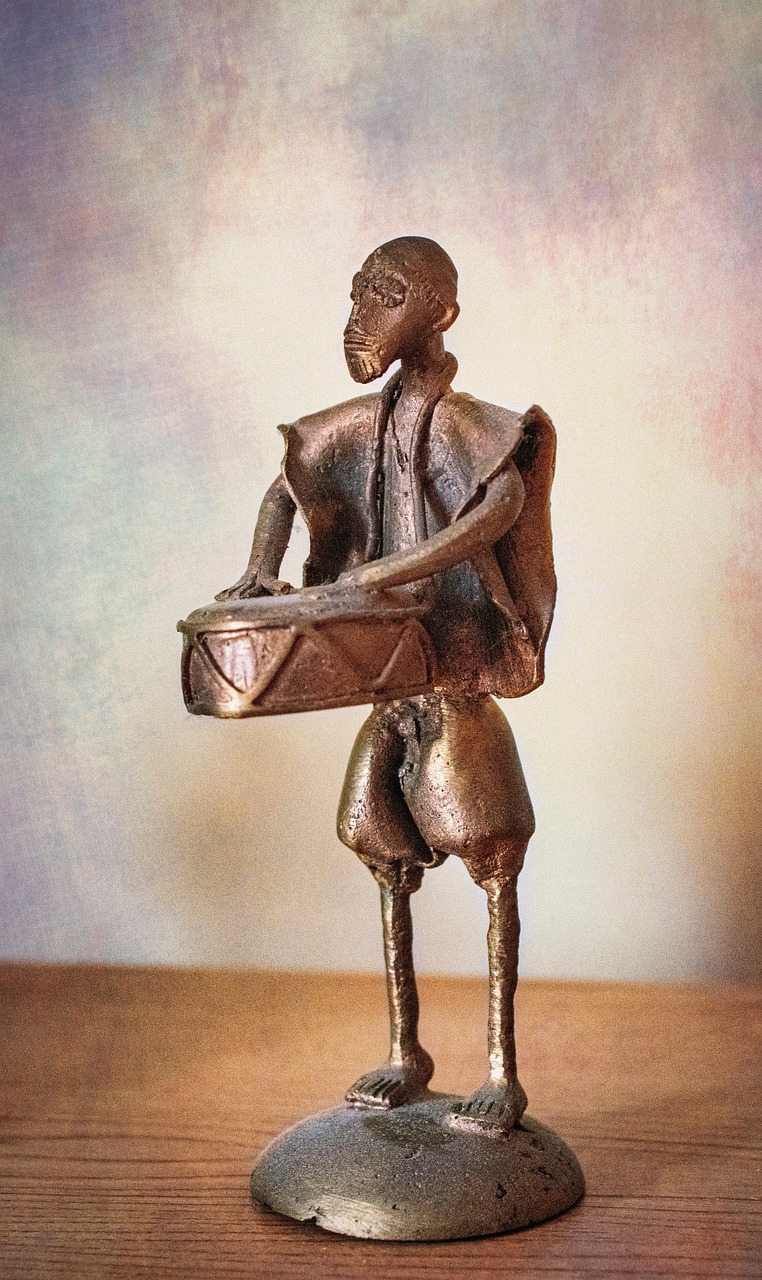
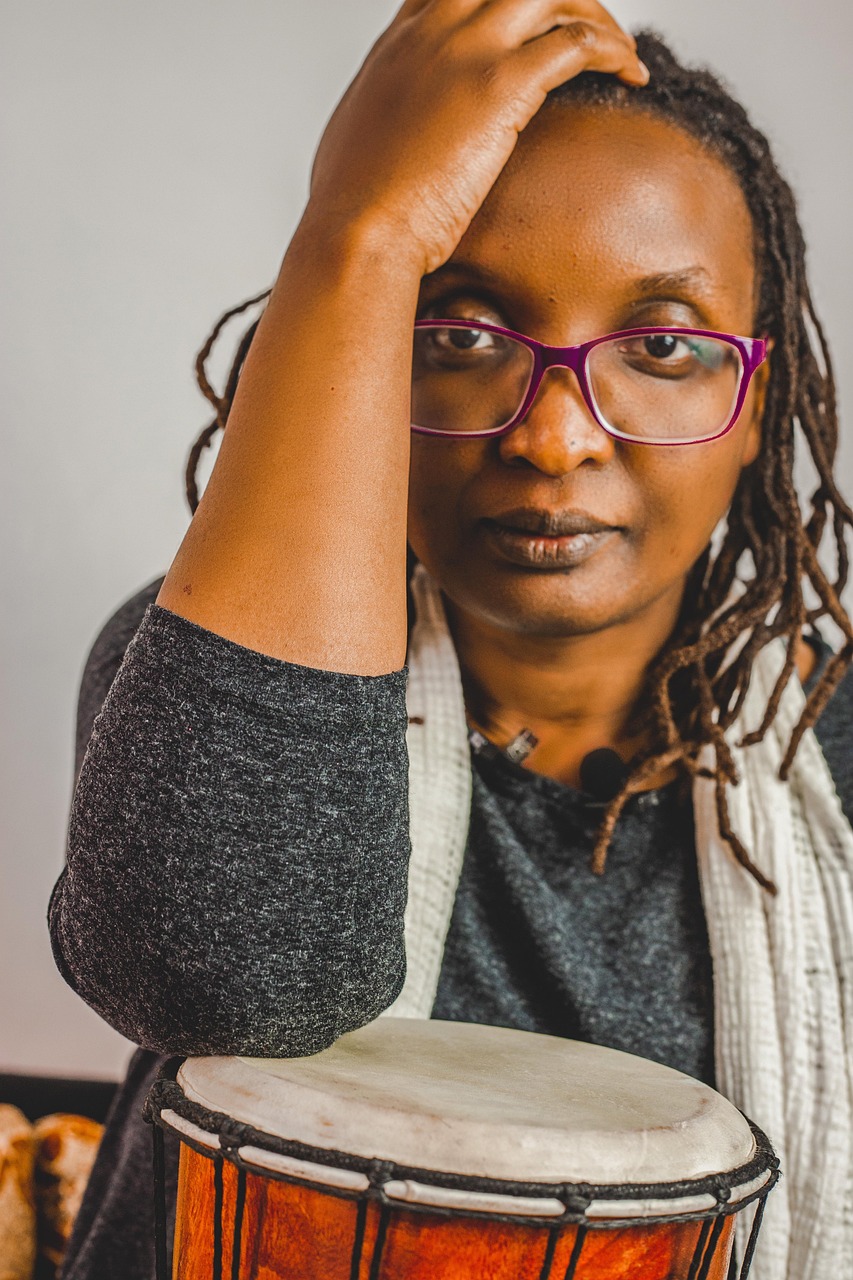
No people of West Africa are more famous for their drumming than the Ewe, whose complex, interlocking rhythms have made their music a subject of study and admiration around the world. An Ewe drum ensemble is a whole orchestra of instruments, bells, rattles, and drums of many sizes, over which a master drummer leads, weaving intricate patterns that guide the dancers and speak in the tonal language of the people. Each traditional dance has its own drums, its own songs, and its own meaning, whether for war, for mourning, for worship, or for pure celebration.
Dance is inseparable from the drum, and the Ewe possess a rich repertoire of dances performed by clubs and associations that pass their traditions down the generations. The movements of a great dancer, answering the calls of the master drum, turn a gathering into a living dialogue of rhythm and motion. These drumming and dancing traditions serve every side of life, sacred and social, and they have carried the fame of Ewe music far beyond the coast into the concert halls and universities of the wider world.
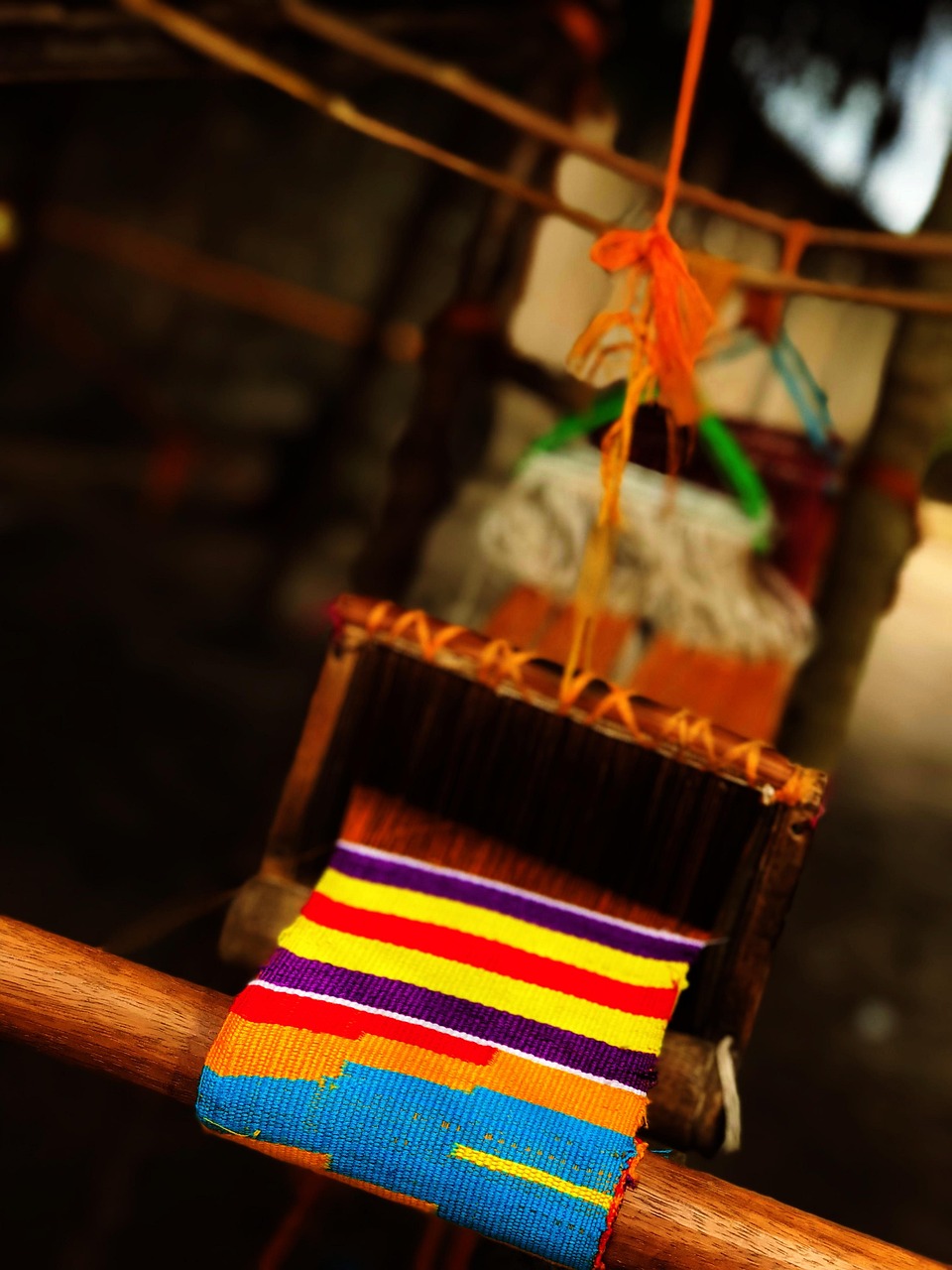
The Ewe are also renowned weavers, and the strip cloth they weave, cousin to the famous kente of their Akan neighbours, is prized for its bold patterns and bright colours. Woven in narrow bands on the loom and sewn edge to edge into cloths of great beauty, Ewe kete often carries figures and motifs that tell stories or mark status. Dressing well in fine cloth for a festival or a funeral is a valued art, and the weaver towns of the Ewe country have long supplied the coast with some of its most admired textiles.
Weavers, Potters, and the Smiths of the Coast
Weaving is the most celebrated of Ewe crafts, and the men who work the narrow strip looms are masters of an art that turns cotton thread into cloth of striking beauty. Working long warps stretched out before them, they weave band after band of patterned fabric, which is then cut and sewn together into the finished cloth. Ewe weavers are known for daring to include pictorial motifs, small woven figures of animals, tools, and symbols, alongside the geometric patterns, giving their kete a distinctive voice among the strip-woven cloths of the region.
The potters, most often women, shape the clay vessels that store water, cook food, and serve the shrines, coiling and smoothing the pots by hand and firing them in open blazes. The blacksmiths work iron into the hoes, cutlasses, knives, and hooks on which farming and fishing depend, and their forges hold an honoured and slightly awesome place in the life of the town. Along the lagoons the making of canoes, nets, and fish traps is a craft in itself, for on these depends the great harvest of the water.
Carving, bead-work, and the making of drums and other instruments round out the crafts of the Ewe. The drums above all are objects of care and meaning, hollowed and headed with skill so that each will sound its proper voice in the ensemble. Many of these crafts run within particular families and towns, so that certain places become known for their weavers, their potters, or their smiths, and skill is handed down as a family inheritance. Together they made the Ewe town largely able to supply its own needs from the work of its own hands.
Akple, the Sea, and the Bounty of the Lagoon
The food of the Ewe is the food of a rich coast, built on the crops of the field and the harvest of the water. The great staple is akple, a smooth dough made from maize or cassava flour cooked with water into a soft, springy mass, which is eaten with soups and stews. Beside it stand banku and other fermented maize doughs, and yam, plantain, and cassava boiled or pounded, so that a filling starch forms the base of nearly every meal, dipped into a flavourful sauce.
From the sea and the lagoon comes the great gift of fish, and the Ewe are famous fish-eaters. Fresh fish, crabs, and shellfish, and above all fish dried, smoked, and salted for keeping and trade, flavour the soups and stews that dress the akple. Okra soups, palm-nut soups thick and red with the oil of the palm, and pepper-hot sauces bright with tomato and chilli are among the beloved dishes of the coast, and the small dried fish and shellfish lend their savour even to meals eaten far inland.
The oil palm is a treasure of this land, giving both the red palm oil that colours and enriches the cooking and the sap that is tapped for palm wine. Groundnuts, beans, garden vegetables, and tropical fruits complete the table, and the sharing of food expresses the deep Ewe values of hospitality and kinship. To set a good soup before a guest, thick with fish and fragrant with palm oil, is to honour them in the way the coast knows best, and the communal meal remains a centre of family life.

Hogbetsotso, the Yam Festival, and the Season of Return
The greatest festival of the Ewe is Hogbetsotso, the festival of the exodus, celebrated each year by the Anlo and other coastal groups to remember the flight from Notse. In a great gathering of chiefs, drummers, and dancers, the people re-enact and recall the escape of their ancestors, walking backwards from the tyrant town, and reaffirm the unity of the Ewe nation. Purification rites, a grand durbar of the chiefs in their finery, and days of drumming and feasting make it a powerful expression of Ewe identity and a magnet for the people from across the borders that divide them.
Alongside this national festival the Ewe keep many local celebrations tied to the farming year and the gods of particular towns. Yam festivals mark the coming of the new harvest, when the first yams are offered to the ancestors and the gods before the people may eat them, and other festivals honour the trowo of the sea, the lagoon, and the earth. These gatherings, timed to the rhythm of the crops and the fishing, bind the community to the land and the water and to the powers that govern their bounty.
The passages of family life, births, marriages, and above all funerals, are themselves great social occasions filled with drumming, dancing, and feasting. Ewe funerals in particular can be elaborate and costly affairs that draw the whole clan and reaffirm its bonds, for the honouring of the dead is a sacred duty. Whether at the great festival of the exodus or the funeral of an elder, the Ewe gather around the drum, and in the gathering they renew the ties of kin, community, and the shared memory that makes them one people.
From Notse to the Divided Colonies of the Coast
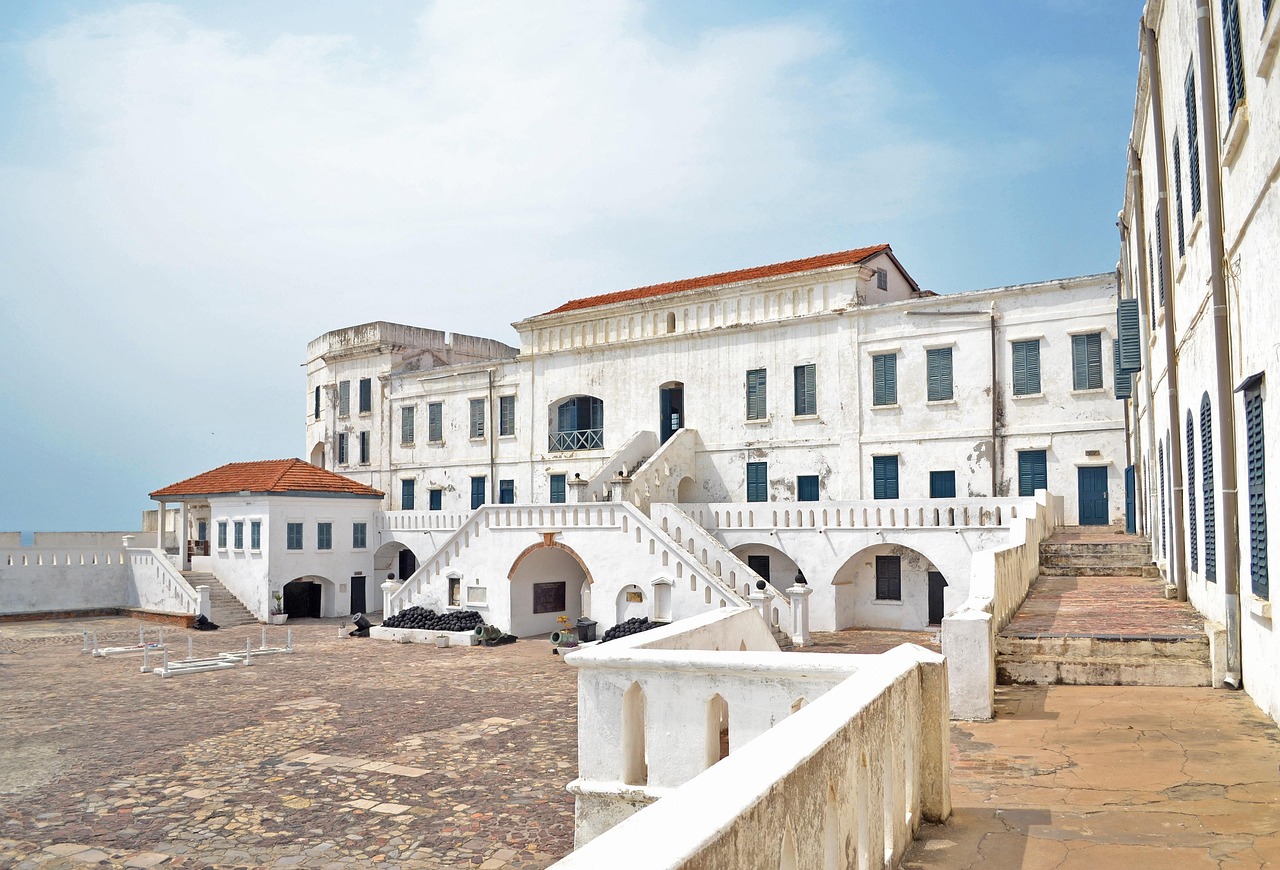
The recorded history of the Ewe begins with their migrations along the coast and their settlement in the many towns that still bear their founding stories, above all the flight from Notse that scattered them across the land. Settling near the coast, they came early into contact with the wider Atlantic world, for their shore lay on the stretch of coast that Europeans called the Slave Coast, where the trade in captives drew the region into a violent commerce and where the coastal towns both suffered from and took part in the traffic that emptied so much of West Africa.
In the nineteenth century the Ewe country became a target of missionary work and then of colonial ambition. German missionaries studied and wrote the language and won many converts, and in the 1880s Germany seized the land east of the Volta as the colony of Togoland, while the British held the western Ewe within their Gold Coast. Thus even before the colonial age hardened, the Ewe were being drawn under different foreign powers, a division that would shape their modern fate more than any other single fact of their history.
After the First World War the German colony was split between Britain and France, cutting the Ewe apart yet again, and when independence came the western Ewe found themselves in Ghana and the eastern in Togo. The dream of reuniting the divided people into a single Ewe or Togoland state stirred strong movements in the twentieth century but was never realised, and the border still runs through the heart of their land. The history of the Ewe is thus above all a history of a people repeatedly divided by powers greater than themselves, yet never losing the memory of their oneness.
The Ewe of Ghana, Togo, and the Wider World
Today the Ewe are a large people divided chiefly between two nations, forming one of the major groups of southern Ghana, in the region east of the Volta, and standing as one of the two great peoples of Togo. In both countries they are prominent in trade, in the professions, in the churches, and in public life, and the Ewe of Ghana and Togo remain closely tied by language, kinship, and the shared festivals that draw them together across the border. The frontier that colonial powers drew through their land has never erased their sense of being one people.
Modern life has brought both opportunity and strain to the Ewe homeland. The building of the great dam on the Volta created Lake Volta and brought electricity to the region but also flooded lands and displaced communities, while the coast has faced the slow erosion of its shore and the pressures of a crowded, changing economy. Many Ewe have migrated to the cities of Accra and Lome and beyond, and a wide diaspora carries their music, their cloth, and their culture to the wider world, sending support back to families at home.
Yet the deep strengths of Ewe culture endure with remarkable vitality. The drums still sound at festivals and funerals, the weavers still work their looms, the Vodun shrines still stand beside the churches, and the great festival of the exodus still gathers the people to remember Notse and to celebrate their unity. In their music above all, admired and studied across the world, the Ewe have given a lasting gift to humanity, and they carry their long history of division and endurance forward as one of the vital peoples of the West African coast.

Related Peoples of the Region
- Igbo of the Republican Villages and Their Nation That Crowned No King
- Ashanti of the Golden Stool and Their Forest Empire of Gold
- Dogon of the Bandiagara Cliffs and Their World Carved Into the Rock
- Bambara of the Upper Niger and Their Antelope Dance of the Farming Cults
- Wolof of the Senegal Coast and Their Nation of Teranga
- Songhay of the Niger Bend and Their Empire of Gold and Salt
- Mossi Horsemen of the Volta Plateau and Their Kingdoms That Defied Every Empire
- Kanuri of Lake Chad and Their Empire That Lasted a Thousand Years
More Peoples of the World
You May Like
The Zaza, a Mountain People of Eastern Anatolia