Along a great sandstone cliff in the heart of Mali, a people built an entire civilization into the rock. The Dogon, farmers and sculptors who took refuge on the Bandiagara escarpment to keep their independence and their religion, raised villages of mud towers on the ledges, wrested millet from the thin soil, carved some of the most prized sculpture in the world, and preserved a cosmology of such depth that they became one of the most famous peoples in the study of Africa.
This portrait follows the Dogon of the escarpment: the migration into the cliffs and the earlier Tellem, a family of a dozen languages, the granaries and the toguna and the farming of rock, the Hogon and the masked societies, the Nommo and the mythology of Amma and the debated secret of Sirius, the dama masks and the sixty-year Sigui, the raised-arms ancestor figures, and a World Heritage culture now caught in the storm of Mali’s crisis.
Contents
- Refugees Who Built a World on a Cliff
- Dogon, Kado, and the People of the Escarpment
- A Language Isolate of Many Tongues
- The Cliffs of Bandiagara
- Granaries, the Toguna, and the Farming of Rock
- Lineages, the Hogon, and the Council of Elders
- The Nommo, the Sky, and the Secret of Sirius
- The Dama, the Masks, and the Sixty-Year Sigui
- Carvers of the Sacred and Workers of Iron
- Millet, Onions, and the Beer of the Harvest
- The Masked Dama and the Turning of the Sigui
- Migration, Isolation, and the Modern Storm
- A World Heritage Under Threat
Refugees Who Built a World on a Cliff
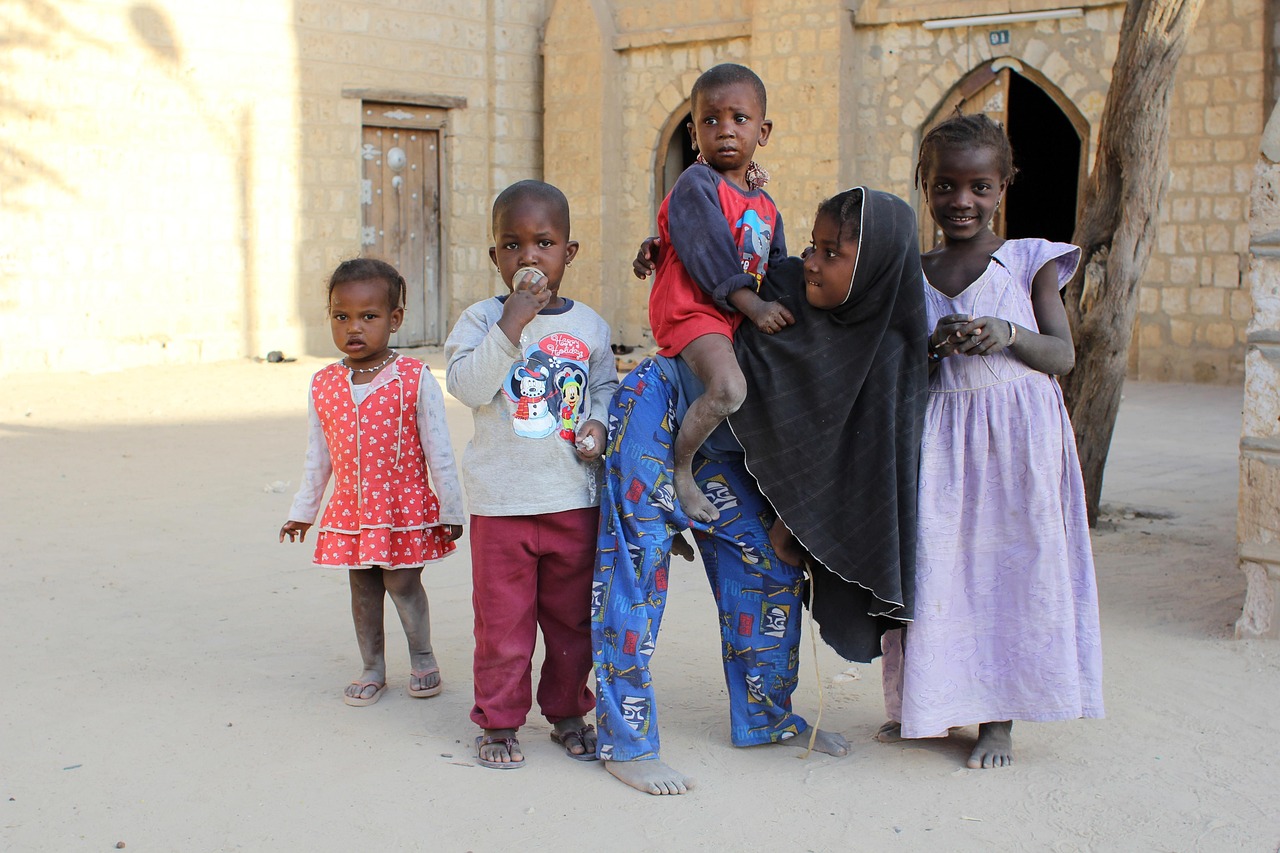
The Dogon are one of the most studied and most striking peoples of West Africa, farmers and sculptors who built an entire civilization into the face of a cliff. They live along the Bandiagara escarpment in the heart of Mali, a great sandstone wall rising from the plains, and their villages of mud houses and granaries cling to its slopes and ledges in one of the most dramatic settlements on earth.
Their own traditions and the evidence of history point to migration and refuge: the Dogon are thought to have moved into the Bandiagara cliffs some centuries ago, perhaps from the region toward the Niger, taking to the rocks to preserve their own religion and independence against the spreading power of Islam and the Sahel’s empires.
Before them the cliffs held the Tellem, an earlier people whose dwellings and burials high in the rock the Dogon inherited and wove into their own cosmology, so that the escarpment carries layers of habitation reaching back more than a thousand years.
On this hard, beautiful, defensible land the Dogon built a world apart: a farming society of intensive skill, a religion of extraordinary depth and complexity, and an art of carved masks and figures that would make them, in the twentieth century, one of the most famous peoples in the study of African culture.
The Tellem left their mark high in the cliff: their ancient dwellings and burial caves, set in the sheer face far above the Dogon villages, held textiles and remains centuries old, and the Dogon wove the earlier people into their own cosmology as the little red-skinned ones who could fly, a memory of predecessors turned into myth.
Dogon, Kado, and the People of the Escarpment
The name Dogon is the one by which the people are widely known, though its origin is debated, and in some contexts they have been called Habe, a Fulani term for non-Muslim peoples, or Kado, names applied from outside; the Dogon themselves are a cluster of groups bound by a shared way of life on the escarpment more than by a single ancient name.
They are not one uniform people but a mosaic: many villages, many lineages, and a striking diversity of speech and custom along the length of the cliffs, united by the escarpment, the farming life, the masked societies, and the religion that binds them, rather than by a centralized state or a single ruler.
The name has become famous far beyond Mali: the Dogon entered world consciousness through the French anthropologists who studied them in the twentieth century, and through the extraordinary claims made about their astronomical knowledge, so that Dogon is a name known to many who could not place it on a map.
To the Dogon themselves, identity is rooted in the village, the lineage, and the great binu and mask societies, and in the escarpment that is at once their home, their fortress, and the stage of their sacred life.

A Language Isolate of Many Tongues
The Dogon speak not one language but a family of them, a dozen or more related tongues so varied that speakers from villages a day’s walk apart may not understand one another, a diversity that reflects the fragmented, village-based world of the escarpment and its long isolation.
The Dogon languages form their own branch of the Niger-Congo family, distinct enough that linguists treat them as a group apart, and their internal variety, along with the ritual languages of the masked societies, makes the Dogon country one of the more complex linguistic landscapes of West Africa.
Among the most remarkable is Sigi so, the secret language of the masks, known only to initiated men of the Awa society and used in the rites of the great festivals, a ritual tongue layered over the everyday languages of the villages.
Alongside their own tongues many Dogon speak the wider languages of Mali, and the pressures of migration, schooling, and Islam bear on the smaller village languages, but the escarpment’s remarkable linguistic diversity endures as a monument to the isolation and independence in which Dogon culture was forged.
The sheer diversity of Dogon speech has made the region a laboratory for linguists: the dozen-plus languages, some spoken in only a handful of villages, and the ritual mask language layered above them, testify to centuries of isolation on the escarpment, each valley cultivating its own tongue behind the wall of the cliff.
The Cliffs of Bandiagara
The Dogon homeland is the Bandiagara escarpment, a sandstone cliff running some hundred and fifty kilometers across the Mopti region of central Mali, rising in places two hundred meters and more above the sandy plains, one of the most spectacular landscapes in Africa and a UNESCO World Heritage Site.
Three zones make up the country: the plateau above the cliff, the escarpment itself with its villages built on the ledges and talus slopes, and the sandy Seno plain below, and Dogon farming and life move between all three, each village often stretched from cliff-top to plain.
The cliff was chosen for defense and for water: springs in the rock gave life, the heights gave safety from raiders and slavers, and the old Tellem dwellings high in the sheer face, still visible, mark the extremity of the refuge the escarpment offered.
It is a hard land of little rain and thin soil, farmed with astonishing skill, and its beauty, the mud towers of the granaries, the villages clinging to the rock, the plains stretching to the horizon, has made it one of West Africa’s wonders, drawing scholars, artists, and travelers for a century.
The three-level geography shaped everything: villages strung a settlement from the cool springs and defensible ledges of the cliff down to the fields of the plain, and a family’s day could run from the granaries on the rock to the millet on the sand, the escarpment stitching together fortress, water, and farmland in one vertical world.
Granaries, the Toguna, and the Farming of Rock
The Dogon are farmers of rock, and their genius is the granary. The mud towers with their pointed thatch caps that crown every village are the stores of millet, sorghum, and the harvest, some for men, some for women, built with care and guarded as the wealth and survival of the family, the most characteristic image of the Dogon country.
Farming the escarpment demanded ingenuity: fields terraced and manured on the thin soil, gardens of onions, the famous Dogon shallots, watered by hand from the springs and grown for trade, and the whole cycle of millet, from the sowing to the harvest, ordered by ritual and labor across the hard year.
At the center of every village stands the toguna, the shelter of the men, a low open structure roofed thick with millet stalks and supported on carved posts, its roof deliberately too low to stand under so that tempers in debate cannot rise to blows; here the elders sit, talk, and judge in the shade.
Nearby stands the menstrual house at the village edge, and the whole village is laid out as a body and a cosmos, the smithy, the shrines, the granaries, and the houses each in their place, for the Dogon village is itself a sacred diagram, the settlement a model of the ordered world their religion describes.
The toguna’s deliberately low roof is a piece of political architecture famous among anthropologists: by making it impossible to stand, it forces the seated elders to keep their heads and their tempers, turning the men’s shelter into a court where disputes are argued out in the cool shade beneath the millet-stalk roof.
Lineages, the Hogon, and the Council of Elders
Dogon society is built of patrilineal lineages grouped into villages, and authority rests not with a king but with elders, priests, and the heads of families, a decentralized order in which the escarpment’s many villages governed themselves through councils and consensus rather than a central state.
The spiritual head is the Hogon, the priest of the earth cult and the eldest man of a district or region, hedged with taboo and ritual restriction, who embodies the fertility and order of the land, must not be touched, and lives under prohibitions that set him apart as the living guarantee of the community’s bond with the earth.
The masked society, the Awa, binds the men across villages: a graded association whose initiates carve and dance the masks, keep the secret language, and conduct the great funerary rites, one of several ritual societies, alongside the binu totemic priesthood and the earth cult, that ordered Dogon religious life.
The blacksmiths and leatherworkers form endogamous castes set apart, feared and needed, for the smith who works iron and carves wood holds a dangerous, sacred power, and the caste order, running through the whole society, placed each craft and lineage in its ritual and social station.
The Hogon’s restrictions are severe: in some districts he may not leave his compound, must be served and fed by others, and is believed to be visited in the night by the sacred serpent Lebe that licks him clean, the priest of the earth living as a kind of prisoner of his own holiness for the sake of the land’s fertility.
The Nommo, the Sky, and the Secret of Sirius
Dogon religion is one of the most elaborate cosmologies ever recorded from a small society. At its center is Amma, the creator, and the Nommo, the primordial ancestral beings, twin and amphibious, born of Amma’s creation, who brought order, water, and life to the world, and whose story the Dogon tell in a mythology of extraordinary depth and symbolic richness.
The world is read in symbols: the village as a body, the granary as a model of the cosmos, the fields, the smith’s craft, and the masks all carrying layers of meaning, a system so complex that the French anthropologist Marcel Griaule spent decades recording it and made the Dogon a byword for the intellectual depth of African religion.
The cult of the ancestors and the earth runs through daily life: the binu shrines with their painted facades honoring totemic ancestors, the Lebe earth cult served by the Hogon, and the constant round of sacrifice and offering that keeps the living, the dead, and the forces of the world in balance.
The Dogon became world-famous for a claim about the stars: that their priests knew of the companion star of Sirius, invisible to the naked eye, before modern astronomy confirmed it, a claim recorded by Griaule that has fueled endless speculation, though scholars debate fiercely whether it reflects ancient Dogon knowledge, later contamination, or the anthropologist’s own construction.
Griaule’s conversations with the blind elder Ogotemmeli, published as Dieu d’eau, revealed a cosmology so vast and systematic that it changed how the world regarded African thought, though later scholars have questioned how much reflected a single sage’s genius, how much a shared tradition, and how much the anthropologist’s own shaping hand.

The Dama, the Masks, and the Sixty-Year Sigui
The great Dogon tradition is the dama, the collective funeral rite that lifts the spirits of the dead from the village and sends them to the ancestors. Held months or years after death, it is the occasion of the masked dances for which the Dogon are famous, a spectacle of dozens of masks leaping and wheeling to the drums, seen by the world in a thousand photographs.
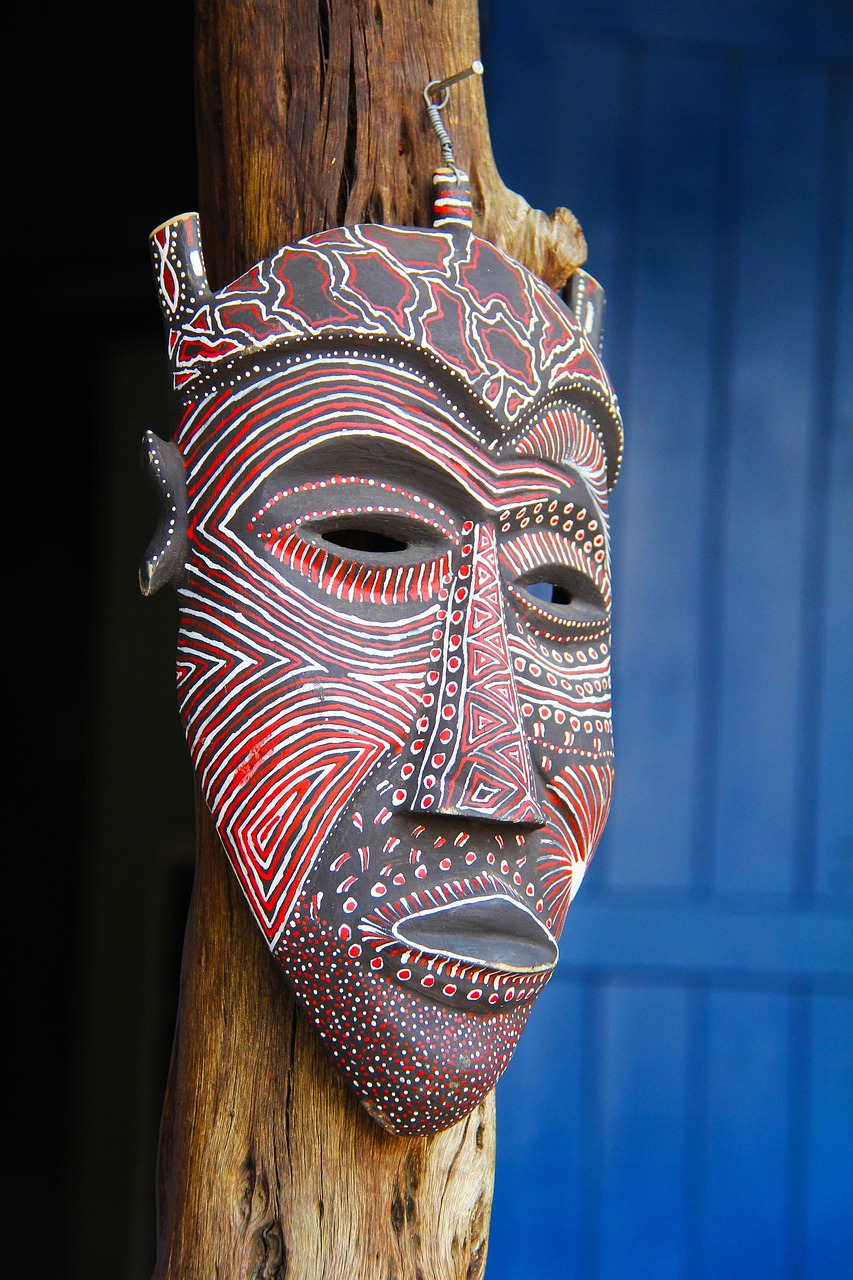
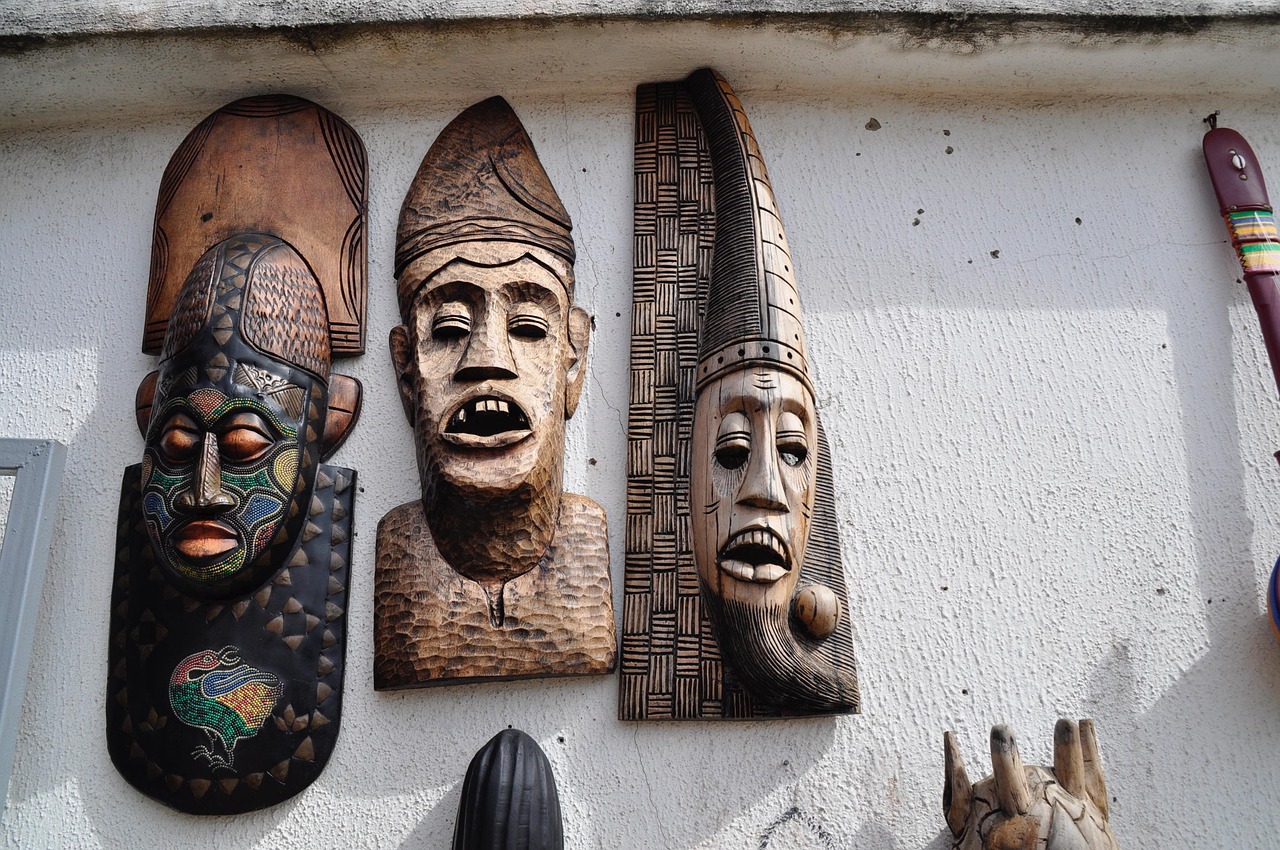
The masks embody the cosmos: the towering kanaga mask with its cross-armed superstructure, the sirige mask, a plank rising many meters representing the ancestral house, the animal and spirit masks, each carved and danced by initiates of the Awa society, the visible forms of the dead and the powers of the world.
Above all cycles the Sigui, the greatest Dogon ceremony, held only once every sixty years, moving from village to village along the escarpment over several years, marking the renewal of the world and the passing of a generation, when the great serpent mask is carved anew, the most solemn rite of the culture.
Around these run the rituals of the farming year, the divination by the tracks of the pale fox read in grids drawn in the sand, and the daily ceremonies of the shrines, so that Dogon life is threaded through with ritual, the escarpment a landscape of the sacred.
The plank-like sirige mask, rising as much as ten meters above the dancer’s head and swung in great arcs to touch the ground before and behind, is one of the most spectacular objects in African art, representing the multi-storeyed house of the ancestors and demanding of its dancer both strength and years of training.
Carvers of the Sacred and Workers of Iron
Dogon sculpture is among the most prized in the world of African art. The carvers, drawn from the smith caste, produce the masks of the dama and, above all, the wooden figures, ancestor statues with raised arms, seated couples, riders, and abstracted forms of a power and gravity that have made Dogon figures among the most sought and imitated in the world’s museums and markets.
The raised-arms figure is the icon: the ancestor with arms lifted to the sky, a prayer for rain and life, carved with an austere elegance that captivated the modernist artists of Europe and helped shape the twentieth century’s discovery of African sculpture as art.
The smith is the master craftsman and a figure of awe: worker of iron for the hoes and weapons of a farming people, carver of the sacred wood, set apart in his caste, holder of a fire-born power both needed and feared, and the smithy stands at the center of the village as a place of creation and danger.
Beyond figure and mask the Dogon make the granary doors and locks carved with rows of ancestors, the toguna posts, the ritual pottery, the woven and dyed cloth, and the beadwork and iron staffs of the cults, a whole material world dense with the symbols of their cosmology.
The European discovery of Dogon sculpture helped remake modern art: the austere, elongated ancestor figures and bold masks that reached Paris in the early twentieth century fed the fascination with African form that shaped Picasso and his contemporaries, so that the carvers of the escarpment left a mark on the art of the whole world.
Millet, Onions, and the Beer of the Harvest
The Dogon table is built on millet, the grain wrested from the thin soil of the escarpment and the plain, pounded and cooked into the stiff porridge, to, eaten with a sauce, the daily bread of the cliff villages and the measure of the harvest stored in the mud granaries.
The sauces and the garden fill it out: the leaf and baobab sauces, the onions and shallots for which the Dogon are famous, grown in tiny irrigated garden plots and traded far beyond the escarpment, and the beans, sorghum, and fonio of the fields.
Millet beer is the drink of ritual and sociability: brewed by the women, konjo or the local millet beer flows at funerals, festivals, and work parties, a sacred and social drink poured to the ancestors and shared among the men in the shade of the toguna.
Meat is for occasion, the sacrificed chicken, goat, or, at the greatest rites, cattle, shared according to ritual rule, and the whole cuisine, spare, grain-based, and tied to the ceremonies of the farming year, reflects the hard bounty of a people who made the rock yield a living.
The Dogon onion trade is an old wonder of the escarpment: grown in hand-watered garden squares among the rocks, the shallots are pounded, dried into balls, and traded across Mali and beyond, a cash crop coaxed from the cliff that has helped sustain the villages for generations.

The Masked Dama and the Turning of the Sigui
The dama is the festival the world knows: the great collective funeral, held to release the souls of those who have died since the last, when for days the masks come out and dozens of dancers in fiber skirts and carved headpieces leap and wheel across the village square and the rooftops to the drums, a spectacle of grief, renewal, and art.
The Sigui towers above all: the ceremony of the renewal of the world, held once in sixty years and unfolding over several years as it passes village by village along the escarpment, when a new great serpent mask, the imina na, is carved to last the generation until the next, the deepest and rarest rite of the Dogon calendar.
The bulu and the rites of the farming year mark the sowing and the harvest, the offerings at the binu shrines and the Lebe earth cult renew the bond with the land, and the divination of the pale fox reads the future in the sand each night, so that ceremony threads through every season.
These festivals have drawn the world to the escarpment: the masked dances became one of the iconic images of Africa, filmed and photographed, and a mainstay of the tourism that, until conflict closed the region, brought visitors from across the globe to witness the dama beneath the cliffs.
The rhythm of the Sigui organizes memory itself: because it comes only once in a lifetime, a Dogon marks the ages of the world by it, and the awa mask society, the carved great serpents stored in the caves, and the initiations tied to the ceremony bind the generations to a clock that ticks once every sixty years.

Migration, Isolation, and the Modern Storm
Dogon history is a story of migration and refuge. Moving into the Bandiagara cliffs some five or six centuries ago, they took over the dwellings of the earlier Tellem and built their world in the rock, choosing the hard, defensible escarpment precisely to keep their independence and their religion against the Islamic states and slave-raiders of the Sahel.
For centuries they held their isolation, resisting the pressure of the Fulani jihad states and the empires around them, preserving a traditional religion of great complexity when much of the region turned to Islam, an island of the old ways in the heart of West Africa.
The twentieth century brought the anthropologists and then the tourists: Marcel Griaule and his colleagues made the Dogon world-famous from the 1930s, and the escarpment became a destination for travelers and collectors, its art flowing into the world’s museums and its dances into its imagination, even as Islam and Christianity gradually spread among the people.
The twenty-first century brought catastrophe: the collapse of security in central Mali after 2012, the spread of jihadist insurgency, and above all the eruption of ethnic massacres between Dogon and Fulani communities from 2018, have devastated the region, killing hundreds, emptying villages, and closing to the world one of Africa’s great cultural landscapes.
The 2019 massacres shocked the world: the killing of some 150 Fulani villagers at Ogossagou, and reprisals against Dogon villages, turned a region synonymous with art and ceremony into a byword for the Sahel’s ethnic violence, and the self-defense militias that arose to protect Dogon villages became, in turn, parties to the bloodshed.
A World Heritage Under Threat
The Dogon number some hundreds of thousands to perhaps a million and more across central Mali and into Burkina Faso, still farming the escarpment and the plains, still building the granaries and dancing the masks, but living now under a shadow that has fallen hard on their world.
The Bandiagara escarpment is a UNESCO World Heritage Site, recognized for its beauty, its architecture, and the living culture of its people, and for decades tourism to see the cliff villages and the dama dances was a mainstay of the local economy and a bridge to the world.
That world has been shattered by Mali’s crisis: since 2012 the collapse of the state, the jihadist insurgency, and the terrible cycle of massacres between Dogon and Fulani have brought killing, displacement, and self-defense militias to a region once famous for its art, and the tourists and many of the scholars are gone.
Yet the culture endures in its people: the masks are still carved, the granaries still crown the villages, the Sigui still awaits its sixty-year turn, and the Dogon, farmers and sculptors of the cliff, hold to the escarpment and the traditions that made them one of the most remarkable peoples of Africa, carrying an ancient world through a dangerous age in the hope of better years beneath the rock.
The heritage bodies now list the Bandiagara escarpment among World Heritage sites in danger, its monuments and its living culture alike threatened by the insecurity, and the Dogon diaspora and their advocates work to keep the masks carved, the languages recorded, and the world’s attention on a culture holding on through catastrophe.
Related Peoples of the Region
- Fulani Herders of the Sahel and Their Nation Scattered Across a Continent
- Hausa City-Builders of the Northern Savanna and Their Thousand-Year Market Civilization
- Yoruba of the Forest Cities and Their Gods That Crossed the Atlantic
- Igbo of the Republican Villages and Their Nation That Crowned No King
- Ashanti of the Golden Stool and Their Forest Empire of Gold
More Peoples of the World
You May Like
The Zaza, a Mountain People of Eastern Anatolia