Around the shallow, shifting waters of Lake Chad, at the very heart of the African continent where the Sahel meets the Sahara, lives a people whose empire ranks among the longest-lived the world has ever known. They are the Kanuri, the nation of Kanem-Bornu, an Islamic state that endured in one form or another for a full thousand years. Farmers, herders, traders, and famed Muslim scholars of the desert edge, they built a civilisation that took shape before the empires of Mali and Songhay and outlasted them by centuries.
This is the story of the Kanuri and their thousand-year realm on the great lake. It is a story of sacred kings hidden behind screens, of caravans crossing the Sahara with salt and horses and cloth, of an attachment to Islam reaching back nearly to the age of the Prophet, and of the magnificent durbars in which mounted nobles still charge in salute before their ruler. Divided today among four modern nations and tested by drought and war, the Kanuri carry the memory of one of the most durable states in the history of Africa.
Contents
- A People Forged Around the Great Lake of the Sahara
- Kanuri, Beriberi, and the Name of the Bornu People
- Kanuri, a Saharan Tongue Among the Sahel
- The Shores of Lake Chad and the Bornu Plains
- The Mai, the Court, and the Empire of Kanem-Bornu
- Nobles, Clerics, and the Order of the Bornu Towns
- A Thousand Years of Islam on the Lake
- The Turban, the Horse, and the Great Durbar
- Leatherworkers, Weavers, and the Smiths of Bornu
- Millet, the Lake, and the Table of the Sahel
- The Sallah, the Durbar, and the Feasts of the Faith
- From the Kings of Kanem to the Colonial Partition
- The Kanuri of Nigeria, Niger, and Chad
A People Forged Around the Great Lake of the Sahara
Around the shallow, shifting waters of Lake Chad, where the borders of Nigeria, Niger, Chad, and Cameroon meet in the heart of the African continent, lives a people whose empire was among the longest-lived that the world has ever known. They are the Kanuri, the nation of the old realm of Kanem-Bornu, an Islamic state that endured in one form or another for a thousand years. Farmers, herders, traders, and scholars of the Sahel, the Kanuri built a civilisation on the desert edge that outlasted almost every other African state of its age.
The Kanuri were formed over centuries from the blending of many peoples around the great lake, as a ruling dynasty and its followers welded together the older inhabitants of the region into a single nation bound by Islam, a common language, and loyalty to a line of kings. Their homeland lay at a crucial meeting point, where the trans-Saharan trade routes reaching down from the Mediterranean met the roads of the Sudan, and this position made the lands of the lake a crossroads of goods, faith, and power for a thousand years.
From this crossroads the Kanuri built and rebuilt their empire, first in the land of Kanem to the northeast of the lake and later in Bornu to its west, weathering invasions, migrations, and the rise and fall of dynasties. Their story is one of extraordinary endurance, of a Muslim state that took shape before the great empires of Mali and Songhay and survived long after they had crumbled to dust. To understand the Kanuri is to understand how faith, trade, and kingship could sustain a nation across a full millennium of history.
Kanuri, Beriberi, and the Name of the Bornu People
The people call themselves Kanuri, a name bound up with the ancient land of Kanem from which their earliest empire took its name, the country to the northeast of Lake Chad where their kingdom first arose. When the centre of the empire shifted west of the lake to the province of Bornu, the people carried their identity with them, and the names Kanem and Bornu came to mark the two great phases of a single long story. To be Kanuri was to belong to the nation of that enduring realm.
To their Hausa neighbours to the west the Kanuri were long known by another name, Beriberi, a term still sometimes heard for the Kanuri communities scattered through the Hausa lands and beyond. Within the Kanuri world itself there are related groups and branches, the Manga, the Mober, and others, each with its own local identity beneath the shared name, along with closely connected peoples such as the Kanembu of the eastern lake who represent the older stock of the original homeland.
Across the centuries the name Kanuri came to stand for one of the great Muslim peoples of the central Sudan, famous for the antiquity of their faith, the power of their kings, and the reach of their trade. Divided today among four modern nations, the Kanuri still answer to the single name that ties them to the thousand-year empire of the lake, a name that carries the memory of one of the most durable states in the history of Africa.
Kanuri, a Saharan Tongue Among the Sahel
The Kanuri speak a language of the same name, a tongue that belongs to the Saharan branch of the great Nilo-Saharan family and thus stands apart from the Chadic languages of the Hausa and the Niger-Congo languages of most of their southern neighbours. This deep difference marks the Kanuri as a people whose roots reach toward the desert and the east rather than the forests of the south, and their language is one of the most important of the central Sudan, spoken by millions around Lake Chad.
As the speech of a great empire and a long-standing language of trade and Islam, Kanuri carries considerable prestige and has served for centuries as a common tongue in its region. It absorbed a large store of Arabic words through the faith, through learning, and through commerce, for the scholars of Bornu were steeped in the Arabic of the Quran and the wider Muslim world. Yet its grammar and its core have remained firmly its own, and it thrives today in the towns and villages of the lake country.
The Kanuri prize the arts of speech, and their language carries a rich oral tradition of poetry, proverb, and praise, much of it shaped by the long presence of Islamic learning. Court poets and religious scholars alike used the language to preserve genealogy, history, and devotion, and even now, in radio and song and daily life, Kanuri remains the living voice of a people whose written and spoken word has served an Islamic civilisation for a thousand years.

The Shores of Lake Chad and the Bornu Plains
The Kanuri homeland lies in the basin of Lake Chad, the great shallow lake that sits at the very centre of the African continent where the Sahel meets the Sahara. The lake itself is a strange and shifting body of water, spreading wide in the wet years and shrinking dramatically in the dry, fringed by reeds and marshes and dotted with islands. Around and to the west of it stretch the flat plains of Bornu, a dry savanna country of thorn scrub and scattered trees that gives way northward to the true desert.
This is a land at the frontier of the sown and the barren, and its life has always been shaped by that boundary. The lake and the rivers that feed it, above all the Komadugu and the great Chari and Logone from the south, bring water and fish to a thirsty land, and their floods leave rich soils for farming. Beyond the reach of the water the country dries quickly into pasture for cattle and camels and then into desert, so that the Kanuri lived at the meeting of the farmer, the herder, and the caravan.
The climate is harsh and demanding, with a long dry season under the dusty harmattan wind and a short, vital rainy season on which the single harvest depends. Drought is an ancient enemy, and the shrinking of Lake Chad in recent generations has brought new hardship to the lands around it. Yet on this difficult frontier the Kanuri built a dense population and a great civilisation, mastering the arts of farming the flood, herding the dry pastures, and trading across the sands to the north.
The Mai, the Court, and the Empire of Kanem-Bornu
At the heart of the old Kanuri world stood the empire of Kanem-Bornu and its ruler, the Mai, a sacred king whose person was so hedged about with majesty that he was long hidden from common view, speaking to his court from behind a screen. Around him revolved an elaborate government of titled officials, ministers, and provincial governors, a standing army with famed cavalry, and a court whose ceremony proclaimed the power and the antiquity of the throne. This was one of the great states of the medieval world, and its dynasty was among the longest-reigning in all of history.
The empire was organised as a network of provinces and tributary lands governed on the kings behalf, its wealth drawn from farming, from herding, and above all from the trans-Saharan trade. Caravans crossed the desert carrying salt, horses, cloth, and captives, and the tolls and profits of this commerce filled the treasury of the Mai. The capital cities of the empire, walled and populous, were centres of government, trade, and Islamic learning, and the greatest of them, Ngazargamu, was a metropolis of the Sahel in its day.
Society under the empire was ordered into ranks, the royal lineage and the titled nobility at the summit, the free farmers, herders, traders, and craftsmen below, and beneath them the large populations of the enslaved who laboured on estates and served in the army and the households of the great. The learned class of Muslim clerics held a place of high honour and real influence, advising kings and administering justice. Over all presided the Mai, embodiment of a state that had already lasted for centuries when Europe was still in its Middle Ages.
Nobles, Clerics, and the Order of the Bornu Towns
Kanuri society kept much of its old hierarchical shape into modern times, ordered by rank, by descent, and by nearness to the court and the throne. At the top stood the families of the nobility and the holders of the ancient titles, men who governed towns and provinces and who bore names of office reaching back to the empire. Below them lay the great body of free commoners, the farmers, herders, traders, and artisans who made up the mass of the people, and among them the learned Muslim clerics who commanded a respect that cut across the ordinary ranks of birth.
The town, walled and densely built around the compound of its chief, was the characteristic setting of Kanuri life, and the bonds of patronage tied the great and the humble together. A powerful man gathered around himself a following of clients, dependants, and servants who looked to him for protection and advancement and who gave him loyalty and service in return. This web of patron and client, running from the palace of the ruler down to the household of the ordinary notable, was one of the enduring structures of Kanuri society.
Family, marriage, and Islam ordered the intimate life of the people. Households were patriarchal and often large, elders were honoured, and the customs of the faith shaped marriage, inheritance, and the daily round of prayer and fasting. The great passages of life were marked by ceremonies that drew kin and neighbours together and displayed the standing and generosity of the family. Through these bonds of rank, patronage, and kinship, the Kanuri wove a stable social order that carried the values of their old civilisation across the centuries.
A Thousand Years of Islam on the Lake
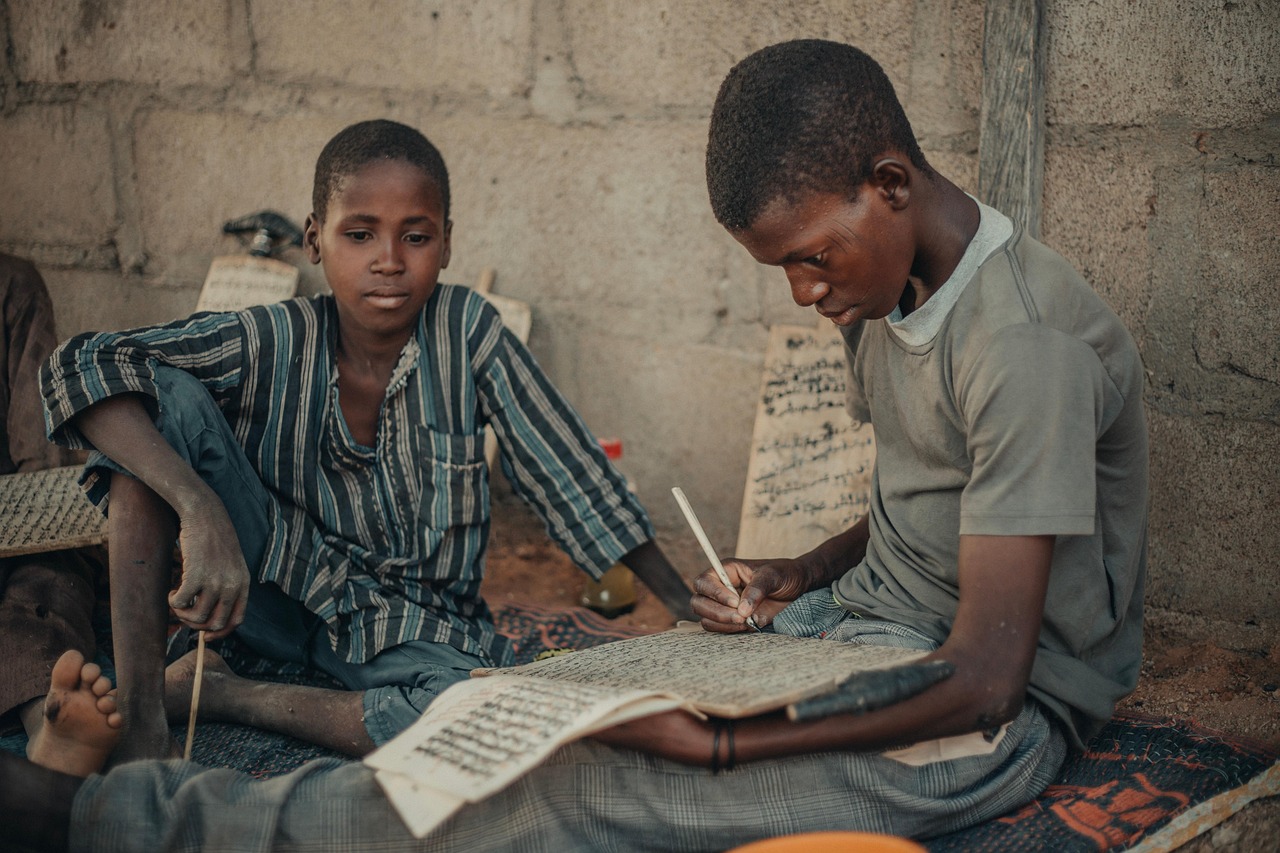
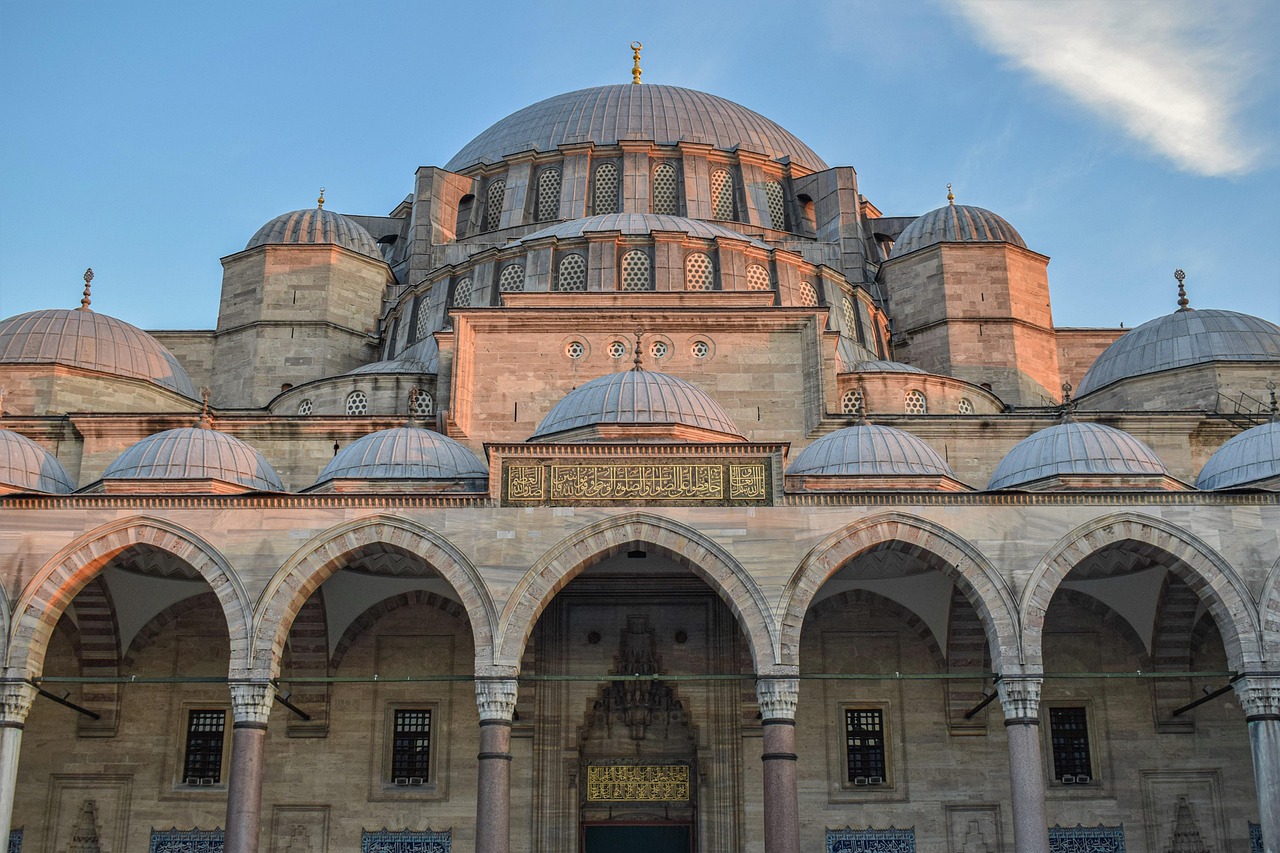
Islam lies at the very foundation of Kanuri identity, and few peoples in Africa can claim so ancient a bond with the faith. The kings of Kanem embraced Islam around the eleventh century, a thousand years ago, and from that time the religion became the soul of the state and the mark of its rulers and people. The Mais built mosques, endowed scholars, made the pilgrimage to Mecca, and ruled as Muslim sovereigns, and Bornu became renowned across the Sudan and even in the wider Muslim world as a land of learning and devotion.
For a full millennium the Kanuri have been a deeply Muslim people, and their attachment to the faith runs through every part of their culture, their law, their learning, and their daily life. The clerics and scholars of Bornu, masters of the Arabic sciences and the Quran, held honoured positions as teachers, judges, and advisers to kings, and the copying and study of religious texts was a proud tradition. Quranic schools taught generations of children their letters and their faith, and the learned families of the towns carried the torch of Islamic scholarship down the centuries.
This long and orthodox Islamic tradition gave Kanuri religion its particular depth and dignity. Older beliefs in spirits and in the power of charms survived at the margins, folded into a life governed by the mosque and the calendar of the faith, but the public and dominant reality was one of settled, learned Islam. The antiquity of their conversion and the fame of their scholars gave the Kanuri a special pride, the sense of belonging to one of the oldest homes of the faith in all of Africa.
The Turban, the Horse, and the Great Durbar
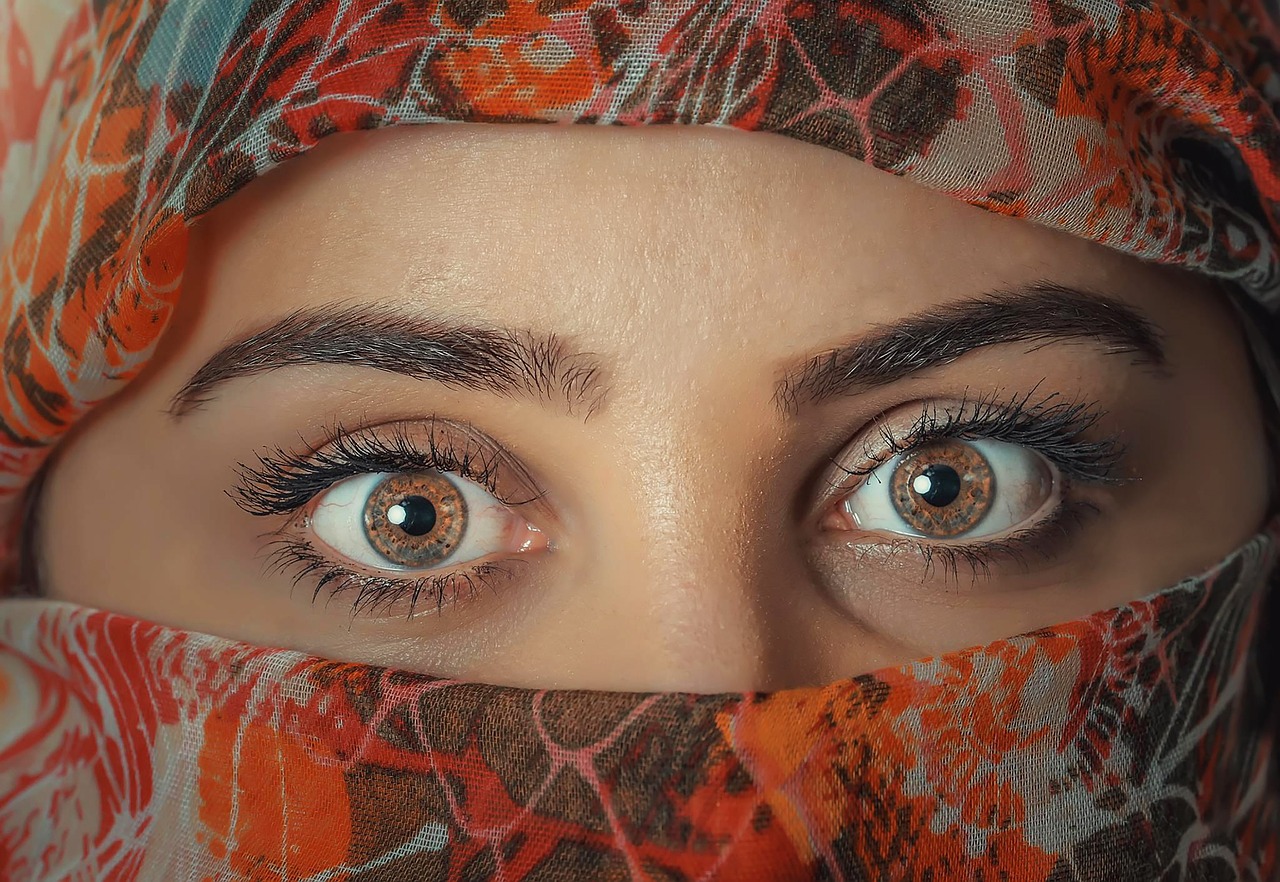
The visible traditions of the Kanuri carry the dignity of an ancient Islamic court. Men wear the flowing gowns and the turbans of the Sahel, wound so that they can be drawn across the face against the dust and the sun, and for great occasions they dress in richly embroidered robes that mark their rank and wealth. Women wear brightly coloured wraps and veils, and gold and silver ornaments proclaim the standing of a family. To appear well dressed at a festival or a court gathering is a valued social art, an expression of honour and respect.
The horse holds a place of high prestige, a legacy of the cavalry that once made the empire mighty, and nothing displays it more gloriously than the durbar, the grand parade in which mounted nobles in splendid dress ride before their ruler. Caparisoned horses, and sometimes camels, their riders in armour or finery, charge and wheel in salute to the throne in a spectacle that reaches back to the age of the empire. These processions, timed to the great festivals, are among the most magnificent traditions of the whole region.
Music, poetry, and the arts of hospitality round out the traditional life of the Kanuri. Court musicians with long trumpets and drums announce the ruler and lend grandeur to ceremony, praise-singers recite the honours of the great, and religious chant fills the mosque and the school. The long formal greetings, the deference shown to elders and clerics, and the generous reception of guests all carry the courtesy of an old and settled civilisation, and in them the Kanuri keep alive the manners of their thousand-year state.
Leatherworkers, Weavers, and the Smiths of Bornu
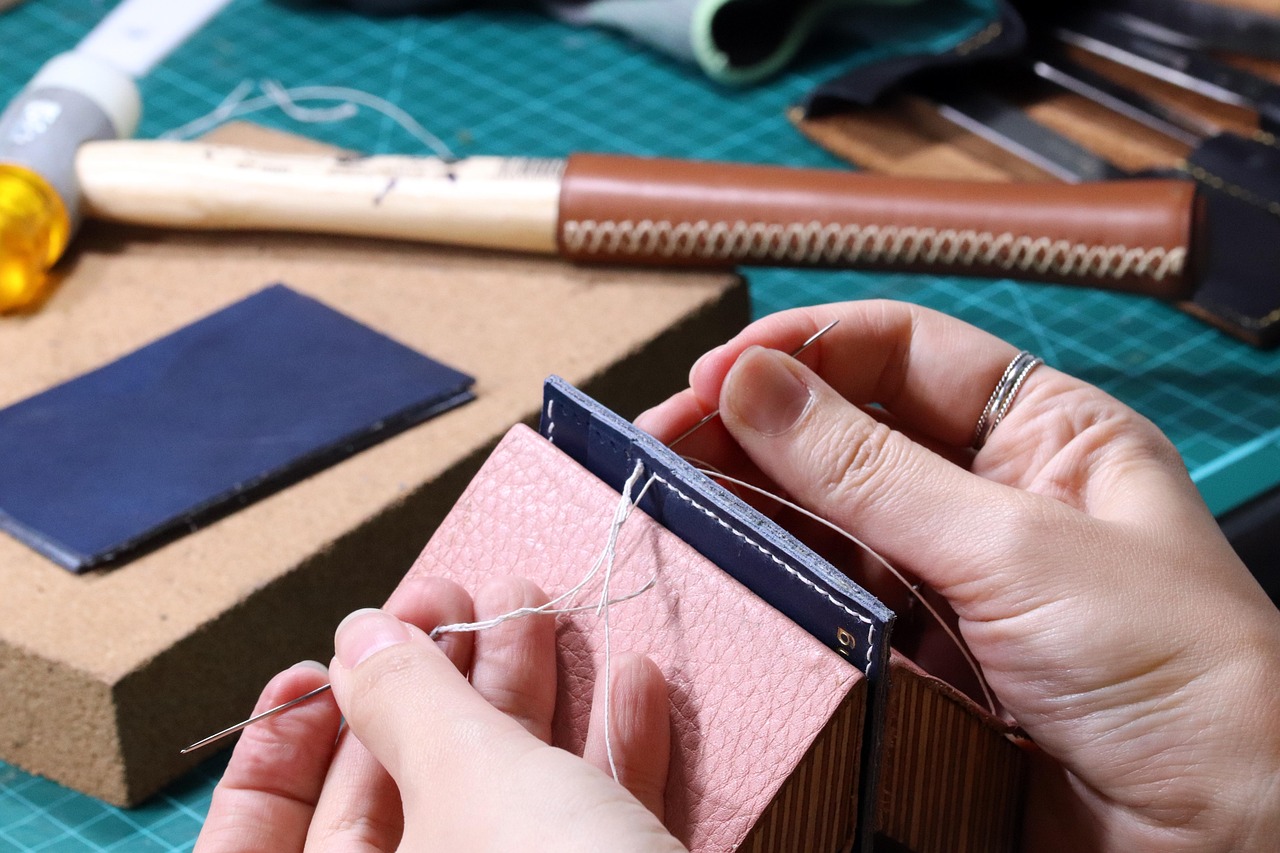
The Kanuri and the towns of Bornu have long been famous for their leatherwork, one of the great craft traditions of the central Sudan. Tanners and leatherworkers turned the hides of the abundant herds into fine goods, sandals, bags, cushions, harness and saddlery for the prized horses, sheaths and cases and the tooled and dyed leather that travelled far along the trade routes. The red-tanned leather of the region was renowned across the Sahara, and some of what Europe long knew as Moroccan leather in fact came from the tanneries of the Sudan.
Weaving and dyeing clothe the Kanuri world, as across the Sahel. On narrow looms weavers produced the strips of cotton cloth that were sewn into the great gowns and robes, and dyers steeped cloth in indigo pits to produce the deep blues of festival dress. The embroidery of the flowing robes, worked in bold patterns across the chest, was a specialised art that turned a simple gown into a garment of prestige, and the finest embroidered robes were prized possessions and honoured gifts.
The blacksmiths worked iron into the tools of farming and the weapons of war, and their craft carried the usual aura of fire and secret skill. Potters, most often women, shaped the vessels for water, grain, and cooking, and other artisans wove mats and baskets from the reeds of the lake. Many of these crafts belonged to particular families and callings, handed down as an inheritance, and together they made the Kanuri town a centre of skilled production whose goods supplied the markets of a wide region.
Millet, the Lake, and the Table of the Sahel
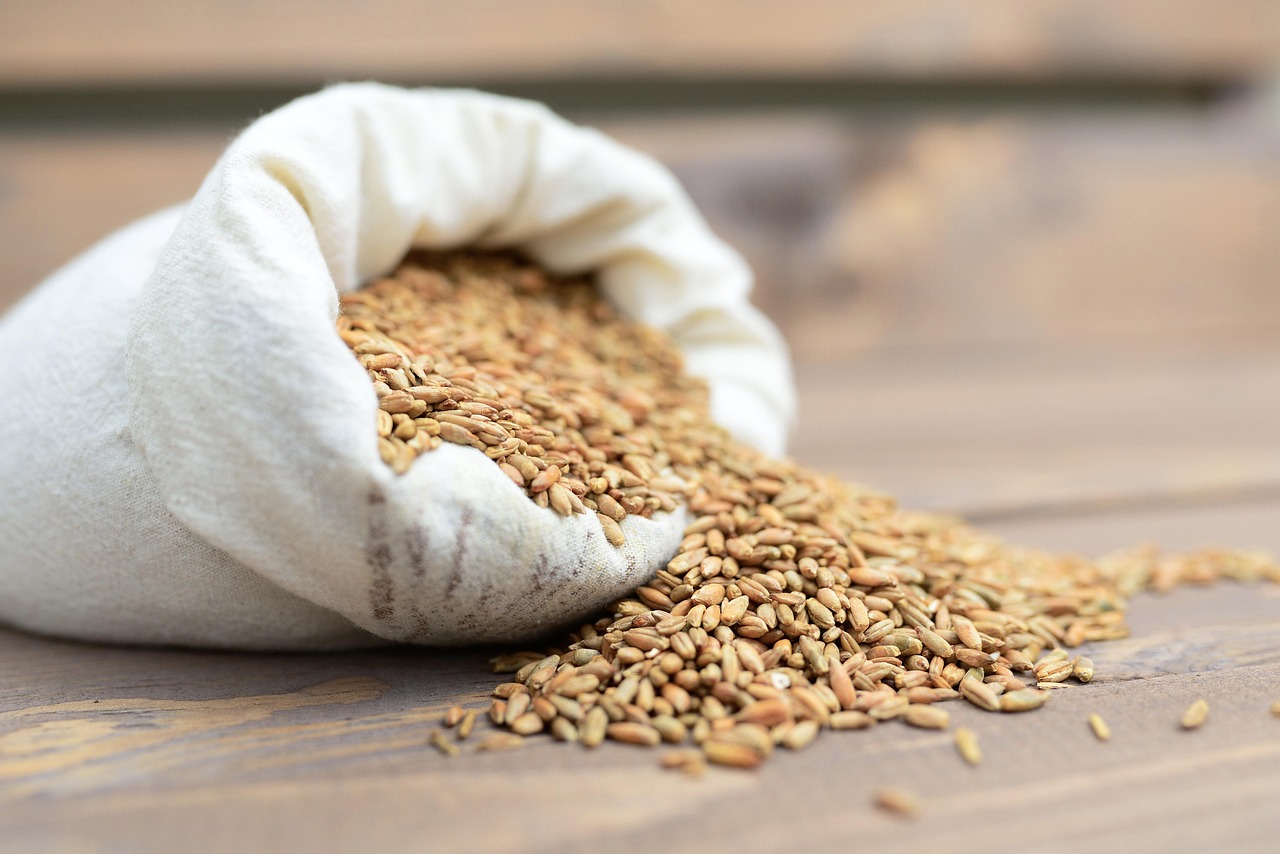
The food of the Kanuri is the food of the Sahel, built on the grains that grow in the short rains around the lake. Millet and sorghum are the great staples, pounded into flour and cooked into a thick porridge that is eaten with sauces, and they are also brewed and prepared in many other ways to fill the bowl at the centre of the family meal. Around this grain the Kanuri built a cuisine adapted to a dry land, storing the harvest carefully against the long lean season before the rains return.
The lake and its rivers give the great gift of fish, and the Kanuri and their neighbours around Lake Chad are famous fishermen. Fresh fish, and above all fish dried and smoked to preserve it, flavour the sauces and travel far inland as an item of trade, so that the taste of the lake reaches tables across the region. From the herds come milk, butter, and the meat of cattle, sheep, and goats, eaten chiefly on days of honour and festival, and the trade in livestock is both a food and a store of wealth.
Beans, groundnuts, onions, peppers, and the leaves and pods of useful trees enrich the sauces, and the fruit of the baobab and the dates of the oases add their sweetness. The sharing of food expresses the deep values of Kanuri hospitality, for to feed a guest generously is a point of honour in a society that prizes courtesy. Tea and other drinks punctuate the day and the visit, and the communal meal, taken from a shared bowl, remains a centre of family and social life.
The Sallah, the Durbar, and the Feasts of the Faith
The great festivals of the Kanuri are the feasts of Islam, kept with a splendour befitting a people of such ancient faith. The two Sallah festivals, the celebration at the end of the fasting month and the feast of the sacrifice, are the high points of the year, when families pray together, slaughter rams, dress in their finest new robes, and move between households sharing meat and greetings. The whole community turns out in colour and abundance, and the mosques overflow with worshippers giving thanks.
The crown of these celebrations is the durbar, the magnificent parade of horsemen that gathers before the ruler on the great festival days. Nobles and their retainers, mounted on richly caparisoned horses and dressed in gleaming robes and turbans, ride in procession and then charge in salute toward the throne, raising a thunder of hooves and a blaze of colour. Court musicians sound their long trumpets and drums, and the whole spectacle recalls the martial glory of the old empire, binding the present to a thousand years of kingship.
Alongside the feasts of the faith stand the ceremonies of family life, the naming of a child, the celebration of marriage, and the rites of mourning, each a social occasion that draws kin and neighbours together with prayer, feasting, and the flow of gifts. Weddings in particular can be grand and prolonged affairs that display the standing of a family. From the great durbar before the ruler to the naming in a humble compound, the gatherings of the Kanuri renew the bonds of faith, kinship, and community that hold their society together.
From the Kings of Kanem to the Colonial Partition
The history of the Kanuri begins with the kingdom of Kanem, which arose to the northeast of Lake Chad more than a thousand years ago under a line of kings who embraced Islam in the eleventh century. From this base the Mais built an empire that reached far across the desert and the Sahel, growing rich on the trans-Saharan trade and famous for its learning. Internal strife and the pressure of enemies eventually drove the dynasty from Kanem, and in the fourteenth and fifteenth centuries it re-established itself west of the lake in the province of Bornu, beginning a second great chapter of the same long story.
From its new heartland the empire of Bornu rose to its height, above all under the great sixteenth-century ruler Mai Idris Alooma, remembered for his reforms, his firearms, his mosque-building, and his campaigns. Bornu commanded the trade routes, exchanged embassies across the Muslim world, and stood as one of the mightiest states of Africa, its capital Ngazargamu a great city of the Sahel. For centuries the empire endured, weathering droughts, wars, and the shifting fortunes of the desert trade, a monument to the durability of the Kanuri throne.
The long decline and transformation came in the nineteenth century, when the empire was shaken by the Fulani jihad, revived under the leadership of the scholar-warrior al-Kanemi and his descendants, and finally conquered and carved up by the European powers at the close of the century. The lands of the Kanuri were divided among the British, the French, and the Germans, and their heirs, so that the single nation of the lake was split among the colonies that became Nigeria, Niger, Chad, and Cameroon, ending a thousand years of independence.
The Kanuri of Nigeria, Niger, and Chad
Today the Kanuri are a large people divided chiefly among Nigeria, Niger, Chad, and Cameroon, with their greatest numbers in the northeast of Nigeria, where the city of Maiduguri stands as their principal centre. The traditional throne endures in the person of the Shehu of Bornu, heir to the thousand-year line of rulers and a revered figure whose moral authority still carries great weight, a living link to one of the oldest states in the history of the world. Across the borders that divide them, the Kanuri keep their shared language, faith, and memory of empire.
The modern era has pressed hard on the Kanuri homeland. The dramatic shrinking of Lake Chad, on which so many depend for fish, water, and farmland, has brought hardship and hunger to the whole basin, and in recent years the region has been ravaged by a brutal insurgency that has driven vast numbers of people from their homes and inflicted terrible suffering on the Kanuri and their neighbours. These trials have tested a people long accustomed to the hardships of the desert edge and to weathering the storms of history.
Yet the deep strengths of Kanuri culture endure. The ancient faith remains the centre of life, the throne of Bornu still commands respect, the durbar still rides on the festival days, and the language and the traditions of a thousand-year civilisation are carried on by millions around the lake. Bearers of one of the longest continuous political traditions on earth, the Kanuri hold to their identity through every trial, a people whose history reaches back to the dawn of Islam in Africa and whose endurance remains their greatest inheritance.

Related Peoples of the Region
- Igbo of the Republican Villages and Their Nation That Crowned No King
- Ashanti of the Golden Stool and Their Forest Empire of Gold
- Dogon of the Bandiagara Cliffs and Their World Carved Into the Rock
- Bambara of the Upper Niger and Their Antelope Dance of the Farming Cults
- Wolof of the Senegal Coast and Their Nation of Teranga
- Songhay of the Niger Bend and Their Empire of Gold and Salt
- Mossi Horsemen of the Volta Plateau and Their Kingdoms That Defied Every Empire
- Ewe of the Lagoon Coast and Their Drums That Conquered the World
More Peoples of the World
You May Like
The Zaza, a Mountain People of Eastern Anatolia


3 thoughts on “Kanuri of Lake Chad and Their Empire That Lasted a Thousand Years”