On the high, wooded savannas of the southern Congo basin, in the country where Angola, the Democratic Republic of the Congo, and Zambia meet, lives a people whose carved masks and chairs, whose hunter-chiefs and whose great expansion across the region made them one of the most remarkable of central Africa. They are the Chokwe, a Bantu nation of the miombo woodland whose sculpture is counted among the finest of the continent and whose dramatic history carried them, in a few generations, from a small chiefdom to a people spread across a vast territory.
This is the story of the Chokwe and the woodland world of chiefs, hunters, and artists they built. It is a story of sacred chiefship inherited from the Lunda and of the hunter-hero Chibinda Ilunga so often carved in their finest sculpture, of the serene Mwana Pwo mask and the masked makishi spirits of the mukanda initiation, of the marvellous carved chairs peopled with tiny figures, and of the cassava and the game of the hunt. It is also a story of a great nineteenth-century expansion in which a client people mastered the empire that had ruled them, told by one of Africas great artistic nations.
Contents
- The People of the Chiefs and the Masks
- Chokwe, Bachokwe, and the Speakers of Chokwe
- Chokwe, a Language of the Southern Savanna
- The Woodlands of Angola and the Congo
- Chiefs, Hunters, and the Heirs of the Lunda
- Lineage, the Village, and the Bonds of the Chokwe
- The Ancestors, the Spirits, and the Masked Powers
- The Mwana Pwo, the Chair, and the Art of the Chokwe
- Carvers, Smiths, and the Masters of the Chair
- Cassava, Millet, and the Table of the Woodland
- The Mukanda, the Masks, and the Feasts
- From the Lunda to the Great Expansion
- The Chokwe of Angola and Beyond
The People of the Chiefs and the Masks
On the high, wooded savannas of the southern Congo basin, in the country where Angola, the Democratic Republic of the Congo, and Zambia meet, lives a people whose carved masks and chairs, whose hunter-chiefs and whose great expansion across the region made them one of the most remarkable of central Africa. They are the Chokwe, a Bantu nation of the miombo woodland whose sculpture is counted among the finest of the continent and whose dramatic history carried them, in a few generations, from a small chiefdom to a people spread across a vast territory. Among the peoples of the southern savanna, the Chokwe are one of the most artistically and historically striking.
The Chokwe are a Bantu people, part of the vast family whose ancestors spread across much of Africa, and they trace their political origins to the great Lunda empire, from which their ruling lineages sprang, so that their culture of sacred chiefship is a cousin to that of the Lunda and the Luba. Settling the wooded savannas at the headwaters of the great rivers, they built a society of chiefdoms and villages, and they became famous as hunters, as traders, and above all as artists.
Their story is one of a people who rose from the woodland chiefdoms of the Lunda world to become, in the nineteenth century, a great and expanding power, spreading across a huge region on the strength of their hunting, their trade in wax, ivory, and rubber, and their prowess in war, and whose masks and carvings are treasures of world art. To understand the Chokwe is to understand a people of the chief, the hunter, and the mask, at the heart of the southern savanna.

Chokwe, Bachokwe, and the Speakers of Chokwe
The people call themselves the Chokwe, or Bachokwe, and their language by the same name, and they are one of the major peoples of the region where Angola meets the two neighbouring nations. The name is written in various ways, Cokwe, Tshokwe, Ciokwe, and others, reflecting the different colonial languages that recorded it, but it belongs to a single people conscious of their common origin and their shared culture of chiefship, hunting, and art.
The Chokwe are spread today across a broad territory, with their greatest numbers in the eastern highlands of Angola, and large communities in the Kasai and Katanga regions of the Democratic Republic of the Congo and in northwestern Zambia, a spread that is the direct result of their great nineteenth-century expansion out of their original heartland. Beneath the shared name lie many chiefdoms, clans, and local groups, each with its own identity, yet all bound by the common language, the common traditions, and the memory of their origin in the Lunda world.
The name Chokwe carries the fame of a people known across the region and the world for their sculpture, their masks, and their history of dramatic expansion, and it marks them as a distinct nation among the many peoples of the southern savanna. In the name Bachokwe, the many chiefdoms and communities recognise their common descent and their shared belonging to one of the great artistic and historical peoples of central Africa.

Chokwe, a Language of the Southern Savanna
The Chokwe speak Chokwe, a Bantu language of the Niger-Congo family, closely related to the languages of the other peoples of the Lunda world and to the tongues of the southern savanna, and it is one of the important languages of eastern Angola and the neighbouring lands, spoken by several million people across the three countries where the Chokwe live. As a Bantu language it is built on the system of noun-classes and the tonal patterns characteristic of that great family.
For most of their history the Chokwe passed their language and their knowledge by word of mouth, in a rich oral culture of proverbs, tales, songs, and the traditions of the chiefs and the clans, and their culture is famous for the play of proverb and allusion and for the great store of stories, including the tales of the trickster and the legends of the founding hero. The oral traditions carried the history of the chiefdoms, the genealogies of the rulers, and the wisdom of the people.
With the coming of the missionaries the language was reduced to writing and acquired a place in schooling and the churches, and today Chokwe flourishes in daily life and in music across its wide territory, spoken alongside the Portuguese of Angola and the French and other languages of the neighbouring lands. In its proverbs, its tales, and the traditions of its chiefs, the Chokwe language carries the memory and the imagination of a great savanna people.

The Woodlands of Angola and the Congo
The Chokwe homeland is the high, wooded savanna of the interior of south-central Africa, in the country where the great rivers of the region have their sources, spreading across the eastern highlands of Angola and into the neighbouring parts of the Congo and Zambia. It is a country of the miombo woodland, the vast belt of open, dry forest of small-leaved trees that covers so much of the southern savanna, broken by grassy valleys and the gallery forests that line the many rivers, a healthy, high country cooler than the deep basin to the north.
The original heartland of the Chokwe lay in the highlands of eastern Angola, at the sources of some of the great rivers of the continent, a well-watered country of woodland and grassland rich in game, in the wax of wild bees, and in the other products of the wild that would later fuel the trade and the expansion of the people. From this core the Chokwe spread in the nineteenth century across a huge territory, following the game, the trade, and the opportunities of a turbulent age.
This was a country suited to the hunter and the woodland farmer, its game and its wild products supporting a people famous for the chase, its soils giving the cassava, millet, and maize of the fields, and its position at the sources of the rivers placing it at the heart of the trade routes of the interior. On this high, wooded savanna, rich in game and threaded by rivers, the Chokwe built their chiefdoms and, in time, launched their great expansion.

Chiefs, Hunters, and the Heirs of the Lunda
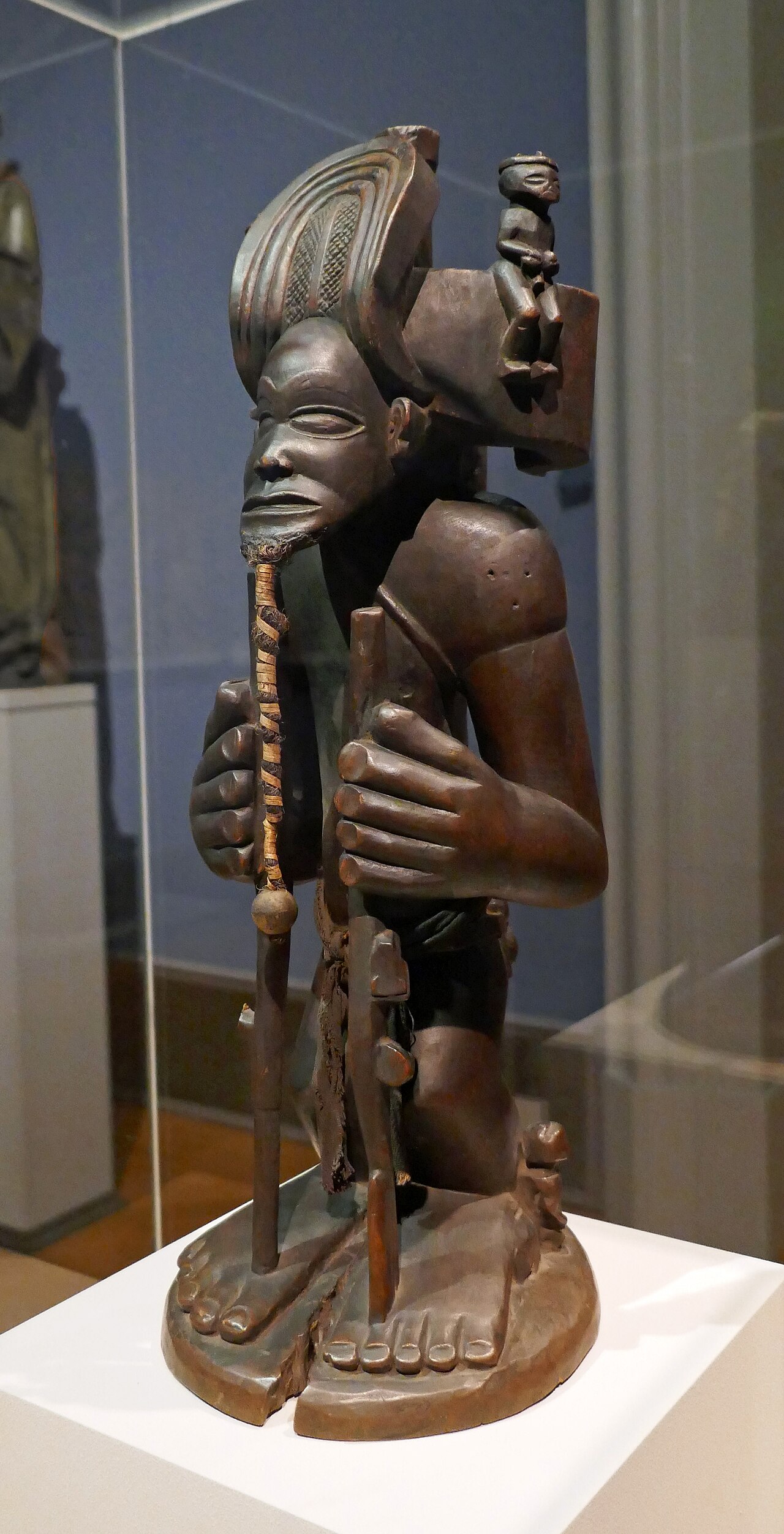
The old Chokwe world was ordered by sacred chiefship, a tradition the Chokwe inherited from the great Lunda empire, from which their ruling lineages claimed descent. Their founding legend tells of the hunter-hero Chibinda Ilunga, a prince of the Luba who married the Lunda queen Lueji and brought the arts of the hunt and the principles of civilised chiefship, and the memory of this hunter-prince, so often carved in the finest Chokwe sculpture, stands at the root of their idea of the chief as hunter, provider, and sacred ruler.
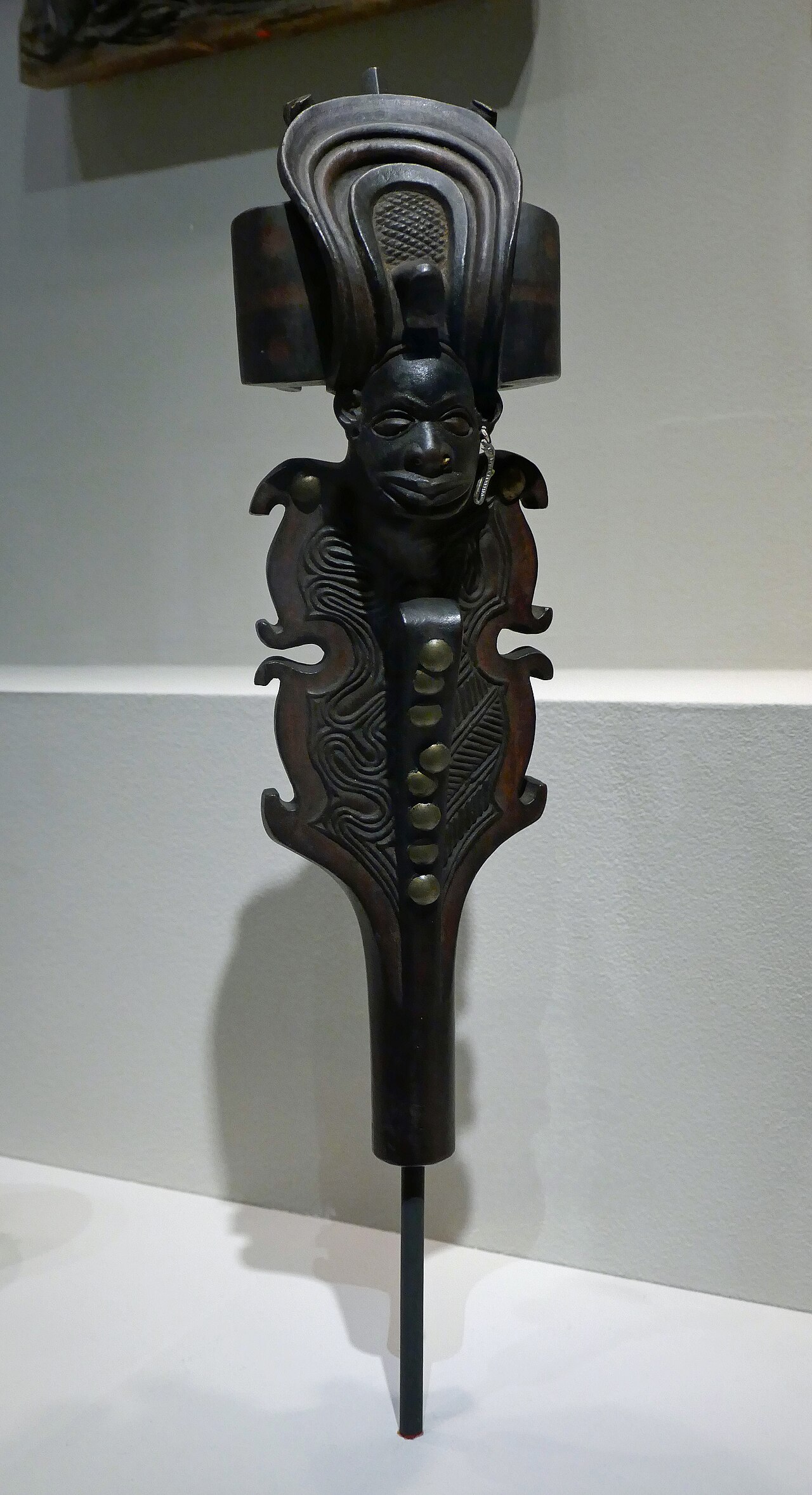
The Chokwe were organised into many chiefdoms, each under a chief whose authority was both political and sacred, hedged about with ritual and marked by the regalia, the carved thrones, the staffs, and the ceremonial objects that proclaimed his office. The chief was the guardian of his people and the land, the leader in the hunt and in war, and the mediator with the ancestors and the powers, and his court and his title-holders governed the affairs of the chiefdom. Unlike the great centralised empires, the Chokwe world was a cluster of such chiefdoms rather than a single state.
Beneath the chiefs lay the villages and the lineages, the ordinary Chokwe living by hunting, by the woodland farming of cassava and grain, and by trade, and bound to their chiefs and their kin by the ties of loyalty and custom. The hunter held a special honour in this society, for the chase was both a livelihood and a mark of prestige, and the ideal of the hunter-chief, embodied in Chibinda Ilunga, ran through the whole culture. In sacred chiefship, the hunt, and the chiefdom, the old Chokwe world was built.
Lineage, the Village, and the Bonds of the Chokwe
Chokwe society was built on the lineage, the village, and the chiefdom, woven together into an order at once egalitarian in its villages and hierarchical in its chiefship. Descent among the Chokwe was reckoned largely through the mother, in the matrilineal fashion common in the region, so that a person belonged to the lineage of their mother and inherited position and belonging through the maternal line, giving the mothers brother a special importance in the life of a child. The lineages and clans, spread across the woodland, tied the people into a web of kinship.
The village, a cluster of households often set amid the fields and the woodland, was the setting of daily life, under a headman and grouped into the chiefdoms of the wider society, and within this order a person rose through birth, through the favour of the chiefs, through wealth won in the hunt and the trade, and through membership of the sacred associations. Marriage, sealed by bride-wealth, joined lineages, and a man of many wives, children, and followers was a man of standing in a society that prized the vigour of the lineage and the prowess of the hunter.
The values of Chokwe society joined the honour of the hunter and the reverence for the chief to the bonds of the matrilineal lineage and the love of art and ornament, for even the objects of daily life were made with care and beauty. Respect for the chiefs, the elders, and the ancestors, the prizing of the hunt and of skill in craft, and the ties of kinship ordered the whole. In lineage, village, and chiefdom, the Chokwe wove a society of hunters, chiefs, and artists.

The Ancestors, the Spirits, and the Masked Powers
The traditional religion of the Chokwe centred on a supreme creator God, Kalunga or Nzambi, the distant maker of all things, and on a rich world of ancestral spirits and nature powers that pervaded the life of the people and the authority of the chiefs. The ancestors, the departed dead of the lineage and above all of the chiefly line, remained a living presence who watched over, blessed, and could trouble their descendants, and who had to be honoured and consulted, and the bond between the living and the dead lay at the heart of the moral order.
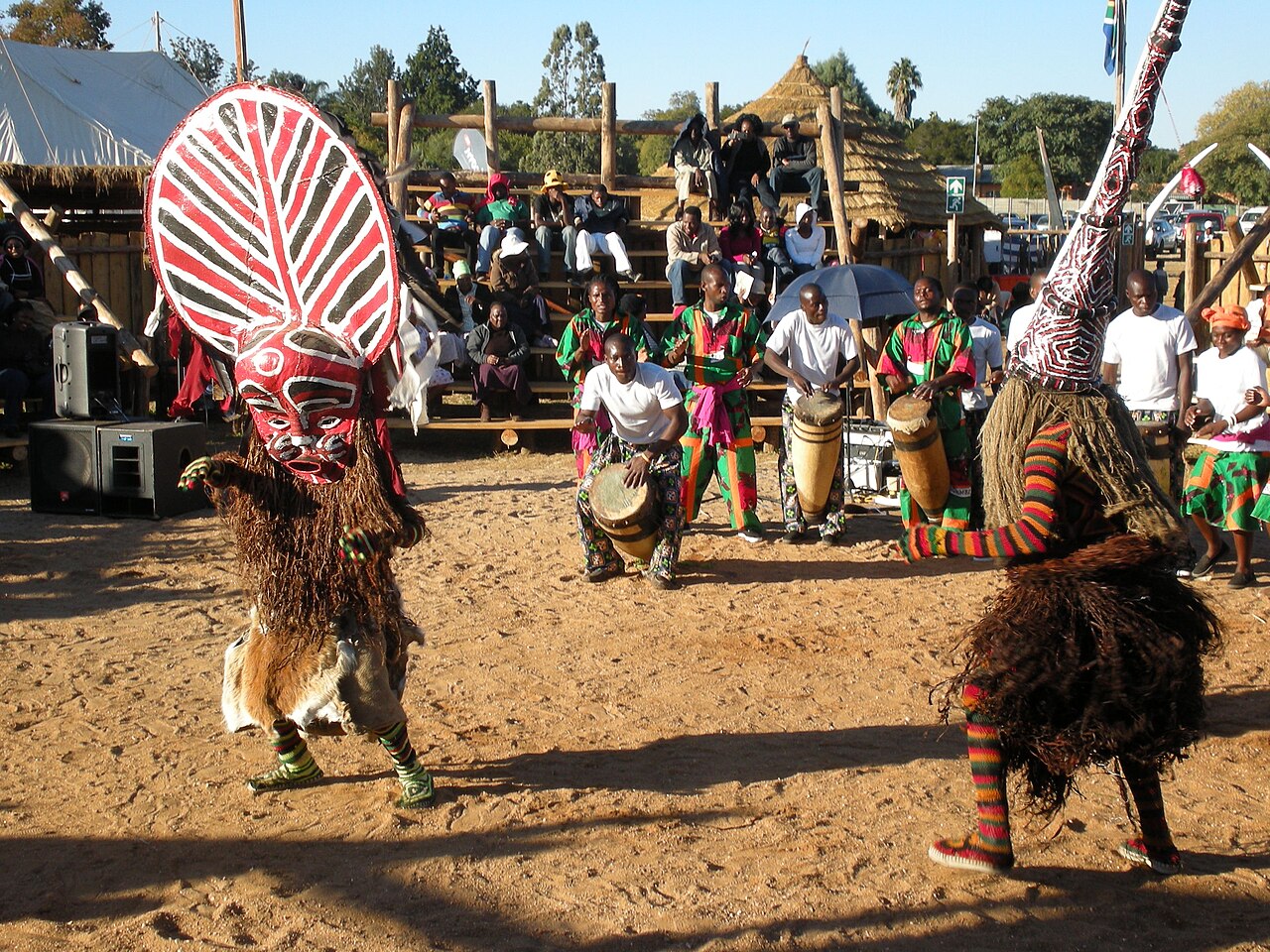
The masked spirits, the makishi, were among the most powerful expressions of Chokwe religion, for in the great masquerades carved and costumed figures embodied the spirits of the ancestors and the powers of the bush, appearing at the initiations and the ceremonies of the chiefdom to teach, to bless, to enforce the moral order, and to bring the sacred into the midst of the community. Chief among them were the masks of the founding ancestors and the powers, above all the serene female mask Mwana Pwo, the young woman who embodies the beauty and the fertility of the lineage, and the male power masks of the chiefly spirits.
Diviners and ritual specialists mediated with the spirit world, reading the causes of misfortune through elaborate divination and providing the charms and rites that could restore health and order, and belief in the power of the unseen ran deep. With the coming of the missionaries many Chokwe became Christians, yet the reverence for the ancestors, the power of the chiefship, and the sacred masks of the makishi have never wholly faded beneath the new faith.

The Mwana Pwo, the Chair, and the Art of the Chokwe
The Chokwe are counted among the greatest artists of Africa, and the supreme expression of their tradition is their sculpture, above all the carved masks of the makishi and the famous statues of the hunter-hero Chibinda Ilunga, works of such power and refinement that they are treasures of world art. The most beloved of the masks is the Mwana Pwo, the mask of the beautiful young woman, worn by a male dancer to honour the female ancestors and to embody the ideal of feminine grace and fertility, its serene carved face marked with the ritual scarifications and the delicate features that are the glory of Chokwe carving.
The carved chairs and thrones of the Chokwe chiefs are another marvel of their tradition, for the Chokwe took the form of the European chair and transformed it into a support for a whole world of carved figures and scenes, the rungs and frames peopled with tiny sculptures of the life and the ceremonies of the people, so that a chiefs chair became a carved chronicle of Chokwe society. The staffs, the scepters, the combs, the pipes, and the everyday objects of the people were likewise carved with a care and beauty that made the whole material world a canvas for their art.
The masquerade and the dance filled the ceremonial life of the people, the makishi appearing at the great initiations and the feasts of the chiefdom in a drama of costume, movement, and music, and the dances of the masked spirits were among the most spectacular of Chokwe ceremonies. In the Mwana Pwo mask, the carved chair, and the dance of the makishi, the Chokwe kept the great artistic traditions of the southern savanna.

Carvers, Smiths, and the Masters of the Chair
The crafts of the Chokwe are the very foundation of their fame, and the carvers hold pride of place, for the Chokwe sculptor produced the masks of the makishi, the statues of Chibinda Ilunga and the chiefs, the elaborately carved thrones and chairs, the staffs and scepters of office, and the countless carved objects of daily and ceremonial life, working the wood with a mastery of form that placed his art among the greatest of the continent. The carving of the mask and the chief chair, in particular, called forth the highest skill of the Chokwe artist.
The blacksmiths held an honoured and even sacred place, for the working of iron was tied in the culture to the hunter and the chief, and the smith forged the tools, the weapons, the hoes, and the fine ceremonial iron, along with the ornaments and the wire-work that adorned the people, and his command of fire and metal carried respect and awe. The Chokwe were also known for their skill in beadwork and in the working of the materials of the hunt and the wild into ornament and regalia.
The women were the potters, shaping the clay vessels of the household, and the makers of the basketry, the mats, and the woven goods of the forest and the field, and the making of the great masks combined the carving of the wooden face with the working of bark cloth, fibre, and resin into the costume of the masked spirit. Many of these crafts, above all the carving, were the work of honoured specialists who served the chiefs and the ceremonies. In carved mask, chief chair, and forged iron, the crafts of the Chokwe made a people of artists.

Cassava, Millet, and the Table of the Woodland
The food of the Chokwe is the food of the wooded savanna, built on the staple crops of the field and enriched above all by the game of the hunt for which the people are famous. Cassava is the great staple, its root soaked, dried, and pounded into flour and cooked into the thick paste eaten across the region, and its leaves cooked as a nourishing green, while millet and maize, ground and cooked in the same way, complete the foundation of the daily meal, served with sauces and stews.
As a people of the hunter, the Chokwe prized the meat of the game of the woodland and savanna above all, and the products of the chase, fresh, dried, and smoked, ran through their cooking and their trade, for the hunter was both a provider and a figure of honour. From the rivers came fish, and from the fields and the wild came beans, groundnuts whose paste thickens many a stew, a range of vegetables and greens, and the mushrooms, wild fruits, honey, and the edible caterpillars that are prized delicacies of the miombo woodland.
The oil palm and other sources gave the oil that enriches the cooking, and honey, gathered from the wild bees of the woodland, was both a food and, in the wax it yielded, a great item of the trade that fuelled the Chokwe expansion. Palm wine and grain beer flowed at celebrations and in the daily sociability of the people. The sharing of a meal of cassava or millet paste with a rich sauce of game or greens expressed the deep values of hospitality. In cassava, game, and the bounty of the woodland, the food of the Chokwe is the taste of the hunters savanna.

The Mukanda, the Masks, and the Feasts
The great ceremonial occasions of the Chokwe were the initiations and the masquerades, and none was more important than the mukanda, the initiation of boys into manhood, a long and formative rite in which the young were secluded in a bush camp, taught the knowledge, the skills, and the moral order of the community, circumcised, and brought back to the village as men. The mukanda was accompanied by the appearance of the makishi, the masked spirits who presided over the initiation, taught and disciplined the initiates, and celebrated their emergence, and it was one of the central institutions of Chokwe life.
The masquerades of the makishi were the most dramatic of Chokwe festivals, for the masked spirits appeared not only at the initiations but at the installation of chiefs, at funerals, and at the great celebrations of the chiefdom, dancing in their carved masks and their costumes of fibre and bark cloth in a drama that brought the ancestors and the powers of the bush into the midst of the people. The Mwana Pwo, the beautiful female mask, danced her graceful dance, and the male power masks displayed the might of the chiefly spirits.
The passages of family life, births, marriages, and funerals, gathered kin and community with drumming, singing, dance, and feasting, and the installation of a chief was a great occasion of the whole chiefdom. With the coming of Christianity the Chokwe added the feasts of the church to their calendar. Through the mukanda, the dances of the makishi, and the ceremonies of family and chiefdom, the Chokwe marked the passages of life and the sacred order of their world.
From the Lunda to the Great Expansion
The history of the Chokwe begins in the world of the Lunda empire, the great state of the southern savanna from which the Chokwe ruling lineages claimed their descent, tracing their chiefship to the hunter-prince Chibinda Ilunga who, in the founding legend, brought the arts of the hunt and the principles of sacred rule from the Luba to the Lunda. From a small heartland in the highlands of eastern Angola, the Chokwe lived for centuries as one of the woodland peoples on the fringes of the Lunda world, hunters and farmers of the miombo.
In the nineteenth century the Chokwe underwent one of the most dramatic expansions in the history of central Africa, for they grew rich and powerful on the trade in beeswax, in ivory, and then in wild rubber, exchanging these products of the woodland for guns and goods, and armed with firearms and skilled in the hunt and in war, they spread explosively out of their heartland across a huge territory. They even overran and conquered the heartland of the very Lunda empire from which their kingship had sprung, a startling reversal in which the client people mastered their old overlords.
This great expansion carried the Chokwe across the country where Angola, the Congo, and Zambia now meet, and their raiding and their trade made them a formidable and disruptive power in the age just before the colonial conquest. Under Portuguese, Belgian, and British colonial rule their lands were divided, and in the modern era the Chokwe have known the upheavals of the wars of Angola and the troubles of the Congo. From the Lunda world through the great expansion to the modern nations, the Chokwe have carried a dramatic history.
The Chokwe of Angola and Beyond
Today the Chokwe are one of the major peoples of Angola, concentrated in the eastern highlands that were their heartland, and they form important communities in the Kasai and Katanga regions of the Democratic Republic of the Congo and in northwestern Zambia, a spread that is the living legacy of their great nineteenth-century expansion. Numerous, widespread, and proud of their history and their art, they remain one of the significant peoples of the southern savanna and the wider region.
The modern history of the Chokwe has been bound up with the turbulent history of their nations, above all the long and terrible civil war that convulsed Angola for decades after independence and fell heavily on the eastern highlands that are their homeland, bringing displacement, hardship, and suffering, and the troubles of the neighbouring Congo have touched the Chokwe there as well. Through war and upheaval the people have endured, and many have moved to the towns and cities even as the woodland homeland remains the root of identity.
Through all these changes the artistic genius of the Chokwe endures and is celebrated across the world, for their masks, their statues of Chibinda Ilunga, and their carved chairs are treasured in the great museums and are among the most admired of all African art, and the makishi masquerade still dances at the initiations of the young. The Chokwe language thrives, the traditions of the chief and the hunter endure, and the pride in a history of expansion and a heritage of art remains strong. Heirs to the world of the Lunda and to one of Africas great sculptural traditions, the Chokwe carry their heritage into the modern life of three nations.

Related Peoples of the Region
- Kongo of the Lower River and Their Kingdom That Wrote to the Pope
- Luba of the Southern Savanna and Their Empire of Sacred Kings and Memory Boards
- Kuba of the Kasai and Their Kingdom Where Everything Became Art
- Fang of the Equatorial Forest and Their Guardian Figures That Changed Modern Art
- Mongo of the Congo Rainforest and Their Epic of the Hero Lianja
More Peoples of the World
You May Like
The Zaza, a Mountain People of Eastern Anatolia