In the dense equatorial rainforest of the northwestern Congo basin, in the country that spreads across Gabon, southern Cameroon, and Equatorial Guinea, lives a people whose carved wooden figures, serene and powerful guardians of the bones of the ancestors, so struck the artists of early twentieth-century Europe that they helped to change the course of Western art. They are the Fang, a Bantu people of the forest whose sculpture is counted among the greatest of Africa, and whose migration out of the north and settlement of the coastal forests is one of the epics of the region.
This is the story of the Fang and the forest world they built without kings. It is a story of a great migration southward through the woodland toward the Atlantic, of independent villages ordered by clan and elder around the meeting-house, of the byeri ancestor cult and its serene guardian figures, of the white ngil masks and the visionary Bwiti religion of the sacred root iboga, of the night-long epic of the mvet, and of the cassava and plantain of the forest table. It is the story of a forest people whose art and whose migration made them famous across the world.
Contents
- The People of the Great Northern Migration
- Fang, Pahouin, and the Speakers of Fang
- Fang, a Tongue of the Northwest Forest
- The Rainforest of Gabon and the Cameroon Border
- The Clans, the Elders, and the Society Without Kings
- Lineage, the Village, and the Bonds of the Fang
- The Byeri, the Ancestors, and the Bwiti
- The Guardian Figure, the Mask, and the Ways of the Fang
- Carvers, Smiths, and the Makers of the Forest
- Cassava, the Plantain, and the Table of the Forest
- The Byeri Rites, the Bwiti, and the Feasts
- From the Migration South to the Modern Nations
- The Fang of Gabon, Guinea, and Cameroon
The People of the Great Northern Migration
In the dense equatorial rainforest of the northwestern Congo basin, in the country that spreads across Gabon, southern Cameroon, and Equatorial Guinea, lives a people whose carved wooden figures, serene and powerful guardians of the bones of the ancestors, so struck the artists of early twentieth-century Europe that they helped to change the course of Western art. They are the Fang, a Bantu people of the forest whose sculpture is counted among the greatest of Africa, and whose migration out of the north and settlement of the coastal forests is one of the epics of the region.
The Fang are a Bantu people, part of the vast family whose ancestors spread across much of Africa, and they are the largest of a cluster of closely related peoples, sometimes called the Pahouin, who occupy the forests of the northwest. Unlike many of the great peoples of the interior, the Fang built no centralised kingdom, living instead in independent forest villages ordered by clan and elder, a society without kings that nonetheless produced an art and a culture of remarkable power and unity.
Their story is one of a great migration, of a people who pressed southward and westward through the forest over generations, reaching the Atlantic coast only in relatively recent centuries, of an ancestor cult whose guardian figures are treasures of world art, and of a role in the modern life of three nations of the region. To understand the Fang is to understand a forest people without kings whose art and whose migration made them famous across the world.
Fang, Pahouin, and the Speakers of Fang
The people call themselves the Fang, and their language by the same name, and they are the largest and best known of a group of closely related peoples of the northwestern forest whom scholars have sometimes gathered under the name Pahouin, a group that includes the Fang proper along with the Bulu, the Beti, the Ewondo, and others of southern Cameroon and the neighbouring lands. These peoples share a common origin, closely related languages, and much of their culture, forming a broad family of the forest.
The Fang themselves are divided into a number of clans and sub-groups spread across the forests of Gabon, southern Cameroon, and Equatorial Guinea, each tracing descent from common ancestors and keeping its own local identity, yet all bound by the shared language, the shared customs, and the memory of the great migration that brought them to their lands. The reciting of clan and ancestry places a person within this web of kinship that structures the society.
The name Fang, and the wider name Pahouin, thus cover a large and vigorous population of the northwestern forest, one of the major peoples of the region, and the name carries the fame of the great sculptural tradition and the migration epic of the people. In the name Fang, the many clans of the forest recognise their common origin and their shared belonging to one of the great peoples of the equatorial northwest.

Fang, a Tongue of the Northwest Forest
The Fang speak Fang, a Bantu language of the Niger-Congo family, closely related to the tongues of the other Pahouin peoples of the northwestern forest, and it is one of the major languages of Gabon and Equatorial Guinea and is spoken in southern Cameroon as well. As a Bantu language it is built on the system of noun-classes and the tonal patterns characteristic of that great family, and it exists as a chain of related dialects across the wide Fang country, understood among neighbours and shading one into another.
For most of their history the Fang passed their language and their knowledge by word of mouth, in a rich oral culture of proverbs, tales, and above all the great oral traditions of migration and ancestry, and one of the glories of Fang oral literature is the mvet, the long epic sung by a bard to the accompaniment of a stringed instrument of the same name, a harp-zither, recounting the legendary deeds of heroes in a mythical land. The performance of the mvet, lasting through the night, is one of the great arts of the Fang.
With the coming of the missionaries the language was written down and acquired a place in schooling and the churches, and today Fang flourishes in daily life, in music, and in media across its wide territory, spoken alongside French and Spanish, the colonial languages of the region. In its proverbs, its migration traditions, and above all the epic of the mvet, the Fang language carries the memory and the imagination of a great forest people.

The Rainforest of Gabon and the Cameroon Border
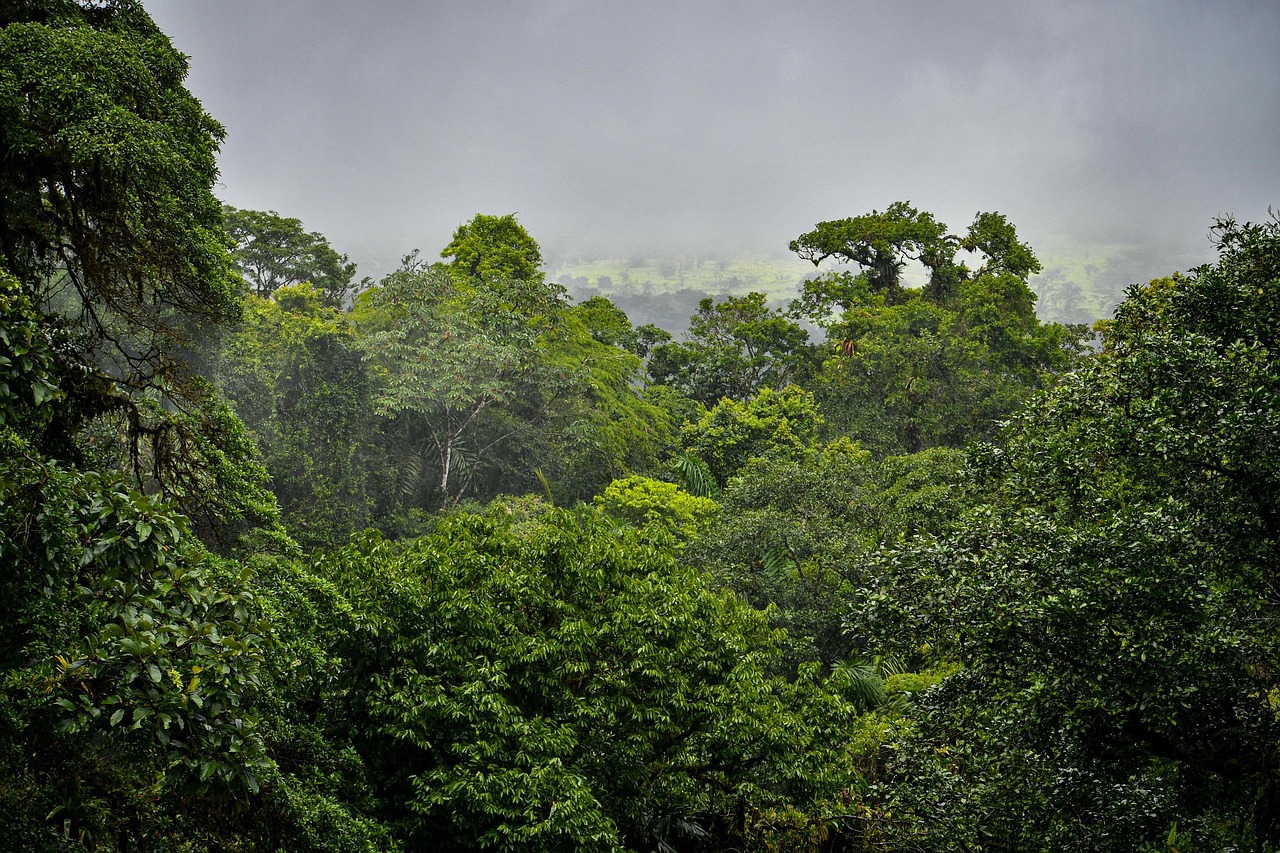
The Fang homeland is the dense equatorial rainforest of the northwestern Congo basin and the Atlantic coast, a country of towering trees, tangled undergrowth, and many rivers, spreading across the whole of Gabon, the southern forests of Cameroon, and the mainland and islands of Equatorial Guinea. It is one of the great forests of the world, hot, wet, and green the year round, teeming with life, where the sun is filtered through the high canopy and the rivers are the natural highways through the trees.
This is a land of heavy and abundant rain, watered by the many rivers that wind through the forest to the Atlantic, and the Fang made their life in clearings hacked from the forest, where they planted their gardens and built their villages along the paths and the streams. The forest gave them timber and game, the fruits, nuts, and medicines of the wild, and the raffia and bark for their crafts, while the rivers gave fish and a means of travel and trade through the dense and roadless woodland.
The Fang came to this coastal forest relatively recently, pressing down from the interior toward the Atlantic over generations, so that their occupation of the westernmost lands and the coast is, in the long span of African history, a recent thing. On this rich and difficult forest, roofed by the high canopy and threaded by rivers, the Fang built their villages and their society, a people of the deep equatorial woodland of the northwest.

The Clans, the Elders, and the Society Without Kings
The old Fang world was a society without kings, ordered not by a central state but by the clan, the lineage, and the authority of the elders, in a pattern of independent forest villages that governed their own affairs. Unlike the great kingdoms of the savanna, the Fang built no throne and no capital, living instead in autonomous communities bound to one another by kinship, by shared language and custom, and by the loose ties of the clan, a strikingly egalitarian order in which authority rested on age, wisdom, and personal standing rather than on inherited rule.
The village, a single street of houses flanking a central meeting-house, was the heart of Fang life, home to a group of related families under the leadership of its elders and its most respected men, and the affairs of the community were settled in the meeting-house, the aba, where the men gathered to discuss, to judge disputes, and to decide the business of the village. A man of wealth, wisdom, and many followers might rise as a leader, but his authority was personal and rested on consent, and the villages remained fiercely independent.
Binding the scattered villages together was the clan, the group tracing descent from a common ancestor, whose members, though spread across the forest, recognised their kinship and their mutual obligations, and the genealogies that linked the living to the founding ancestors. The migration traditions, the shared customs, and above all the ancestor cult gave a unity to a people who had no single ruler. In clan, village, and the council of elders, the Fang ordered a society without kings.

Lineage, the Village, and the Bonds of the Fang
Fang society is built on the patrilineal clan and lineage, the group tracing descent through the male line from a common ancestor, and every Fang places themselves in the world by their descent, able to recite the line of forefathers that ties them to their lineage, their clan, and the wider people. The clans, spread across the forest, tie the scattered villages into a web of kinship that crosses the divisions of place, and the reciting of ancestry, a valued art, locates a person within the whole society.
The village and the household were the setting of daily life, a group of related families under the elders, with the men gathering in the meeting-house and the women tending the gardens and the children, and marriage, sealed by the giving of bride-wealth from the family of the groom to that of the bride, joined lineages in alliance and was the foundation of the family and the continuity of the line. A man of many wives, children, and followers was a man of standing in a society that prized the vigour and increase of the lineage.
The values of Fang society were those of a proud and independent forest people, respect for the elders and the ancestors, the prizing of eloquence and the arts of the meeting-house, hospitality, and the strong bonds of clan and lineage that reached across the forest. Authority came with age and personal standing, the ancestors were honoured above all, and the ceremonies of birth, initiation, marriage, and death gathered the kin and renewed the bonds of the lineage. In clan, village, and the honouring of ancestry, the Fang wove a resilient society.

The Byeri, the Ancestors, and the Bwiti
The traditional religion of the Fang centred, above all, on the cult of the ancestors, the byeri, in which the skulls and bones of honoured forebears were preserved in cylindrical bark boxes and guarded by carved wooden figures, the famous reliquary guardians whose serene and powerful forms are treasures of world art. The ancestors, kept close and consulted in the great matters of life, were a living presence and a source of protection and blessing, and the carved guardian figure, set atop the box of relics, watched over the bones and warded off the uninitiated and the malign.
The rites of the byeri were the heart of Fang religion, conducted by the elders and the initiated, who consulted the relics of the ancestors, sought their blessing and their guidance, and, on great occasions, brought out the skulls and the guardian figures and even manipulated them as puppets in dramatic performances that taught the young the traditions and the power of the forebears. The ancestor was the mediator between the living and the divine, and the byeri bound the generations together across the threshold of death.
In more recent times a new religion arose among the Fang and their neighbours, the Bwiti, a syncretic faith centred on the sacred root iboga, whose visions were sought in long night-long ceremonies of drumming, dance, and the harp, and which blended the old ancestor cult with elements of Christianity into a powerful movement of spiritual and cultural renewal. With the coming of the missionaries many Fang became Christians, yet the reverence for the ancestors, the byeri, and the Bwiti endure, so that the Fang live in a layered religious world.

The Guardian Figure, the Mask, and the Ways of the Fang
The supreme tradition of the Fang is their sculpture, and above all the byeri guardian figures, the carved wooden heads and full figures that surmounted the boxes of ancestral relics, works of such serene power, such balance of stillness and tension, that they are counted among the masterpieces of world art and were admired and collected by the pioneers of modern European painting, who found in them a new way of seeing. The Fang carver worked the wood to a dark, glossy sheen, and his guardian figures, with their calm faces and their powerful, inward presence, embody the dignity of the ancestors.
The masks of the Fang are another glory of their tradition, above all the elongated white-faced masks of the ngil, once worn by the members of a society that policed the villages and hunted out sorcerers, their pale, serene faces a striking image that has become famous in the museums of the world. The masks appeared in the ceremonies of justice, initiation, and mourning, and their dancing was among the dramatic rites of the forest.
Music and the epic filled the life of the people, above all the mvet, the long sung epic performed by a bard to the harp-zither of the same name, recounting through the night the deeds of heroes in a legendary land, and the drumming, dance, and song of the Bwiti and the ceremonies of the village. In byeri figure, ngil mask, and the epic of the mvet, the Fang kept the powerful traditions of the forest.

Carvers, Smiths, and the Makers of the Forest
The crafts of the Fang are dominated by the art of the carver, for the Fang sculptor produced the byeri guardian figures and the ngil masks that are the glory of the people, working the forest wood with a mastery of form that placed his art among the greatest of Africa. Beyond these famous ritual objects the carvers made the drums, the harps, the stools, the staffs, and the many carved objects of daily and ceremonial life, and the making of the mvet, the harp-zither of the epic bard, was itself a fine craft.
The blacksmiths held an honoured place, forging the iron tools, the weapons, the knives, and the throwing implements of the forest people, and working the iron currency-blades that served as a store of wealth and a medium of exchange, and their command of fire and metal carried the usual respect. The making of the bark boxes that held the ancestral relics, the working of raffia and bark into cloth and containers, and the shaping of pottery were other crafts of the household and the shrine.
The women and the artisans wove baskets and mats from the fibres of the forest, worked in beads and the products of the wild, and made the many things the forest life required, and the building of the long village houses and the meeting-house was a communal craft. Many of these skills, above all the carving, were the work of honoured specialists whose art served the ancestor cult and the ceremonies of the people. In byeri figure, forged iron, and woven fibre, the crafts of the Fang served a forest civilisation.

Cassava, the Plantain, and the Table of the Forest
The food of the Fang is the food of the equatorial forest, built on the starchy staples of the region and enriched by the game of the woodland and the fish of the rivers. Cassava is the great staple, its root soaked, dried, and pounded into flour and cooked into the thick paste eaten across the region, and its leaves cooked as a nourishing green, while the plantain, roasted, boiled, or pounded, is equally beloved, and the two together form the daily foundation of the meal, served with rich sauces and stews.
The oil palm is a treasure of the forest, giving the red palm oil that colours and enriches the cooking, and around the staples the Fang grow groundnuts, whose paste thickens many a stew, along with a range of vegetables and greens, and they gather the wild fruits, nuts, mushrooms, and the edible caterpillars and grubs that are prized delicacies. From the forest comes the game of the hunt, and from the rivers the fish, fresh, smoked, and dried, both vital sources of protein in the woodland economy.
A dish especially loved is the nut of the wild mango, whose kernels are pounded into a thick, rich sauce, and meat and fish are often cooked wrapped in leaves or in the fragrant sauces of the forest. Palm wine, tapped from the oil palm, flows at celebrations and in the daily sociability of the people. The sharing of a meal of cassava or plantain with a rich forest sauce expresses the deep Fang values of hospitality. In cassava, plantain, and the bounty of the forest, the food of the Fang is the taste of the equatorial woodland.

The Byeri Rites, the Bwiti, and the Feasts
The great ceremonies of the old Fang world were those of the ancestor cult, the byeri, in which the elders and the initiated brought out the boxes of ancestral relics and the carved guardian figures, consulted the forebears, and, on the most important occasions, staged the dramatic performances in which the skulls and figures were displayed and even manipulated as puppets to teach the young the traditions and the power of the ancestors. These rites, often tied to the initiation of young men into the knowledge of the cult, were the central religious festivals of the people.
In more recent times the Bwiti religion brought its own great ceremonies, the long night-long vigils of drumming, dance, the music of the harp, and the taking of the sacred root iboga, in which the worshippers sought visions and communion with the ancestors and the spirit world, celebrations of a syncretic faith that fused the old ancestor cult with new elements into a powerful movement. These all-night ceremonies, filled with music and dance, are among the most striking of Fang gatherings.
The passages of family life, births, initiations, marriages, and above all funerals, gathered kin and community with drumming, singing, dance, and feasting, and the performance of the mvet epic could crown a great gathering, the bard singing through the night to the harp. With the coming of Christianity the Fang added the feasts of the church. Through the rites of the byeri, the vigils of the Bwiti, and the ceremonies of family and faith, the Fang marked the passages of life and honoured the ancestors.

From the Migration South to the Modern Nations
The history of the Fang is above all a history of migration, of a people who pressed southward and westward out of the interior of the northwestern forest over the course of centuries, moving through the woodland toward the Atlantic coast in a great and prolonged movement remembered in their oral traditions. They came relatively late to the coastal forests of Gabon and Equatorial Guinea, arriving in force only in the eighteenth and nineteenth centuries, so that their occupation of the westernmost lands is, in the long span of the regions history, a recent thing, and their migration was still under way when the Europeans arrived on the coast.
As they pressed toward the coast the Fang came into contact and sometimes conflict with the coastal peoples and with the European traders on the Atlantic, and they were drawn into the trade of the region, exchanging the ivory and other products of the forest for the goods of the wider world. Their vigour and their expansion made them a formidable presence, and by the time of the colonial conquest they were the major people of the interior of Gabon and the neighbouring forests.
Under French and Spanish colonial rule the Fang lands were divided among Gabon, the French Cameroon, and Spanish Guinea, and the Fang, taking readily to education and to the new economy, came to play a leading role in the political life of the emerging nations, above all in Gabon and Equatorial Guinea, where they are the largest people and have furnished leaders of the independent states. From the great migration to the modern nations, the Fang have carried their forest heritage through a dynamic history.

The Fang of Gabon, Guinea, and Cameroon
Today the Fang are the largest people of Gabon and of Equatorial Guinea, and a major people of southern Cameroon, spread across the forests and the growing cities of the three nations, above all around the Gabonese capital of Libreville and in the towns of the region. Prominent in the political, economic, and cultural life of their countries, they have furnished presidents and leaders of the independent states, and the Fang stand at the centre of the national life of Gabon and Equatorial Guinea in particular.
The move from the forest village to the city and the modern economy has reshaped Fang life, as many have left the ancestral villages for the towns, for education and employment, and for the oil economy that has transformed Gabon and Equatorial Guinea, even as the forest homeland remains the place of belonging and the root of identity. The pressures of the modern world, the changes of the economy, and the politics of their nations bear upon the people, yet their vigour and their prominence carry them forward.
Through all these changes the culture of the Fang endures. The Fang language thrives across three nations, the Bwiti religion continues to draw worshippers to its night-long vigils, the epic of the mvet is still sung, and above all the sculptural genius of the Fang is celebrated across the world, for the byeri figures and the ngil masks are treasured in the great museums and helped to shape the course of modern art. Heirs to a great migration and a great artistic tradition, the Fang carry their forest heritage into the modern life of the equatorial northwest.

Related Peoples of the Region
- Kongo of the Lower River and Their Kingdom That Wrote to the Pope
- Luba of the Southern Savanna and Their Empire of Sacred Kings and Memory Boards
- Kuba of the Kasai and Their Kingdom Where Everything Became Art
- Mongo of the Congo Rainforest and Their Epic of the Hero Lianja
- Chokwe of the Angolan Woodlands and Their Masks and Chairs of Carved Wonder
More Peoples of the World
You May Like
The Zaza, a Mountain People of Eastern Anatolia


One thought on “Fang of the Equatorial Forest and Their Guardian Figures That Changed Modern Art”