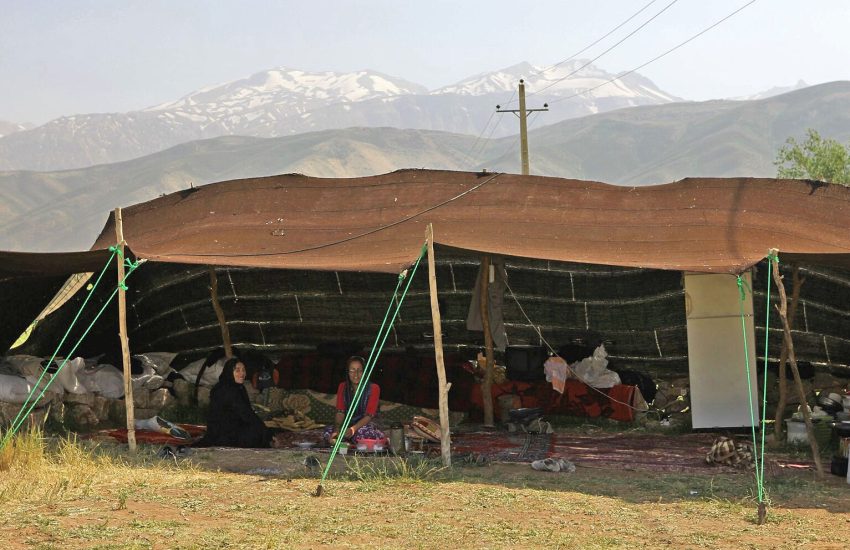
In the hills of the Dehong country and the border ranges of the far southwest of Yunnan, near the frontier with Burma, live the De’ang, a small people famed as growers of tea. An Austroasiatic people kin to the Wa and the Blang, and to the Palaung across the border, they tend the ancient tea trees of the forested slopes, joining the Buddhism of their Dai neighbours to the older worship of the spirits, and their women are known for the silver hoops they wear about the waist.
This account follows the De’ang from their ancient origins among the aboriginal peoples of the southern hills, through their tea villages and their life on the slopes, into their Austroasiatic language, their Buddhism and the worship of the spirits, and the tea, the waist hoops, and the festivals that mark them. It ends with the De’ang of today, a small people of the border tea hills, kin to the Palaung, keeping their tea and their customs alive in modern China.
- The Tea Growers of the Border Hills
- De’ang, Palaung, and the Name of the People
- The De’ang Tongue of Austroasiatic Root
- The Hills of Dehong and the Border Ranges
- The Villages, the Elders, and the Old Order
- The Village, the Clan, and the Bonds of the De’ang
- Buddhism, the Spirits, and the Rites
- The Waist Hoops, the Tea, and the Ways of the De’ang
- The Weavers, the Tea Makers, and the Silversmiths
- Rice, Tea, and the Table of the Hills
- The Water Festival, the Tea Rites, and the Feasts
- From the Ancient South to the People of Modern China
- The De’ang in Modern China
The Tea Growers of the Border Hills
In the hills of the Dehong country and the border ranges of the far southwest of Yunnan, near the frontier with Burma, live the De’ang, a small people famed as growers of tea. Numbering around twenty thousand within China, one of the smaller of the country’s peoples, they dwell on the forested slopes among the Dai, the Jingpo, and their other neighbours, with a far larger kindred across the border in Burma, where they are known as the Palaung.
The De’ang belong to the Mon-Khmer branch of the Austroasiatic family, kin in the deep past not to the Tibeto-Burman and Tai peoples around them but to the Wa, the Blang, the Khmer, and the other Austroasiatic peoples of Southeast Asia. This sets them apart from most of their neighbours and marks them, with their kin, as among the oldest inhabitants of the region.
Their forebears are held to have dwelt in these southern hills from very ancient times, one of the aboriginal peoples of the borderland between China and Southeast Asia, and they took up early the growing of tea on the forested slopes, tending the tea trees whose leaves became famed across the region. The De’ang are counted, with their kin, among the ancient tea-growing peoples of the south.
To speak of the De’ang is to speak of a small Austroasiatic people of the southern border hills, growers of tea and farmers of the slopes, followers of the Buddhism of their Dai neighbours mingled with the worship of the spirits, and famed for the silver waist hoops worn by their women. Kin to the Palaung across the border, they hold their own place among the peoples of China as keepers of the ancient tea.

De’ang, Palaung, and the Name of the People
The people are known in China as the De’ang, the name they now give themselves, adopted in the modern age in place of an older name once used for them. It is by this name that the state recognises them as one of its nationalities, one of the smaller of the recognised peoples, in the hills of the far southwest of Yunnan.
Across the border in Burma, and among scholars, the same people and their kin are known as the Palaung, a name famous across the northern Shan hills, where they are numerous. The De’ang of China and the Palaung of Burma are one people divided by a modern border, sharing a common origin, a common Austroasiatic tongue, and a common body of custom, above all the growing of tea.
The De’ang are close kin to the Wa and the Blang, their Austroasiatic neighbours, sprung from a common ancient stock, yet they are a distinct people with their own name, their own tongue, and their own traditions, above all the tea and the silver waist hoops of their women. The line between them and their kin was drawn by long settlement and by custom.
Whatever the name, De’ang in China or Palaung in Burma, the people know themselves as one, a small folk of the border tea hills, keepers of their tongue, their tea, and their festivals. The name De’ang marks them among the peoples of China as an Austroasiatic people kin to the Wa and the Blang, and to the Palaung across the border.

The De’ang Tongue of Austroasiatic Root
The De’ang speak a language of the Mon-Khmer branch of the Austroasiatic family, kin in the deep past to the tongues of the Wa and the Blang, and more distantly to Khmer and Mon, and quite unrelated to the Tibeto-Burman and Tai languages of their neighbours. This ancient linguistic kinship, reaching far to the south, marks the De’ang as among the oldest inhabitants of the southern hills.
Unlike the tonal languages that surround them, the De’ang tongue is, in the manner of its Austroasiatic kin, not truly tonal, and its sounds and its grammar set it apart from the speech of the peoples around it. It is spoken in dialects across the scattered communities of the border hills, and across the frontier by the far more numerous Palaung, the everyday tongue of the people.
For most of their history the De’ang had no writing of their own, and their store of song, legend, and lore was carried by memory and by mouth, while for the affairs of religion the script of the Dai or the Burmese, in which the Buddhist scriptures were kept, served among those who took up the faith. The great body of De’ang tradition lived in the spoken and the sung word.
In the modern age standard Chinese has spread through schooling and daily life, and the De’ang, living among the Dai and their other neighbours, often know also the Dai tongue, so that many are bilingual or more. As a very small people among larger neighbours, the De’ang face strong pressure on their Austroasiatic language, and its keeping among the young is a matter of concern for those who cherish it.

The Hills of Dehong and the Border Ranges
The homeland of the De’ang in China is the hills of the Dehong country and the border ranges of the far southwest of Yunnan, near the frontier with Burma, scattered among the counties about Mangshi, Ruili, and Zhenkang, above all in the settlement of Santaishan set aside for them. The greater number of the people, as the Palaung, live across the border in the northern Shan hills of Burma.
This is warm, wet, sub-tropical highland, its slopes clothed in dense forest, drenched by the summer monsoon, and famed for the tea that the De’ang and their kin have tended for centuries. The De’ang settled the forested slopes, above the valleys held by the Dai, where the tea and the forest gave them their livelihood, scattered in small communities among their many neighbours.
On these forested slopes the De’ang built their villages of timber, bamboo, and thatch, often raised in the southern style on posts, clustered among the tea gardens and the fields, and among them, for the De’ang took up the Buddhism of the Dai and the Burmese, the temples of the southern faith. The tea gardens on the slopes were the mark and the mainstay of the De’ang home.
Rooted to the tea slopes of the border hills, and scattered among their neighbours in the Dehong country, the De’ang made their homeland in the warm forested ranges of the far southwest. It is a land of forest, mist, and tea, of hillside village and tea garden, where a small Austroasiatic people kept its tongue, its tea, and its festivals among the many peoples of the border.
.jpg)
The Villages, the Elders, and the Old Order
In the days before the reach of the modern state, the De’ang lived in their hill villages as growers of tea and farmers of the slopes, under the sway of custom, the guidance of elders, and, in some places, the native chiefs of the Dai lords in whose domains their hills lay. Each village was a community of households, ordered by the ties of kin and the authority of the old and the wise.
Theirs was a life of the tea garden and the slope-field, for the De’ang tended the tea trees on the forested mountains, gathering the leaves that became famed across the region, and cleared land on the slopes for rice and other crops. The growing and selling of tea was a mainstay of the De’ang, and their tea was sought by the traders who came to the hills.
The village was guided by its elders and, among those who took up the Buddhist faith, by the monks of the temple, for the De’ang built no wide state of their own and lived under the Dai lords and the empire. Authority rested on age, on wisdom, and on the leading of the rituals, whether of the old spirits or of the Buddha, rather than on inherited throne.
Governed by custom, by elders, and by the monks and the native chiefs, the De’ang lived as growers of tea and farmers of the border slopes. A small Austroasiatic people of the tea hills, keepers of the ancient tea and of the worship of the spirits and the Buddha, they held to their ways through the long centuries in the warm hills of the far southwestern border.

The Village, the Clan, and the Bonds of the De’ang
De’ang society rests on the village and the household, the bonds of kin that tie families together on the forested tea slopes. Descent is reckoned through the father’s line, and the village, often a community of related families, was the largest everyday unit of De’ang life, guided by respected elders and, among those who took up the Buddhist faith, by the monks of the temple.
The De’ang built no wide state and knew no king, and authority within the village rested on age, on wisdom, and on the respect owed to those skilled in custom and ritual, whether the elders who knew the ways of the spirits or the monks who kept the Buddhist faith. The ties of kin and the bonds of the small village were the frame of De’ang life among the hills.
Marriage was made according to custom, marked by the exchange of gifts and by feasting, and the songs of courtship gave the young a voice in the choosing of their matches. A mark of the De’ang woman was the wearing of hoops of silver, rattan, or lacquer about the waist, a custom that set the people apart and that, in the old telling, was tied to a legend of the origin of the people.
Women worked beside the men in the tea gardens and the fields and, as weavers, clothed the household in the cloth they made, and the dress of the De’ang women, with its waist hoops and its ornaments, marked them among their neighbours. Through the village, the kin, and the ties of faith and custom, the De’ang individual was bound into a close community of the tea hills.
.jpg)
Buddhism, the Spirits, and the Rites
The religion of the De’ang joins the Buddhism they took from their Dai and Burmese neighbours with the older worship of the spirits and the ancestors that runs beneath it. Many De’ang embraced the Theravada Buddhism of the south, building temples in their villages, sending sons to become monks, and keeping the festivals and the merit-making of the Buddhist year, so that in faith they resemble the Dai among whom they live.
Yet beneath and beside the Buddhism ran the older faith, the worship of the spirits of the forest, the mountains, the rivers, the fields, and above all the tea, and of the ancestors of the village and the household. Offerings and rites, led by the elders and the ritual specialists, kept the spirits content and secured their blessing on the tea, the crop, and the health of the people.
The two faiths lived side by side and often mingled in the De’ang world, the temple and the monk for the Buddhist rites and the merit-making, the elder and the spirit-specialist for the propitiation of the spirits and the honouring of the ancestors. The great festivals joined the two, and the life of the people was ordered by both the Buddhist calendar and the older rites of the spirits and the tea.
In the modern age the old faith has weakened under the pressures of change, yet among the De’ang the Buddhism of the temples endures, and the worship of the spirits and the ancestors, above all the spirits of the tea and the mountains, remains at the root of the people’s sense of themselves. The joining of the Buddha and the spirits is the mark of De’ang religion.
.jpg)
The Waist Hoops, the Tea, and the Ways of the De’ang
The most famous mark of the De’ang is the waist hoops worn by their women, a set of hoops of silver, rattan, or lacquered cane worn about the waist over the skirt, sometimes many in number and finely worked. In the old telling this custom is tied to a legend of the origin of the people, and the hoops, given and worn from a young age, are the pride of the De’ang woman and the emblem of the people.
Tea is at the heart of De’ang tradition, for the De’ang are among the most ancient of the tea-growing peoples, and the tending of the tea, the picking and drying of the leaves, and the drinking and offering of tea run through the whole of their life. A De’ang way with tea is the making of a sour or pickled tea, the leaves fermented and eaten as well as drunk, a custom shared with their Austroasiatic kin.
The Buddhism of the south, with its temples, its monks, its festivals, and its merit-making, is a great tradition of the De’ang who took up the faith, joined to the older worship of the spirits and the ancestors and of the tea. Song and dance fill the gatherings, and the De’ang share in the festivals of the wider Dehong world with their Dai and other neighbours.
Around these run the customs of the year and of life, the growing and drinking of tea, the courtship and the weddings, the Buddhist festivals and the rites of the spirits, and the honouring of the ancestors. Through the waist hoops, the tea, and the joining of the Buddha and the spirits, the De’ang mark the passages of life and the turning of the year in ways carried down from their forebears in the tea hills.

The Weavers, the Tea Makers, and the Silversmiths
The great craft of the De’ang is the growing and making of tea, in which they are among the most ancient and skilled of peoples. The tending of the tea on the forested slopes, the picking of the leaves, and the drying, rolling, and preparing of them into the teas for drinking and for trade were the mainstay skills of the De’ang, and their tea was famed across the region.
A distinctive De’ang craft, shared with their Austroasiatic kin, is the making of a sour or pickled tea, in which the tea leaves are fermented and kept to be eaten as well as drunk, a food and a delicacy peculiar to the people. This use of the tea leaf as a food marks the De’ang as a people who made tea the very centre of their life.
The women of the De’ang wove and dyed cloth, and made the dress of the household, and the silversmiths worked the metal into the famous waist hoops, the ornaments, and the jewellery of the women, a craft bound to the distinctive dress of the people. The making of a woman’s dress and her hoops was a labour of care and a mark of the household.
The building of the houses of the tea villages, the plaiting of bamboo, and the carving of the tools of daily life, along with the building and adorning of the Buddhist temples for those who kept the faith, rounded out the crafts of the people. Yet it is for the growing and making of tea, and for the silver waist hoops of the women, that the crafts of the De’ang are known, an art bound to the tea and the dress of the border hills.

Rice, Tea, and the Table of the Hills
The food of the De’ang is the food of the southern tea hills, built on rice grown on the slopes and, where the land allowed, in the terraced valleys, with maize and other crops on the higher ground. Rice is the heart of every meal, and a well-loved way of cooking it is in a length of fresh bamboo, roasted over the fire so that the grain takes the fragrance of the green wood.
To the rice is added a relish of vegetables, gathered greens, beans, and the produce of the garden and the forest, with meat as the food of festivals and welcome. The De’ang share in the pungent and sour cooking of the south, fond of the chilli and the fermented, and the forests of their hills yield wild plants, herbs, and game to enrich the table.
Tea holds a place at the De’ang table unlike that among any other people, for the De’ang, like their Blang and Wa kin, not only drink their famed tea but eat it, in the sour or pickled tea made by fermenting the leaves, a food and a delicacy of the hills. The drinking and offering of tea is a mark of hospitality and runs through the daily life and the rites of the people.
Rice wine and other home-brewed liquors are the drink of hospitality and of ritual, poured for guests, shared at the festivals, and offered to the spirits and the Buddha. From the bamboo-roasted rice and the wild plants of the forest to the drunk and eaten tea of the hills, the food of the De’ang is rooted in the tea gardens and the forested slopes of the far southern border.
.jpg)
The Water Festival, the Tea Rites, and the Feasts
The festivals of the De’ang join the Buddhist calendar of the south with the older rites of the tea and the spirits. Among those De’ang who took up the faith, the great Buddhist festivals, above all the water-splashing new year of the south, are kept as among their Dai neighbours, with the sprinkling of water, the visiting of the temple, and the gathering of the community for feasting and joy.
The water festival, the new year of the south, is among the greatest occasions of the De’ang year, a time of cleansing, of the sprinkling of water for blessing, of merit-making at the temple, and of the gathering of kin, kept with the Dai and the other Buddhist peoples of the border. The festivals tied to the tea, at the planting and the picking, honour the spirits of the tea gardens.
The rites of the spirits of the mountains, the forest, and the ancestors bring their own observances, with offerings and ceremonies led by the elders and the spirit-specialists, and the whole community gathers for the great festivals with song, dance, and feasting. The De’ang share in the festivals of the wider Dehong world, joining their many neighbours.
The passages of life, birth, marriage, and death, gather the kin for ceremony, the wedding marked by feasting and song and the wearing of the silver waist hoops. At all these occasions the dress and the hoops, the tea, the songs, and the rites of the Buddha and the spirits bring colour and devotion, so that the De’ang meet the great moments of life and the year with feast and rite.

From the Ancient South to the People of Modern China
The De’ang are held to be among the most ancient inhabitants of the southern hills, an Austroasiatic people dwelling there, with their Wa and Blang kin, before the Tibeto-Burman and Tai peoples came, kin in the deep past to the Mon and Khmer of Southeast Asia. Their forebears took up early the growing of tea, and are counted, with their kin, among the first cultivators of the tea of the south.
Through the long centuries the De’ang and their Palaung kin lived in their tea hills under the sway of the Dai and the Shan lords of the valleys and, more distantly, the Chinese and the Burmese states, growing tea and farming the slopes, and from their neighbours many took up the Theravada Buddhism of the south. In earlier times the people were more numerous and their power greater in the northern Shan hills.
The border country of the De’ang, near the frontier with Burma, was a land of many peoples and of the old caravan routes by which the tea of the hills went out, and the drawing of the modern frontier divided the people, leaving the far larger part, the Palaung, on the Burmese side. Through the changes of the centuries the De’ang kept their tongue, their tea, and their festivals.
After the founding of the People’s Republic the De’ang of China were recognised as one of the official nationalities, one of the smaller of the recognised peoples, and later took the name De’ang in place of an older one. The modern age has brought roads, schools, and the reach of the market to the tea hills, drawing the people into the wider life of the country, while the tea and the waist hoops remain the marks of their heritage.

The De’ang in Modern China
Today the De’ang number around twenty thousand within China, one of the smaller of the country’s peoples, living still chiefly in the hills of the Dehong country and the border ranges of the far southwest of Yunnan, scattered among their many neighbours, with a far larger kindred, the Palaung, across the border in Burma. A small Austroasiatic people of the tea, they remain rooted in the forested slopes.
Modern life has come to the De’ang hills in the shape of roads, schools, and the reach of the market and the border trade, and the tea of their slopes finds its place in the great trade of the region’s tea. The same forces, and the pull of the towns, draw the people and press upon the old ways of the villages.
As a very small people scattered among larger neighbours, the De’ang face strongly the pressures that blur the lines between peoples, and standard Chinese and the Dai tongue press upon the De’ang language, which, as the speech of a small people, is among the more fragile parts of their heritage. The keeping of the language and the old customs is a matter of care.
Yet the De’ang carry their heritage with pride. The famous silver waist hoops of the women, the ancient tea and the sour eaten tea, the joining of the Buddha and the spirits, and the songs and festivals of the tea hills endure as marks of who they are. A small Austroasiatic people of the southern border, kin to the Palaung, keepers of the ancient tea, the De’ang keep their tea and their customs alive in modern China.
.jpg)
Related Peoples of the Region
- Derung of the Dulong Valley, a Hidden Mountain People of Yunnan
- Jing People of the Beibu Gulf, China’s Vietnamese Coast Dwellers
- Russians of China, an Orthodox People on the Northern Frontier
- Tatars of China
- Uzbeks of China
- Monba People
- Gaoshan People, the Austronesian Highlanders of Taiwan
- Lhoba People of the Eastern Himalaya, Forest Hunters of the Tibetan Gorges
More Peoples of the World
- Zulu of the Green Hills and Their Kingdom Forged by Shaka
- Xhosa of the Eastern Cape and Their Clicking Tongue and Rite of Manhood
- Basotho of the Mountain Kingdom and the Nation Moshoeshoe Forged
- Shona of the Zimbabwe Plateau and Their Cities of Stone
- Ndebele of the Highveld and Their Painted Homes
- Tswana of the Kalahari Plateau and the Kgotla
- Swazi of Eswatini and the Kingdom of the Two Rulers
You May Like
The Zaza, a Mountain People of Eastern Anatolia