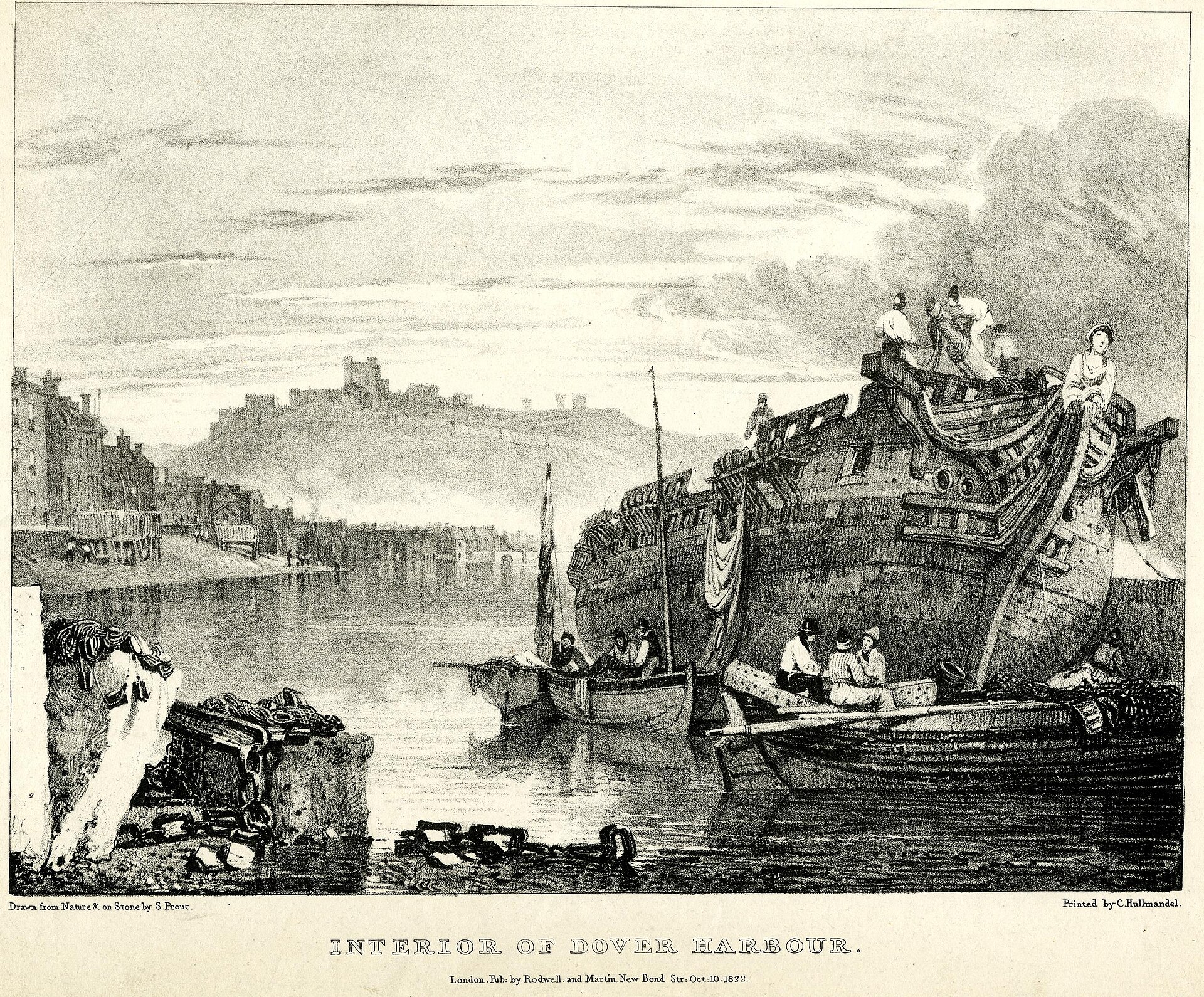
Stand on the battlements of Dover Castle on a clear day and you can see France. That single fact explains almost everything about the place. For two thousand years, this high chalk headland above the narrowest stretch of the English Channel has been the front door to England, the point where the island is closest to the Continent and therefore most exposed to it. Whoever held Dover held the key to the kingdom, and the English knew it. They called the castle exactly that, the Key to England, and they fortified this cliff-top more heavily, and for longer, than almost anywhere else in the country.
What makes Dover so extraordinary is the sheer sweep of history piled onto one hilltop. Up here you will find a Roman lighthouse nearly two thousand years old, standing beside an Anglo-Saxon church. You will find one of the mightiest medieval keeps in Europe, thrown up by Henry II. You will find the scene of an epic siege that helped decide the fate of the English crown, tunnels dug against Napoleon, and, deep in the chalk, the secret wartime headquarters from which the miracle of Dunkirk was directed in 1940. Few places on earth have been a working fortress for so long, or defended against so many different enemies.
So this is not really the story of one castle but of one crucial patch of ground, defended over and over again as the centuries and the threats changed. Let’s climb the hill and walk through the whole of it, from Roman legionaries to wartime code-rooms.
We will take it in roughly the order the layers were laid down, because at Dover the history really does stack up on the hill like that. Start with the sea and the cliff that made the place matter, move up through Roman and Saxon survivals to the great medieval keep and its epic siege, then follow the defences forward through the age of Napoleon and into the wartime tunnels in the chalk. By the top of the hill you will see why they called it the Key to England.

Table of Contents
- The Cliff That Guards the Narrow Sea
- A Roman Lighthouse and a Saxon Church
- Henry II’s Mighty Great Tower
- Pilgrims, Kings, and a Royal Gateway
- The Great Siege That Saved England
- A Fortress Rebuilt for Every New Age
- Rings Within Rings: A Fortress Ahead of Its Time
- The Secret Tunnels in the Chalk
- Inside the Royal Palace
- The Ghosts of the Garrison
- Guarding the Coast into the Modern Age
- Making a Day of Dover
- Nearby Castles
- Before You Go
The Cliff That Guards the Narrow Sea
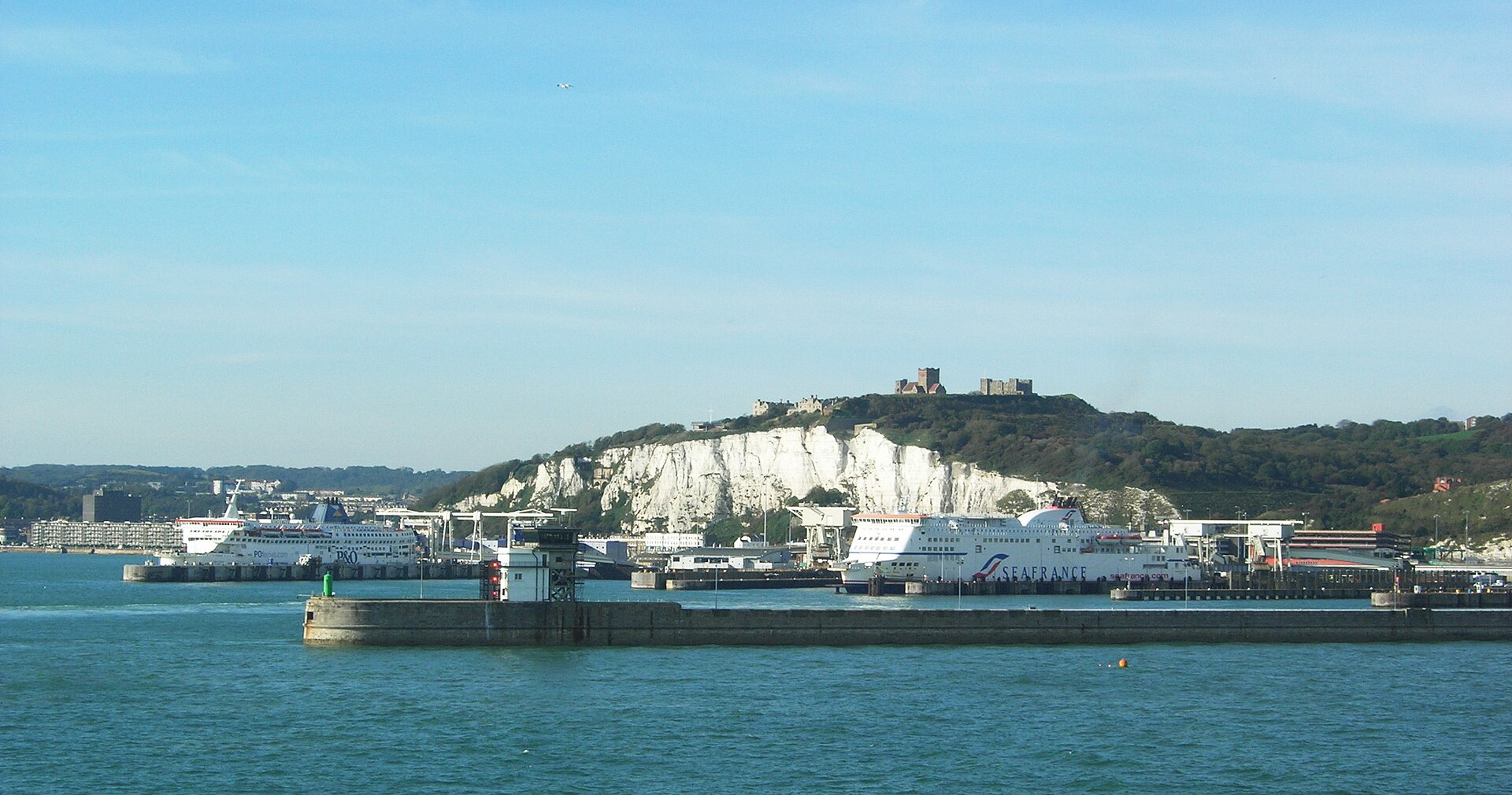
Everything about Dover comes back to geography. Here the English Channel pinches to just over twenty miles wide, the shortest hop between Britain and mainland Europe, and a great chalk headland rises straight up from the sea beside a natural harbour. For anyone wanting to invade England, this was the obvious landing place, and for anyone wanting to defend it, this cliff was the obvious spot to plant a fortress. Control the heights above Dover and you controlled the front door of the whole island.
People grasped this very early. Long before the Romans, an Iron Age hillfort crowned this headland, its great earthen ramparts still traceable in the landscape. Successive rulers simply kept building on the same commanding ground, each adding to the defences of those before. The result is a site occupied and fortified more or less continuously for something like two thousand years, one of the longest defensive stories anywhere in Europe.
That is the thread to hold onto as we go. Dover is not a single castle from a single age but a layer cake of fortifications, each generation defending the same vital cliff against the enemy of the day, from Roman raiders to Napoleon to Hitler.
It is worth letting that closeness sink in. On a clear day you really can see the French coast from the castle walls, a pale line across the water. For most of history that short crossing was the most likely invasion route into England, which is why generation after generation poured resources into this one hill. The whole story of Dover is the story of a country staring nervously across a narrow sea and fortifying the cliff that faced it.
A Roman Lighthouse and a Saxon Church
The oldest thing on the hill is astonishing: a Roman lighthouse, or pharos, built in the first or second century to guide ships into the harbour. It still stands, several storeys high, making it one of the oldest surviving buildings in all of Britain and one of very few Roman lighthouses left anywhere in the world. That it has survived nearly two thousand years, through every siege and rebuilding, is little short of miraculous.
Beside it stands a second ancient survivor, the Anglo-Saxon church of St Mary in Castro, built more than a thousand years ago and still in use. The two buildings together, the pagan Roman lighthouse and the Christian Saxon church side by side, are a wonderful snapshot of the deep history of this site, spanning the Roman, Saxon, and Christian ages all in one small corner of the castle grounds.
Long before the great medieval castle rose around them, then, this hilltop was already a place of importance, watched over by a lighthouse and a church. When the Normans and their successors came to fortify Dover, they were building on ground already thick with a thousand years of history.
Try to picture the pharos in its working days. A fire burned at its top through the night, its light thrown out over the dark water to guide Roman galleys safely into the harbour below. It was, in effect, an ancient piece of maritime technology standing on the very spot that would later hold radar and wartime signal rooms. Even the castle’s oldest building, then, was about watching and guarding the sea, exactly the job the whole hilltop would go on doing for the next two thousand years.

Henry II’s Mighty Great Tower
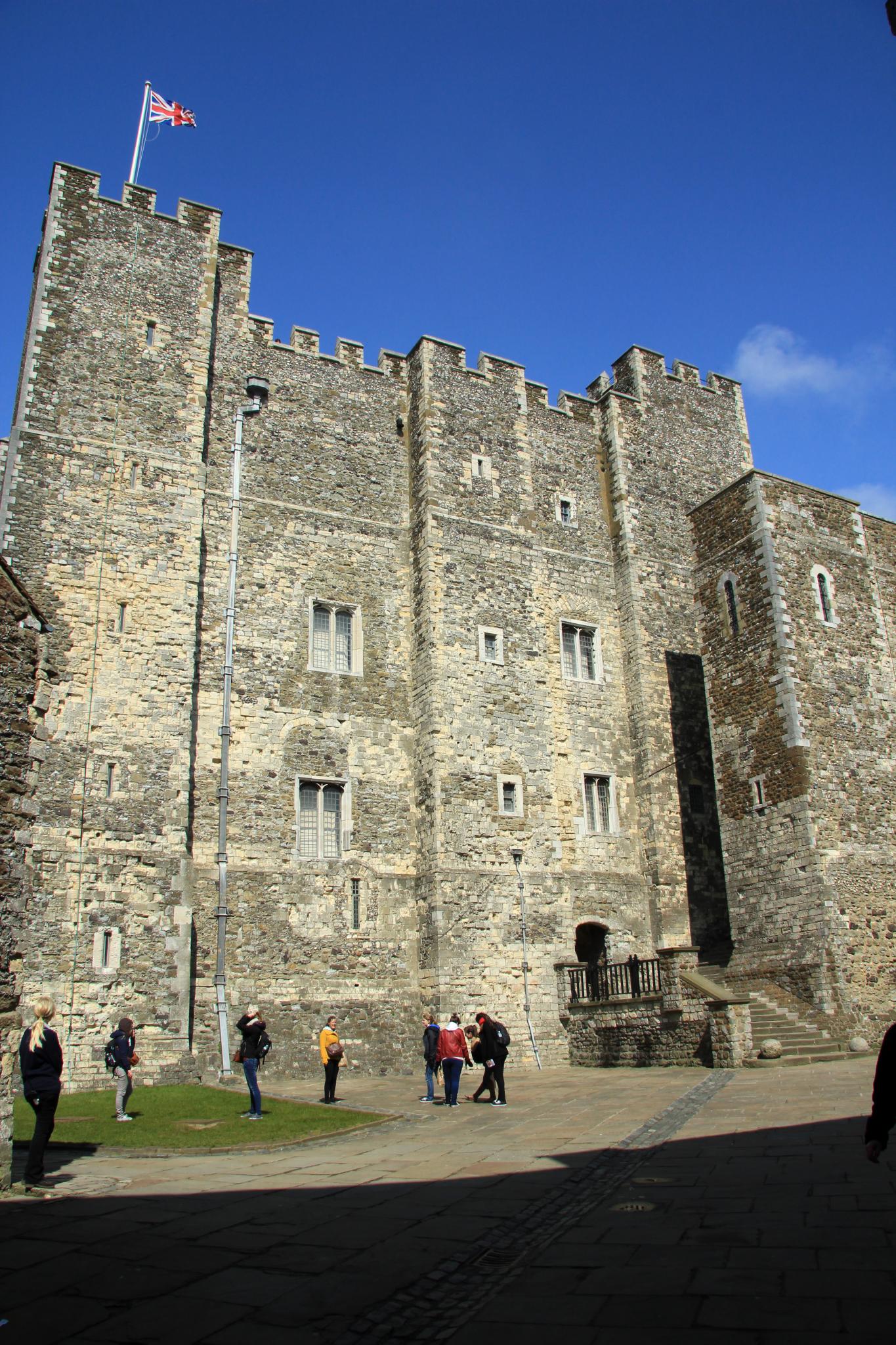
The castle as a serious medieval fortress really began with Henry II in the 1180s. Henry was one of England’s greatest kings and greatest builders, and at Dover he created something spectacular: an enormous square keep, the Great Tower, one of the last and largest of its kind ever built in England. Its walls are colossally thick, its rooms grand, and it was designed to be both an impregnable strongpoint and a palace fit to receive royalty.
There was a very practical reason for such splendour. Dover sat on the main route between England and the Continent, and it became the grand gateway through which important visitors, including pilgrims heading to the shrine of the newly martyred Thomas Becket at Canterbury, passed into the kingdom. The Great Tower was partly a piece of royal theatre, a magnificent first impression of English wealth and power for anyone arriving from abroad.
Around the keep Henry and his successors laid out concentric rings of walls studded with towers, making Dover one of the most sophisticated and up-to-date fortresses in Europe. Today the interior of the Great Tower has been vividly recreated as it might have looked in Henry’s day, brightly painted and richly furnished, giving a real sense of the colour and swagger of a twelfth-century royal court.
The scale of the Great Tower is hard to grasp until you are standing beside it. Its walls are in places over six metres thick, riddled with passages and chambers built into the stone itself, and it rises in great square mass above everything around it. Building something this size in the twelfth century, hauling the stone up the hill and raising it storey by storey, was an enormous undertaking, and it announced in the plainest possible terms that the King of England intended to hold this cliff forever.
Pilgrims, Kings, and a Royal Gateway
Because Dover was the great gateway between England and the Continent, an extraordinary parade of history passed through it. Kings and queens came and went here on their way to and from their lands and wars in France. Ambassadors, armies, and churchmen landed beneath its walls. And in the Middle Ages, streams of pilgrims passed this way, many of them heading for the shrine of Thomas Becket at nearby Canterbury, one of the greatest pilgrimage destinations in Europe.
This traffic gave Dover a double character. It was a grim fortress, yes, but it was also a grand front door, meant to impress everyone who entered the kingdom with the wealth and power of the English crown. Henry II’s lavish Great Tower was designed partly with exactly this in mind, a magnificent welcome, or warning, to important visitors arriving from overseas.
Over the centuries the castle hosted royalty on countless occasions, from medieval kings to later monarchs inspecting its ever-changing defences. It has been painted, drawn, and photographed endlessly as the very image of England’s edge, the first sight of home for travellers returning across the Channel and the last as they left. That role as the nation’s threshold is as much a part of Dover’s story as any siege.
The Great Siege That Saved England
Dover’s finest hour as a fortress came in 1216, in a siege that genuinely helped decide the future of England. The country was in the grip of civil war between the unpopular King John and his rebellious barons, who had invited the French prince Louis to come and seize the throne. Louis landed with an army and swept across the south, and almost everything fell to him, except Dover. If he could take the Key to England, the road to total victory lay open.
The castle was held for the king by a tough and resourceful commander, Hubert de Burgh, with a small garrison. Louis threw everything at it. His miners tunnelled under the great northern gatehouse and actually brought part of it crashing down, and for a moment it looked as though the French would pour through the breach. But the defenders fought them off hand to hand in the gap, plugged it with timber, and held on. The siege dragged into a second attempt, and still Dover would not fall.
That stubborn defence changed history. With Dover holding out behind him, Louis could never fully secure England, and when King John died and the English rallied around his young son Henry III, the French cause collapsed. Louis went home, the invasion failed, and Dover had, quite literally, saved the kingdom. In the aftermath the damaged defences were rebuilt and strengthened, and an ingenious system of underground tunnels was added to help defend the vulnerable northern approach.
The detail of the mining is what makes the siege so vivid. Medieval attackers could not simply blow up a wall, so they dug tunnels beneath it, propped up with timber, then set the props alight so that the tunnel, and the wall above it, collapsed. At Dover this actually worked against the northern gatehouse, and only ferocious close-quarters fighting in the breach saved the day. Afterwards the English learned the lesson and rebuilt that vulnerable northern end with the clever tunnels and outworks you can still explore.

A Fortress Rebuilt for Every New Age
What sets Dover apart from most medieval castles is that it never became obsolete. As warfare changed, Dover was simply upgraded to meet it, again and again, right into the twentieth century. When gunpowder artillery made tall medieval walls vulnerable, the defences were remodelled for cannon. The castle stayed a live, garrisoned military base long after most of its contemporaries had crumbled into romantic ruins.
The biggest transformation came during the long wars with France in the eighteenth and early nineteenth centuries, when the threat of a French invasion under Napoleon loomed large. Dover was massively re-fortified, its medieval walls cut down and reshaped into low, gun-friendly earthworks, and a warren of tunnels was dug into the cliff to house the huge garrison stationed there against the expected attack. Those Napoleonic tunnels would, a century later, take on a dramatic new role.
This is the key to understanding Dover. Where other castles are frozen in the Middle Ages, Dover is a living record of two thousand years of military technology, from Roman lighthouse to medieval keep to Napoleonic gun-battery, all layered onto the same cliff. It was never allowed to become a relic, because the country never stopped needing it.
The Napoleonic remodelling was drastic. Soldiers cut down proud medieval towers to stumps and buried walls in earth banks, all so that cannon could be mounted low and safe from enemy fire. To a romantic it can look like vandalism, but it was survival: a castle that could not fight the weapons of its day was no use, and Dover always chose to stay useful rather than beautiful. That willingness to be brutally modernised, over and over, is exactly why it was still a working fortress when the Second World War came.
Rings Within Rings: A Fortress Ahead of Its Time
The medieval defences that grew up around the Great Tower were, for their day, cutting-edge. Instead of relying on a single wall, Dover was ringed with concentric lines of defence, an inner circuit close around the keep and an outer circuit lower down the slope, each bristling with towers so that defenders could rake attackers with crossbow fire from many angles at once. An enemy who fought through the outer wall found himself trapped in a killing ground before the inner one, exactly as at other great castles of the age.
What is often said of Dover is that it pioneered ideas that would later appear in the famous concentric castles of Wales and the Crusader fortresses of the Holy Land. The lessons learned defending this cliff, especially after the near-disaster of the 1216 siege, fed into the wider development of castle design across the medieval world. Dover was not just strong; it was a school of fortification.
Wandering the outer walls today, from tower to tower, you can trace this thinking on the ground. The way the defences step down the hillside, the overlapping fields of fire, the strengthened northern end where Prince Louis so nearly broke through, all of it repays a slow walk. It is one thing to read that a castle was advanced for its time, and quite another to stand on the walls and see the cold logic of it laid out around you.
The Secret Tunnels in the Chalk
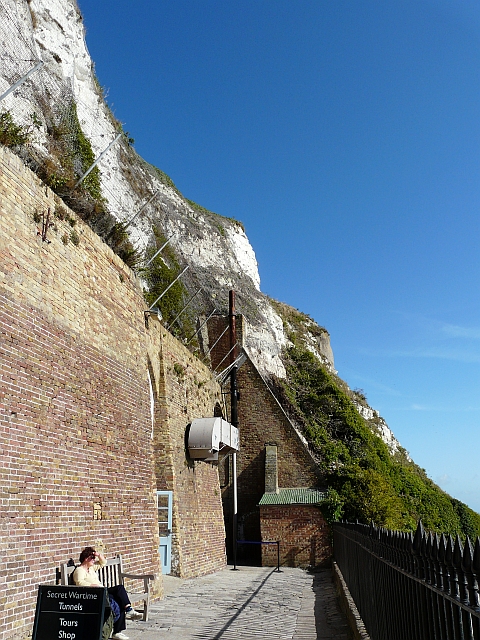
Deep beneath the castle, hidden in the white chalk of the cliff, lies one of Dover’s most gripping secrets: a labyrinth of tunnels, begun against Napoleon and hugely expanded during the Second World War. It was here, in cramped underground rooms lit by bare bulbs, that some of the most dramatic events of the war were directed. The tunnels became a nerve centre for the defence of Britain at its moment of greatest danger.
Their most famous hour came in 1940. As the British army was driven back to the French coast and trapped at Dunkirk, it was from these tunnels, under the command of Vice-Admiral Bertram Ramsay, that the astonishing evacuation known as Operation Dynamo was masterminded. Over nine desperate days, a scratch fleet of warships and little civilian boats lifted well over three hundred thousand soldiers off the beaches and brought them home, a deliverance that many at the time called a miracle. It was planned and run from the chalk beneath Dover Castle.
The tunnels went on serving through the war as a command post and a hospital, and later, in the Cold War, part of the complex was fitted out as a secret regional seat of government in case of nuclear attack. Walking through them today, past the map rooms and the hospital beds and the old telephone exchanges, is one of the most powerful experiences at Dover, a reminder that this ancient fortress was still on the front line within living memory.
There is something deeply moving about the contrast the tunnels hold. Above ground stands a medieval fortress built to repel knights and siege engines; below ground, in the same chalk, men in twentieth-century uniforms bent over maps and telephones to save an army from annihilation. The same cliff that guarded England against Prince Louis in 1216 was still guarding it against invasion in 1940, seven centuries later. Nowhere else makes that continuity of purpose so startlingly clear.
Inside the Royal Palace
Back up in the daylight, the Great Tower rewards a slow visit. English Heritage has recreated its interior as the sumptuous royal palace it was meant to be in Henry II’s time, and the effect is a shock to anyone expecting bare grey stone. The rooms blaze with colour: brightly painted walls, rich hangings, thrones, banqueting tables, and beds fit for a king, all reconstructed from careful research into how such a great tower would have been furnished.
It brings home a truth that ruined castles hide, which is that these places were not gloomy and austere but colourful, luxurious, and full of life. A royal keep like this was a stage for feasting, ceremony, and the display of power, where a king dazzled his guests and overawed his rivals. Climbing through the recreated chambers, you get a vivid sense of the swagger of a medieval royal court.
From the roof of the Great Tower there is a tremendous view over the whole castle, the town, the harbour, and the Channel beyond, with France sometimes visible on the horizon. Standing up there, with two thousand years of fortification spread out below you and the sea glittering toward the Continent, you understand in an instant why this cliff has been fought over for so long.
The Ghosts of the Garrison
With so many centuries of soldiers, sieges, and sudden death, it is no surprise that Dover has a rich crop of ghost stories, and it is often named among the most haunted castles in Britain. Visitors and staff have reported all sorts of strange encounters, especially in the older parts of the keep and in the eerie underground tunnels, where the atmosphere can be genuinely unsettling.
Among the most frequently told tales are sightings of soldiers from various eras, footsteps in empty passages, sudden cold spots, and glimpses of figures in old-fashioned dress who vanish when approached. The wartime tunnels, with their memories of injury and desperate effort, have their own reputation for ghostly activity, and the castle runs paranormal-themed events that play on all of this.
As always with a great fortress, the ghost stories are really the past refusing to lie still. A place that has seen this much fear, courage, and death, from medieval siege to wartime evacuation, seems almost bound to feel haunted, and Dover leans happily into the drama of it.

Guarding the Coast into the Modern Age
Remarkably, Dover Castle remained an active military site well into the twentieth century, garrisoned and in use through both world wars. Few castles anywhere can claim to have been continuously defended from the Middle Ages until living memory, but Dover can. Its guns watched the Channel in the age of Napoleon, and its tunnels ran the Dunkirk evacuation and stood ready against nuclear attack in the Cold War.
Only in the later twentieth century did the long military story finally wind down and the castle pass fully into the care of English Heritage as one of the country’s flagship historic sites. Even then, its position looking out over the busy Channel, with ferries and ships passing constantly below, keeps that sense of a watchful guardian very much alive.
Today Dover is one of the most rewarding castles to visit in Britain precisely because it tells so many stories at once. In a single day you can stand in a Roman lighthouse, a medieval royal palace, a Napoleonic gun-position, and a wartime command bunker, all on the same windy cliff. It is less a castle than a two-thousand-year diary of how the English defended their island.
Making a Day of Dover
Dover sits on the Kent coast in the far south-east of England, and it is easy to reach by road or by train from London in a little over an hour, which makes it a very doable day trip. The castle stands high above the town and the ferry port, so it is impossible to miss, and on a clear day the views across to France are part of the fun. It pairs naturally with a walk along the famous white cliffs nearby.
Give yourself a full day, because there is a huge amount to see and it is spread over a large, hilly site. Do not miss the secret wartime tunnels, which are one of the highlights and often require a timed ticket, and leave time for the recreated Great Tower, the Roman lighthouse, and the walk around the outer walls. Wear comfortable shoes and a windproof jacket, because it can be breezy up on that exposed cliff, and let the sheer span of history sink in as you go.
The castle sits at roughly 51.1295, 1.3210. Punch that into Google Maps and it will take you straight to Dover Castle.
Nearby Castles
The Key That Never Rusted
Dover is the castle that never stopped being needed. Most fortresses have a single great age and then fade, but this cliff has been the guardian of England for two thousand years without a real break, defended against every enemy the island ever faced. Roman sailors, Saxon worshippers, medieval knights, Napoleonic gunners, and wartime admirals have all held this ground, each leaving their mark on the same commanding headland.
That is what makes standing on its walls so moving. Look one way and you see a Roman lighthouse and a Saxon church; look another and you see the tunnels that saved an army in 1940; look out to sea and you see the same narrow water that made this cliff so precious in the first place, with France faint on the horizon. Dover is not just a castle. It is the long, unbroken story of an island guarding its own front door, told in stone and chalk on the edge of the sea.
You May Like

Château d’Amboise: Where the French Renaissance Was Born


2 thoughts on “Dover Castle: The Key to England on the White Cliffs”