High on the roof of the world, in the Pamir mountains and the western Tian Shan of Xinjiang, where China meets Kyrgyzstan, Tajikistan, and Afghanistan, live the Kyrgyz, a Turkic people of herders and horsemen. Among the most ancient of the Turkic peoples, named in the records more than a thousand years ago, they dwell in the high pastures about Karakul lake and the great peaks of Muztagh Ata, keepers of the yurt, of the horse and the eagle, and of Manas, one of the longest epic poems in the world.
This account follows the Kyrgyz from their ancient origins on the Yenisei in Siberia and their long migration into the high mountains, through their nomadic life of the yurt and the herd and their forty tribes, into their Turkic tongue and the epic of Manas, their Muslim faith and older mountain beliefs, and the felt, the horse games, and the festivals that mark them. It ends with the Kyrgyz of today, herders of the roof of the world keeping their yurt and their epic alive in modern China.
- The Herders of the Pamir and the Tian Shan
- Kyrgyz, Kirghiz, and the Name of the People
- The Kyrgyz Tongue of Turkic Root
- The High Pastures of Kizilsu and the Pamir
- The Yurt, the Herd, and the Old Order
- The Clan, the Tribe, and the Bonds of the Kyrgyz
- Islam, the Mountains, and the Old Beliefs
- The Manas, the Eagle, and the Horse
- The Feltmakers, the Weavers, and the Yurt
- Meat, Milk, and the Table of the Herders
- The Nowruz, the Horse Games, and the Feasts
- From the Yenisei to the Roof of the World
- The Kyrgyz in Modern China
The Herders of the Pamir and the Tian Shan
High on the roof of the world, in the Pamir mountains and the western Tian Shan of Xinjiang, where China meets Kyrgyzstan, Tajikistan, and Afghanistan, live the Kyrgyz, a Turkic people of herders and horsemen. Numbering some two hundred thousand within China, they dwell above all in the Kizilsu Kyrgyz autonomous prefecture in the far west, a people of the high pastures and the yurt at the meeting of great mountains.
The Kyrgyz belong to the Turkic family of peoples, kin to the Kazakhs, the Uyghurs, and the other Turkic folk of Central Asia, and their forebears are among the most ancient of the Turkic peoples, mentioned in the records under the name Kyrgyz more than a thousand years ago, in the days when their ancestors dwelt far to the north on the Yenisei river in southern Siberia.
From that ancient northern home the Kyrgyz moved, over long centuries, south and west into the high mountains of the Tian Shan and the Pamir, where the greater number now live, in the country that became Kyrgyzstan and in the neighbouring ranges of China. Those who came to dwell within the Chinese frontier, in the high pastures of the far west, are the Kyrgyz of China.
To speak of the Kyrgyz is to speak of a Turkic people of herders and horsemen of the high mountains, keepers of the yurt, of the great epic of Manas, and of the arts of the horse and the eagle. Kin to the Kyrgyz of the neighbouring republic yet living within the Chinese frontier, they hold their own place among the peoples of China as the herders of the Pamir and the Tian Shan.

Kyrgyz, Kirghiz, and the Name of the People
The people are known as the Kyrgyz, or in older spellings Kirghiz, the name they give themselves, and it is by this name that the state recognises them as one of its nationalities and sets aside the Kizilsu Kyrgyz autonomous prefecture in the far west of Xinjiang. The name is one of the oldest of the Turkic peoples, borne through more than a thousand years of history.
The meaning of the name is old and debated, and some connect it to a word suggesting forty, tied to the legend of the forty tribes or the forty maidens from whom the Kyrgyz are said to descend, a story dear to the people and echoed in the very structure of their nation. Whatever its first sense, the name marks one of the most ancient of the Turkic folk.
In the old Chinese records the Kyrgyz appear under various renderings, among them the name Bulute used in the days of the Qing, marking a people of the high mountains of the west whom the empire knew as herders and horsemen of the frontier. Under these names the Kyrgyz have a long presence in the histories of both the Chinese and the Central Asian worlds.
Whatever the rendering, the people know themselves as one, the Kyrgyz, a Turkic folk of the high mountains, keepers of the yurt and the epic of Manas. The name Kyrgyz, one of the oldest in the Turkic world, marks them among the peoples of China as kin to the Kyrgyz of the neighbouring republic and heirs to an ancient heritage of the herders and horsemen of the steppe and the mountain.

The Kyrgyz Tongue of Turkic Root
The Kyrgyz speak a language of the Turkic family, of its Kipchak branch, kin to Kazakh and, more distantly, to the other Turkic tongues, and it is the same language, in the main, as that spoken in the neighbouring republic of Kyrgyzstan. Like its kin it is a language rich in the vowel harmony and the agglutinative forms of the Turkic tongues, the everyday speech of the Kyrgyz of the high pastures.
The Kyrgyz language is above all the vehicle of a vast and cherished oral literature, and chief among its treasures is the epic of Manas, one of the longest epic poems in the world, a great cycle of tens of thousands of lines telling of the hero Manas and his descendants, recited from memory by the trained bards, the manaschi. This epic is the crown of the Kyrgyz tongue and the heart of the people’s heritage.
In China the Kyrgyz have written their language at different times in the Arabic script, in the manner of the Muslims of the west, and efforts have been made to record and teach it, while the Kyrgyz of the neighbouring republic came to use first the Latin and then the Cyrillic script. The Kyrgyz of China have kept their tongue as the living speech of the high pastures.
In the modern age standard Chinese has spread through schooling and dealings with the state, and the Kyrgyz of China often know also Uyghur or Kazakh, their Turkic neighbours, so that many are bilingual or more. Yet the Kyrgyz language, with its great epic of Manas and its rich oral heritage, remains the living tongue of the people and the vessel of their ancient culture.

The High Pastures of Kizilsu and the Pamir
The homeland of the Kyrgyz in China is the high mountain country of the far west of Xinjiang, above all the Kizilsu Kyrgyz autonomous prefecture, which lies in the Pamir and the western Tian Shan where China meets Kyrgyzstan, Tajikistan, and Afghanistan. This is a land of towering peaks, high passes, and open mountain pastures, among the highest inhabited country in all of China.
Here rise some of the great mountains of Asia, Muztagh Ata and Kongur towering above the Pamir, and among them lies the famed Karakul lake, its still waters mirroring the snow peaks, in a landscape of stern and tremendous beauty. The Kyrgyz dwell in the high valleys and on the mountain pastures, where the short summer brings grass for the herds and the long winter is bitter and cold.
Theirs is a pastoral homeland, a land not of fields but of grazing, for on the high cold pastures little will grow but grass, and the Kyrgyz have lived by their herds of sheep, goats, yaks, horses, and camels, moving with them between the summer and the winter pastures. The yurt, the round felt tent, was the home that moved with the herds across this high country.
Rooted to the high pastures of the Pamir and the Tian Shan, and gathered in the Kizilsu prefecture on the roof of the world, the Kyrgyz made their homeland among the greatest mountains of Asia. It is a land of peak, pasture, and lake, of yurt and herd, where a Turkic people of herders and horsemen kept their yurt, their epic, and their ancient ways in the thin air of the high frontier.

The Yurt, the Herd, and the Old Order
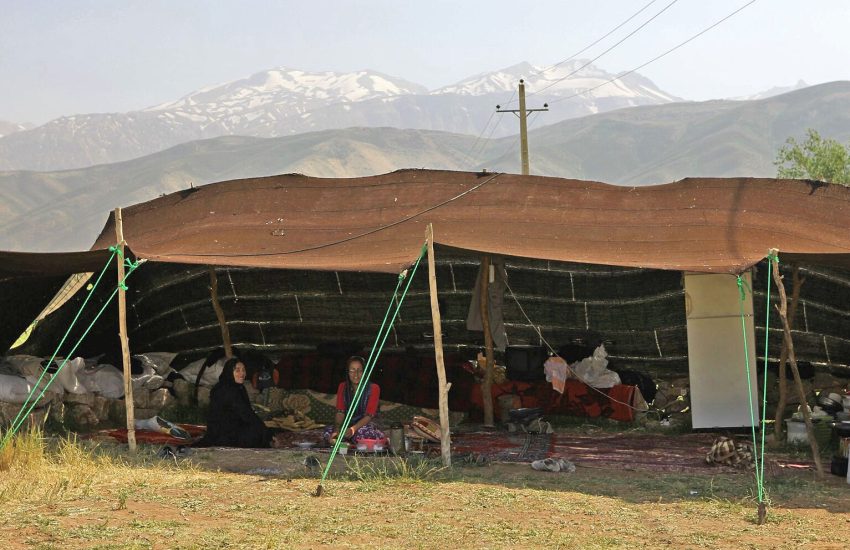
In the days before the reach of the modern state, the Kyrgyz lived as nomadic herders of the high pastures, moving with their flocks and herds between the summer grazing on the high mountain meadows and the sheltered winter camps in the valleys. Their home was the yurt, the round tent of felt on a frame of wood, warm against the mountain cold, easily raised and struck, and carried with the herds on the move.
Society was ordered by the clan and the tribe, for the Kyrgyz reckoned themselves as descended, in the old telling, from forty tribes, gathered into greater groupings, and a person’s place was in the line of the clan, which held the pastures and led in war and in the affairs of the people. The chiefs and the elders of the clans guided the community, and the ties of kin and tribe were the frame of life.
Wealth was reckoned in the herd, above all the sheep, the horses, and the yaks that gave meat, milk, wool, and transport, and the standing of a family and a chief rested on the size of the herd and the strength of the clan. The horse was the pride and the companion of the Kyrgyz man, for the people were horsemen from childhood, and the arts of the horse ran through their life.
Governed by the clan and the tribe, by chiefs and elders, and moving with their herds across the high pastures, the Kyrgyz lived as free nomadic herders of the mountains. A Turkic people of the roof of the world, keepers of the yurt, the horse, and the great epic of Manas, they held to their pastoral ways through the long centuries on the high frontier.
_leader_and_his_wife.jpg)
The Clan, the Tribe, and the Bonds of the Kyrgyz
Kyrgyz society rests on the clan and the tribe, the ties of descent that bind the herding families of the high pastures. Descent is reckoned through the father’s line, and the Kyrgyz trace themselves, in the old telling, to forty tribes gathered into greater wings and groupings, so that a person knows their line back through the clan to the ancient tribes, and the knowing of the genealogy is a matter of pride and identity.
The clan held the pastures and the herds, led in war and in the affairs of the people, and gave each family its place and its support, and the chiefs and elders of the clans guided the community. Above the clans stood the greater tribal groupings, and the whole people was bound by the sense of common descent from the forty tribes, a unity echoed in the very name of the Kyrgyz.
Marriage was made outside the clan, arranged by the families and sealed with the gift of livestock as bridewealth, so that the giving and taking of brides and herds bound the clans together. The yurt was the home of the family, and within it a proper order of places and honour was kept, the honouring of elders and guests running through the life of the people.
Women held a place of real standing in the pastoral life, keeping the yurt, milking the herds, making the felt and the food, and joining in the moves between the pastures, and the Kyrgyz woman was known for her skill and her spirit. Through the clan, the tribe, and the ties of kin and marriage, the Kyrgyz individual was bound into a proud society of herders reaching back to the forty tribes.

Islam, the Mountains, and the Old Beliefs
The Kyrgyz are Muslims, of the Sunni faith, and Islam came to them, as to the other Turkic peoples of Central Asia, over the long centuries, becoming in time the faith of the whole people. Yet the Kyrgyz, herders of the high mountains far from the great centres of Islamic learning, kept their faith in a form coloured by their older beliefs and their pastoral life.
Beneath and beside the Islam of the Kyrgyz ran an older layer of belief, the reverence of the sky and the mountains, the spirits of the natural world, and the ancestors, and the arts of the shaman and the healer. The great mountains, the springs, and the ancestral spirits were honoured, and the older beliefs blended with the Muslim faith in the life of the herders, so that the religion of the Kyrgyz joined the new and the old.
The epic of Manas itself, though the hero is a Muslim, carries much of the older world of the Kyrgyz, its spirits, its heroes, and its ancient values, and the recitation of the epic had at times something of the sacred about it. The manaschi, the bard of Manas, was held to be called and inspired, and the epic bound the people to their faith and their forebears alike.
In the modern age the Kyrgyz of China keep their Muslim faith, joined still in places to the older reverence of the mountains and the ancestors, though the pressures of a changing world bear upon the religious life of the people as upon all else. Yet Islam and the older beliefs, and above all the epic of Manas, remain woven into the Kyrgyz sense of themselves as a people of the high mountains.
.jpg)
The Manas, the Eagle, and the Horse
The greatest treasure of Kyrgyz tradition is the epic of Manas, one of the longest epic poems in the world, a vast cycle telling of the hero Manas, who united the forty tribes, and of his son and grandson, recited from memory by the trained bards, the manaschi, in a chanting, half-sung style that could hold an audience for hours and days. The keeping and reciting of Manas is the crown of Kyrgyz heritage.
The arts of the horse run through Kyrgyz tradition, for the people are horsemen from childhood, and the horse games are the great sport of the festivals, above all the fierce contest fought on horseback for the carcass of a goat, and the games of skill and daring in the saddle, and the racing that shows the swiftness of the mountain horses. The horse is the pride and the companion of the Kyrgyz.
Hunting with the golden eagle was another tradition of the Kyrgyz, as of their Kazakh neighbours, the trained eagle flown from the wrist to take fox and hare across the mountains, a skill of great patience and a mark of the horseman-hunter. The keeping and training of the eagle was an honoured art of the high pastures.
Around these run the customs of the yurt and the herd, the felt-making and the crafts of the women, the courtship and the weddings with their games and songs, and the honouring of the ancestors. Through the epic of Manas, the horse games, and the eagle, the Kyrgyz mark their identity and the passages of life in ways carried down from the ancient herders and horsemen of the steppe and the mountain.

The Feltmakers, the Weavers, and the Yurt
The great craft of the Kyrgyz is the making of felt, for the herds gave wool in plenty, and the women beat and rolled and pressed the wool into the thick felt that clothed the yurt, carpeted its floor, and made the warm garments of the mountain cold. The felt-making was a labour of the women, done together in the making of the great pieces, and the felt was the very fabric of the pastoral home.
Upon the felt the Kyrgyz women worked the bold patterns of their craft, the shyrdak and the ala-kiiz, felt carpets patterned in strong colours and curving designs, cut and sewn or rolled into the felt, among the treasures of Central Asian folk art. These felt carpets, warm and beautiful, adorned the yurt and were the pride of the household and a measure of a woman’s skill.
The making of the yurt itself was a craft of the people, the round tent of felt on a frame of bent wood, the collapsible lattice walls and the roof poles and the crown, all made to be raised, struck, and carried with the herds, warm and snug against the mountain weather. The building and adorning of the yurt drew on the skills of both the men, who made the frame, and the women, who made the felt.
The women wove and embroidered the dress and the goods of the household, the men worked leather and made the gear of the horse and the herd, and the makers of the komuz, the three-stringed lute of the Kyrgyz, and the other instruments served the music of the people. Yet it is for the felt and the yurt above all that the crafts of the Kyrgyz are known, an art bound to the wool and the pastoral life of the high mountains.

Meat, Milk, and the Table of the Herders
The food of the Kyrgyz is the food of herders of the high mountains, built above all on the meat and the milk of their flocks and herds. Mutton is the chief meat, boiled and served on the bone, and the sheep is the mainstay of the table, while the horse gives meat as well, and a horse-meat sausage is a prized food for the great occasions and the winter store.
The milk of the herds gives a wealth of dairy foods, the sheep, the mare, the yak, and the cow all milked, and the milk made into sour milk, into dried curds hard as stone that keep through the winter, into butter and cream and cheese. Above all the Kyrgyz, like their steppe kin, make kumis, the drink of fermented mare’s milk, slightly sour and mildly heady, the great drink of the summer pastures.
Bread and the products of grain, got by trade or grown where the land allowed, round out the table, and tea, at times with milk and salt in the manner of the mountains, is drunk and offered to guests. The offering of meat and kumis and tea to a guest is a sacred duty of hospitality among the Kyrgyz, and no visitor is let go unfed.
The rules of the Muslim faith order the table, the forbidding of pork and the eating of the lawfully slaughtered, and the meat and milk of the herds, with the bread and the tea, make the food of a pastoral people. From the boiled mutton and the horse sausage to the dried curds and the kumis of the summer pastures, the food of the Kyrgyz is that of the herders of the roof of the world.

The Nowruz, the Horse Games, and the Feasts
The great festival of the Kyrgyz year is Nowruz, the spring new year of the Persian and Turkic world, kept at the vernal equinox when the winter loosens its grip and the herds may go up to the new grass. On this day the people gather, don their finest dress, share the special foods of the season, and hold the games and the songs that greet the coming of spring and the new pastoral year.
The horse games are the great sport of the festivals, above all the fierce contest fought on horseback for the carcass of a goat, in which teams of riders struggle to carry it to the goal, a game of tremendous vigour and skill, and the games of the courting couple on horseback, the races, and the wrestling. These games, drawn from the life of the horseman, fill the gatherings with contest and daring.
The recitation of the epic of Manas is itself an occasion of the greatest moment, when the manaschi chants the great cycle before the assembled people, holding them through the deeds of the hero and his line, and such recitations were held at the festivals and the great gatherings. The songs of the komuz and the poetry of the improvising bards also filled the celebrations.
The passages of life, birth, marriage, and death, gather the kin for ceremony, the wedding above all celebrated with feasting, games, and song. At all these occasions the felt and the fine dress, the horse games, the epic and the songs, and the meat and kumis bring colour and vigour, so that the Kyrgyz meet the great moments of life and the year with feast, contest, and the chanting of Manas.

From the Yenisei to the Roof of the World
The Kyrgyz are among the most ancient of the Turkic peoples, and their name appears in the records more than a thousand years ago, in the days when their forebears, the Yenisei Kyrgyz, dwelt far to the north on the Yenisei river in southern Siberia, where they built a state that at its height overthrew the Uyghur empire of the steppe in the ninth century.
From that ancient northern home the Kyrgyz moved, over the long centuries and under the pressures of the Mongol age and after, south and west into the high mountains of the Tian Shan and the Pamir, where the greater number came to dwell, in the country that became Kyrgyzstan and in the neighbouring ranges. The migration into the high mountains made the Kyrgyz the herders of the roof of the world they are today.
Those who came to dwell within the frontier of the Chinese empire, in the high pastures of the far west, lived as nomadic herders under the loose rule of the Qing and the local powers, moving with their herds and keeping their clans and their epic. The drawing of the modern border between China and the Russian and then Soviet lands divided the Kyrgyz, leaving a large kindred in the neighbouring republic.
After the founding of the People’s Republic the Kyrgyz of China were recognised as one of the official nationalities, and the Kizilsu Kyrgyz autonomous prefecture was established in their high homeland in the far west of Xinjiang. The modern age has brought roads, schools, and settlement to the high pastures, and the great epic of Manas has won honour as a masterpiece of the heritage of humanity.
_commoner_and_his_wife.jpg)
The Kyrgyz in Modern China
Today the Kyrgyz number some two hundred thousand within China, living still chiefly in the high mountains of the far west of Xinjiang, above all in the Kizilsu Kyrgyz autonomous prefecture in the Pamir and the western Tian Shan, with a scattering elsewhere, including a small and distant community far to the northeast in Heilongjiang. A Turkic people of the high pastures, they remain the herders of the roof of the world.
Modern life has come to the high pastures in the shape of roads, schools, and the reach of the state and the market, and many Kyrgyz have settled in fixed villages and towns, though the herding of sheep, yaks, and horses on the mountain pastures remains the way of many. The famed landscapes of Karakul lake and Muztagh Ata draw travellers to the Kyrgyz country along the old Silk Road.
The pull of the towns and standard Chinese schooling bear upon the old pastoral life and the Kyrgyz tongue, yet the language remains strong, and the great epic of Manas, honoured now as a treasure of world culture, is still recited by the manaschi and cherished as the heart of the people’s heritage. The felt-making, the horse games, and the yurt endure among the herders.
Through change the Kyrgyz carry their heritage with pride. The yurt and the felt carpets, the horse games and the eagle, the kumis of the summer pastures, and above all the great epic of Manas endure as marks of who they are. A Turkic people of herders and horsemen of the Pamir and the Tian Shan, kin to the Kyrgyz of the neighbouring republic, they keep their yurt and their epic alive in modern China.

Related Peoples of the Region
- Derung of the Dulong Valley, a Hidden Mountain People of Yunnan
- Jing People of the Beibu Gulf, China’s Vietnamese Coast Dwellers
- Russians of China, an Orthodox People on the Northern Frontier
- Tatars of China
- Uzbeks of China
- Monba People
- Gaoshan People, the Austronesian Highlanders of Taiwan
- Lhoba People of the Eastern Himalaya, Forest Hunters of the Tibetan Gorges
More Peoples of the World
- Zulu of the Green Hills and Their Kingdom Forged by Shaka
- Xhosa of the Eastern Cape and Their Clicking Tongue and Rite of Manhood
- Basotho of the Mountain Kingdom and the Nation Moshoeshoe Forged
- Shona of the Zimbabwe Plateau and Their Cities of Stone
- Ndebele of the Highveld and Their Painted Homes
- Tswana of the Kalahari Plateau and the Kgotla
- Swazi of Eswatini and the Kingdom of the Two Rulers
You May Like
The Zaza, a Mountain People of Eastern Anatolia