Some ancient monuments greet you with beauty. Cerro Sechin greets you with violence. On the dry coastal plain of Peru, in the Casma Valley, stands a temple whose outer walls are lined with hundreds of carved stone slabs, and the story they tell is grim: rows of armed warriors marching in procession, interspersed with the dismembered bodies of their victims, severed heads, cut-open torsos, disembodied eyes, spilled entrails, limbs scattered across the stone. It is one of the oldest and most unsettling galleries of monumental art in all of the Americas, and it was carved more than three and a half thousand years ago.
Cerro Sechin is not a household name, even though it should be. It belongs to a chapter of human history that most people never encounter: the astonishing early civilisations that rose on the coast of Peru thousands of years before the Inca, at a time when much of the world was still finding its feet. This was a society building monumental architecture and carving elaborate stone reliefs while, in many other places, people were only beginning to experiment with cities at all. And it left behind a message in stone that we are still trying to fully understand.
What was this place? Who were the warriors on its walls, and who were their shattered victims? Was it a monument to a real battle, a warning to enemies, a religious statement about death and sacrifice, or something else entirely? Cerro Sechin raises more questions than it answers, which is exactly what makes it so compelling. Let’s walk its walls together and try to make sense of one of the ancient world’s most haunting sites.
A temple on the coastal plain
Cerro Sechin sits in the Casma Valley, on the north-central coast of Peru, in a landscape that surprises many people. This is not lush jungle or high mountain terrain but a stretch of coastal desert, one of the driest places on the planet, cut through by river valleys that carry water down from the Andes to the Pacific. Those green ribbons of valley, fed by rivers and irrigation, were the cradle of some of the earliest complex societies in the Americas. Where there was water, there could be farming, and where there was farming, people gathered and built.
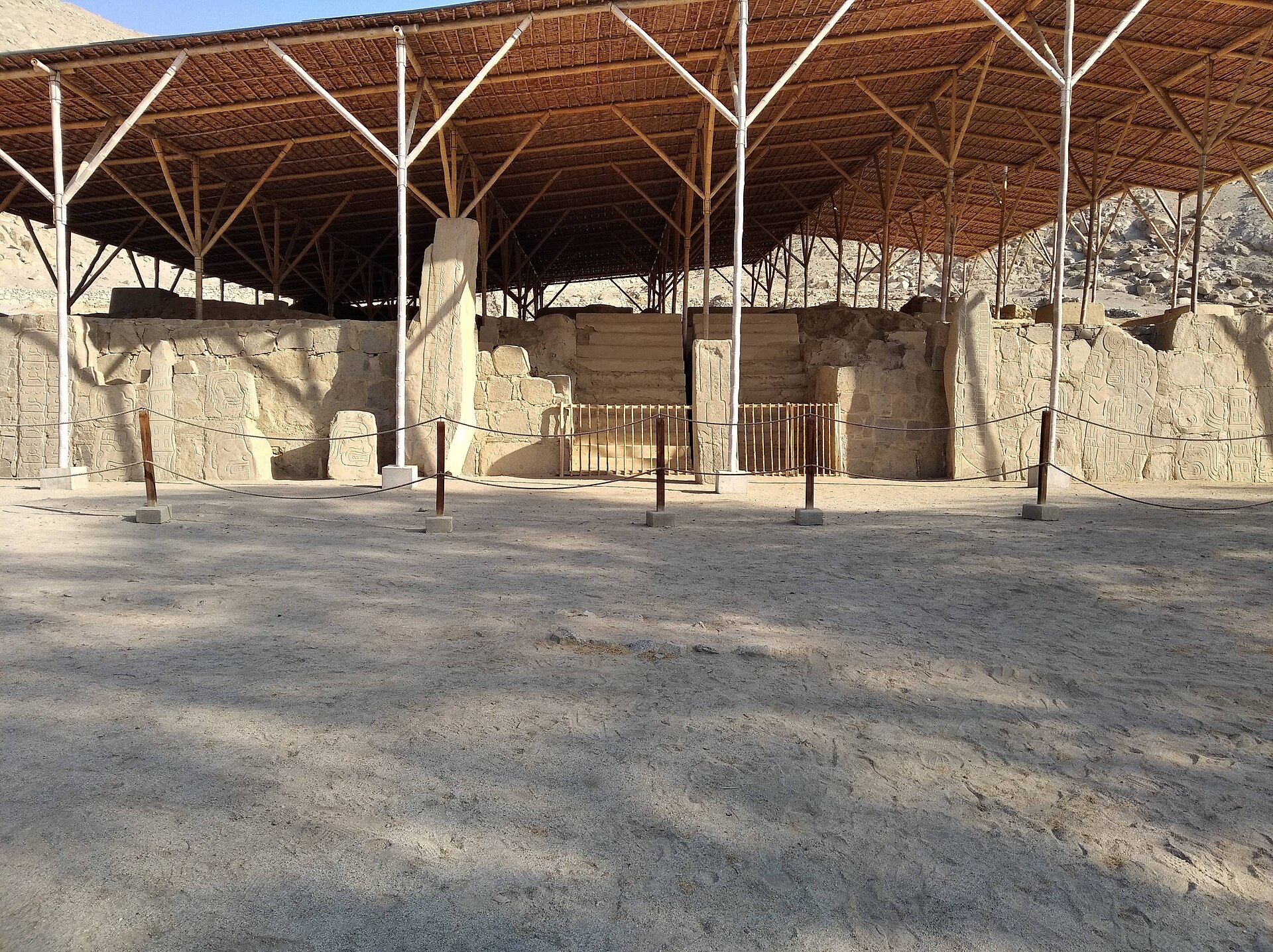
The site takes its name from a nearby hill, cerro meaning hill in Spanish, and it forms part of a broader cluster of ancient monuments in the Casma Valley. The main structure is a temple complex, a stepped platform mound built of stone and earth, and it is the outer facade of this building that carries the famous carved reliefs. The temple was not enormous by the standards of later Andean monuments, but it was substantial, and the effort invested in facing it with hundreds of carved stones tells us it mattered enormously to the people who raised it.
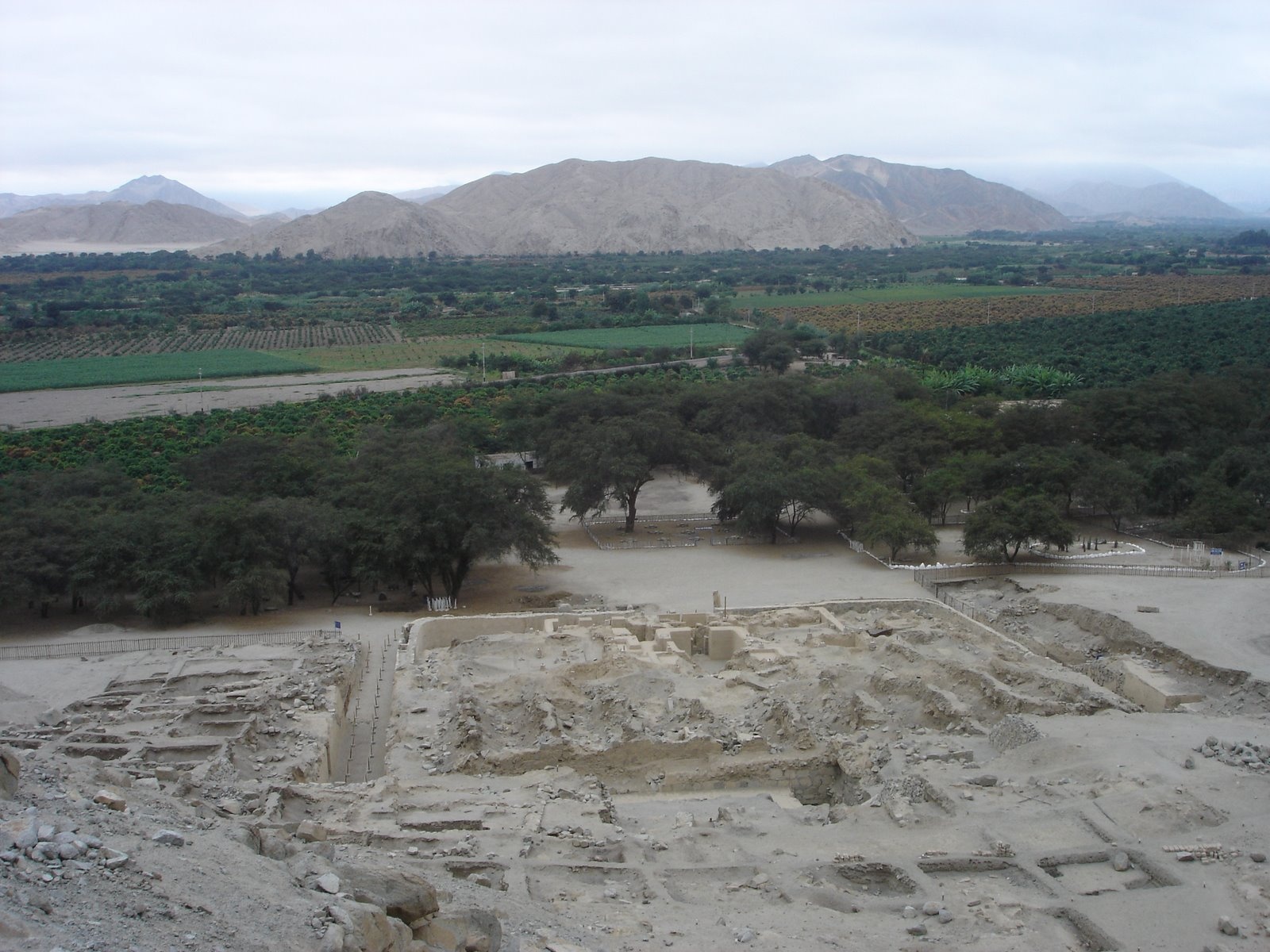
Placing the temple here was a statement in itself. In these valley societies, monumental buildings were focal points, gathering places for ritual and community, visible symbols of shared identity and belief. To stand before Cerro Sechin, surrounded by those carved warriors and their victims, would have been to feel the weight of whatever ideology the temple embodied. This was architecture designed to be experienced, and to leave a mark on the mind.
Older than you’d think
Here is the fact that reframes everything: Cerro Sechin is old. The site is generally dated to around 1600 BCE, and some interpretations push key phases even earlier. To put that in perspective, this temple and its violent reliefs were being made at roughly the same time as the great palace civilisations of Bronze Age Crete were flourishing across the world in the Mediterranean, and long, long before anything we would recognise as Andean empire.
When we think of ancient Peru, most of us jump straight to the Inca, whose empire dazzled the Spanish in the sixteenth century CE. But the Inca were extraordinarily late arrivals in a very deep story. Before them came the Chimu, the Wari, the Nazca, the Moche, and before all of those, cultures like the one that built Cerro Sechin, more than three thousand years earlier. The Andean world had an astonishingly long history of monument-building, and Cerro Sechin stands near its beginning.
This deep antiquity is part of what makes the carved walls so remarkable. We are not looking at the mature art of a long-established empire with centuries of stone-carving tradition behind it. We are looking at one of the early, formative moments of monumental stone art in the Americas. The people who carved these warriors were, in a real sense, among the pioneers, working out how to tell a story in stone on a grand scale, and doing it with startling force.
The walls of warriors and victims
The heart of Cerro Sechin, the thing that draws visitors and scholars alike, is its outer wall, faced with hundreds of upright carved stone slabs, or monoliths. Estimates put the number at somewhere around three hundred or more carved stones, forming a continuous frieze around the building. Together they make up one of the most extensive and dramatic sequences of monumental carving in the early Americas.
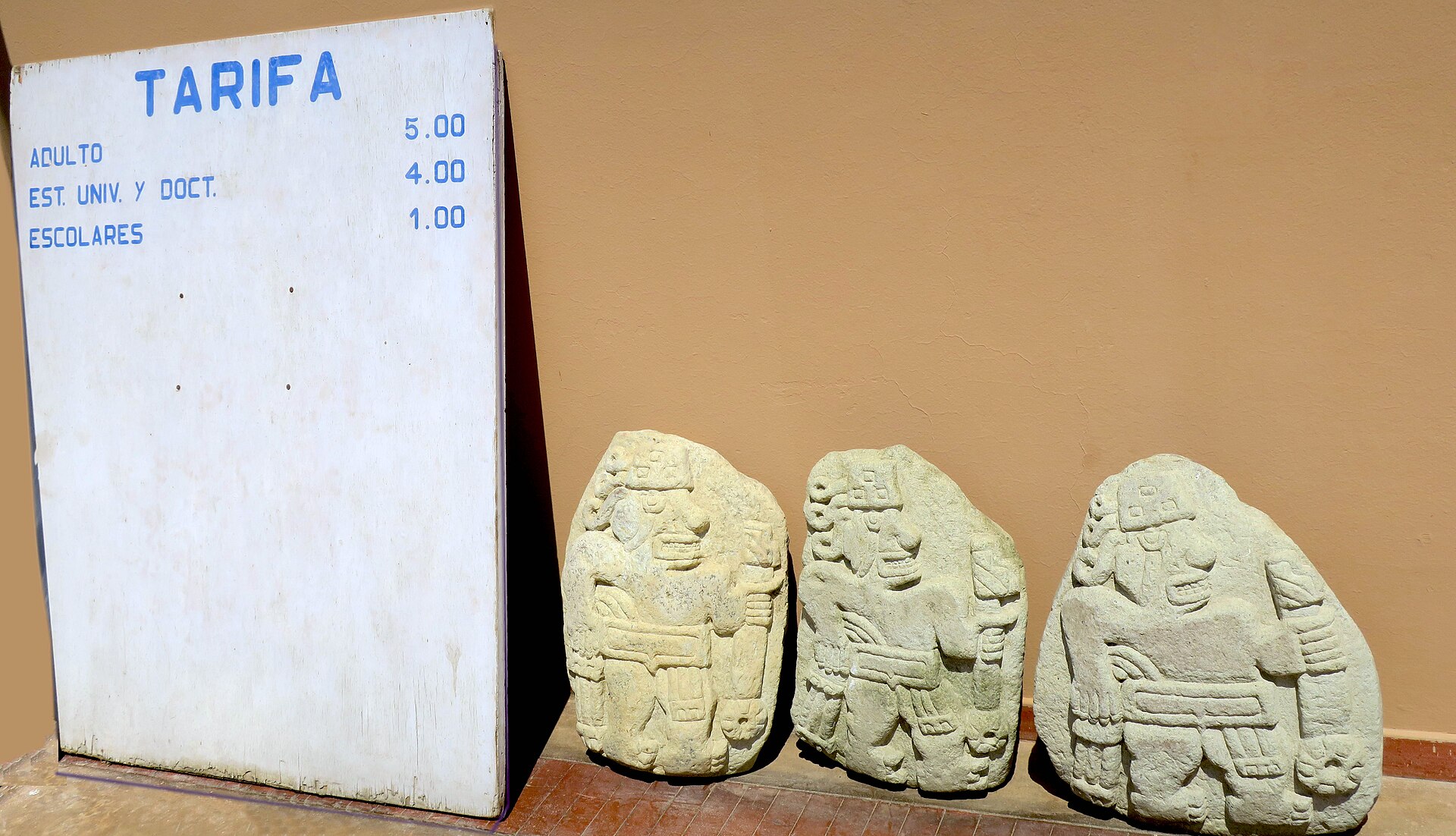
The imagery divides broadly into two kinds of figure, and the contrast between them is the whole point. First, there are the warriors: standing human figures, often shown in profile or striding forward, carrying weapons, sometimes wearing headgear or ornaments that mark their status. They are depicted whole, powerful, in control. These are the victors, the agents, the ones doing the violence.
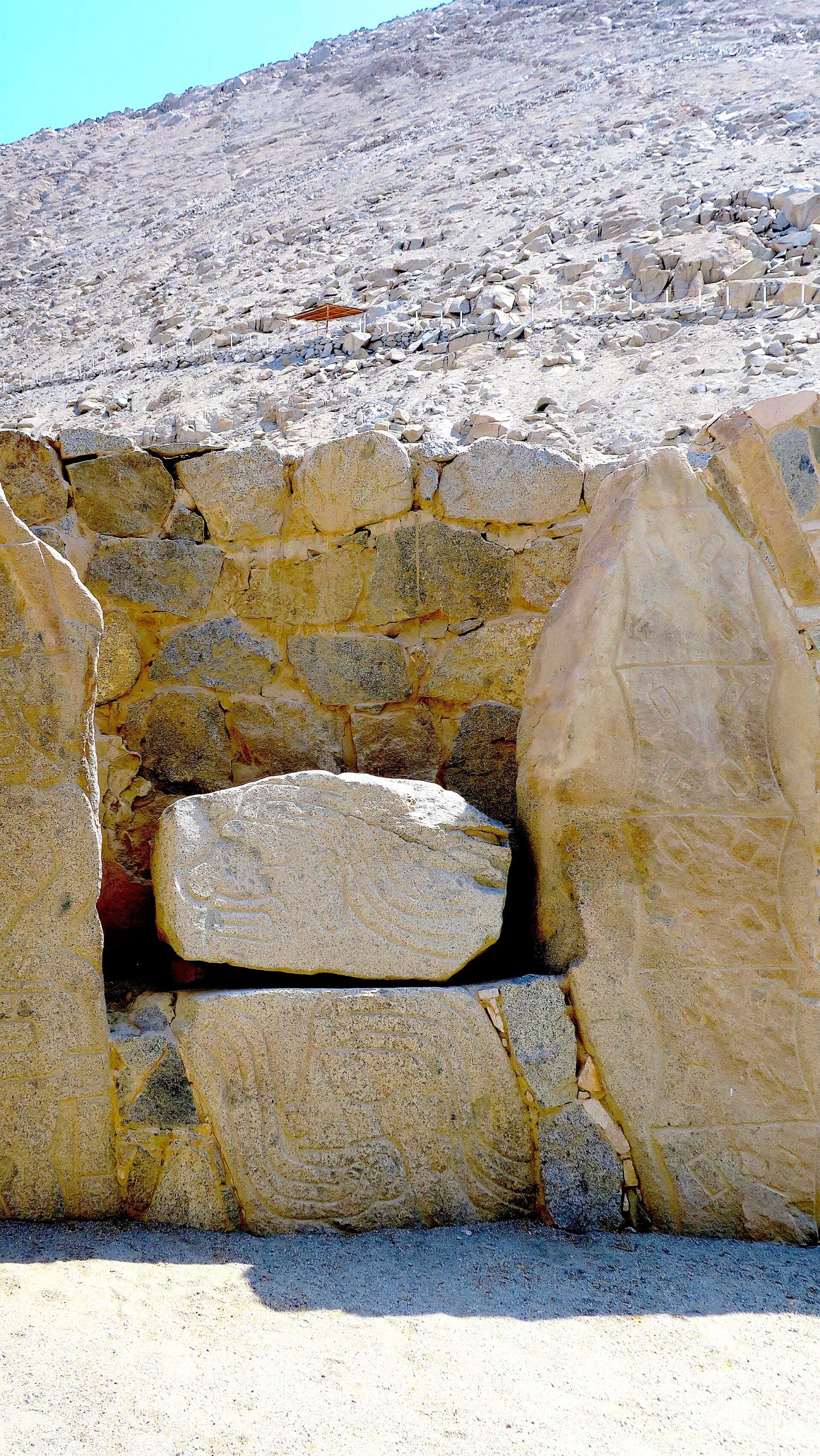
And then there are the victims, and this is where Cerro Sechin becomes genuinely disturbing. Between and around the warriors are carved the broken bodies of the defeated: severed human heads, sometimes with eyes closed in death, sometimes with blood indicated; bodies cut in two; disembodied arms and legs; vertebral columns and ribcages laid bare; loose eyes and streams of what appear to be blood or entrails. The wall is, quite literally, a catalogue of dismemberment, an unflinching depiction of bodies torn apart.
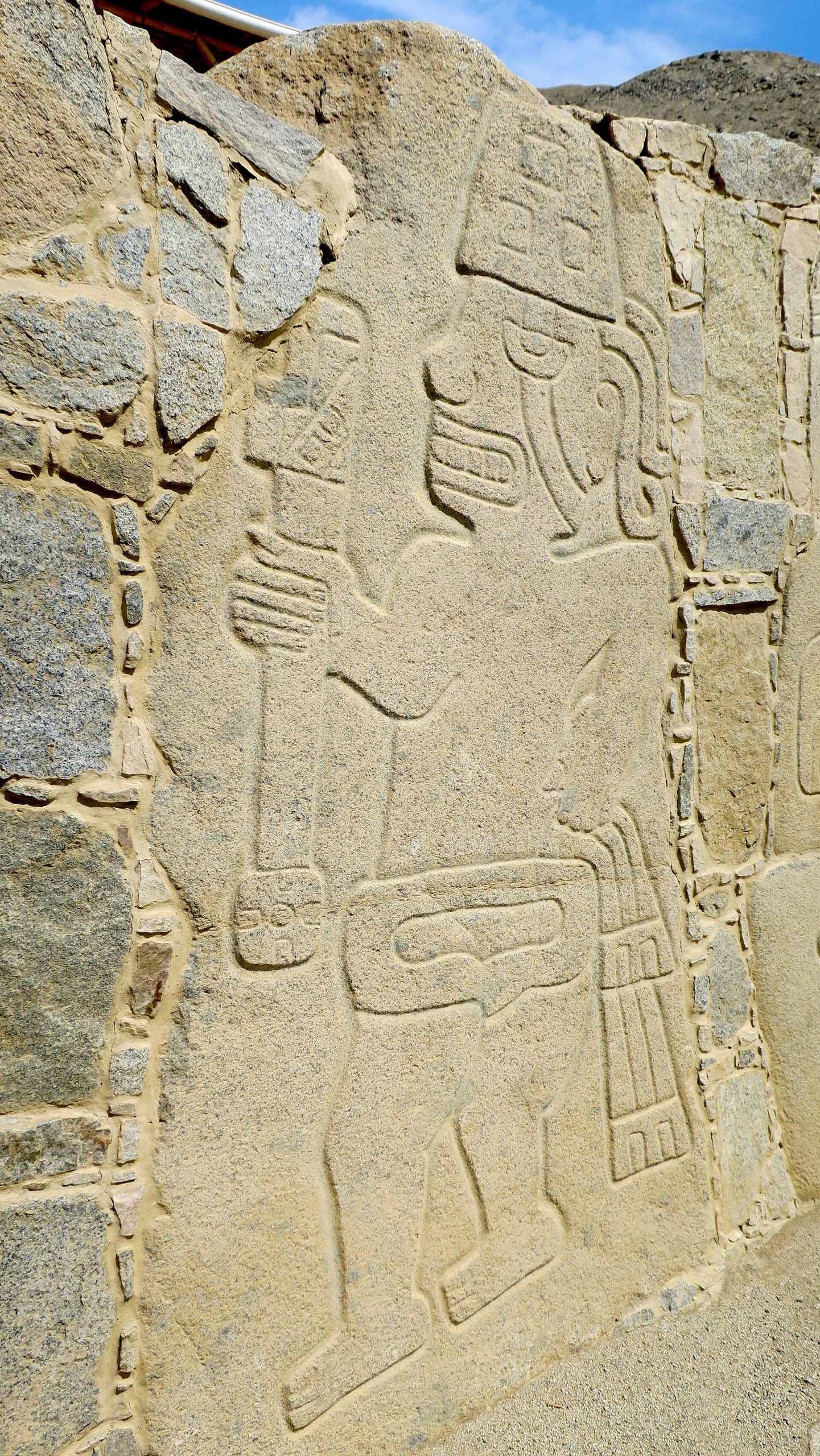
Walking along this wall, you move through a procession of triumphant warriors wading through the wreckage of their enemies. There is no attempt to soften it. The carvings are bold, deeply incised, almost stark in their clarity, and they hammer the message home again and again across hundreds of stones. Whatever else Cerro Sechin was, it was a place that wanted you to confront violence and death directly, carved permanently into the face of a sacred building.
Reading the carvings
Look closely and the carvings reveal a real artistic sophistication beneath their brutal subject matter. The figures are rendered in a confident, stylised way, with clear conventions for showing a warrior, a head, a limb, an eye. This is not crude or accidental work; it follows a consistent visual language, a set of agreed symbols that the people of the time would have read fluently. The artists knew exactly what they were doing.
The consistency across hundreds of stones is itself striking. To carve so many slabs in a unified style, and arrange them into a coherent frieze wrapping around a building, required planning, coordination, and skilled labour on a significant scale. Someone conceived the overall program, someone organised the quarrying and carving and setting of the stones, and a community supported the whole enterprise. The wall is not just art; it is evidence of a society capable of ambitious, collective projects.
Scholars who study the reliefs have noted the care taken to distinguish the living warriors from the dead, and to depict the specifics of injury and dismemberment. Some read a narrative sequence in the arrangement, as if the wall tells a story that unfolds as you walk along it. Others see it more as a repeated, emphatic statement rather than a single tale. Either way, the level of detail suggests the imagery was meaningful and precise, not random horror but a deliberate, structured message.
What does it mean?
So what were the people of Cerro Sechin trying to say? This is the great question, and honestly, we cannot answer it with certainty, because they left no writing to explain themselves. But scholars have proposed several interpretations, and each tells us something about how these carvings might have functioned.
One reading is that the wall commemorates a real historical event: a great battle or military victory, its triumph and its slaughter recorded in stone for all time. In this view, the warriors are actual victors and the dismembered figures their genuine, defeated enemies, and the temple is a war memorial of a very direct kind. A second, related interpretation sees the imagery as a warning, a display of power meant to intimidate. Enemies, rivals, or the community’s own members would see the fate of those who opposed this society, carved in unmistakable terms.
A third line of thought moves away from literal warfare and toward ritual. In many ancient societies, including later Andean ones, human sacrifice and the ritual treatment of the body carried deep religious meaning, tied to fertility, cosmic order, and the relationship between the community and its gods. The dismembered figures might represent sacrificial victims rather than battlefield dead, and the wall might depict a religious rite, or a mythic event, rather than a specific war. The severed heads, in particular, echo a long Andean tradition in which the human head held special power.
There are also interpretations that see the imagery in symbolic or even medical-anatomical terms, reading the exposed organs and severed parts as a kind of statement about the body, death, and healing. The truth may combine several of these threads. Ancient monuments rarely mean just one thing, and a temple wall showing warriors and dismembered bodies could simultaneously commemorate, warn, sanctify, and instruct. What is certain is that death, violence, and the human body were absolutely central to whatever Cerro Sechin was about.
The temple beneath the temple
Like many ancient sacred sites, Cerro Sechin is not a single, one-off building but the product of rebuilding and layering over time. The famous carved stone facade belongs to a particular phase of the temple’s life, and archaeologists have found evidence of earlier construction beneath and within it. In the Andean tradition, temples were often ceremonially buried and rebuilt, one structure raised over another, so that a mound could contain nested generations of sacred architecture.
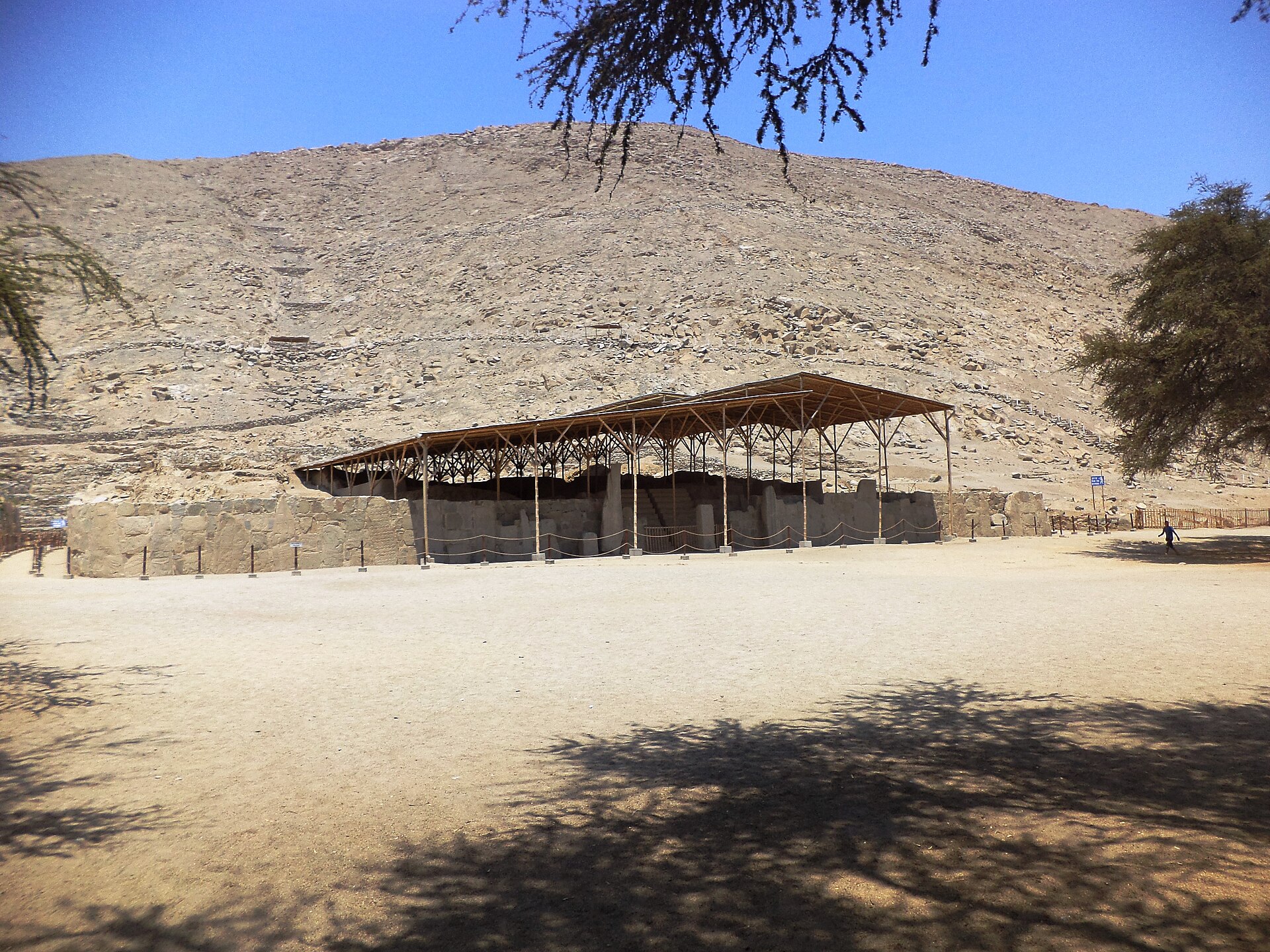
Beneath the stone-faced exterior, earlier versions of the temple were built using different materials and techniques, including construction in clay and adobe with painted decoration. The switch to a facade of carved stone monoliths represented a major transformation of the building, a decision to clad the temple in this extraordinary and durable program of imagery. That choice, at that moment, is part of what we are trying to understand: why, at this point, did this community decide to wrap its temple in warriors and the dead?
This layering matters for how we interpret the site. It reminds us that Cerro Sechin had a long, evolving history, that its meaning may have shifted across its phases, and that the carved wall we focus on today was one chapter in a longer story. The temple was a living institution, maintained, altered, and reimagined by generations, until eventually, like all such places, it was left behind.
Peru before the Inca
To really appreciate Cerro Sechin, it helps to zoom out and take in the astonishing depth of Andean history. The coast and highlands of Peru host one of the world’s great independent traditions of civilisation, one that arose on its own, without borrowing from the Old World, and produced a remarkable succession of cultures over thousands of years. Cerro Sechin belongs to the early, formative part of that story.
Not far away in time and space, other communities were raising monumental centres of their own. The Casma Valley and neighbouring valleys are dotted with ancient sites, some of them among the oldest monumental complexes in the Americas. This was a landscape busy with temple-building societies, exchanging ideas, competing, and developing the traditions that later Andean cultures would inherit and transform. Cerro Sechin was not an isolated wonder but part of a vibrant, interconnected world of early coastal Peru.
Out of this deep foundation grew everything that followed: the great religious center of Chavin in the highlands, the desert-line makers of Nazca, the goldsmiths and warriors of the Moche, the vast adobe cities of the Chimu, and eventually the sprawling empire of the Inca. When we admire Machu Picchu, we are admiring the culmination of a tradition whose roots reach back through thousands of years to sites like this one. Cerro Sechin is a reminder that the Andean achievement did not spring up suddenly with the Inca but was built, layer by layer, across an immense span of time.
Discovery and survival
Cerro Sechin was brought to scholarly attention in the twentieth century, and once again the name of Julio C. Tello, the pioneering Peruvian archaeologist, is central to the story. Tello, who did so much to reveal the deep antiquity of Andean civilisation, investigated the site in the 1930s and recognised the importance of its carved stone facade. His work helped establish Cerro Sechin as a key piece in the puzzle of Peru’s ancient past.
The survival of the carvings is itself a small miracle. Stone endures where wood and cloth perish, and the dry coastal climate of Peru is kind to ancient remains. Because parts of the temple were buried, either deliberately in antiquity or by later collapse and sediment, many of the monoliths were protected from weathering and the hand of time, preserved until archaeologists uncovered them again. What we see today is the result of both ancient care and modern conservation.
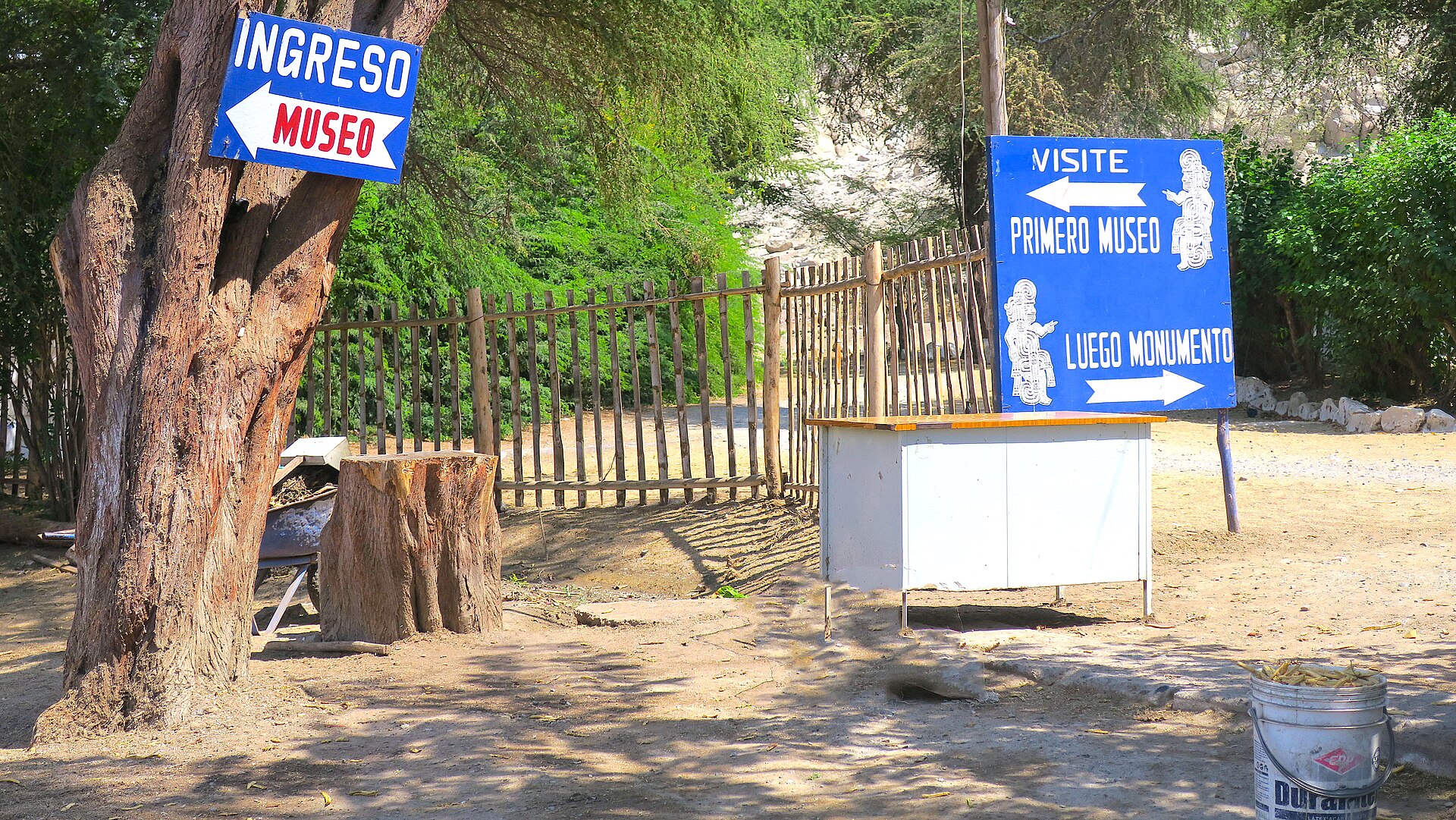
Today Cerro Sechin is a protected archaeological site with a museum, and visitors can walk along the wall of warriors much as ancient people once did, confronting the same stark images across a gulf of more than three thousand years. Conserving such a site is an ongoing task; stone carvings exposed to the elements need protection, and balancing access with preservation is a constant challenge. But the fact that we can stand before these reliefs at all, and feel their force, is a genuine gift from the past.
How they built it
It is worth thinking about the sheer practical effort behind Cerro Sechin, because it is easy to look at the finished wall and forget the labour it represents. Every one of those hundreds of monoliths had to be selected, quarried, transported, shaped, and carved, and then set upright and arranged into a coherent frieze around the temple. In a society without iron tools, without the wheel, and without draft animals, all of this was accomplished by human muscle, stone tools, and accumulated skill.
The stones themselves vary in size, with some of the larger slabs standing well above head height. Moving and erecting them would have required organised teams, ropes, levers, ramps, and a great deal of coordinated effort. Carving them demanded practised artisans who understood how to work the stone and how to render the standardised figures of warriors and victims. And behind the artisans stood the farmers whose surplus fed the whole project, and the leaders or priests who conceived and directed it.
In other words, the wall of Cerro Sechin is a kind of frozen record of social organisation. You cannot produce something like this without a community capable of planning ahead, mobilising labour, feeding workers, and sustaining a shared purpose over what may have been a long period of construction. The temple is impressive as art, but it is equally impressive as evidence of what these early coastal societies could achieve when they pulled together. The violence on the walls is matched by a quiet story of cooperation in the making of them.
The power of the severed head
Among all the grim images at Cerro Sechin, the severed heads deserve special attention, because they connect the site to one of the great enduring themes of Andean culture. Across thousands of years and many different societies in the Andes, the human head, and especially the taken head of an enemy or sacrificial victim, carried extraordinary symbolic weight. Later cultures are known for trophy heads, for depictions of head-taking, and for rituals surrounding the head as a seat of power and identity.
Seen against that long tradition, the severed heads carved at Cerro Sechin look less like isolated horror and more like an early expression of a deep, persistent Andean idea. The head may have been understood as a concentration of a person’s essence or vital force, and to take and display a head was to capture and control that power. If so, the Cerro Sechin reliefs are not just recording violence but expressing a belief about what violence, and the body, meant in cosmic and social terms.
This is one of the ways the site rewards patient thought. What can appear at first as mere brutality turns out, on reflection, to be woven into a whole worldview, one shared in various forms across the Andes for millennia. The people who carved these heads were drawing on, or helping to create, a symbolic language of the body that would echo through Andean art long after their own temple fell silent.
Standing before the wall
Try, for a moment, to imagine encountering Cerro Sechin as an ancient visitor. You approach across the dry valley floor, the temple rising ahead of you, and as you draw near, the wall resolves into figures: a warrior, then a severed head, then another warrior, then a body cut in two, on and on around the building. There is no escaping the imagery. It surrounds the sacred space, framing whatever rituals took place within, and it would have shaped your emotional state before you ever set foot inside.
For the people of the time, this was surely a powerful, perhaps frightening experience, charged with meaning we can only partly recover. The wall may have reminded them of a founding event, of the fate of enemies, of the demands of the gods, of the reality of death that underpinned their world. Whatever the specific message, the design ensured that no one approached the temple casually. The architecture and the art worked together to produce awe, and awe is the emotional currency of sacred places everywhere.
That capacity to move people is exactly why the wall still works on us today, even stripped of its original context. We do not share the beliefs of its makers, we cannot read its imagery as fluently as they did, and yet standing before those carved warriors and their shattered victims, something still lands. The starkness, the repetition, the unflinching depiction of the body, all of it reaches across the millennia and unsettles us, just as it was surely meant to unsettle those who first walked this wall. Great monuments do that. They collapse time, and for a moment put us in the presence of minds long gone.
Why Cerro Sechin matters
It would be easy to reduce Cerro Sechin to its shock value, to remember it only as the temple of dismembered bodies. But its real significance runs deeper. This site is one of the earliest and most powerful examples we have of a human community using monumental art to make a statement, to tell a story, to project an ideology in permanent, public form. Long before writing reached this part of the world, the people of Cerro Sechin found a way to speak across the centuries, and they are still speaking to us now.
The site also forces us to reckon with the fact that violence and the ancient world were often intimately linked. We sometimes prefer to imagine early societies as peaceful or idyllic, but many of them, here and elsewhere, placed conflict, sacrifice, and death at the very center of their sacred life. Cerro Sechin does not let us look away from that. Its wall confronts us with a worldview in which the broken body was a subject worthy of a temple, and understanding that, rather than recoiling from it, is part of understanding the human past honestly.
And finally, Cerro Sechin matters because it expands our sense of what the ancient Americas achieved. Here, on a desert coast more than three and a half thousand years ago, people quarried and carved hundreds of stones, arranged them into a coherent monumental program, and raised a temple that still stops visitors in their tracks. That is a profound accomplishment by any measure. It deserves to stand alongside the more famous monuments of the ancient world, not as a curiosity, but as a masterpiece of early human expression in its own right.
Stand before those walls today, in the dry heat of the Casma Valley, and the warriors still march and the victims still lie broken among them, exactly as some unknown artists intended so long ago. Whatever their message truly was, it has outlasted their civilisation, their language, and their names. That, in the end, is what monuments are for, and few have done the job as unforgettably as Cerro Sechin.
It is also worth saying plainly how much we still do not know, because that uncertainty is part of the honest picture. We do not know the name these people gave their temple, the language they spoke, the specific event, if any, that the wall records, or the exact rituals that unfolded here. Much of what scholars say about Cerro Sechin is careful interpretation built on limited evidence, and reasonable experts disagree. Rather than a weakness, this open-endedness is part of the site’s enduring fascination: it hands us a vivid, disturbing masterpiece and lets us wrestle, as every generation must, with what it was truly for.
If Cerro Sechin has pulled you into the deep past of the Andes, there’s much more to explore right nearby. Just inland stands the great temple of Chavin de Huantar, where darkness and roaring water were used to overwhelm pilgrims, and up the coast lie the desert pyramids of Caral, one of the oldest cities in the Americas. Further afield, if it’s the birth of urban life that fascinates you, wander to Uruk and Sumer in Mesopotamia and Jericho in the Jordan Valley, the water-planned streets of Mohenjo-daro and Dholavira in the Indus Valley, or the giant Neolithic mega-towns of Cucuteni-Trypillia in eastern Europe. For sheer age and mystery there’s Göbekli Tepe and Karahan Tepe in Turkey and the painted caves that hold The World’s Oldest Art. And for other monuments and lost worlds, meet Stonehenge, the tomb of Newgrange, the The Megalithic Temples of Malta, the towns of Çatalhöyük and Skara Brae, the jade-carvers of Liangzhu, the palace of Knossos on Crete, and Nan Madol, a city built on a Pacific reef. Each one, like Cerro Sechin, has its own way of astonishing you.
For a monument that rewrites the rules, meet Poverty Point and its concentric earthen ridges. If unexpected places intrigue you, do not miss Sarazm, the ancient proto-city on a river plain in Tajikistan. The roots of settled life reach right back to Mehrgarh, the ancient village that seeded the Indus civilization. The question of where urban life truly began leads straight to Tell Brak, ancient Nagar. If early farming fascinates you, take a detour to Aşıklı Höyük, one of Anatolia’s oldest villages. If early creativity fascinates you, take a detour to Jiahu, home of the world’s oldest playable instruments. If you love monuments to the heavens, take a detour to Chankillo, the oldest solar observatory in the Americas. The story continues at Kalibangan, an Indus town rebuilt after what may be history’s earliest recorded earthquake. The story continues at the Cairn of Barnenez, a 75-metre Neolithic cairn on the Breton coast. The story reaches the Danube at Vinča, home to thousands of enigmatic clay figurines. The story reaches Brittany again at Gavrinis, sometimes called the Sistine Chapel of megalithic art. See also Los Millares, whose walls, bastions, and vast necropolis rose over five thousand years ago. You might also wander over to Bougon, one of the oldest surviving pieces of architecture anywhere on Earth. If standing stones speak to you, wander over to Almendres, a hillside of ancient granite near Évora. If giant stones fascinate you, step into Ġgantija, Malta’s colossal Neolithic temple complex. If carved stones fascinate you, step into Knowth, home to Europe’s richest megalithic art. If prehistoric art fascinates you, step into Tarxien, the richest of Malta’s Neolithic temple complexes. If ancient astronomy fascinates you, step into Mnajdra, Malta’s solar temple by the Mediterranean. You might also wander to Ħaġar Qim, where Neolithic builders raised twenty-tonne stones above the sea. You might also wander to Dowth, where a five-thousand-year-old mound still guards its dark chambers. You might also explore Carnac, where Neolithic farmers raised more than three thousand menhirs across the fields. You might also wander to Callanish, where thirteen ancient stones ring a towering monolith. You might also wander to Filitosa, whose carved menhirs bear faces, swords, and daggers. You might also sail your imagination to Ale’s Stones, a 67-metre ship of stone above the Baltic.
You May Like
The Bardo, a Palace of the Beys Filled With Roman Mosaics


7 thoughts on “Cerro Sechin: The 3,600-Year-Old Peruvian Temple Carved With Warriors and Their Victims”