High in the northwest corner of Yunnan, where the plateaus of Tibet begin to crumble into the gorges of southern China, there is a town of grey tiled roofs and running water. Snowmelt from a great white mountain slips down through its lanes in a hundred small channels, and for centuries the people who built those channels have been writing their sacred books in pictures rather than letters. They are the Naxi, one of the smaller peoples of China, and for their size they may be one of the most remarkable.
There are only around three hundred thousand of them, a rounding error against China’s population, and yet the Naxi have given the world things no one else has. They kept alive the only pictographic writing system still in living use anywhere on earth. They preserved orchestral music that had died out in the cities that first played it. And in the valleys at the edge of their country, a people counted among them raised children in households run entirely by women, without husbands living under the same roof. The Naxi are proof that the size of a people has almost nothing to do with the size of what they leave behind.
This is an attempt to walk through their world from the beginning: where they came from and how they got their name, the strange beauty of their picture-writing, the mountain and town they call home, the old rhythm of farming life, the shape of their society, their layered religion, their traditions and crafts, the food on their tables, the festivals that mark their year, the long history that carried them from herders to a UNESCO showpiece, and where they stand now. By the end the mountain town should feel less like a postcard and more like a place with people in it.
What This Story Covers
- Where the Naxi Came From
- A Name With Many Spellings
- Writing the World in Pictures
- A Mountain, a Town, and Running Water
- How the Old Days Were Spent
- Households, Women, and the Mosuo
- Gods Borrowed From Every Neighbour
- Music, Dance, and the Things Passed Down
- What Their Hands Made
- Eating in the High Valleys
- Days Marked on the Calendar
- From Herders to Heritage Site
- Naxi Country in the Present
Where the Naxi Came From
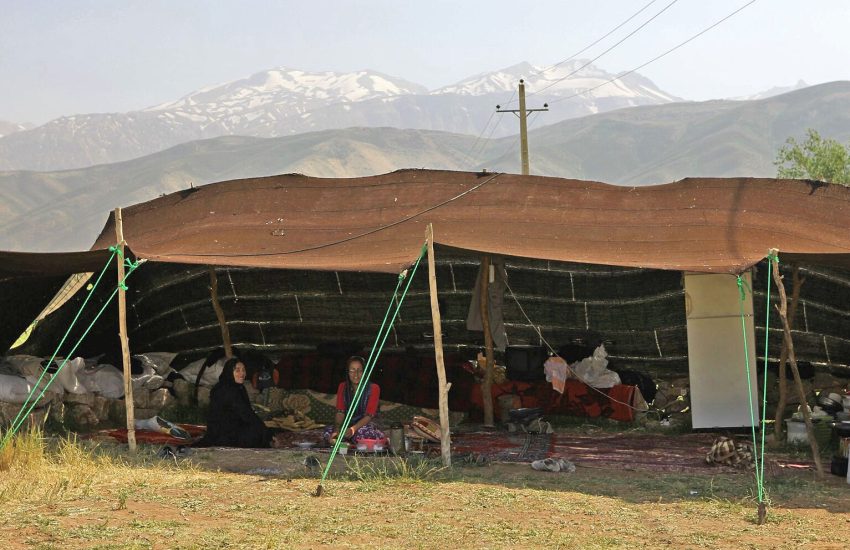
The Naxi did not begin in the pretty valleys where the world now finds them. Their oldest memory points north, up onto the cold grasslands of the Tibetan plateau and the upper reaches of the Yellow River, where their ancestors were part of a loose family of herding peoples the Chinese chronicles lumped together under the name Qiang. These were mobile folk who followed their animals across high, treeless country, and the Naxi carried the marks of that life south with them long after they had stopped being nomads.
Sometime in the first millennium, pushed by stronger neighbours and pulled by warmer, kinder land, groups of these herders drifted down the great river corridors that run north to south through the eastern edge of the Himalayas. It was a slow migration measured in generations, not seasons, and it delivered them at last into the country where the Yangtze makes its famous hairpin turn and the mountains soften just enough to farm. There they settled and slowly became a different people.
That double inheritance still explains a great deal about them. Their language belongs to the Tibeto-Burman family, tying them back to the plateau and to Tibetans, Yi and Burmese far to the south. Their religion kept the shamanic bones of a herding culture even as it dressed itself in borrowed robes. And their fierce attachment to a single mountain, treated as a living ancestor rather than mere scenery, is the sort of bond a people forms when they have wandered a long way and finally decided to stop.
Chinese records begin to notice them clearly by the Tang dynasty, when the Naxi appear as one of the many hill peoples caught between the expanding Chinese empire to the east and the rising Tibetan kingdom to the west. Squeezed between two giants, they learned early the skill that would define their history: how to bend without breaking, to borrow from everyone and belong wholly to no one, and to survive by being useful, quiet, and quietly stubborn about the things that mattered to them.
A Name With Many Spellings
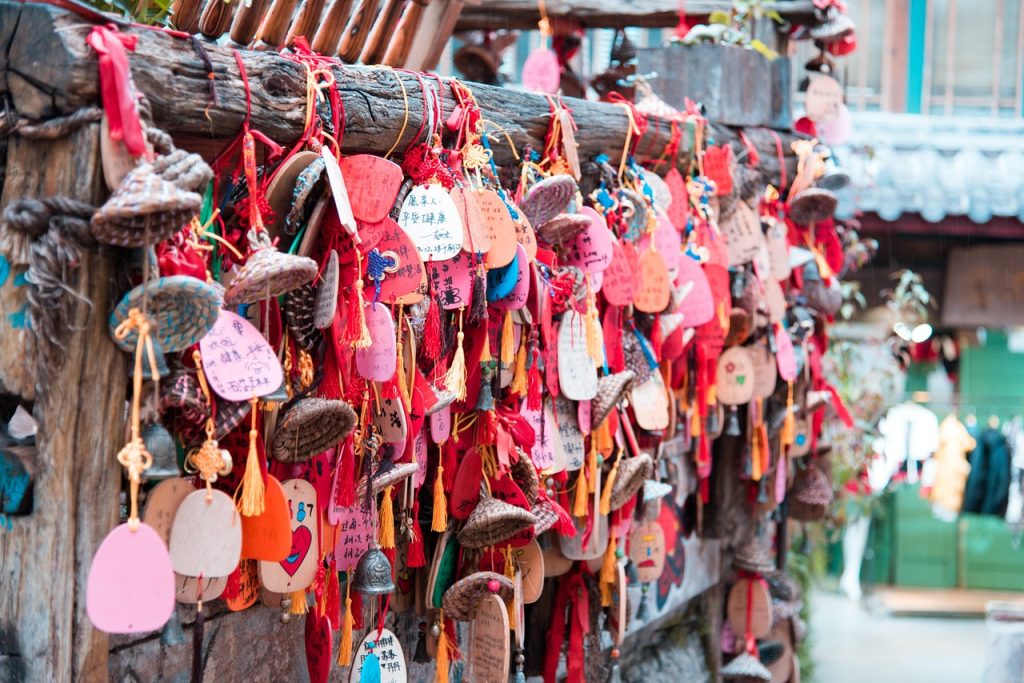
The word Naxi is deceptively simple. In their own language it breaks into two pieces: na, an old syllable carrying the sense of black or great, and xi, meaning people or man. Read together it means something like the black people or, more grandly, the great folk, though the colour black here almost certainly signalled honour and strength rather than skin. Many peoples across this region used black in exactly that proud way.
Getting there in print took a long detour. For most of the twentieth century outsiders wrote the name as Nakhi or Naxi with a wandering set of spellings, and the botanist-explorer Joseph Rock, who spent decades among them and made them famous in the West, fixed Nakhi in the minds of a generation of readers. When the People’s Republic standardised its official list of minority peoples in the 1950s, the pinyin spelling Naxi won out, and that is the form used today, pronounced roughly nah-shee.
The naming did not stop there, because the Naxi were never quite one tidy group. Around the shores of Lugu Lake lived people who called themselves Mosuo and who were folded into the Naxi in the official classification, though many of them insist to this day that they are their own people. Other branches carried their own local names. What Beijing wrote down as a single nationality was in truth a cluster of related communities who spoke similar tongues and shared a rough sense of kinship.
This matters more than a footnote about spelling. When a state draws a box and writes one name inside it, everyone in the box is quietly told they are the same, and the smaller names inside start to fade. The Mosuo campaign for separate recognition is really an argument about who gets to decide what a people is called and, underneath that, who gets to decide what a people is. For the Naxi as a whole, the name is settled; for some counted under it, the question is still open.
Writing the World in Pictures
If the Naxi are known abroad for one thing, it is their writing. While almost every other living script on earth records the sounds of speech, the Naxi kept a system that records ideas as little pictures. It is called Dongba, after the priests who alone could read and write it, and it is widely described as the last pictographic script still in active use anywhere in the world. A mountain is a small drawing of a peak; a person is a stick figure; anger, wind and death each have their own tiny image.
It was never meant to be an everyday alphabet. Ordinary Naxi did not write their shopping lists in pictographs. Dongba was a sacred technology, guarded by the priesthood, used to record the vast body of religious texts that guided funerals, exorcisms and the great ceremonies of the year. A single Dongba manuscript could run to thousands of these images, and reading one properly required not just recognising the pictures but knowing the chants they were meant to trigger in a trained memory. The script was a prompt as much as a text.
The spoken language beneath it is a Tibeto-Burman tongue, tonal like Chinese, and split into dialects that reflect the scattered valleys of Naxi country. For daily talk most Naxi now move easily between their own language and Mandarin, and the young increasingly lean toward the national tongue. This is the ordinary arithmetic of a small language living inside a huge one, and it puts the everyday speech of the Naxi under exactly the pressure that endangers minority languages everywhere.
The pictographs face a stranger danger. For centuries the knowledge lived only inside the heads of Dongba priests, passed from master to pupil, and the political storms of the twentieth century nearly cut that chain entirely. When the old priests began to die, they took the readings with them, and thousands of manuscripts sat in archives that almost no one could fully understand. Today scholars and a few surviving practitioners race to record what remains, half rescue mission and half act of cultural memory.
A Mountain, a Town, and Running Water

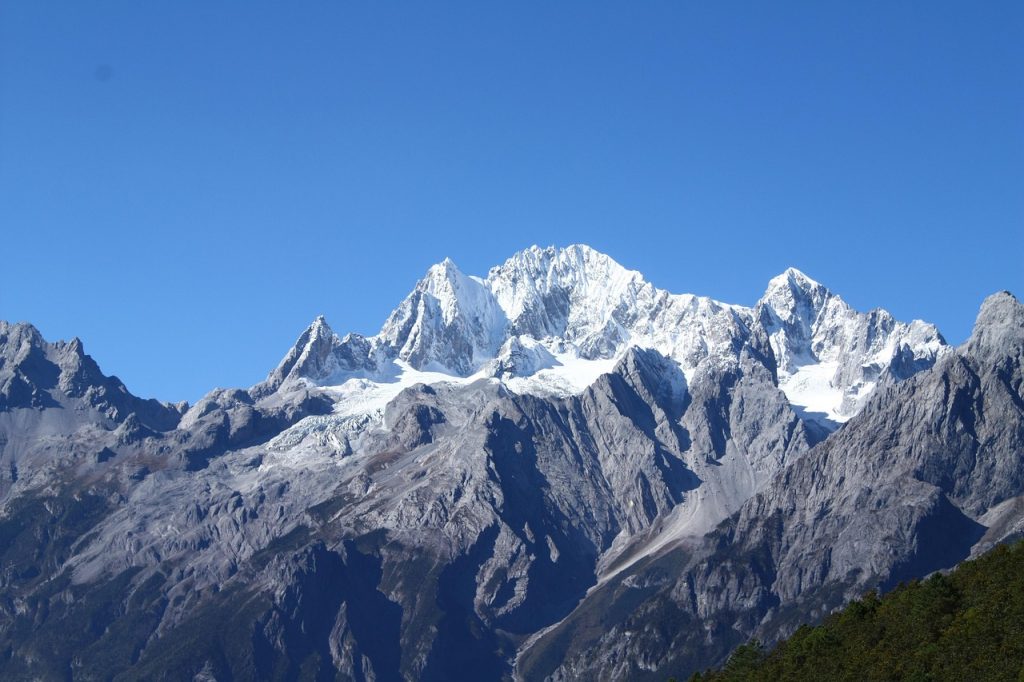
Naxi country is small and easy to picture, because it gathers around one overwhelming landmark. Jade Dragon Snow Mountain rises to more than five and a half thousand metres above the plateau, its glaciers gleaming above pine forest and pasture, and it dominates the horizon from almost everywhere the Naxi live. They do not treat it as a view. In their tradition the mountain is a living presence, tied to a protector spirit, and it stands at the centre of their sense of who they are and where they belong.
At the mountain’s foot sits Lijiang, the old town that has become almost synonymous with the Naxi themselves. It is a maze of cobbled lanes, timber houses and small stone bridges, laced through by channels of clear snowmelt diverted from the streams above. For centuries that running water served every practical purpose, washing, cooling and carrying, and the whole town was engineered around its flow. Lijiang grew rich as a stop on the tea and horse trade routes that threaded these mountains toward Tibet.
Beyond the town the land climbs and folds. There are high pastures where herders once grazed animals, terraced fields cut into slopes too steep for any easy plough, deep river gorges including the famous Tiger Leaping Gorge where the Yangtze roars through a slot in the rock, and far to the north the still blue sheet of Lugu Lake. It is difficult country, cut into pockets by ridges and rivers, and that fragmentation shaped the Naxi into a people of separate valleys rather than one open plain.
Altitude rules everything here. Most Naxi live between two and three thousand metres, high enough that winters bite and the growing season is short, low enough that the valleys can still be farmed. The thin bright air, the closeness of the snow line, the sudden mountain weather; all of it set the terms of ordinary life. A people who live under a glacier learn to respect the mountain, and it is no accident that the Naxi made theirs into a god.
How the Old Days Were Spent

For most Naxi through most of their history, life meant farming a hard, high land. On the terraces and valley floors they grew what the altitude allowed: barley and buckwheat in the cold upper reaches, maize, wheat and potatoes lower down, and rice wherever water and warmth would let it stand. Every scrap of workable ground was coaxed into use, banked and levelled by hand, because in mountains this steep flat land is not found but made.
Around the crops turned a whole economy of animals and side trades. Households kept pigs, chickens, oxen for the plough and horses for the road, and in the higher pastures some families still ran sheep and yaks in the old herding style their ancestors had never entirely forgotten. Wool was spun, hides were worked, and the thick sheepskin capes that Naxi women wore across their backs were both clothing and a badge of the working life.
Lijiang’s position on the tea-horse road pulled many Naxi off the land and onto the trail. Caravans of ponies carried bricks of tea up from the warm south and returned laden from Tibet, and the Naxi, sitting astride that route, became muleteers, innkeepers, guides and traders. That commerce is why a remote mountain town grew wealthy and worldly, and why the Naxi were never quite the isolated hill folk that the map might suggest. Goods and ideas both moved along those trails.
The labour itself split along familiar lines but with a Naxi twist. Women did an enormous share of the work, in the fields, in the markets and in the running of the household, to the point where outsiders often remarked that Naxi women seemed to carry the community on their backs, literally and otherwise. Men handled the long trading journeys, the heavier building, and much of the religious and scholarly life. It was a hard existence, close to the soil and the seasons, and it left little room for idleness.
Households, Women, and the Mosuo

Naxi society was built around the household and the extended family, and within it women held unusual weight. Even among the mainstream Naxi, wives and daughters ran the domestic economy and much of the market trade, and the sight of women doing the visible, public work of the community struck many travellers as the reverse of what they expected in China. It was not a matriarchy, but it was a long way from a world in which women stayed quietly indoors.
The truly startling case sat at the northern edge of Naxi country, around Lugu Lake, among the Mosuo. There households were organised around women and traced descent through the mother’s line, and many Mosuo practised what outsiders clumsily labelled walking marriage: partners kept separate homes, a man visited his partner at night and returned to his own mother’s house by day, and the children were raised by the mother and her brothers rather than by a resident father. Property and family name passed down the female line.
It is easy to romanticise this into a lost paradise of female power, and outsiders often have, but the reality was more practical than utopian. The system kept large households intact and stable across generations, avoided the disputes that dowries and inheritance so often cause, and gave women real security within their own family compound. It was one workable answer to the eternal questions of who lives with whom, who raises the children and who inherits the land, arrived at independently in a high mountain valley.
Above the household stood the wider web of clan and locality, and in the historical Lijiang region a hereditary Naxi ruling house, the Mu family, governed on behalf of successive Chinese dynasties for centuries. Their palace complex still stands in Lijiang, a grand Chinese-style compound that tells you how thoroughly the Naxi elite had woven itself into the imperial order while keeping a firm grip on its own mountain domain. Rank, kinship and place together fixed a person’s world.
Gods Borrowed From Every Neighbour

Naxi religion is a layered thing, and the deepest layer is Dongba, the indigenous faith named for the same priests who kept the pictographic script. At its root Dongba is shamanic, the inheritance of those old herding ancestors: a world crowded with spirits of mountain, river, tree and sky, kept in balance by priests who could chant, sacrifice and read the sacred picture-books. Nature was not a backdrop but a society of powers to be respected and appeased.
The most striking Dongba idea is the figure of Shu, the spirit lord of the natural world, treated as a kind of half-brother to humanity. In this view people and nature were born of the same source and owed each other restraint; to foul a spring, kill without need or clear a forest recklessly was to break a family bond and invite disaster. It is an old and surprisingly modern ecological ethic, dressed in the language of kinship rather than conservation.
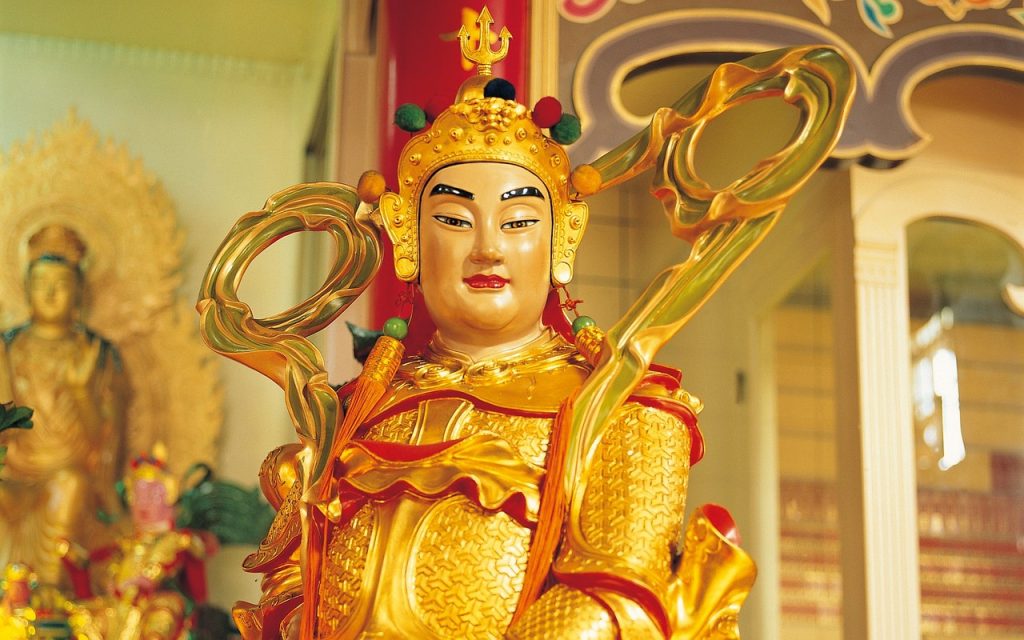
Onto this base the Naxi layered whatever their powerful neighbours offered. From Tibet came Bon and then Tibetan Buddhism, whose monasteries dotted the region; from the Chinese east came Confucian learning, Daoist ritual and Han Buddhism, especially among the Lijiang elite who sat their sons for the imperial examinations. The Naxi did not so much choose between these systems as stack them, calling on a Dongba priest for a funeral and a Buddhist lama for a blessing without feeling any contradiction.
That easy layering is the signature of Naxi spiritual life. Rather than a single church with a single creed, they kept a working toolkit of traditions, reaching for whichever suited the moment. The result was tolerant, practical and deeply local, but it also meant that Dongba, the one faith that was truly theirs alone, had no great institution to defend it. When the twentieth century turned hostile to religion, the borrowed faiths had monasteries and networks to fall back on; Dongba had only its ageing priests.
Music, Dance, and the Things Passed Down

The most celebrated Naxi tradition is one they did not invent but rescued. Naxi Ancient Music is an orchestral repertoire, some of it drawn from Daoist ritual and courtly tunes that vanished from the Chinese heartland centuries ago, preserved in the mountains long after it had died elsewhere. Played on old instruments, some genuinely antique, by musicians who were often elderly men, it survived in Lijiang like a living fossil, and today it draws visitors who come specifically to hear music no one else still performs.
Song and dance run through ordinary Naxi life as well, not just the concert hall. Communal circle dances, sung at festivals and gatherings, pull whole villages into a slow turning ring, and courtship, work and mourning all had their own songs. This was a culture that carried much of its memory in performance rather than on paper, which is fitting for a people whose written script was reserved for priests and whose real archive lived in voices, hands and feet.
Dress was another quiet tradition, and here again the women carried the meaning. The classic Naxi woman’s costume paired a wide-sleeved gown with a distinctive sheepskin cape across the shoulders, decorated with discs that were often read as symbols of the sun, moon and stars, marking the wearer as one who labours from dawn to dusk. To wear it was to advertise a whole ethic of work, and though everyday clothing has long since gone modern, the costume still appears at festivals and performances.
Underneath all of it ran the authority of the Dongba priest at life’s great turning points. A proper funeral, a naming, an exorcism, a blessing on a new house; these were his domain, and his chanting from the picture-books tied each family’s private moment back to the larger order of spirits and ancestors. Weakening that priesthood did not just endanger a script. It loosened the thread that had stitched individual Naxi lives into a shared sense of meaning.
What Their Hands Made

Naxi craft grew out of the same mountain economy that shaped everything else, practical first and beautiful second. Woodwork ran deep, because the old town itself was a carpenter’s achievement: timber houses with carved doors and window screens, latticed panels worked with flowers, birds and lucky symbols, all fitted together by builders who understood how wood moves in a climate of hard winters and bright summers. To walk old Lijiang is to walk through generations of joinery.
Textiles were the women’s craft, spun and woven from the wool of mountain flocks and the fibres the valleys produced. The sheepskin cape was the showpiece, but there was also everyday weaving, embroidery and the making of the sturdy clothing a working life demanded. Alongside cloth came leatherwork from the hides of their animals, and metalwork for the tools, harness and ornament that a farming and trading people needed to keep moving.
The rarest craft of all was the Dongba tradition of manuscript-making: the priests were not only readers but makers of their picture-books, preparing paper, mixing inks and painting the pictographs and religious images by hand. Dongba paintings, scrolls of gods and cosmic diagrams rendered in the same bold, childlike-looking style as the script, are now prized as folk art, though they began strictly as sacred objects meant for ritual rather than display on a collector’s wall.
Tourism has bent these crafts toward the souvenir stall, as it does everywhere, and much of what fills Lijiang’s shops now is made for visitors rather than neighbours. Yet the deeper skills survive in the carved beams of the old houses, in the hands of the weavers who still know the patterns, and in the workshops where a few painters keep the Dongba style alive. The trick, here as with the language and the music, is keeping the craft a living practice rather than a frozen display.
Eating in the High Valleys
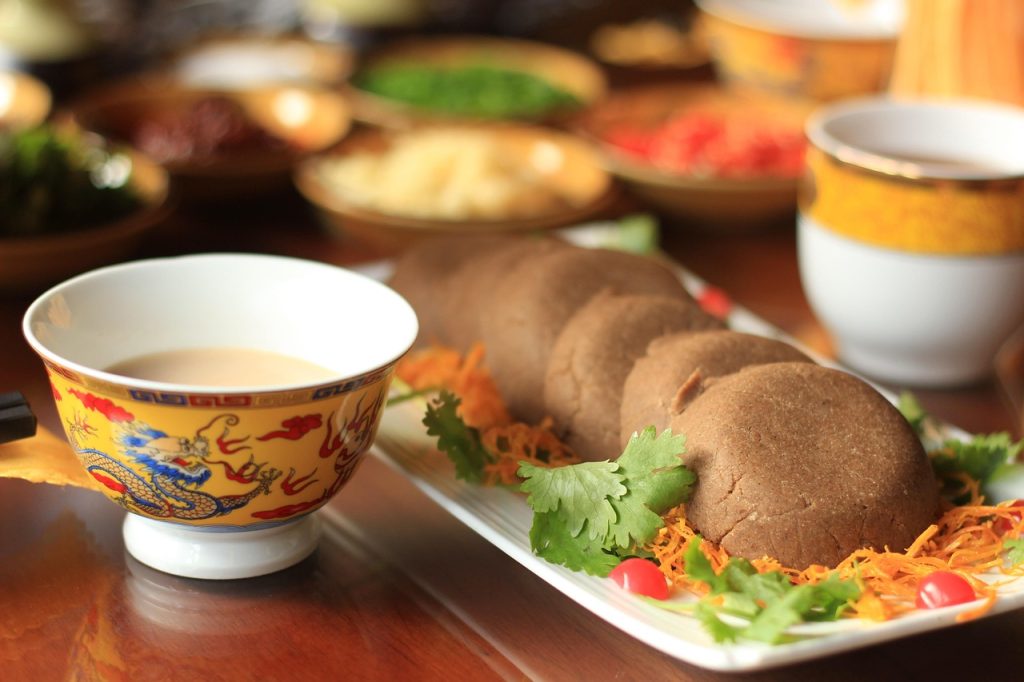
Naxi food is mountain food: hearty, unfussy, and built around what will grow at altitude and keep through a cold winter. Grains do much of the heavy lifting, with wheat, barley, buckwheat and maize turning up as breads, cakes and porridges. The most famous single dish is baba, a thick fried flatbread that comes in sweet and savoury versions and travels well, exactly the sort of food a muleteer would want in his saddlebag on the road to Tibet.
Preserved meat is the pantry’s backbone, because fresh food does not last long without refrigeration and a hard winter must be planned for. Cured pork and sausage hang in Naxi kitchens, and the region’s most notorious speciality is a whole preserved pig, boned, salted and sewn back into its own skin to age for years, a spectacular and slightly alarming larder that speaks of a people who never took the next meal for granted.
The valleys and the lake add their own flavours. Fish from Lugu Lake and the rivers, wild mountain vegetables and fungi gathered in season, chillies and the bold seasonings of the wider Yunnan kitchen all find their way to the table. Yunnan is one of China’s great regions for wild mushrooms, and the Naxi share in that bounty, foraging the hillsides for varieties that fetch high prices in the cities and grace the pot at home.
Around the food sits the usual social ritual: butter tea borrowed from Tibetan neighbours, home-brewed grain liquor for guests and festivals, and the shared meal as the basic unit of hospitality. A people shaped by trade learned to feed travellers well, and the modern flood of tourists has turned Naxi cooking into a selling point, with baba and cured ham now offered to visitors as edible heritage. Behind the tourist menu, though, the everyday food remains what the mountain will provide.
Days Marked on the Calendar

The Naxi year is stitched together by festivals, some shared with the wider Chinese world and some entirely their own. They keep the Lunar New Year like their neighbours, with its feasting, visiting and cleaning away of the old year, but layered over that common calendar are observances that belong to the Naxi alone and reach back into their Dongba past.
One of the most distinctive is the Sanduo Festival, honouring Sanduo, the warrior-god and protector spirit of the Naxi who is bound up with Jade Dragon Snow Mountain itself. Held in the early spring, it is in effect a national day for the people, a moment to salute the guardian of the mountain that stands at the centre of their identity, with offerings, gatherings and a renewed sense of who they are. To celebrate Sanduo is to reaffirm the bond between the people and their peak.
Other days follow the older shamanic rhythm, marking the turning of the agricultural seasons, the propitiation of nature spirits and the ceremonies for the dead that were the Dongba priest’s special work. Torch festivals shared with the Yi and other Yunnan peoples light up the summer nights, and local temple fairs and market days give the calendar its everyday punctuation. The pattern is the familiar one of farming societies everywhere, a year measured out in sowing, harvest and thanks.
Today many of these festivals do double duty, both genuine observance and tourist attraction, performed partly for the community and partly for the cameras. That tension is real and not easily resolved, but it is not new either; festivals have always been partly about display. What matters is whether the Sanduo Festival still means something to a young Naxi beyond a day off and a show, and for now, at least, the mountain god seems to keep his hold.
From Herders to Heritage Site

The long arc of Naxi history is a story of survival between giants. After drifting down from the plateau they settled the Lijiang region and, from the Song and Yuan periods onward, came under the loose authority of the Chinese empire through the familiar system of local chieftains left to rule their own. The Mu family emerged as hereditary lords of Lijiang, governing on the dynasty’s behalf while keeping their mountain domain firmly in Naxi hands, and their long rule gave the region unusual stability.
Under the Mu, Lijiang flourished as a crossroads of the tea-horse trade, and Naxi culture reached a kind of golden age, open to Chinese learning and Tibetan religion alike while keeping its Dongba core. The town’s wealth, its scholars and its distinctive blend of influences all date from this era. The Qing dynasty eventually replaced the hereditary chieftains with directly appointed officials, tightening imperial control and drawing the Naxi more firmly into the machinery of the Chinese state.
The twentieth century brought the hardest tests. The collapse of the empire, the chaos of war and then the founding of the People’s Republic reshaped everything. In the political campaigns of the following decades, especially the Cultural Revolution, religion and tradition became dangerous, Dongba priests were persecuted, manuscripts were destroyed or hidden, and the chain of knowledge that carried the picture-script came within a generation of snapping altogether. The Naxi survived, but their oldest heritage nearly did not.
The great reversal came at the end of the century. In 1997 the old town of Lijiang was inscribed as a UNESCO World Heritage Site, and the Naxi were transformed from an obscure hill people into the stars of one of China’s most popular tourist destinations. A devastating earthquake in 1996 had, strangely, helped by drawing attention and rebuilding funds. Almost overnight, being Naxi went from a liability to an asset, and heritage became the region’s most valuable crop.
Naxi Country in the Present

Modern Naxi life is dominated by a single overwhelming fact: tourism. Millions of visitors now pour through Lijiang every year, and the old town that grew up around a mountain trade route has been remade around a new one, in travellers. The money is real and so is the cost. Rents rise, longtime residents move out, souvenir shops replace family homes, and the risk is that Lijiang becomes a beautiful stage set with fewer and fewer actual Naxi living on it.
Against that pressure runs a serious effort at preservation. The Dongba script and its manuscripts are being catalogued and studied, research institutes work to record what the last priests remember, Naxi Ancient Music is performed and taught, and the culture’s fame gives it a political weight that many larger minorities would envy. Being famous has its dangers, but obscurity would have been worse; the spotlight that commodifies Naxi culture also helps fund its rescue.
The everyday reality for most Naxi now looks much like that of other Chinese citizens. The young are educated in Mandarin, drawn to jobs in the cities, and fluent in the digital world; their own language and the intricate old traditions compete with everything modern China offers. Whether the picture-script becomes a living skill again or a museum exhibit, whether the mountain god still means something in a generation, these are open questions that only the Naxi themselves will answer.
The Naxi found their answer to survival in a very particular place, wrapping their identity around one mountain, one town and one extraordinary script. But not every people of China chose to root itself so firmly to a single spot. Far to the north, on the wide grasslands beyond the Great Wall, lived a people who built their identity around movement itself, whose horsemen once conquered the largest land empire the world has ever seen, and who still measure their world by the open sky. To meet them, we leave the running water of Lijiang and ride out onto the steppe of the Mongols.
Others Who Share This Vast Country
China is home to dozens of peoples, each with its own language, gods and way of making sense of the world. If the Naxi drew you in, here are the others whose stories I have told so far, and any one of them makes a good place to wander next:
- A Fifth of Humanity, the Story of the Han Chinese
- A Civilization of the Silk Road Oases, the Story of the Uyghurs
- The Giants China Overlooks, the Story of the Zhuang People
- Chinese in Everything but Faith, the Story of the Hui
- Conquerors Absorbed by Their Conquest, the Story of the Manchus
- A Civilization on the Roof of the World, the Story of the Tibetans
- A History Sewn Into Silver and Cloth, the Story of the Miao
- Carriers of Fire and an Ancient Script, the Story of the Yi
- A People Who Nearly Vanished Into the Crowd, the Story of the Tujia
- Southeast Asia Within China’s Borders, the Story of the Dai
- Builders of Kingdoms by a Mountain Lake, the Story of the Bai
You May Like
The Zaza, a Mountain People of Eastern Anatolia