Beyond the Great Wall, where the farmland of China gives out and the grass takes over, the land opens into something that can stop a traveller cold: an ocean of rolling steppe under a sky so vast it seems to bend down and touch the horizon on every side. This is the country of the Mongols, and it has bred a people whose story is written not in one place but across half the world, because for a brief and blazing moment in history they held more of the earth than anyone before or since.
Say the word Mongol and most minds jump straight to Genghis Khan and the horde that swept from the Pacific to the gates of Europe, and that is fair enough, since no small people ever cast a longer shadow. But the empire was a single chapter. The Mongols were herders before it and are herders still, a nation of perhaps ten million split across an independent country, a large region of China, and a slice of Russia, bound together less by borders than by a shared way of living with animals, distance and the open sky.
This is their story from the ground up: where they came from and how their name conquered the world, the elegant script that runs down the page, the grassland that made them, the old life of the herd and the felt tent, the shape of their society, the faith that softened the warrior, their traditions and crafts, the food of the steppe, the festivals that gather them, the long rise and fall of empire, and where the Mongols stand today. The conqueror will get his due, but the herder is the real hero here.
The Ground We Will Cover
- Out of the Northern Grasslands
- The Name That Shook the World
- A Script That Runs Downward
- An Ocean of Grass
- The Herd, the Horse, and the Felt Tent
- Clans, Khans, and the Family Circle
- From Sky Worship to the Yellow Faith
- Horses, Wrestling, and the Long Song
- What the Nomad Made by Hand
- Meat, Milk, and the Milky Liquor
- The Days the Steppe Gathers
- The Empire That Swallowed a Continent
- The Mongols in the Modern World
Out of the Northern Grasslands
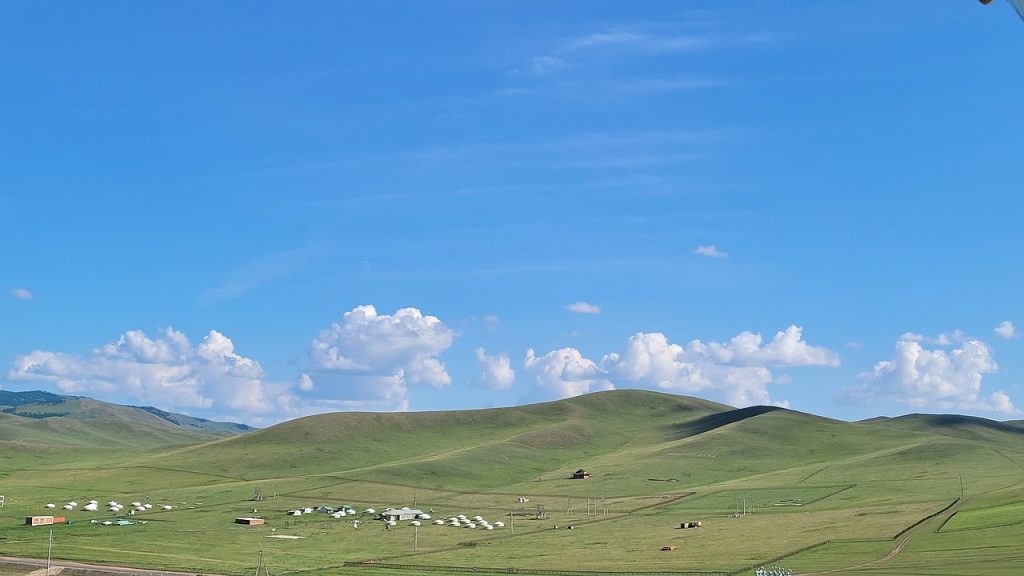
The Mongols come from the grasslands that stretch across what is now Mongolia and the northern edge of China, a belt of open steppe that has been home to horse-riding herders for thousands of years. Long before the Mongols themselves stepped into history, this land had produced wave after wave of nomad powers, from the Xiongnu who troubled the early Chinese emperors to the Turks and others who rose and scattered across the same grass. The Mongols were heirs to a very old way of life.
Their own beginnings are half history and half legend. In the centuries before their sudden rise, the Mongols were one of many scattered tribes on the eastern steppe, herding, hunting and raiding, sometimes squabbling among themselves and sometimes serving as auxiliaries to stronger neighbours. They spoke a Mongolic language, they followed their herds across the seasons, and there was little in their early obscurity to suggest that they would one day rule from Korea to Hungary.
What changed everything was the arrival of one man in the late twelfth century, a boy born into hardship and clan warfare who would grow up to unite the fractious tribes of the steppe under a single banner. Before him the Mongols were a people; after him they were an empire. His genius was not only military but organisational, welding quarrelsome clans into a disciplined nation loyal to him rather than to their old chiefs, and that unity was the true engine of everything that followed.
It is worth holding on to the fact that the herding life came first and outlasted the conquest. The empire was the exception, an astonishing burst of energy that reshaped the map for a couple of centuries and then receded. The steppe, the herd, the horse and the tent were the constant, the deep structure of Mongol existence that was there long before Genghis Khan and is there still today. To understand the Mongols you have to see the herder behind the horseman.
The Name That Shook the World
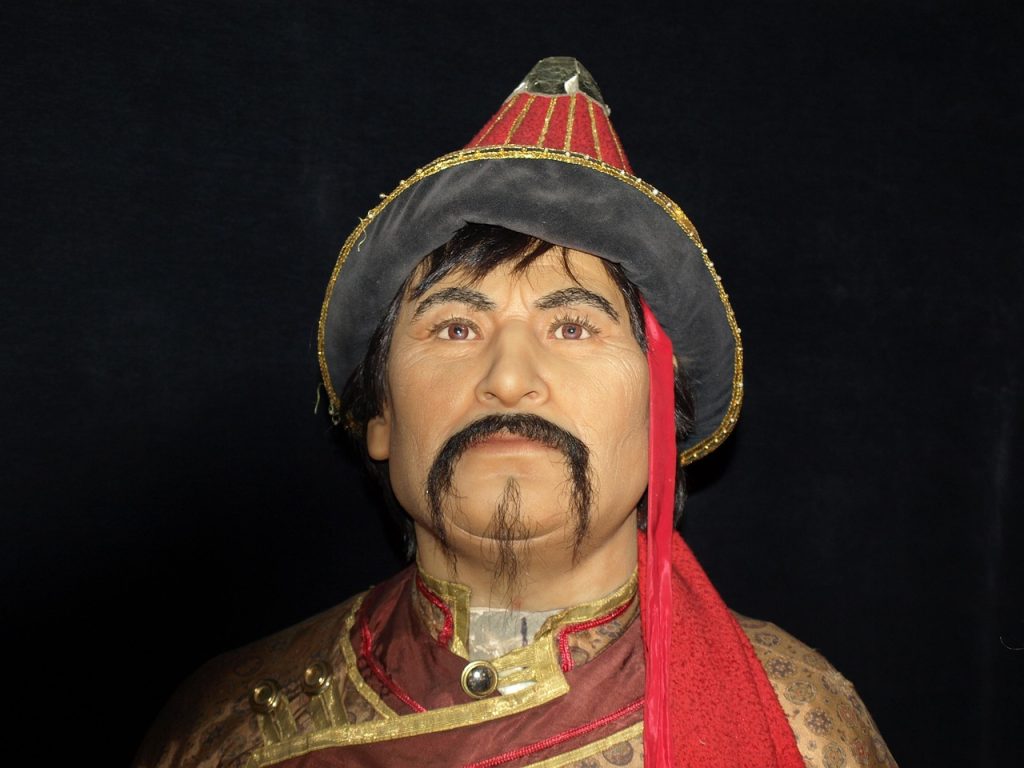
The name Mongol was originally that of a single tribe, one group among many on the eastern steppe. When Genghis Khan united the tribes, he extended his own people’s name to the whole confederation, so that Tatars, Merkits, Keraites and the rest were all folded into a single Mongol nation. In this sense the Mongol people were quite literally created by an act of political will, a nation assembled out of many tribes and given one name to march under.
That name then travelled the world on the backs of the fastest cavalry in history. To the peoples they conquered the Mongols were often called Tatars or Tartars, a term that got hopelessly tangled with Tartarus, the classical hell, until frightened Europeans half-believed the horsemen had ridden up out of the underworld. The confusion says everything about the terror the name inspired: for a generation, Mongol meant the end of the world arriving on horseback.
The title that towers over all of this is Genghis Khan, or more properly Chinggis Khan, which was not a personal name at all but a title of supreme rulership granted to a man born Temujin. What exactly Chinggis meant is still argued over, with guesses ranging from oceanic or universal to fierce, but the sense was clear enough: this was the khan of everything, the universal ruler. The man made the title, and the title has outlived nearly every other name of his age.
Today the Mongols carry their name proudly and with a certain complicated pride, because it is bound up with a conqueror the rest of the world remembers mainly for destruction. Within Mongolia, Genghis Khan is the father of the nation, his face on the money and his name on the airport and the beer; outside it, he is often a byword for slaughter. Living with a name that means glory at home and terror abroad is part of the modern Mongol condition.
A Script That Runs Downward
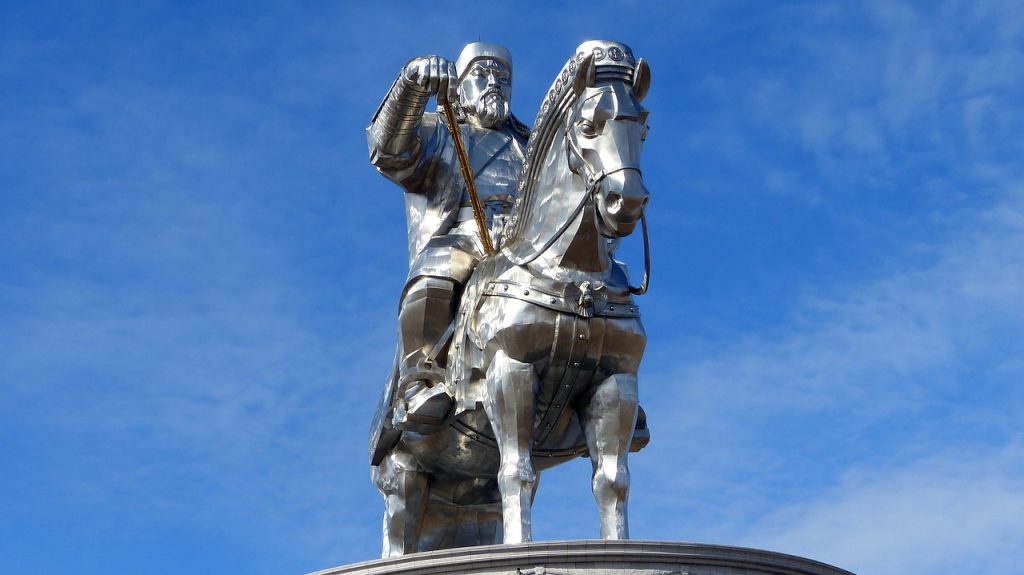
The Mongolian language belongs to the Mongolic family and is spoken, in various dialects, by the Mongols of the independent country, of China’s Inner Mongolia, and of pockets in Russia. It is the everyday tongue of the steppe, rich in words for animals, colours of horses, kinds of weather and the fine gradations of a herding life that a farming or city language never needed to name. To speak Mongolian well is to carry a whole vocabulary of the grassland.
Its most beautiful feature is its traditional script, one of the few writing systems in the world written vertically, in columns that run from top to bottom and march across the page from left to right. Adapted centuries ago from an older Central Asian alphabet, this flowing, spindly script curls down the page like a vine and remains one of the most distinctive sights in the region. It has been in use, in one form or another, since the days of the empire itself.
Politics split the Mongols’ writing in two. In the independent state of Mongolia, the twentieth century brought the country firmly into the Soviet orbit, and the old vertical script was set aside in favour of a Cyrillic alphabet, the same used for Russian with a few extra letters. Meanwhile in China’s Inner Mongolia the traditional vertical script was kept, so that today the two great communities of Mongols write their shared language in two entirely different systems.
That split has become a live issue. Independent Mongolia has been moving to revive the traditional vertical script alongside Cyrillic, treating it as a piece of reclaimed heritage, while in Inner Mongolia the place of Mongolian in schools has become a sensitive matter of language rights and identity. A script is never just a way of recording sounds; it is a flag, and the question of how the Mongols write their language carries a weight far beyond the classroom.
An Ocean of Grass

The Mongol homeland is defined by one overwhelming feature: grass, in quantities the human eye struggles to take in. The steppe rolls away in gentle waves to a horizon that never seems to arrive, treeless, enormous and open to a sky that dominates everything beneath it. It is a landscape that teaches distance and self-reliance, where a herder might ride all day without meeting another soul, and it has shaped the Mongol character as surely as the sea shapes a sailor’s.
But the grassland is only part of it. To the south the steppe dries into the Gobi, a vast cold desert of gravel and scrub where Bactrian camels replace horses and life clings to scattered oases and hardy scrub. To the north and west rise forested mountains and cold lakes, and everywhere the land sits high and exposed, swept by winds that carry no obstacle to slow them. It is beautiful and it is unforgiving in almost equal measure.
The climate is one of brutal extremes. Summers can be warm and green, briefly generous, but winters are savage, with temperatures plunging far below freezing for months and the ever-present danger of the dzud, a disastrous winter that kills livestock in their millions and can ruin a herding family in a single season. Life here has always been a gamble against the weather, and the Mongols learned to live lightly, ready to move at need and to bear what could not be moved away from.
This homeland is now cut by borders. The heart of it is the independent nation of Mongolia, but a very large Mongol population lives to the south in China’s Inner Mongolia region, and smaller communities live in Russian Siberia. The grass does not recognise these lines, and neither, in their hearts, do many Mongols, for whom the steppe is a single homeland regardless of which flag flies over which stretch of it. The land is older than the maps.
The Herd, the Horse, and the Felt Tent
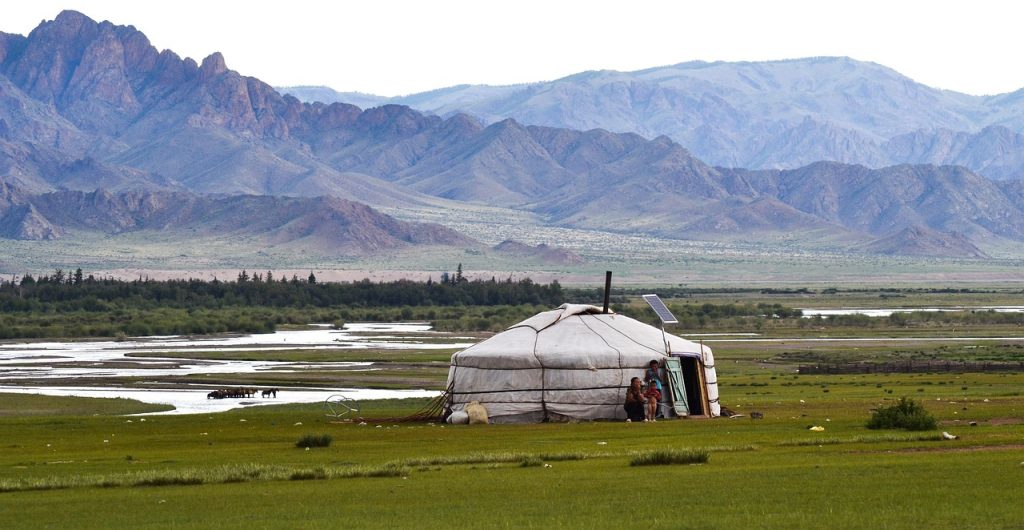
The classic Mongol life is pastoral nomadism, a way of living built entirely around herds of animals moved across the grassland in search of pasture and water. The Mongols speak of five kinds of livestock, the snouts of the steppe: horses, cattle, sheep, goats and camels, and a family’s wealth and survival were measured in these animals rather than in land, which no one owned and everyone used. The herd was the bank, the larder and the pension all at once.
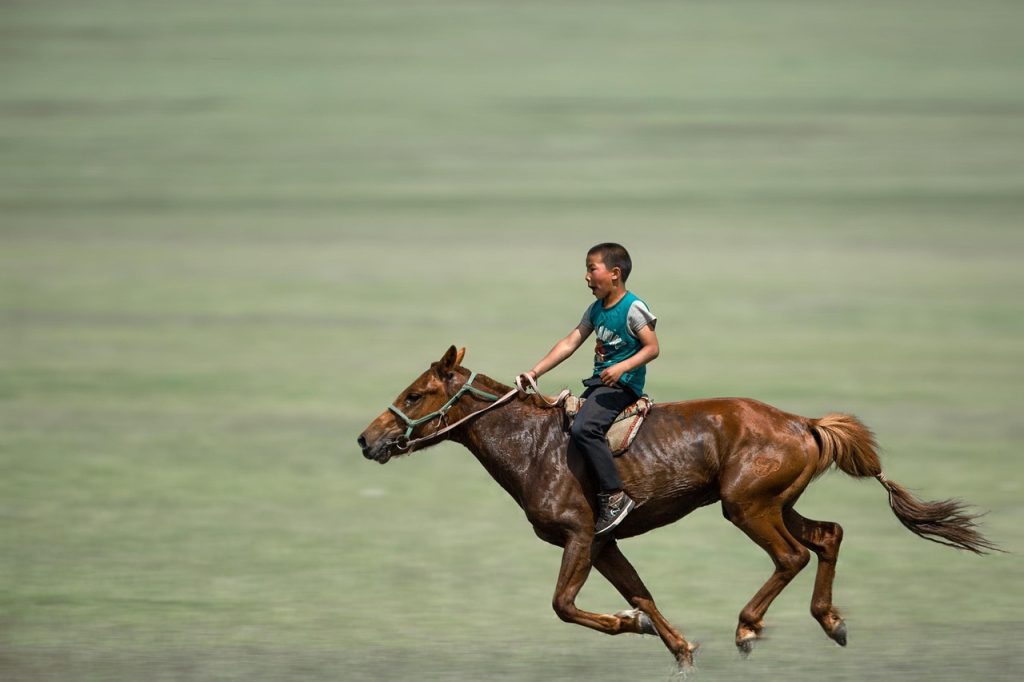
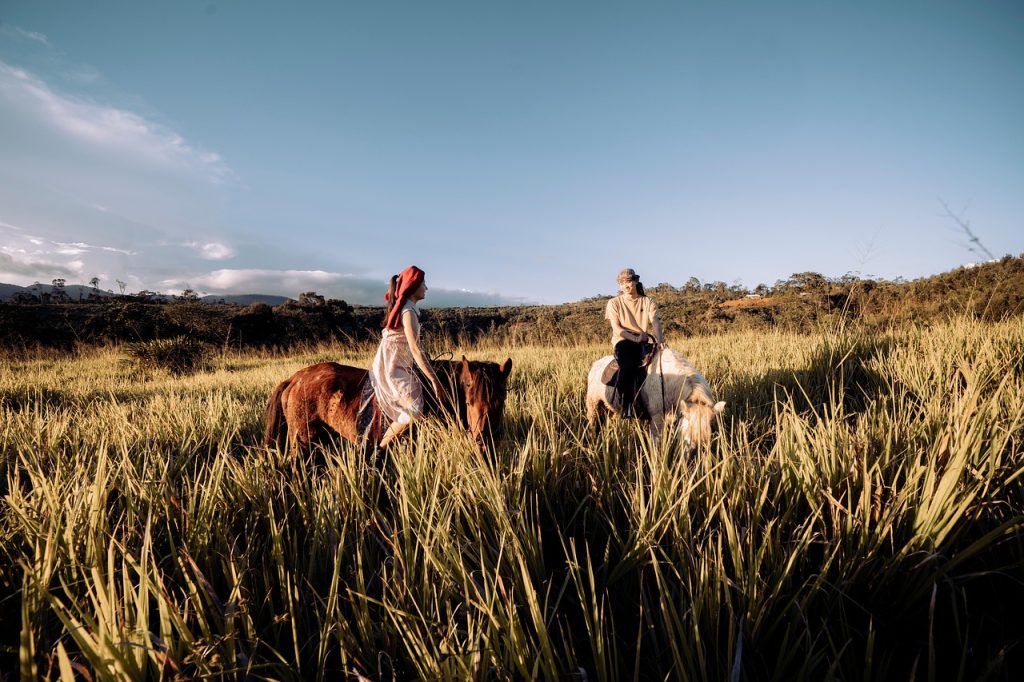
At the centre of everything stood the horse. Mongol children learned to ride almost before they could walk, and the horse was transport, tool, companion and, in war, weapon. It was said that a Mongol without a horse was like a bird without wings, and the mounted archer, able to shoot accurately at a gallop, was the terror of the medieval world. Even in peace the horse defined the Mongol as a person of movement, at home in the saddle across enormous distances.
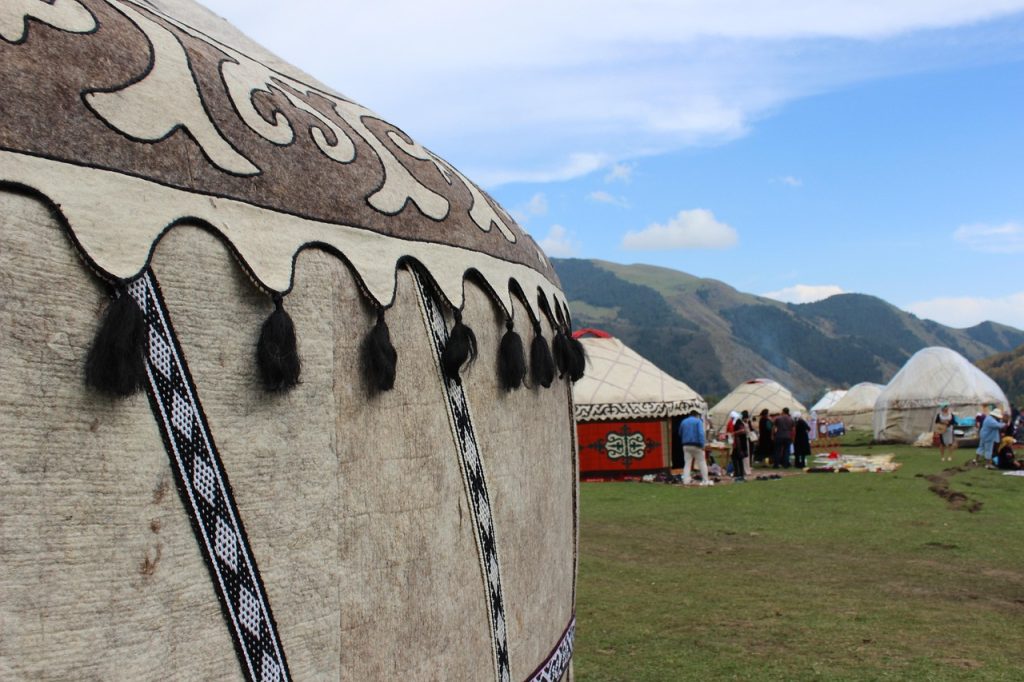
The home that matched this life was the ger, the round felt tent known abroad by its Turkic name, the yurt. A lattice of wood, a covering of thick felt made from the wool of the flocks, and a smoke hole at the top: it could be struck, packed onto animals and raised again in an hour or two, warm in the killing winter and cool in summer. It was a masterpiece of design refined over millennia, a whole house that travelled with the herd.
This was not a life of poverty but of a different kind of wealth, mobile rather than fixed. A prosperous herding family moved several times a year between seasonal pastures, following an ancient rhythm, and carried its entire world with it. The nomad looked at the settled farmer, tied forever to one patch of soil, with a certain pity, and the farmer looked back at the nomad with a certain fear. It was one of the oldest divisions in human history, and the Mongols lived on the free side of it.
Clans, Khans, and the Family Circle
Traditional Mongol society was organised by kinship, in clans and tribes that traced descent through the male line and gathered under chiefs and, above them, khans. Loyalty ran along these lines of blood and allegiance, and the endless business of steppe politics was the making and breaking of alliances between clans, sealed by marriage, oath and shared campaigns. Genghis Khan’s revolution was partly to cut across this, promoting men by merit and loyalty to him rather than by birth.
The basic unit, as always, was the family and its herd, and within it there was a clear division of labour. Men handled the horses, the hunting, the heavier herding and the fighting; women ran the ger, milked the animals, made the felt and dairy, and held the domestic economy together. Mongol women had a reputation for toughness and relative independence that struck outside observers, managing the camp for long stretches while the men were away, and some rose to real political power behind the scenes of the empire.
Hospitality was not a courtesy but a law of survival. In a land of enormous distances and deadly winters, to turn a traveller away from your ger could be a death sentence, so custom demanded that any visitor be fed, warmed and sheltered without question. A stranger could ride up to a tent, be given food and a place by the fire, and continue on his way, and the same would be done for the host when he in turn was on the road. The steppe ran on this mutual trust.
Above the clans, when a strong leader arose, the Mongols could assemble something larger: a kurultai, a great assembly of chiefs that could acclaim a khan and decide on war and peace. It was through such an assembly that Temujin was raised up as Genghis Khan, and through them that his successors were, in theory, chosen. This capacity to gather from scattered clans into a single decisive body was the political secret that turned herders into the masters of a continent.
From Sky Worship to the Yellow Faith

The oldest Mongol religion was a form of shamanism centred on the worship of the Eternal Blue Sky, Tengri, the vast heaven that arched over the steppe. Alongside the sky stood spirits of earth, mountain, river and ancestor, and between the human world and these powers moved the shaman, who could fall into trance, heal, divine and carry messages to the other world. It was a faith perfectly suited to a people who lived under that immense open sky every day of their lives.
The empire, remarkably, was religiously tolerant on principle. Genghis Khan and his heirs let their subjects keep their own faiths and exempted priests of every religion from taxes, entertaining Buddhists, Muslims, Christians and others at their courts and playing them off against one another. This openness was partly policy and partly the shamanic instinct that many roads might lead to the powers above, and it made the Mongol court, for a time, one of the great crossroads of the world’s religions.
In the end it was Tibetan Buddhism that won the Mongol soul. From the sixteenth century, in a famous meeting, a Mongol leader and a Tibetan lama forged an alliance, the lama receiving the title Dalai Lama and the Mongols embracing his school of Buddhism, sometimes called the Yellow Faith. Monasteries spread across the steppe, absorbing a large share of the male population as monks, and Buddhism reshaped Mongol life so thoroughly that the fierce warrior culture of the empire gave way to something far more peaceable.
Then came the hammer. In the twentieth century, communist rule in both Mongolia and China turned violently against religion; monasteries were destroyed, monks were killed or forced out of their robes, and the visible practice of Buddhism was nearly wiped out. Since the end of communist restrictions, both Buddhism and the old shamanism have revived, temples have reopened, and Mongols have gone back to the sky and the Buddha alike. Faith on the steppe proved harder to kill than its persecutors hoped.
Horses, Wrestling, and the Long Song
If the Mongols have a national festival of their own traditions, it is the Naadam, the games built around the three manly sports of wrestling, horse racing and archery. Mongol wrestling, fought in a distinctive costume with an eagle dance to open and close each bout, is a test of raw strength and skill; the horse races are cross-country marathons ridden by children over enormous distances; and archery preserves the skill that once made the Mongols invincible. Together they are the living memory of the warrior steppe.
Music carries just as much of the culture. The most haunting Mongol art is khoomei, the throat singing in which a single singer produces a low drone and, above it, a high whistling overtone, seeming to sing two notes at once. Alongside it stands the long song, urtiin duu, with its vastly drawn-out notes that seem to stretch like the horizon itself, and the morin khuur, the horse-head fiddle whose two strings and carved scroll make it the emblematic instrument of the nation.
Horsemanship threads through all of it, because to the Mongols riding is not a sport bolted onto life but life itself. The skills of the saddle, of handling and breeding and racing horses, of the lasso pole used to catch animals from horseback, are passed down from earliest childhood and remain a source of deep pride. A people who conquered the world from the saddle have never quite climbed down from it, and the horse remains the truest symbol of who they are.
These traditions have become, inevitably, markers of national identity, performed at festivals and for visitors as much as lived day to day. But unlike some folk revivals, the Mongol ones rest on a base that is still genuinely alive: real herders still ride real horses across real grassland, children still race in the Naadam, and throat singers still learn from masters. The performance and the reality have not yet parted company, which is more than many peoples can say.
What the Nomad Made by Hand
Nomad craft is shaped by a hard rule: everything a herder owns must be portable, durable and useful, because it will be packed onto an animal and carried across the steppe. This ruled out heavy furniture and fragile ornament and favoured instead the working arts of felt, leather, wood and metal, all bent toward a life on the move. Mongol craft is the beauty of the practical, ornament wrapped around objects that must first of all do a job.
Felt was the master material, made by beating and rolling the wool of the flocks into thick sheets that covered the ger, lined the floor and became boots, mats and bags. Leatherwork turned the hides of the herd into harness, saddles, containers and clothing, and the Mongol saddle, high and sturdy, was a piece of engineering as much as a craft. These were not luxuries but the very fabric of survival, made by hand from the animals the family already kept.
Where wealth allowed, the craft turned to ornament: silver-chased saddles and bridles, elaborate jewellery and headdresses for women that could carry a family’s portable fortune in precious metal and stone, and finely decorated snuff bottles and knives. The empire, drawing skilled artisans from across the conquered world, produced dazzling metalwork and textiles, and the taste for silver and rich ornament on the tools of the riding life long outlived the empire that first indulged it.
Buddhism added a whole further layer of sacred craft: the painting of thangkas, the casting of bronze images, and the building and decoration of monasteries that became the great artistic centres of the later steppe. Much of this was destroyed in the twentieth century, but the skills were not entirely lost, and today Mongol craftspeople work again in felt and leather and silver, making both for their own use and for a world that has discovered the spare beauty of the nomad’s design.
Meat, Milk, and the Milky Liquor
Mongol food is the food of the herd, and it divides neatly into two great categories the Mongols themselves recognise: the red foods, meaning meat, and the white foods, meaning dairy. In a land where crops barely grow, the animals provide almost everything, and the Mongol diet is one of the most purely pastoral on earth, built from mutton, beef, horse and camel on one side and an astonishing range of milk products on the other.
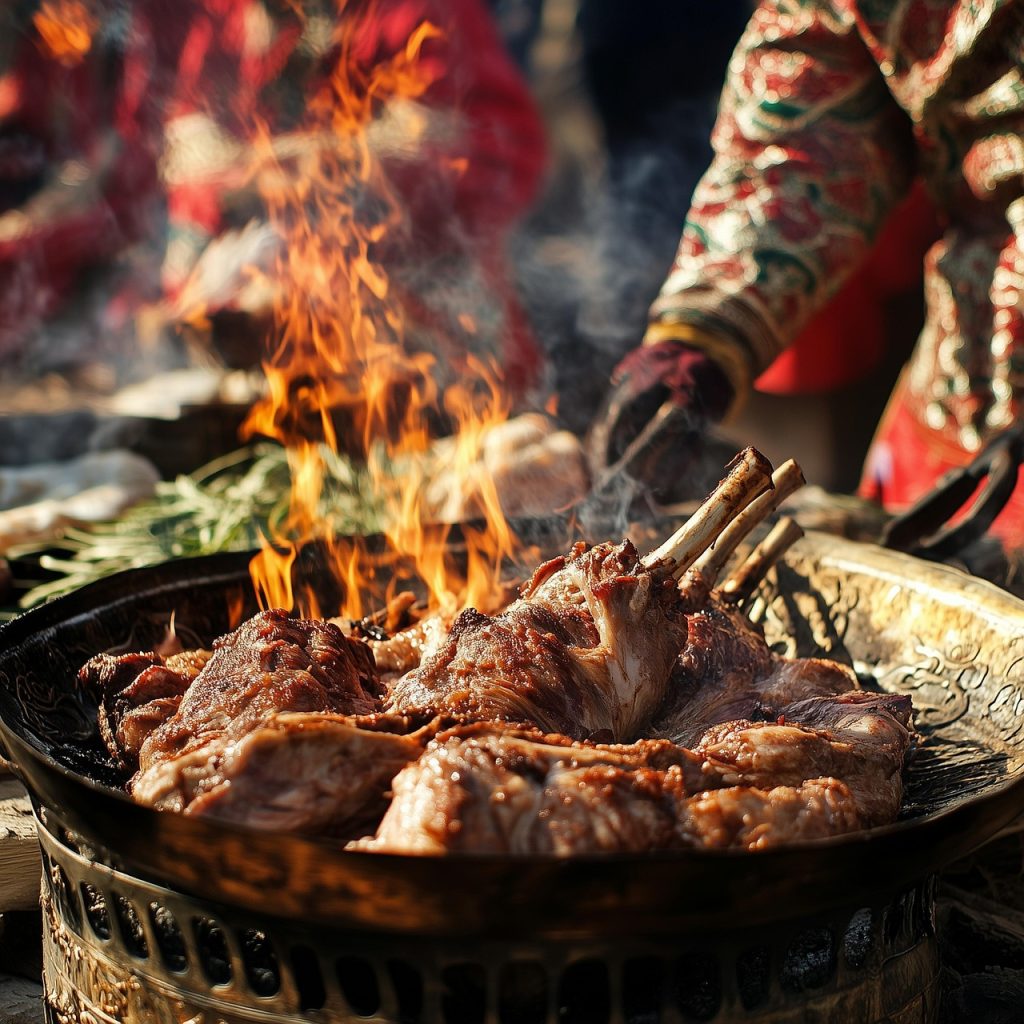
Meat is treated with a directness that suits the climate. Mutton is the staple, boiled or roasted with little seasoning, and one famous method, khorkhog, cooks chunks of meat in a sealed container with fire-heated stones, the hot stones passed hand to hand afterwards for luck. Little of the animal is wasted, and the deep cold of winter serves as a natural freezer, letting a family live through the lean months on the meat of animals slaughtered in the autumn.
The white foods are where the real variety lies. Mare’s, cow’s, sheep’s, goat’s and camel’s milk are turned into an array of products: fresh and dried curds, cheeses, clotted cream, yoghurt and butter, many of them dried hard to survive the journey and the season. The most celebrated is airag, fermented mare’s milk, a mildly alcoholic, sour, fizzy drink that is the national beverage and a fixture of hospitality, offered to guests and drunk by the bowlful at summer gatherings.
Salty milk tea, suutei tsai, warms every ger, brewed with milk and salt and sometimes a little grain or fat, drunk all day long and offered to every visitor. Onto this ancient base the modern world has piled the usual additions, flour for noodles and dumplings, vegetables where they can be had, and the food of the city, but the deep structure of the Mongol table remains what it has always been: what the five kinds of animal can be persuaded to give.
The Days the Steppe Gathers
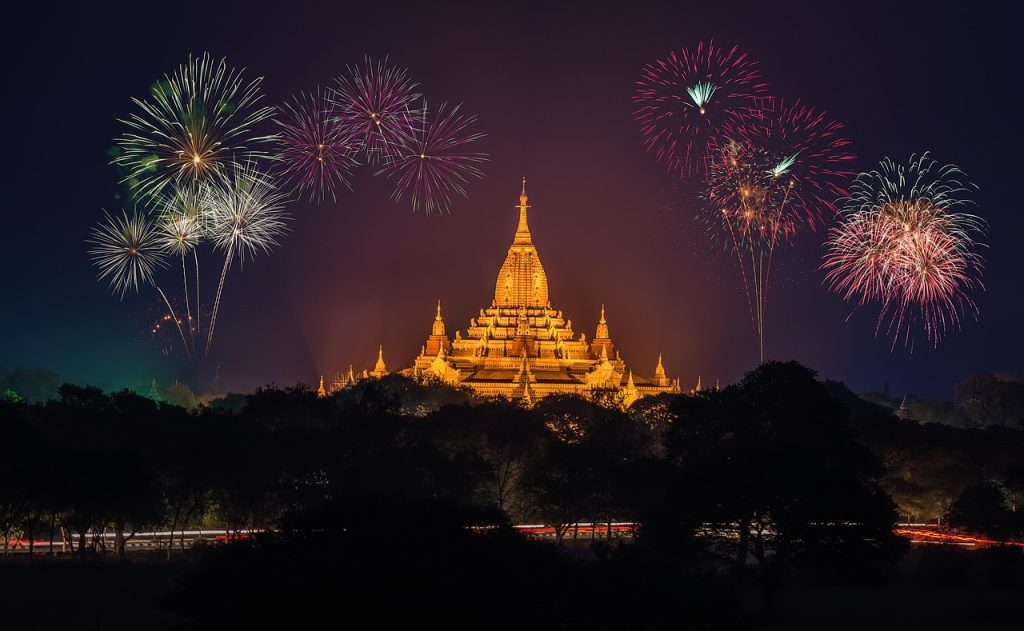
The great festival of the Mongol year is Naadam, held in high summer, when the scattered people of the grassland gather to compete and celebrate in the three manly games of wrestling, horse racing and archery. Once tied to religious and military assemblies, Naadam is now the national festival of Mongolia, a blaze of colour, costume and sport that draws the whole nation together and lets the herding life show itself off at its proudest. To watch Naadam is to see the steppe remember what it is.
The other pillar of the calendar is Tsagaan Sar, the White Month, the lunar new year celebrated at the tail end of the brutal winter. It is a festival of family, reconciliation and above all food, when households pile the table with dairy and stacked biscuits and boiled mutton and receive a stream of visiting relatives with formal greetings and small gifts. Surviving another winter is itself worth celebrating, and Tsagaan Sar marks the community’s collective relief and renewal.
Layered over these are the observances of Buddhism, the temple festivals and ceremonies that returned with the revival of the faith, and the older shamanic rites tied to sacred mountains and the ovoo, the cairns of stones raised at high and holy places, which travellers circle and add a stone to for luck and blessing. The steppe has always mixed the practical, the sacred and the festive, and its gatherings do all three jobs at once.
These festivals matter especially now because they are the moments when a scattered and increasingly urban people reassembles itself. As Mongols move to the cities and the herding life thins out, Naadam and Tsagaan Sar become the great occasions when the nation performs its own identity and remembers the grassland even from an apartment block. The festival is the thread that keeps the modern Mongol tied to the ancient one, and it is pulled tight once a year.
The Empire That Swallowed a Continent

The central event of Mongol history is the empire, and it remains almost impossible to exaggerate. From his unification of the tribes around the year 1206, Genghis Khan and his successors conquered an area running from Korea and China across Central Asia to Persia, Russia and the doorstep of Western Europe, the largest contiguous land empire the world has ever known. It was assembled in a few decades by a people of perhaps a million souls, on horseback, and it redrew the map of Eurasia.
The cost was staggering. The conquests were accompanied by slaughter and destruction on a scale that scarred whole regions for generations, and the Mongol name became a synonym for terror from China to Christendom. Yet the empire also did something else: by uniting so much of Asia under one rule, it opened the roads, and for a century trade, travellers, technologies and ideas flowed across the continent along the Mongol peace as never before. Terror and connection came in the same package.
Empires built so fast rarely last, and this one fractured into rival khanates that gradually lost their Mongol character, the rulers in China becoming the Yuan dynasty, those in Persia turning Muslim, those on the Russian steppe fading over centuries. By the time the dust settled, the Mongols had retreated to their grassland heartland, and there they eventually fell under the control of the very peoples they had once ruled, absorbed into the Qing empire of the Manchus for centuries.
The modern shape emerged only in the twentieth century. Outer Mongolia broke free as China’s empire collapsed and, with Soviet backing, became the world’s second communist state, enduring purges that destroyed its monasteries and much of its old order before winning full democracy and independence in 1990. Inner Mongolia, meanwhile, remained within China as an autonomous region, its Mongols now a minority in their own homeland. One people, two very different modern fates.
The Mongols in the Modern World
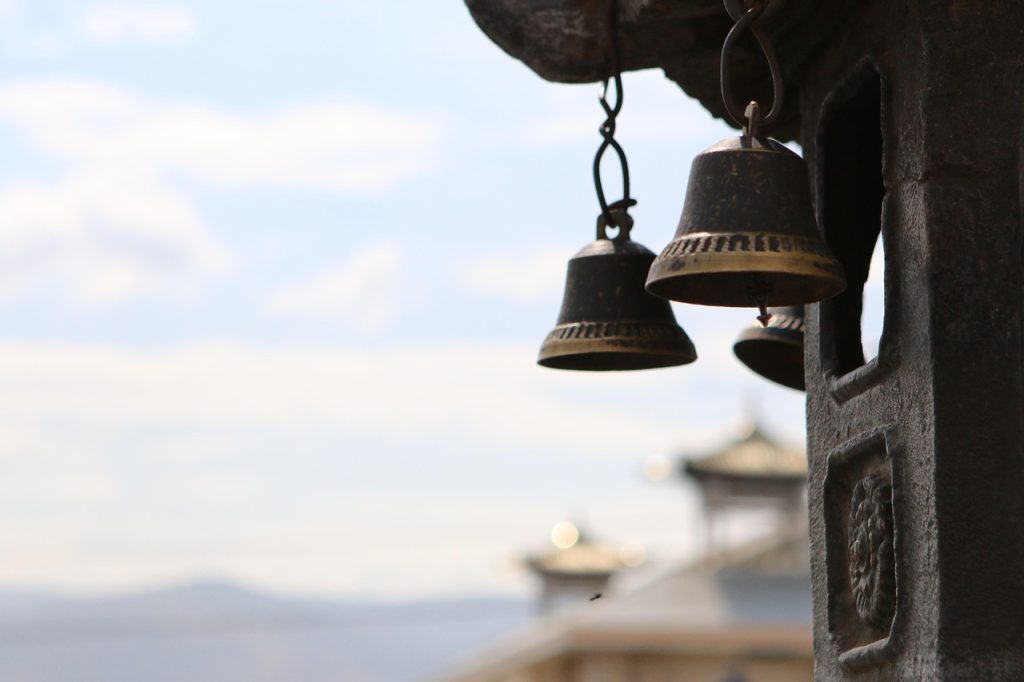
Modern Mongol life is caught between the ger and the tower block. In independent Mongolia, roughly half the population now lives in the capital, Ulaanbaatar, a fast-growing city ringed by districts of gers where herders who have left the land, often driven off by disastrous winters, camp on the edge of the modern economy. The country rides a rollercoaster of mining wealth dug from beneath the steppe, and the tension between old herding life and new urban money defines the age.
In China’s Inner Mongolia the Mongols face a different pressure, living as a minority far outnumbered by Han settlers, with their language and traditional life under strain and questions about schooling and cultural rights sitting close to the surface. Across both communities the herding population is shrinking as the young move to the cities, and the great question is whether the nomadic way of life that made the Mongols can survive the twenty-first century, or whether it will become mainly a heritage performance.
Yet the culture is strikingly alive. The traditional script is being revived, Naadam and Tsagaan Sar are celebrated with real feeling, throat singing and the horse-head fiddle have found audiences around the world, and Genghis Khan has been reclaimed as a national hero rather than a global villain. A small nation with a vast history, the Mongols carry their identity with unusual confidence, secure in the knowledge that for one astonishing moment they were the centre of the world.
The Mongols built their identity on the horse and the open steppe, and they were not the only ones. Away to the west, where the grassland runs on past the deserts of Central Asia toward the mountains, live another people of herds and horses, of felt tents and fermented mare’s milk, who share so much of the nomad’s world and yet turned toward Islam rather than the Buddha, and who tamed the golden eagle to hunt from the fist. To follow the grass westward is to arrive among the Kazakhs.
Wander a Little Further Through China
The Mongols are one thread in an enormous tapestry. I have been slowly working my way through the many peoples who call this country home, and if you have the time, any of these makes a fine next stop:
- A Fifth of Humanity, the Story of the Han Chinese
- A Civilization of the Silk Road Oases, the Story of the Uyghurs
- The Giants China Overlooks, the Story of the Zhuang People
- Chinese in Everything but Faith, the Story of the Hui
- Conquerors Absorbed by Their Conquest, the Story of the Manchus
- A Civilization on the Roof of the World, the Story of the Tibetans
- A History Sewn Into Silver and Cloth, the Story of the Miao
- Carriers of Fire and an Ancient Script, the Story of the Yi
- A People Who Nearly Vanished Into the Crowd, the Story of the Tujia
- Southeast Asia Within China’s Borders, the Story of the Dai
- Builders of Kingdoms by a Mountain Lake, the Story of the Bai
- The People Who Write in Pictures, the Story of the Naxi
You May Like
The Zaza, a Mountain People of Eastern Anatolia


3 thoughts on “The Horsemen Who Conquered the World, the Story of the Mongols”