On the shore of a great mountain lake in the far southwest of China lies one of the loveliest towns in the country, an old walled city of whitewashed houses set between the shining waters and a wall of snow-capped peaks. This is Dali, and it is the ancient heart of the Bai, a people whose civilization once ruled a kingdom that rivaled the Tang empire itself, and whose elegant white-walled villages still cluster along the lake as they have for many centuries.
The Bai are one of China’s minority peoples, concentrated around their historic homeland in the Dali region, and they are among the most cultured and, in some ways, most Chinese-influenced of the southwestern nations. Skilled builders, traders, and artisans, famous for their white dress and their whitewashed courtyard houses, for their tie-dyed cloth and their elaborate tea ceremony, the Bai built a sophisticated urban civilization by their beautiful lake long before they were drawn into the Chinese fold.
This profile explores the world of the Bai: their origins and the meaning of a name that speaks of the color white, their language shaped by long contact with Chinese, the exquisite homeland of lake and mountain they inhabit, the old life of farmers, fishers, and traders, the structure of their society, their blend of Buddhism and local cults, their distinctive dress and architecture, their famous crafts, their celebrated tea and cuisine, the great March Fair and other festivals, the history of the kingdoms they built, and their situation in China today.
- An old civilization by the lake
- The people of white
- A language between two worlds
- Between the lake and the snow mountains
- Farmers, fishers, and traders
- Villages of whitewashed courtyards
- Buddhism and the cult of the Benzhu
- White dress and elegant architecture
- Tie-dye, marble, and the artisan’s skill
- Three-course tea and the Bai table
- The March Fair and the Bai year
- Nanzhao, Dali, and the road of history
- The Bai in China today
An old civilization by the lake

The Bai are an old people of the southwestern highlands, long settled around their historic homeland in the region of a great mountain lake. Their origins are complex, involving a blending over the centuries of indigenous peoples of the region with influences and, likely, settlers from the Chinese world to the north and east, producing in time the distinctive Bai people and culture.
What is clear is that the ancestors of the Bai developed, in their beautiful lakeside homeland, one of the most advanced civilizations of the southwestern region. By the early medieval period they had built cities, developed sophisticated agriculture and crafts, and organized themselves into states, culminating in the powerful kingdoms that would make the region a major power in the region for several centuries.
The Bai civilization was marked from early on by a fruitful blending of influences. Positioned on the trade routes that linked China, Tibet, and Southeast Asia, the Bai homeland was a crossroads, and Bai culture absorbed elements from all these directions while developing its own distinctive character, expressed in its architecture, its crafts, its religion, and its way of life.
From these roots emerged a people of notable cultural sophistication, urban, mercantile, and artistic, quite different from the herding and dry-farming peoples of the surrounding mountains. The Bai built a settled, prosperous civilization around their lake, and their long history as builders of kingdoms and cities sets them apart among the peoples of China’s southwest.
The people of white
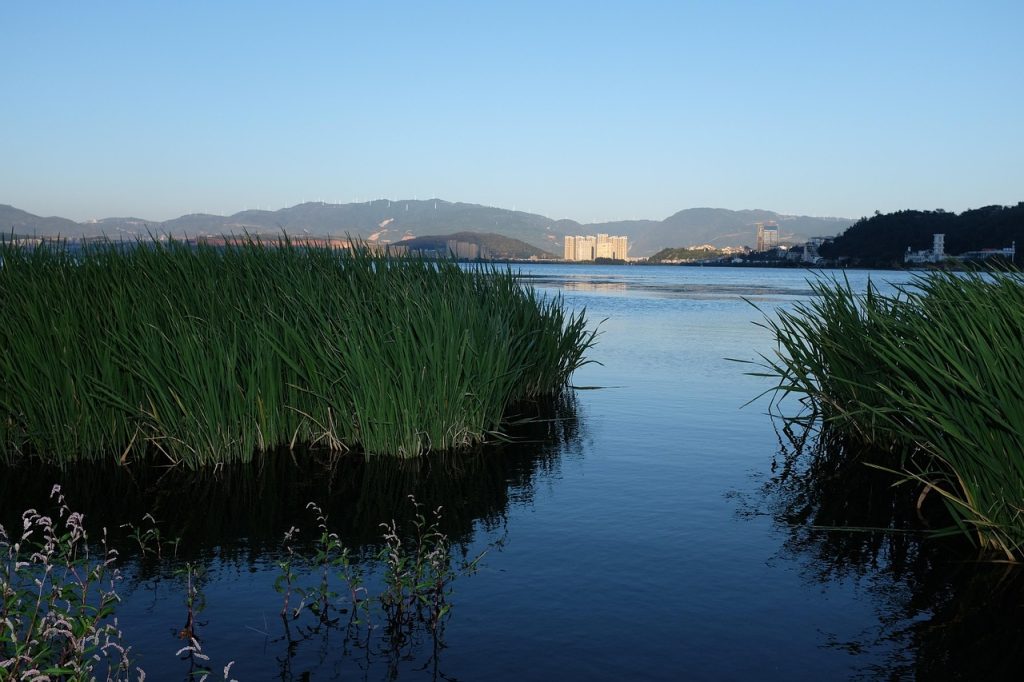
The name Bai means white, and it reflects a cultural preference of the people, who traditionally favored the color white in their dress and in the whitewashed walls of their houses. This love of white is a distinctive marker of Bai identity, giving their villages and their traditional costume a characteristic clean, bright appearance.
The self-name of the Bai likewise centers on this idea, the Bai referring to themselves with a term connected to whiteness and, by extension, to their own identity as a people. The association with white runs deep in Bai culture, an aesthetic and symbolic preference that has come to define the people in the eyes of others and themselves alike.
Historically, the Bai were known by various names in Chinese records, reflecting the different states they formed and the changing ways outsiders perceived them. The modern designation, centered on the name meaning white, was formally adopted in modern times, affirming the distinct identity of a people long recognized as culturally distinctive in the southwestern region.
So the name of the Bai is bound up with the color that pervades their material culture, from the white jackets of the women to the whitewashed, painting-adorned walls of their courtyard houses. It is a name that captures something essential about Bai aesthetics, a preference for brightness and clarity that gives their towns and villages their distinctive and beautiful character.
A language between two worlds
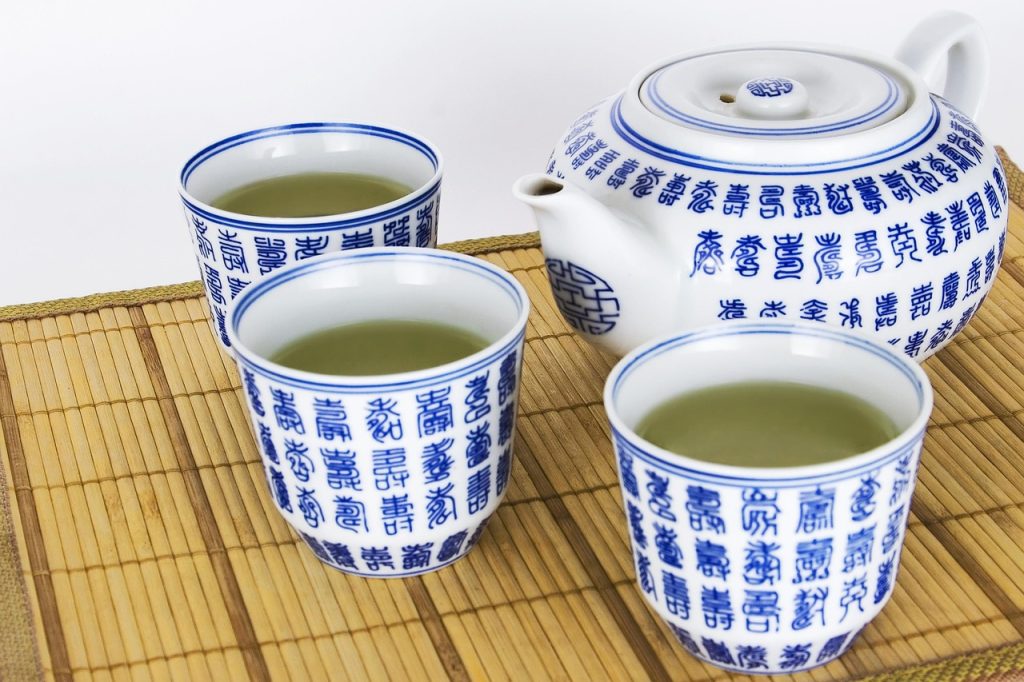
The Bai language is generally classified within the Tibeto-Burman branch of the Sino-Tibetan family, though its precise position has been much debated, for it has absorbed an enormous amount of Chinese vocabulary over the long centuries of contact and influence. So heavily has Chinese shaped the Bai language that scholars have differed sharply over its exact classification and history.
This deep Chinese influence on the Bai language reflects the long and close relationship between the Bai and the Chinese world. Positioned on the frontier and drawn early into the orbit of Chinese civilization, the Bai adopted much from their powerful northern neighbor, in language as in much else, while retaining a distinct tongue and identity of their own.
The Bai traditionally used Chinese characters for writing, both to write Chinese itself, which served as the language of administration and learning, and, in adapted ways, to represent their own language. This reliance on the Chinese script, rather than a wholly indigenous one, again reflects the depth of Chinese cultural influence on the sophisticated, literate Bai civilization.
Today the Bai language continues to be spoken by much of the population in the traditional heartland, though, as with other minority languages, it faces pressure from the dominance of Chinese in education, media, and public life. The language, poised between its Tibeto-Burman roots and its heavy Chinese overlay, is itself a monument to the Bai position between two worlds.
Between the lake and the snow mountains

The Bai homeland is one of the most beautiful landscapes in all of China, centered on a large, clear mountain lake set between a range of high, snow-capped peaks and the water’s edge. This spectacular setting, of shining lake, towering mountains, and fertile lakeside plain, has shaped Bai civilization and made the region famous for its scenery.
The lake provided fish and water and served as a highway for boats; the fertile plain along its shores offered rich farmland; and the mountains rising steeply behind provided timber, herbs, and the famous marble quarried from their slopes. This combination of lake, plain, and mountain gave the Bai homeland a rich and varied environment supporting a dense and prosperous population.
The old city of Dali, set on the plain between the lake and the mountains, was the heart of this homeland and the capital of the kingdoms the Bai built. With its walls, its temples and pagodas, and its whitewashed houses, backed by the snow peaks and fronting the lake, it remains one of the most picturesque cities in China, a jewel of the southwestern highlands.
This exquisite homeland shaped every aspect of Bai culture, from the lakeside economy of farming and fishing, to the marble craft drawn from the mountains, to the whitewashed architecture set against the dramatic natural backdrop. The beauty of the Bai country has, in modern times, made it one of China’s premier tourist destinations, drawing visitors to the shores of the famous lake.
There is something telling in the fact that the Chinese word for marble comes from the name of the Bai homeland. It is a small linguistic monument to a larger truth: that the Bai were, for centuries, the makers and traders of beautiful things, their name attached to the very stone their mountains gave up. Few peoples have left so quiet yet so permanent a mark on the language of their giant neighbor.
Farmers, fishers, and traders
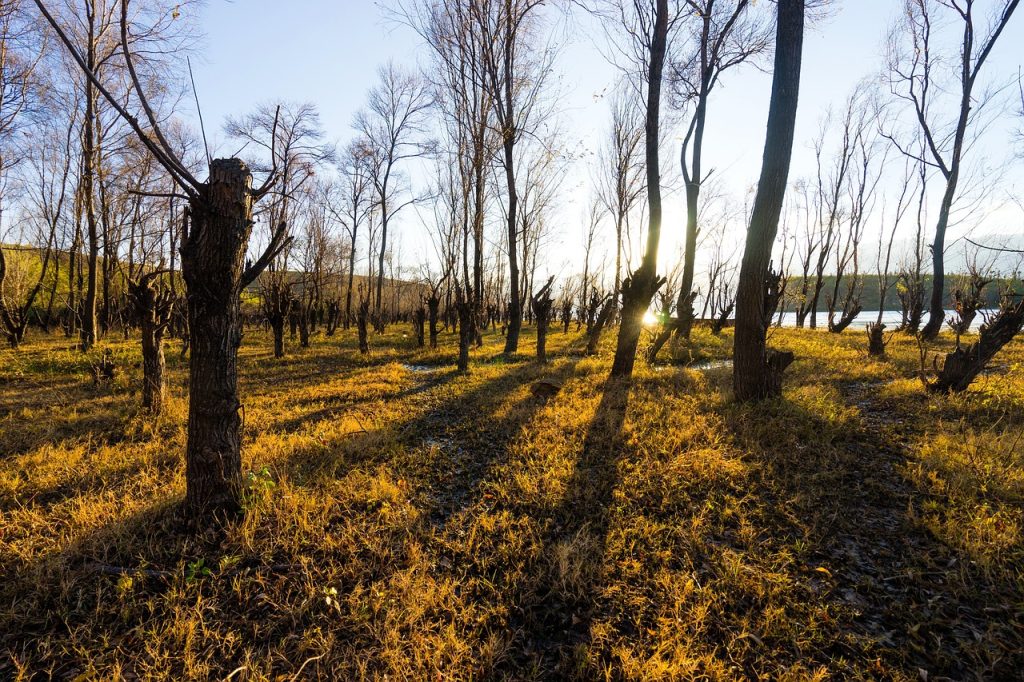
Traditional Bai life drew on the varied resources of their lake-and-mountain homeland. On the fertile plain along the lakeshore, the Bai practiced intensive agriculture, growing rice and other crops in well-watered fields, while on the lake itself, fishing provided an important supplement, with the Bai famous for their fishing traditions, including the use of trained cormorants to catch fish.
Beyond farming and fishing, the Bai were notable traders and artisans, and commerce played a significant role in their economy. Their homeland lay on important trade routes, and Bai merchants were active in the trade that linked the southwest to China, Tibet, and Southeast Asia, giving Bai society a mercantile character unusual among the peoples of the region.
Craft production was another pillar of the Bai economy, with the Bai renowned for their skills in building, stone-working, tie-dyeing, and other crafts. The marble of the mountains, the famous tie-dyed cloth, and the products of Bai artisans entered trade and enhanced the prosperity and reputation of a people known for their skill and industry.
This varied economy, combining productive agriculture, lake fishing, trade, and craft, supported the settled, prosperous, and relatively urbanized civilization the Bai built around their lake. It was an economy quite different from that of the surrounding mountain peoples, reflecting the Bai character as builders, traders, and artisans of a sophisticated lakeside society.
Villages of whitewashed courtyards
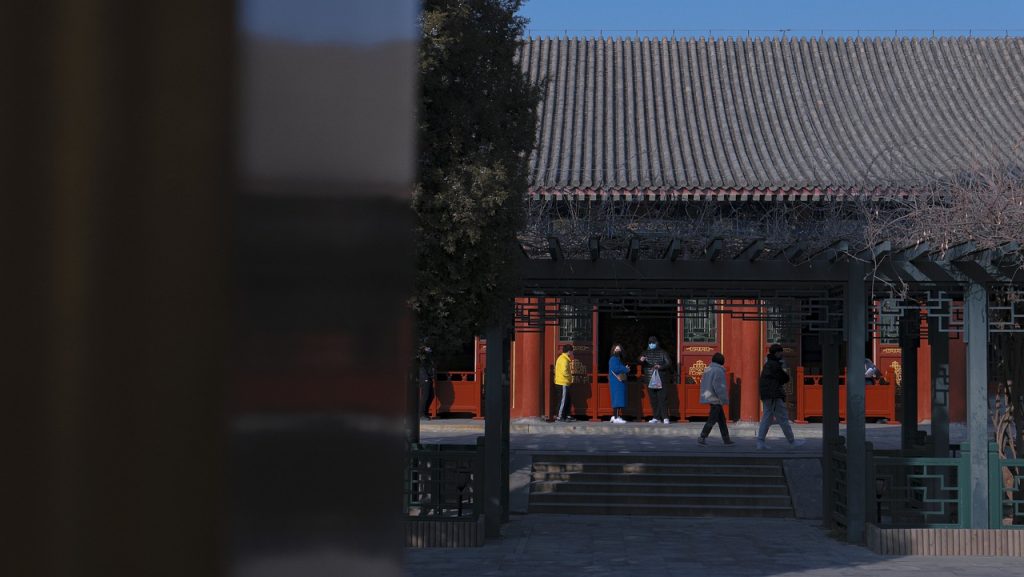
Bai society traditionally centered on the village and, in the towns, on a settled urban life unusual among the southwestern peoples. The characteristic Bai settlement was a village of whitewashed courtyard houses, often beautifully built and decorated, clustered on the lakeside plain or against the mountains, expressing the settled, prosperous character of Bai civilization.
The Bai courtyard house is a distinctive architectural form, typically built around one or more courtyards, with whitewashed walls adorned with paintings and calligraphy, and elaborately carved and decorated woodwork. These houses, reflecting both Chinese influence and distinctive Bai style, are among the finest expressions of the people’s building skill and their aesthetic sense.
Bai society was long shaped by its close relationship with the Chinese world and by the sophisticated, literate culture the Bai developed. Family and kinship structured social life, as elsewhere, while the mercantile and artisan character of the economy, and the urban life of the towns, gave Bai society a distinctive complexity and refinement.
This settled, prosperous, and cultured social order, expressed in the beautiful whitewashed villages and towns of the lakeside, set the Bai apart from the clan-based mountain societies around them. The Bai were people of the village and the town, of the courtyard house and the marketplace, heirs to an old urban civilization by their lake.
Buddhism and the cult of the Benzhu

The religious life of the Bai centers on a distinctive blend of Buddhism and a local cult of tutelary deities known as the Benzhu. Buddhism, which arrived early and flourished under the Bai kingdoms, is woven deeply into Bai culture, and the region is famous for its Buddhist monuments, above all the great pagodas that have stood near Dali for over a thousand years.
Alongside Buddhism, and in many ways more central to everyday village life, stands the cult of the Benzhu, the local protective deities. Each Bai village has its own Benzhu, a patron god or gods, worshipped at a village temple and honored with festivals and offerings. These deities, drawn from a great variety of figures, including local heroes, historical persons, and nature spirits, are the guardians of the community.
The worship of the Benzhu is one of the most distinctive features of Bai religion, a village-centered cult that binds each community to its own protective deity and marks the rhythm of local religious life. The festivals of the Benzhu, with their processions, offerings, and celebrations, are important occasions in the life of the Bai village.
This blend of Buddhism and the Benzhu cult, along with influences from Daoism and Chinese popular religion, gives Bai religion its distinctive character, at once cosmopolitan, in its Buddhism and Chinese elements, and intensely local, in the village cult of the protective deities. It reflects the Bai position at a cultural crossroads, absorbing wider influences while nurturing their own local traditions.
White dress and elegant architecture
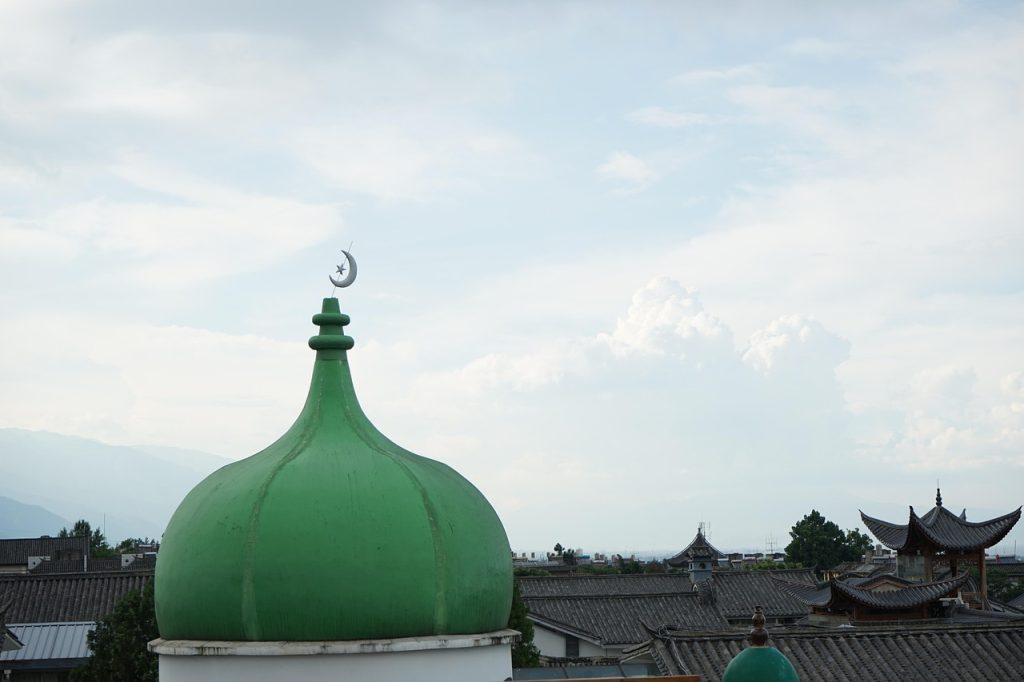
Bai traditional culture is marked above all by its distinctive aesthetic, centered on the color white and expressed in dress and architecture alike. The traditional costume, especially of the women, is elegant and graceful, featuring white as a dominant color, set off with bright trim and embroidery, and completed by distinctive headdresses that vary by region and mark a woman’s status.
The whitewashed courtyard house, adorned with paintings, calligraphy, and carved woodwork, is the architectural expression of the same aesthetic, and Bai skill in building and decoration is celebrated throughout the region. The harmony of white walls, grey tiles, and decorative painting, set against the dramatic backdrop of lake and mountain, gives Bai towns and villages their distinctive beauty.
Song and dance hold an important place in Bai custom, woven into the festivals and celebrations of the community, along with distinctive marriage and other life-cycle customs. The Bai are known for their refinement, their courtesy, and the cultured character of their traditions, reflecting the sophisticated civilization they built by their lake.
Together, the white dress, the elegant architecture, the song and dance, and the refined customs express the distinctive character of Bai culture, a culture of beauty, refinement, and a love of the bright and the clean. This aesthetic sensibility, pervading every aspect of Bai life, is one of the most attractive and distinctive features of this cultured lakeside people.
Tie-dye, marble, and the artisan’s skill
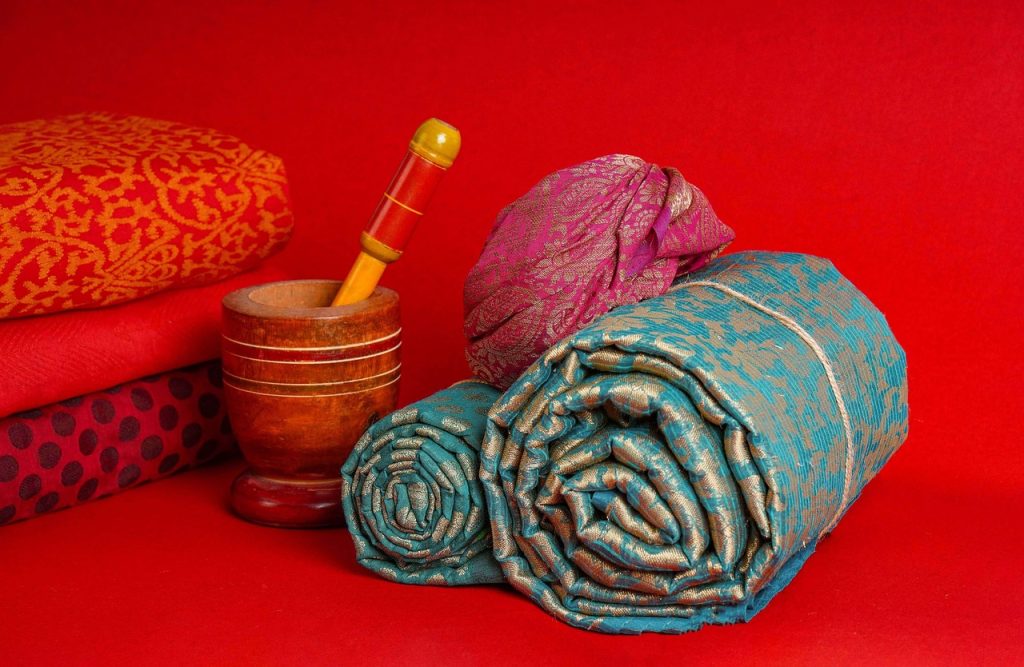
The Bai are renowned for their crafts, and among the most famous is their tie-dyed cloth, produced above all in the villages around the lake. Worked in the characteristic deep indigo blue and white, in intricate patterns created by binding the cloth before dyeing, Bai tie-dye is celebrated throughout China for its beauty and has become emblematic of the people.
Another famous Bai craft draws on the marble of their mountains, the stone quarried from the peaks behind Dali being so celebrated that the Chinese word for marble derives from the name of the place. Bai artisans work this beautiful stone, prized for its patterns that can resemble landscape paintings, into ornaments, screens, and works of art valued across China.
Building and decoration constitute another realm of Bai craftsmanship, the people being celebrated as skilled builders, carpenters, and decorators, whose talents adorned not only their own courtyard houses but structures throughout the region. Woodcarving, painting, and the other decorative arts flourished in the hands of Bai artisans.
These crafts, the tie-dye, the marble work, the building and decoration, reflect the artistic character of Bai civilization and its long tradition of skilled craftsmanship. Increasingly, as with other minority arts, Bai crafts, above all the famous tie-dye, have found new markets through the tourism that flows into their scenic homeland, sustaining traditions of great antiquity.
Three-course tea and the Bai table

Among the most celebrated of Bai customs is the three-course tea, an elaborate tea ceremony in which guests are served three successive cups, each with a distinct flavor, said to symbolize the stages and lessons of life. The first cup is bitter, the second sweet, and the third a complex blend, and the ceremony, accompanied by hospitality and often by song and dance, is a treasured expression of Bai culture.
Bai cuisine reflects the varied resources of the lake-and-mountain homeland, making abundant use of the fish of the lake, the produce of the fertile plain, and the herbs and products of the mountains. Fish dishes are naturally prominent, prepared in a variety of ways, alongside the rice, vegetables, and other foods of a settled agricultural people.
Like their neighbors, the Bai enjoy sour and spicy flavors, and their cuisine features distinctive local dishes and preparations, including cured and preserved foods and the products of the lake and mountains. The cuisine is that of a prosperous, settled people with access to varied and abundant resources, refined by the cultured character of Bai civilization.
The three-course tea, with its symbolic progression from bitter to sweet, captures something of the refinement and depth of Bai culture, its love of ceremony, hospitality, and meaning.
The three-course tea rewards a moment’s reflection, for it is more than a pleasant custom. In moving deliberately from a bitter first cup to a sweet second and a complex third, the ceremony offers a small parable of a life, hardship first, then reward, then the mingled, thoughtful taste of experience. That the Bai should have built so philosophical a ritual around a cup of tea says much about the reflective refinement of their culture.
Together with the fish of the lake and the varied dishes of the Bai table, it expresses the character of a cultured people living amid the abundance of their beautiful homeland.
The March Fair and the Bai year

The greatest festival of the Bai is the March Fair, a grand celebration and market held near Dali in the spring, which has been a major event for well over a thousand years. Originally connected with Buddhist observance, it grew into a vast fair drawing traders and visitors from across the southwest and beyond, combining commerce with celebration on a grand scale.
The March Fair is a time of trade, when merchants gather to buy and sell goods of every kind, from horses and medicines to crafts and produce, in a market of great antiquity and renown. But it is also a time of celebration, filled with horse racing, singing, dancing, and festivity, bringing the Bai and their neighbors together in a joyful annual gathering.
Beyond the March Fair, the Bai calendar is marked by the festivals of the Benzhu deities, celebrated village by village with processions and offerings to the local protective gods, along with the Buddhist observances and the seasonal celebrations shared with the wider Chinese world. Song and dance fill these gatherings, renewing the bonds of the community.
Through these festivals, above all the great March Fair, the Bai express and renew their culture and community, combining commerce, religion, and celebration in the manner characteristic of their mercantile, cultured civilization. The March Fair in particular, ancient, grand, and joyful, stands as a vivid symbol of the Bai and their long history as traders and builders by their famous lake.
Nanzhao, Dali, and the road of history

The history of the Bai reaches its height in the powerful kingdoms they built around their lake. In the early medieval period, a state known as Nanzhao rose in the region, uniting the local peoples under a powerful monarchy that became a major power in the southwest, strong enough to contend with the Tang empire of China and to expand widely across the region.
Nanzhao was succeeded by the Kingdom of Dali, which ruled the region for several more centuries as an independent Buddhist state, a center of civilization, trade, and religion in the southwestern highlands. Under these kingdoms, the Bai civilization flourished, building the cities, temples, and pagodas whose remains still grace the region today.
The independence of the Bai kingdoms was ended by the Mongol conquest in the thirteenth century, which brought the region firmly into the Chinese empire for the first time. Thereafter the Bai homeland was governed as part of China, and the Bai were drawn ever more closely into the Chinese cultural and political world, though they retained their distinct identity and traditions.
This long history, from the rise of Nanzhao to incorporation into the empire and beyond, made the Bai one of the most historically significant of China’s southwestern peoples, builders of kingdoms that shaped the history of the entire region. The great pagodas near Dali, standing for over a millennium, remain a monument to the vanished glory of the Bai kingdoms.
The Bai in China today
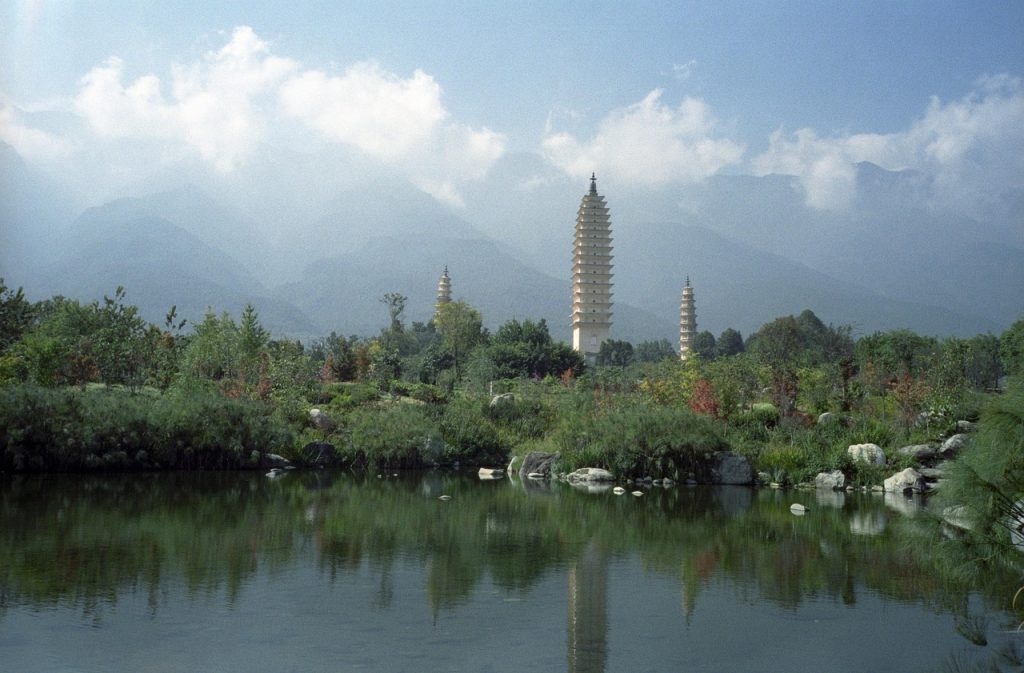
Today the Bai are one of China’s recognized minority peoples, numbering around two million, concentrated in their historic homeland around the famous lake but present across the wider region as well. They remain among the most culturally distinctive and accomplished of the southwestern peoples, heirs to the old civilization of Nanzhao and Dali.
The transformation of the Bai homeland by tourism has been dramatic, for the beauty of the lake-and-mountain landscape and the charm of the old city of Dali, with its whitewashed houses and ancient pagodas, have made the region one of China’s most popular destinations. This has brought prosperity and outside contact, reshaping the local economy around the visitors who flock to the lake.
Bai culture shows real vitality in the modern era, with the famous tie-dye, the three-course tea, the March Fair, and the distinctive architecture all celebrated and, in part, sustained by the interest of visitors. The Bai heritage, from the crafts to the festivals to the beautiful old towns, has become a source of both pride and livelihood in the modern world.
The Bai thus carry their old lakeside civilization, with its kingdoms remembered and its crafts and customs alive, into the modern age, keepers of one of the most refined cultures of China’s southwest. From these people of the white walls and the famous lake, the series turns next to their near neighbors, a small people of the snow mountains famous for their ancient pictographic script and their remarkable traditions: the Naxi.
More Peoples, More Stories
The Bai are one people among many who together make up China. If you would like to keep exploring, here are the others we have written about:
- A Fifth of Humanity, the Story of the Han Chinese
- A Civilization of the Silk Road Oases, the Story of the Uyghurs
- The Giants China Overlooks, the Story of the Zhuang People
- Chinese in Everything but Faith, the Story of the Hui
- Conquerors Absorbed by Their Conquest, the Story of the Manchus
- A Civilization on the Roof of the World, the Story of the Tibetans
- A History Sewn Into Silver and Cloth, the Story of the Miao
- Carriers of Fire and an Ancient Script, the Story of the Yi
- A People Who Nearly Vanished Into the Crowd, the Story of the Tujia
- Southeast Asia Within China’s Borders, the Story of the Dai
You May Like
The Zaza, a Mountain People of Eastern Anatolia


4 thoughts on “Builders of Kingdoms by a Mountain Lake, the Story of the Bai”