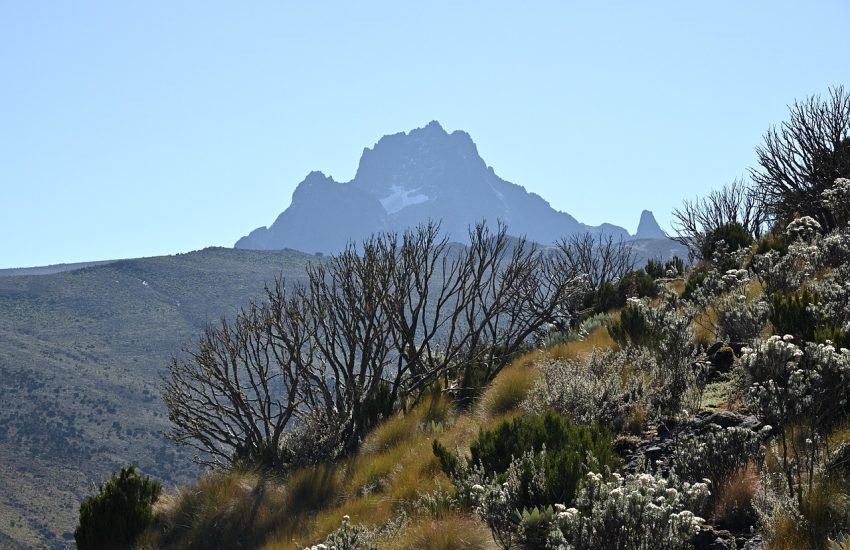
West of the Mongols, where the grassland runs on past deserts and salt lakes toward the snow peaks of the Tian Shan and the Altai, lies a country so large it barely seems possible: a stretch of steppe, semi-desert and mountain that reaches almost from the Caspian Sea to the borders of China. This is the land of the Kazakhs, one of the great nomad peoples of Central Asia, whose horsemen once ranged across it in the millions and whose most famous sons still hunt from horseback with eagles perched on their arms.
The Kazakhs number well over fifteen million, most of them in the vast independent nation that bears their name, but with an important community living across the border in the far west of China, in the mountains and pastures of the Altai. It is that Chinese Kazakh community, sitting at the edge of the country we have been travelling through, that earns them a place in this series, even though the heart of the Kazakh world lies in the sovereign state to the north and west.
Their story runs from the origins of the name and the language, across the immense homeland and the old life of the herd and the yurt, through the shape of their clan society, the light-worn Islam they carry, their traditions of eagles and horses, their crafts and their meat-and-milk cuisine, their festivals, the long and often tragic modern history that nearly destroyed them, and their place in the world today. They are cousins to the Mongols in almost everything but faith, and the family resemblance runs deep.
What Lies Ahead
- Cousins of the Western Steppe
- The People Who Broke Away
- A Turkic Tongue of Poets
- From the Caspian to the Altai
- The Yurt and the Yearly Round
- The Three Hordes and the Clan
- Islam Worn Lightly
- The Eagle on the Arm
- Felt, Silver, and the Woven Wall
- A Diet of Meat and Mare’s Milk
- Games on Horseback
- Famine, Exile, and a New Nation
- The Kazakhs Between Two States
Cousins of the Western Steppe

The Kazakhs grew out of the same great world of the steppe that produced the Mongols, but a little further west and drawing on a different linguistic root. Their ancestors were Turkic-speaking nomads, part of the vast family of horse peoples who had ridden the Central Asian grasslands for millennia, mingled over the centuries with the Mongol tribes who swept through under Genghis Khan and his heirs. Out of that blend of Turkic stock and Mongol conquest the Kazakhs slowly took shape.
Their more immediate origin lies in the breakup of the Mongol successor states. After the great empire fragmented, the western steppe fell under a series of Mongol-descended khanates, and it was from the ruling family of one of these, in the fifteenth century, that the Kazakhs were born, not as an ancient tribe but as a political breakaway. A group of nomads split off from their overlord, rode out onto the open steppe to live free of him, and in doing so gave rise to a new people.
This origin as breakaways is written into what they became. The Kazakhs were, from the start, the ones who chose the freedom of the open grassland over submission to a settled power, and that self-image as free nomads runs through their whole culture. They spread across an enormous territory in relatively small numbers, organised into a loose confederation of clans, and for centuries they roamed one of the largest stretches of open country on the planet with a lightness that few peoples could match.
They are, in short, close cousins of the Mongols, sharing the yurt, the horse, the herd, the fermented mare’s milk and the whole material culture of the steppe, but speaking a Turkic rather than a Mongolic language and, in time, following Islam rather than Buddhism. To move from the Mongols to the Kazakhs is to stay within the same great nomadic civilisation while crossing a linguistic and religious frontier that runs down the middle of the Central Asian grass.
The People Who Broke Away

The name Kazakh is generally understood to carry the sense of a free spirit, a wanderer, an independent adventurer, someone who has broken away to live on his own terms. This fits their origin perfectly, since the first Kazakhs were exactly that: nomads who split from their khan to roam the steppe freely. The word captures not just an ethnic label but an attitude, a claim to independence that the Kazakhs have always worn with pride.
The same root gives us another, better-known word in English: Cossack. The free-riding warrior bands of the Russian and Ukrainian frontier took their name from the same Turkic source, another set of people defined by breaking away to live freely on the edge of settled society. The two peoples are quite distinct, but the shared name points to a shared idea, of the frontiersman who answers to no lord, that echoes across the whole Eurasian steppe.
Confusingly, in the Russian and Soviet period the Kazakhs were often lumped together with or confused with other Central Asian peoples, and the imperial authorities sometimes called them Kyrgyz to avoid confusion with the Cossacks. Sorting out who was who, and fixing the name Kazakh firmly to this particular Turkic nomad people, was partly the work of the twentieth century and the drawing of Soviet republican borders that gave them a defined homeland and a settled name.
Today the name is anchored in a nation. Kazakhstan, the land of the Kazakhs, is the ninth-largest country on earth, and the Kazakh identity is now bound up with that state as much as with the old nomad freedom. Yet the older meaning has not died: the free rider on the open steppe remains the romantic self-image of the people, invoked in poetry, song and national myth, a reminder of what the name meant before it was ever the label of a modern republic.
A Turkic Tongue of Poets
Kazakh is a Turkic language, part of the same great family that stretches from Turkey through Central Asia into western China, and it is close enough to its neighbours that a Kazakh can make himself understood among Kyrgyz, Tatars and other Turkic speakers with a little effort. It is a language shaped by the herding life, full of the vocabulary of horses, livestock, weather and kinship that a nomad people needed and a settled one never developed.
Above all it is a language of the spoken word and of poetry. The Kazakhs had a magnificent oral tradition long before they had much of a written one, carried by bards who recited vast epic poems from memory and by the akyn, improvising poets who duelled in verse before audiences, composing on the spot in contests of wit and eloquence. To be a master of words was among the highest honours on the steppe, and that reverence for eloquence still runs through Kazakh culture.
The written form of the language has had a turbulent century. Kazakh was written in the Arabic script in the era of Islamic learning, then switched to the Latin alphabet under early Soviet reform, then to Cyrillic as Moscow tightened its grip and tied the language to Russian. Each change cut a generation off from what came before, an act of control dressed as modernisation, and each left its mark on how the Kazakhs could read their own past.
Now the wheel turns again. Independent Kazakhstan has embarked on a slow, deliberate shift back to a Latin-based alphabet, framed as a step toward the wider Turkic world and away from the Russian sphere, a change of profound symbolic weight for a nation redefining itself. Meanwhile the Kazakhs of China write their language in a modified Arabic script, so that here too, as with the Mongols, a single people ends up writing one tongue in different alphabets on opposite sides of a border.
From the Caspian to the Altai

The Kazakh homeland is almost absurdly vast. The independent nation alone is the size of Western Europe, a country of steppe, semi-desert and mountain that sprawls across the heart of Eurasia from the Caspian Sea in the west to the Altai and Tian Shan ranges in the east, where it brushes up against China and Mongolia. This is a land of enormous horizons and thin population, where a people could ride for weeks and never leave their own country.
Most of it is grassland and dry steppe, the classic nomad country of endless rolling plains, drying in the south into deserts and semi-deserts where only the hardiest herds can graze. In the far east and southeast the land rises into high mountains, snow-capped and forested, and it is here, in the Altai on the Chinese side of the border, that the Kazakh community of China makes its home, herding in high summer pastures much as their ancestors did.
The climate is harshly continental, with blazing summers and ferocious winters, and like the Mongols the Kazakhs have always had to reckon with the deadly winter that can wipe out a herd. The old nomadic pattern was a constant seasonal migration, moving the animals between lush summer pastures high in the hills and sheltered winter camps in the lowlands, a yearly round dictated entirely by the search for grass and water and the need to survive the cold.
This immense and varied territory, straddling the divide between the settled civilisations to the south and the open steppe to the north, made the Kazakhs a bridge people, in contact with Russians, Chinese, Uzbeks and the whole caravan world of Central Asia. The Chinese Kazakhs of the Altai, in particular, live at the meeting point of the Mongol, Turkic and Chinese worlds, a small community holding onto the nomad life at the far eastern edge of the enormous Kazakh homeland.
The Yurt and the Yearly Round
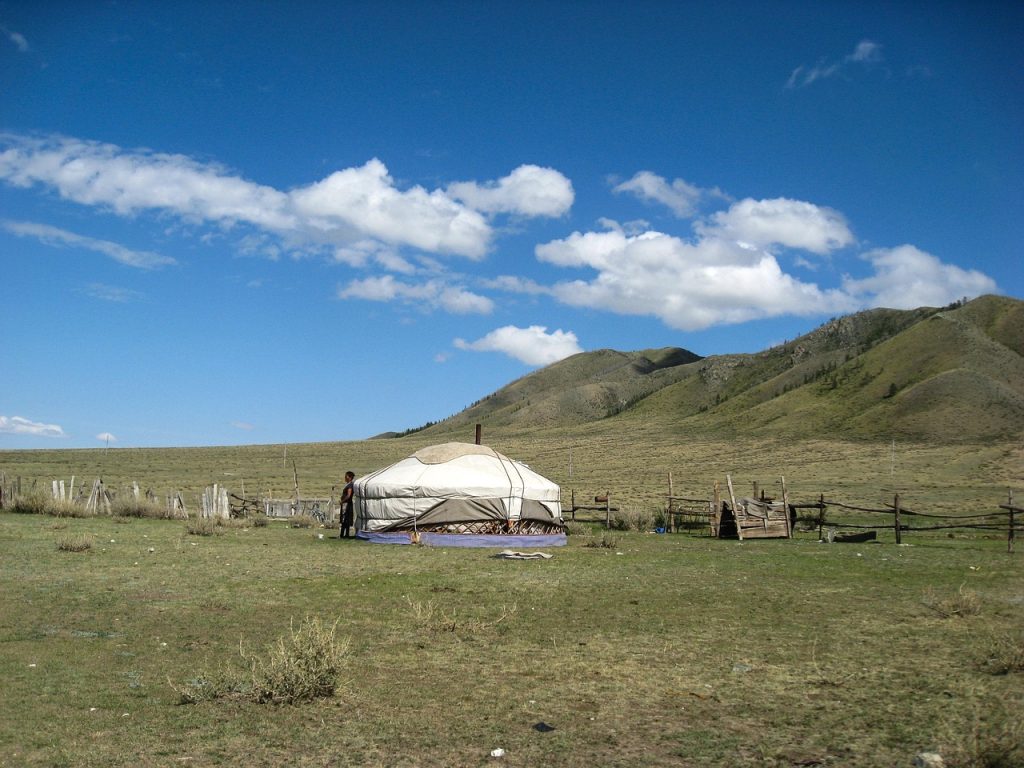
The traditional Kazakh life was pastoral nomadism of the classic Central Asian kind, built around herds of sheep, goats, horses, cattle and camels moved across the steppe in an endless search for pasture. Wealth was counted in animals, above all in horses and sheep, and a family’s whole existence turned on the health of the herd and the success of the seasonal migration between summer and winter grazing. Land was not owned but used, according to custom and the strength of one’s clan.
Their home was the yurt, the round felt-covered tent that the Kazakhs, like their neighbours, had refined into a perfect nomad dwelling. Built on a collapsible wooden lattice and covered in thick felt, it could be dismantled, loaded onto camels and reassembled in an hour, warm against the winter and airy in summer, its interior richly hung with woven textiles that turned a portable tent into a comfortable and even beautiful home. The yurt is still the emblem of Kazakh identity.
The horse was, if anything, even more central to Kazakh life than to most, for the Kazakhs bred and rode horses not only for transport and war but as a source of meat and of milk, the mare’s milk fermented into their national drink. A Kazakh was practically born in the saddle, and the skills of riding, herding and racing were the foundation of a boy’s upbringing. The relationship between the Kazakh and the horse was total, covering food, drink, transport, sport and status alike.
This nomadic way of life persisted, remarkably, into the twentieth century, when it was violently broken by forced collectivisation under Soviet rule. In the space of a few years the Soviets destroyed a way of life thousands of years old, herding the nomads onto collective farms with catastrophic results. The old free migration survives now mainly among the Kazakhs of China and Mongolia and in the summer pastures where some families still take their animals up, a fragment of what was once the whole world.
The Three Hordes and the Clan

Kazakh society was organised into a great pyramid of kinship, and its most distinctive feature was the division of the entire people into three large groupings known as the hordes or zhuz: the Great, the Middle and the Little Horde, each associated with a broad region of the steppe. These were not tribes so much as vast confederations of clans, and knowing which horde and which clan a person belonged to placed them instantly within the whole architecture of the nation.
Below the hordes ran the clans and lineages, traced through the male line, and a Kazakh was expected to know his genealogy going back many generations, ideally seven. This was not mere pride: the rule that one should not marry within seven generations of one’s own line depended on it, and knowing the ancestral tree was the practical map of who one was related to, whom one could marry, and where one stood in the web of obligation that held the scattered nomads together.
Within this structure the family lived in and around the yurt, with a clear division of labour between men who handled the horses, the herding and the hunting and women who ran the household, made the felt and textiles, and managed the dairy. As among the Mongols, Kazakh women had a good deal of practical authority within the domestic sphere and a reputation for capability, running the camp during the long absences the herding life demanded of the men.
Leadership traditionally lay with the khans and, more importantly in daily life, with the biys, respected men of wisdom and eloquence who settled disputes according to customary law. In a society without written codes or a standing state, it was these judges and their command of tradition and rhetoric that kept order, and their memorised rulings and wise sayings became part of the oral heritage. Authority on the steppe rested less on force than on lineage, wisdom and the spoken word.
Islam Worn Lightly

The Kazakhs are Muslims, followers of Sunni Islam, but their faith came to them late and settled over an older layer of belief without ever quite erasing it. Islam had reached the settled cities of Central Asia early, but out on the open steppe the nomads were slow to convert, and it was only over the later medieval centuries, and in some areas not fully until the eighteenth or nineteenth, that Islam became the general faith of the Kazakh people.
Because it arrived so late and among such mobile people, Kazakh Islam has always been worn relatively lightly, mixed with the older traditions of the steppe. Beneath the Muslim surface survived elements of the ancient Tengri sky-worship, reverence for ancestral spirits, and the practices of shamans and healers, and even devout Kazakhs long kept customs that a strict theologian might frown at. The result was a tolerant, practical faith woven into the fabric of nomad life rather than imposed upon it.
Soviet rule then tried to strip religion away altogether. Mosques were closed, religious teaching was suppressed, and two generations grew up in an officially atheist state, so that by the end of the communist period many Kazakhs knew little of the details of the faith even as they still identified as Muslims. Islam survived more as a marker of identity, of being Kazakh rather than Russian, than as a fully practised religion, kept alive quietly in the home and at the great rites of passage.
Since independence Islam has revived, with new mosques built and religious life once more open, though most Kazakhs practise a moderate, culturally embedded form of the faith rather than anything strict. For the Kazakhs of China the situation is different again, their religious life shaped by the wider policies of the Chinese state toward its Muslim minorities. Across both communities, though, Islam remains a defining thread of identity, layered as ever over the deep older heritage of the steppe.
The Eagle on the Arm

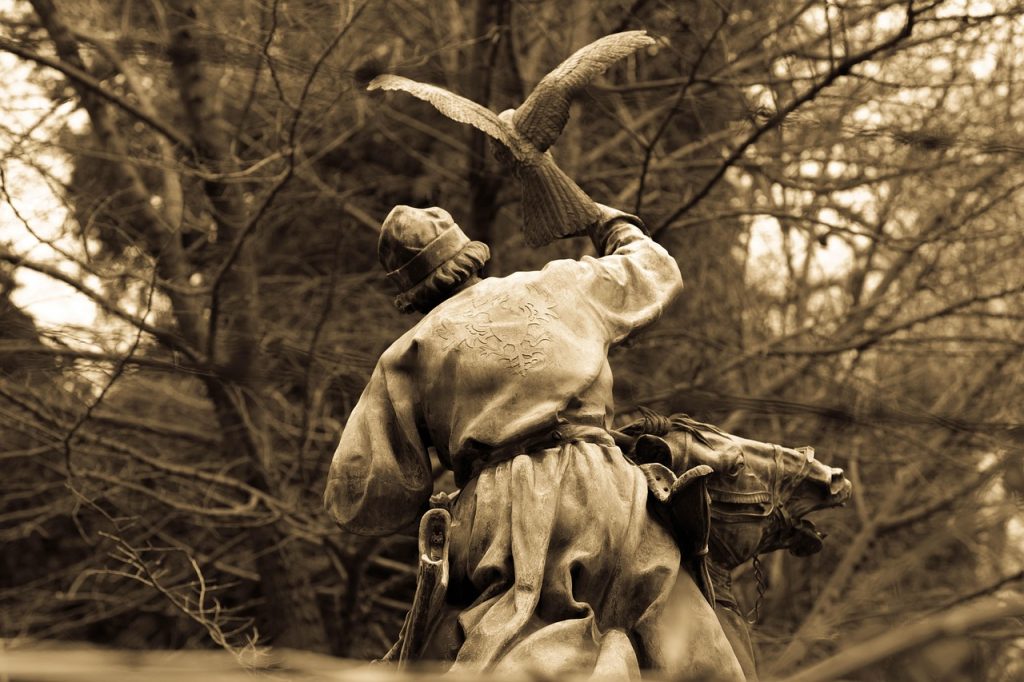
No Kazakh tradition is more spectacular than eagle hunting. For centuries, hunters known as berkutchi have captured young golden eagles, trained them with extraordinary patience, and used them to hunt foxes, hares and even wolves across the winter steppe and mountains. To see a horseman ride out with a huge eagle hooded on his gloved arm, then loose it to stoop on prey far below, is to witness one of the oldest and most breathtaking partnerships between human and animal on earth.
This art survives most strongly today among the Kazakhs of Mongolia and China, where eagle hunting festivals have become famous, drawing photographers and visitors from around the world to watch the berkutchi compete. The relationship between hunter and bird is intense and, in the old way, temporary: an eagle is often released back to the wild after some years of service, to breed and live free, a gesture of respect that says much about the ethic behind the practice.
Around the eagle cluster the other great traditions, nearly all of them tied to the horse. The Kazakhs are famous for a whole repertoire of equestrian games, and horsemanship remains the deepest measure of a Kazakh man, learned from earliest childhood and displayed at every gathering. To ride superbly, to break and race and handle horses, is not a pastime but a core part of the identity, the living inheritance of a people who spent their whole history in the saddle.
Music and verse complete the picture. The dombra, a two-stringed lute, is the national instrument, its plucked, driving rhythms accompanying songs and the improvised poetry of the akyn, whose verse duels remain a celebrated art. Hospitality, too, is a sacred tradition, the obligation to feed and shelter any guest lavishly rooted in the same steppe logic that governed the Mongols. These traditions of eagle, horse, verse and welcome are the pillars of what it means to be Kazakh.
Felt, Silver, and the Woven Wall

Kazakh craft, like all nomad craft, is built around portability and the materials of the herd, and its supreme achievement is the working of felt. Wool from the flocks was beaten and rolled into thick felt that covered the yurt, and the Kazakhs raised felt-making to an art form with the syrmak and other decorated felt rugs, cut and pieced into bold patterns of contrasting colours that lined the floor and walls of the tent. The interior of a good yurt was a gallery of felt.
Weaving added another layer of colour. Woven bands, storage bags and carpets, patterned in the geometric and stylised natural motifs of the steppe, decorated the yurt and served endless practical purposes, and the making of these textiles was women’s work carried down through the generations. Together the felt and the weaving turned the bare frame of a tent into a richly ornamented home, all of it capable of being rolled up and carried on the back of a camel.
Metalwork was the other prized craft, above all in silver. Kazakh smiths produced ornate jewellery, the heavy silver ornaments and headdresses worn by women, decorated harness and saddle fittings, and inlaid weapons and utensils, often set with semi-precious stones. As with other nomads, jewellery was portable wealth as much as adornment, and the flash of worked silver on a woman’s dress or a rider’s tack was a statement of a family’s standing on the steppe.
Woodwork and leather rounded out the material culture, the carved wooden frame of the yurt, the leather vessels for storing and fermenting mare’s milk, the whittled and decorated tools of daily life. All of it was made by hand from what the herd and the land provided, all of it designed to travel, and all of it carrying the distinctive Kazakh patterns that turned even the humblest object into something recognisably of the steppe. Craft here was never separate from life; it was life, made beautiful.
A Diet of Meat and Mare’s Milk

Kazakh food is steppe food, and like the Mongols the Kazakhs built their diet around the two great products of the herd: meat and milk. In a land where farming was marginal and the animals were everything, the table was dominated by mutton, beef, and above all horse meat, prized in a way that startles outsiders but makes perfect sense for a people whose wealth walked on four legs and whose most valued animal was the horse.
The national dish is beshbarmak, whose name means five fingers, because it was traditionally eaten by hand: boiled meat, often horse or mutton, served over flat squares of dough with an onion broth, shared from a common platter at any gathering worth the name. The most honoured guests receive the choicest portions in a careful etiquette of hospitality, and the serving of the boiled sheep’s head to the guest of honour is a ritual heavy with meaning.
Horse meat appears in celebrated cured forms, the sausages kazy and shuzhuk made from the meat and fat of the horse, rich, fatty and deeply prized, the kind of food laid up for winter and brought out for feasts. Alongside the meat comes the vast world of dairy: fermented, dried and fresh milk products from mare, cow, sheep, goat and camel, including dried curd balls that travel and keep, and clotted creams and cheeses that made the most of every drop the animals gave.
The signature drink is kumis, fermented mare’s milk, the Kazakh cousin of the Mongol airag, mildly alcoholic, sour and fizzy, drunk in quantity in summer when the mares are in milk and regarded as both refreshment and medicine. Camel’s milk, fermented into shubat, plays a similar role in the desert country. Tea, taken with milk, warms every home and every welcome, and the whole cuisine speaks of a people who wrung nourishment, drink and hospitality from their herds.
Games on Horseback

The great festival of the Kazakh year is Nauryz, the spring new year celebrated at the equinox in late March, an ancient Persian and Central Asian holiday marking the renewal of the year and the coming of spring after the killing winter. It is a festival of feasting, visiting, reconciliation and hospitality, when a special dish of seven ingredients is prepared, old quarrels are set aside, and the community gathers to welcome the return of life to the steppe.
The celebrations are inseparable from horseback games, the thrilling and often violent equestrian sports that are the beating heart of any Kazakh gathering. Chief among them is kokpar, a wild contest in which mounted teams struggle to carry a goat carcass to a goal, a sport of astonishing roughness and skill that is essentially rugby on horseback with a slaughtered animal for a ball. To watch kokpar is to see the martial horsemanship of the old steppe alive in sporting form.
Gentler games have their own charm, above all kyz kuu, the chase in which a young man on horseback pursues a young woman, who may whip him if he fails to catch her before a set line, a courtship game full of laughter and display. Wrestling, archery and horse racing over long distances fill out the programme, and among the Kazakhs of China and Mongolia the eagle hunting festivals draw crowds to watch the berkutchi and their birds compete.
Layered over these are the observances of Islam, the two great Eids kept as elsewhere in the Muslim world, and the rites of passage, births, weddings and funerals, that gather the clan and display its wealth and hospitality. For the Kazakhs of China, festivals are also occasions to affirm an identity distinct from the Han majority around them. As with so many nomad peoples, the festival is where the scattered community becomes visible to itself, and where the old horseback culture is proudly performed.
Famine, Exile, and a New Nation

Kazakh history since their fifteenth-century origin is a long story of freedom on the steppe followed by a slow, painful loss of it. For centuries the Kazakh khanate and its three hordes roamed the grasslands, trading and raiding, caught between larger powers, until from the eighteenth century the expanding Russian Empire began to swallow the steppe piece by piece, building forts, settling colonists, and gradually stripping the nomads of the land and freedom that defined them.
The twentieth century brought catastrophe. Under Soviet rule the forced collectivisation of the early 1930s destroyed the nomadic economy almost overnight, and the resulting famine killed an appalling share of the Kazakh people, perhaps well over a million, in one of the great and least-remembered atrocities of the age. Vast numbers fled across the borders into China and beyond, and the Kazakhs became, for a time, a minority in their own homeland as Slavic settlers poured in.
Soviet rule also, paradoxically, built the modern nation. It drew the borders of a Kazakh republic, fixed the language and identity in institutional form, industrialised the country, and made the steppe the site of grand and grim projects, the virgin lands ploughed up for grain, the space programme launched from Baikonur, the nuclear weapons tested on Kazakh soil with terrible consequences for the people living nearby. The land was remade, for good and for ill, by a power based far away.
Independence came suddenly in 1991 with the collapse of the Soviet Union, handing the Kazakhs a giant, resource-rich country almost by surprise. The decades since have seen the nation grow wealthy on oil and minerals, move its capital, revive its language and heritage, and assert a distinct place in the world, even as it wrestles with the legacies of the Soviet century. From near-destruction, the Kazakhs emerged with a nation-state larger than most in the world.
The Kazakhs Between Two States

The Kazakhs today live overwhelmingly in their own prosperous nation, a country transformed by oil wealth, with gleaming new cities, a young and increasingly urban population, and a confident sense of itself as the great success story of Central Asia. The old nomadic life is now mostly memory and heritage, celebrated at festivals and preserved in the countryside, while most Kazakhs live modern urban lives and the yurt has become a symbol rather than a home.
The Kazakhs of China, the community that brings them into this series, live a rather different life in the far northwest, in the Altai mountains and the pastures of Xinjiang. There, a substantial Kazakh minority has kept the herding traditions, the eagle hunting and the seasonal migrations alive more fully than in the modernised republic, even as they navigate life within the Chinese state and its policies toward its minority peoples. They are a living link back to the older nomad world.
Across both communities the great question is the balance between the modern and the traditional, between the pull of the city and the wealth of the modern economy on one side and the deep attachment to the steppe, the horse and the old ways on the other. The Kazakhs seem to manage this balance with unusual confidence, proud of their nomad heritage precisely because they no longer depend on it, able to celebrate the eagle and the yurt from the comfort of the apartment and the office.
The peoples we have met so far in this country have mostly been rooted in Asia for as long as anyone can remember, whether on the steppe, the plateau or the southern hills. But not every people of China grew up within it. In the cool northeast, hard against the border with the Korean peninsula, lives a community whose homeland lies just across the river, who came as farmers and refugees within the last few generations, and who keep the language, food and fierce pride of a nation that is not, on the map, their own. To meet them, we travel to the rice paddies of the Koreans of China.
More Faces of the Same Country
The Kazakhs sit at the western edge of a country full of peoples I have been getting to know one by one. If their story caught your interest, here are the others I have written up so far, ready whenever you feel like reading on:
- A Fifth of Humanity, the Story of the Han Chinese
- A Civilization of the Silk Road Oases, the Story of the Uyghurs
- The Giants China Overlooks, the Story of the Zhuang People
- Chinese in Everything but Faith, the Story of the Hui
- Conquerors Absorbed by Their Conquest, the Story of the Manchus
- A Civilization on the Roof of the World, the Story of the Tibetans
- A History Sewn Into Silver and Cloth, the Story of the Miao
- Carriers of Fire and an Ancient Script, the Story of the Yi
- A People Who Nearly Vanished Into the Crowd, the Story of the Tujia
- Southeast Asia Within China’s Borders, the Story of the Dai
- Builders of Kingdoms by a Mountain Lake, the Story of the Bai
- The People Who Write in Pictures, the Story of the Naxi
- The Horsemen Who Conquered the World, the Story of the Mongols