In the far northeast of China, where the country presses up against the Korean peninsula along the Tumen and Yalu rivers, lies a corner of land that feels, in many small ways, like somewhere else. The shop signs carry a second script full of circles and lines, the food on the table is sharp with chilli and fermentation, and the older people speak a language that belongs, by rights, to the two nations just across the water. This is the home of the Koreans of China, a people who live in one country while their heart belongs partly to another.
There are close to two million of them, most concentrated in the mountains and river valleys of the northeast, and among them sits the Yanbian Korean Autonomous Prefecture, a stretch of territory set aside where the Korean language and culture hold official status within China. Unlike almost every other people in this series, the Koreans of China are not an ancient presence rooted in Chinese soil since time out of mind. They arrived, for the most part, within the last century and a half, as farmers and refugees crossing a river.
Their story is unusual and worth telling with care: where they came from and why, the name they carry, the language that ties them to a divided homeland, the northeastern land they settled, the rice-farming life they built, the shape of their family-centred society, their layered faith, their traditions of song and dress, their crafts, their famous food, their festivals, the turbulent modern history that brought them and tested them, and where they stand now, caught between China, North Korea and the bright pull of the South.
The Path This Takes
- A People From Across the River
- Chaoxianzu, the Korean Nationality
- A Language of a Divided Nation
- The Northeast They Made Home
- Rice in the Cold North
- Family, Elders, and the Confucian Order
- Ancestors, Buddha, and the Cross
- Drums, Dance, and the White Dress
- The Work of Careful Hands
- Kimchi, Cold Noodles, and the Dog Days
- The Turning of the Korean Year
- Crossing the River, Then and Now
- Between Three Koreas
A People From Across the River
The Koreans of China are, as their name suggests, ethnic Koreans, and their ancestral homeland is not China at all but the Korean peninsula that lies just to the east, across two rivers that mark the border. To understand them, you have to start not on the steppe or the plateau like the other peoples of this series, but with the long history of Korea itself and, more immediately, with the reasons that Koreans began, within the last century and a half, to cross the water into China in large numbers.
For most of history the border was quiet, and few Koreans lived on the Chinese side. That changed dramatically from the second half of the nineteenth century. A series of terrible famines in the north of Korea drove desperate farmers across the rivers in search of empty land to till, and the fertile but underpopulated valleys of the Chinese northeast offered exactly that. What began as a trickle of hungry migrants became a steady stream, and Korean farming villages sprang up on the Chinese bank.
The flow became a flood in the early twentieth century for a grimmer reason. When Japan annexed Korea in 1910 and ruled it harshly for decades, huge numbers of Koreans fled or were pushed off their land, and many crossed into Manchuria, as the northeast was then known. Some came simply to farm and survive; others came as fighters, for the Chinese northeast became a major base for the Korean independence movement against Japanese rule, a place to organise and resist from beyond Japan’s easy reach.
So the Koreans of China are, in the main, the descendants of these recent migrants: famine refugees, colonial exiles and independence fighters who crossed a river within living memory and made new lives on Chinese soil. This recent, deliberate arrival sets them apart from nearly every other people in this account and shapes everything about them, for they are a people who remember where they came from, and the homeland is not a distant myth but a real place just across the water.
Chaoxianzu, the Korean Nationality
In Chinese the Koreans of China are called Chaoxianzu, which means simply the Chaoxian nationality, Chaoxian being the Chinese name for Korea, and specifically the older, dynastic name that survives today in the official name of North Korea. The choice of this name over the alternative used for South Korea is a small linguistic accident of history, but it hints at the complicated position this community occupies between a divided homeland and the Chinese state that counts them among its official minority peoples.
Among themselves, of course, they simply consider themselves Korean, part of the same people as those in the peninsula, sharing the same language, food, dress and sense of history. The term Joseonjok, the Korean rendering of the same nationality name, is how they often refer to themselves, marking them as Koreans specifically of the Chinese diaspora, distinct from the citizens of the two Korean states even as they share so much with them.
This layered naming reflects a genuine complexity of identity. A Korean in Yanbian is a citizen of China, an official member of a recognised Chinese minority, and at the same time an ethnic Korean with deep ties to a homeland split into two rival states. Which of these identities matters most can shift with the moment and the generation, and the very name they carry, Chinese in language but Korean in meaning, holds that tension in a single word.
It is worth being clear that this is a community defined by ethnicity and recent origin rather than by any ancient separate identity of its own. They did not evolve into a distinct people over millennia in China, as the Naxi or the Bai did in their valleys. They are Koreans who happen to live in China, and their whole culture is a transplanted branch of the peninsula’s, kept alive and slowly changed on the Chinese side of the river. The name says diaspora, and diaspora is the key to who they are.
A Language of a Divided Nation
The Koreans of China speak Korean, the same language as the peninsula, and its survival in China is one of the community’s proudest achievements. In the Yanbian Autonomous Prefecture, Korean has official status alongside Chinese, appearing on shop signs and street signs, taught in schools, and used in local media, a level of official protection that most of China’s minority languages can only envy. To walk through Yanbian is to see Korean writing everywhere, sharing the streetscape with Chinese.
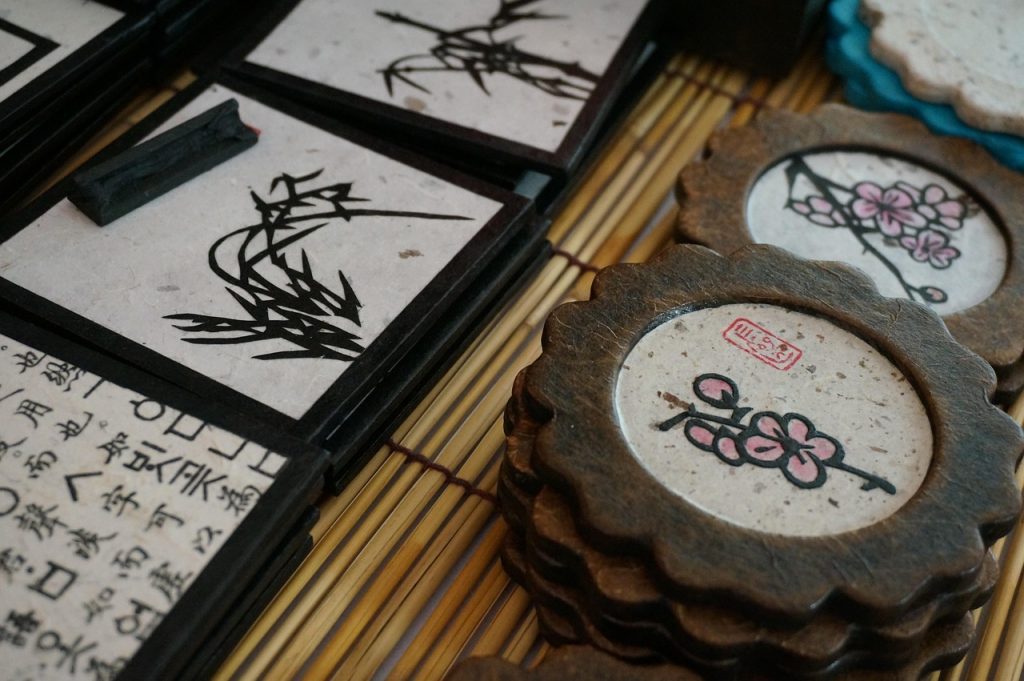
The writing system is Hangul, the remarkable alphabet invented in fifteenth-century Korea to give the common people a script they could actually learn, in place of the difficult Chinese characters that only the elite could master. Hangul is often praised as one of the most logical and elegant writing systems ever devised, its letters designed to reflect the shapes the mouth makes in speaking, and it is a genuine point of national pride for Koreans everywhere, including those in China.
The dialect spoken in Yanbian is close to the speech of the northern peninsula, which stands to reason given that most of the migrants came from the north, and it has picked up its own flavour over the generations, including many loanwords from Chinese for the realities of life in China. Older speakers keep a rich, traditional Korean; the language of the community carries the accent of its northern origins and the marks of a century on Chinese soil.
The great challenge now is generational. As younger Koreans of China pursue education and careers in the wider Chinese world, and as many move to Chinese cities or abroad to South Korea for work, Mandarin increasingly becomes their stronger language, and fluent, literary Korean can fade. The community’s schools and institutions work to keep the language alive, but the same pressure that erodes every minority language inside a huge dominant one bears down here too, sharpened by migration away from the Korean-speaking heartland.
The Northeast They Made Home
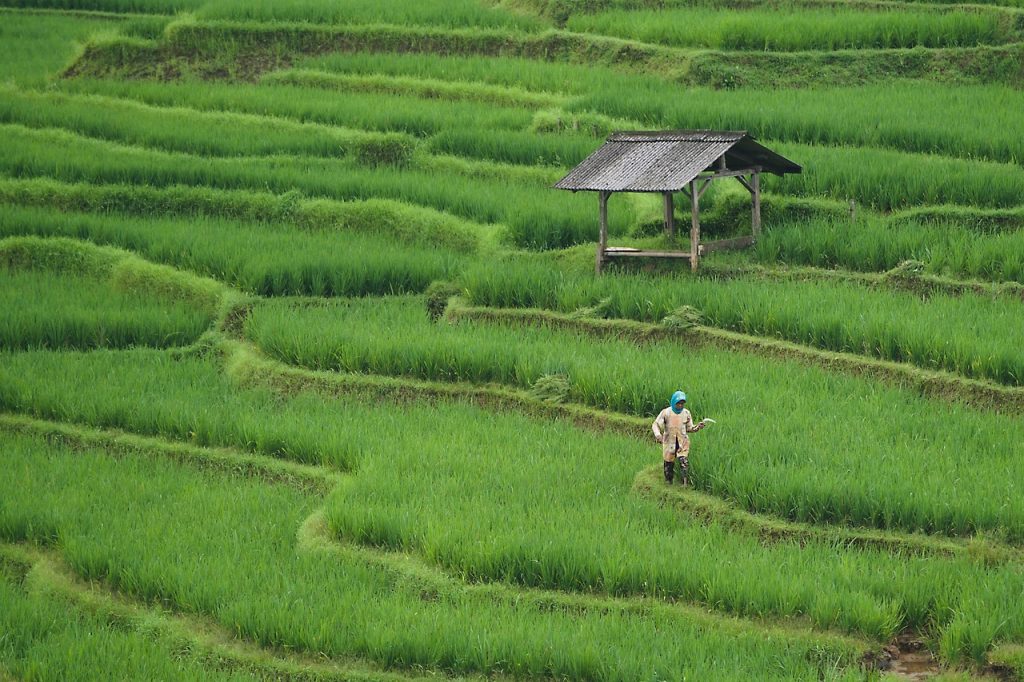
The homeland of the Koreans of China is the northeast of the country, the region once known as Manchuria, and above all the eastern part of Jilin province that borders both North Korea and Russia. Here lies the Yanbian Korean Autonomous Prefecture, the heartland of the community, a region of forested mountains, broad river valleys and cold, fertile farmland set along the Tumen River that marks the frontier with North Korea. It is a landscape of hills and water, green and productive in summer, hard in winter.
This northeastern country is a world away from the warm south or the dry steppe. It sits at a high, northern latitude, and its winters are long and severe, with deep snow and biting cold, while its summers are warm and wet, ideal for the crop the Koreans brought with them. The river valleys, watered and flat, could be turned into paddy fields, and it was precisely the sight of this empty, well-watered land that had drawn the hungry migrants across the border in the first place.
Beyond Yanbian, Koreans settled more widely across the three northeastern provinces, in farming villages and, increasingly, in the region’s industrial cities. The northeast was for much of the twentieth century the industrial heartland of China, and Koreans took part in its factories and mines as well as its fields. But the emotional centre of the community remained Yanbian, the one place where being Korean was not just tolerated but built into the official fabric of local government and public life.
The border itself is the defining feature of this homeland. Just across the Tumen lies North Korea, close enough to see, and the river has been at various times a lifeline, an escape route, and a place of tragedy, as North Koreans have crossed it fleeing hunger and repression. The Koreans of China live with this frontier as a constant presence, tied by blood and language to the troubled state on the far bank, and to the prosperous South beyond it that so many of them travel to for work.
Rice in the Cold North
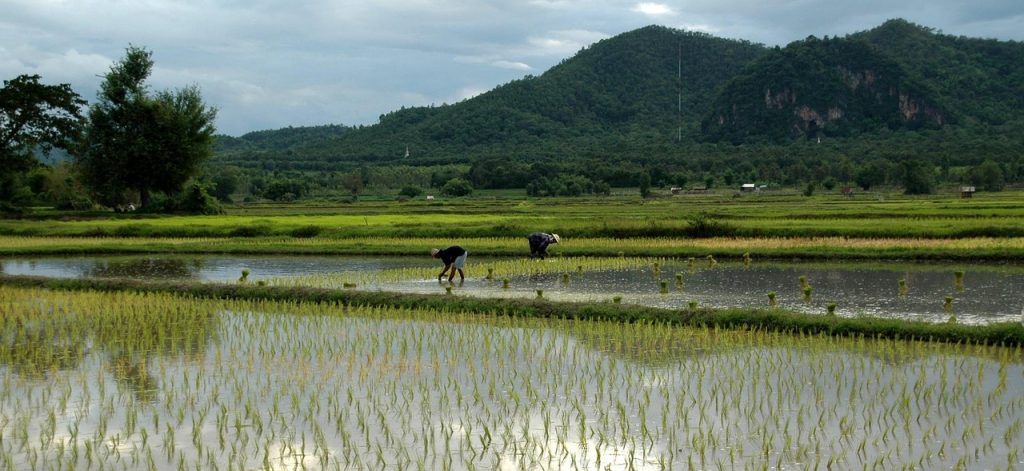
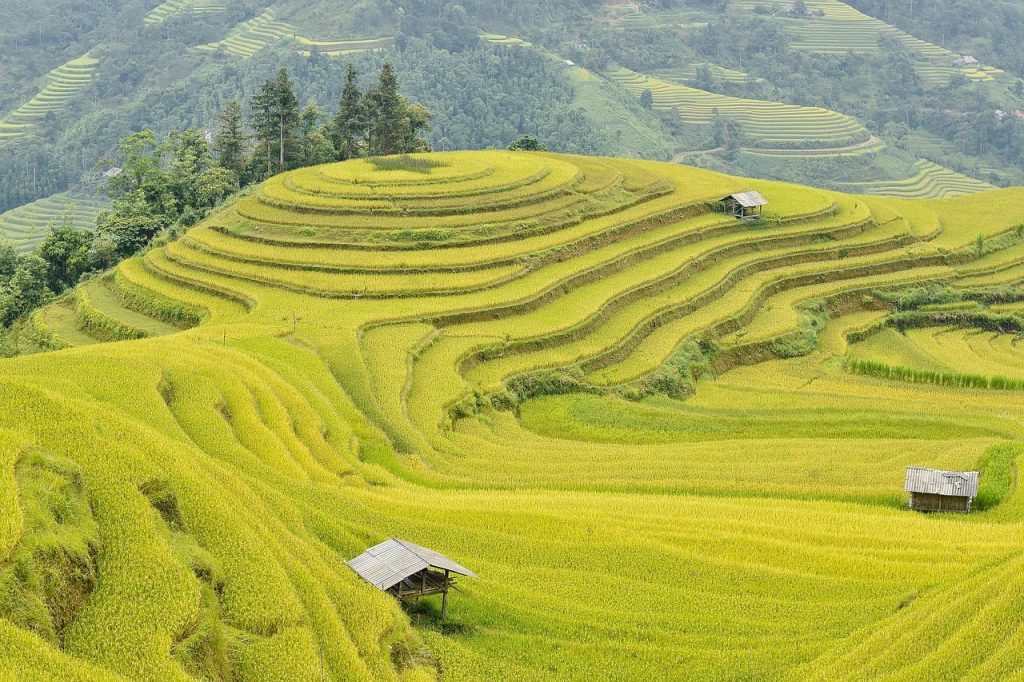
The Koreans came to China as farmers, and specifically as growers of wet rice, and this skill was the foundation of everything they built. Rice had long been the staple of the Korean diet, and Korean farmers were expert at the demanding art of paddy cultivation, flooding fields, transplanting seedlings by hand, and managing water with great care. They brought this knowledge north with them and applied it to the river valleys of the Chinese frontier, transforming underused land into productive paddy.
This was no small feat, because they were pushing rice cultivation into a cold, northern climate where it did not obviously belong. Through careful selection of hardy varieties and skilful management of the short growing season, the Korean settlers succeeded in growing rice far north of where it had traditionally thrived in China, and the northeast became known for its high-quality rice grown largely by Korean hands. Their farming skill earned them a reputation and a livelihood in their new land.
Village life revolved around the rice year, with its intense bursts of labour at transplanting and harvest, and around the tight-knit farming community. The Koreans built villages of their own with their distinctive houses, kept their own customs, and worked the land communally in the way of a people who had brought a whole rural culture with them across the border. The paddy field, green in summer and gold in autumn, was the centre of their world as it had been in the homeland.
Over the twentieth century this rural, rice-growing life was reshaped by the great upheavals of Chinese history, by land reform, collectivisation and eventually the move toward a market economy. Farming remains important, and the northeast still produces its famous rice, but the old self-contained village world has loosened as roads, schools and cities pulled people outward. The rice paddy endures as the emblem of the community’s origins, even as fewer of its young people spend their lives bent over it.
Family, Elders, and the Confucian Order
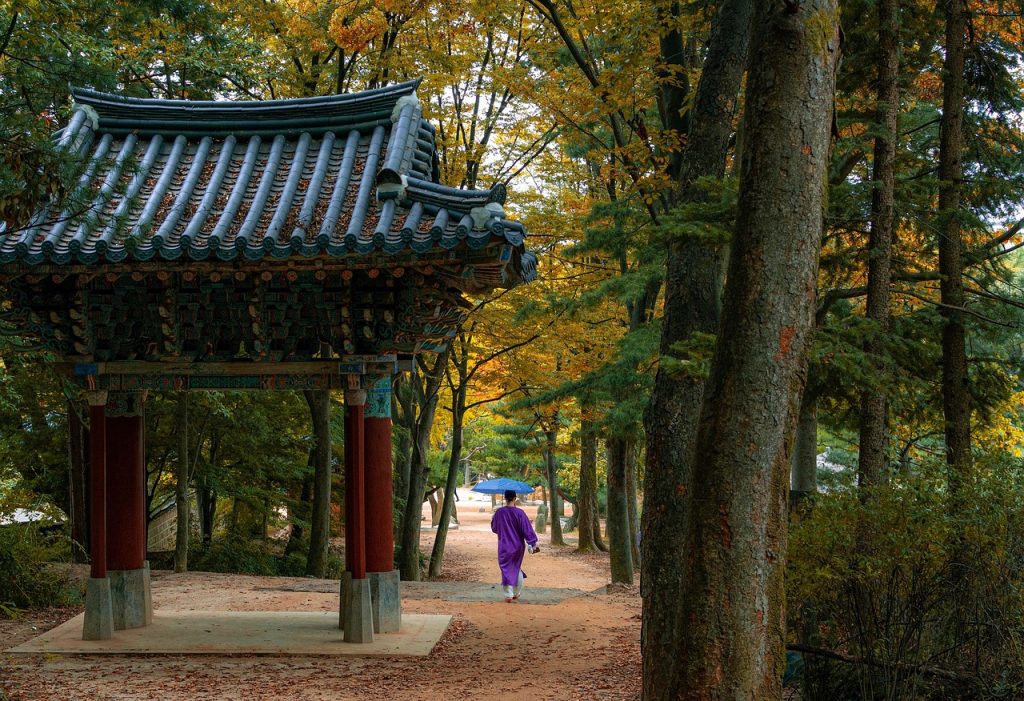
Korean society, in China as in the peninsula, was shaped profoundly by Confucianism, the ethical system inherited from centuries of Korean tradition that placed the family, respect for elders, and proper social order at the centre of life. The Koreans brought this deeply Confucian outlook with them, and it governed the shape of the family, the deference owed to parents and ancestors, and the whole web of obligations that bound the generations together. The family was the fundamental unit and its harmony the highest value.
Respect for age and hierarchy ran through everything. Elders were honoured, their birthdays marked with great ceremony, and the proper forms of address and behaviour toward those older or of higher status were learned young and observed carefully. This Confucian emphasis on education, propriety and family duty gave the community a strong internal cohesion and, notably, a powerful drive toward schooling, for learning was honoured in the Confucian scheme as the path to advancement and respect.
That reverence for education became one of the community’s defining traits. The Koreans of China placed enormous value on schooling and built a strong network of Korean-language schools, and the community came to be known for high levels of education and academic achievement relative to its size. The Confucian conviction that study ennobles a person and lifts a family translated, in modern China, into real success in examinations and the professions, a quiet source of pride for the community.
Within the family, roles followed the traditional Confucian pattern, with clear expectations of parents and children, husbands and wives, and elder and younger, though these have softened over the generations as modern life and Chinese society reshaped them. The great life events, the sixtieth birthday marking a full cycle of the calendar, weddings and the elaborate rites for the dead, remained occasions of deep ceremony, moments when the Confucian order of the family displayed itself in full and the generations gathered.
Ancestors, Buddha, and the Cross
The religious life of the Koreans of China is as layered as their homeland’s, blending several traditions that have coexisted in Korea for centuries. At the base lies the ancient shamanism of the peninsula, with its spirits and its ritual specialists, overlaid by the Confucianism that, more than a religion, provided the ethical framework of ancestor veneration and family rites that shaped everyone regardless of their other beliefs. Honouring the ancestors at the proper times was, and remains, a near-universal Korean practice.
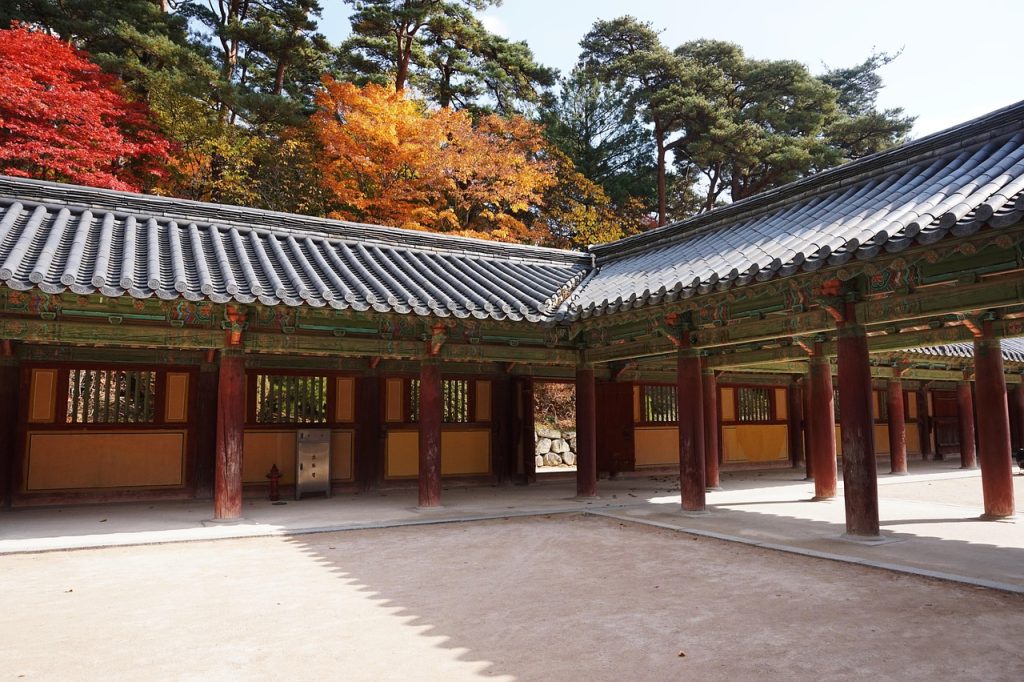
Buddhism arrived in Korea over a thousand years ago and put down deep roots, and the Koreans carried its influence with them, visible in temples and in the Buddhist elements woven through the culture. For much of Korean history Buddhism and Confucianism together formed the spiritual and ethical backbone of the society, the temple and the ancestral rite serving different needs within a single worldview that most people did not feel any need to choose between.
The most distinctive feature of modern Korean religion, however, is the extraordinary strength of Christianity, which spread through Korea with remarkable speed and became a major faith on the peninsula. This Christian current is present among the Koreans of China as well, and churches serve some communities, though the religious landscape on the Chinese side is shaped by the policies of the Chinese state toward religion, which set limits that do not apply in South Korea.
For many Koreans of China, as for many people across East Asia, religious identity is fluid and practical rather than exclusive, mixing ancestor rites, seasonal customs, and elements of Buddhism, Christianity or folk belief without sharp boundaries. The Confucian rites for the dead and the ancestors are perhaps the most persistent thread, tying the living to the generations before them and to the homeland their forebears came from, a quiet religion of family memory that outlasts every doctrine.
Drums, Dance, and the White Dress
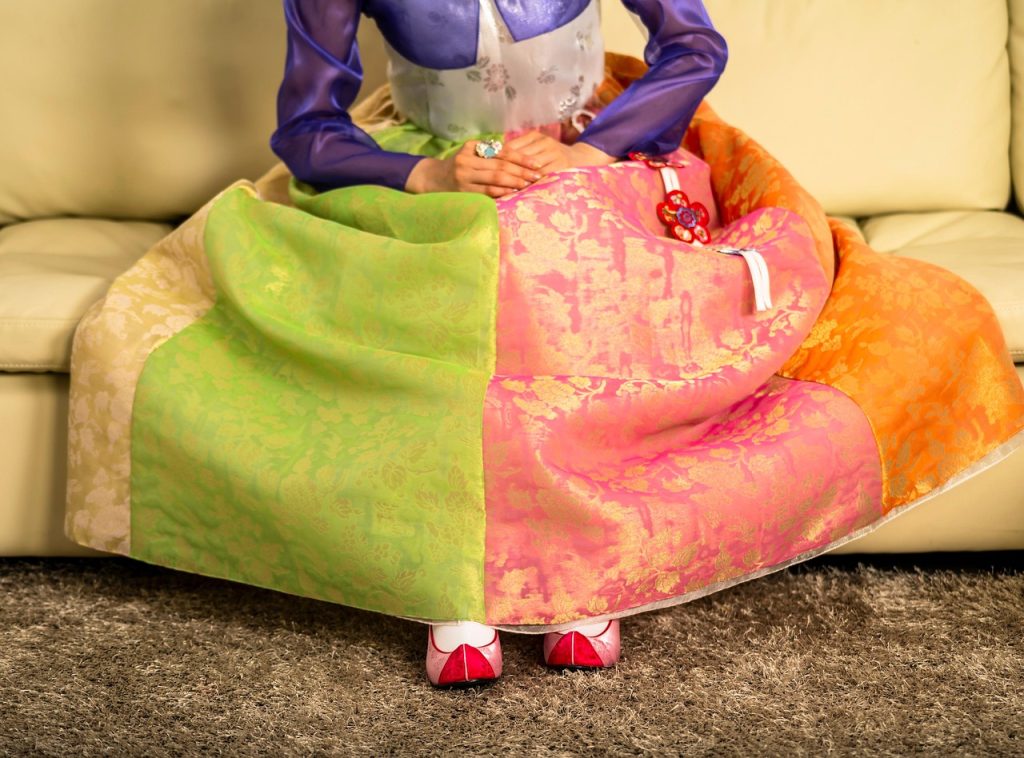
The Koreans of China have kept the rich performing traditions of the peninsula alive with striking devotion, and their song and dance are among the most vibrant of any of China’s minority cultures. Korean traditional dance, graceful and flowing, and the energetic drumming and farmers’ music with its whirling ribbon-hats and pounding rhythms, are performed at festivals and gatherings with real skill, and the community has produced celebrated dancers and musicians who carry these arts to national stages in China.
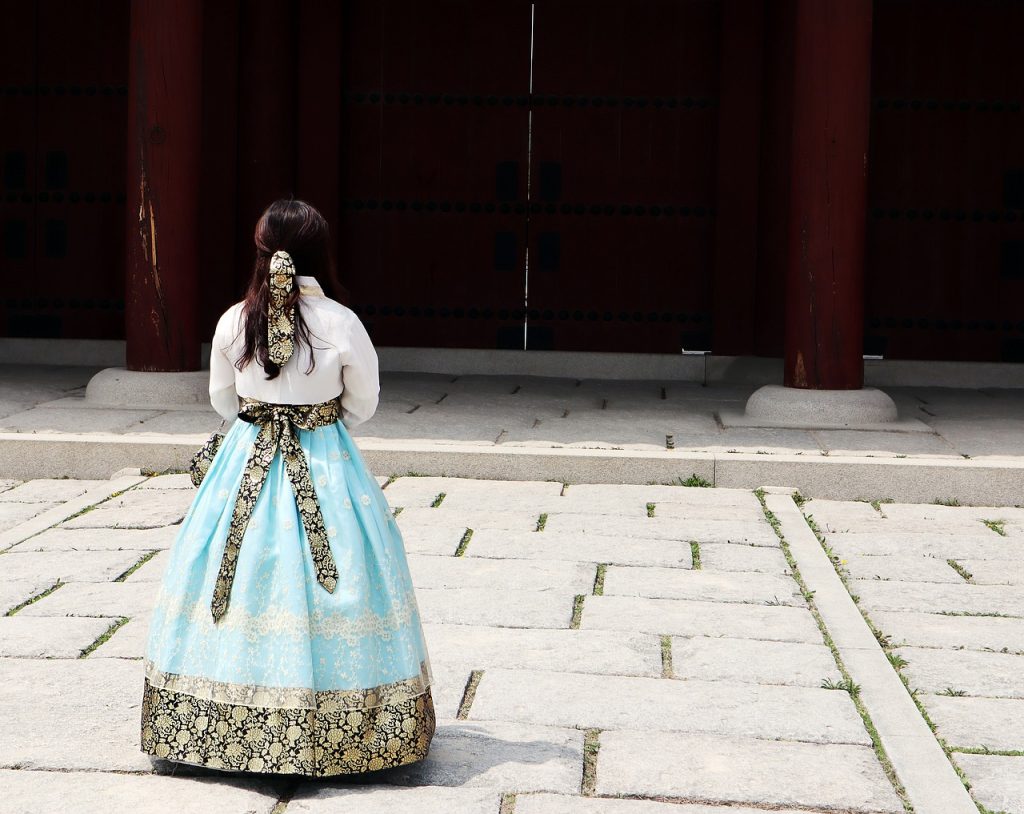
Dress is a proud tradition, above all the hanbok, the flowing Korean costume with its high-waisted, full skirt for women and its elegant lines, worn in bright colours or in the plain white that gave Koreans their old poetic epithet as the people of the white clothes. Brought out for weddings, birthdays and festivals, the hanbok is an instantly recognisable badge of Korean identity, and its careful preservation among the Koreans of China is a deliberate act of cultural continuity.
Music runs deep, from the folk songs carried from the homeland, the famous laments and love songs known across all of Korea, to the drumming traditions that turn a festival into a spectacle of sound and motion. The seesaw and the swing, the games and pastimes of the Korean village, and the whole repertoire of customs surrounding birth, coming of age, marriage and death were transplanted and maintained, so that a Korean festival in Yanbian looks and sounds much like one in the homeland.
These traditions matter to the community as more than entertainment; they are the visible proof of a distinct identity maintained across a border and a century. In a diaspora, keeping the dances, the dress and the songs is a way of remaining oneself, and the Koreans of China have done this with notable success, their cultural performances recognised and celebrated within China even as they root the community in its peninsular heritage. To dance the old dances is to remember who one is.
The Work of Careful Hands
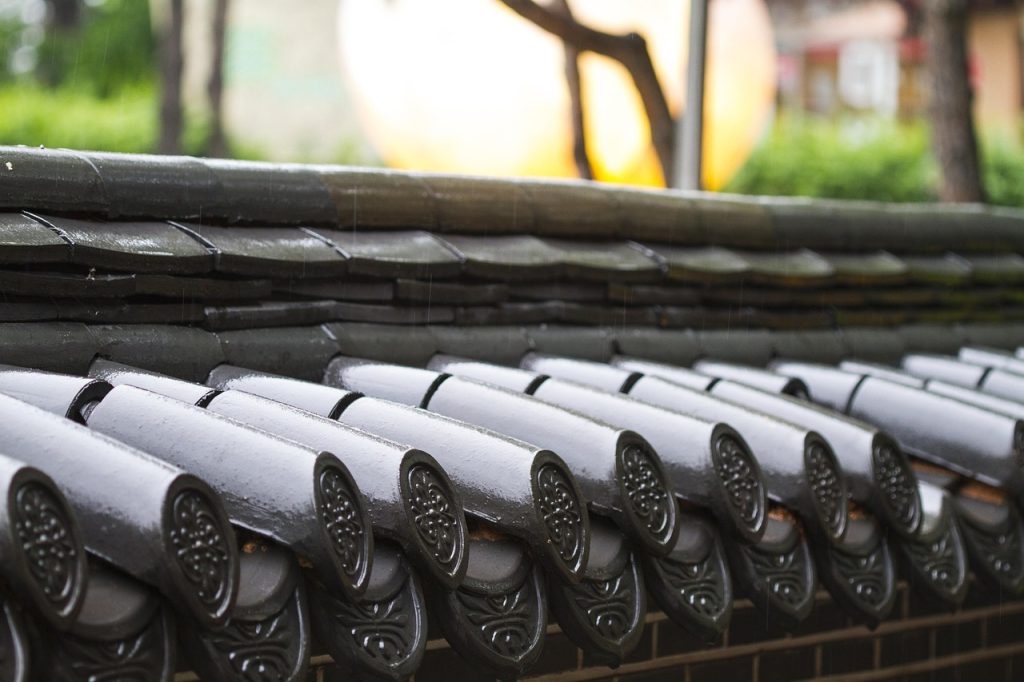
Korean craft, like Korean cooking, prizes restraint, natural materials and a certain understated elegance, and the Koreans of China carried these sensibilities with them. The traditional Korean house, the hanok, with its curved tiled roof, its wooden frame and its ingenious underfloor heating system that channelled warmth from the kitchen fire beneath the living space, was a marvel of design suited to cold winters, and versions of Korean domestic architecture marked the settlers’ villages.
Textiles and clothing were a major craft, centred on the making of the hanbok and the weaving and dyeing of cloth, work that fell largely to women and was passed down through the generations. The plain white cotton and the bright silks of festival dress, the careful sewing and the sense of line and proportion that make the hanbok so distinctive, all represented a craft tradition that the community took pains to keep alive far from its origins.
Everyday craft served the practical needs of a farming people: the making and storing of food, above all the great earthenware jars in which kimchi and fermented pastes were prepared and kept through the winter, buried or set out in rows behind the house. These fermentation vessels, humble but essential, were at the heart of the Korean kitchen, and the knowledge of how to make and use them was a craft of survival as much as of cuisine.
Papercraft, woodwork and the decorative arts of the Korean tradition, the folding screens, the painted chests, the ornamental knots, all had their place, and the aesthetic preference throughout was for natural beauty and quiet refinement rather than ostentation. As with the language and the dances, these crafts have been maintained partly as living skills and partly as heritage, kept alive by a community conscious that its distinctiveness rests on holding onto the culture it carried across the river.
Kimchi, Cold Noodles, and the Dog Days
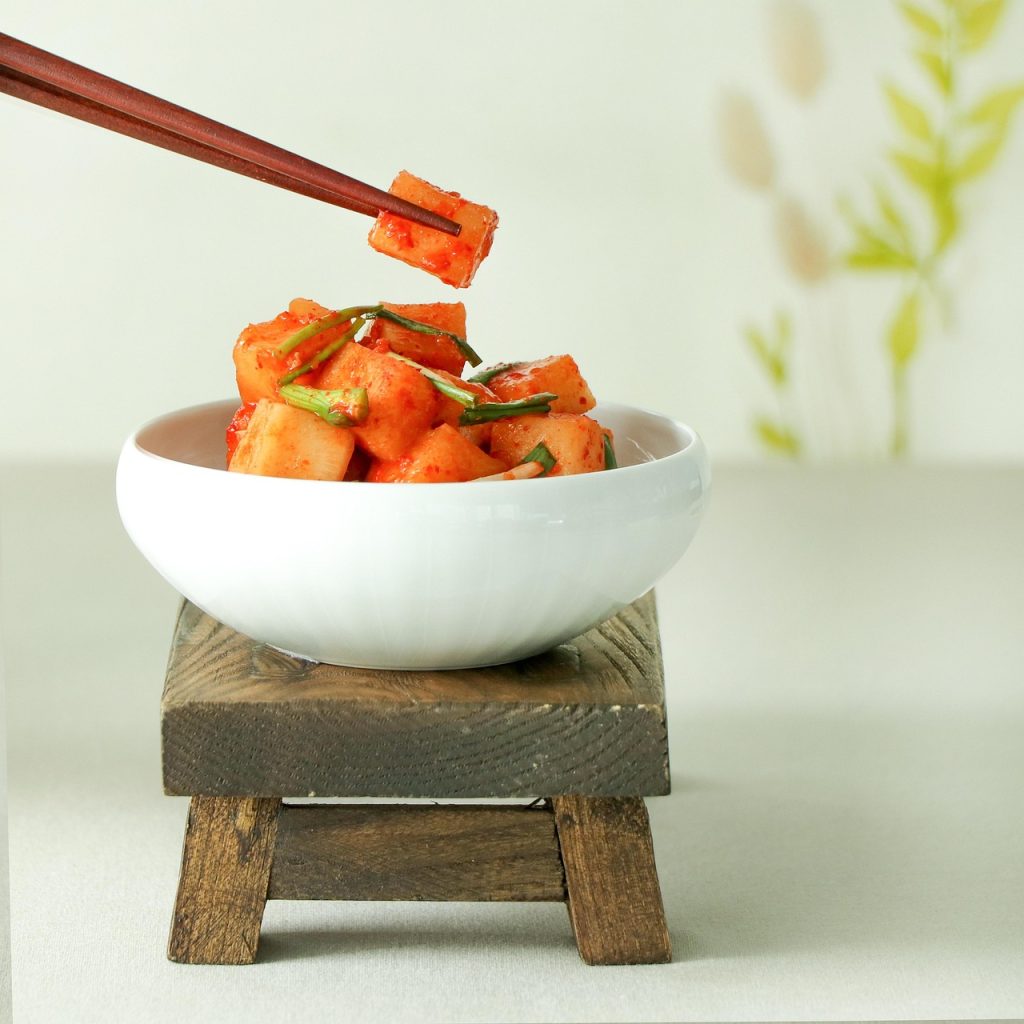
If any single thing announces a Korean kitchen, it is kimchi, the fermented vegetables, most famously napa cabbage, seasoned with chilli, garlic, ginger and salted seafood, that accompany virtually every Korean meal. Made in great quantities in the autumn to last the winter, kimchi is the beating heart of Korean cuisine, and among the Koreans of China it is prepared and eaten with the same devotion as in the homeland, a spicy, sour, pungent staple that defines the flavour of the whole tradition.
Rice is the foundation, as it must be for a rice-farming people, and a Korean meal is built around a bowl of rice surrounded by a spread of small side dishes, banchan, of vegetables, greens and preserves. The famous dishes of the peninsula are all here: the mixed rice bowl bibimbap, the grilled meats of the Korean barbecue, the hearty stews and soups, and the various savoury pancakes, all carried across the river and kept in their full glory in the Korean communities of the northeast.
The northeast has given the community’s food a few specialities of its own, and cold noodle dishes are especially celebrated, the chewy buckwheat noodles served in an icy broth that are a beloved summer food, associated particularly with the northern Korean tradition from which most of the migrants came. Dog meat soup, historically eaten in the hottest days of summer as a warming, restorative dish, was another old tradition, though it has become far less common and more controversial in modern times.
Food is, for the Koreans of China, one of the strongest and most joyful expressions of their identity, and it is also their most successful export into the wider Chinese world. Korean restaurants run by the community, and the popularity of Korean cuisine across China more broadly, mean that the flavours of the diaspora have spread far beyond Yanbian. To share a Korean meal, with its rice and kimchi and grilled meat and endless little dishes, is to taste the homeland the community has carried with it.
The Turning of the Korean Year
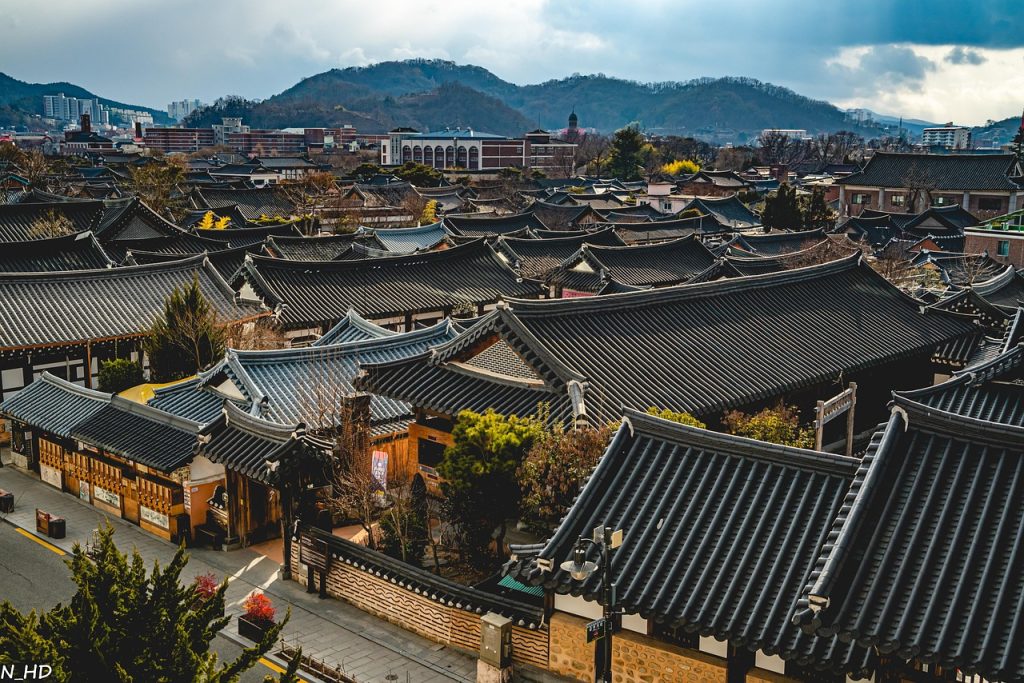
The festivals of the Koreans of China follow the Korean calendar, itself close to the wider East Asian lunar calendar, and the greatest of them is the Lunar New Year, Seollal, celebrated much as it is across the region but with distinctly Korean customs. Families gather, the young perform deep formal bows of respect to their elders and receive blessings and gifts in return, special foods are prepared, above all the rice-cake soup that marks the adding of a year to one’s age, and the ancestors are honoured with ceremony.
The other great festival is Chuseok, the autumn harvest thanksgiving, sometimes called Korean Thanksgiving, when families give thanks for the harvest, visit and tend the graves of their ancestors, and share special foods including the delicate stuffed rice cakes made for the occasion. Falling at the full moon of the harvest season, it is a festival of gratitude, family reunion and remembrance, one of the most important days of the whole Korean year and kept with full feeling in China.
Beyond these two pillars, the Korean year is marked by other observances: the first birthday of a child, celebrated with a lavish ceremony and a ritual in which the baby chooses objects said to foretell its future; the sixtieth birthday marking a completed cycle of life; and the various seasonal customs and games that punctuate the calendar. These life-cycle celebrations, heavy with Confucian ceremony, gather the extended family and reaffirm the bonds between the generations.
For a diaspora community, these festivals carry a special weight, for they are the occasions when Korean identity is most fully performed and passed on. Gathered for Seollal or Chuseok, in hanbok, bowing to elders, eating the traditional foods and honouring the ancestors, the Koreans of China enact their continuity with the homeland and with the generations who crossed the river. The festival is the thread of memory, pulled tight at the turning points of the year.
Crossing the River, Then and Now
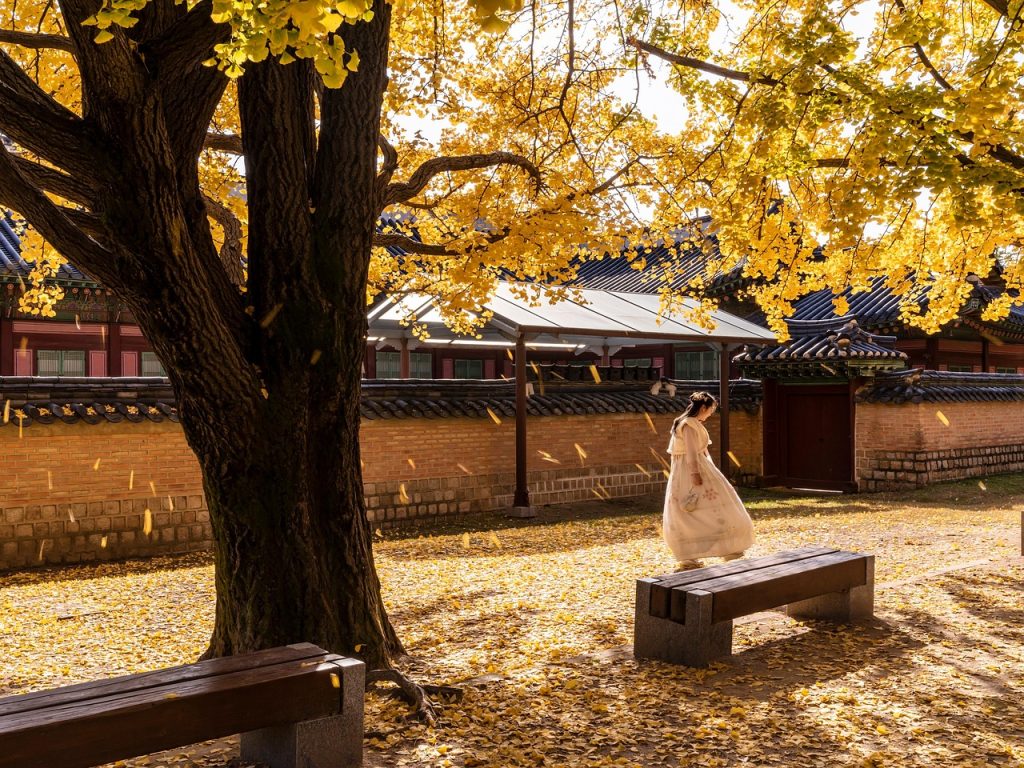
The history of the Koreans of China is compressed into little more than a century, and it is a turbulent one. The migration that created the community, driven by famine and then by the brutal Japanese colonisation of Korea, brought hundreds of thousands across the border in the decades before and after 1910. The Chinese northeast became not only a refuge but a base for the Korean independence struggle, and Korean fighters played a significant part in the armed resistance against Japan from Manchurian soil.
That resistance tied the community’s fate to the Chinese revolution. Many Koreans of the northeast joined the Chinese Communist forces in the fight against Japan and in the civil war that followed, and this contribution earned the community a favourable position when the People’s Republic was founded. In recognition, the new state granted the Koreans the Yanbian Korean Autonomous Prefecture in the early 1950s, a formal homeland-within-China where their language and culture would enjoy official protection.
The decades since brought the same upheavals that shook all of China, land reform, collectivisation, the famines and political storms of the Mao era, and then the sweeping changes of the reform period. Through it all the community held onto its distinct identity, its schools, its language and its autonomous prefecture, weathering the pressures that bore down on every minority while maintaining an unusually strong cultural continuity thanks to its concentration in Yanbian and its recent, vivid memory of the homeland.
The most transformative recent event has been the rise of South Korea. Since China and South Korea established relations, and as the South grew rich, huge numbers of Koreans from China have travelled there to work, drawn by shared language and high wages, sending money home and reshaping the community’s economy and demography. This vast labour migration, along with movement to China’s own booming cities, has hollowed out some Korean villages even as it has enriched families, the latest chapter in a history defined by crossing borders.
Between Three Koreas
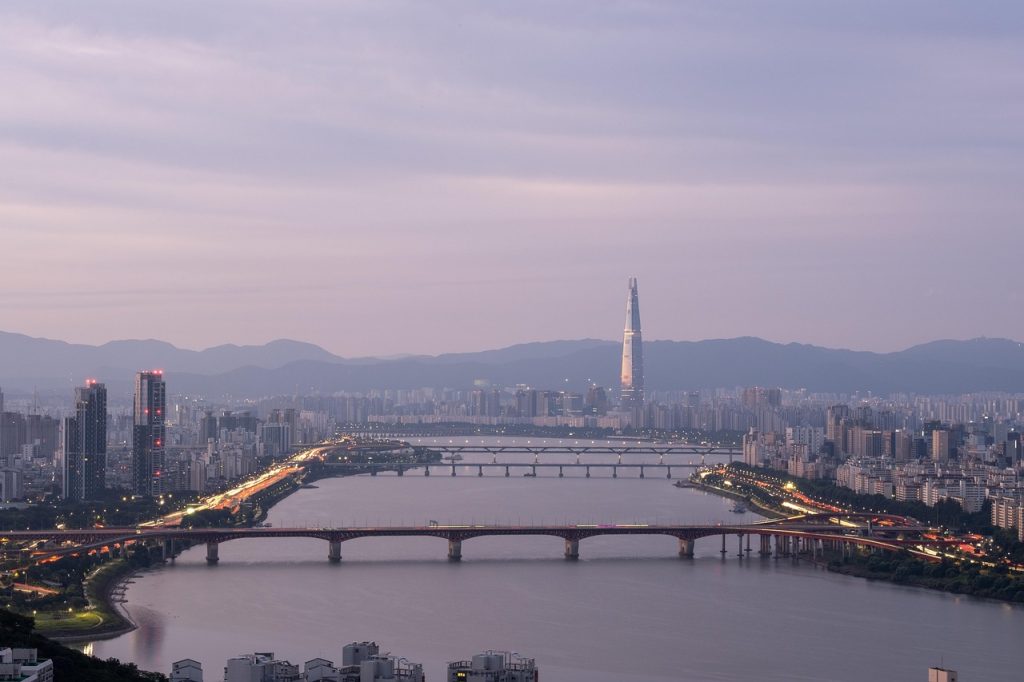
The Koreans of China today live suspended between three worlds. They are citizens of China, integrated and often successful within it; they are ethnic Koreans tied by blood and language to a peninsula divided into two states; and increasingly they are a mobile people whose working lives may be spent in Seoul or Shanghai as much as in Yanbian. This triangular position, between China, North Korea and South Korea, defines the modern community and pulls it in several directions at once.
The pull of South Korea has been especially powerful and double-edged. The chance to earn South Korean wages has lifted countless families out of poverty, but the long absences of working-age adults have emptied villages, strained families and accelerated the decline of the Korean-speaking rural heartland. Meanwhile the young who stay in China are drawn into the Mandarin-speaking mainstream, and fluent Korean, once universal, becomes less certain with each generation. The community’s very success carries the seeds of its dispersal.
Yet the Koreans of China remain one of the most successfully preserved minority cultures in the country, with their language still official in Yanbian, their food beloved across China, their traditions vigorously maintained, and their strong tradition of education carrying many into prosperity. They are a community that knows exactly where it came from and holds onto that knowledge deliberately, a living bridge between China and the Korean peninsula that sits, uneasily and remarkably, on its edge.
With the Koreans of China we come to the end of a long journey through the peoples of this vast country, from the great Han majority to the smallest of the mountain and steppe minorities, from peoples rooted in the land since before memory to this community that crossed a river within living memory. Each of them, in its own way, has answered the question of how to remain oneself within one enormous, diverse and demanding country, and together they make China not a single nation but a whole world of peoples living side by side. The story of any one of them is a thread; woven together, they are the fabric of the place itself.
The Rest of the Journey
This is the last of the peoples of China I have written about, at least for now. If you have arrived here and want to double back through the others we have met along the way, here they all are:
- A Fifth of Humanity, the Story of the Han Chinese
- A Civilization of the Silk Road Oases, the Story of the Uyghurs
- The Giants China Overlooks, the Story of the Zhuang People
- Chinese in Everything but Faith, the Story of the Hui
- Conquerors Absorbed by Their Conquest, the Story of the Manchus
- A Civilization on the Roof of the World, the Story of the Tibetans
- A History Sewn Into Silver and Cloth, the Story of the Miao
- Carriers of Fire and an Ancient Script, the Story of the Yi
- A People Who Nearly Vanished Into the Crowd, the Story of the Tujia
- Southeast Asia Within China’s Borders, the Story of the Dai
- Builders of Kingdoms by a Mountain Lake, the Story of the Bai
- The People Who Write in Pictures, the Story of the Naxi
- The Horsemen Who Conquered the World, the Story of the Mongols
- The Free Riders of the Western Steppe, the Story of the Kazakhs
You May Like
The Zaza, a Mountain People of Eastern Anatolia