Scattered across the Caribbean waters off Panama’s northeastern coast, nearly four hundred small islands make up one of the most successfully self-governed Indigenous territories in the Americas. This is Guna Yala, home to the Guna people, who have spent the last century building a level of formal political autonomy that few Indigenous nations anywhere have managed to secure and maintain.
The Guna, sometimes spelled Kuna in older literature, did not always live on these islands; their ancestors originally inhabited the Panamanian mainland before gradually relocating to the San Blas archipelago, partly to escape disease, conflict, and encroachment, and partly for the strategic and practical advantages small, defensible islands offered a community determined to control its own affairs.
This is the story of the Guna: their origins and migration to the islands, what their name means, their still-thriving language, the remarkable island homeland they built a life around, their old way of fishing and trading life, their distinctive society and governance, their beliefs, their world-famous mola textile art, their food, their festivals, the history of resistance culminating in a successful 1925 revolution, and where the Guna stand today.
- Origins and the Move to the Islands
- What “Guna” Means
- Dulegaya, a Thriving Indigenous Language
- Nearly Four Hundred Islands
- The Old Life of Fishing and Trade
- Congress, Chiefs, and Self-Governance
- Belief and the Guna Cosmovision
- Wini and the Marking of Womanhood
- The Mola, an Art Form and an Identity
- Coconut, Fish, and Island Food
- Festivals and Community Gatherings
- The 1925 Revolution
- The Guna Today
Origins and the Move to the Islands

The ancestors of the Guna are believed to have originally lived in what is now Colombia and the Darien region of mainland Panama, gradually migrating westward and, from roughly the eighteenth and nineteenth centuries onward, relocating increasingly to the small coral and sand islands of the San Blas archipelago just offshore.
This migration to island life was driven by a combination of factors, including outbreaks of disease that spread more easily among mainland populations, the search for relief from insects and jungle heat, and a deliberate strategic choice to occupy defensible, easily monitored territory less vulnerable to encroachment by outsiders, whether other Indigenous groups, colonial authorities, or later national settlers.
By the early twentieth century, most Guna communities had completed this transition to island life, developing a distinctive settlement pattern of densely packed thatched-roof houses on small islands, often just large enough to hold a single village, with mainland areas nearby used for agriculture, fresh water access, and burial grounds.
This deliberate, strategic relationship between mainland resources and island settlement distinguishes Guna history from many Indigenous nations who were displaced from ancestral land against their will; the Guna largely chose their island territory as an active strategy for cultural and political survival.
Some historical accounts suggest earlier Guna ancestors may have originally lived even further east, possibly in what is now Colombia, before a longer historical migration brought them into the Darien region and eventually the coastal and island territories they occupy today, though the precise details of this deeper migration history remain a subject of ongoing archaeological and historical research.
What “Guna” Means

The name “Guna” is generally understood simply to mean “person” or “people” in the Guna’s own language, following the common Indigenous naming pattern seen also among the Wayuu and many other nations across the Americas, asserting basic humanity and belonging rather than describing any particular external trait.
The spelling “Kuna,” commonly used in older anthropological and historical literature, has been officially phased out in favor of “Guna,” reflecting a 2010 decision by Guna General Congress authorities to standardize the spelling in line with more accurate phonetic representation and community preference.
The territory itself, “Guna Yala,” replaced the earlier colonial-era name “San Blas” in official use following a 1998 renaming, part of a broader pattern of Guna political institutions actively asserting control over how their own territory, language, and identity are named and represented.
This consistent pattern of reclaiming and standardizing self-chosen terminology, from personal ethnic identity to territorial naming, reflects the broader political sophistication and self-determination that distinguishes Guna governance more generally, discussed further in the sections on Guna political structure below.
Dulegaya, a Thriving Indigenous Language

Dulegaya, the Guna language, belongs to the Chibchan language family, a group of related languages spoken across parts of Central America and northern South America, and remains actively spoken by the substantial majority of the Guna population, including children, making it one of the more vital Indigenous languages in the Americas relative to community size.
Bilingual education combining Dulegaya and Spanish has been implemented across schools in Guna Yala, reflecting a broader community consensus that maintaining fluency in the ancestral language is compatible with, rather than opposed to, full participation in Panamanian national life and education.
Dulegaya oral tradition includes an extensive body of chants, historical narrative, and ceremonial speech performed by specially trained community specialists, a tradition that has helped preserve detailed community history and cosmology despite the absence of a long-standing written literary tradition in the language.
Increasing use of Dulegaya in radio broadcasting, written material, and even digital and social media in recent years reflects deliberate community effort to ensure the language remains relevant to younger generations navigating an increasingly connected, bilingual or trilingual reality.
Dulegaya’s classification within the Chibchan family connects it distantly to other Indigenous languages spoken across Costa Rica, Colombia, and parts of Central America, part of a linguistic picture that reveals deep, ancient connections between Indigenous nations across a region now divided by modern national borders.
Nearly Four Hundred Islands
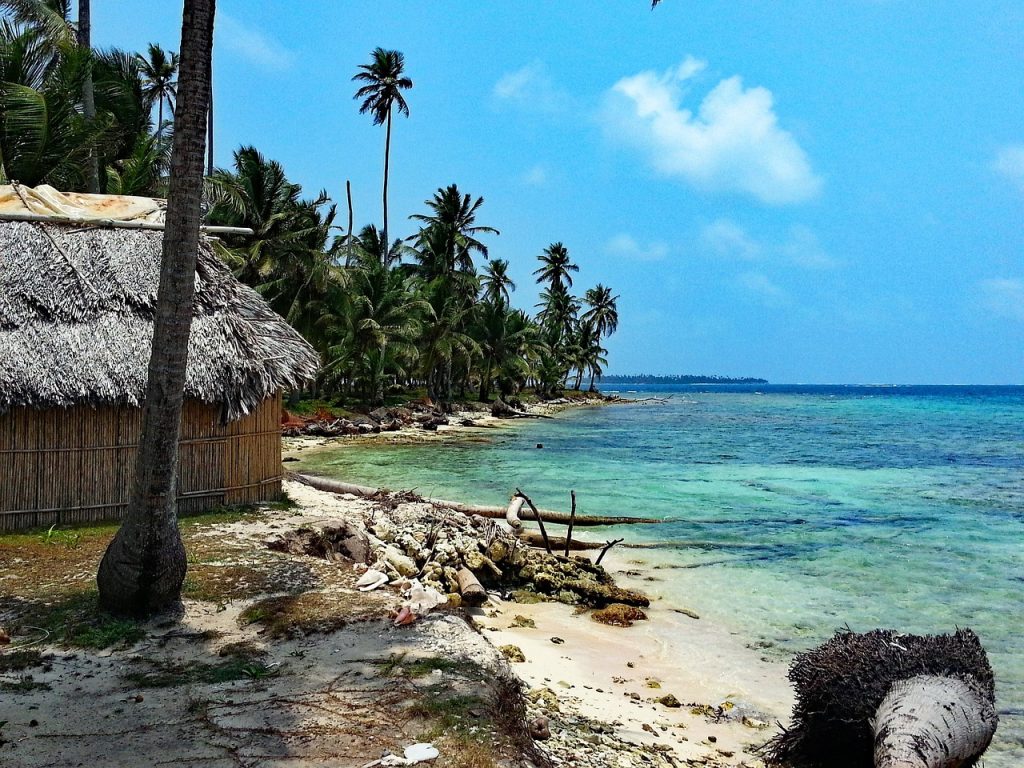
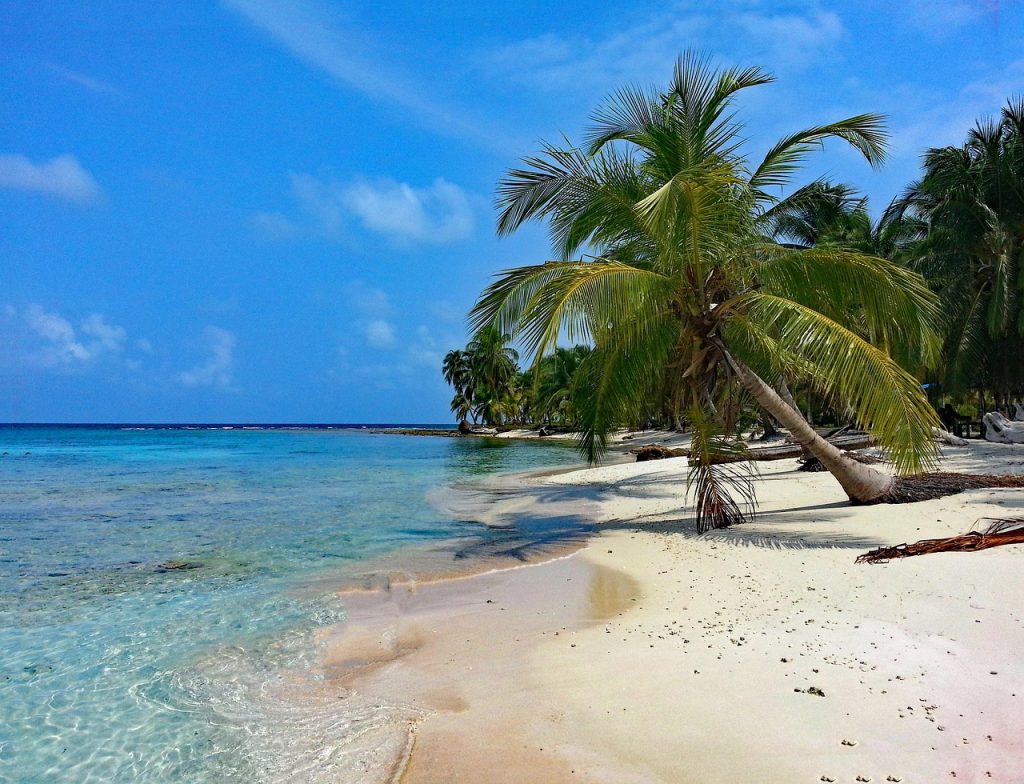
Guna Yala consists of roughly 365 to 400 small islands, depending on how they are counted, stretching along nearly 200 kilometers of Panama’s Caribbean coastline, though only about forty of these islands are permanently inhabited, with the rest remaining undeveloped or used only seasonally.
The islands themselves are typically small, low-lying, and composed of coral and sand, offering little in the way of fresh water or agricultural land, which is why Guna communities maintain close, continuous ties to mainland areas just across the water, used for farming, fresh water collection, hunting, and burial.
This narrow, fragile island geography has made Guna Yala especially vulnerable to rising sea levels linked to climate change, with several island communities already actively planning or beginning relocation to mainland sites, a stark and immediate example of climate impact on a specific, identifiable Indigenous homeland.
Despite these environmental pressures, the islands remain visually and culturally striking, characterized by tightly packed thatched-roof homes, narrow walkways between houses, and a strong sense of communal, shared space that reflects both practical necessity and deliberate cultural preference for close community living.
ok 1-4The Old Life of Fishing and Trade

Traditional Guna subsistence combined fishing in the surrounding Caribbean waters with agriculture on nearby mainland plots, growing plantains, corn, and root vegetables, while coconut cultivation on both islands and mainland became an especially important economic activity following sustained contact with European and later international traders.
Coconuts historically functioned almost as a form of currency in Guna trading relationships with foreign schooners and merchants, exchanged for tools, cloth, and other manufactured goods, a trade relationship that gave the Guna meaningful economic leverage and contact with the outside world on largely their own terms.
The ulu, a dugout canoe carved from a single large tree trunk, remains the essential vehicle of Guna daily life, used for fishing, inter-island travel, transporting goods to and from the mainland, and reaching the mouths of rivers where fresh water and agricultural land could be accessed.
This combination of maritime fishing skill, mainland agriculture, and canoe-based mobility created a genuinely amphibious way of life, one that required deep, practical knowledge of both marine and forest environments maintained simultaneously rather than a single specialized subsistence strategy.
Congress, Chiefs, and Self-Governance
Guna political organization centers on a structured system of congresses, local island congresses handling community affairs, and the General Guna Congress serving as the highest authority for the territory as a whole, a formal, codified system of Indigenous self-governance that is unusually well developed compared to most Indigenous political structures in the Americas.
Sahilas, traditional community leaders and chanters, preside over local congresses, reciting historical and spiritual chants that combine governance, moral instruction, and community memory into a single, ongoing oral tradition performed regularly rather than reserved for special occasions alone.
This governance system operates with real legal authority within Guna Yala, recognized by the Panamanian state as having jurisdiction over internal community affairs, land use, and cultural matters, a level of formal legal autonomy achieved through the political developments discussed later in this article.
Women hold significant informal and increasingly formal influence within Guna society, particularly given the culture’s notably matrilineal and matrilocal tendencies, in which married couples often reside with the wife’s family and inheritance patterns favor female lines, distinguishing Guna social structure from many patrilineal societies elsewhere in the Americas.
Guna congress meetings can extend for hours or even days when addressing significant issues, with extensive discussion and consensus-seeking valued over rapid decision-making, a deliberative style that reflects deep cultural investment in the chanted oratory tradition and collective legitimacy described earlier in this section.
Belief and the Guna Cosmovision

Traditional Guna cosmology centers on Bab Dummad and Nan Dummad, a father and mother creator pairing, alongside a rich array of spirits associated with nature, illness, and protection, transmitted through the chanted oral tradition performed by sahilas and other trained ritual specialists.
Nele, spiritual specialists with particular gifts for healing and spiritual insight, play an important role in community life, addressing illness and misfortune through a combination of herbal knowledge, chant, and ritual intervention understood to address both physical and spiritual dimensions of a problem.
Christianity, introduced through missionary contact, has made inroads in some Guna communities, though traditional cosmology and ritual practice remain notably resilient and widely observed compared to many other Indigenous nations in the Americas, reflecting the broader pattern of successful cultural preservation among the Guna.
Coconut palms themselves hold a specific symbolic and economic-spiritual significance in Guna thought, tying practical trade livelihood directly to cultural identity in a way that mirrors how the mola, the salt flats of the Wayuu, or the guanaco of the Tehuelche each anchor economic life to cultural meaning for their respective peoples.
ok 5-7Wini and the Marking of Womanhood

Guna women traditionally wear wini, intricate beaded bands wrapped tightly around the forearms and lower legs, created using tiny glass beads arranged in geometric patterns that can take considerable skill and time to produce, worn as everyday adornment as well as for special occasions.
A Guna girl’s first menstruation traditionally triggers an important community ceremony called the inna suit, or long chicha ceremony, involving several days of ritual, feasting, and the fermented beverage chicha, marking her transition into womanhood with community-wide recognition and celebration.
Hair cutting also plays a symbolic role in this transition, with a young woman’s hair traditionally cut short as part of the ceremony, a visible marker of her new social status that community members would recognize immediately, similar in social function to comparable puberty markers among other Indigenous nations profiled elsewhere on this site.
These life-passage traditions remain actively practiced in many Guna communities today, adapted in various ways to accommodate modern schooling schedules and increased mobility between islands and mainland Panama, but still treated as genuinely important cultural milestones rather than symbolic formalities alone.
The Mola, an Art Form and an Identity

The mola, a layered textile panel created through a reverse applique technique in which multiple layers of colorful fabric are cut and stitched to reveal intricate designs, stands as the Guna’s most internationally recognized art form, traditionally worn as the front and back panels of women’s blouses.
Mola designs range from abstract geometric patterns to detailed representations of animals, plants, and, increasingly, contemporary imagery, with skilled makers building reputations for particular styles and technical mastery within their communities, and finished panels sometimes taking weeks of careful, painstaking stitching to complete.
Mola-making is understood within Guna culture as a serious artistic and economic skill passed primarily among women, functioning simultaneously as everyday clothing decoration, a marker of individual and community identity, and, increasingly, a significant source of income through sale to tourists and international collectors.
Guna Yala’s political authorities have taken active steps to protect mola-making as recognized cultural intellectual property, working to prevent mass-produced imitation textiles from undermining the market for authentic, hand-stitched work produced by Guna artisans themselves.
Contemporary mola artists have also begun incorporating new themes and materials into their work, including political imagery and commentary on climate change affecting the islands, demonstrating that the tradition continues to evolve as a living art form responsive to present-day Guna concerns rather than remaining frozen in purely historical style.
ok 8-9Coconut, Fish, and Island Food
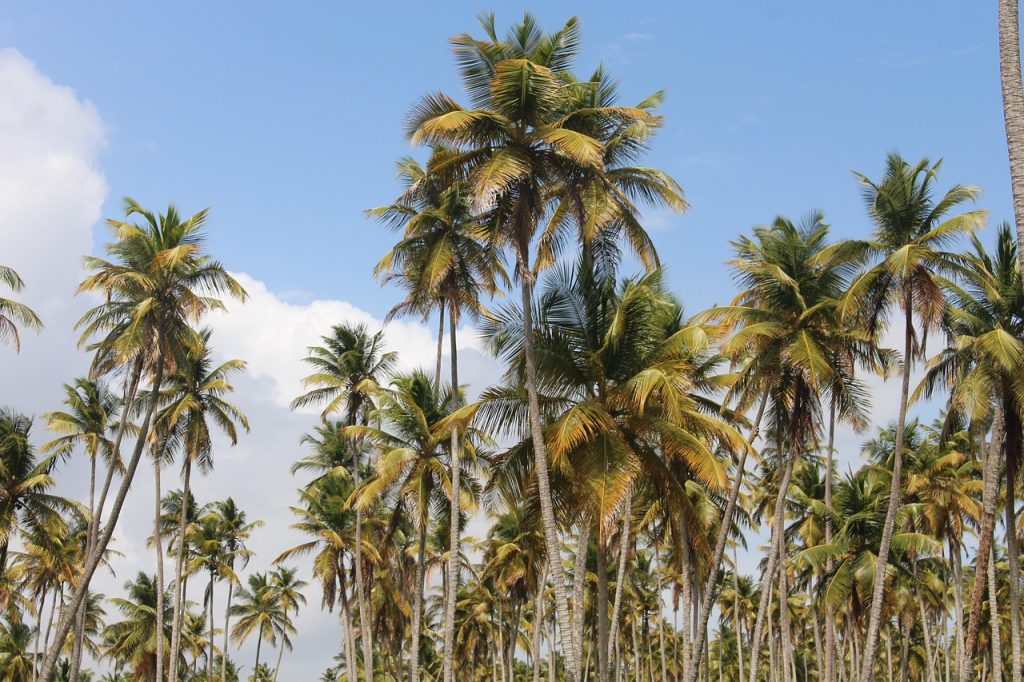
Fish and seafood, drawn from the surrounding Caribbean reefs and open water, form a central part of the traditional Guna diet, prepared in coconut milk-based sauces that reflect both the availability of coconut as a staple crop and its deep integration into everyday Guna cooking.
Plantains and root vegetables including yuca and dachine, grown on mainland plots and transported to the islands by canoe, provide the carbohydrate staples of the diet, typically boiled, fried, or incorporated into stews alongside fish or, less commonly, other meat.
Coconut features prominently beyond its historical trade value, used in cooking oil, drinks, and desserts, with the fruit’s versatility across food, trade, and even traditional medicine reflecting its outsized importance to Guna material and cultural life described in earlier sections.
Tule masi, a traditional dish combining fish or other protein cooked in coconut milk with plantain, exemplifies this culinary combination of marine and coconut-based ingredients that defines much of everyday Guna cuisine, still commonly prepared in island households today.
Festivals and Community Gatherings

The inna suit puberty ceremony described earlier represents one of the most significant recurring community celebrations in Guna life, but congress meetings themselves, held regularly and often accompanied by communal meals and informal socializing, also function as important occasions for maintaining community bonds.
Panamanian national holidays, including Guna Revolution Day commemorating the 1925 uprising discussed in the next section, are marked with particular significance in Guna Yala, blending national Panamanian observance with distinctly Guna historical pride and political meaning.
Chicha ceremonies, involving the preparation and communal drinking of fermented beverages, mark various significant occasions beyond puberty rites, including naming ceremonies and other milestones, each accompanied by specific chants and ritual protocol performed by trained community specialists.
Inter-island canoe journeys for major congress meetings or celebrations bring communities together physically across the archipelago, reinforcing a sense of shared Guna identity that spans the roughly forty inhabited islands despite the practical challenges of a homeland spread across such a wide expanse of water.
ok 10-11The 1925 Revolution

Panamanian government efforts in the early twentieth century to suppress Guna cultural practices, including traditional dress and puberty ceremonies, and to impose greater administrative control over the islands, generated deep resentment that culminated in the Guna Revolution of February 1925, a coordinated armed uprising against Panamanian police and administrators stationed in the territory.
The 1925 revolution, though brief, proved remarkably successful, resulting in a negotiated agreement with the Panamanian government that granted the Guna a meaningful degree of political autonomy over their own territory, an outcome achieved through decisive, organized action rather than passive endurance of assimilation policy.
This agreement laid the groundwork for the eventual formal establishment of the Guna Yala comarca, a specially designated Indigenous territory with its own recognized governance structure operating under Panamanian national sovereignty but with substantial internal self-rule over land, culture, and community affairs.
The 1925 revolution remains a defining event in Guna historical memory, celebrated annually and referenced consistently as proof that organized, unified political action achieved a level of lasting self-determination that many other Indigenous nations in the Americas continue to seek without comparable success.
The Guna Today

Today the Guna Yala comarca stands as one of the most robust examples of formal Indigenous self-governance in the Western Hemisphere, with the General Guna Congress exercising real authority over internal affairs while Guna representatives also participate in Panamanian national government.
Climate change poses perhaps the most urgent practical challenge facing the Guna today, with rising sea levels and increasingly frequent flooding already forcing the relocation of at least one populated island community to the Panamanian mainland, a process other island communities are expected to face in coming years.
Guna students increasingly pursue higher education in Panama City and abroad, with many choosing to return to Guna Yala afterward to contribute professional skills in law, medicine, or education directly to their home communities, a pattern that helps sustain both cultural continuity and practical institutional capacity within the comarca.
Tourism has become an increasingly significant part of the Guna Yala economy, with community-controlled lodges and boat tours allowing visitors to experience the islands while Guna political authorities maintain firm control over how tourism development proceeds, limiting large-scale outside investment that might undermine community autonomy.
International recognition of the mola as intangible cultural heritage has grown alongside broader appreciation for Guna political achievements, with the territory increasingly cited by scholars and Indigenous rights advocates elsewhere in the Americas as a working model for what negotiated, legally recognized self-governance can look like in practice.
The Guna today represent a compelling case study in what sustained, organized Indigenous political action can achieve: a language still spoken by the young, an art form recognized worldwide, and a level of genuine self-governance that took a successful revolution to secure and a century of careful, deliberate political maintenance to preserve. To the south, in the Amazon rainforest straddling Brazil and Venezuela, the Yanomami face very different but equally urgent challenges in defending their own ancestral land and way of life.
More Indigenous Nations
The Guna are one of many Indigenous nations covered here, each with a distinct history of adaptation, resistance, and continuity. A few more worth reading:
- The People Who Emerged Into This World, the Story of the Navajo
- The People Who Never Left the Mountains, the Story of the Quechua
- The People Who Never Vanished, the Story of the Maya
- The People of the Seven Council Fires, the Story of the Lakota
- The People of the Land Who Were Never Conquered, the Story of the Mapuche
- The People of Ice and Sea, the Story of the Inuit
- The Islands of the People, the Story of the Haida
- The Four Directions People, the Story of the Cree
- The Principal People, the Story of the Cherokee
- The People of the Timeless Speech, the Story of the Aymara
- The People Whose Language Became a Nation, the Story of the Guarani
- The People of the Big Feet, the Story of the Tehuelche
- The People Rediscovered by Their Own Nation, the Story of the Diaguita
- The People of the Driest Desert, the Story of the Likan Antai
- The People the Empire Never Conquered, the Story of the Wayuu
You May Like
The Damara, an Ancient People of Namibia


2 thoughts on “Guna: Islanders Who Govern Their Own Corner of Panama”